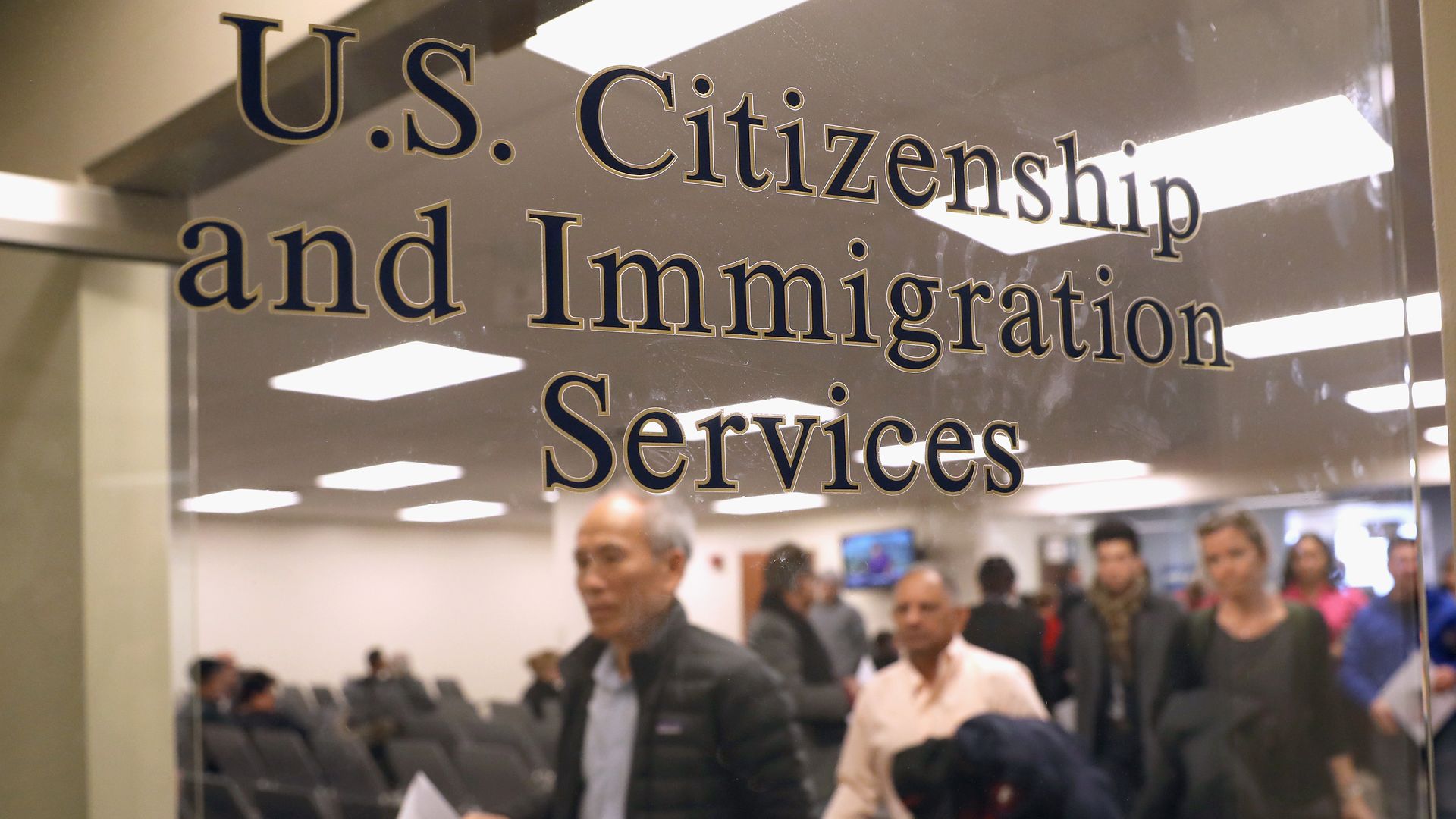
Trump’s administration may make it harder for immigrants to obtain permanent residency if they have received food assistance or other public benefits, Reuters’ Yeganeh Torbati exclusively reports citing a draft proposal.
The reasoning in the draft, per Torbati: “Non-citizens who receive public benefits are not self-sufficient and are relying on the U.S. government…An alien’s receipt of public benefits comes at taxpayer expense.”
The U.S. is tied for 12th place in a Chamber of Commerce ranking of countries' patent system strength. Law professor and senior scholar at George Mason's Center for the Protection of Intellectual Property, Adam Mossoff, told Axios that the U.S. has "a serious, systemic problem in our patent system."
Why it matters: Just two years ago, the U.S. was ranked number one, and then fell to 10th place last year. Mossoff says this "shows a pattern that we are falling, and it can get worse...we will suffer more consequences in slower economic growth, less jobs, and worse quality of life overall."
Last week President Trump released his Nuclear Posture Review, the first update to the vital strategic document since President Obama's in 2010. What will it mean for the U.S. nuclear arsenal and its role in confronting today's global threats?
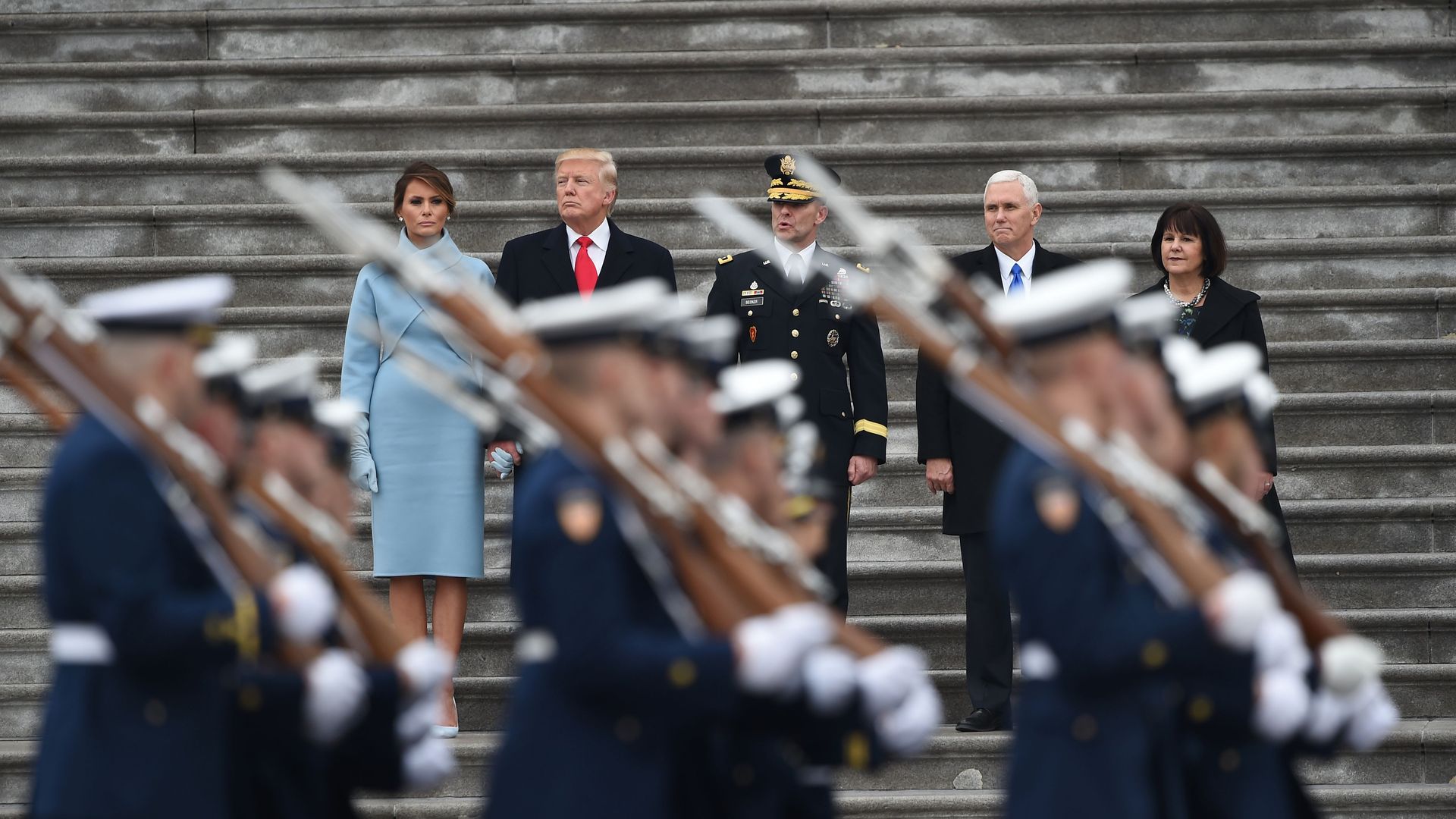
Retired Navy SEAL Robert O'Neill, who claims to have killed Osama bin Laden, lambasted President Trump’s proposal to hold a military parade, calling the idea “third world bullshit.”
The background: The Pentagon confirmed a report by The Washington Post this week that Trump had asked top military officials to look into the idea. The Post said the costs to hold such a parade would "run in the millions" after shipping "tanks and high-tech hardware to Washington."
Defense Secretary James Mattis said Thursday that the roughly 850 immigrants who are about to begin training in the military or are actively serving in the U.S. military are not at risk for deportation, regardless of the status of DACA, unless they have committed a serious felony or a judge gives them a special order for deportation, AP reports.
Why it matters: Until now, it was unclear whether members of the military would receive any protection from deportation since Jeff Sessions rescinded the DACA program in September and Congress hasn't agreed on a solution.
The Trump administration's Nuclear Posture Review retains a commitment, first made by Obama in 2010, not to "use or threaten to use nuclear weapons against non-nuclear weapons states that are party to the NPT [Non-Proliferation Treaty] and in compliance with their nuclear nonproliferation obligations." Today, all 184 non-nuclear weapons states under the treaty meet that criterion.
Trump's reaffirmation of this pledge, known as a negative security assurance, is significant. It rules out U.S. nuclear retaliation against these countries, even if they were to use chemical, biological, cyber or other weapons against the U.S. or its allies.
In line with its recently announced National Security Strategy (NSS), the Trump administration's Nuclear Posture Review (NPR) takes an aggressive stance toward China — a position already raising concerns in Beijing.
The NSS breaks with its predecessors by portraying China unambiguously as a global threat, at one point even lumping it in with ISIS. The NPR heaps additional pressure on Beijing by ordering the development of new low-yield warheads and cruise missiles. The Trump administration justifies such moves as a necessary response to the prospect of limited Chinese nuclear strikes. However, China’s policy calls for the use of nuclear weapons only in retaliation to a nuclear attack.
If the 2010 nuclear posture review (NPR) reflected a left-of-center compromise, probably to the right of President Obama’s preferences, the 2018 NPR is right-of-center, yet falls to the left of many of President Trump’s statements. While staying within the policy mainstream and containing considerable continuity with its predecessor, Trump's review does make a few notable departures.
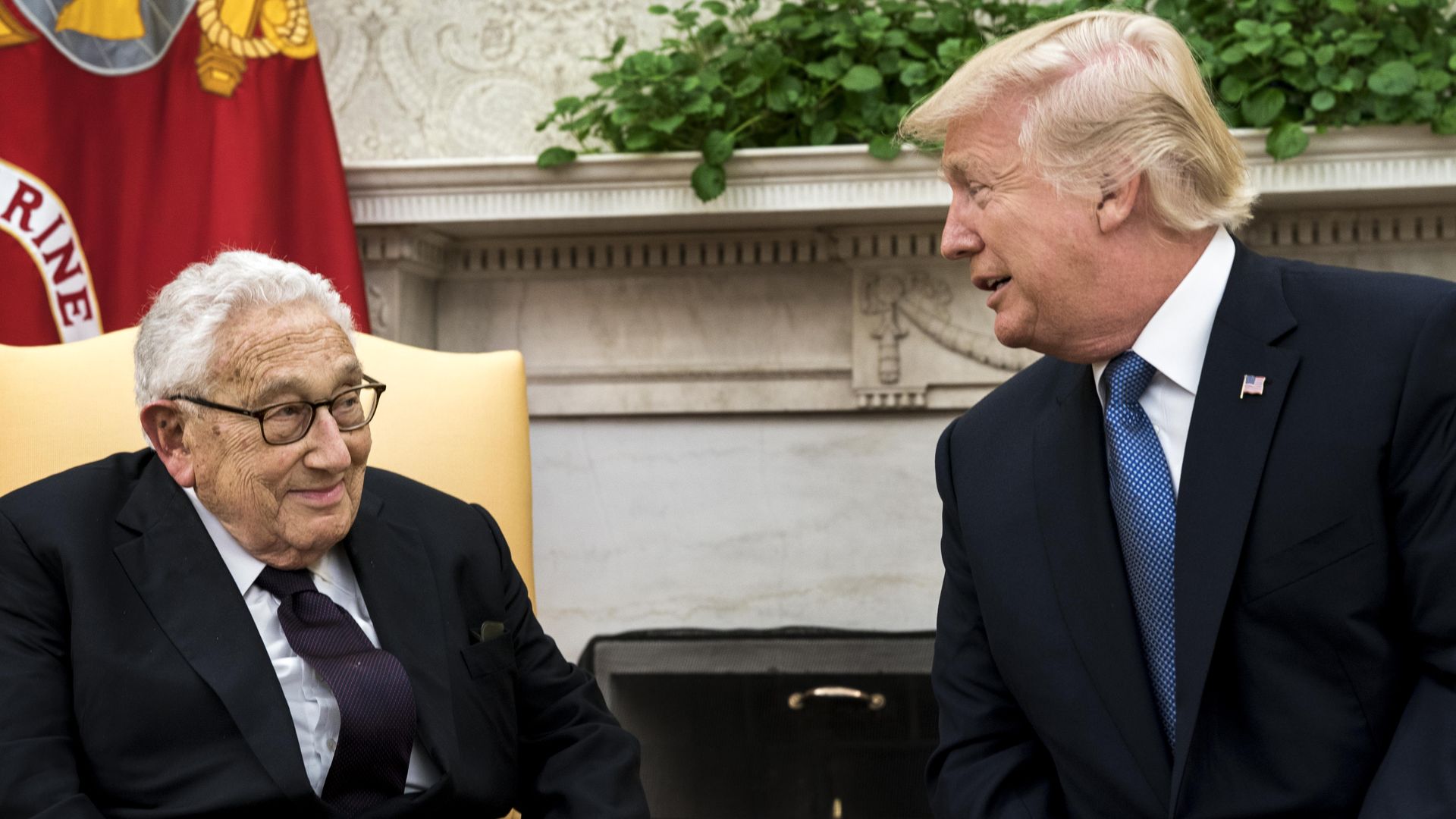
President Trump tweeted out Thursday that he's meeting with former Secretary of State Henry Kissinger in the Oval Office.
The background: The president noted that he would discuss issues involving North Korea, China and the Middle East. Trump has met with the famed U.S. diplomat twice before as president, utilizing Kissinger as an advisor on foreign affairs.
The Senate's version of the government spending bill cuts down on special measures for the Medicare Advantage industry. The bill keeps the House's telehealth and chronic care benefits, but it does not include a gift that would have saved the lowest-quality Medicare Advantage plans for another decade.
That's not all: The bill also prevents Medicare insurers from inflating their quality scores after they consolidate poor-performing contracts into higher-performing ones, a ploy insurers have used to gain more bonus money based on the program's star-rating system. The Congressional Budget Office says that measure would save $520 million over the next 10 years.
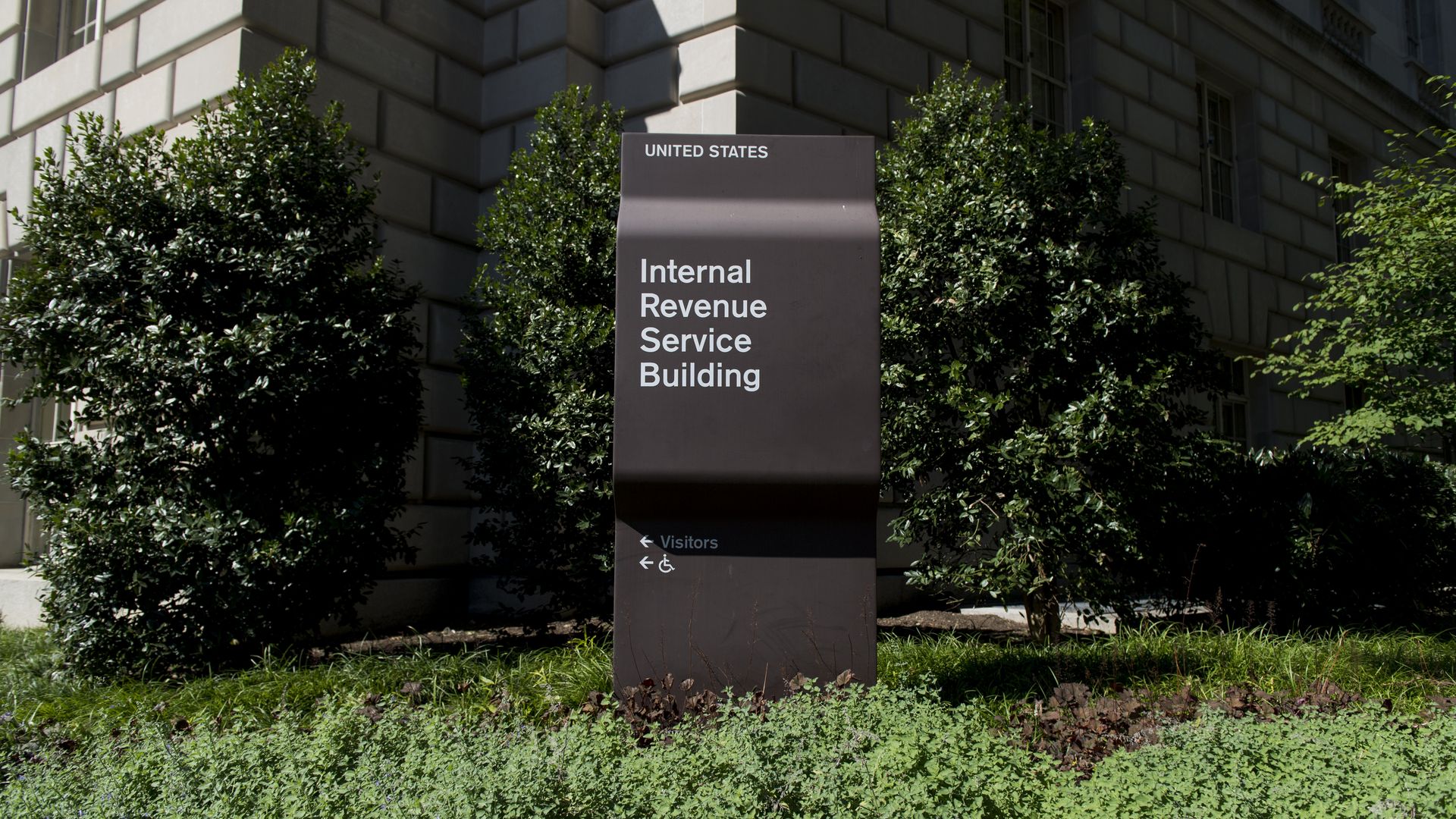
President Donald Trump announced today his intent to nominate Charles P. Rettig as Commissioner of the Internal Revenue Service, replacing acting commissioner David Kautter.
Background: Rettig is a California tax attorney with more than 35 years of experience with Beverly Hills firm Hochman, Salkin, Rettig, Toscher & Perez. He has served as chair of the IRS Advisory Council for almost 20 years and will succeed former IRS Commissioner John Koskinen, who was heavily criticized by Republicans for his harsh scrutiny of conservative groups that applied for nonprofit status.
Former Vice President Joe Biden told MSNBC's Andrea Mitchell that President Trump should "obviously" allow Special Counsel Robert Mueller to interview him in the ongoing Russia probe:
If the president took the 5th, he is — by definition, in my view — abdicating a responsibility of the presidency of the United States.
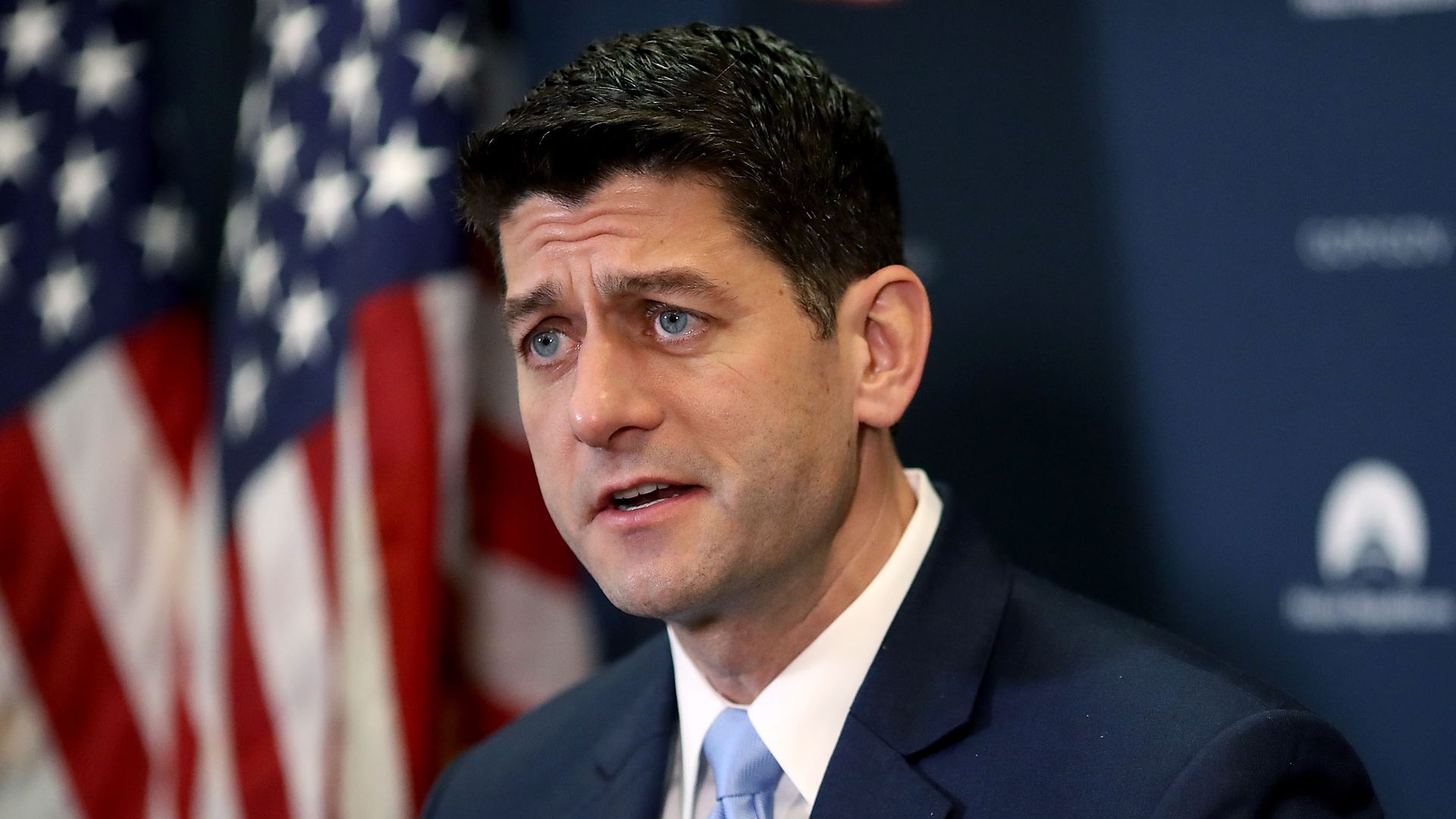
House Speaker Paul Ryan zeroed in on his commitment to solve the Dreamers problem and find a DACA fix Thursday, but said he only wants to bring a bill that the president supports to the floor:
"To anyone who doubts my intention to solve this problem and bring up a DACA and immigration reform bill, do not," said Ryan. "I want to make sure it gets done right the first time. I don't want to risk a veto."
With the March 5 DACA deadline approaching, Sen. Jeff Flake (R-Ariz.) plans to put forth a measure that would temporarily extend protection for Dreamers while providing some funding for additional border security, Politico reports.
Why it matters: Flake's fallback isn't anyone's ideal solution but could be an acceptable fallback measure for both parties before Majority Leader Mitch McConnell kicks off an open immigration debate on the Senate floor next week. Thus far, Republicans and Democrats have failed to find common ground on a permanent deal that both protects Dreamers and meets GOP demands to increase border security, limit family-based migration, and end the diversity visa lottery.
U.S.–Pakistan relations got off to a rough start in 2018. President Trump rang in the new year with a harshly worded tweet accusing Pakistan of accepting American money without taking out the terrorists that attack American troops in Afghanistan. Several days later, the Trump administration announced the suspension of most security aid to Pakistan until those terrorists are targeted.
Pakistani officials excoriated Trump for his tweet. Pakistan's foreign minister declared that his country’s alliance with America was “over.” News reports revealed that Washington is working on ways to mitigate possible Pakistani retaliations to U.S. pressure.
Sound serious? Sure. Still, a reality check is in order.
The Democratic Congressional Campaign Committee (DCCC) is targeting 101 House Republicans' seats in the 2018 midterms, NBC reports. That's the widest battleground in at least a decade.
Why it matters: This shows how Democrats are trying to ride the wave they've seen since Trump's election, in which they've taken 35 state legislature seats from Republicans.
The Wall Street Journal reports that the White House secretly contacted Iran in December to suggest a "direct channel" between the two countries in order to kick off negotiations to release prisoners held by both the United States and Iran. At least four Americans are known to currently be held by Iran.
Why it matters: The proposal marked the Trump administration's first diplomatic outreach to Iran regarding prisoner negotiations. A 2016 prisoner swap with Iran — which also included the unfreezing of $400 million in Iranian assets — had prompted then-candidate Trump to openly criticize Obama administration policy on the issue.
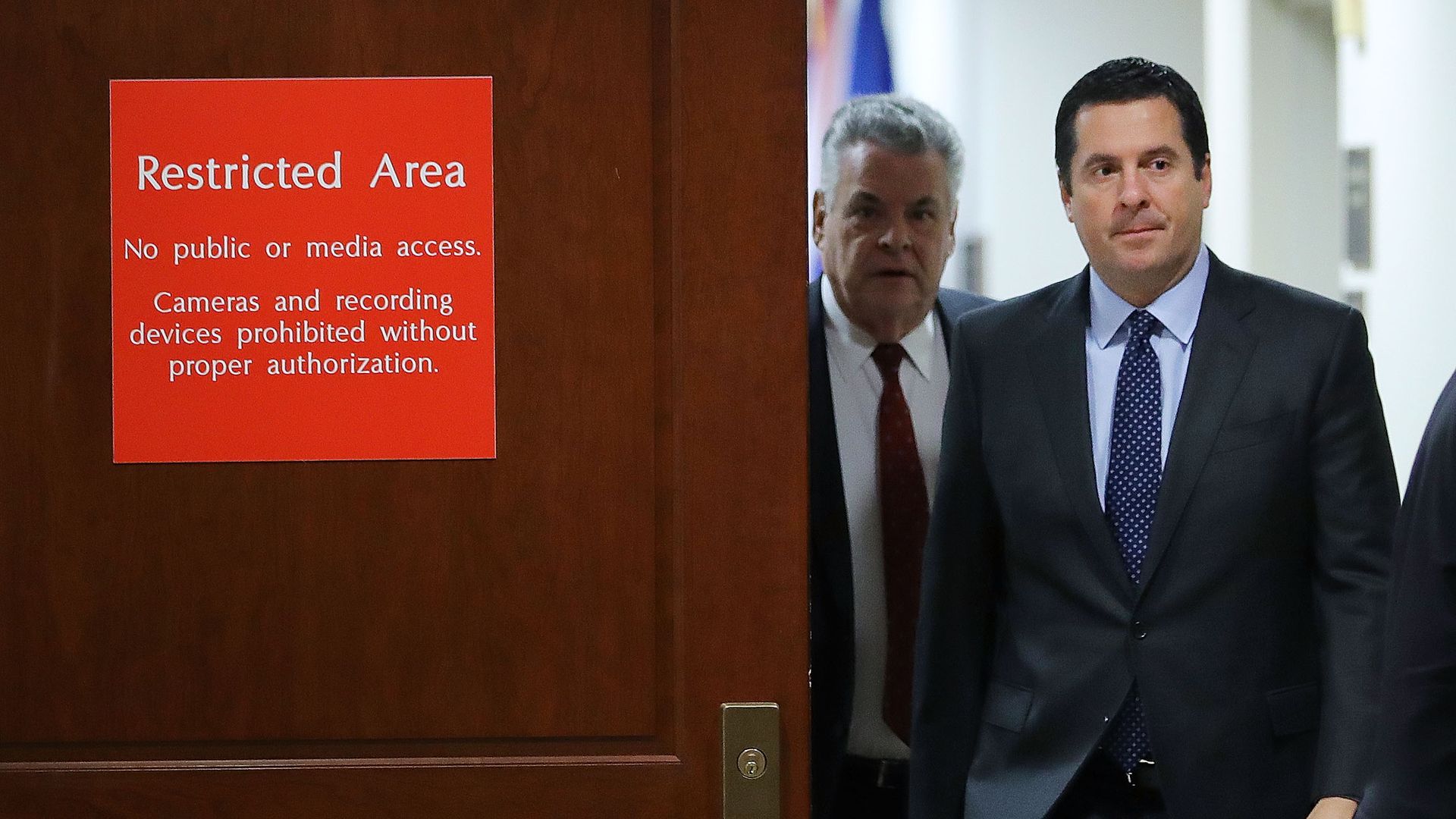
House Intelligence Republicans are planning to build a physical partition separating their committee staff members from their Democratic counterparts this spring, reports CBS News.
Why it matters: The concept of a wall dividing staffers along partisan lines reflects the current state of bipartisan relations on the committee, which have devolved into "absolute poison," according to Rep. Tom Rooney (R-Fla.), amid tension over alleged leaks and the release of the Nunes FISA memo. The tension has spilled over into the committee's work as it has not interviewed a witness in the Russia probe since Corey Lewandowski and Steve Bannon cut their appearances short last month.
"When Americans are able to live by their convictions to speak openly of their faith, and to teach their children what is right our families thrive, our communities flourish, and our nation can achieve anything at all."
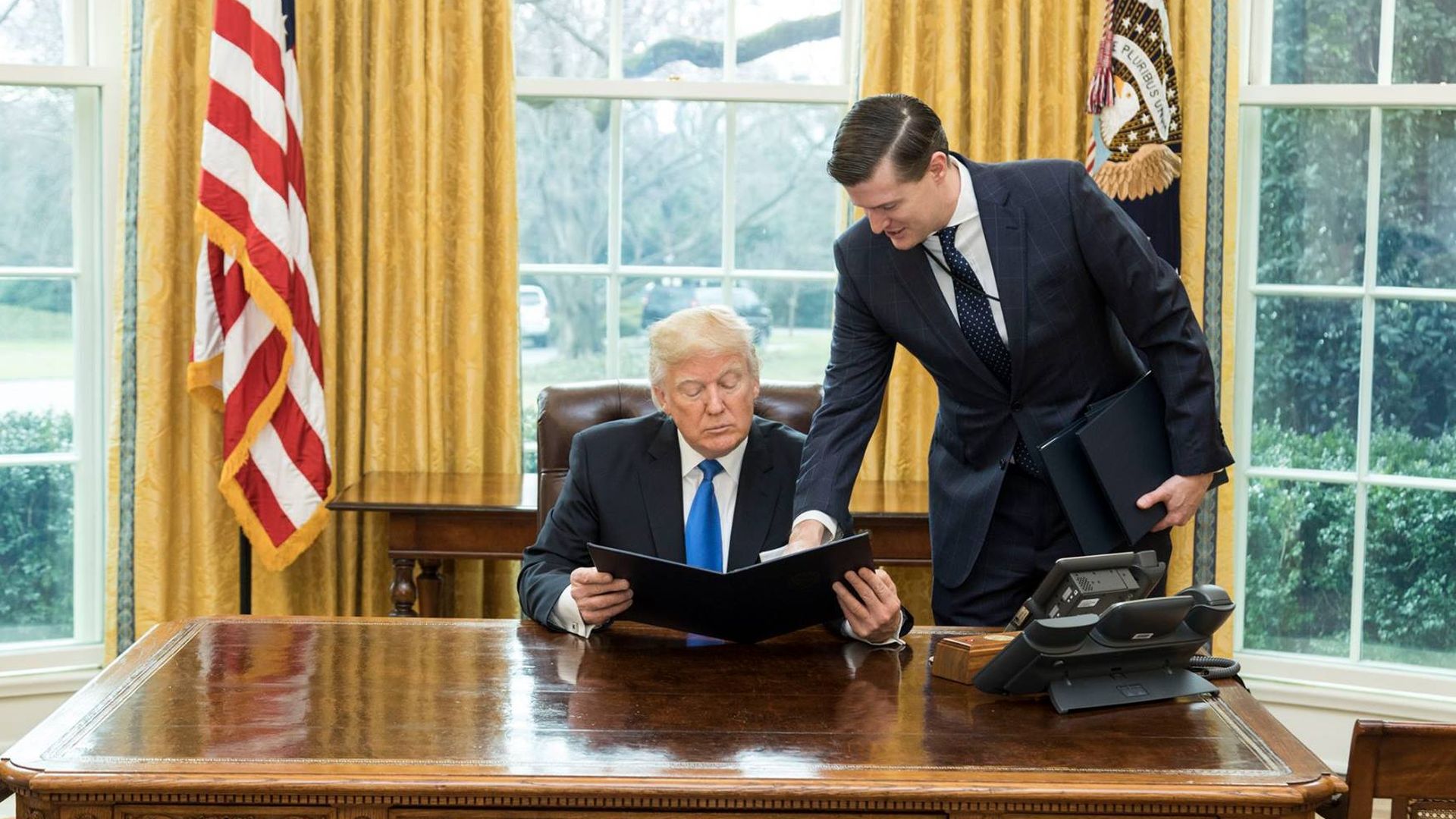
Senior White House officials are in a state of shock, and facing huge questions about their handling of the crisis, over the resignation of Staff Secretary Rob Porter after his two former wives went on the record to allege physical abuse:
Why he matters: Porter, 40 — a clean-cut Harvard and Oxford standout who was chief of staff to Sen. Orrin Hatch (R-Utah) — managed (and partly controlled) the information flow to President Trump, including clippings and briefings.
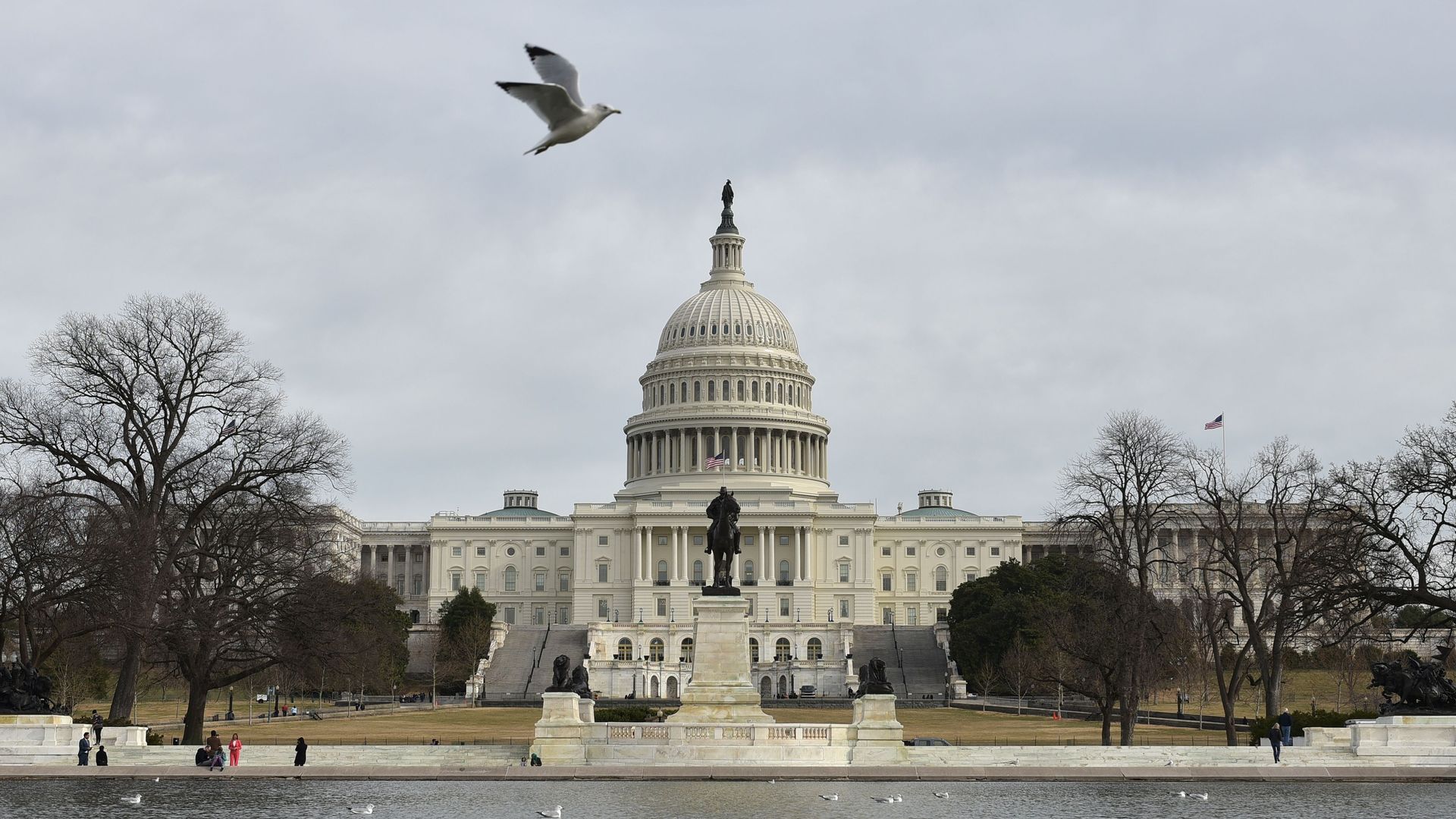
The massive bipartisan budget deal announced by Sens. Mitch McConnell and Chuck Schumer includes hundreds of billions of unpaid-for new spending, potentially ending an impasse over government funding but giving fiscal hawks heartburn.
Why this matters: This adds more new spending than any budget deals made under the Obama presidency (although the stimulus package passed during that time was very pricey). Yet politically, most saw this as the only way forward, reflecting both gridlock and the declining influence of fiscal conservatism in Congress.
Data: U.S. House of Representatives; Chart: Andrew Witherspoon / Axios
The Daily Beast reports that Immigration and Customs Enforcement (ICE) officials "are actively exploring joining the U.S. Intelligence Community," and have been since the Obama administration.
Why it matters: Such a move would spark resistance from civil liberties and immigrant advocate groups because it would involve access to surveillance tools among other things. But one official told the Daily Beast that joining the Intelligence Community (IC) could "be useful for the agency's immigration enforcement work — in particular, their efforts to find and arrest undocumented immigrants with criminal arrest warrants."