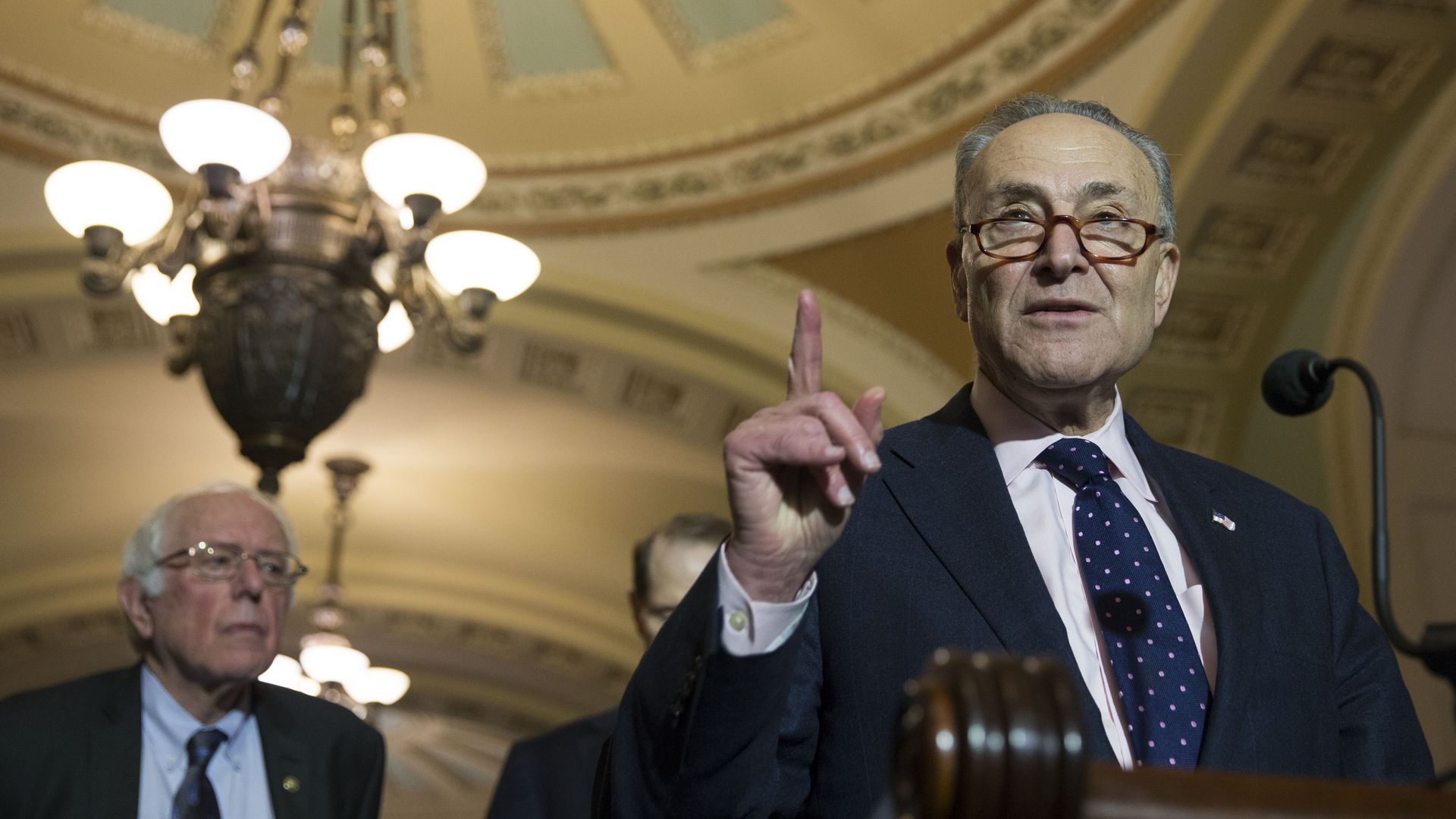
Senate Democrats are confident they have the votes to oppose the Republican short-term spending bill to keep the government open while broader negotiations continue, according to four Democratic aides who spoke with Axios.
Why it matters: Democrats' opposition reflects their growing unwillingness to capitulate to Republicans who aren't giving them what they want — namely signing off on their bipartisan DACA deal from last week — even if it means causing a government shutdown.
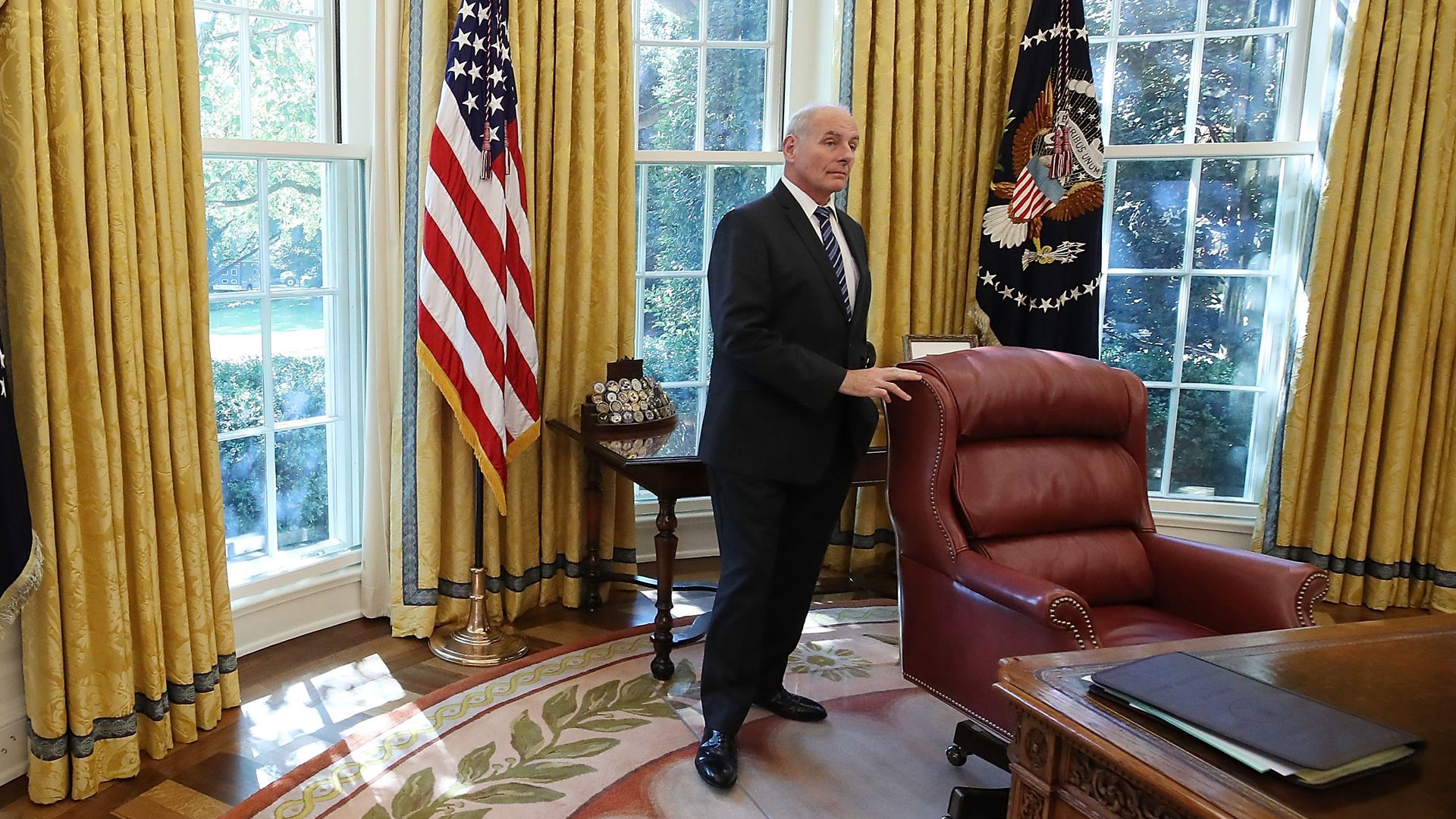
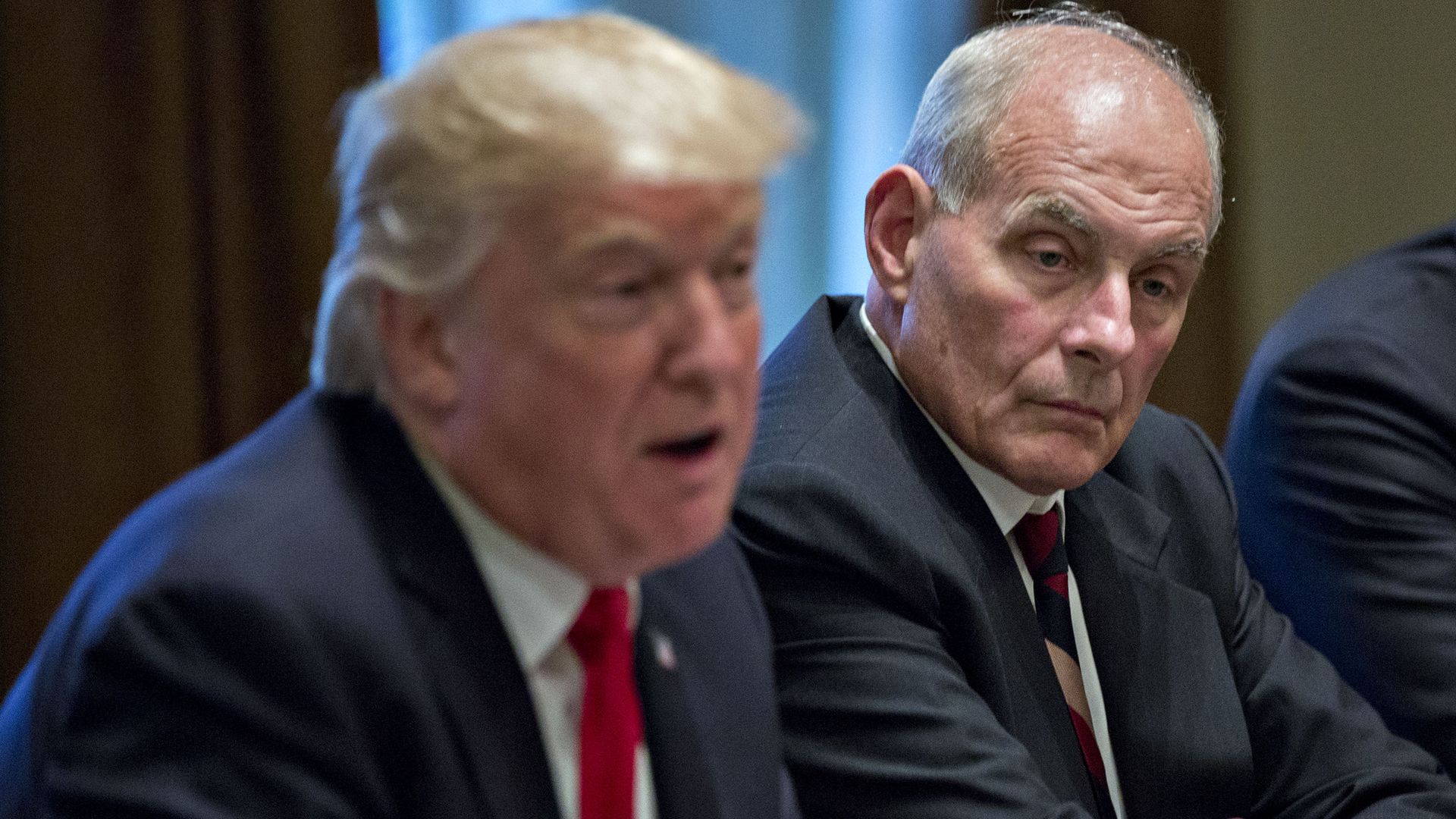
Here’s the picture I’ve formed of White House Chief of Staff John Kelly, based on dozens of conversations over the past weeks with senior officials in the Trump administration.
Why it matters: In his 5 months as chief of staff, Kelly has successfully brought a measure of control to the West Wing but has failed to build deep alliances among much of the senior staff. Last night’s interview on Fox News — where he publicly undercut Trump — provoked the president’s first open break with his chief.
DACA recipients contribute a net $3.4 billion to the U.S. Treasury and $42 billion in annual GDP, according to an Axios review of research from the American Action Forum.
Why it matters: One of the most disputed questions in the debate over the 690,000 Dreamers currently protected by DACA is their impact on the U.S. economy and federal balance sheet. AAF's estimates are among the first to find that deporting all DACA recipients would cost taxpayers between $7 billion and $21 billion and reduce GDP by 0.4%.
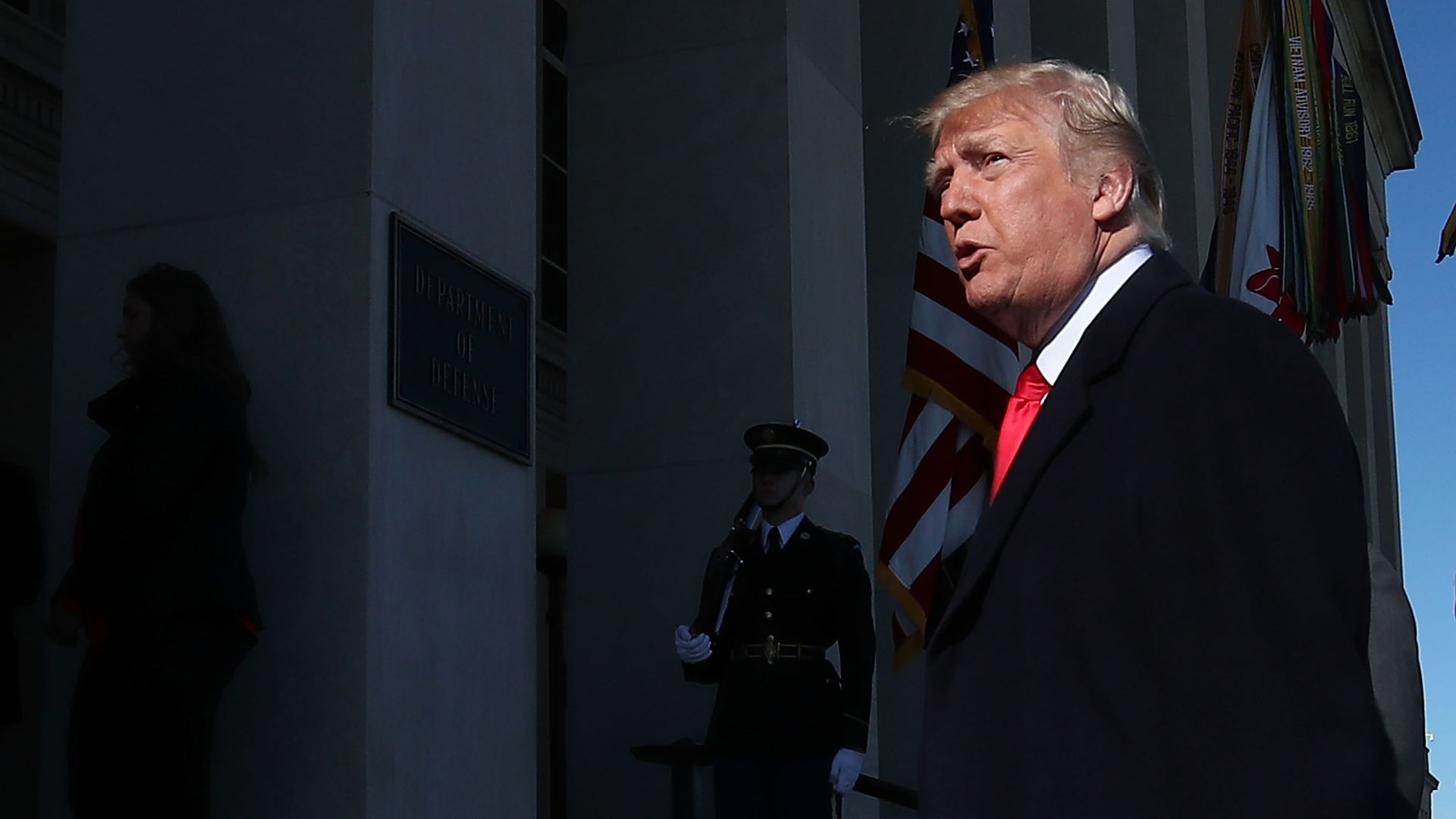
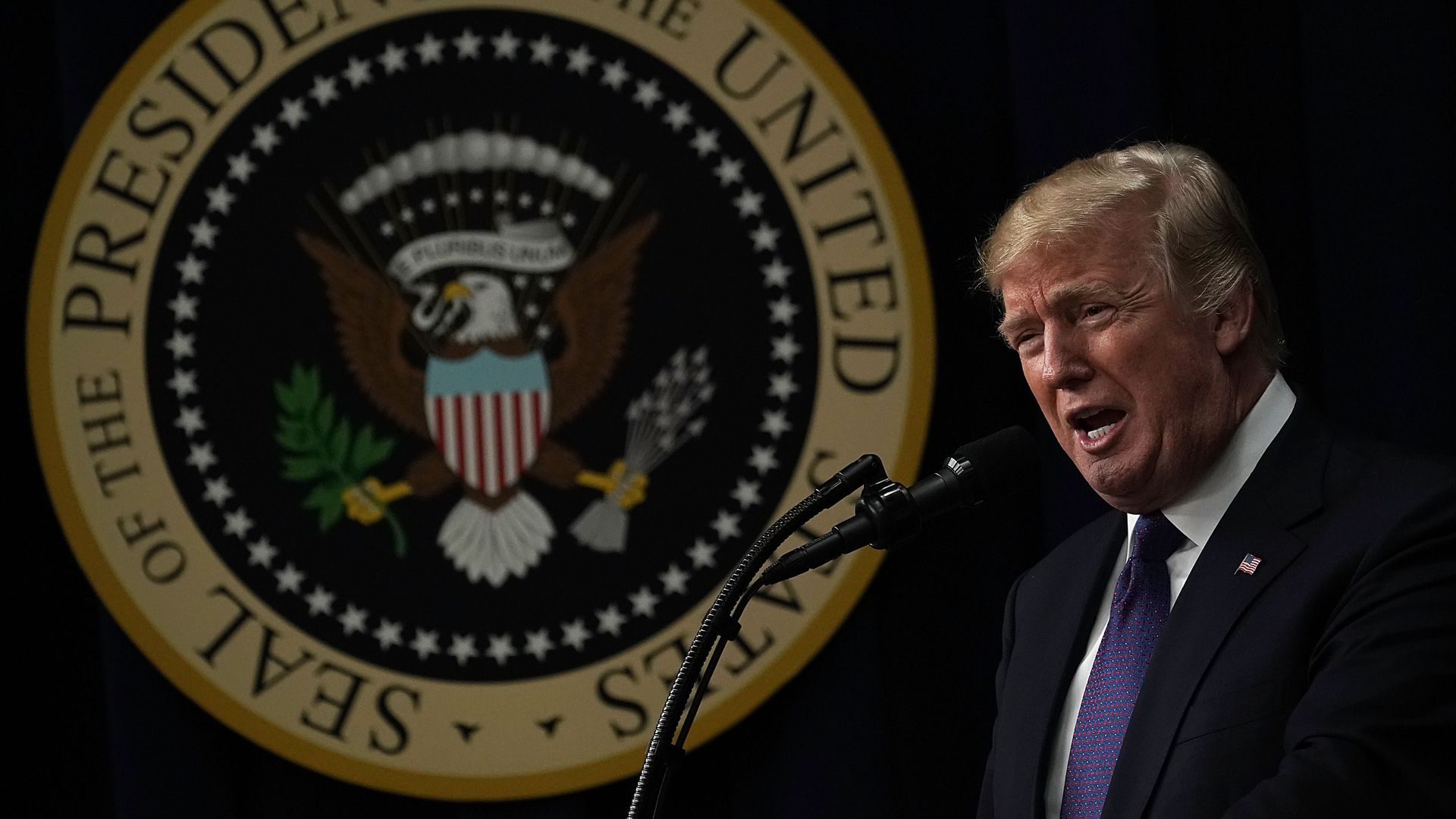
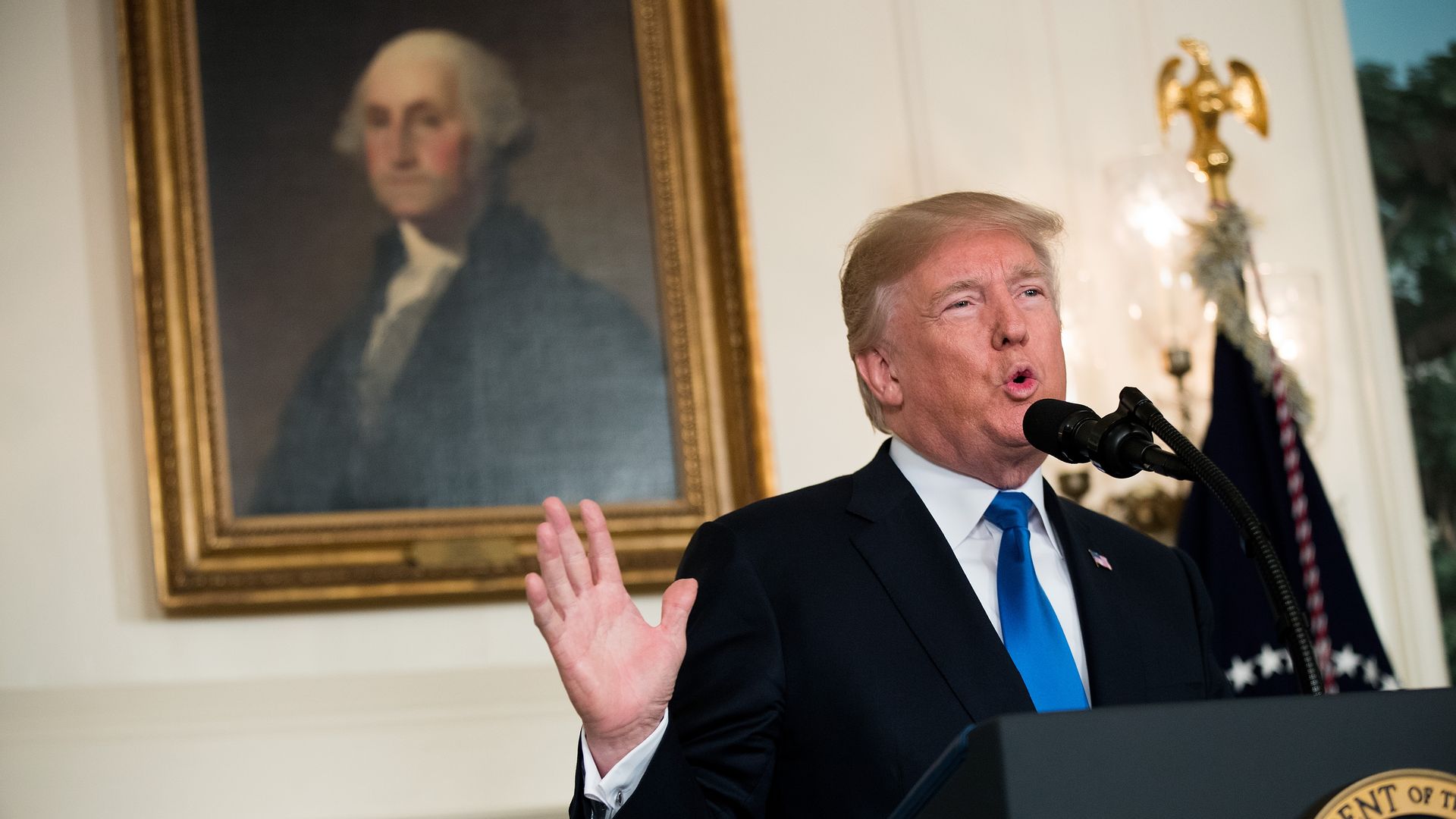
President Trump told the press pool on Thursday that the GOP tax cuts "have not been working well for the Democrats," and they'd "like to see a shutdown in order to get off that subject," according to pool reports.
Why it matters: Congress must pass a continuing resolution (CR) by tomorrow to avoid a government shutdown. To do that, GOP leadership has to satisfy Senate Democrats and the House Freedom Caucus, which Axios' Alexi McCammond and Zachary Basu say seems unlikely, at this point.
How can you have a government shutdown when one party controls both Congress and the White House? If it happens, it will be because Republicans couldn't keep key factions of their party happy or curry favor with Democrats over immigration — not to mention tweets undermining the negotiations from President Trump himself.
The bottom line: In order to pass the continuing resolution (CR) that will fund the government past its Friday deadline, GOP leadership must win over two key contingents: Senate Democrats and members of the House Freedom Caucus. Right now, it's hard to see the path that would allow them to satisfy both.
President Trump has often been his own worst enemy when it comes to his public image. He'll criticize the media for distracting from his administration's accomplishments, but in reality he's the man at the center of it all who's dictating the news cycle.
Imagine if: Trump didn’t call countries "shitholes," taunt his chief of staff over immigration on Twitter, or spend days defending his mental health. The American people might just focus on what's going well.
The Department of Homeland Security will no longer allow Haitian farmers and other laborers to be eligible for temporary agricultural and seasonal visas under the federal H-2A and H-2B guest worker programs, CNN reports.
Why it matters: The administration has also removed Belize and Samoa from the list of countries eligible for temporary working permits. However, the decision to include Haiti comes a week after the President reportedly referred to Haiti, El Salvador and African nations as “shithole countries."
The details, per CNN: Belize was taken off the list because of human trafficking concerns and Samoa because it fails to accept its nationals after they've been ordered to leave the U.S. As for Haiti, the administration says there has been "high levels of fraud and abuse and a high rate of overstaying" after visas expire.
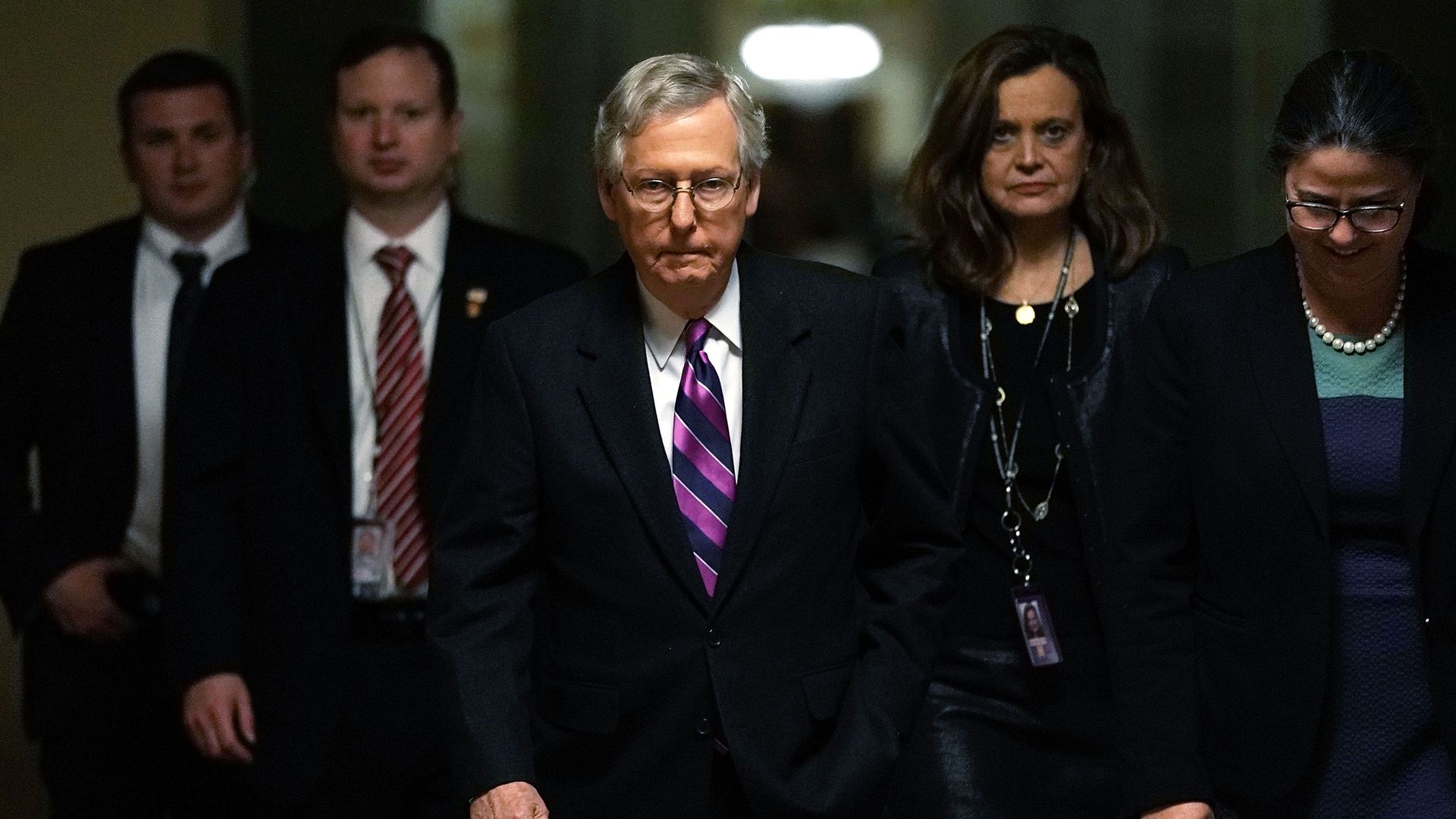
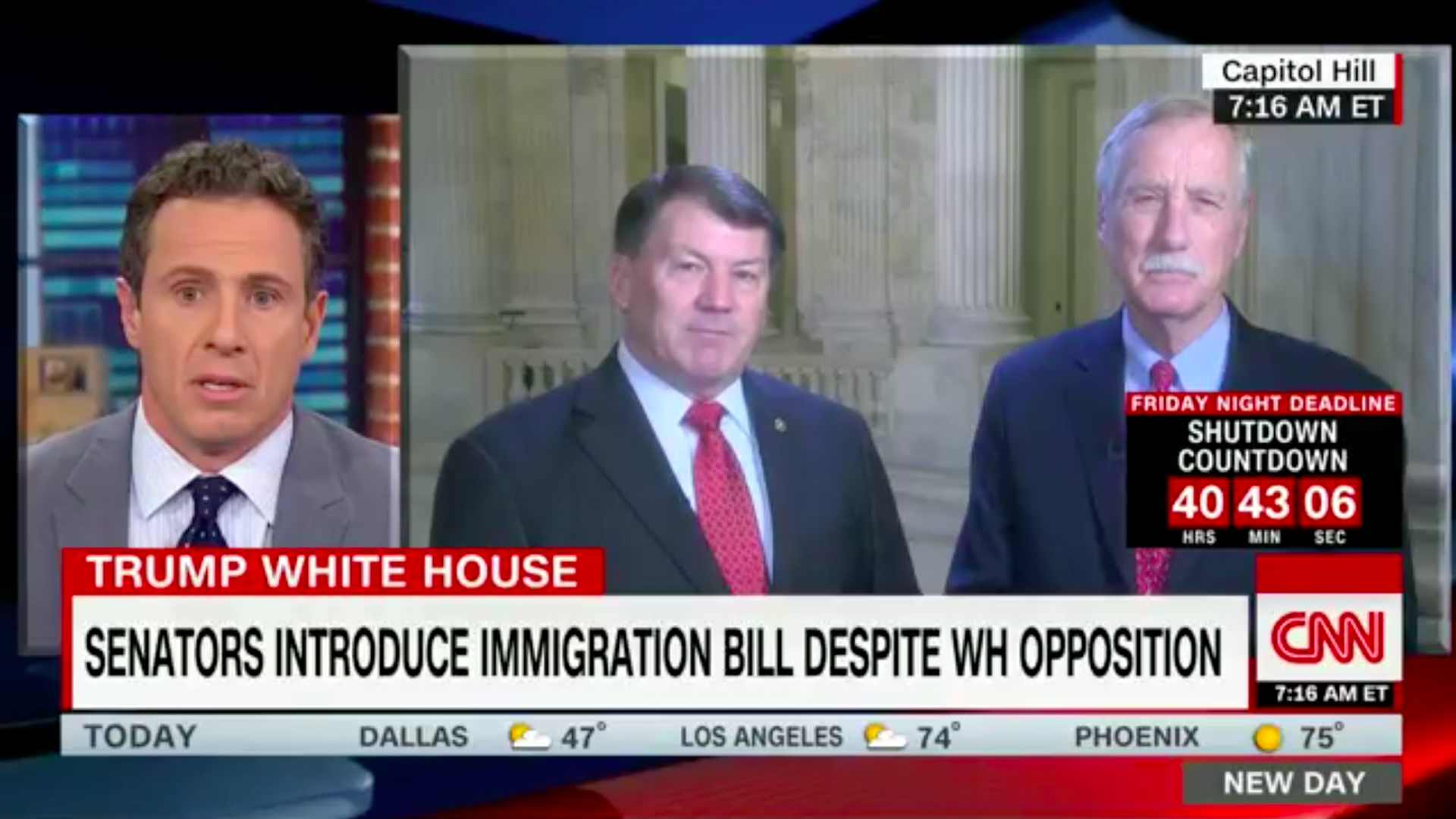
Republican Sen. Mike Rounds and independent Sen. Angus King announced they would not vote for the short-term funding bill, or continuing resolution (CR), on CNN's "New Day" this morning.
Why it matters: The Senate no longer has even 50 Republicans to vote to keep the government funded past tomorrow's deadline. In theory, all Senate Republicans and at least 10 Democrats would be needed to pass the bill.
The Information Technology Industry council, a major tech lobby, sent a letter last night to the U.S. Citizenship and Immigration Services calling for the H-4 visa rule to be upheld.
Why it matters: USCIS is expected to end the H-4 work eligibility program, which allows the spouses of H-1B holders with pending green cards to legally work in the U.S.
"Trump’s Chief of Staff John Kelly told Fox News ... the White House did not tell former Trump chief strategist Steve Bannon to invoke executive privilege in closed testimony before Congress on its probe of alleged Russian meddling in the 2016 U.S. election," via Reuters.
Bannon's lawyer, Bill Burck, tells Jonathan Swan: "We were told by White House lawyers that Mr. Bannon was not authorized to speak about his time on the transition or in the White House until the Committee and the White House agreed on the proper scope of questioning. ... Perhaps [Kelly is] saying that the White House did not ask Mr. Bannon to invoke executive privilege in the formal legal sense."
President Trump reverted to some vintage rhetoric about his long-promised border wall in a series of morning tweets: "The Wall is the Wall, it has never changed or evolved from the first day I conceived of it."
Why it matters: He's likely responding to the front page of the New York Times, which features a report that Chief of Staff John Kelly privately told a group of members of Congress that Trump had "evolved" on the wall...
Stock markets are at record highs, and recession is nowhere in sight. Yet, the threat to all this exuberance — rising international tensions and instability — arguably looks greater than any years since last century's great wars. This is the core of my six geopolitical forecasts for 2018.
Quick take: What stands out is the brittleness of politics across the planet — in Iran, the Korean peninsula, Russia and Saudi Arabia, to name a few flash points. A wrongly lit match involving any of them could turn disastrous.
Republicans are pleased with the immediate aftermath of their tax law, citing a long string of bonus and wage increase announcements as evidence that it's helping the middle class. This clashes with Democrats' insistence that the tax bill is a handout to the wealthy.
Why this matters: Both parties have 11 months to convince voters their narrative about the tax bill is correct. While the law is still unpopular, its approval numbers are improving. And Republicans feel confident that the upcoming increase in take-home wages — which the vast majority of Americans are expected to receive — will change some minds.
There are reasons to dislike the Iran nuclear deal, which has suspended but in no way resolved the challenges posed by Iran’s nuclear program. But since the agreement is widely embraced and Iran has complied with it, one-sided efforts to negotiate away its flaws are likely to come to naught.
When next called to certify the deal in May, President Trump will either act unilaterally to blow it up, creating a crisis that isolates the United States and deflects attention from Iran’s repression of its citizens, or again fail to make good on his threat, at the expense of his credibility. The high stakes transcend Iran, weakening our negotiating position with North Korea in the first case or our power of coercion in the second.
What’s next: North Korea’s nuclear threat is actual and immediate; Iran’s is potential and 10 to 15 years off. Rather than force an immediate showdown, Trump should begin talks with the Europeans and then China and Russia about a follow-on pact limiting Iran’s nuclear program. While he’s at it, he might also start some talks with North Korea.
Richard Haass is the president of the Council on Foreign Relations and the author, most recently, of "A World in Disarray."