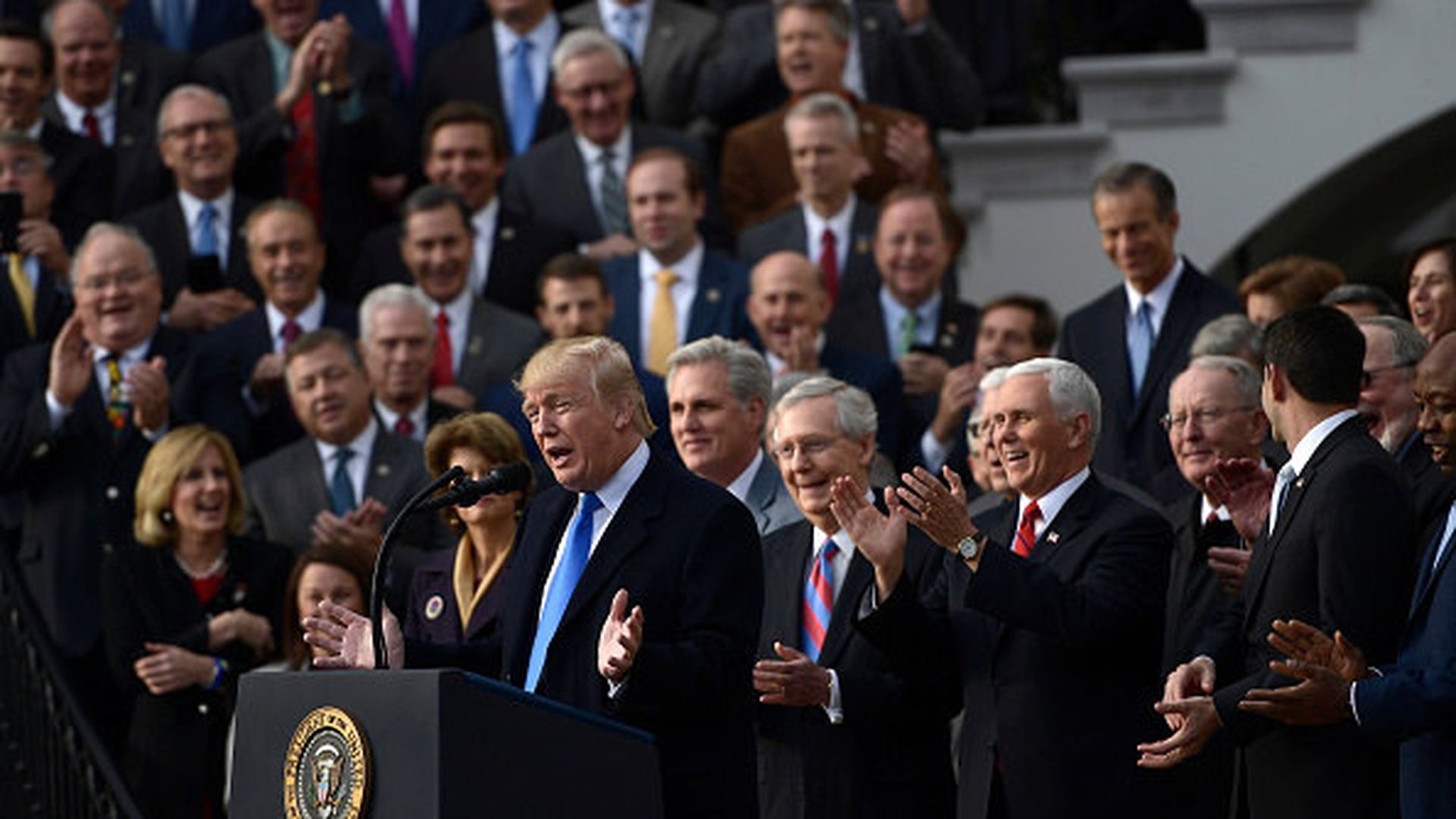
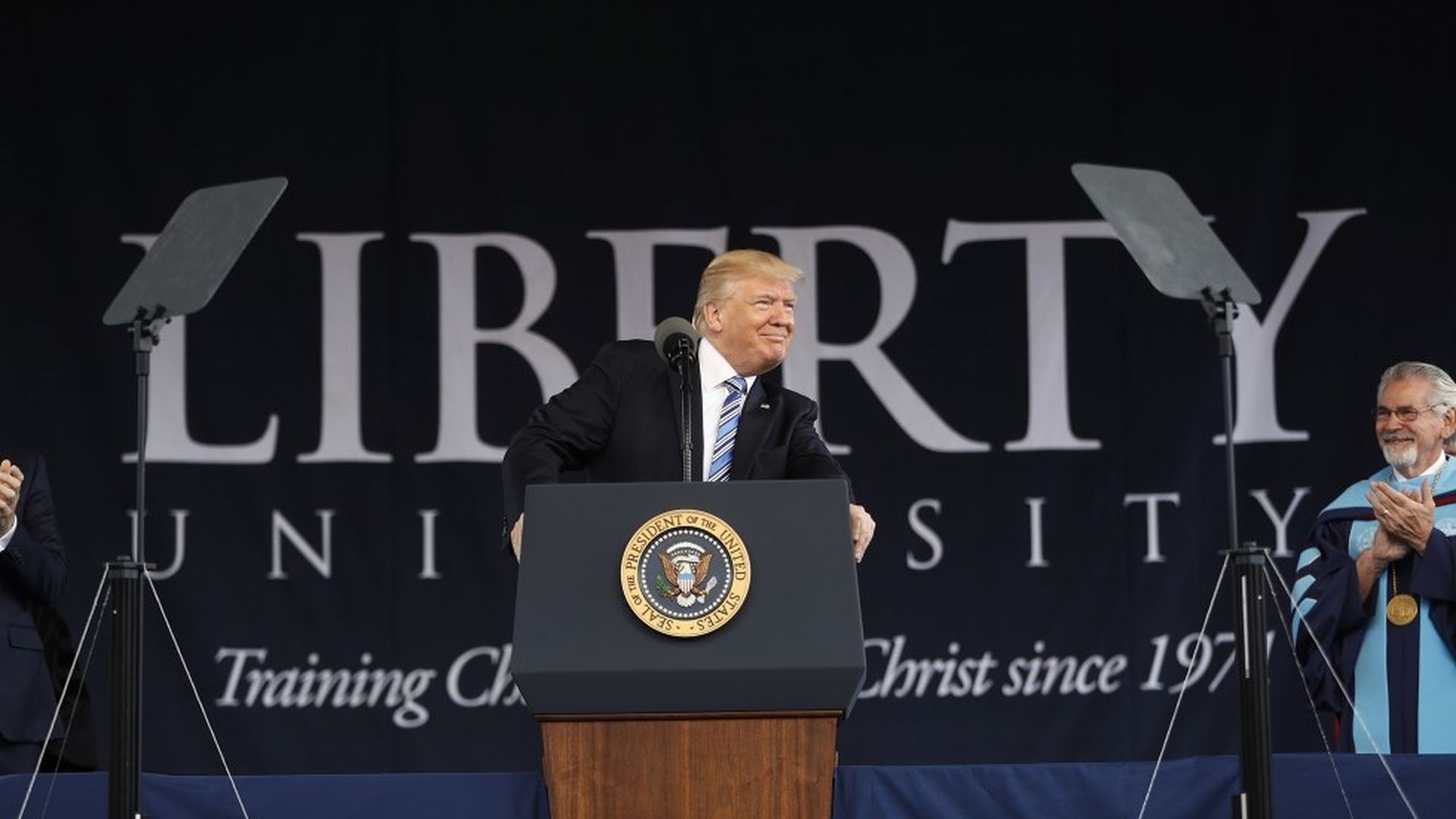
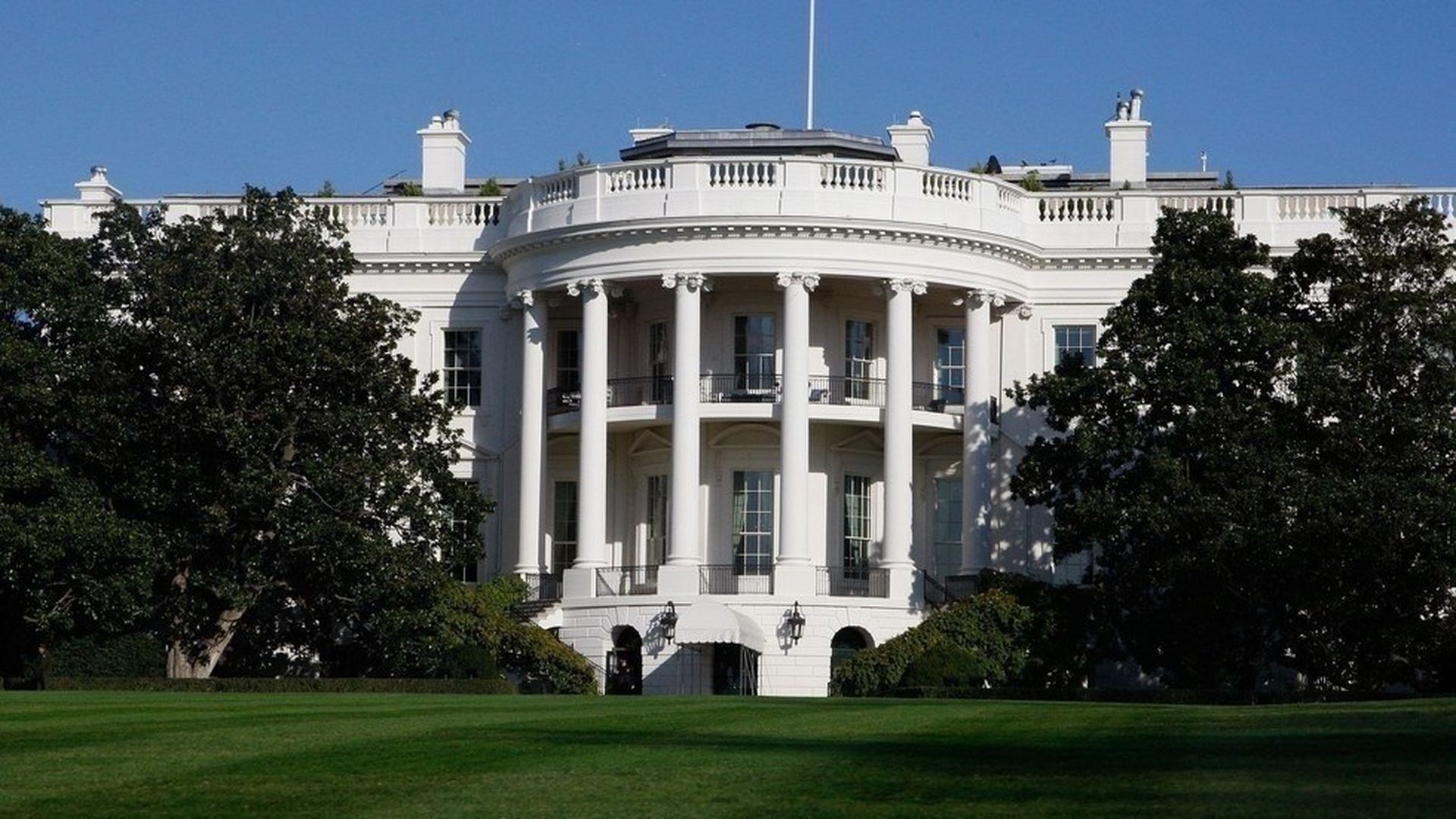
President Trump and Vice President Mike Pence walked onto the South Lawn of the White House Wednesday to cheers and fist pumps before delivering a congratulatory speech on the passage of the GOP tax bill.
Trump, rattling off several names of the people who played a role in the passage of "the largest tax cut in the history of our country," said he "had a lot of fun" working with leadership to get this done. It was fun because "we won."
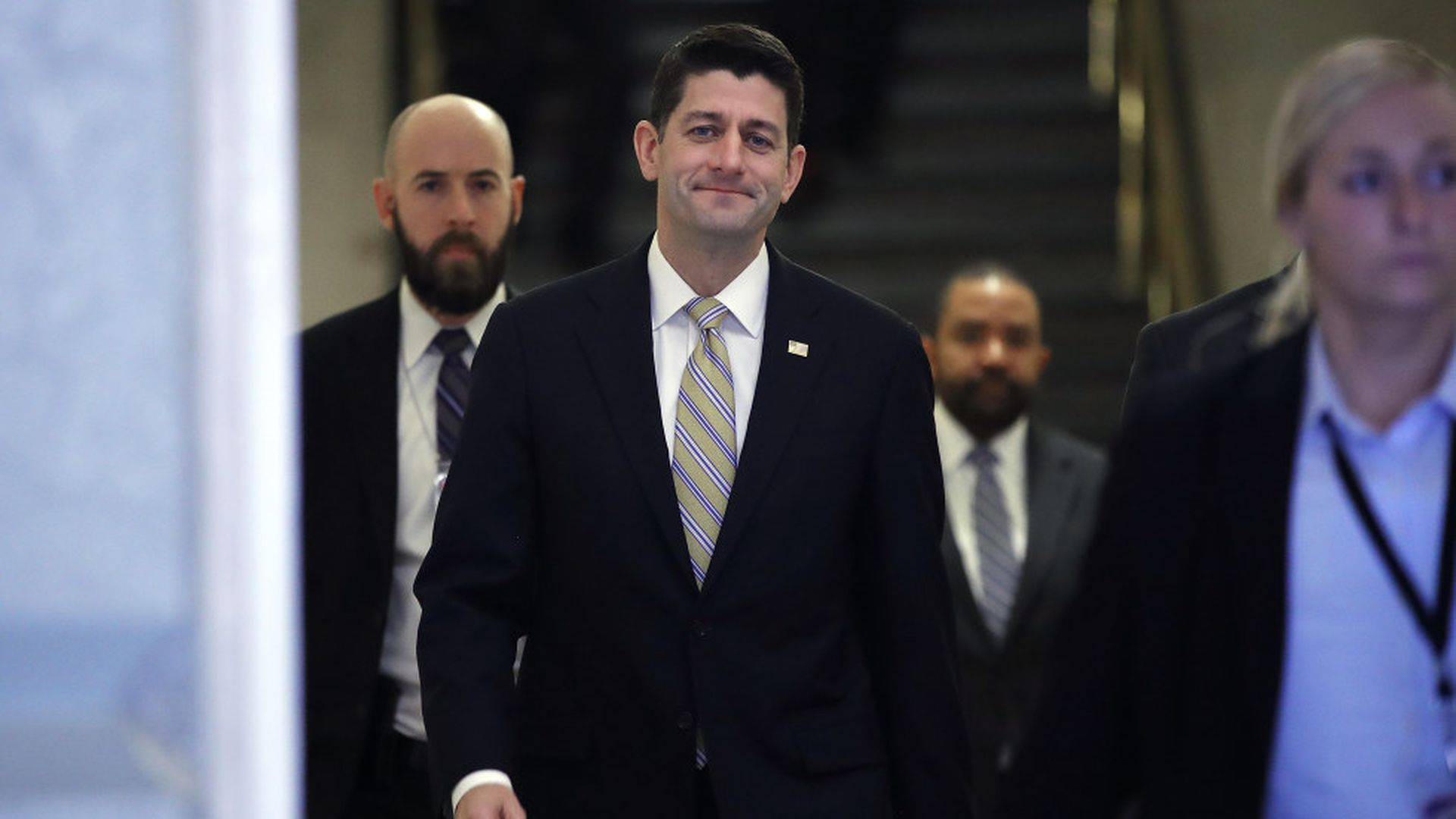
The House just passed the tax bill in a final vote after a procedural hiccup relegated the bill back to the floor for a second vote. The Senate passed the bill early Wednesday morning along party lines.
What it means: The tax bill is on its way to President Trump's desk now, slating the tax overhaul package to take effect in the new year. This sets up the GOP for its first major legislative win in Trump's first year as president.
The Treasury Department has designated five individuals under the Magnitsky Act, including Chechen leader Ramzan Kadyrov. With these first designations under the Trump administration, that brings the total number of people targeted under the act to 49.
What it does: The Magnitsky Act targets those who abetted or benefitted from the detention and death of Russian whistleblower Sergei Magnitsky and those who commit human rights offenses against other would-be Russian whistleblowers, preventing them from doing business with any American financial institution and prohibiting them from traveling to the United States.
MSNBC's Stephanie Ruhle went after Congressman Chris Collins (R-NY) Wednesday, one of the 227 Republicans who voted "yes" on the tax bill, for struggling to answer why the GOP hasn't closed the carried interest loophole.
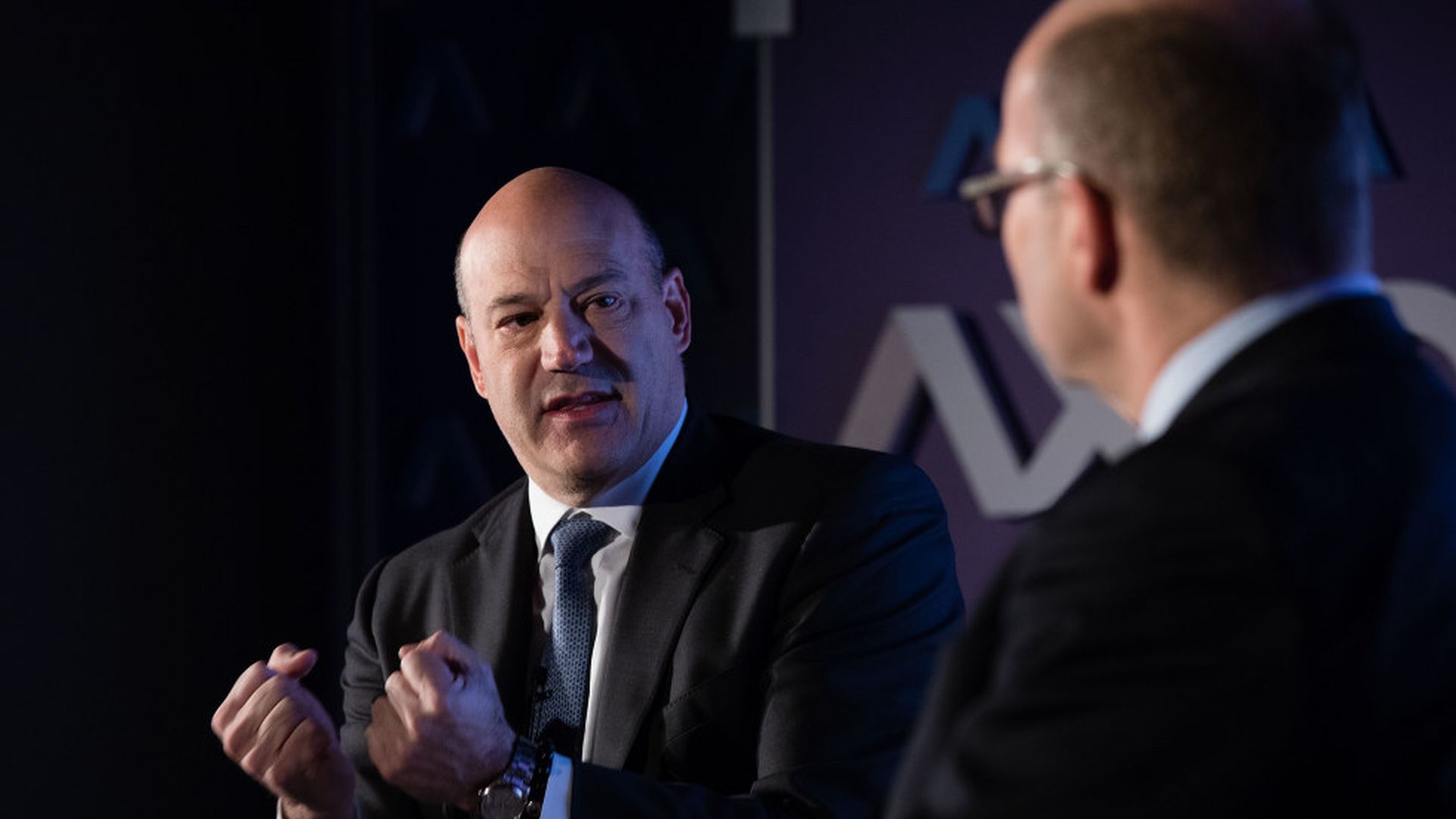
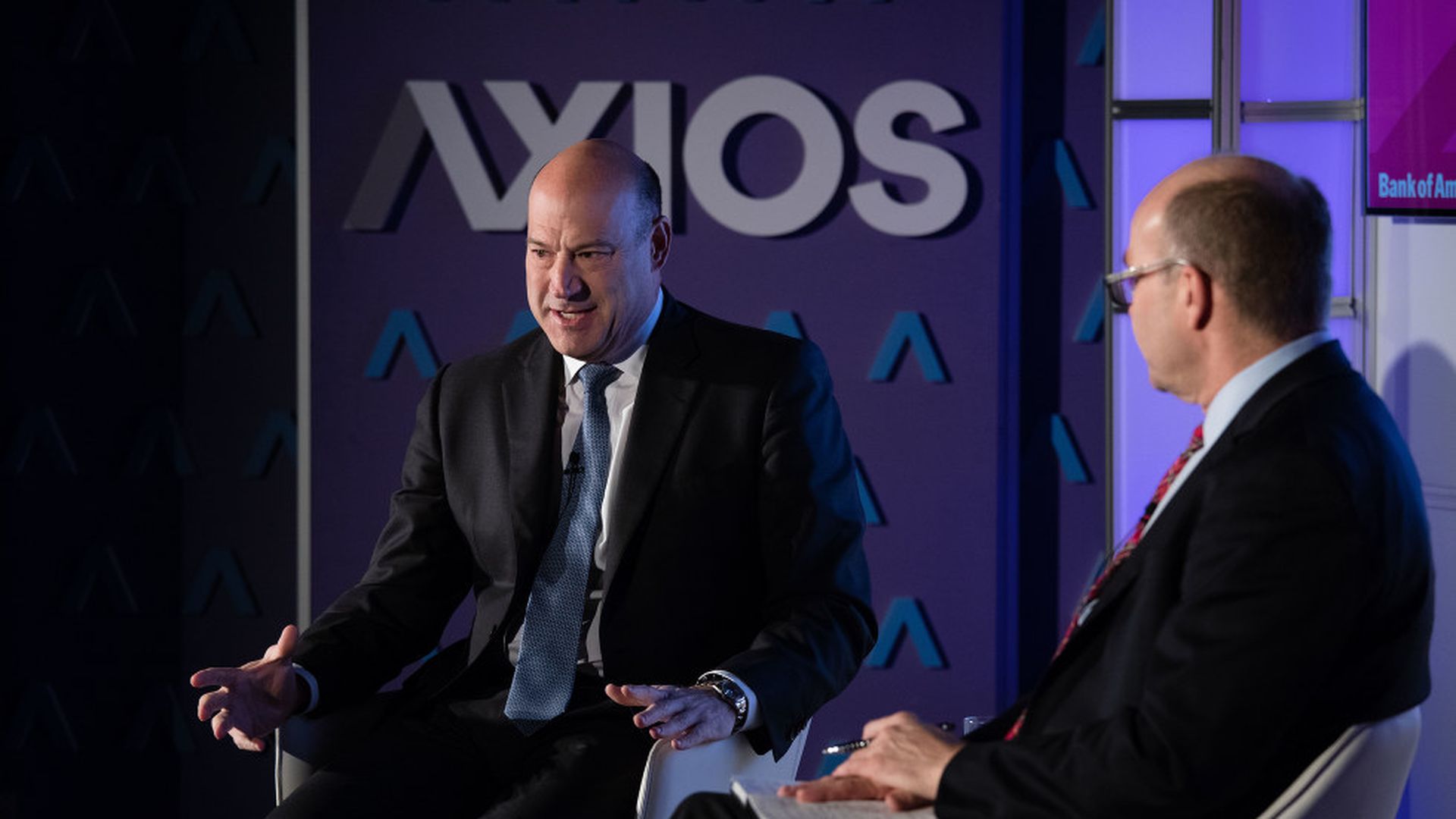
The big question: Ruhle pointed to this morning's Axios event, where Gary Cohn told Mike Allen that the White House tried 25 times to get rid of the loophole, but the Hill fought to keep it. "Who supports it?" Ruhle asked.
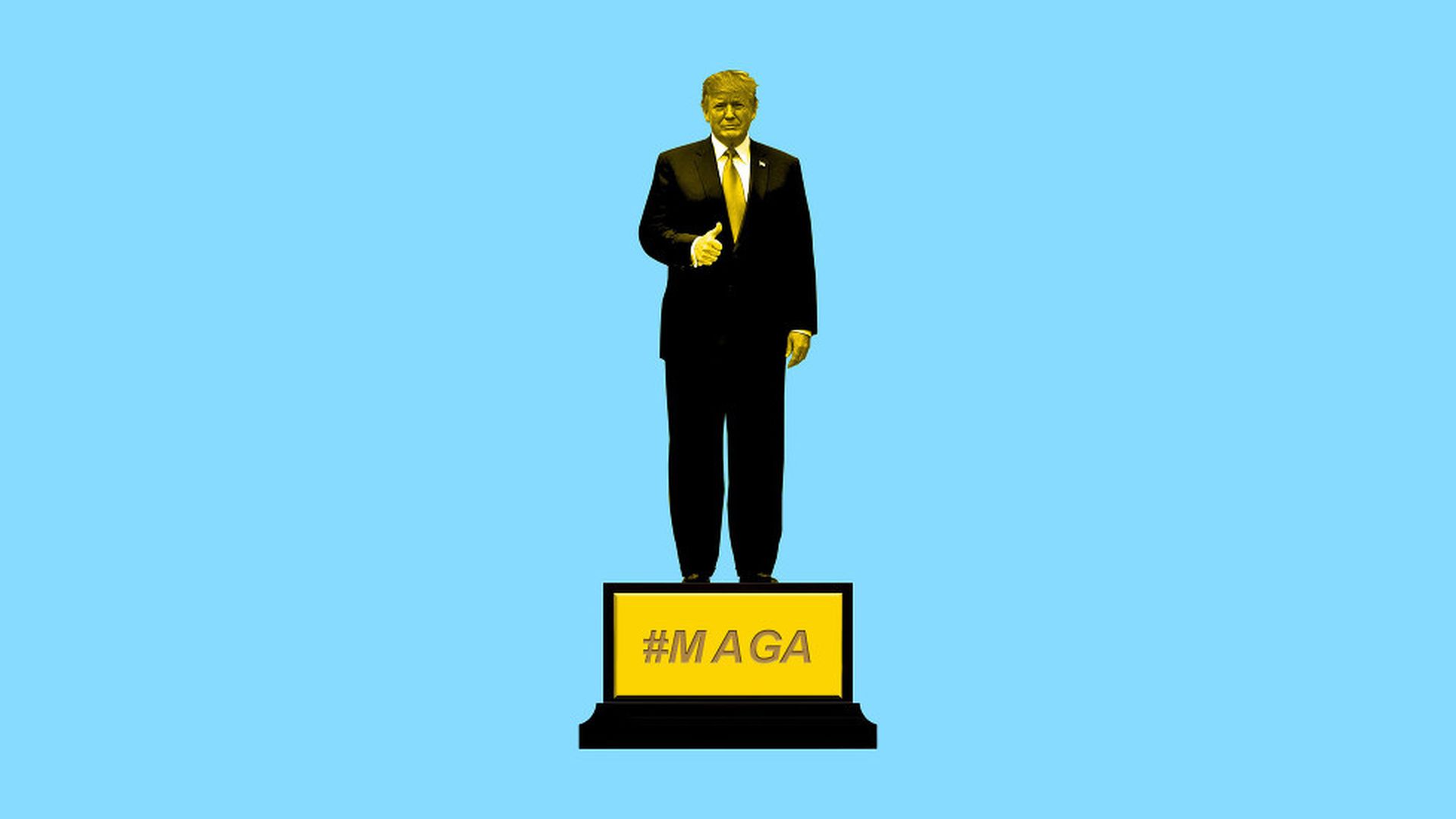
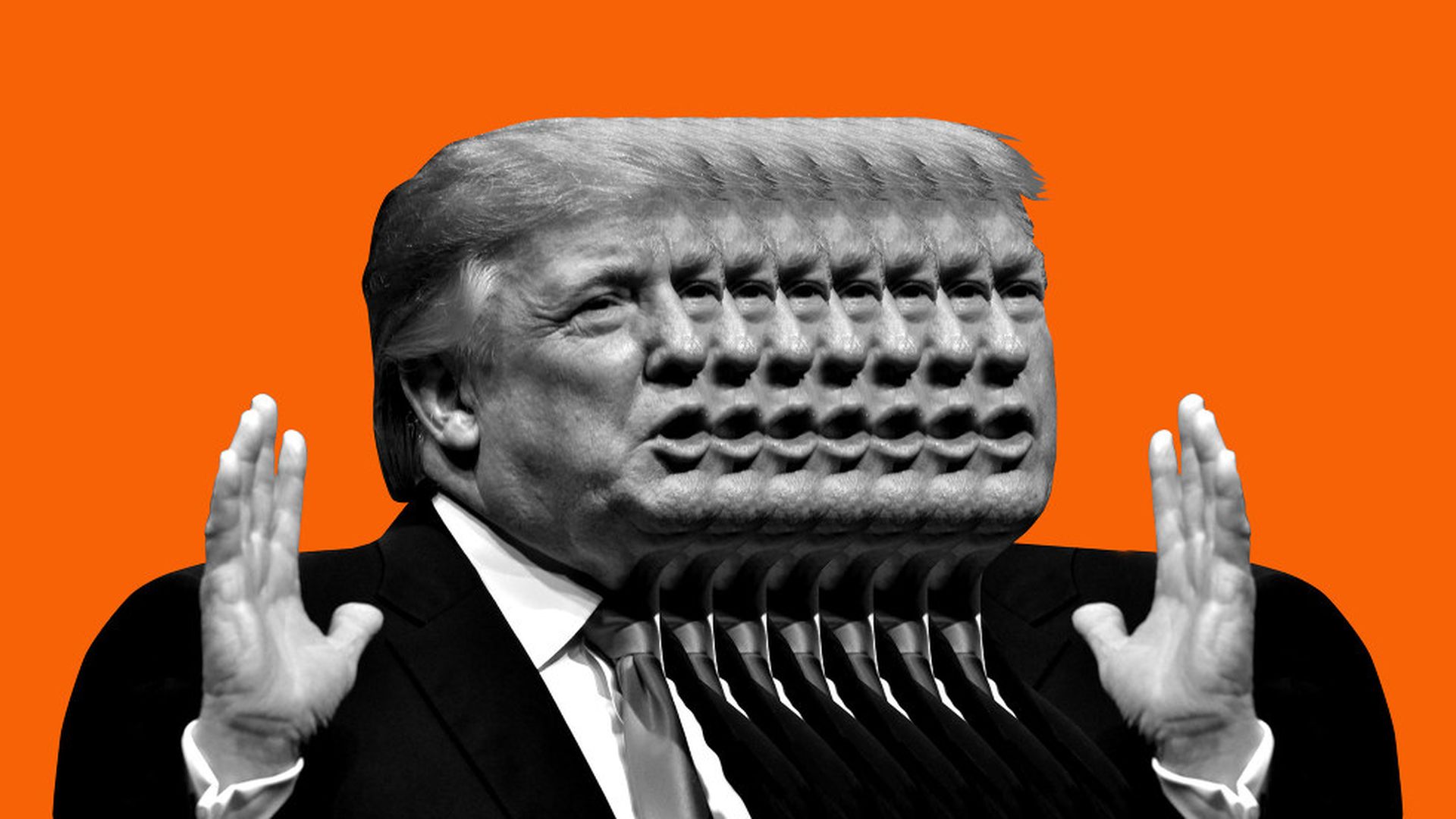
President Trump takes a beating in the media, but he's ending 2017 on the high note of his presidency.
The big picture: You might not like his words or actions. But measured in terms of what Republican voters want and expected, he's winning on important fronts:
Trump's National Economic Council Director Gary Cohn told Mike Allen that tunneling can "revolutionize" transportation. "The tunneling technology today is so superior and so quick," Cohn said, adding that he thinks the U.S. needs to prepare for automated technologies, such as automated cars, to change transportation.
Why it matters: Up next on Trump's agenda after the tax overhaul is infrastructure spending, which Cohn said could top a $1 trillion price tag.
Gary Cohn, Trump's Director of the National Economic Council, told Axios' Mike Allen at an Axios News Shapers event that he thinks the stock market highs are driven by economic growth, not the tax bill.
The big quote: "I think there's a lot more momentum in the stock market," Cohn said, pointing out that he thinks that "tax cuts are not priced in."
Last night the Human Rights Campaign, which advocates for LGBTQ equality, projected the Centers for Disease Control and Prevention (CDC) banned words — including "transgender" and "fetus" — on the Trump International Hotel in Washington.
Tim Keller —founder and Pastor Emeritus of the Redeemer Presbyterian Churches of New York City, and one of the nation's most celebrated evangelical pastors — writes a tough piece for The New Yorker that shot up the "Most Popular" list ... "Can Evangelicalism Survive Donald Trump and Roy Moore?":
The kicker: "People who once called themselves the 'Moral Majority' are now seemingly willing to vote for anyone, however immoral, who supports their political positions."
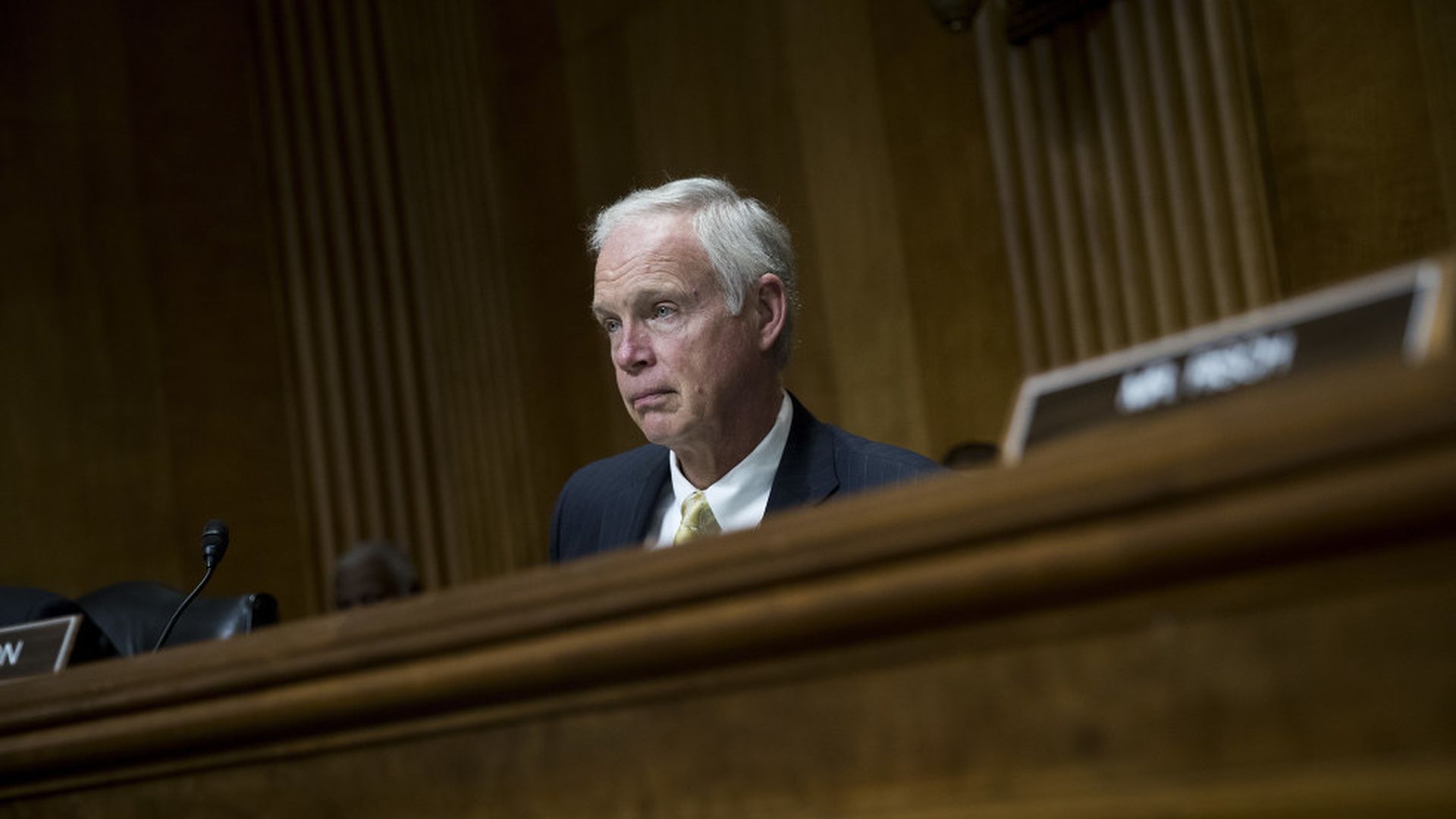
Republican Senator Ron Johnson is asking the Government Services Administration why it didn't "protect" Trump transition emails. "GSA's alleged actions could have serious ramifications for presidential transitions in the future," he wrote to the head of the GSA.
Why it matters: Axios' Mike Allen has reported that Mueller obtained "many tens of thousands" of Trump transition emails from the GSA, which hosted the transition email system. Trump's lawyers have called collection of the emails by Mueller "unlawful."
Because of a procedural conflict with Senate rules, the House will have to vote again on tax legislation tomorrow before it goes to President Trump for his signature. This hiccup isn't expected to imperil final passage.
The Trump administration Monday night asked the Supreme Court to grant a two-week stay on one of the rulings that had ordered the government to allow two undocumented immigrant teens in federal custody to have an abortion, multiple reports say. A judge had ordered the government to permit the abortions as soon as Tuesday evening, but this was delayed by the D.C. Circuit last night for 24 hours until roughly 6pm Dec. 20.
The Supreme Court has not yet responded.
Why it matters: This move by the administration has reignited a legal battle over the constitutional rights of pregnant, undocumented teenagers in federal custody who seek an abortion.
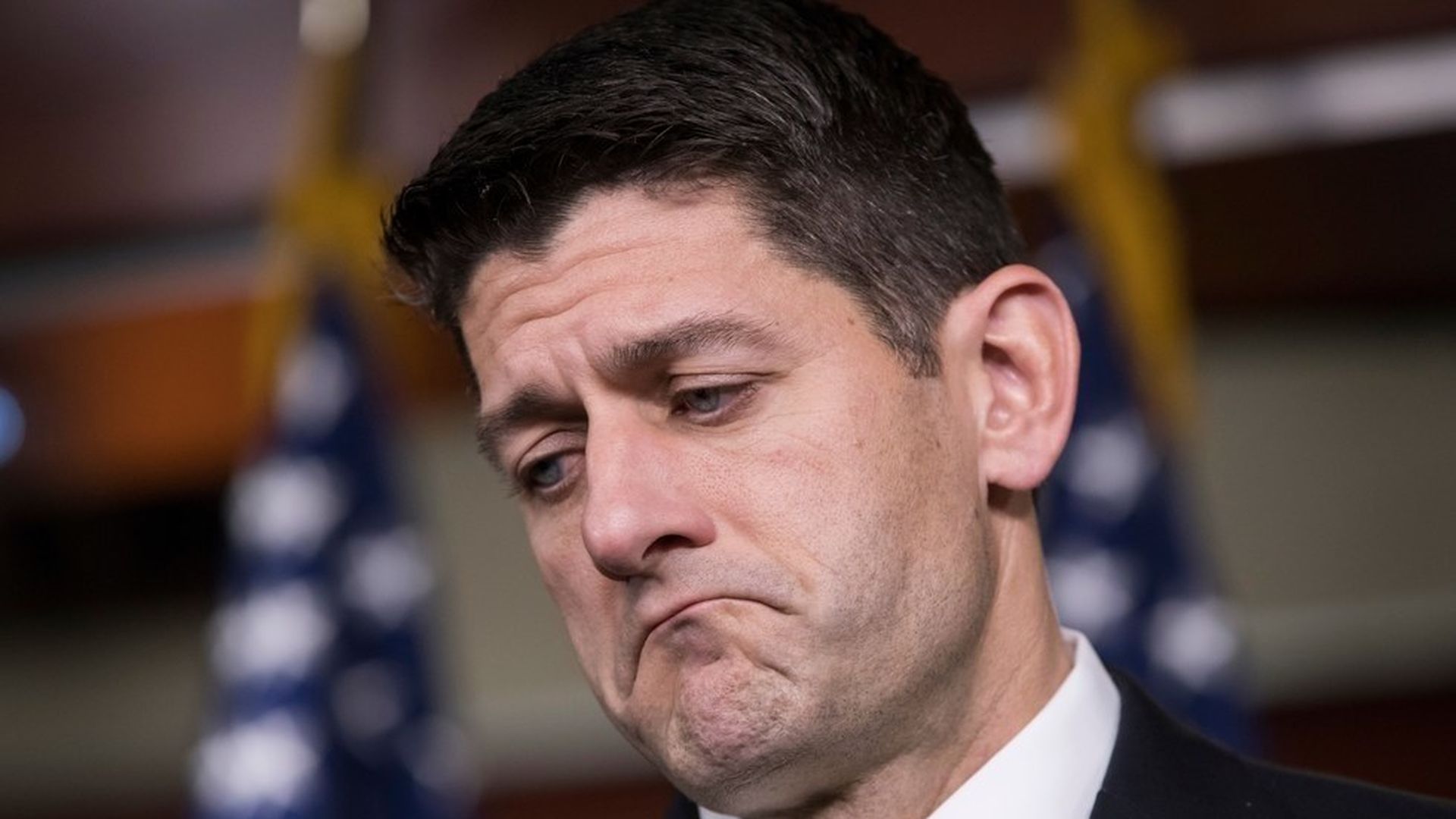
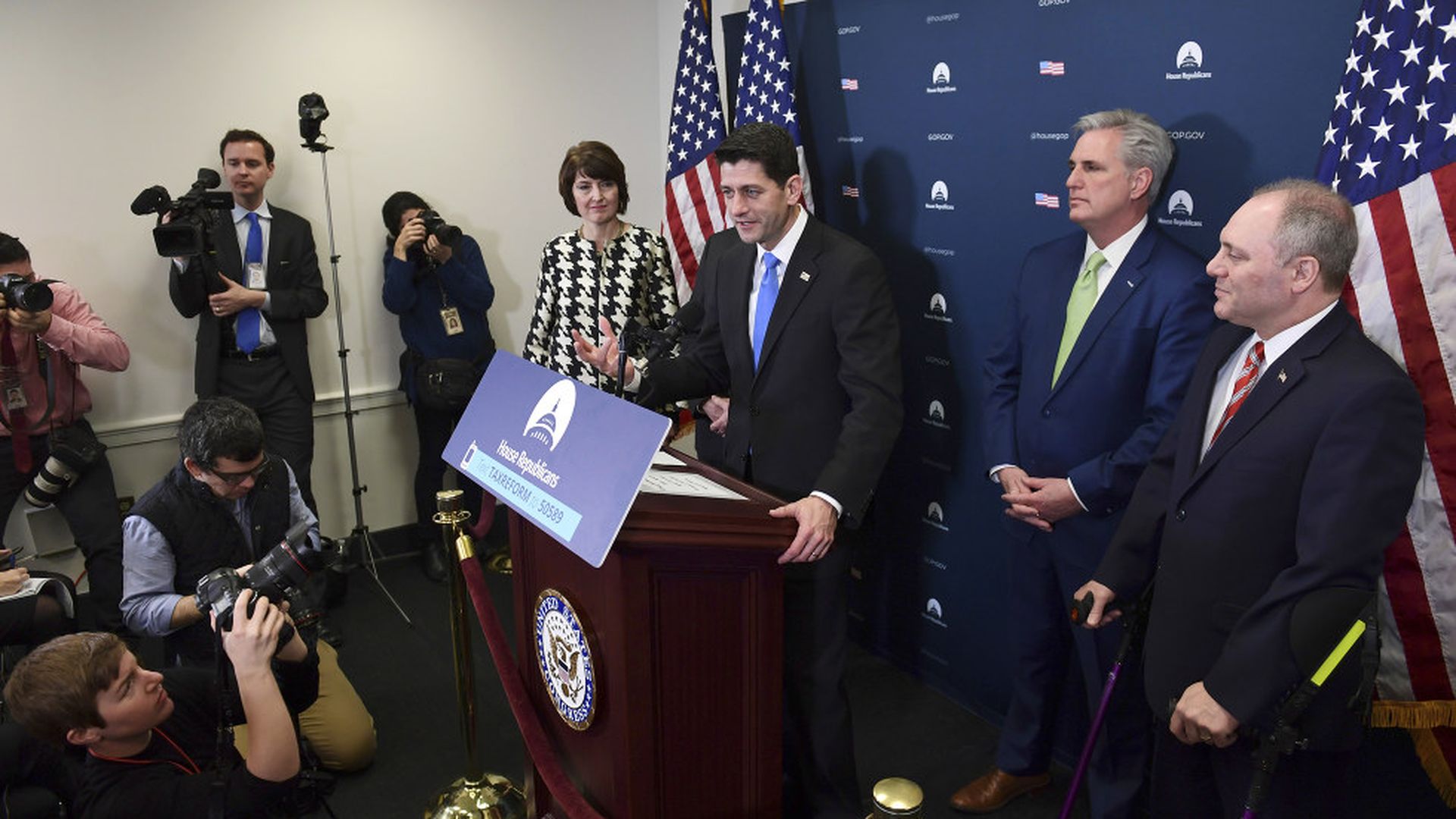
The House passed the GOP tax bill Tuesday, clearing the way for the package to be signed into law before Christmas.
What's next: The bill is now headed to the Senate. If it passes there, it will then be sent to President Trump's desk for his signature.
Update: The House will have to vote on the bill again tomorrow because some small provisions were found to violate Senate rules. Final passage isn't imperiled.
Sometime tomorrow, the biggest rewrite of the tax code since 1986 is likely to be on its way to President Trump's desk after final approval by the House and Senate. These are the biggest changes on the way.
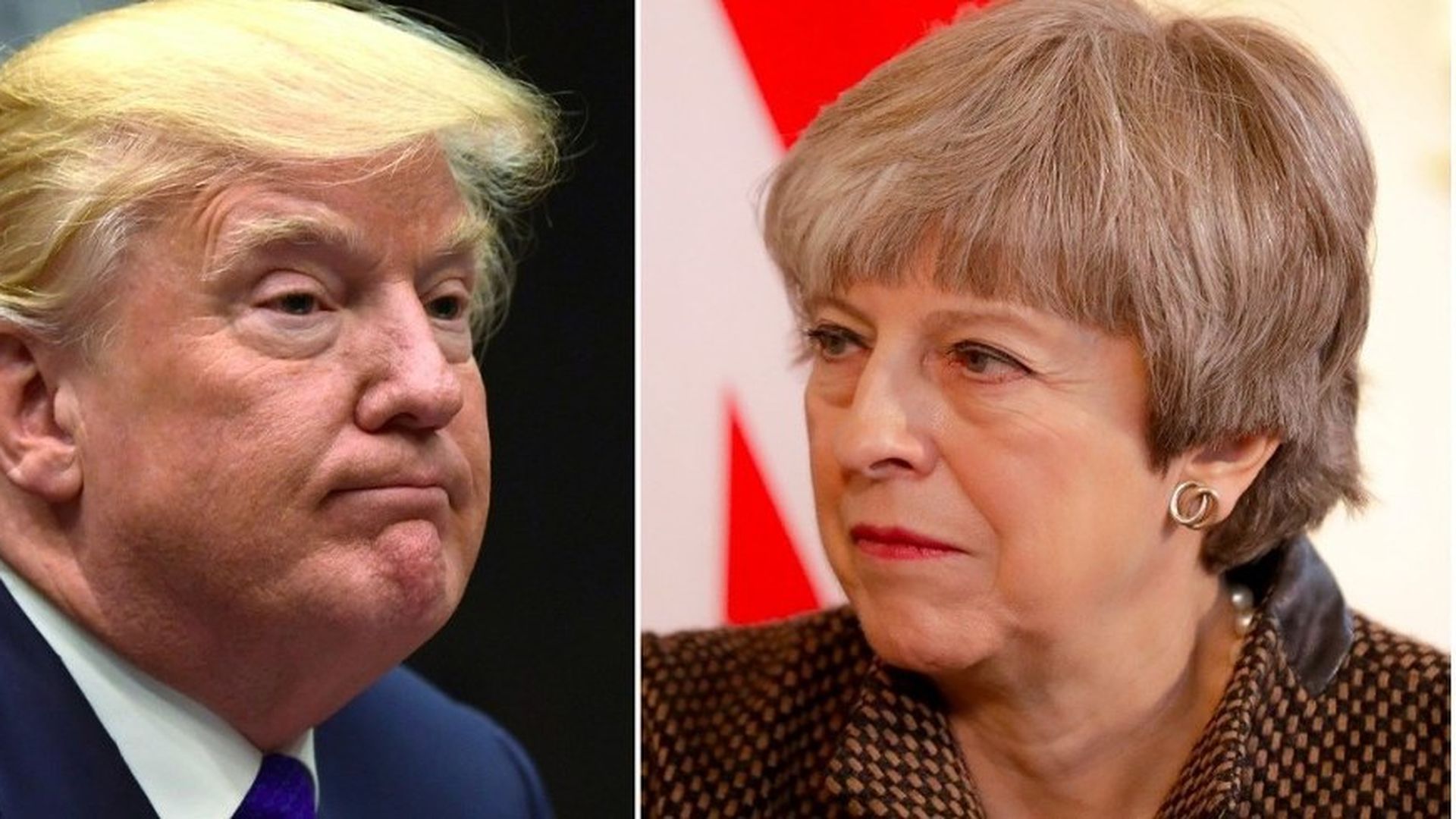
President Trump and British Prime Minister Theresa May spoke over the phone Tuesday for the first time since she criticized Trump for retweeting anti-Muslim hate videos from British far-right leader Jayda Fransen last month, a White House official told AP.
Background: May's condemnation of Trump was an extraordinarily rare move for a British prime minister, and sparked backlash from the president who sent an angry tweet in response. A White House official said the tweets were not discussed during their call.
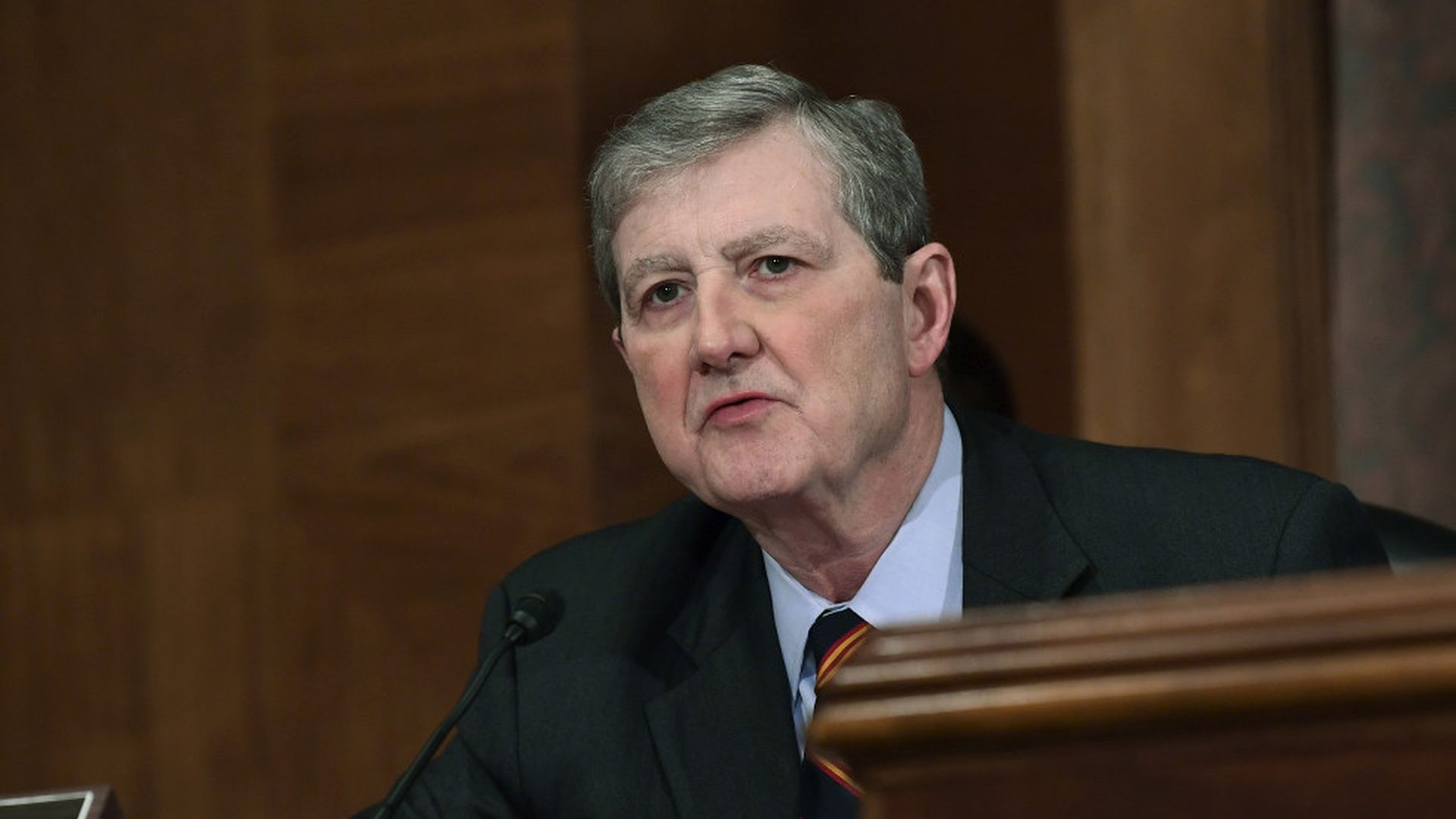
After Sen. John Kennedy's round of questioning on basic legal questions for Matthew Petersen, one of Trump's judicial appointees, he withdrew his nomination. Sam Stein writes on The Daily Beast: "Political humiliations like these don't often happen in public view, let alone at the hands of a member of the same political party of the nominating administration."
Why it matters: "Kennedy was trying to send a larger message here. And it wasn't meant for Petersen but for the man chiefly responsible for his now-withdrawn nomination: White House Counsel Don McGahn."
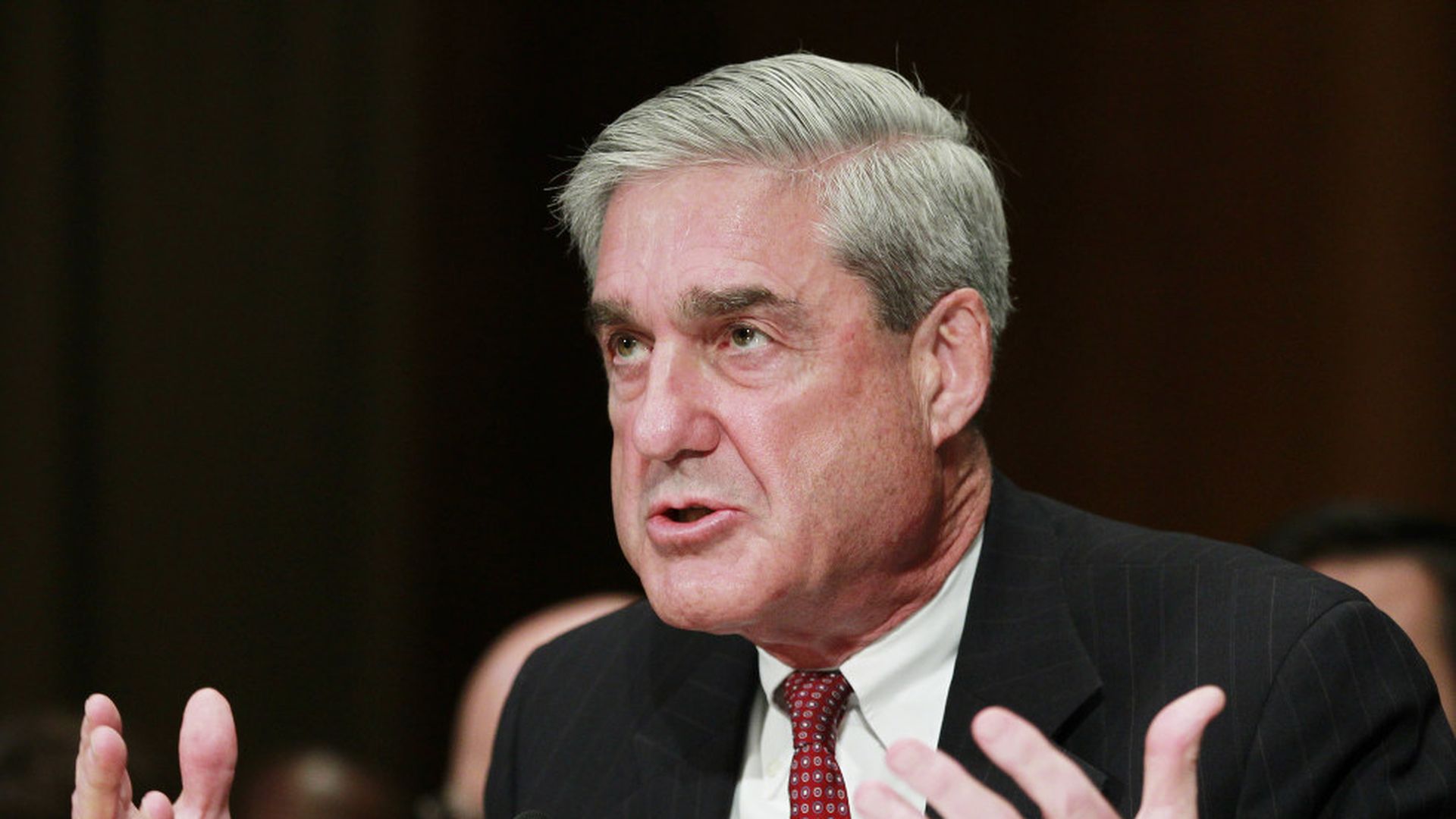
Members of Special Counsel Robert Mueller's team say the Russia probe will at least continue through 2018, the Washington Post reports.
Why it matters: White House lawyers had said the probe would be complete this year. When they meet with Mueller's team this week, the Post reports they hope to hear that the probe is wrapping up and shifting focus away from President Trump. As the investigation continues into the new year, tensions are building between the administration and Mueller's office.
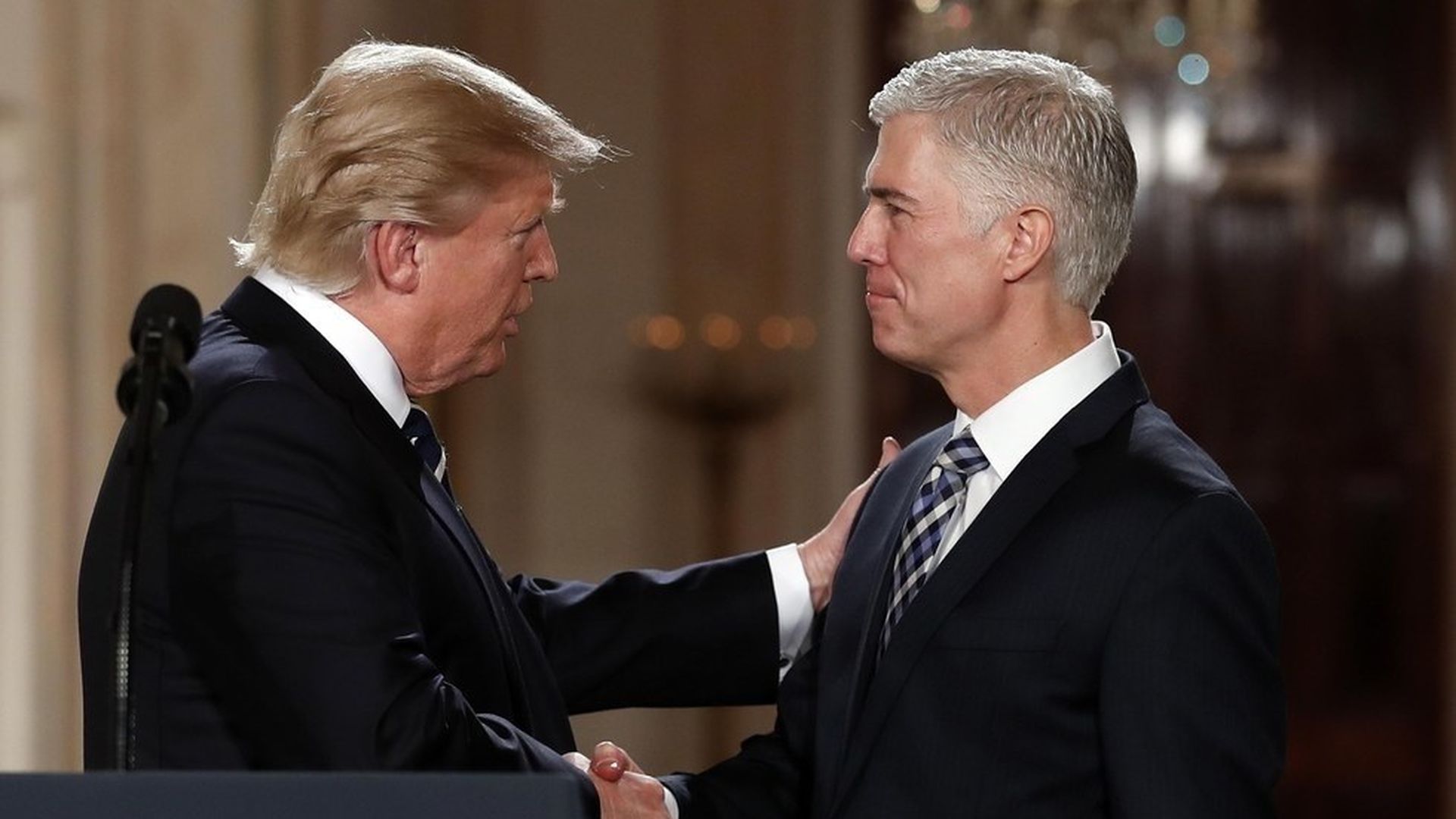
President Trump was so angry at Neil Gorsuch's criticism that he threatened to rescind Gorsuch's nomination to the Supreme Court, the Washington Post reports, citing 11 people familiar with the episode. Trump was reportedly furious about Gorsuch telling a Democratic senator that Trump's attacks on the federal judiciary were "disheartening" and "demoralizing."
Why it matters: The Post reports it's "unclear" whether Trump would actually go through on his threat to scuttle the nomination but some Republicans in Congress and the administration "feared that Gorsuch's confirmation — which had been shaping up to be one of the clearest triumph's of Trump's tumultuous young presidency — was on the verge of going awry."