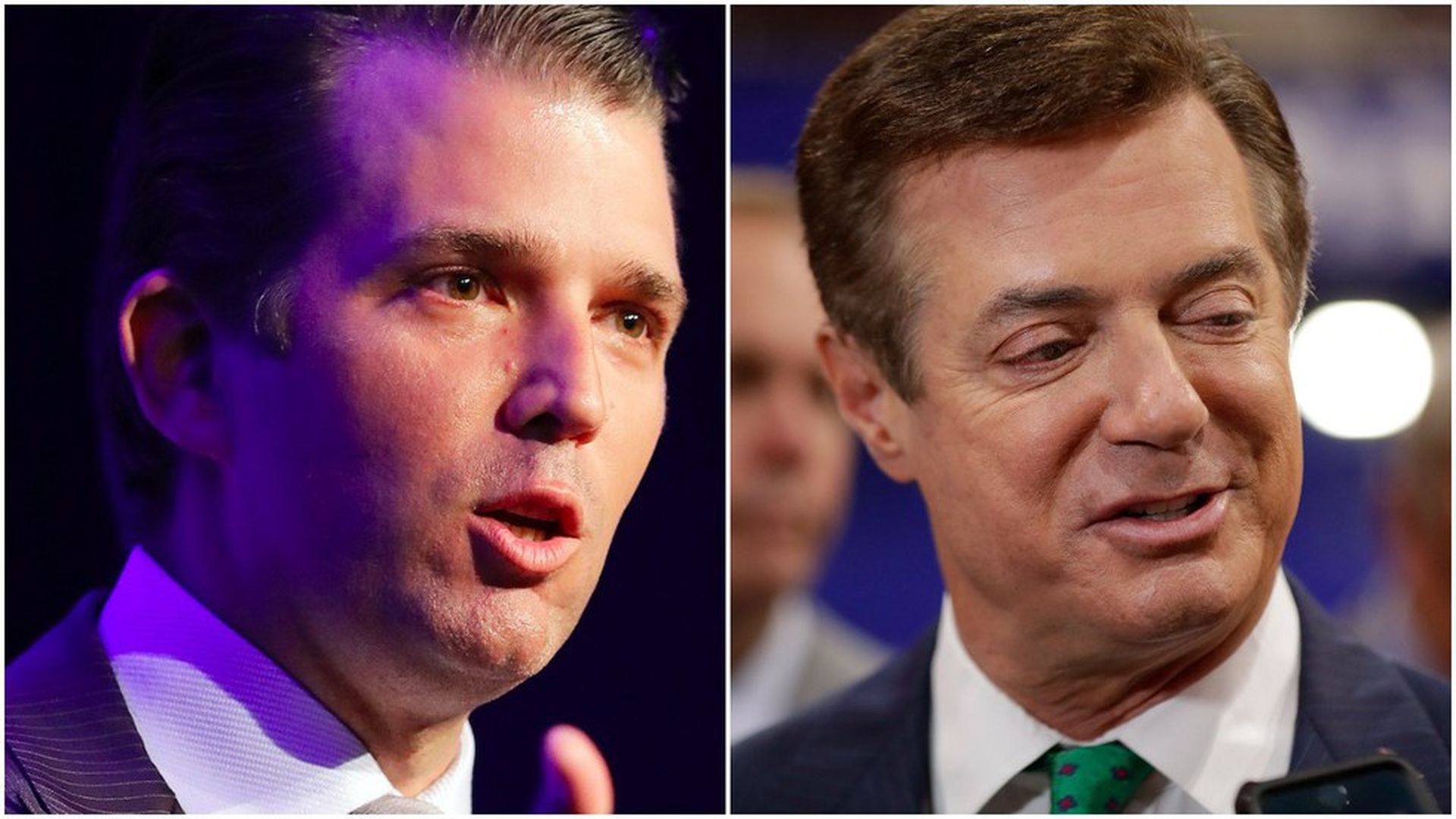
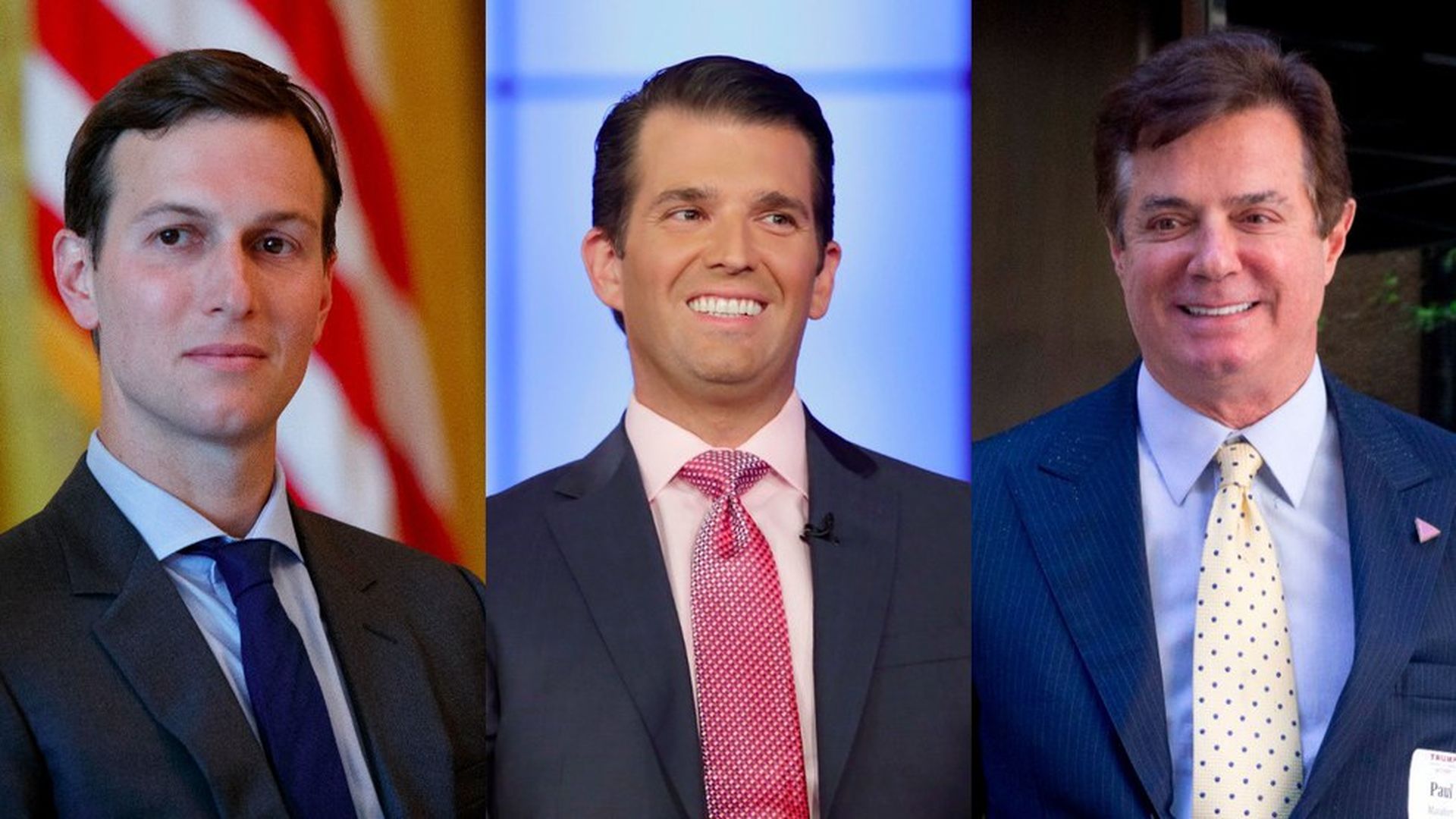
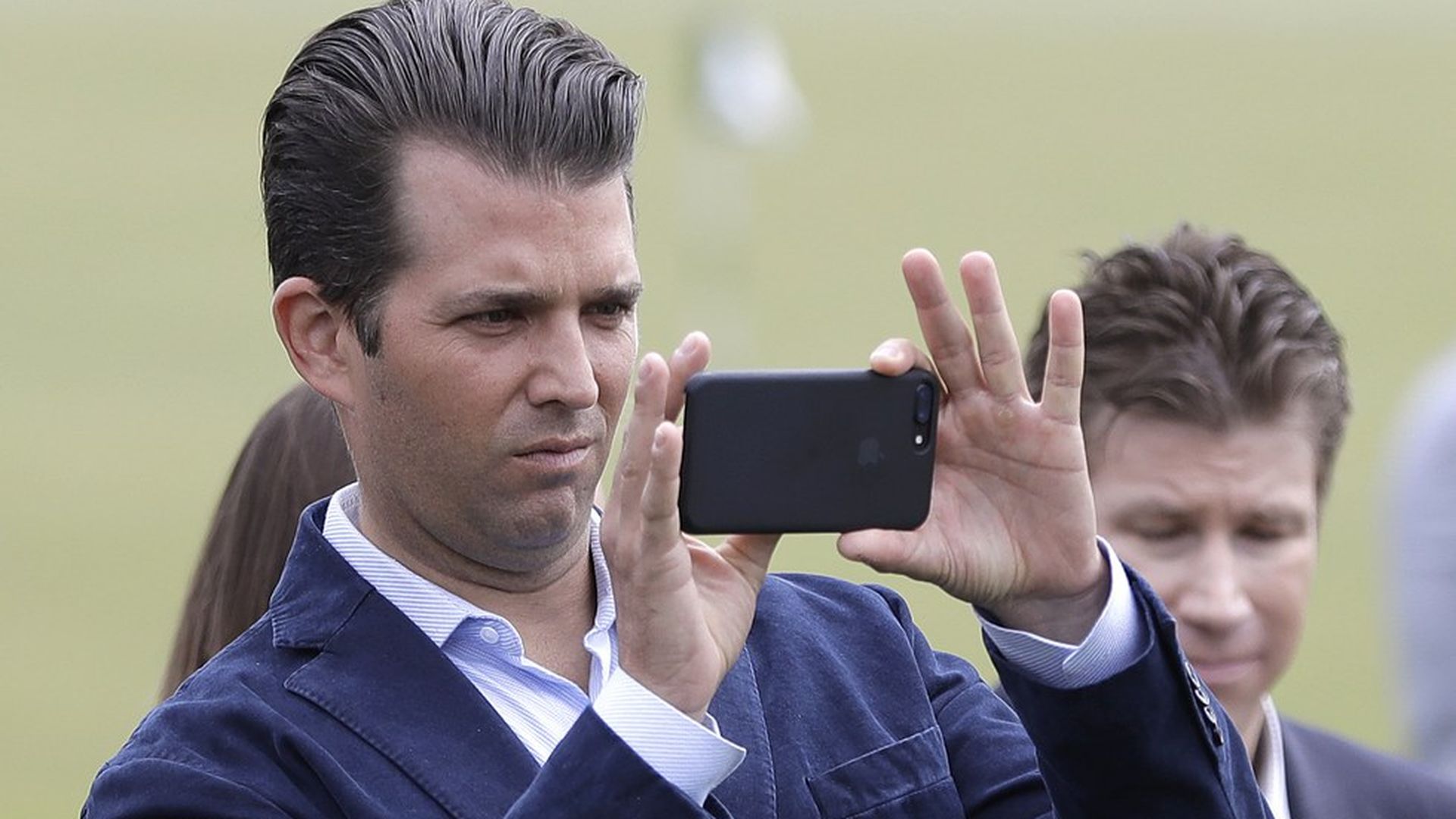
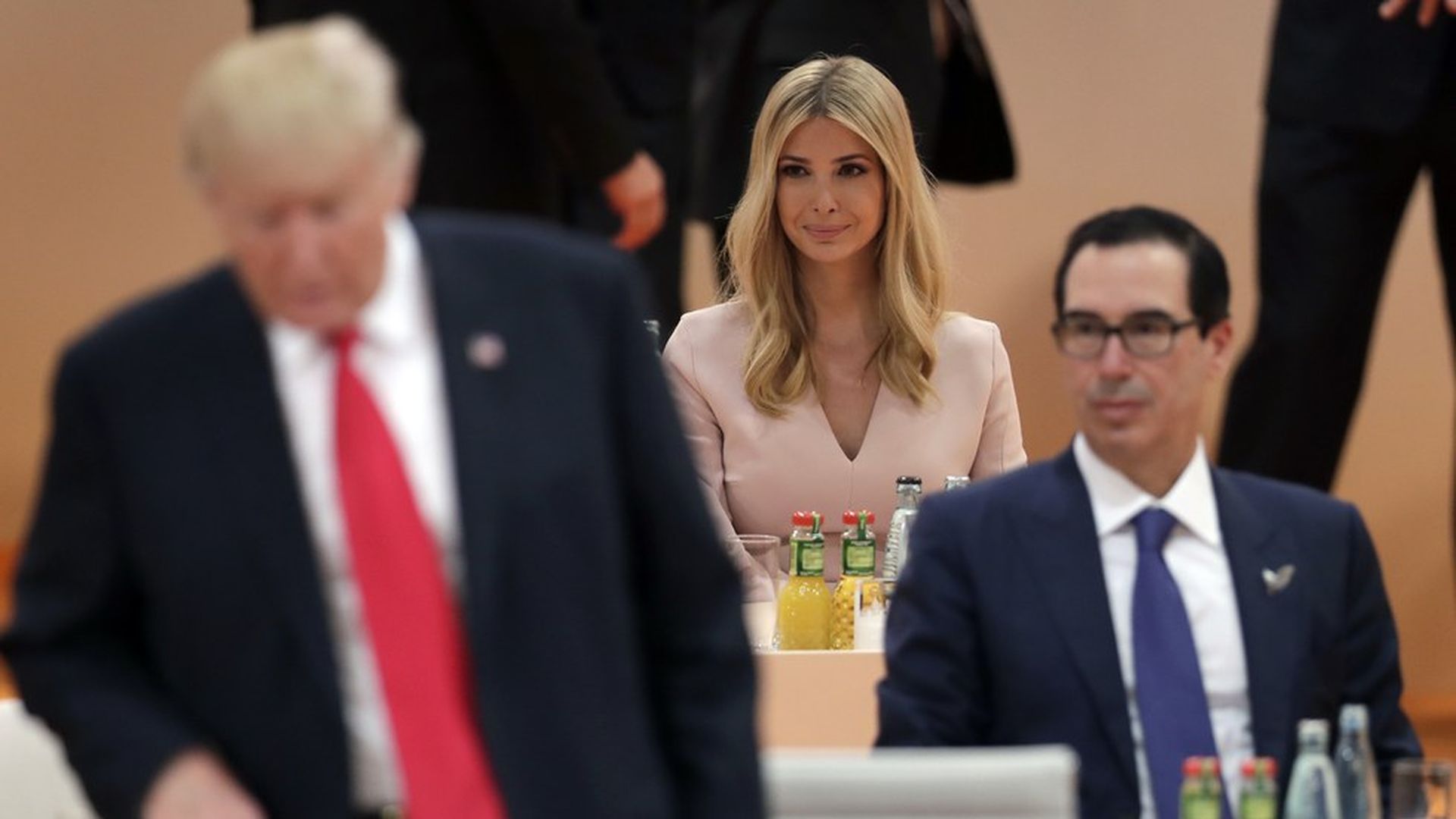
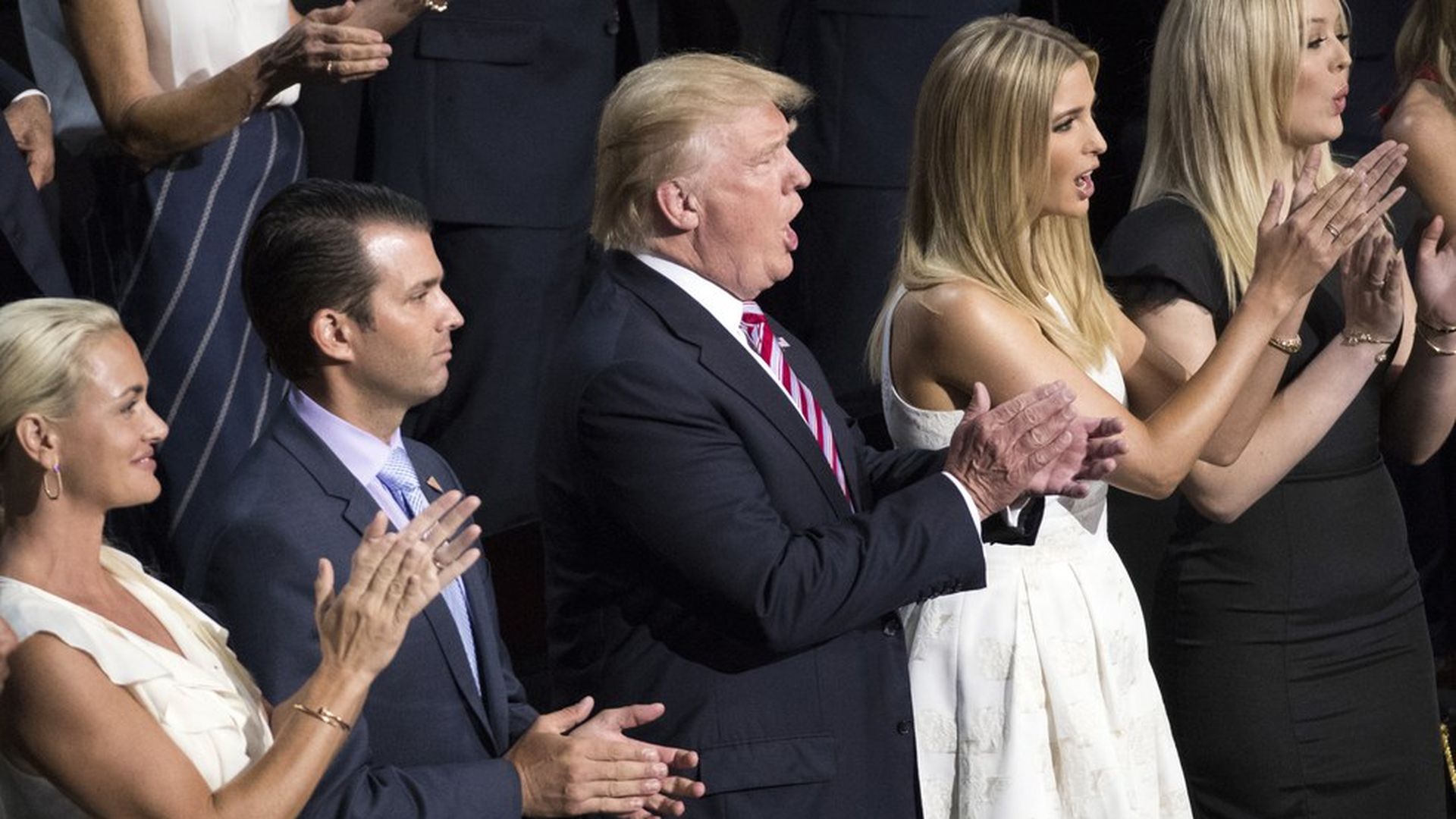
Senate Judiciary Committee Chairman Chuck Grassley is ready to subpoena Donald Trump Jr. and Paul Manafort if they do not agree to testify on Wednesday, RealClearPolitics reports. So far, neither has responded to the request and the deadline is this Friday.
Why this matters: Both of these scheduled testimonies would take place in a public setting (whereas Jared Kushner's on Monday will be private). Plus, the WSJ just raised the stakes for Manafort's potential testimony, with a report tonight that Special Counsel Robert Mueller is investigating him for possible money laundering.
The only other time a sitting president's son has appeared before Congress was Neil Bush, George H. W. Bush's son, who appeared before the House Banking Committee in 1990, per RCP.
Republican Lindsey Graham and Democrat Dick Durbin are introducing the DREAM Act — a new bipartisan push to reform immigration legislation about rights and protections for undocumented people whose parents immigrated to the U.S. illegally.
The bill is butting up against Trump's intention to allow DREAMers to be deported, and just yesterday Marc Short said the administration would likely oppose the bill. Trump has until Sept. 5 to decide whether to rescind the program or face court challenges.
Big picture: Graham told reporters Thursday that when history is written about how the U.S. treated so-called DREAMers, he's "going to be with these kids" and that they're "trying to do a good thing," adding that both Trump and the Republican Party are going to have to make a decision about where they fall.
A significant majority of Americans say that their friends' vote for either Donald Trump (74%) or Hillary Clinton (86%) does not have any effect on their personal friendships, according to a new Pew Research poll.
Data: Pew Research Poll, June 27-July 9, 2017; Chart: Andrew Witherspoon / Axios
The split: Unsurprisingly, the biggest outlier were Democrats or leaning Democrats assessing friends who voted for Trump. 35% of those on the left said a Trump vote would strain a friendship — that number jumps to 47% for those who identify as liberal.
Trump as stress: And a majority of Americans (59%) find it stressful and frustrating to discuss politics with someone who has a differing opinion of Trump.
Why can't we be friends? Majorities of Republicans and Democrats both said that members of the other party probably share many of their values and goals. Those numbers aren't significantly different from the last time the poll was conducted in 2013 — but they're significantly better than 2007 and 2005.
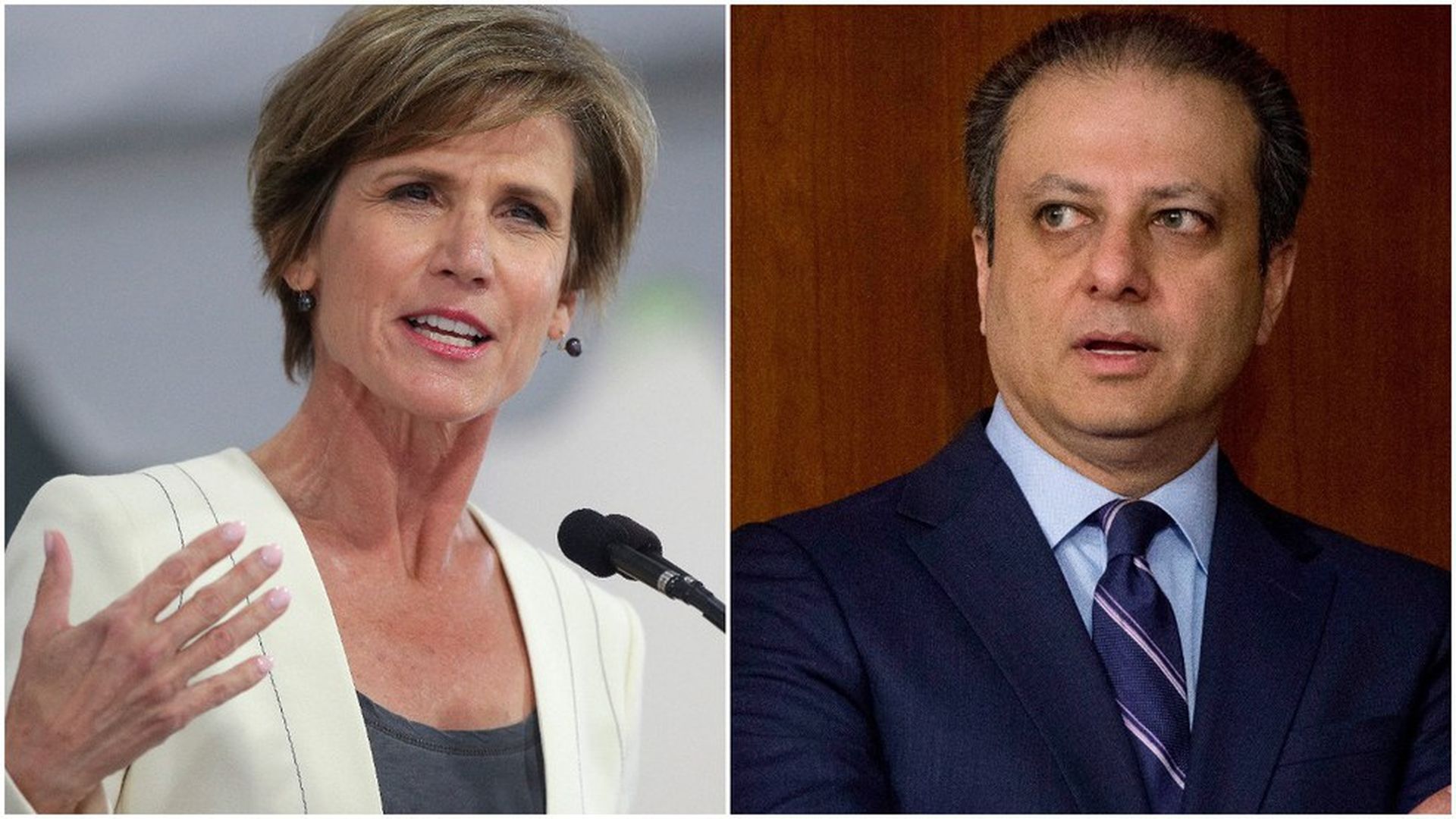
Two of the three most noteworthy officials fired by President Trump criticized his comments about Attorney General Jeff Sessions to The New York Times.
Sally Yates, fired from her DOJ job in January after refusing to enforce the travel ban: "POTUS attack on Russia recusal reveals yet again his violation of the essential independence of DOJ, a bedrock principle of our democracy."
Preet Bharara, fired as a U.S. Attorney in March after Trump promised he'd keep his job: "The President today effectively asked Sessions for his resignation. Will he resign or insist on being fired?... I am looking forward to having Jeff Sessions & Rod Rosenstein as colleagues @nyulaw soon. Maybe we can teach employment law together. ... Not a question you've heard before at a DOJ press conference: "Are you concerned you will be viewed as a zombie Attorney General?"
The official who didn't comment, at least publicly: Jim Comey.
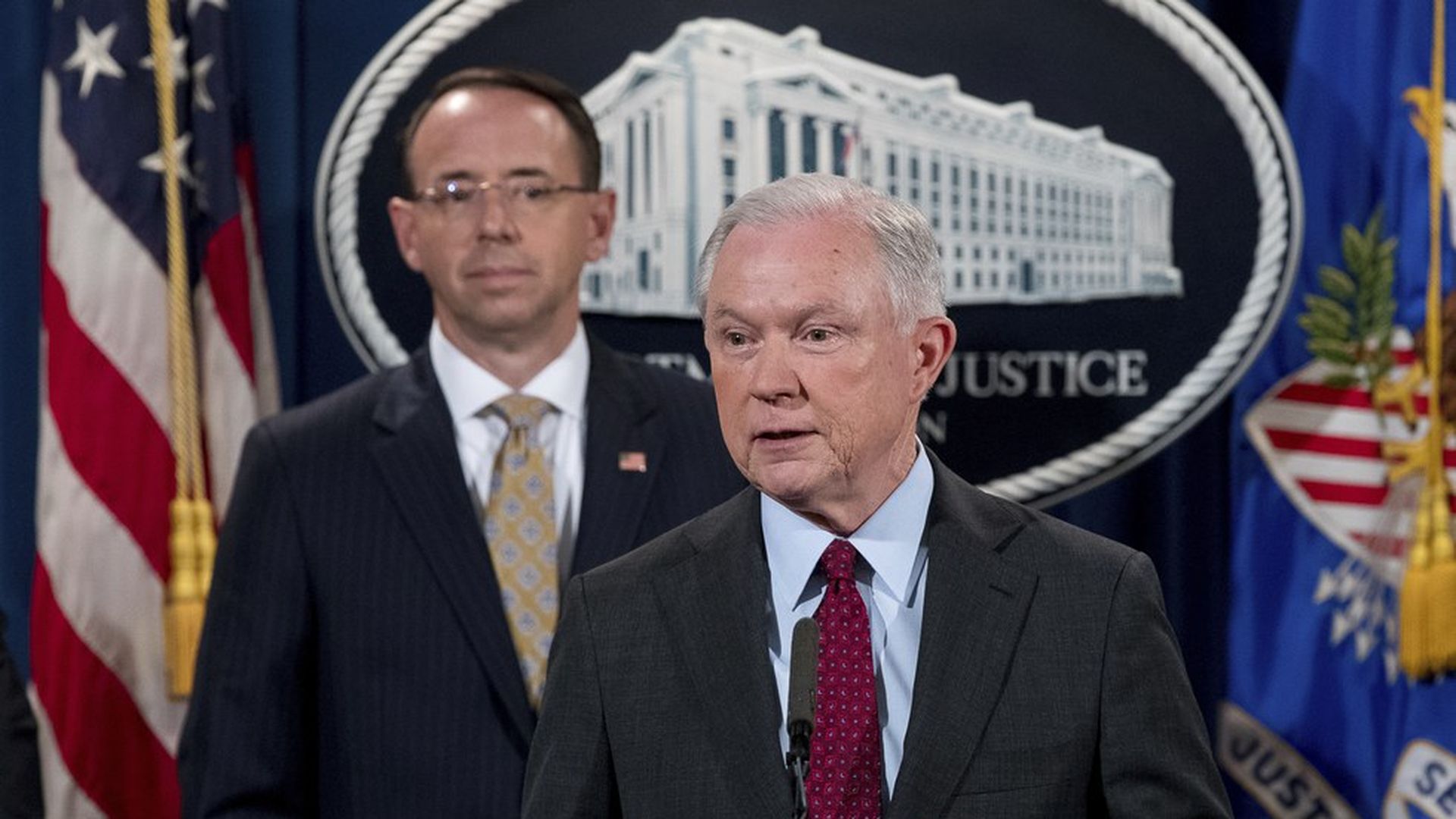
Attorney General Jeff Sessions said Thursday that he plans to continue as Attorney General, despite President Trump's comments to the N.Y. Times that he would have picked someone else for the position if he had known Sessions would recuse himself from the Russian investigation.
"We love this job. We love this department, and I plan to continue to do so as long as that is appropriate," Sessions said Thursday.
Special Counsel Robert Mueller's Russia investigation has reportedly expanded to include a closer look at financial and business transactions involving both President Trump and some of his closest associates, a person "familiar with the probe" tells Bloomberg. This reportedly absorbed a money laundering investigation started by fired U.S. Attorney Preet Bharara last year.
The three prongs of the Mueller investigation: Trump's finances, direct election interference and hacking, and the actions of Michael Flynn.
What Mueller has his eyes on: Trump's interactions with Russian businessmen seem to be the biggest focus, including the Agalarov-funded Miss Universe pageant in Moscow in 2013 and the Russian ties to the development of the Trump SoHo hotel.
Also on the table: Jared Kushner, Paul Manafort, and Wilbur Ross' ties to the Bank of Cyprus — a prime destination for Russian money laundering — are reportedly of interest.
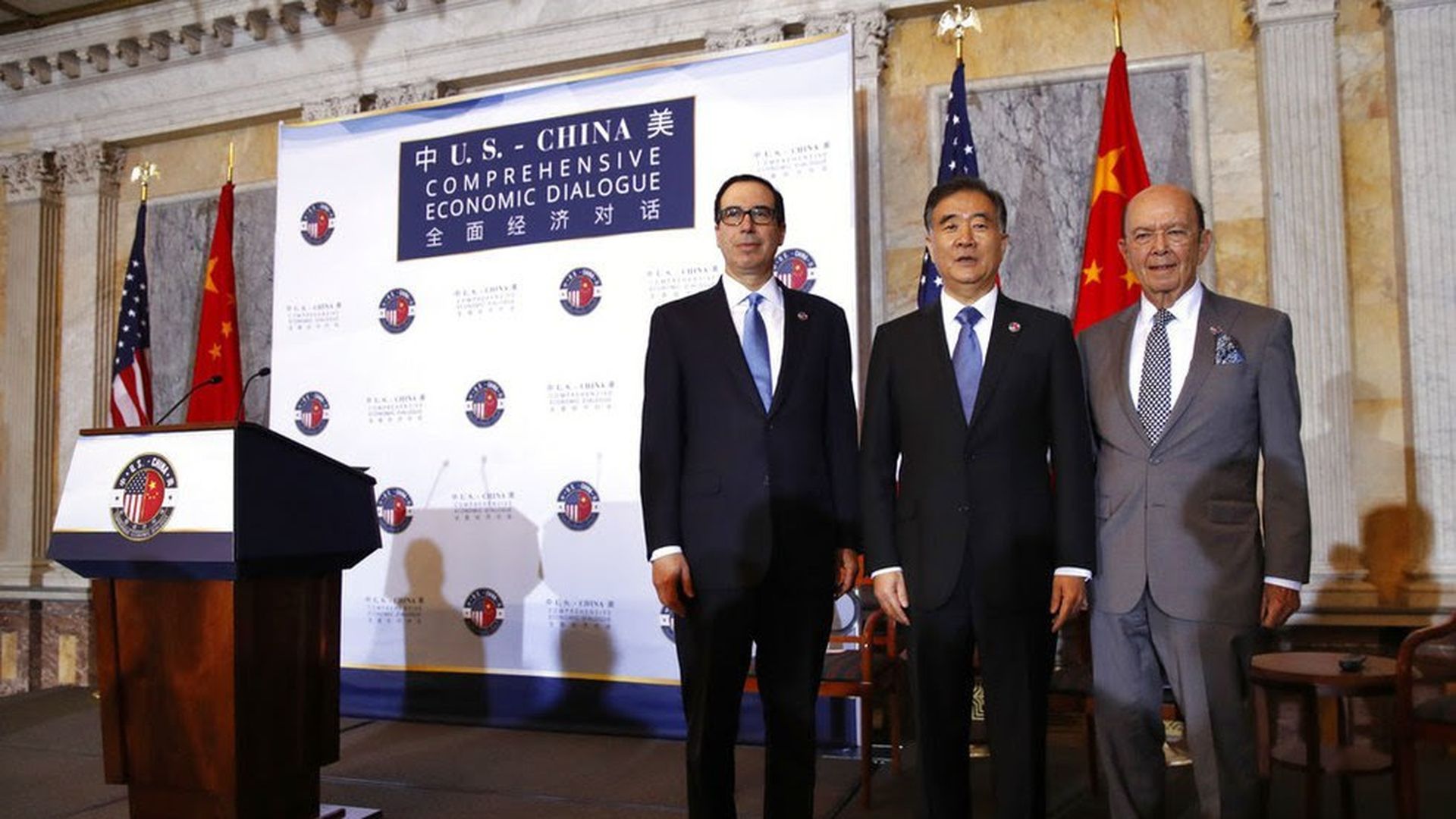
"The brief honeymoon between the world's two largest economies appears to be over," per Bloomberg's Andrew Mayeda and Saleha Mohsin:
"High-level economic talks in Washington broke up Wednesday with the two superpowers unable to produce a joint statement. Commerce Secretary Wilbur Ross scolded China over its trade imbalance with the U.S. in his opening remarks, and then both sides canceled a planned closing news conference."
"Ross complained about the trade gap with China in unusually blunt terms."
Why it matters: "While confronting the Chinese ... will play well politically in America, it's not a good strategy for making progress with Chinese leaders, who are under their own political pressures."
"Trump's embrace of Russia making top advisers wary," by AP's Vivian Salama: "Trump's persistent overtures toward Russia are placing him increasingly at odds with his national security and foreign policy advisers, who have long urged a more cautious approach."
"[A]n extended dinner conversation between Trump and ... Putin ... raised red flags with advisers already concerned by the president's tendency to shun protocol and press ahead with outreach toward Russia."
"Deep divisionsare increasingly apparent within the administration on the best way to approach Moscow ...[S]ome top aides, including National Security Adviser Gen. H.R. McMaster, have been warning that Putin is not to be trusted."
Wow: "Foreign and U.S. officials said the Russians recommended that a note taker be present in the bare-bones official bilateral meeting. But Trump, who has repeatedly expressed concern over leaks, refused, instead relying on [SecState] Tillerson to document the meeting."
For weeks, President Trump has been privately expressing frustration with Attorney General Jeff Sessions, and has even told aides he regretted appointing him:
Trump views Sessions' decision to recuse himself from the Russia investigation as an act of weakness that made the situation exponentially worse for the White House.
POTUS has even mused that he could have named Sessions — a crucial early backer of his campaign — to be Secretary of Homeland Security instead.
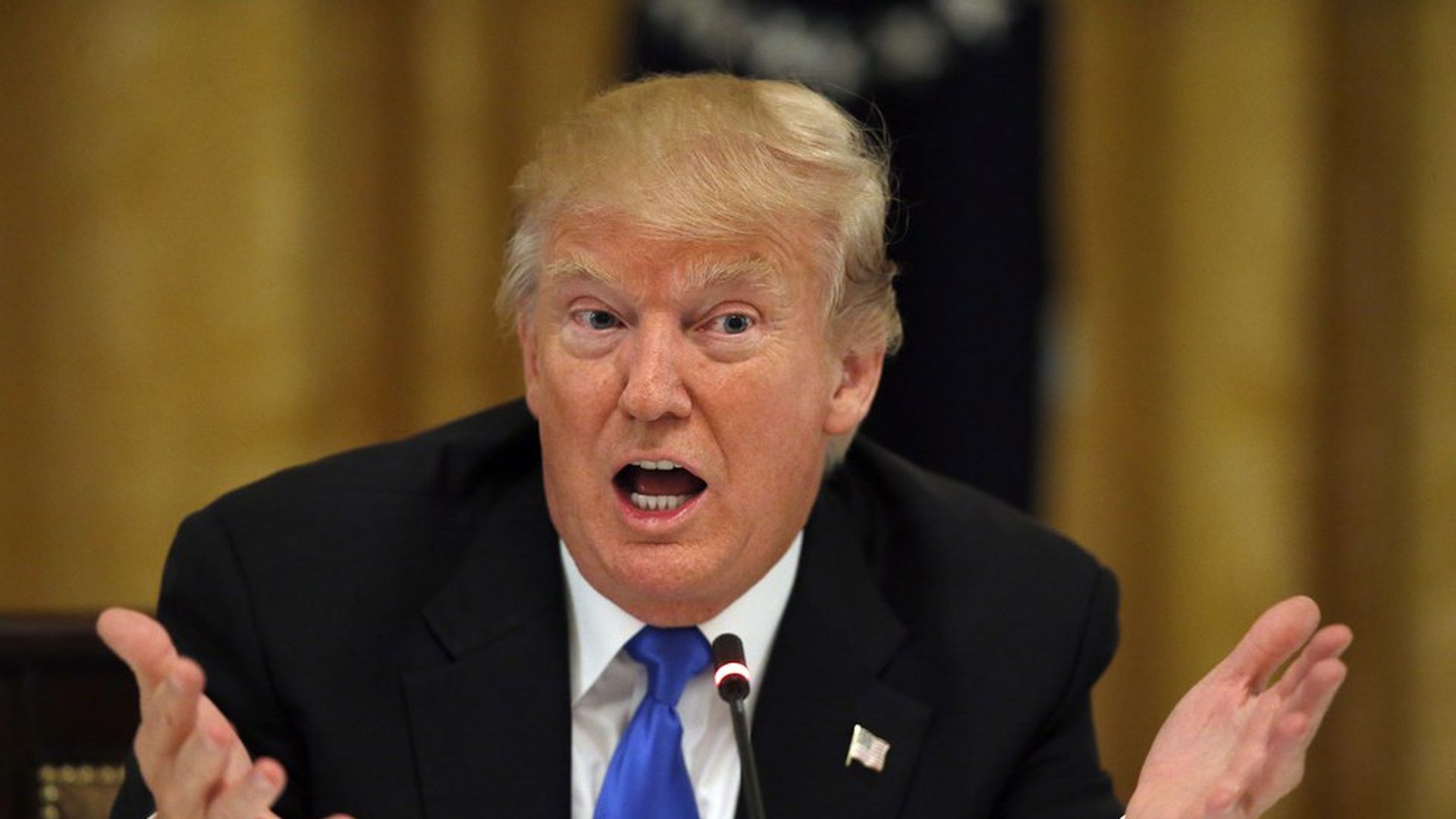
Yesterday, Trump went public with his beef, telling the N.Y. Times: "Sessions should have never recused himself, and if he was going to recuse himself he should have told me before he took the job and I would have picked somebody else."
The declaration of no-confidence led to instant speculation in Republican circles that Sessions would resign: How can he go to work this morning?
Next week will be a big one for Senate committees investigating connections between Trump associates and Russia: Jared Kushner will be testifying in a closed session before the Senate Intelligence Committee on Monday, per ABC News, while Donald Trump Jr. and Paul Manafort are scheduled to appear in front of the Senate Judiciary Committee on Wednesday morning. The committee didn't say if their appearances are confirmed — a Manafort spokesperson said they'd just received the invitation and are reviewing it.
Why it matters: Expect wall-to-wall coverage for the open Trump Jr./Manafort hearing. All three men sat in on last June's Trump Tower meeting with a Russian lawyer and other Russian-connected officials — the strongest evidence of potential collusion with the Russian government.
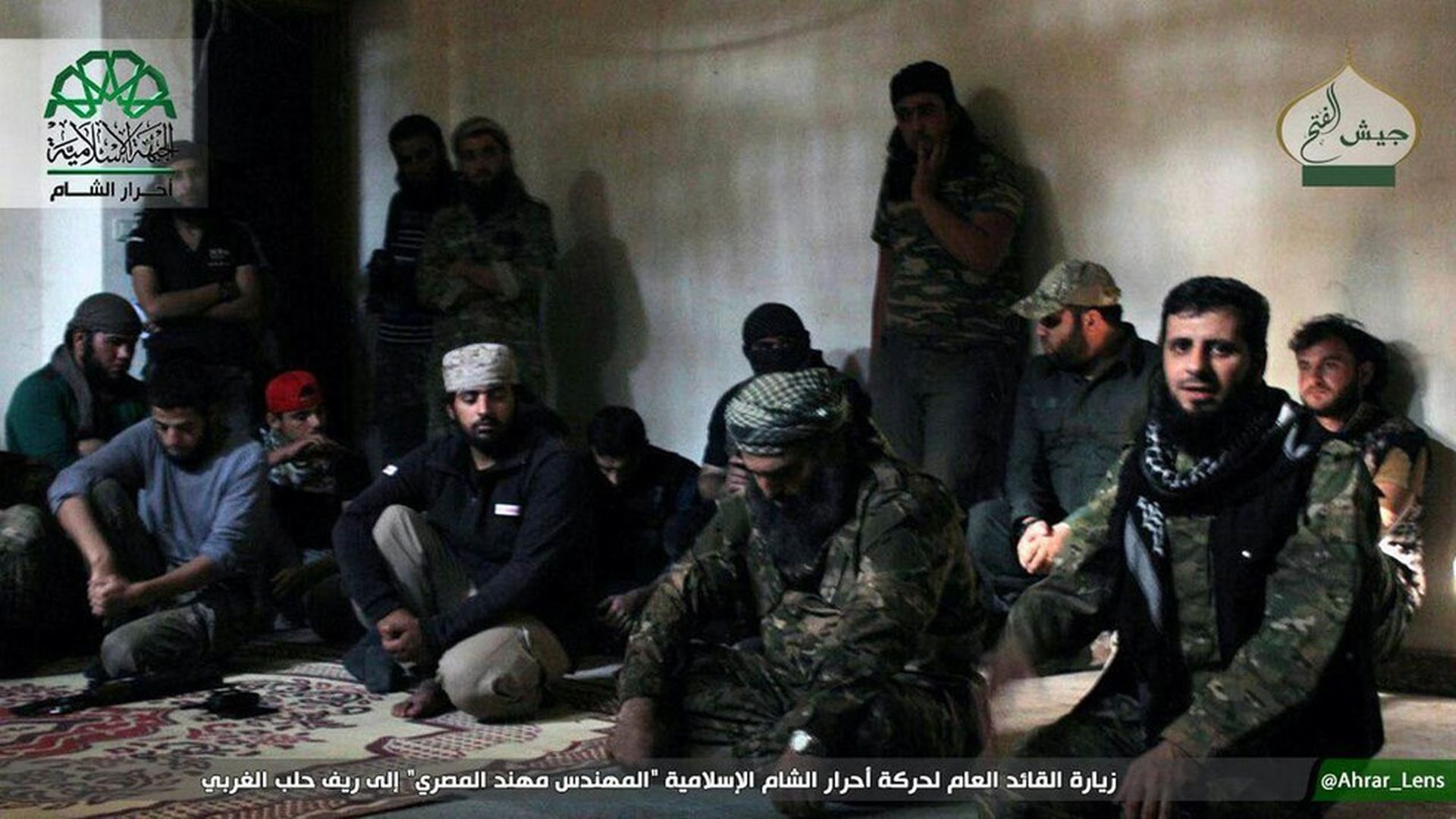
Trump is ending the covert CIA operation to arm and train anti-Assad rebels in Syria, The Washington Post reports. The program will end over a period of a few months, officials said.
Why it matters: Russia has long wanted this program to end, since it wasn't aligned with its interests — it was part of the Obama administration's program to try and push Assad out of power. Officials said this move shows Trump's looking for ways to work with Russia, and acting on them. One U.S. official told WashPost: "This is a momentous decision…Putin won in Syria."
Officials added Trump made the decision about a month ago just before his July 7 meeting with Russian President Vladimir Putin, but that it was not part of the ceasefire agreements. Note: this is not going to affect the U.S.-backed effort to fight ISIS in the region.
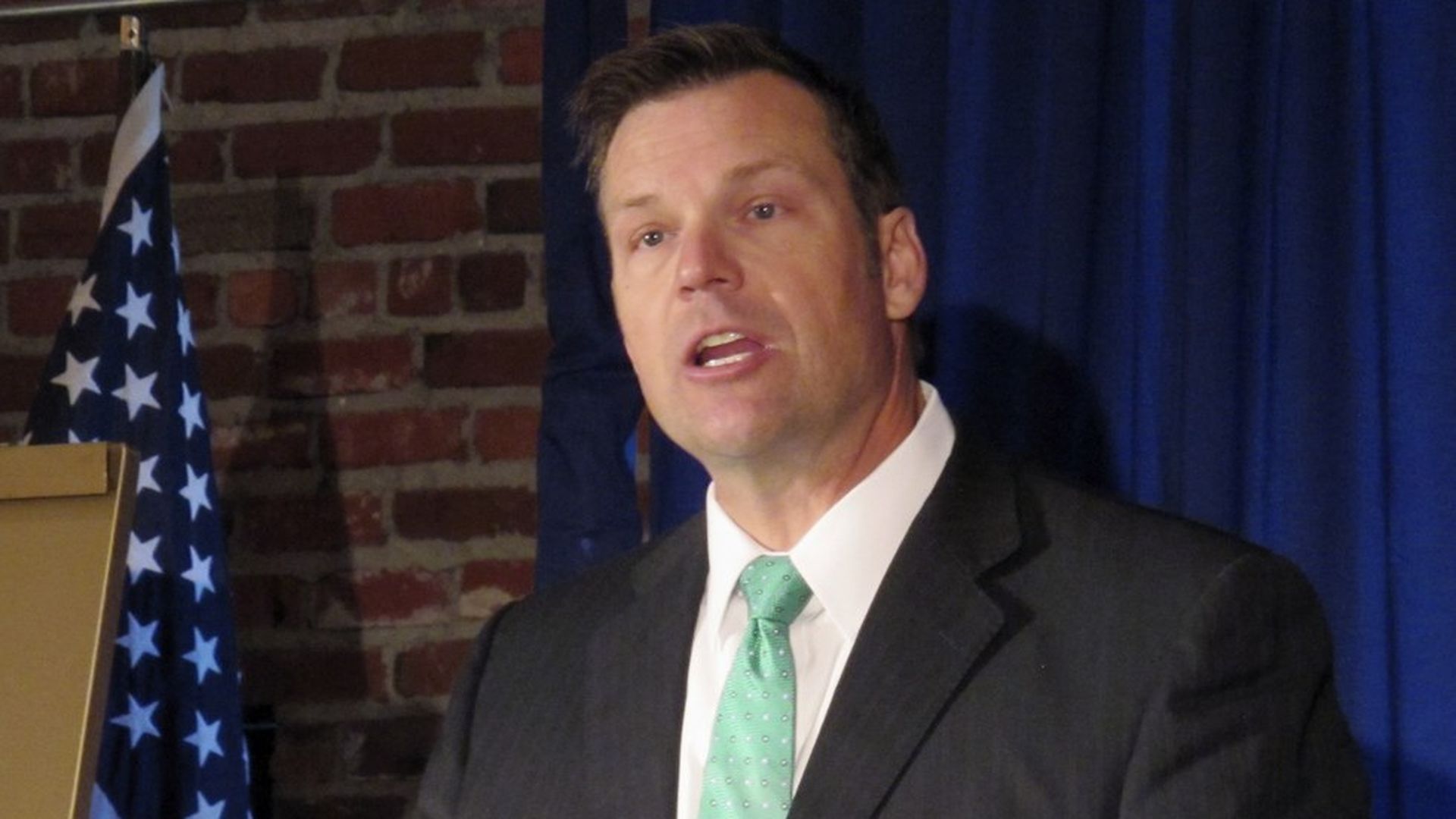
Kris Kobach, the vice chairman of President Trump's Commission on Election Integrity and the Secretary of State of Kansas, told NBC News' Katy Tur this afternoon that the country "probably would never know" the actual results of the 2016 presidential election.
"It's impossible to ever know exactly…what the final tally would be in that election."
Reality check: Per CNN, a Loyola Law School study found just 31 potential instances of voter fraud out of more than 1 billion votes cast during the period from 2000 to 2014.
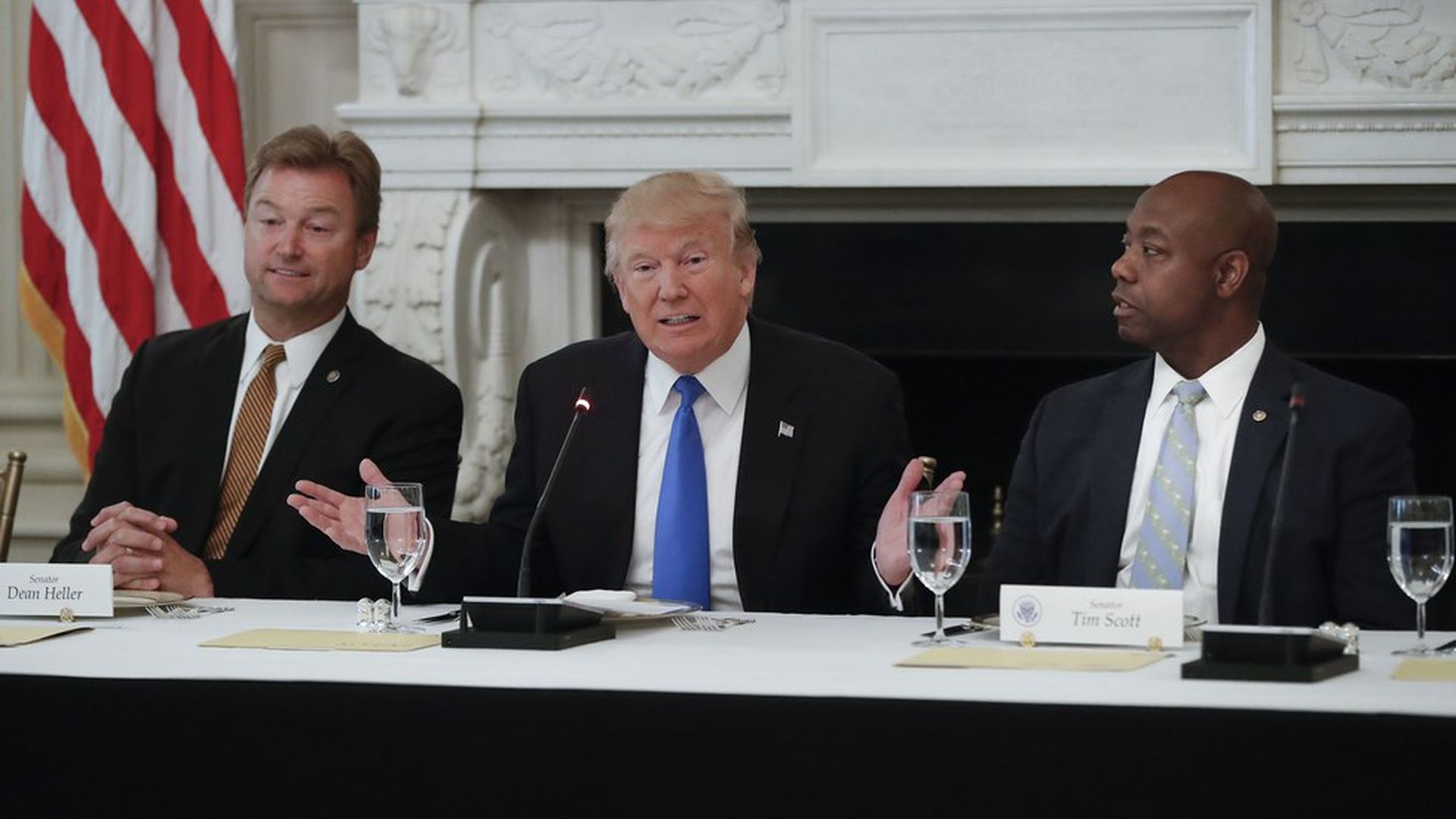
During today's health care meeting with Senators, President Trump reaffirmed his determination to revive the GOP health bill: "I'm ready to act. For seven years you promised the people you'd repeal Obamacare. People are hurting, inaction is not an option. And frankly, I don't think we should leave town unless we have a health insurance plan."
"We can repeal it, but we should repeal it and replace," he reiterated, "and we shouldn't leave town until this is complete, until this bill is on my desk. I'll sign it and we can celebrate with the American people.''
Mixed messaging: Trump's gone back and forth repeatedly on how to deal with the GOP's latest health care failure. First, he said he wanted to solely pass a repeal bill, then he argued they should sit back and "let Obamacare die." Now he's calling for a revival.
The Supreme Court ruled Wednesday in favor of a lower court motion to temporarily exempt travelers with family members already in the U.S., such as grandparents, cousins and other relatives, from Trump's travel ban. SCOTUS gave Trump a partial victory by blocking a San Francisco court's decision that would have exempted thousands of refugees from the ban.
Why it partially matters: The Supreme Court will review arguments in the case when the justices return from summer recess in October. All of their interim decisions are only temporary.
Refresher: On June 26, SCOTUS allowed Trump's 90-day ban to go into effect for travelers from six Muslim-majority countries who lack any "bona fide relationship with any person or entity" in the U.S. The administration soon after issued guidelines clarifying that a parent, spouse, fiance, son or daughter, siblings, son-in-law or daughter-in-law would be allowed to enter the country, but grandparents, grandchildren, aunts, uncles, nieces, nephews, cousins, or siblings-in-laws would be banned.
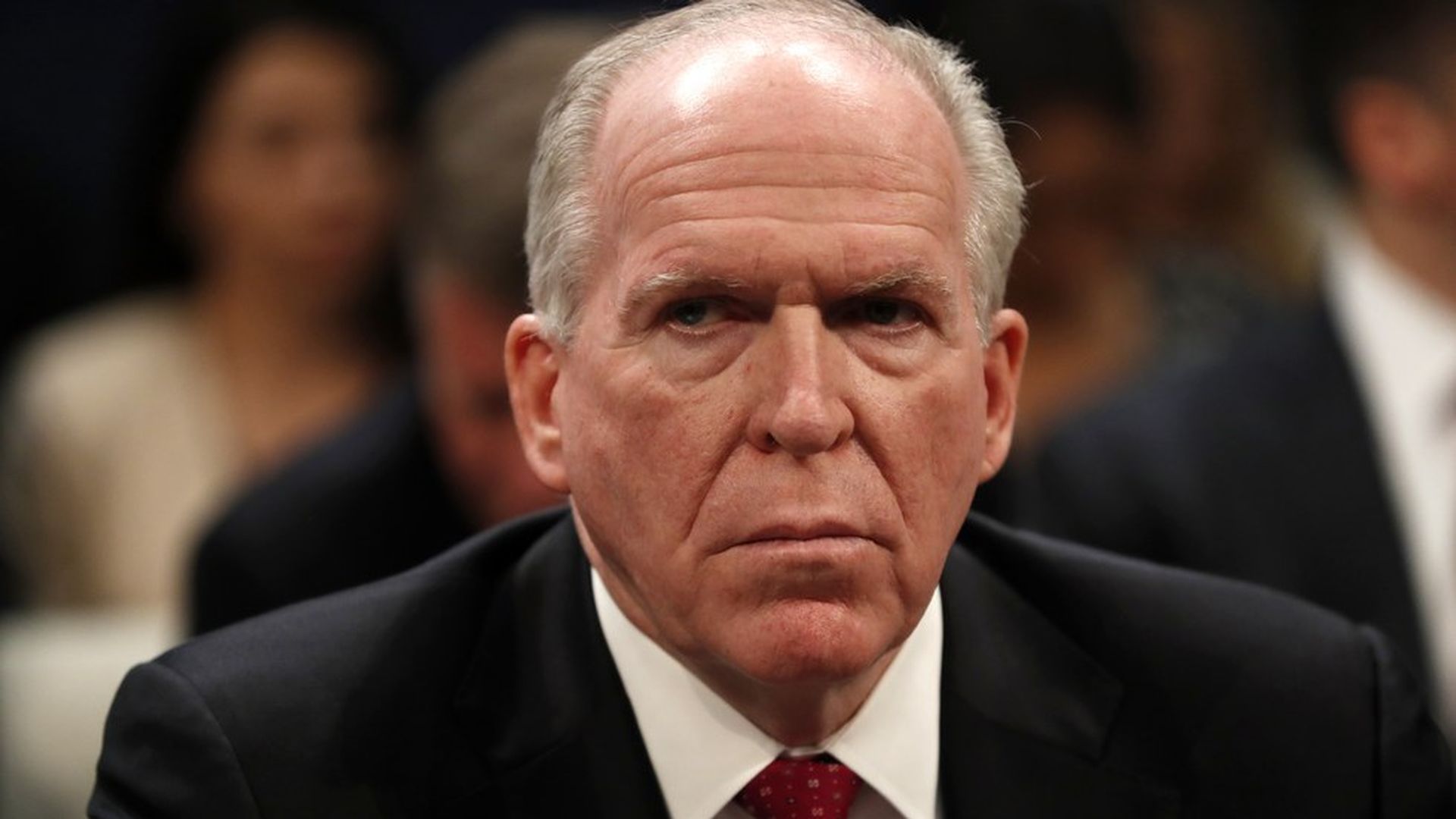
Walter Isaacson, former CEO of CNN and TIME managing editor, interviewed John Brennan, former CIA director under the Obama Administration, on Russian cyberattacks on the 2016 presidential election at a Fortune event Wednesday. Brennan detailed the extent of the hacking, noting that he's "never seen it this bad."
How do you know the hack was authorized by Putin personally? "We have ways."
On Trump's praise of Putin, given Russia's interference in U.S. election: "It made my blood boil."
Intent of Russian hacking: They were out to ruin Hillary Clinton. "They wanted her bloodied by the time of the election."
Difference between a missile attack and a hack? "There's a return address."
Call to action: "This partisan environment in Washington is going to undermine our country's prosperity... if there's going to be a solution, it needs to be an unprecedented partnership between the government and the private sectors."
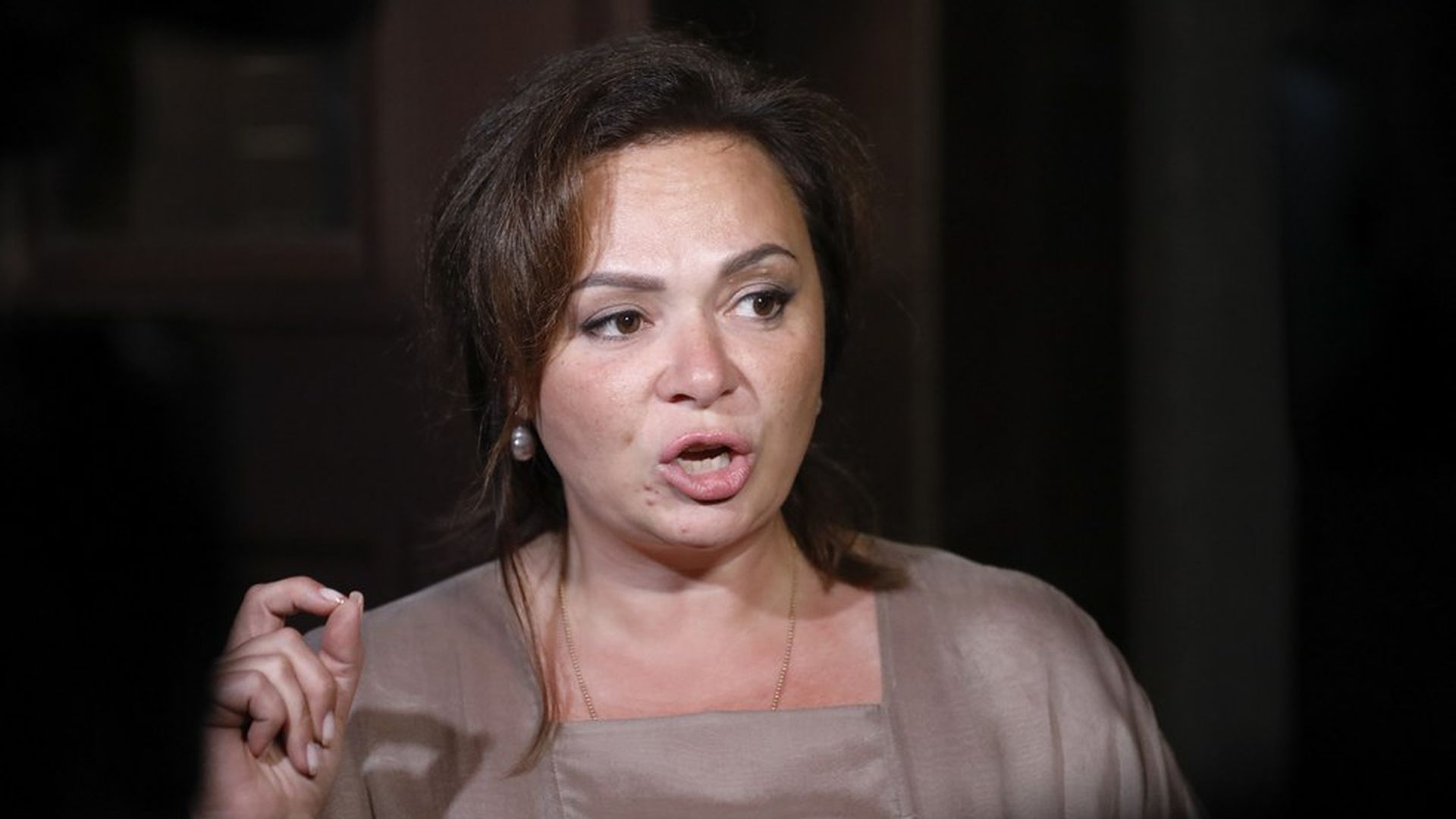
The Russian attorney who met with Donald Trump Jr. at Trump Tower in June 2016 told Russian state media RT that she is prepared to testify before Congress, per Reuters. In an interview that aired Wednesday, Natalia Veselnitskaya said, "I'm ready to clarify the situation behind this mass hysteria" if she's guaranteed safety, "but only through lawyers or testifying in the Senate."
President Trump and Vice President Mike Pence opened the first meeting of the Presidential Election Integrity Commission at the White House Wednesday. Trump, who has been pushing for this commission since his November win, emphasized that every time voter fraud occurs, "it cancels out the vote of a lawful citizen and undermines democracy," and reiterated that this effort is at the heart of Making America Great Again.
Trump thanked the 30 states that have already agreed to publicly provide voter data, and warned the others that withholding information suggests they have something to hide.
"If any state doesn't want to share this information, one has to wonder: What are they worried about? There's something. There always is."
Trump's bottom line: The bipartisan commission "will follow the facts wherever they may lead, and the full truth will be known and exposed, if necessary, in the light of day."
The meeting between Donald Trump Jr. and a Russian attorney last spring was inappropriate, according to 52% of Americans polled in a recent Morning Consult/Politico survey. 25% had no opinion about it and 23% thought the meeting was appropriate.
Partisan breakdown: 44% of Republicans thought the meeting was appropriate compared to 24% who considered it inappropriate, Dems were 8% to 80% and Independents were 19% to 50%.
The Hillary factor: 5% of those questioned said they thought the meeting was appropriate only when the question specified that Don Jr. took the meeting in order to gain incriminating information on Hillary Clinton.
More than 20 Democratic Congressmen wrote a letter to the FBI asking for a review of Ivanka Trump's security clearance forms to see if she failed to disclose either her own or her husband's meetings with foreign contacts.
Why it matters: Rep. Don Beyer (D-VA), who headed up the petition and a similar letter about Jared Kushner in April, told Yahoo, "Under the law … she's also responsible to disclose the foreign contacts of her spouse and her siblings. So, did she make an effort to disclose the things that Jared Kushner had done or Donald Trump Jr?"
"Those who know and have studied Donald Trump Sr. and the grown children running his empire while he's president — Don Jr., Ivanka and Eric — say the family is guided by their father's creed of winning at all costs and never admitting mistakes," according to PEOPLE's Sandra Sobieraj Westfall and Tierney McAfee.
A source who has had business dealings with President Trump: "He doesn't like failure and mistakes, and he doesn't accept them ... You have to justify your existence to be in his realm."
"For all his campaign rallies last year and bellicose tweets this year, Trump Jr., who along with his brother Eric, 33, remained in N.Y.C. to run the family business, still relishes the quiet of his lifelong loves of hunting and fishing. Most weekends, he escapes Trump Tower Manhattan to a rustic cabin upstate with his wife, Vanessa, and their five children."
A source in the Trump brothers' circle: "Don [Jr.] can't do any deals, because he'll be overly scrutinized. He just goes to work every day and is miserable. ... You can't bite the hand that feeds you, but he [Don Jr.] can't wait for these four years to be over."
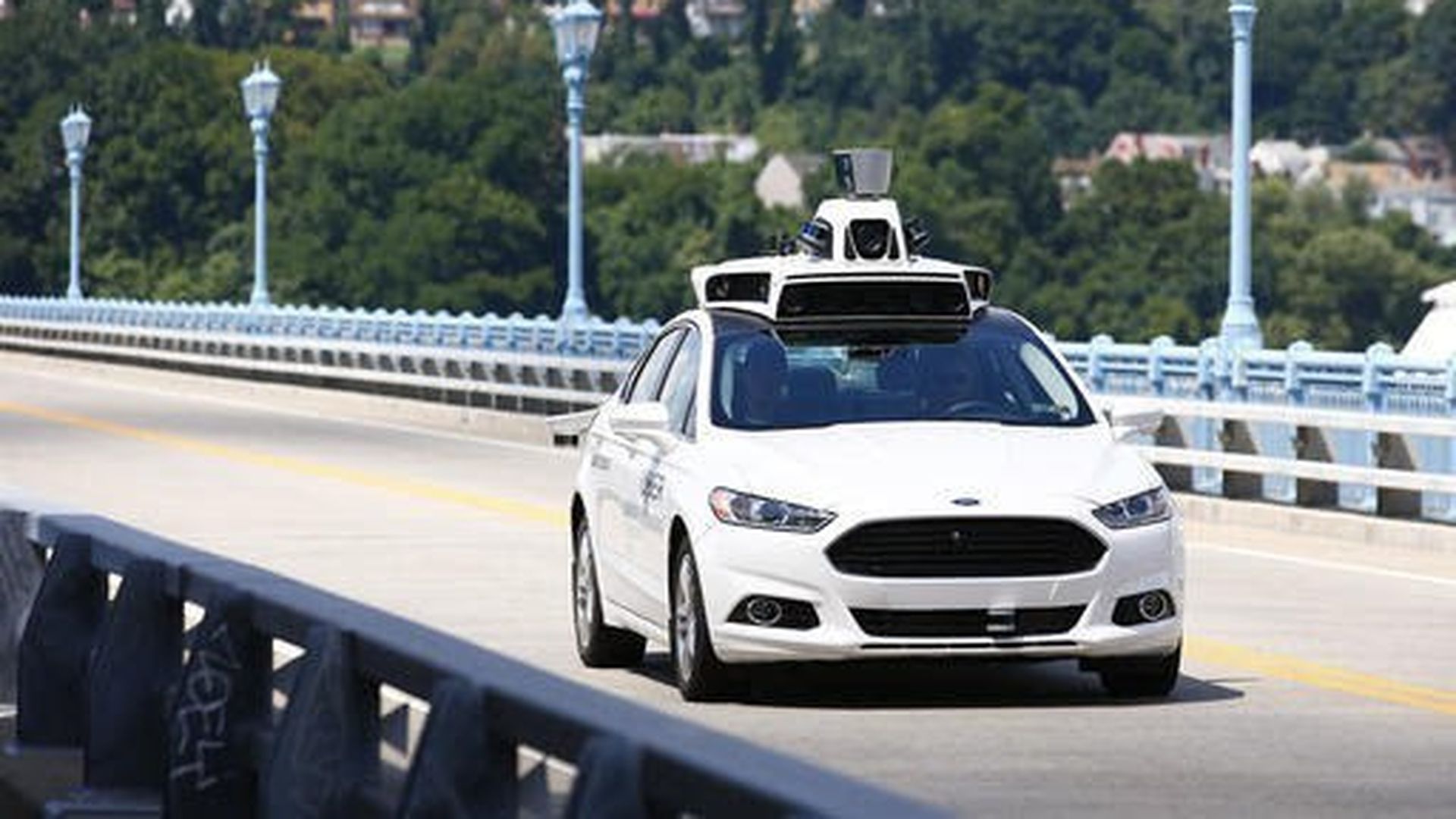
A House Energy and Commerce subcommittee this morning will hold an unheralded but consequential hearing on a bill designed to both regulate and encourage the deployment of driverless cars ("highly automated vehicles," to Congress).
Rep. Debbie Dingell (D-Mich.) says this is a rare bipartisan issue where you can protect consumers but also encourage innovation. Her district includes Ford HQ in Dearborn, plus auto plants, suppliers and R&D labs.
"Like it or not, this is coming," she told me. "It's exploding faster than we can promulgate regulations."
Drones and autonomous vehicles are among the technologies running way ahead of the appetite and ability of a dysfunctional federal government to regulate them, and this collision of technology and regulation is one of the new realities for Washington.
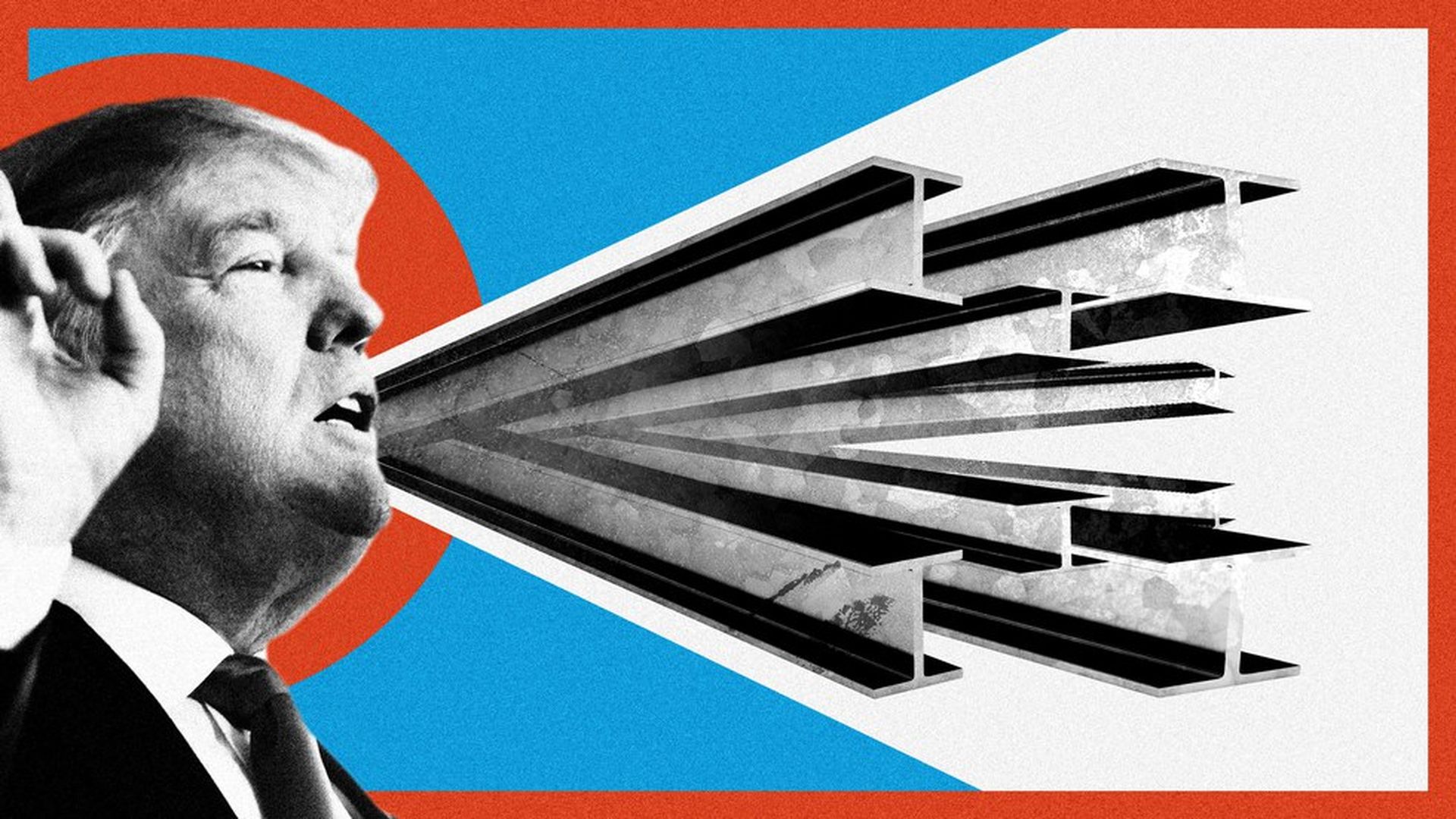
President Trump wants to invoke a national security provision to stop the "dumping" of cheap steel into America, but trade lawyers believe Trump's public statements —and dubious legal reasoning — could expose the administration to significant legal problems.
The White House's rhetoric: The administration in April identified dumping as the impetus for Trump "standing up" for the steel and aluminum industries.
Trump last week on Air Force One:"They're dumping steel and destroying our steel industry, they've been doing it for decades, and I'm stopping it."
Why it matters: International trade experts, including NYU Law professor Robert Howse, told Axios that Trump made a big mistake by identifying "dumping" as his basis for imposing retaliatory tariffs on national security grounds. There are already laws on the books to remedy dumping, and if Trump invokes the national security provision to impose new tariffs, other nations will immediately challenge him because they're operating under a World Trade Organization agreement that has no national security exceptions.
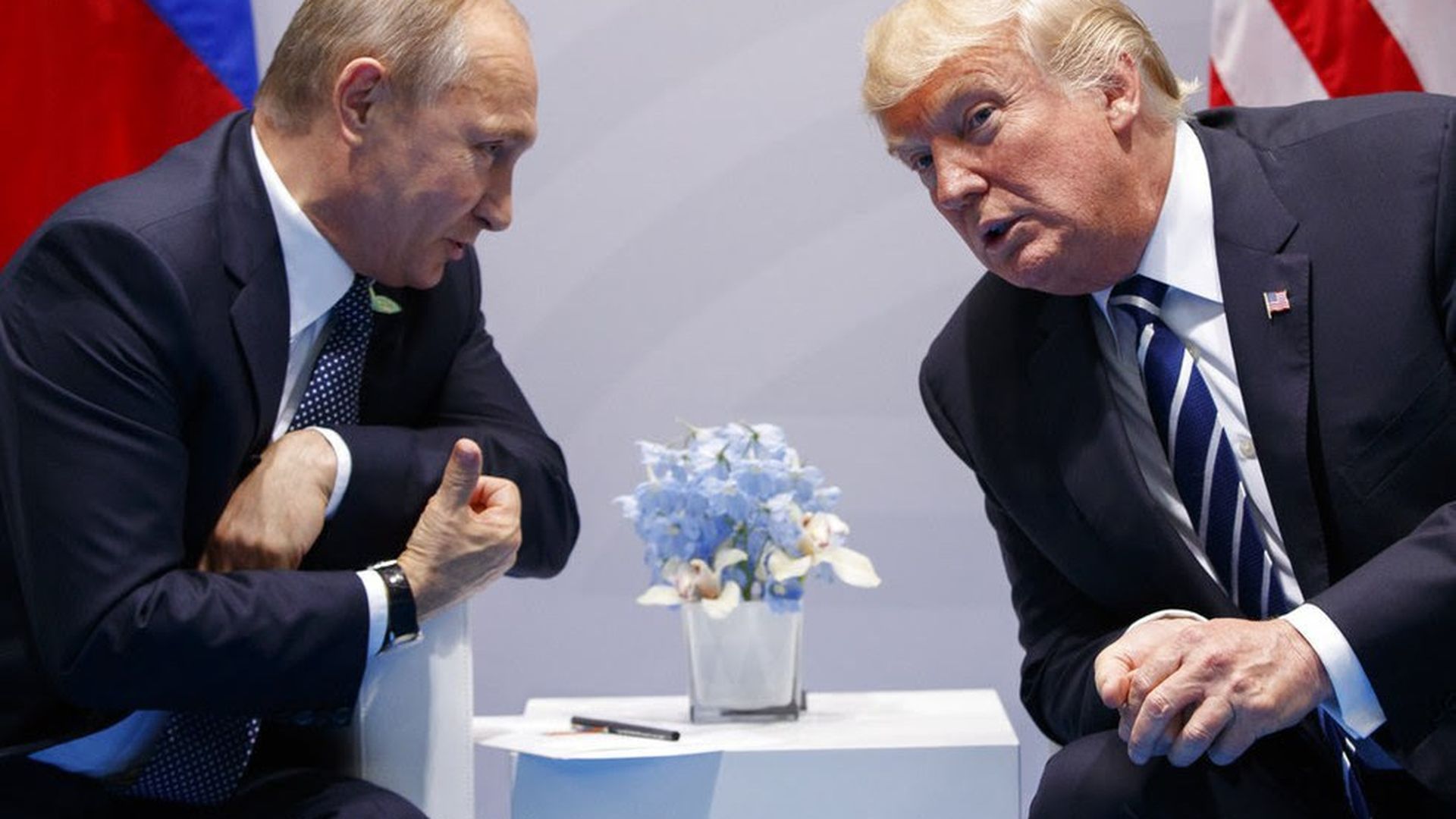
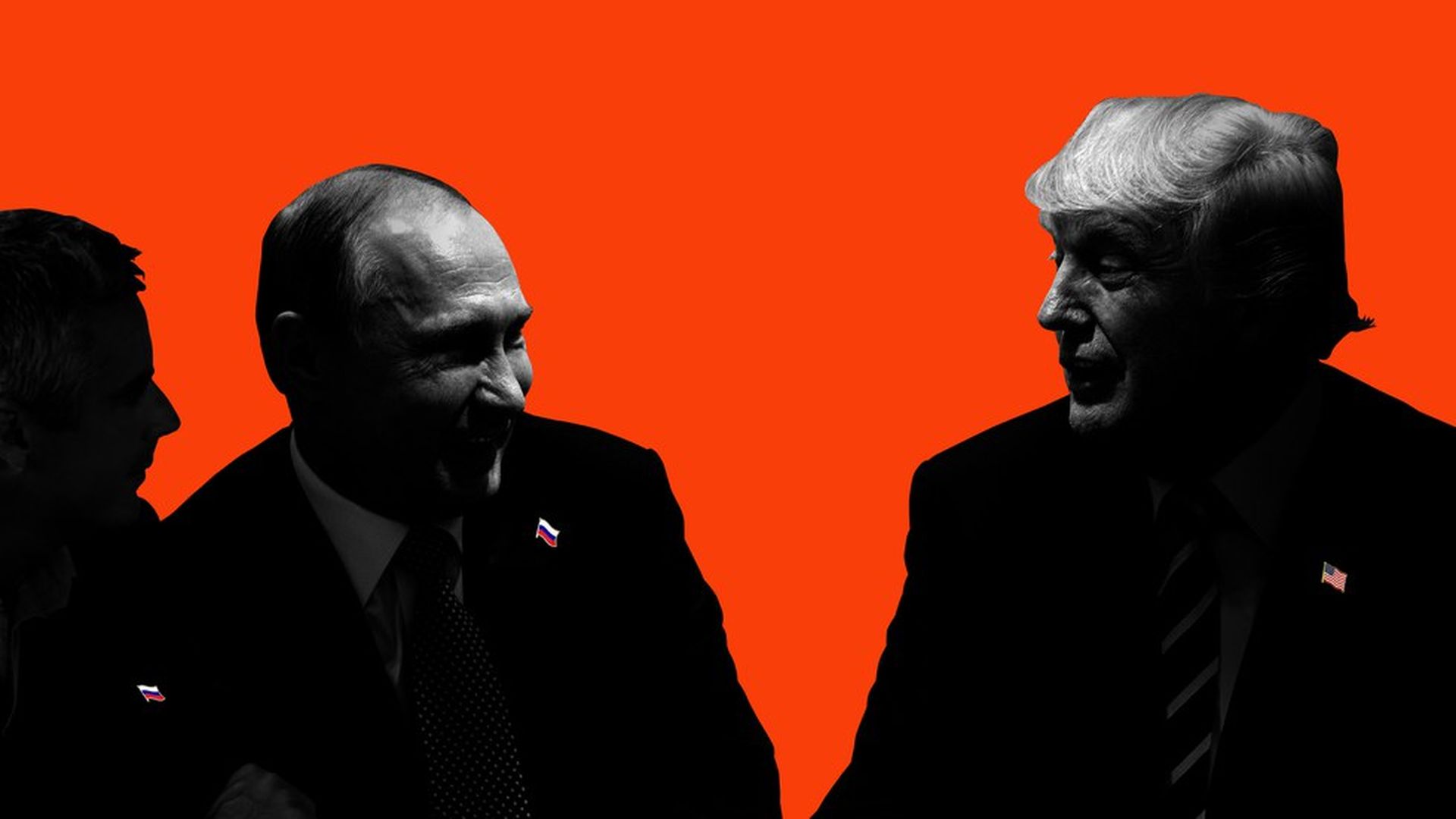
President Trump and Russian President Vladimir Putin spent about an hour talking privately at a dinner during the G-20 meeting in Europe, according to a source familiar with the meeting. It happened during the dinner for heads of state when at one point Trump got up from his seat and moved to sit with Putin and Putin's translator.
Why this matters: It's highly unusual for a U.S. president to meet with a Russian leader with only Russian staff present and violates national security protocol (though Trump might not have been aware of that).
Stanford's Michael McFaul, a U.S. ambassador to Russia under President Obama, told MSNBC's Lawrence O'Donnell that holding such a conversation without talking points is "very difficult — very dangerous, I would say."
Update, Trump tweets: "Fake News story of secret dinner with Putin is 'sick.' All G 20 leaders, and spouses, were invited by the Chancellor of Germany. Press knew!"
The White House said in a statement that all the leaders circulated throughout the room during the dinner and Trump spoke "briefly" with Putin and they used the Russian translator since Trump was with a translator who only spoke Japanese. Saying the meeting was hidden is "false, malicious and absurd."
Full statement
The night of the G20 summit, there was, first, a concert for all the leaders in the new Hamburg opera house. The leaders were all photographed by the press in a group photo before going in. Later that night, Chancellor Merkel hosted a dinner for leaders and spouses only, and the German government set the seating arrangements. The concert and dinner were publicly announced on both the President's schedule and the G20 schedule, with the clear understanding that all visiting leaders would be present.At the dinner, President Trump was seated between Mrs. Abe, wife of the Prime Minister of Japan, and Mrs. Macri, wife of the President of Argentina. Mrs. Trump was seated next to President Putin.During the course of the dinner, all the leaders circulated throughout the room and spoke with one another freely. President Trump spoke with many leaders during the course of the evening. As the dinner was concluding, President Trump went over to Mrs. Trump, where he spoke briefly with President Putin.Each couple was allowed one translator. The American translator accompanying President Trump spoke Japanese. When President Trump spoke to President Putin, the two leaders used the Russian translator, since the American translator did not speak Russian.There was no "second meeting" between President Trump and President Putin, just a brief conversation at the end of a dinner. The insinuation that the White House has tried to "hide" a second meeting is false, malicious and absurd.It is not merely perfectly normal, it is part of a President's duties, to interact with world leaders. Throughout the G20 and in all his other foreign engagements, President Trump has demonstrated American leadership by representing our interests and values on the world stage.