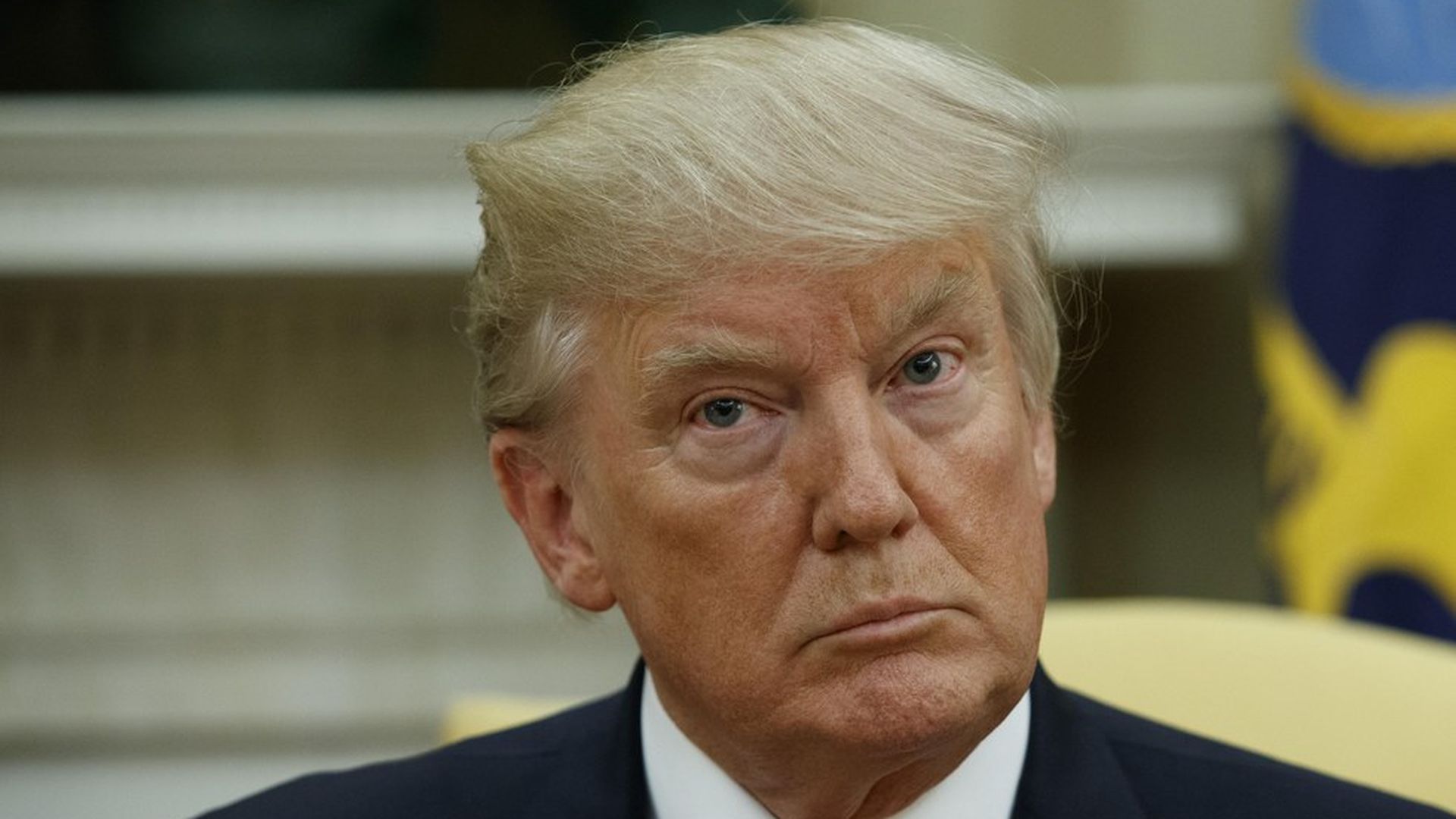
President Trump reacted on Twitter this evening to the shelving of the Senate GOP's health care bill until after the July 4 recess, and his subsequent meeting with Republican senators at the White House — at which he said the final Senate bill was "going to be great."
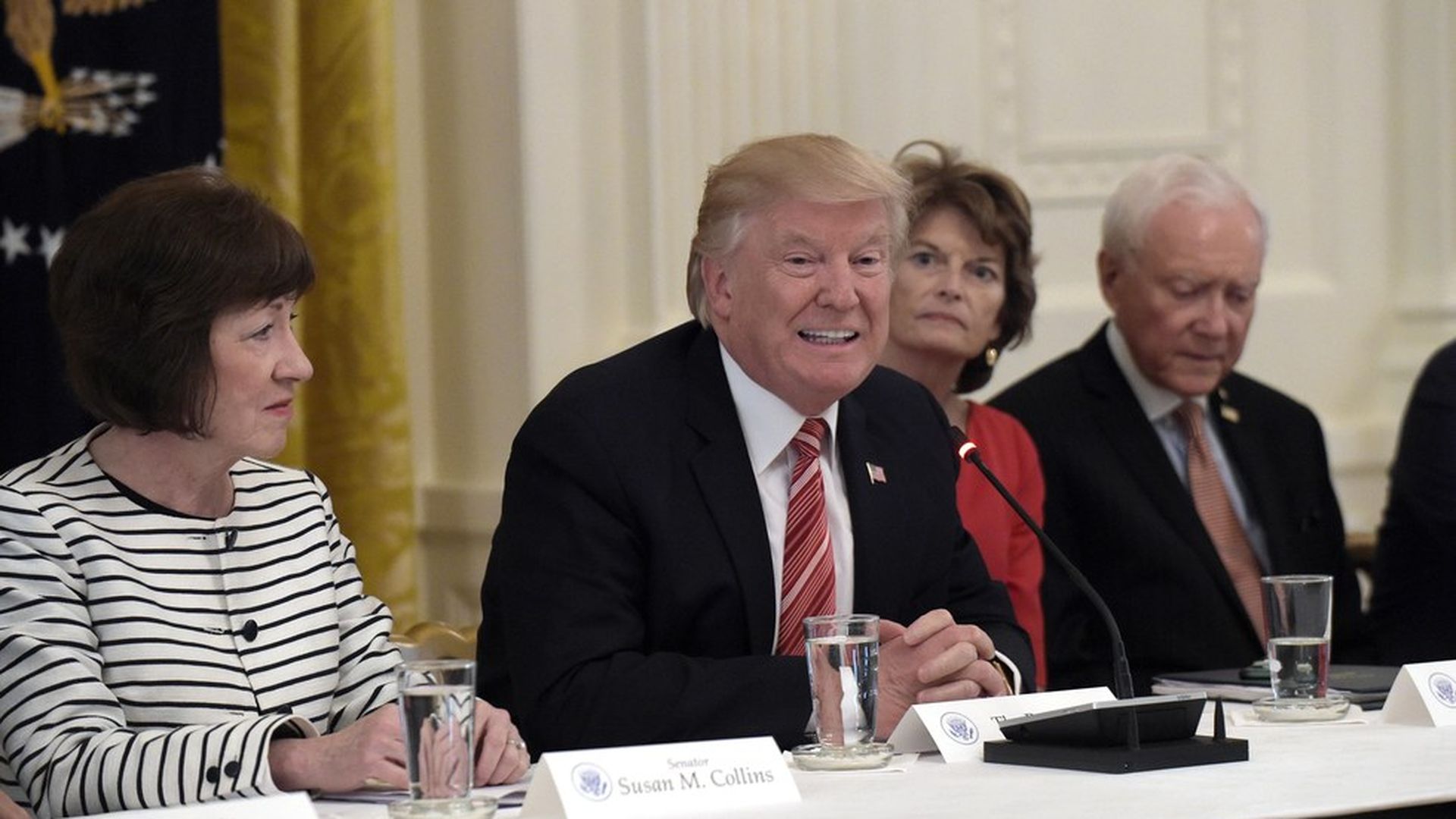
After Mitch McConnell announced he would be delaying the health care vote, which appeared doomed to failure, President Trump brought the entire GOP caucus to the White House and told them, "we have really no choice but to solve this situation."
Many of the holdouts were given seats uncomfortably close to the president. Rand Paul, one of those holdouts, met privately with Trump and said the president seemed "open" to changes.
The White House released a statement Monday night that Syria's military would "pay a heavy price" if it launched a chemical weapons attack. Then BuzzFeed News and NYT reported that defense officials were caught off guard by the announcement. The WH narrative on chemical weapons and what to do about them continues to unfold, and some of the statements seem to contradict one another.
Why it matters: The apparent lack of coordination in setting the scene for another potential U.S. military strike in such a turbulent region could have dire consequences, especially since Trump showed in April his willingness to attack when it comes to chemical weapons use in Syria.
White House sources tell us to look for increasing signs that the afterglow of China President Xi Jinping's visit to Mar-a-Lago in April has long faded, and say the administration is going to be tougher on the world's second largest economy.
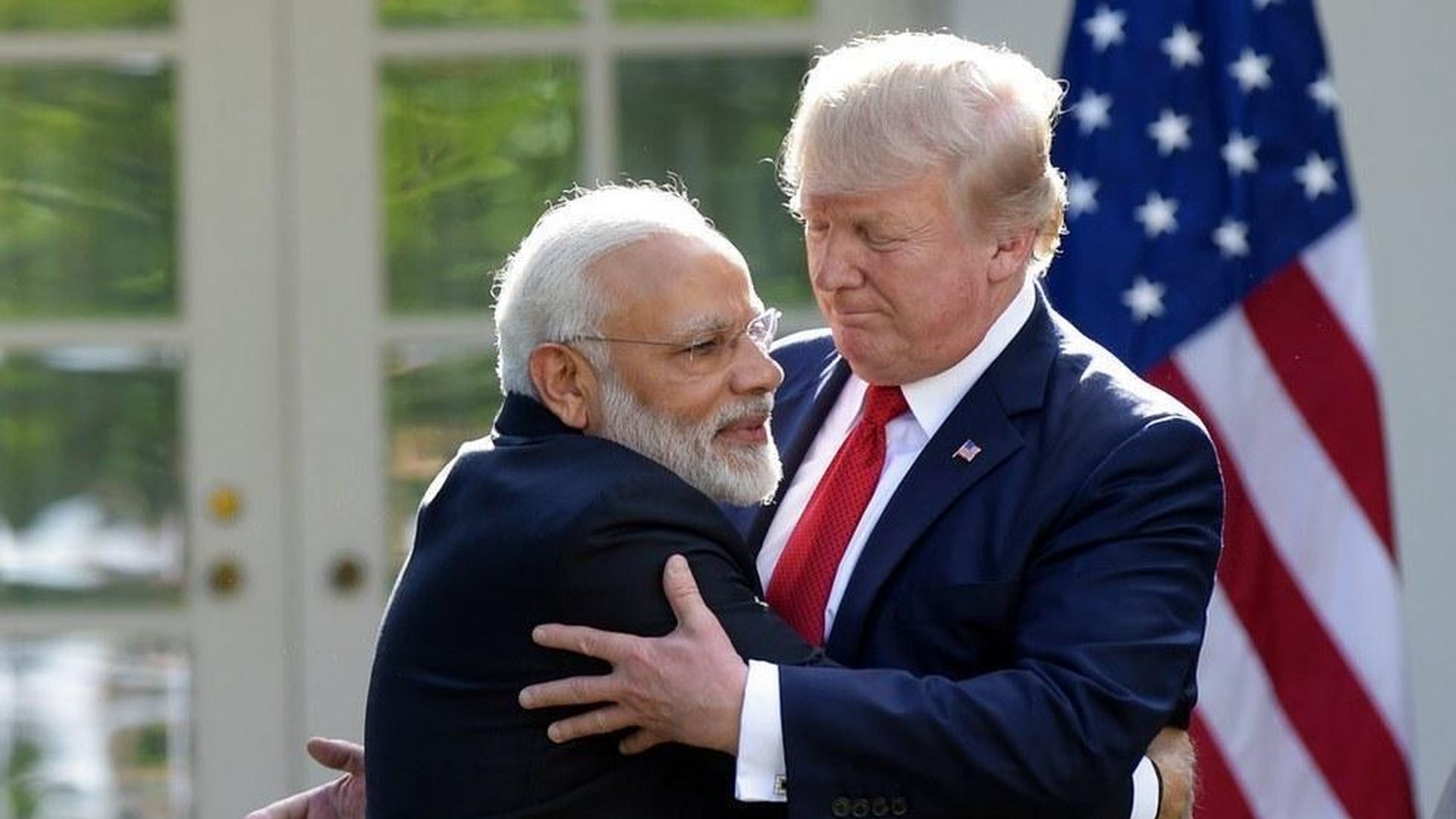
The sources say that at a time when Trump is losing patience with Beijing, he invited the leader of India — a huge China rival — to the White House. He and Prime Minister Narendra Modi, who rose on Trump-like forces, hugged in the Rose Garden yesterday.
Sound smart: Steve Bannon and his allies in key trade and policy positions have been agitating for a high-profile economic fight with China: It is central to their view of America First thinking.
$321 billion in net deficit reduction ($202 billion more than the House).
Average premiums would go down starting in 2020.
The markets would be stable through 2020, and stable after that "in most areas of the country."
The bad news:
22 million fewer people would have health coverage.
The increase in the uninsured would be "disproportionately larger among older people with lower income."
$772 billion in Medicaid cuts.
States would have to decide whether to put more money into Medicaid, cut doctors' payments, eliminate optional services, restrict eligibility, or all of the above.
Average premiums would go up before 2020.
People would pay "substantial increases" for services no longer considered essential benefits.
"Coverage for maternity care, mental health care, rehabilitative and habilitative treatment, and certain very expensive drugs could be at risk."
Annual and lifetime limits could return for those services, too.
Deductibles would be higher. (Closer to $6,000 for a benchmark plan, vs. $3,600 under the Affordable Care Act.)
Some "sparsely populated areas" would have no insurers.
Key quote: "As a result, despite being eligible for premium tax credits, few low-income people would purchase any plan, CBO and JCT estimate." - CBO score
Unless Senate Majority Leader Mitch McConnell can change some of his members' minds pretty quickly, it's looking like he might not have the 50 votes he'd need for a procedural motion that would bring his health care bill to the floor. The CBO's estimate that 22 million more people would be uninsured under the Senate bill was a steep — and maybe fatal — setback.
The proof: Sen. Susan Collins tweeted that she'll vote against the procedural motion to bring up the bill on Wednesday. Others have been making noise, too. If enough Republicans vote against it, the whole effort could end right there.
Sean Spicer told reporters off-camera Monday that President Trump thinks Russia interfered in the 2016 election, but also thinks "other countries as well could have been equally involved."
As for Barack Obama's response, Spicer said, "It's pretty clear they knew all along there was no collusion and that's pretty helpful to the president." He later asked, "they've been playing this card on Trump and Russia... If they didn't take any action, does that make them complicit?"
The Supreme Court decided Monday to allow President Trump's 90-day travel ban to go into effect for some travelers, overturning the actions of lower federal courts that blocked it.
What the ruling means: Unlike in the original travel ban, travelers with valid green cards and visas will be allowed to enter the U.S., but all refugees from the 6 countries listed — Iran, Libya, Somalia, Sudan, Syria and Yemen — will be banned.
Trump's response, on Twitter: "Very grateful for the 9-O decision from the U. S. Supreme Court. We must keep America SAFE!"
Timing: The justices also agreed to review arguments in the case in October, so today's decision could be reversed. In the meantime, Trump stated in a memorandum last week the the ban will go into effect within 72 hours of being cleared by the court.
Ivanka Trump — President Trump's daughter and a White House senior advisor — told Fox News this morning that she tries to "stay out of politics" and that it's normal for she and her father to "not have 100% aligned viewpoints on every issue."
Top quote: "I feel blessed just being part of the ride from day one and before. But he did something pretty remarkable. But I don't profess to be a political savant."
Why it matters: Ivanka has an office in the West Wing. She was influential in President Trump's decision to bomb Syria, worked with her husband Jared Kushner on LGBT rights, and many climate activists saw her as a hope for fighting climate change and staying in the Paris Agreement (although her dad left anyway). This all doesn't seem to back up her claim of staying out of politics.
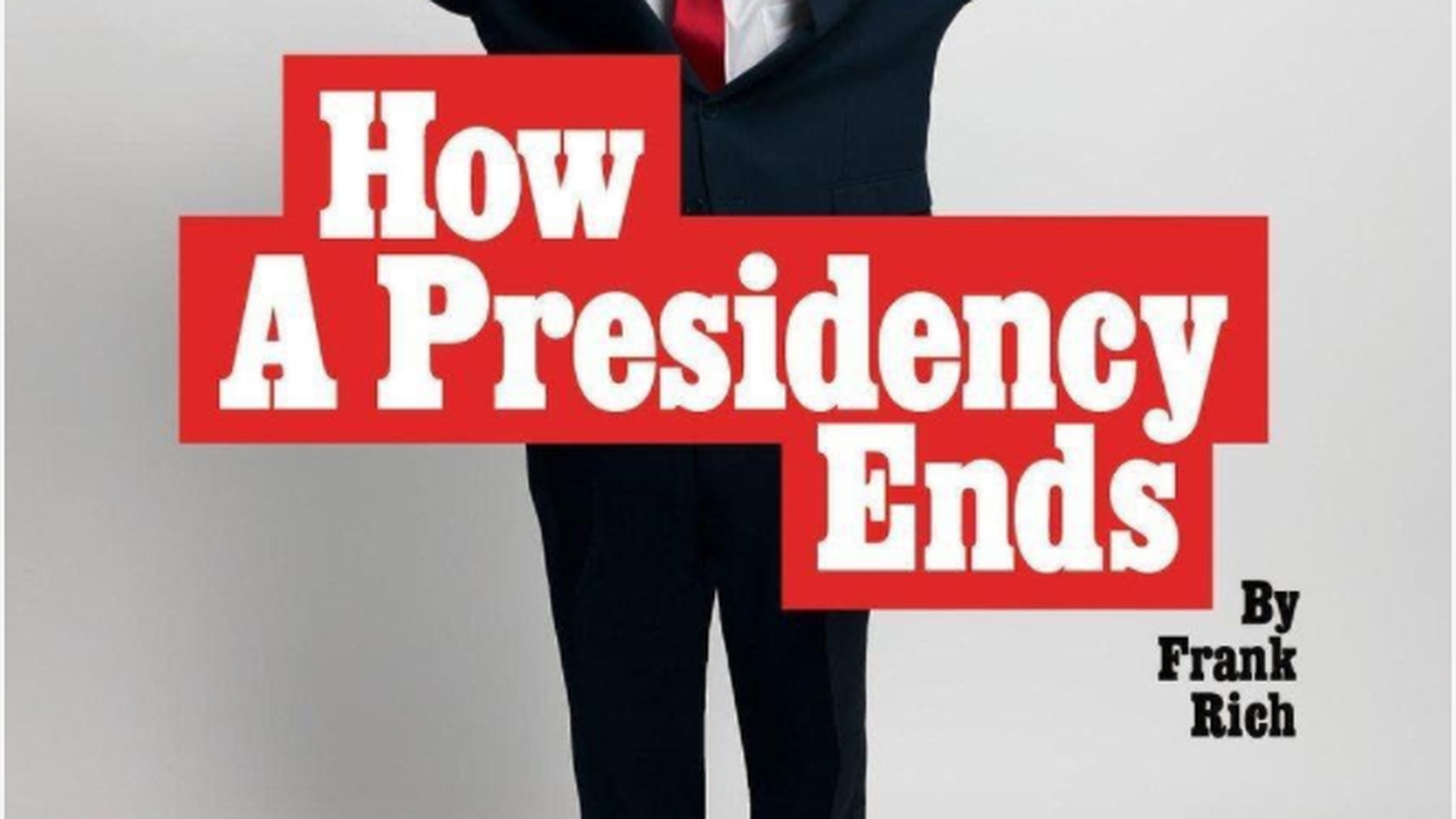
"Just wait: Watergate didn't become Watergate overnight, either" — New York mag cover story, by Frank Rich:
"For all the months of sensational revelations and criminal indictments... a Harris poll found that only 22 percent thought Nixon should leave office. Gallup put the president's approval rating in the upper 30s, roughly where our current president stands now — lousy, but not apocalyptic. There had yet to be an impeachment resolution filed in Congress by even Nixon's most partisan adversaries. ... [A]fter Nixon hit a new low of a 27 percent approval rating in November 1973, he spiked to 37 in a Harris poll a month later. ... Looking back on it all, Elizabeth Drew would write, 'In retrospect, the denouement appeared inevitable — but it certainly didn't feel like that at the time.'"
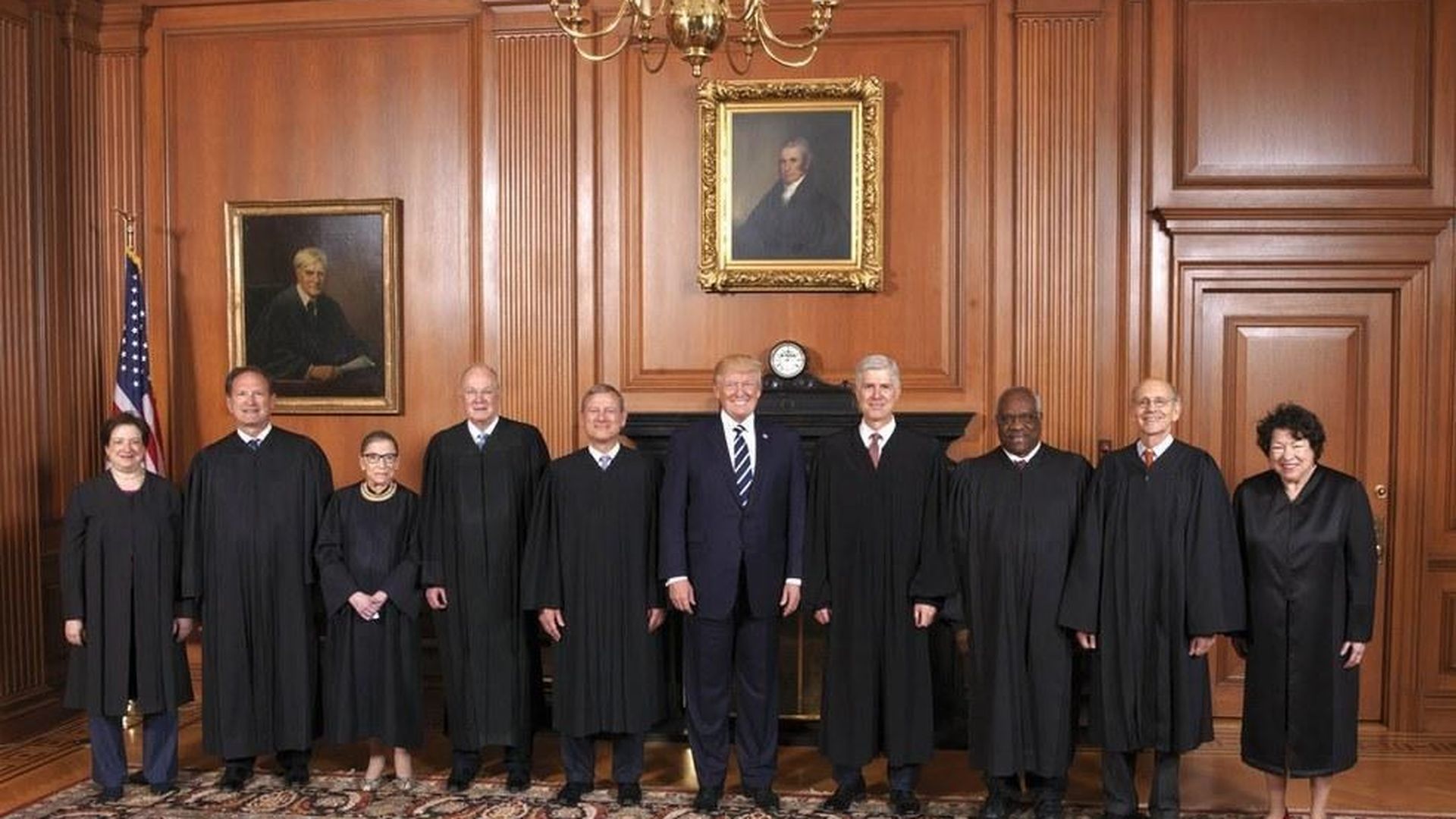
White House sources think Justice Anthony Kennedy, the Supreme Court's ideological fulcrum, may announce his retirement today, as the justices gather on the bench for the last time this term.
If that happens, Day 158 instantly becomes President Trump's biggest moment.
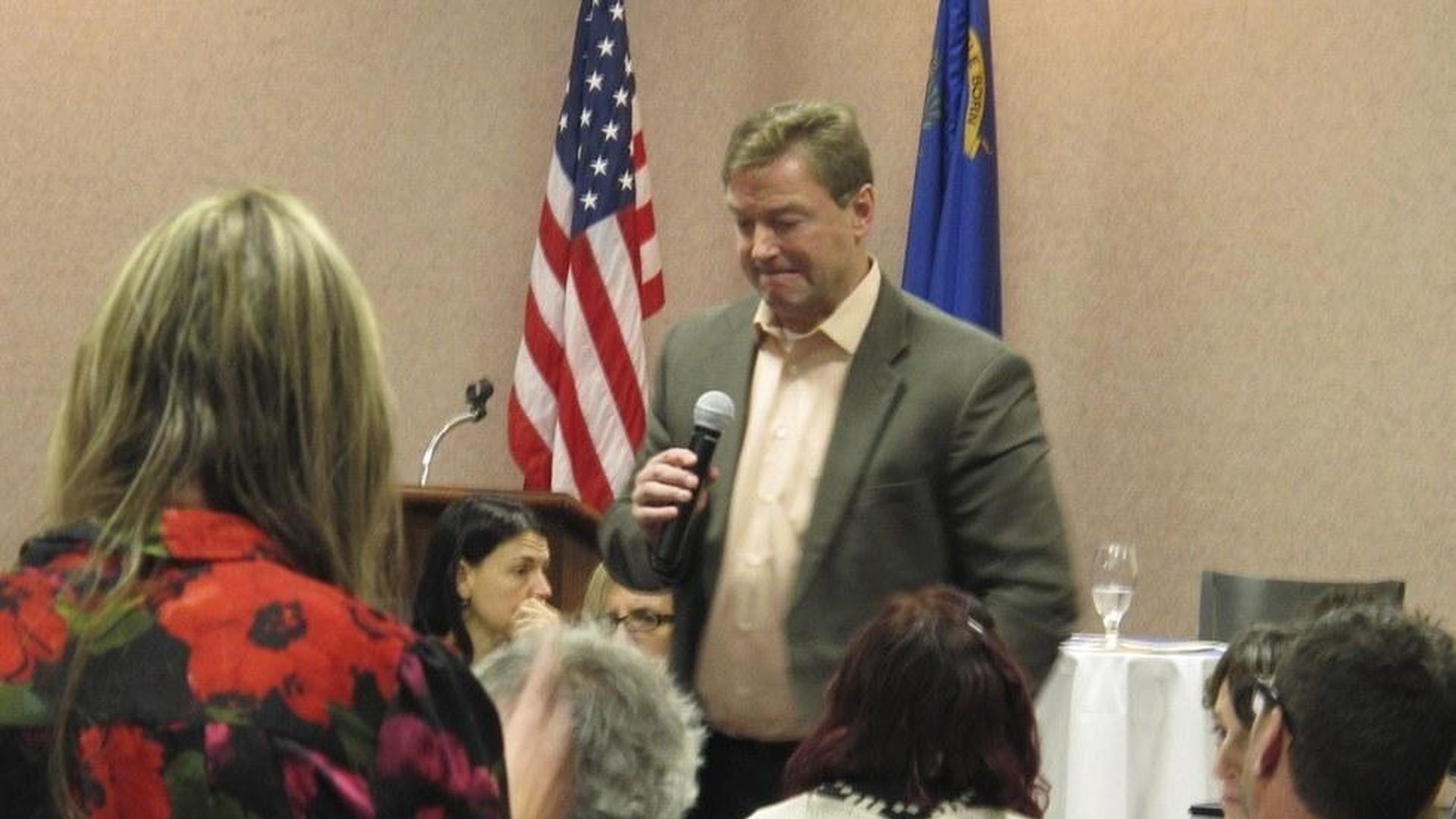
Many Republicans wondered this weekend if it made sense for America First Policies, the outside group backing President Trump, to run attack ads against Sen. Dean Heller (R-Nev.) for wavering on healthcare, when his vote is desperately needed.
"Does Trump team think it's smart to attack the most endangered GOP senator, from a state Trump lost?" asked a longtime lion of the GOP. "This is the second dumbest thing Trump has done since firing Comey."
Well, Axios has learned that the group is giving Heller a chance to modify his blast at the bill, before unleashing an advertising attack in his home state.
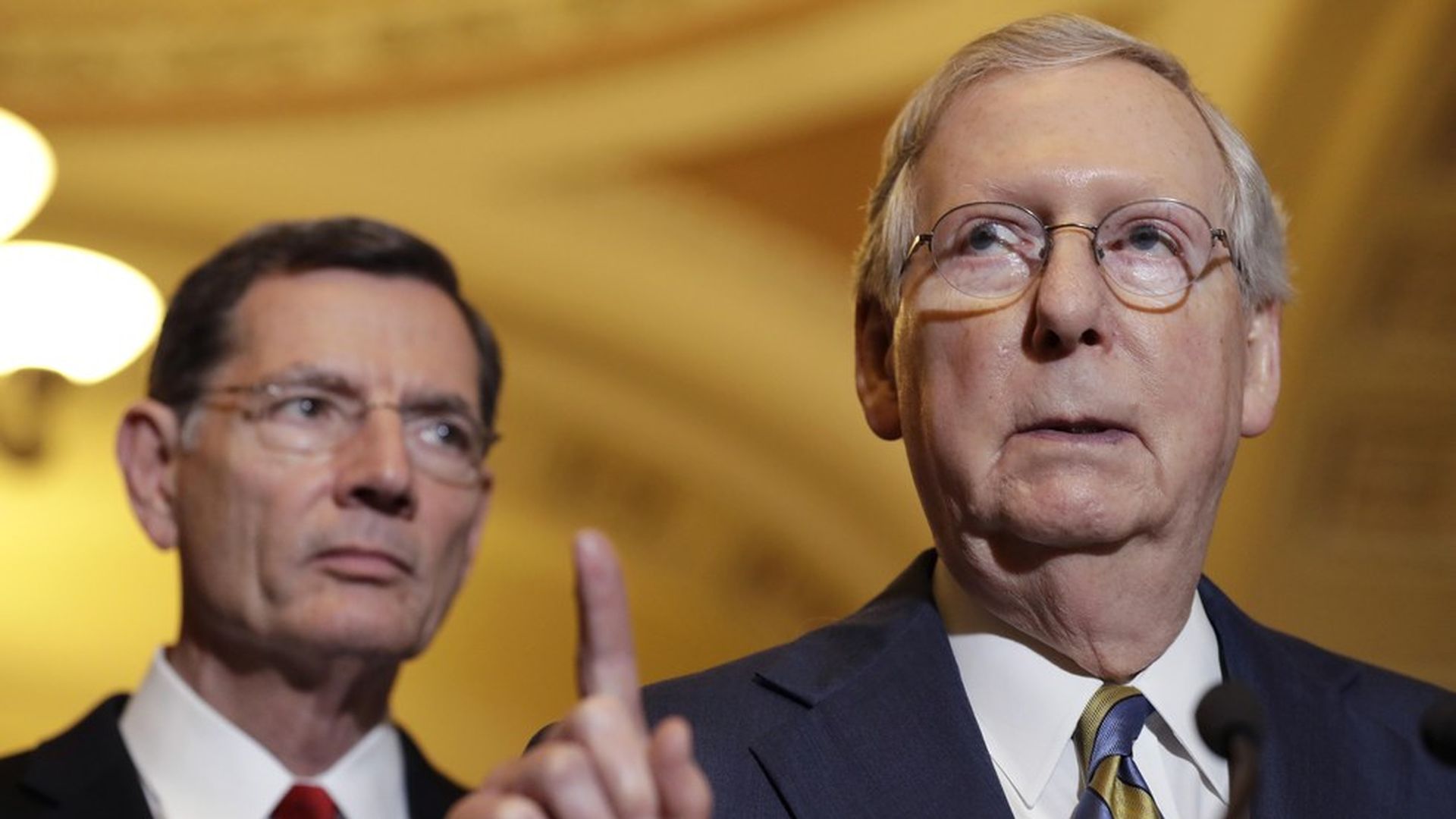
This is the week we'll learn whether Mitch McConnell can pull a rabbit out of a hat. His challenge: Tweak his health care bill enough to win over wavering moderates — including Susan Collins, Lisa Murkoswki — without losing any more conservatives on top of Rand Paul.
It won't be easy. Some of the things each camp wants are in direct conflict: Some of the moderates want to ease off the bill's Medicaid cuts; that could draw new conservative opponents out of the woodwork. Collins wants to strip anti-Planned Parenthood language; Ted Cruz and Mike Lee wouldn't like that.