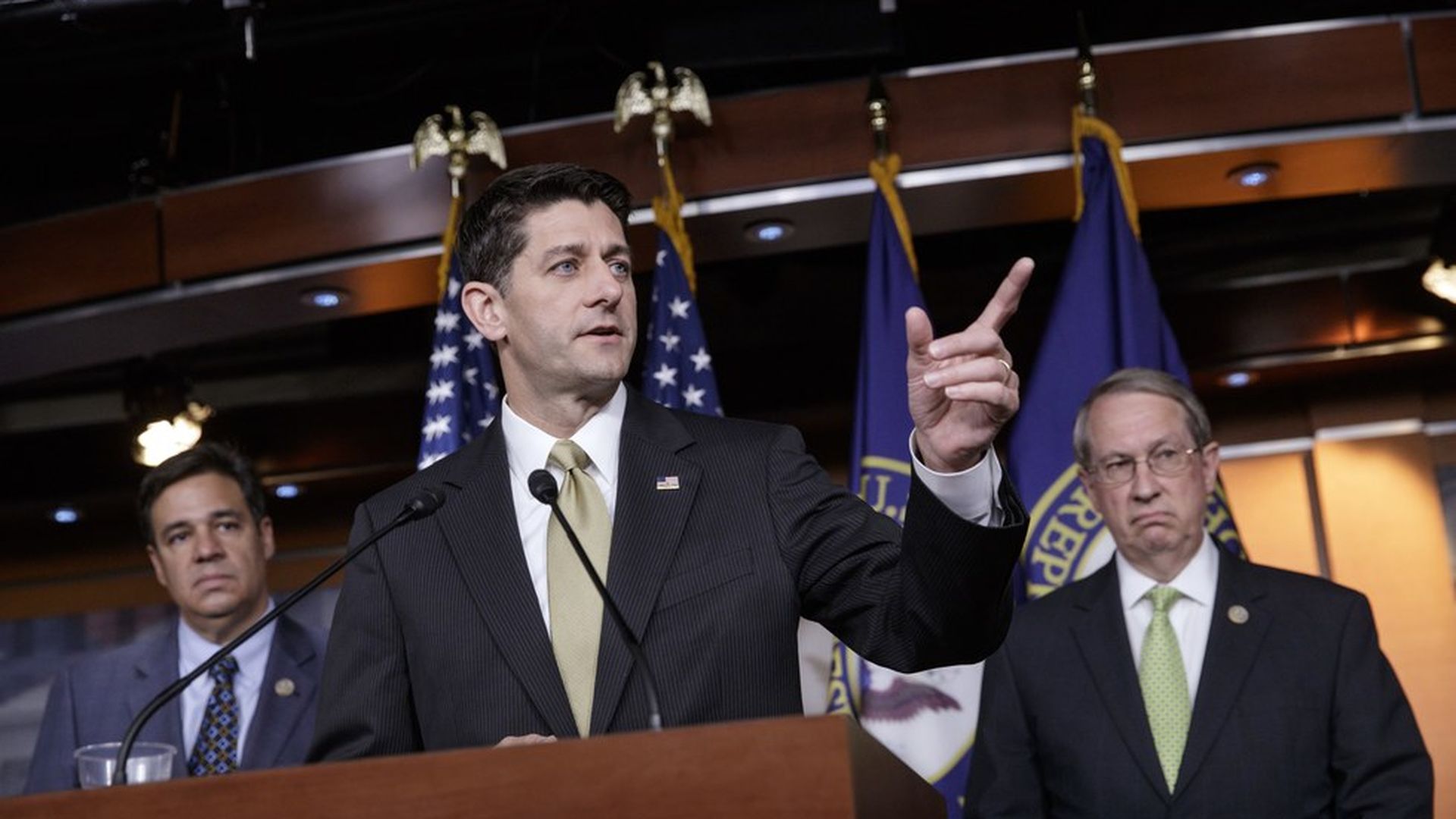
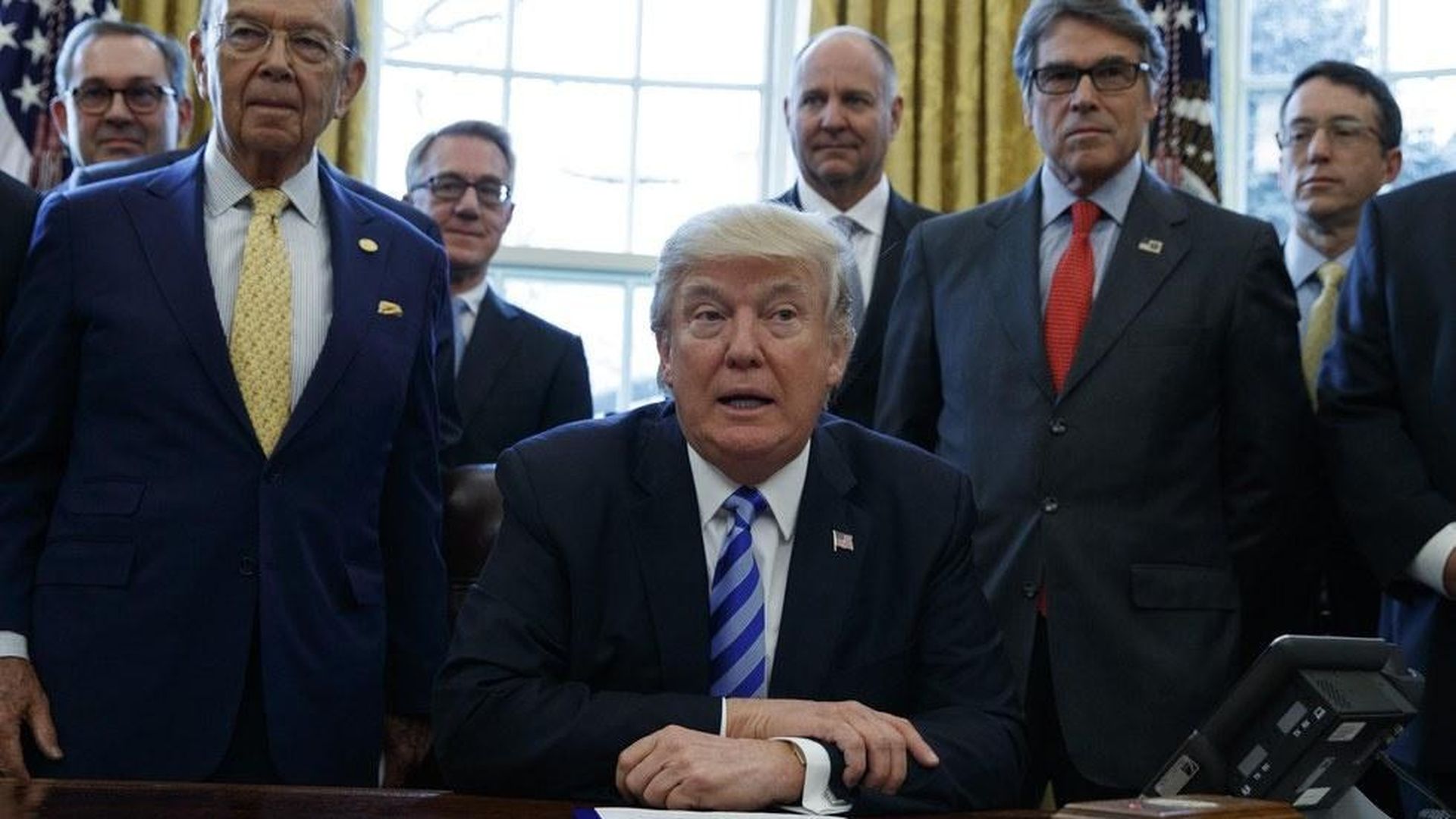
The House passed two bills Thursday which President Trump has promoted as part of his proposed crackdown on illegal immigration. One bill would deny federal grants to so-called sanctuary cities, and another, known as "Kate's Law," would increase penalties for deported people who try to return to the U.S. and get caught.
The Senate, which blocked an earlier version of Kate's Law last year, will have to pass the bills for them to become law.
The votes: The sanctuary cities bill passed 228-195, with seven Republicans voting no and three Democrats voting yes. Kate's law passed 257-157, with one republican voting no and 24 Democrats voting yes.
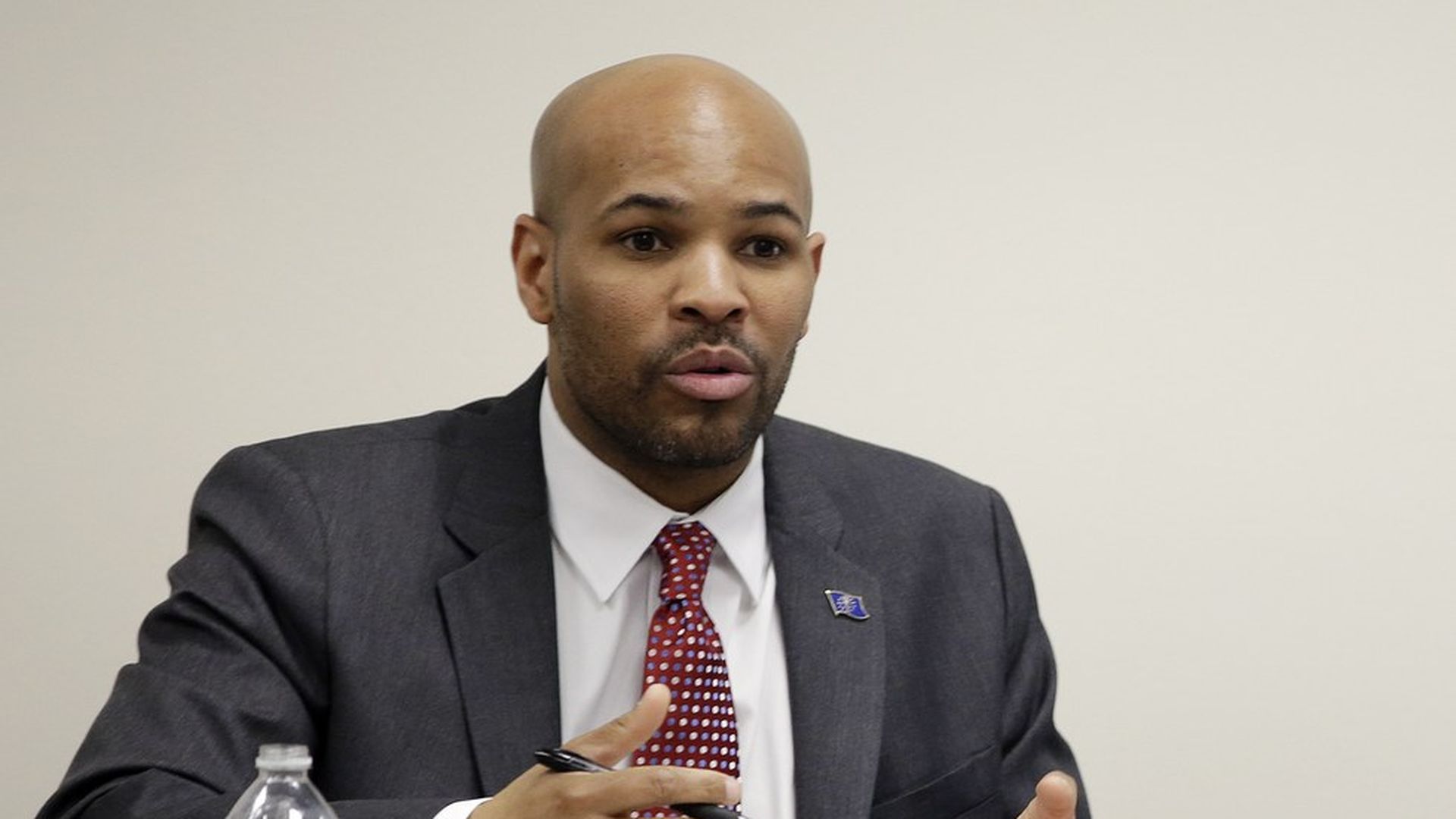
President Trump has nominated Jerome M. Adams to serve as the next U.S. Surgeon General. He currently serves as Indiana State Health Commissioner, a position VP Mike Pence appointed him to, and used to work as an anesthesiologist at the Indiana University School of Medicine. (That would make him the second top health official with ties to Pence, the first being Seema Verma, who administers Medicare and Medicaid, per Stat.)
Adams has promoted a needle exchange program in Indiana to reduce the spread of diseases among intravenous drug users in the state, which suffers from the opioid epidemic.
The resume: BS in Biochemistry and BA in Biopsychology from the University of Maryland Baltimore County, MPH from University of California at Berkeley, MD from Indiana University School of Medicine.
A top White House aide on tech issues said Thursday "we have a responsibility" to figure out what happens to workers who lose their jobs to automation or technological change, whether that's at the federal, state or local level.
"So, I think that's a real policy challenge," said Matt Lira, Special Assistant to the President for Innovation Policy and Initiatives, at an event sponsored by the Internet Association. "Both things like these potential new technologies, but also just the nature of the modern economy, is going to require the evolution of horizontal pathways where someone who's 35, 45, 55 has a credible path from column A to column B that can be done at scale."
Defense Secretary Jim Mattis told reporters on his way to a NATO meeting in Belgium that the Pentagon's plan in the Syrian conflict is to eventually break up the territory along the Euphrates River into so-called "deconfliction" zones.
This shows Mattis is leaving the U.S. strategy open to letting the Assad regime and Iran control territory in the region.
Why it matters: This pits Mattis and the Pentagon against some officials in the White House, who are pushing for a fight against Iran for territory after ISIS is rooted out. The Pentagon is sticking to its statement that it doesn't want a fight with pro-regime forces, but the recent escalation of U.S. clashes with pro-regime forces in the region tell a different story.
Mattis might be hedging his bets on the strategy and said Tuesday "it's not like the fight's over when Raqqa's over."
Trump's new criteria for visa applicants are going into effect tonight now that the Supreme Court has allowed some of his travel ban to move forward, according to AP. Here's your guide to navigating the new protocols:
Who's affected: New visa applicants from six countries (Syria, Sudan, Somalia, Libya, Iran and Yemen) and all refugees will be required to have a close family or business tie to the U.S. This caveat will also affect the government's lottery of visas that randomly awards 50,000 green cards each year to those in countries with low rates of immigration to the U.S. (Note: If you have a visa that's already been approved, it will not be revoked.)
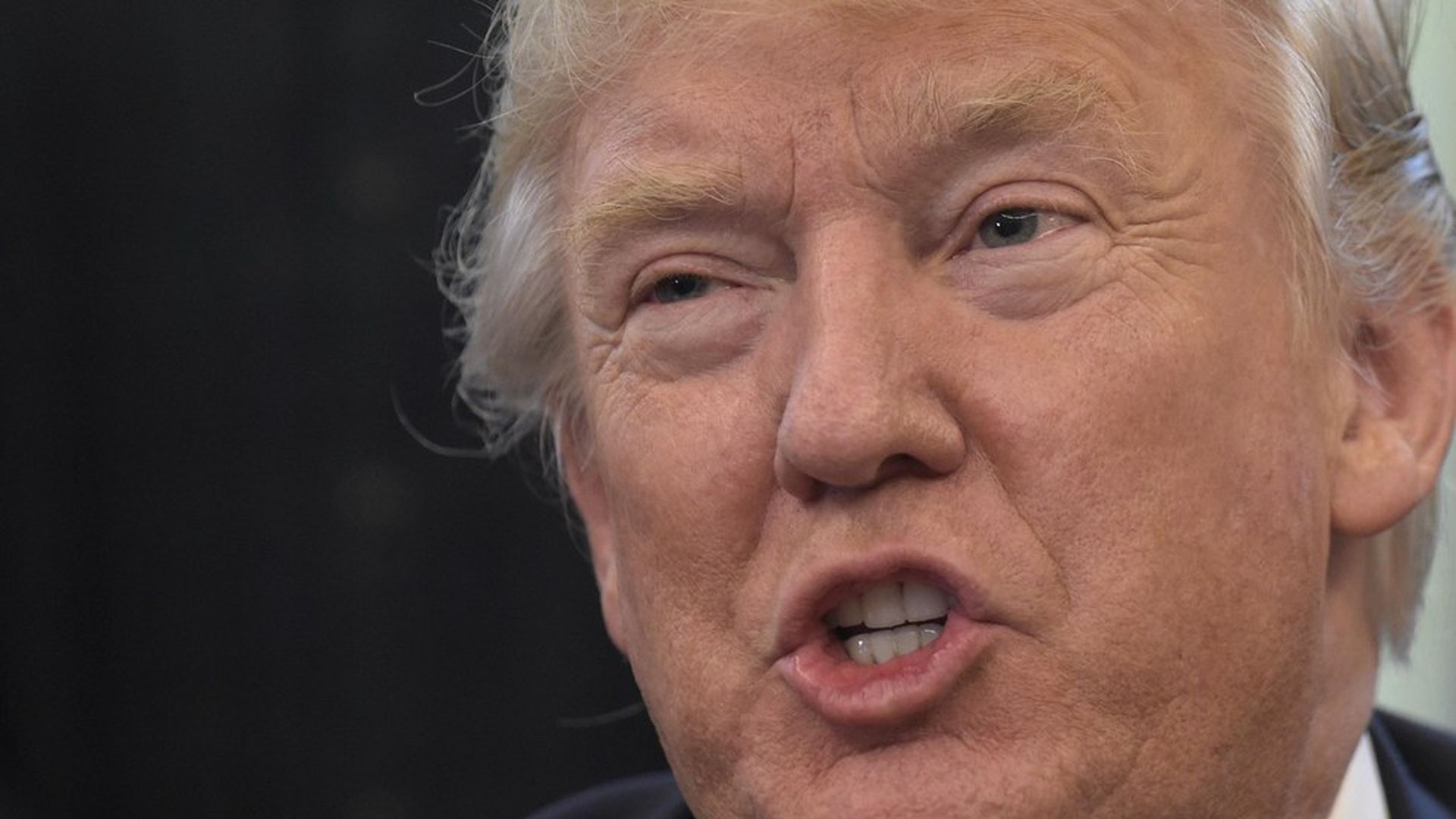
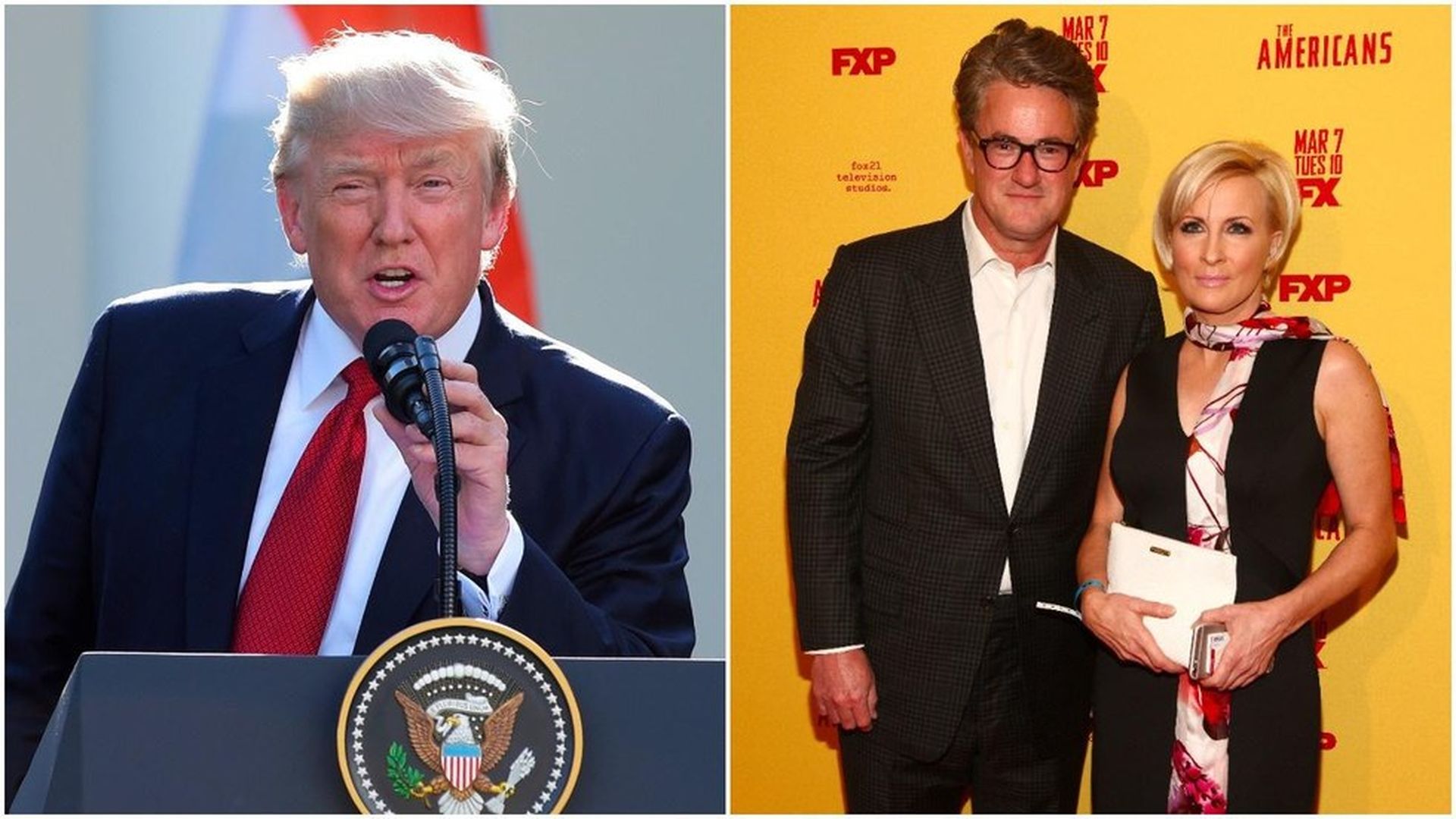
President Trump's Twitter attacks got personal Thursday morning when he went after Morning Joe hosts and engaged couple Joe Scarborough and Mika Brzezinski — his old friends:
"I heard poorly rated @Morning_Joespeaks badly of me (don't watch anymore). Then how come low I.Q. Crazy Mika, along with Psycho Joe, came... to Mar-a-Lago 3 nights in a row around New Year's Eve, and insisted on joining me. She was bleeding badly from a face-lift. I said no!"
Flashback: When Joe and Mika broke the news of their engagement in a Vanity Fair interview last month, they revealed that Trump — over lunch with the couple, as well as Ivanka and Jared Kushner — offered to officiate their wedding, and recommended they hold the ceremony at Mar-a-Lago or the White House. Mika told Vanity Fair, "If it weren't Trump, it might be something to think about."
Everyone is making calls — based on calculations of who's got the most leverage with certain senators down to personal relationships. President Trump, Vice President Pence, Senate Majority Leader McConnell, and officials including White House Legislative Affairs director Mark Short and Chief of Staff Reince Priebus are working the phones.
On Tuesday night the Vice President hosted a small group of very conservative senators for dinner at his residence. Mike Lee, Pat Toomey, Tom Cotton, and Ben Sasse were there. I asked a source familiar with the dinner why Toomey was there given he supported the bill, and the source told me it was wise to bring together colleagues of a similar ideological persuasion who'd come to different conclusions about the health bill.
At the Capitol, Axios' David Nather and Caitlin Owens hear only pessimism. At the White House, we hear a more optimistic read.
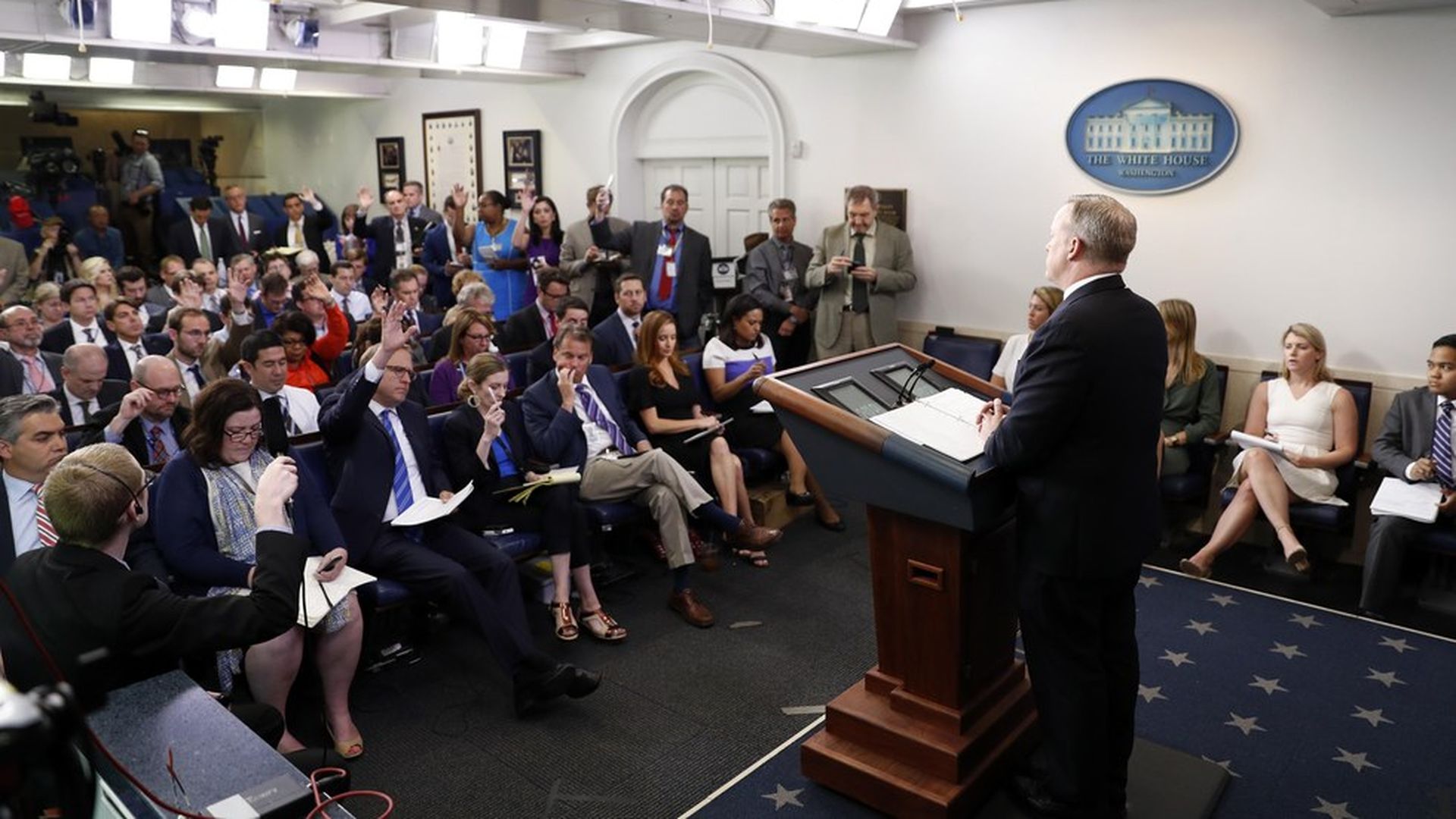
With all the legitimate gripes reporters have with this White House, perhaps the least worthy of your (or their) time and attention is the WWE-style smackdown over briefings. Every day, the White House hides or dodges. Every day, reporters protest and whine.
We can't remind you, or ourselves, often enough of the through-the-looking-glass weirdness of events that cascade over us all day, every day. (Today is Day 161 of President Trump, with 1,302 left in this term).
This tweet by the president yesterday — combined with the previous day's "fake news" barrage against CNN, "the failing @nytimes & @washingtonpost," NBC, CBS and ABC — adds up to the most dangerous denigration of media since ... Nixon? Did Nixon attack six great news organizations by name in 24 hours?
A friend of ours said: "This is dictator-with-mirrored-sunglasses stuff."
The Senate health care bill would substantially reduce federal funding for all Medicaid beneficiary groups over the next two decades compared to current law, according to an analysis by Avalere, a health care consulting firm.
Why this matters: The funding cuts could encourage states to cut benefits for enrollees, payments to providers or eligibility for the program. It also saves the federal government $772 billion over 10 years, and likely much more over 20 years.
Data: Avalere Health analysis; Note: Adult age cutoff defined by state, ranging from 19-21. Seniors are 65+; Chart: Andrew Witherspoon / Axios
Senate Republicans have an urgent reason not to give up on repealing and replacing the Affordable Care Act: They don't want to break their promise to the GOP base. But the most recent polls suggest the base may not care as much as Republicans think.
The bottom line: A majority still supports the plan, but support has slipped, and there is some evidence that base Trump voters do not view repeal as a top priority — and many may not punish their representatives if they vote no.