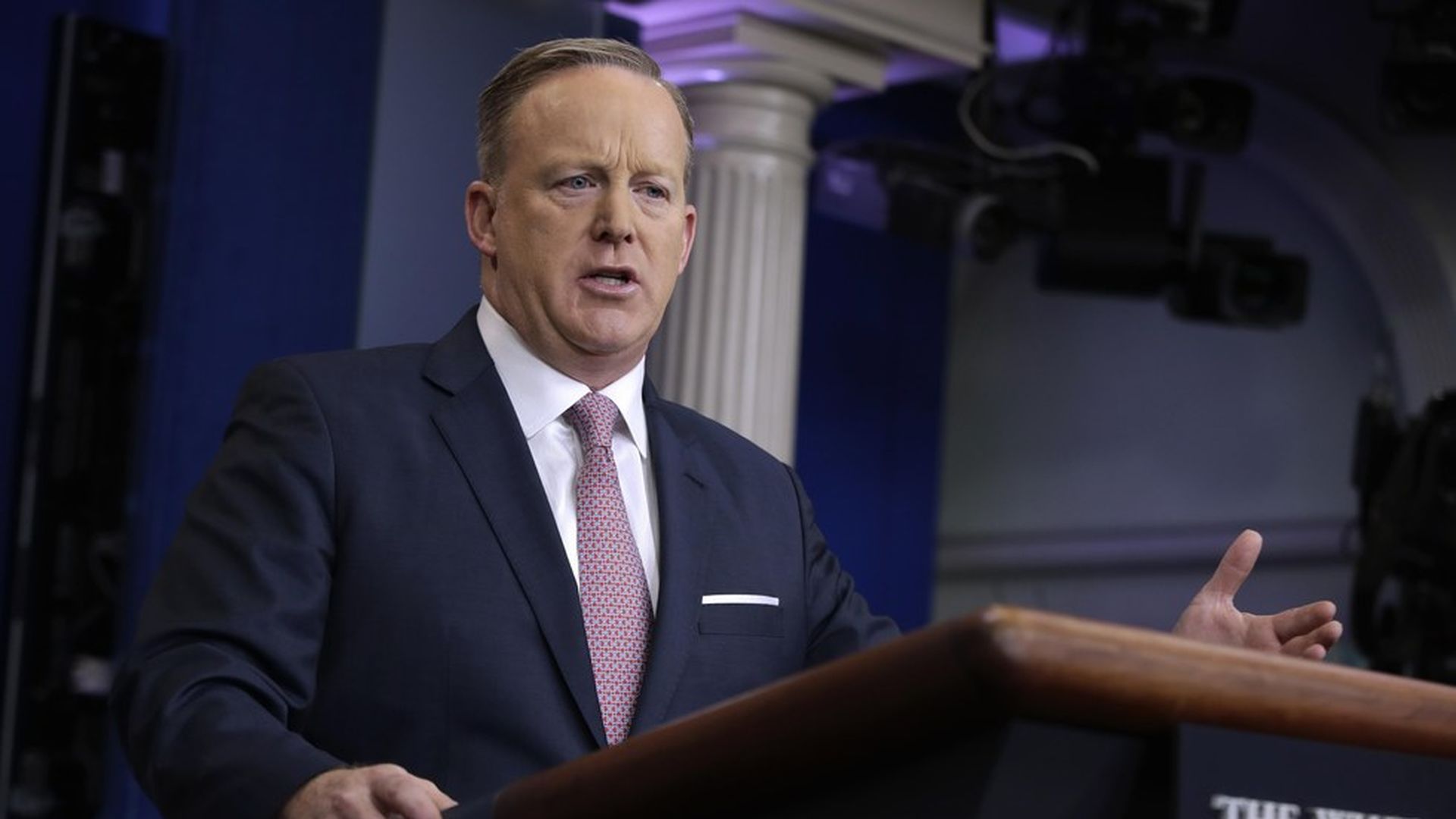
Sean Spicer told reporters off-camera Monday that President Trump thinks Russia interfered in the 2016 election, but also thinks "other countries as well could have been equally involved."
As for Barack Obama's response, Spicer said, "It's pretty clear they knew all along there was no collusion and that's pretty helpful to the president." He later asked, "they've been playing this card on Trump and Russia... If they didn't take any action, does that make them complicit?"
The Supreme Court decided Monday to allow President Trump's 90-day travel ban to go into effect for some travelers, overturning the actions of lower federal courts that blocked it.
What the ruling means: Unlike in the original travel ban, travelers with valid green cards and visas will be allowed to enter the U.S., but all refugees from the 6 countries listed — Iran, Libya, Somalia, Sudan, Syria and Yemen — will be banned.
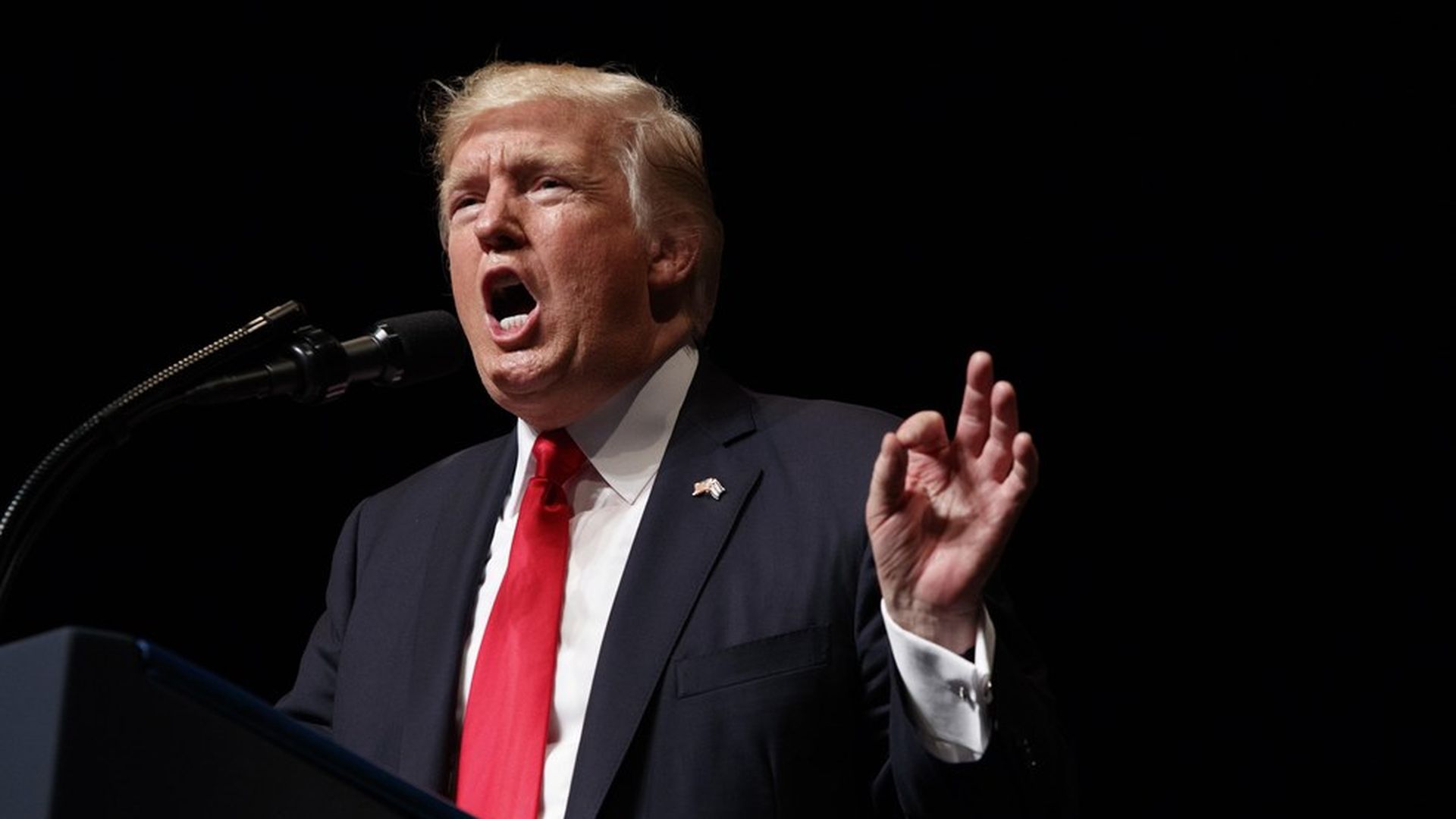
Trump's response, on Twitter: "Very grateful for the 9-O decision from the U. S. Supreme Court. We must keep America SAFE!"
Timing: The justices also agreed to review arguments in the case in October, so today's decision could be reversed. In the meantime, Trump stated in a memorandum last week the the ban will go into effect within 72 hours of being cleared by the court.
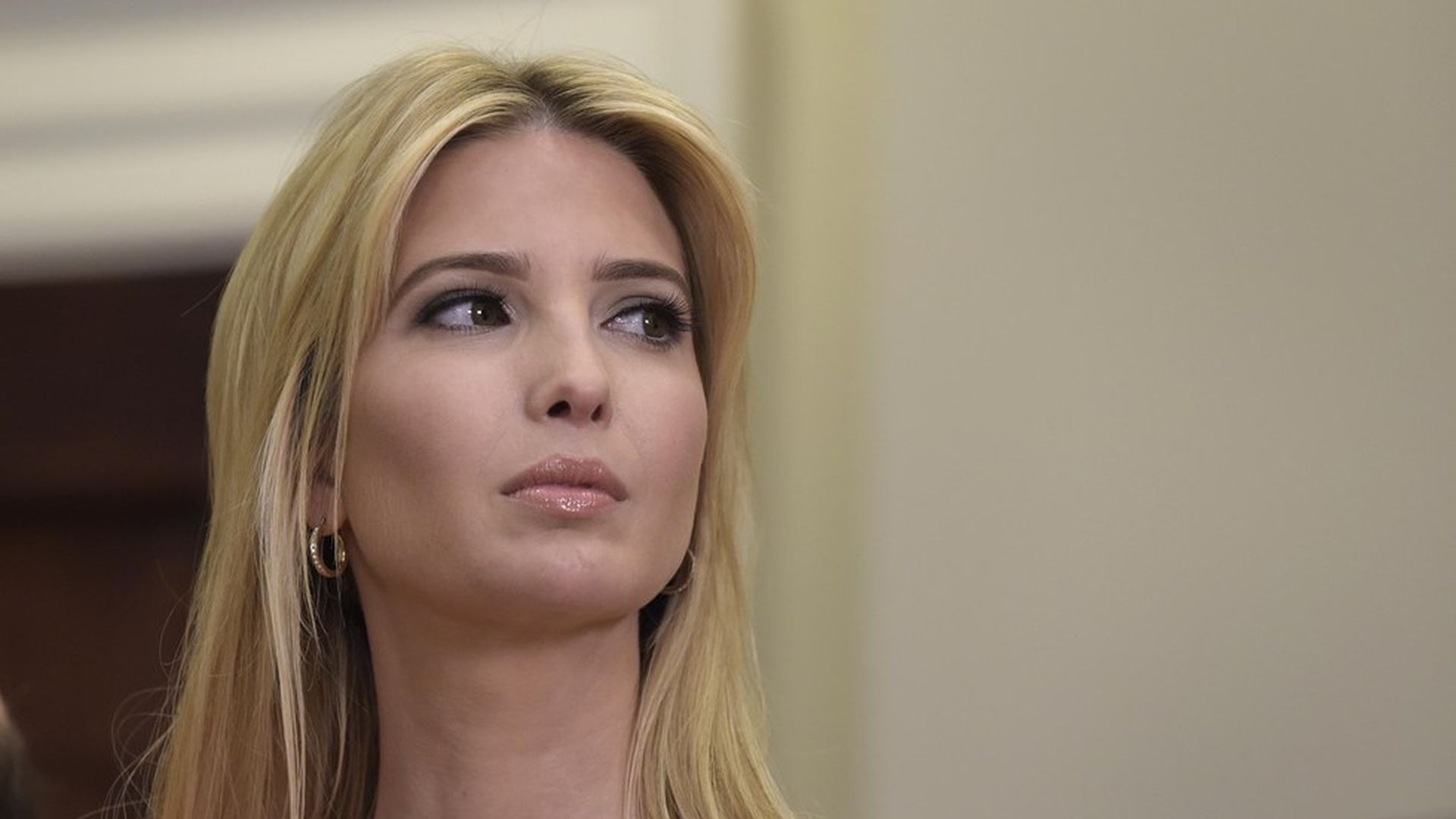
Ivanka Trump — President Trump's daughter and a White House senior advisor — told Fox News this morning that she tries to "stay out of politics" and that it's normal for she and her father to "not have 100% aligned viewpoints on every issue."
Top quote: "I feel blessed just being part of the ride from day one and before. But he did something pretty remarkable. But I don't profess to be a political savant."
Why it matters: Ivanka has an office in the West Wing. She was influential in President Trump's decision to bomb Syria, worked with her husband Jared Kushner on LGBT rights, and many climate activists saw her as a hope for fighting climate change and staying in the Paris Agreement (although her dad left anyway). This all doesn't seem to back up her claim of staying out of politics.
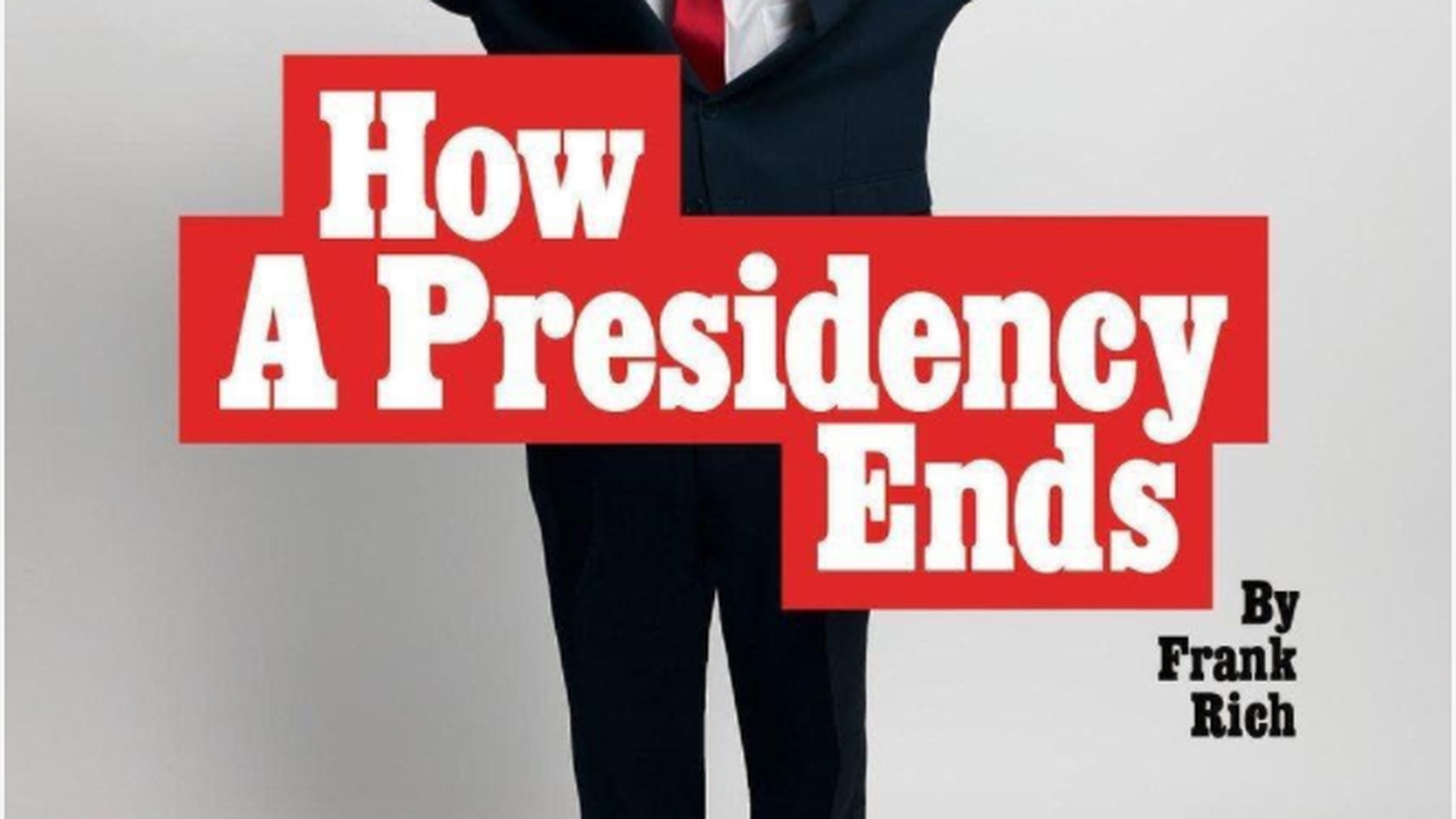
"Just wait: Watergate didn't become Watergate overnight, either" — New York mag cover story, by Frank Rich:
"For all the months of sensational revelations and criminal indictments... a Harris poll found that only 22 percent thought Nixon should leave office. Gallup put the president's approval rating in the upper 30s, roughly where our current president stands now — lousy, but not apocalyptic. There had yet to be an impeachment resolution filed in Congress by even Nixon's most partisan adversaries. ... [A]fter Nixon hit a new low of a 27 percent approval rating in November 1973, he spiked to 37 in a Harris poll a month later. ... Looking back on it all, Elizabeth Drew would write, 'In retrospect, the denouement appeared inevitable — but it certainly didn't feel like that at the time.'"
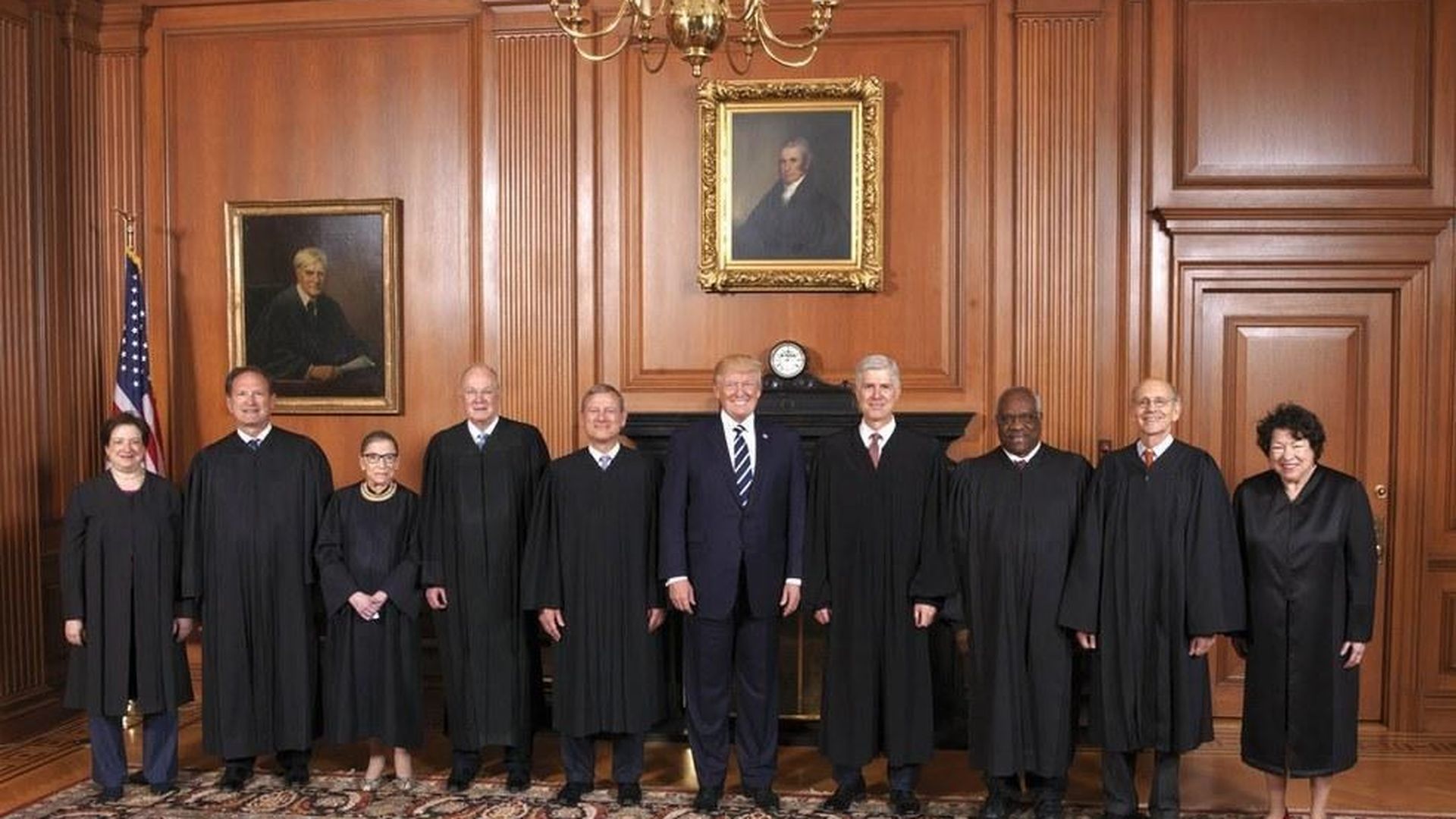
White House sources think Justice Anthony Kennedy, the Supreme Court's ideological fulcrum, may announce his retirement today, as the justices gather on the bench for the last time this term.
If that happens, Day 158 instantly becomes President Trump's biggest moment.
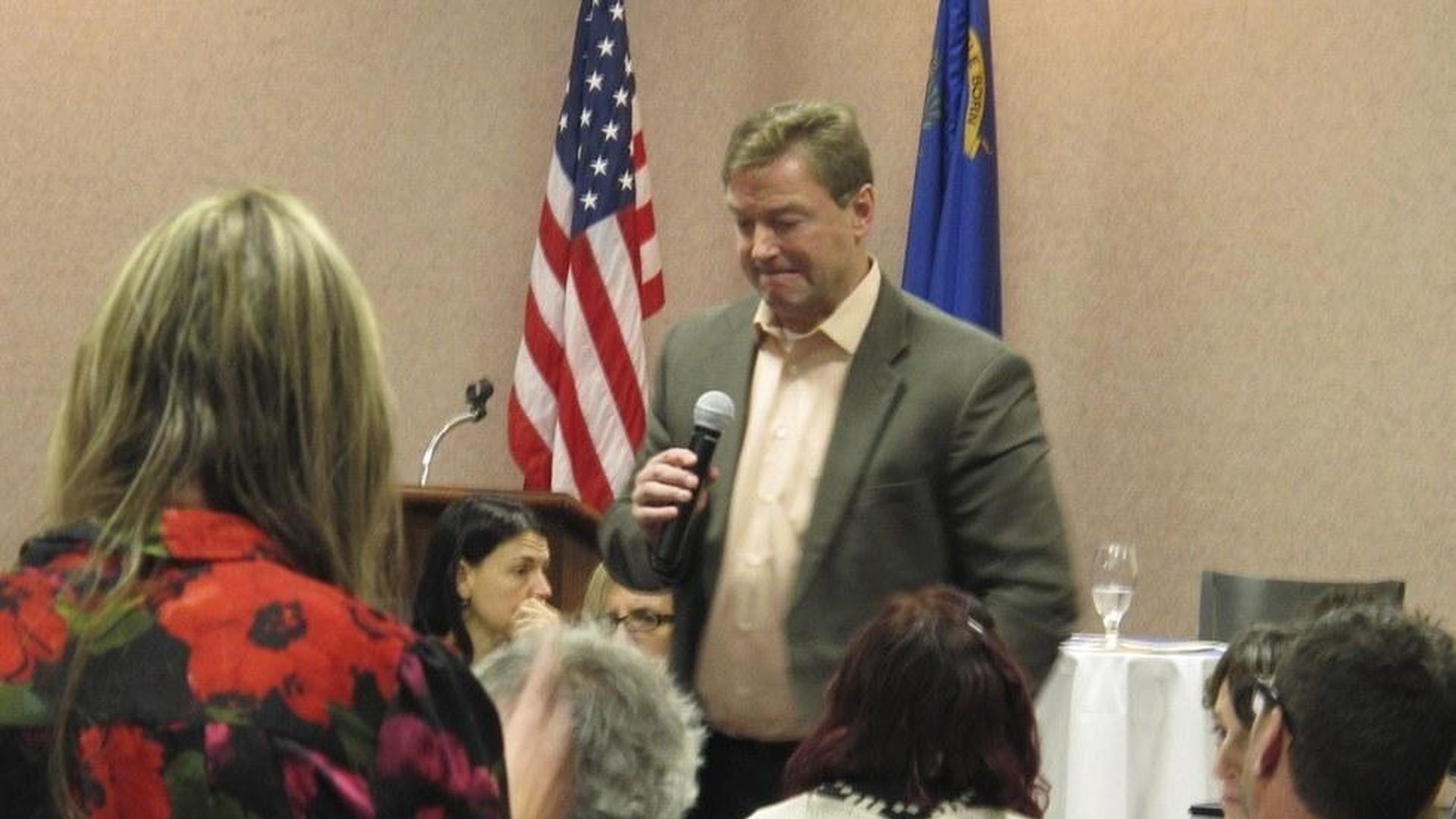
Many Republicans wondered this weekend if it made sense for America First Policies, the outside group backing President Trump, to run attack ads against Sen. Dean Heller (R-Nev.) for wavering on healthcare, when his vote is desperately needed.
"Does Trump team think it's smart to attack the most endangered GOP senator, from a state Trump lost?" asked a longtime lion of the GOP. "This is the second dumbest thing Trump has done since firing Comey."
Well, Axios has learned that the group is giving Heller a chance to modify his blast at the bill, before unleashing an advertising attack in his home state.
This is the week we'll learn whether Mitch McConnell can pull a rabbit out of a hat. His challenge: Tweak his health care bill enough to win over wavering moderates — including Susan Collins, Lisa Murkoswki — without losing any more conservatives on top of Rand Paul.
It won't be easy. Some of the things each camp wants are in direct conflict: Some of the moderates want to ease off the bill's Medicaid cuts; that could draw new conservative opponents out of the woodwork. Collins wants to strip anti-Planned Parenthood language; Ted Cruz and Mike Lee wouldn't like that.
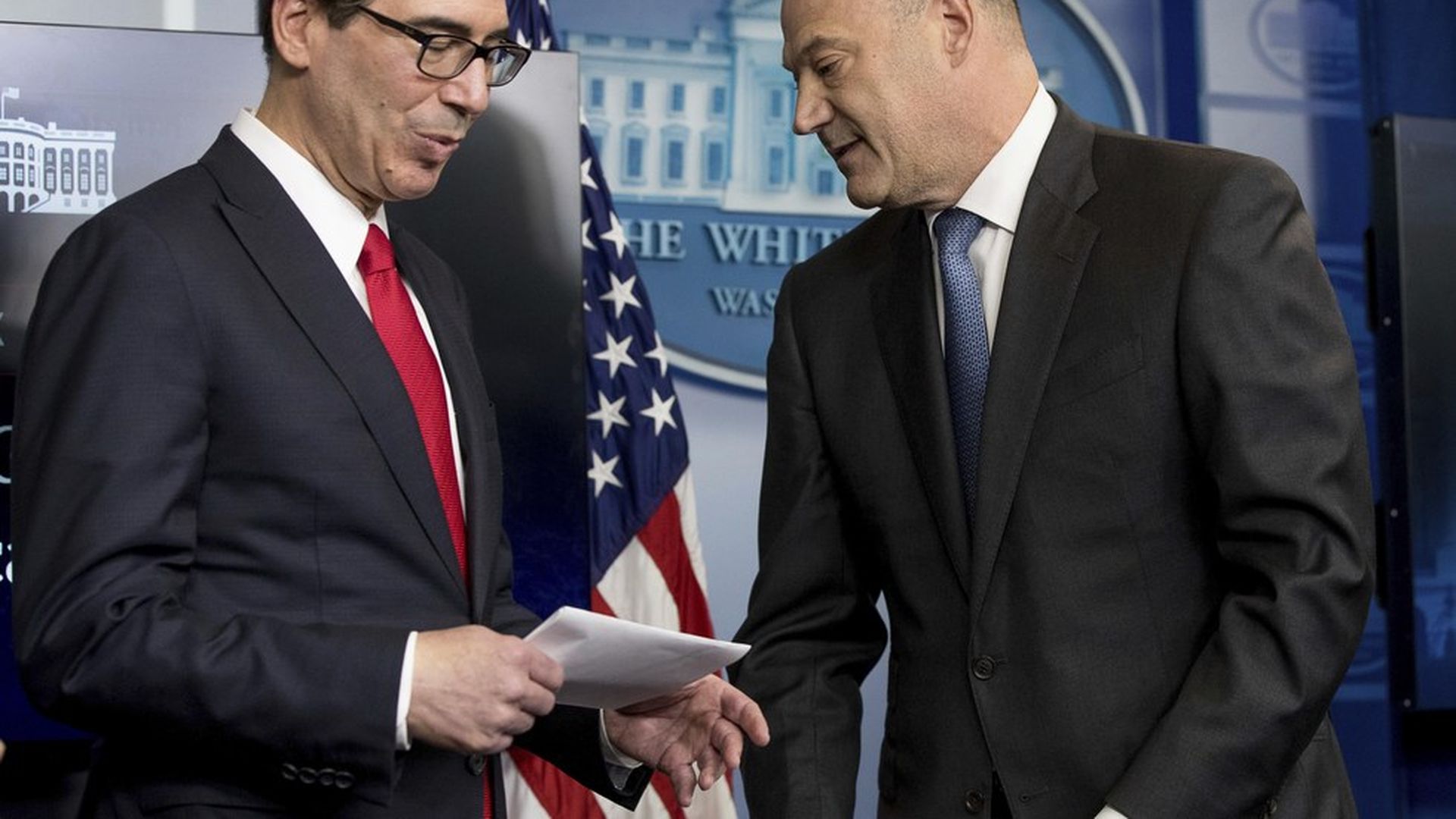
Here's what Trump's two point men on tax reform. Gary Cohn and Steven Mnuchin, have been telling business representatives and special interests in their closed-door meetings, per sources in the rooms:
Timing: Goal is to have an agreed upon House-Senate-White House tax reform proposal by early September for when members return from summer recess. They would then use September, October, November to push through tax reform.
Key question: They're posing the same question to special interest groups: "If we can get the corporate rate into the teens, what are you willing to give up?"
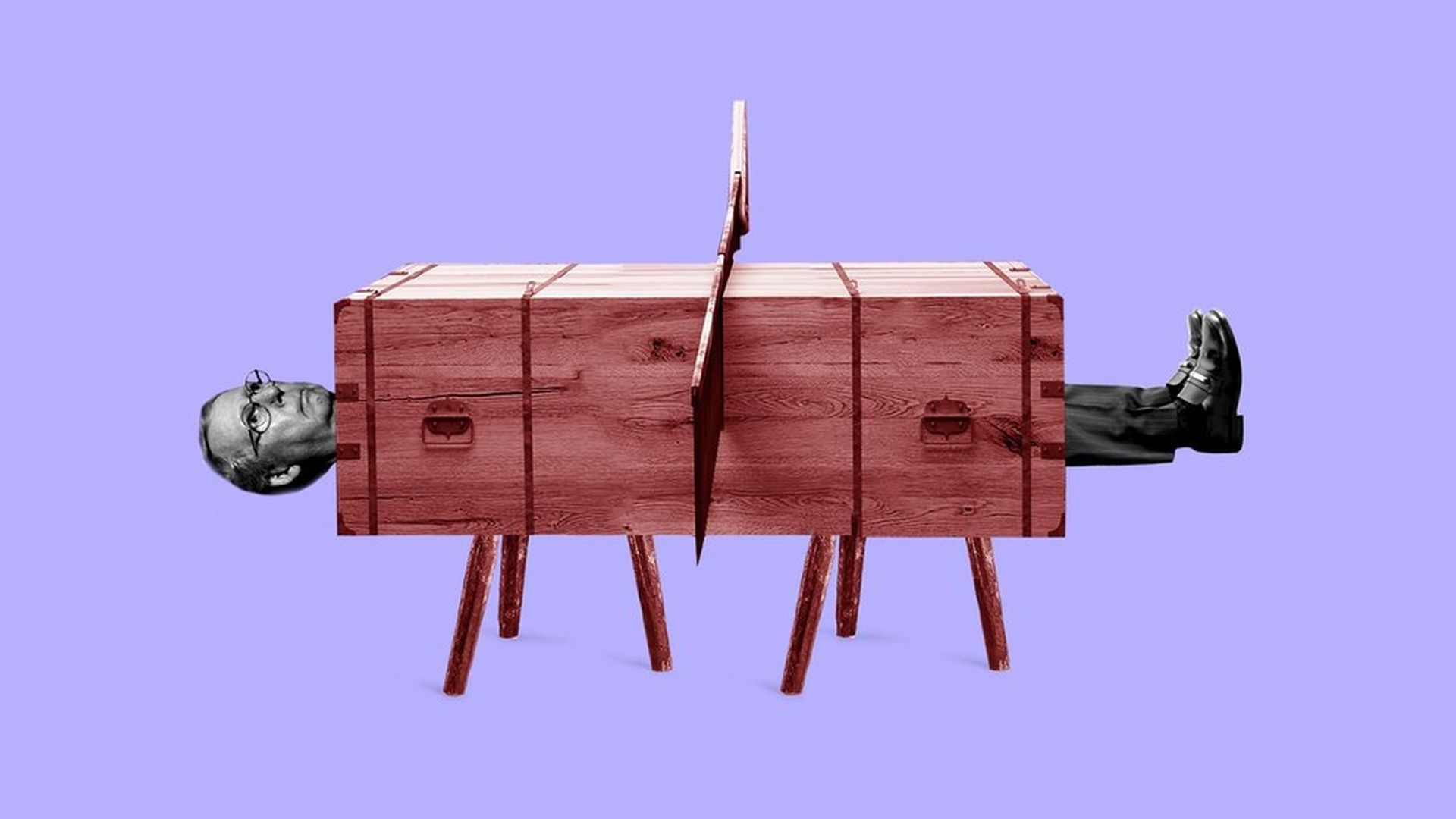
Josh Holmes, Mitch McConnell's former chief of staff, has this analogy for his former boss's week ahead: "It really is a 747 landing on a suburban driveway."
Consider the complexity: McConnell has at least eight holdouts on the Senate Republican healthcare bill — and likely even more. He needs to satisfy the ideological poles of his conference: Ted Cruz et al. on the right, and Dean Heller & Co. in the middle.
Oh, and there's no time: He needs to pass the bill before the July 4 recess. No senator I've spoken to thinks a bit of extra time spent with angry voters will make them more likely to support this bill.