Wednesday's politics & policy stories

The highlights from Spicer's Wednesday briefing
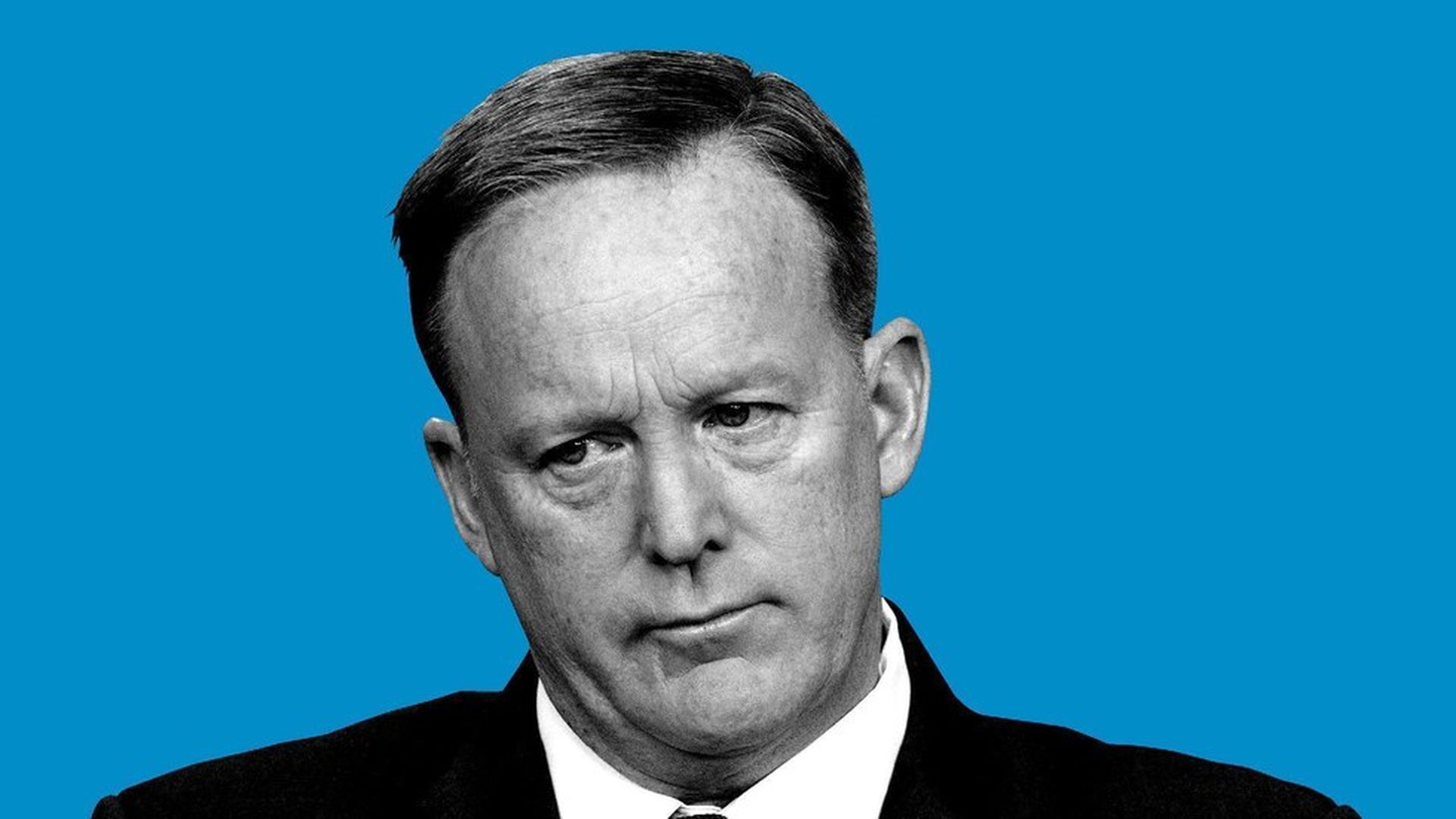
Spicer told reporters that "it is literally impossible at this point" to predict how the GOP health care bill will affect premiums and benefits. As for those with preexisting conditions? Spicer said that Trump has made it "very clear" that everyone with a preexisting condition will be covered.
- Border wall update: Spicer clashed with Breitbart's Charlie Spiering over whether the photos of the "various types of walls" shown during the briefing represented the final border wall. Spiering noted that the photos looked more like fences. Spicer insisted that one was a levee wall and one was a bollard wall.
- Trump's lunch with Abbas: Spicer said Trump raised the issue of payments to Palestinian terrorists in his lunch with Abbas, and emphasized the need to resolve the issue.
- On Trump's Comey tweets: "The president has confidence in the director," said Spicer.
- Hillary Clinton's "comeback": "With all respect to her, you don't get to pick the day the election's on," said Spicer. "I'm a Patriots fan. If games ended in 3rd quarter, a different team would have been here last week."
Trump and Abbas agree to work toward peace deal
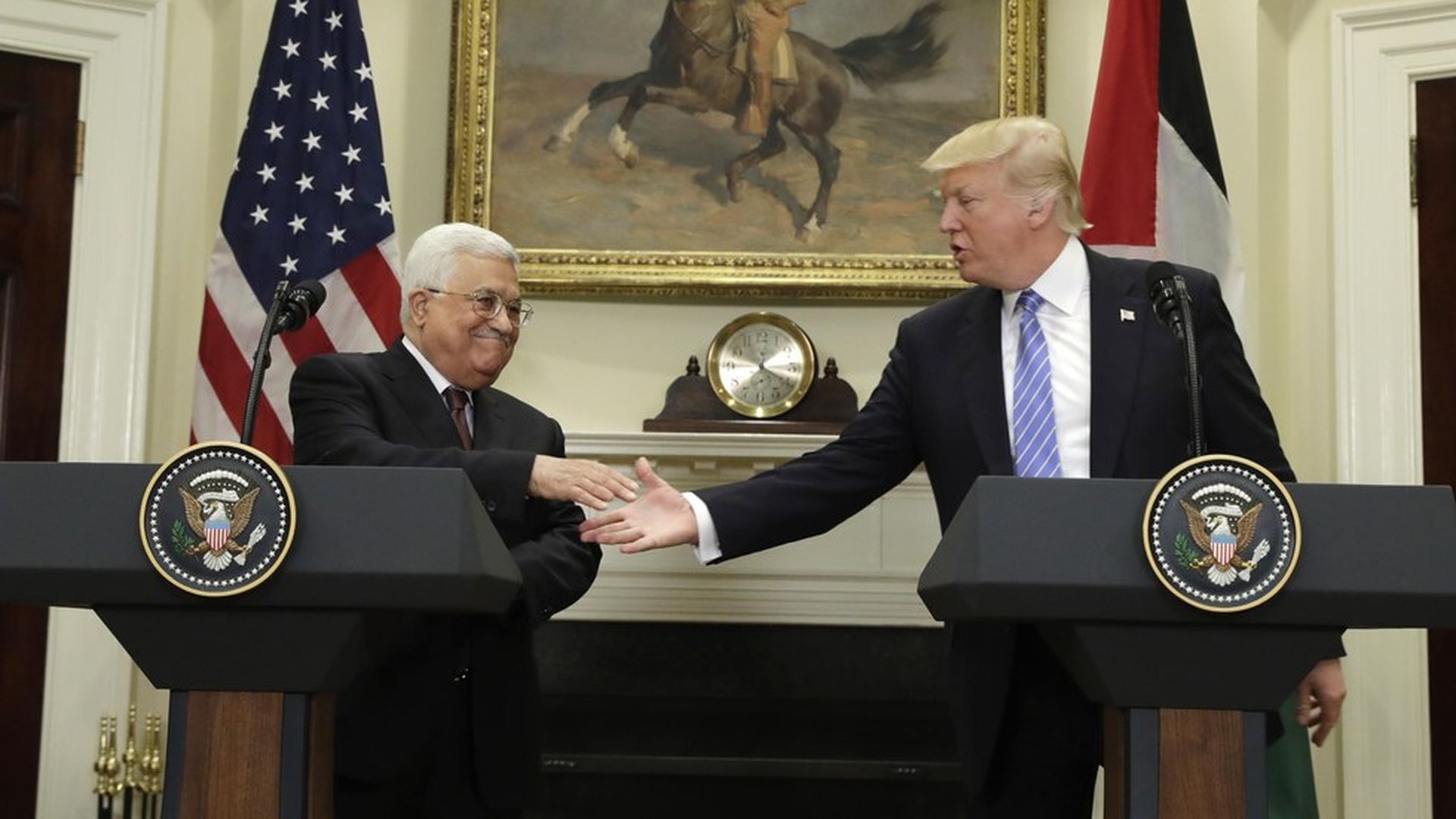
President Trump and Palestinian leader Mahmoud Abbas delivered a joint statement at the White House Wednesday expressing their belief that a Middle East peace deal is achievable. Abbas flattered Trump for his "courageous stewardship" and "great negotiating ability," but said Israel must first end "its occupation of our people and our land." Abbas made clear that "we want Israel to recognize the Palestinian state like we recognize the state of Israel."
Trump closed out the statement: "People say the toughest deal is between the Israelis and the Palestinians, let's see if we can prove them wrong."

Obama aide: "It takes a lot of work to lose to Donald Trump"
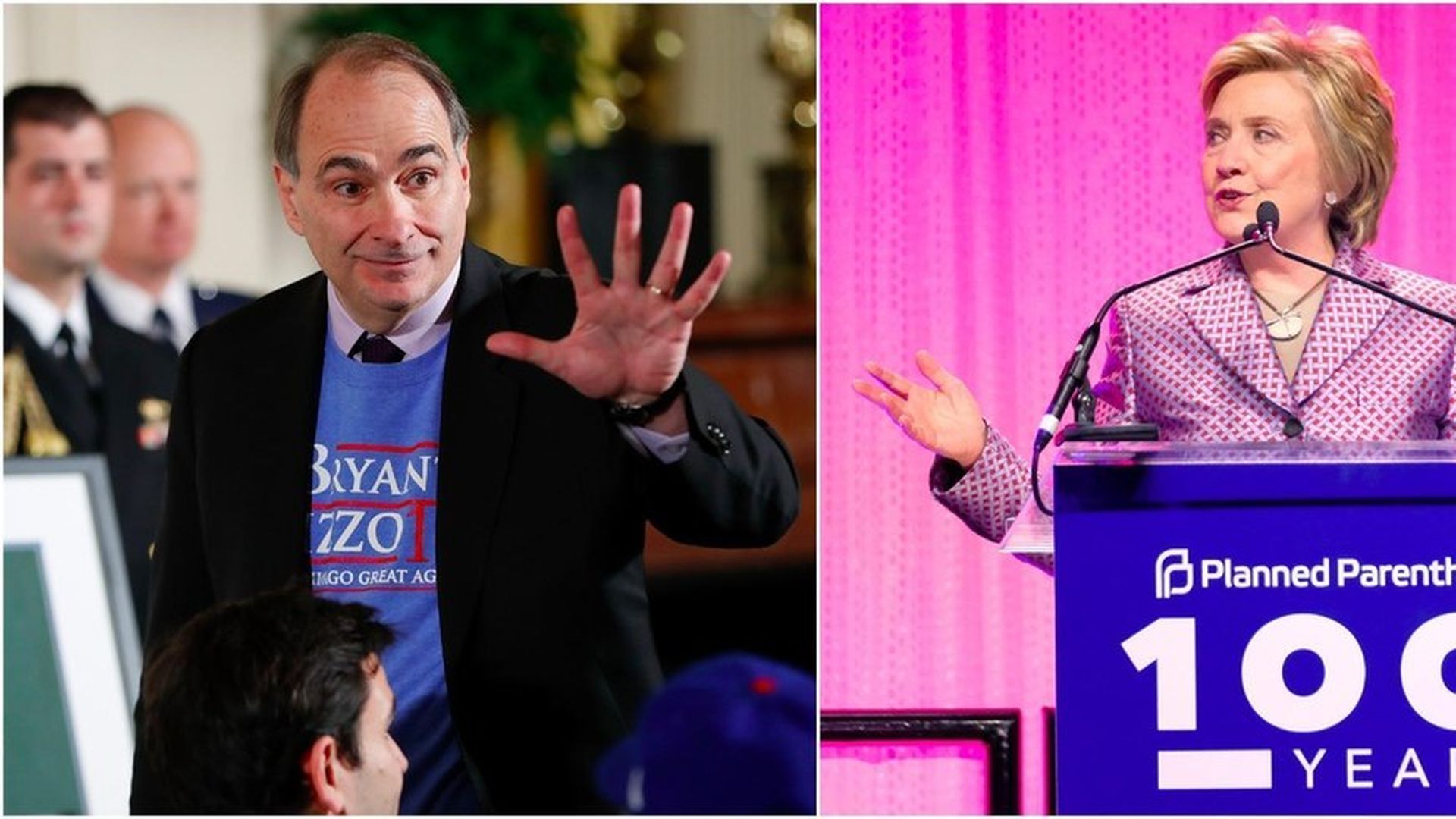
Former Obama White House adviser David Axelrod chided Hillary Clinton for her excuses yesterday for losing the election.
"Jim Comey didn't tell her not to campaign in Wisconsin after the convention. Jim Comey didn't say, 'Don't put any resources into Michigan until the final week of the campaign... One of the things that hindered her in the campaign was a sense that she never fully was willing to take responsibility for her mistakes, particularly that server."
While Axelrod agreed that Comey's letter had something to do with her loss, he added:
"It takes a lot of work to lose to Donald Trump, let me tell you. ... The fact that she was in a position to lose because of the Comey letter is something that deserves some introspection."

Comey defends his Clinton email October surprise
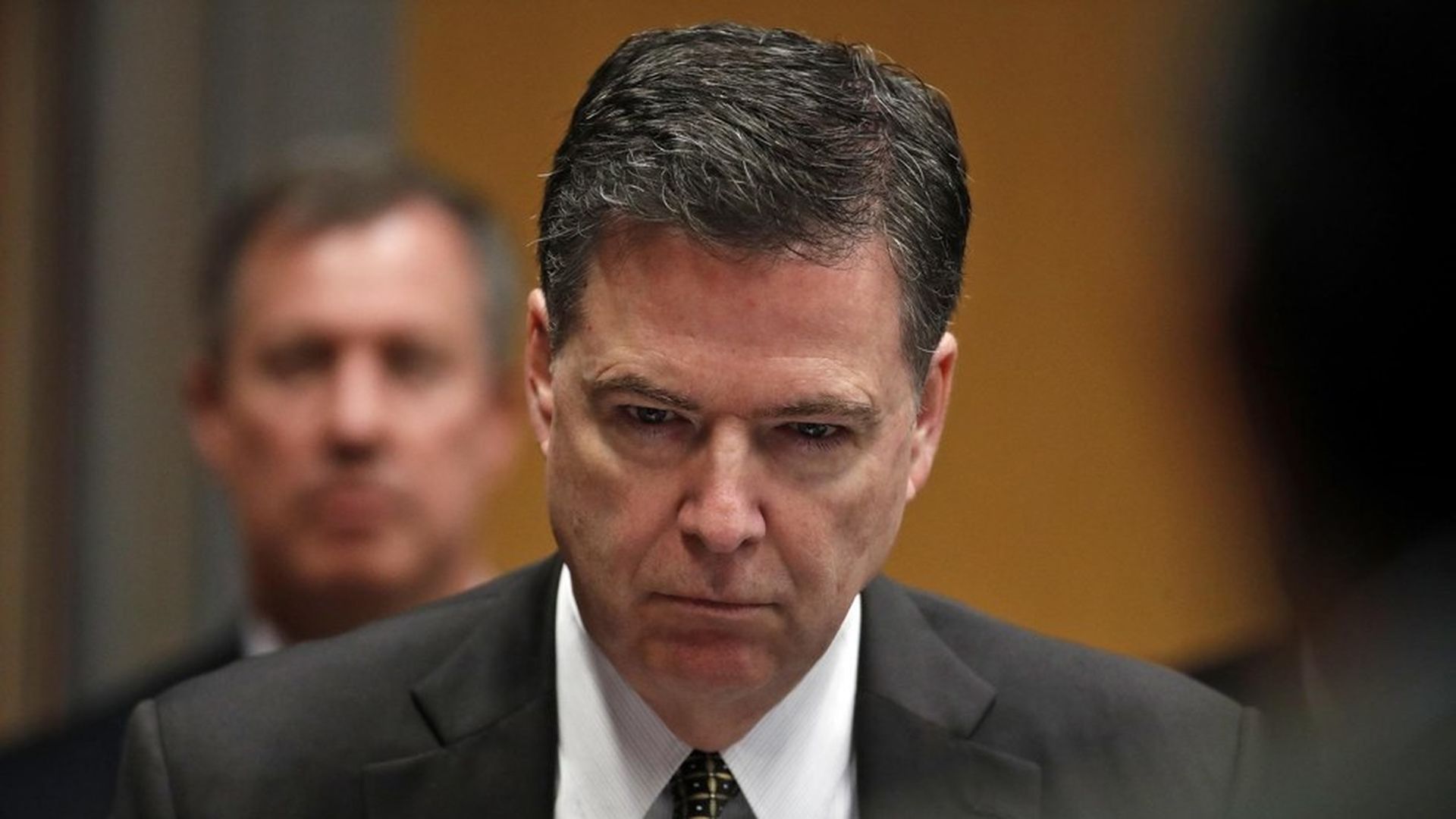
FBI Director James Comey was in front of the Senate Judiciary Committee today — his first appearance on the Hill since March's explosive testimony confirming an active investigation into connections between the Trump campaign and Russia.
Why he sent a letter to Capitol Hill on newly-discovered Clinton emails just days before the election: "I sat there that morning and I could not see a door labeled 'no action here'...concealing in my view would be catastrophic." Comey said he stands by his decision, but added, "It makes me mildly nauseous to think we might have had some impact on the election."


The Jimmy Kimmel effect, by the numbers
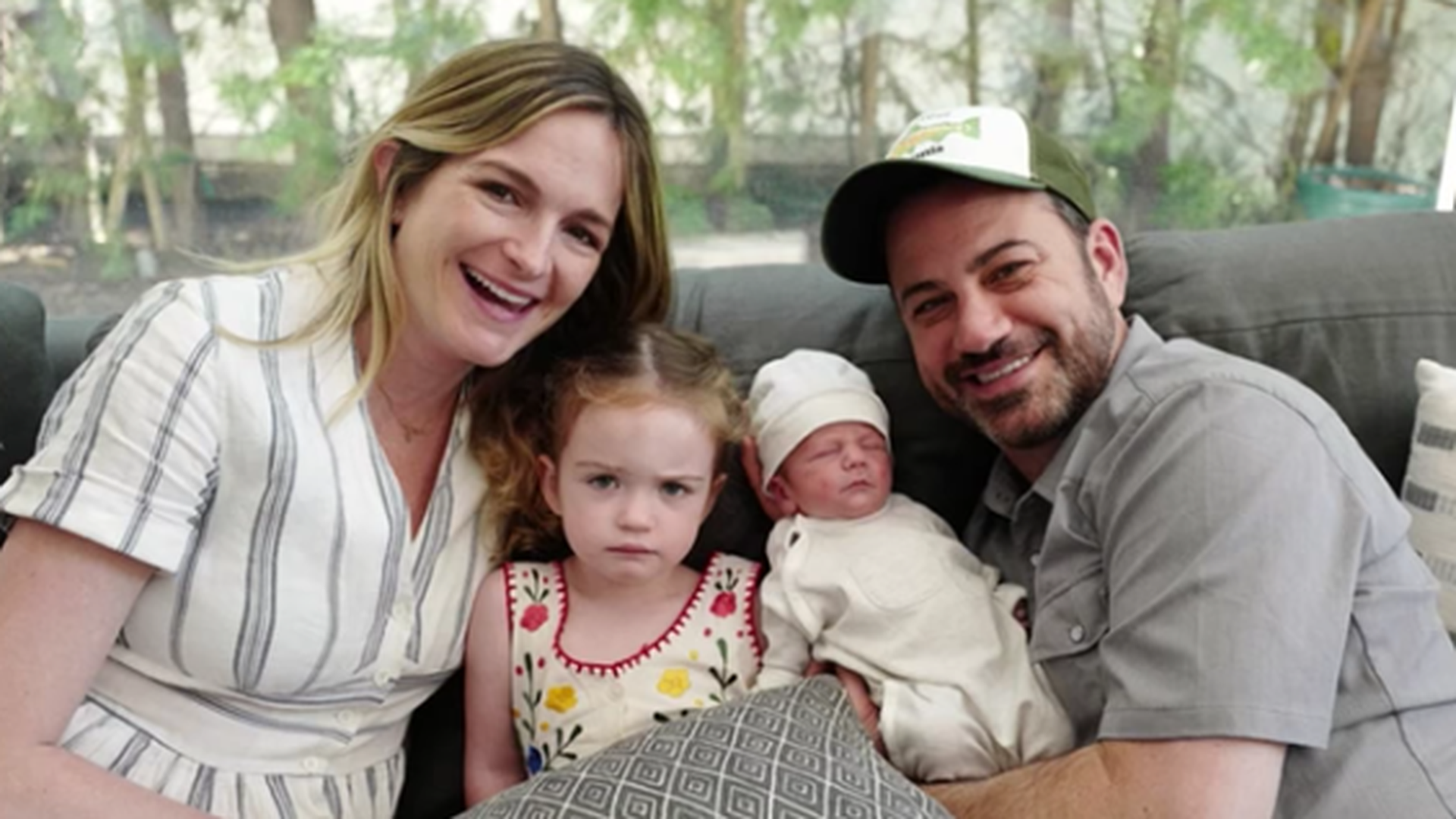
An Obama White House alumnus told us last night that Jimmy Kimmel killed the Republicans' already shaky efforts to revive the House's health-care reform. (In prime time last night, CNN was running the banner: "LATEST GOP HEALTH CARE BILL ON VERGE OF COLLAPSE." The WashPost's lead story is "GOP health bill on shaky ground.")
The instant ubiquity of the late-night host tearfully discussing his baby Billy's open-heart surgery, along with a message decrying Trump's proposed cuts to the National Institutes of Health ("If your baby is going to die, ... it should not matter how much money you make"), is an eye-opening case study of the stunning velocity of the new media ecosystem.
So we decided to quantify the reach of the "Jimmy Kimmel Live" monologue, beyond the 7 million views on his official YouTube page.

Trump admin. cuts school healthy lunch guidelines
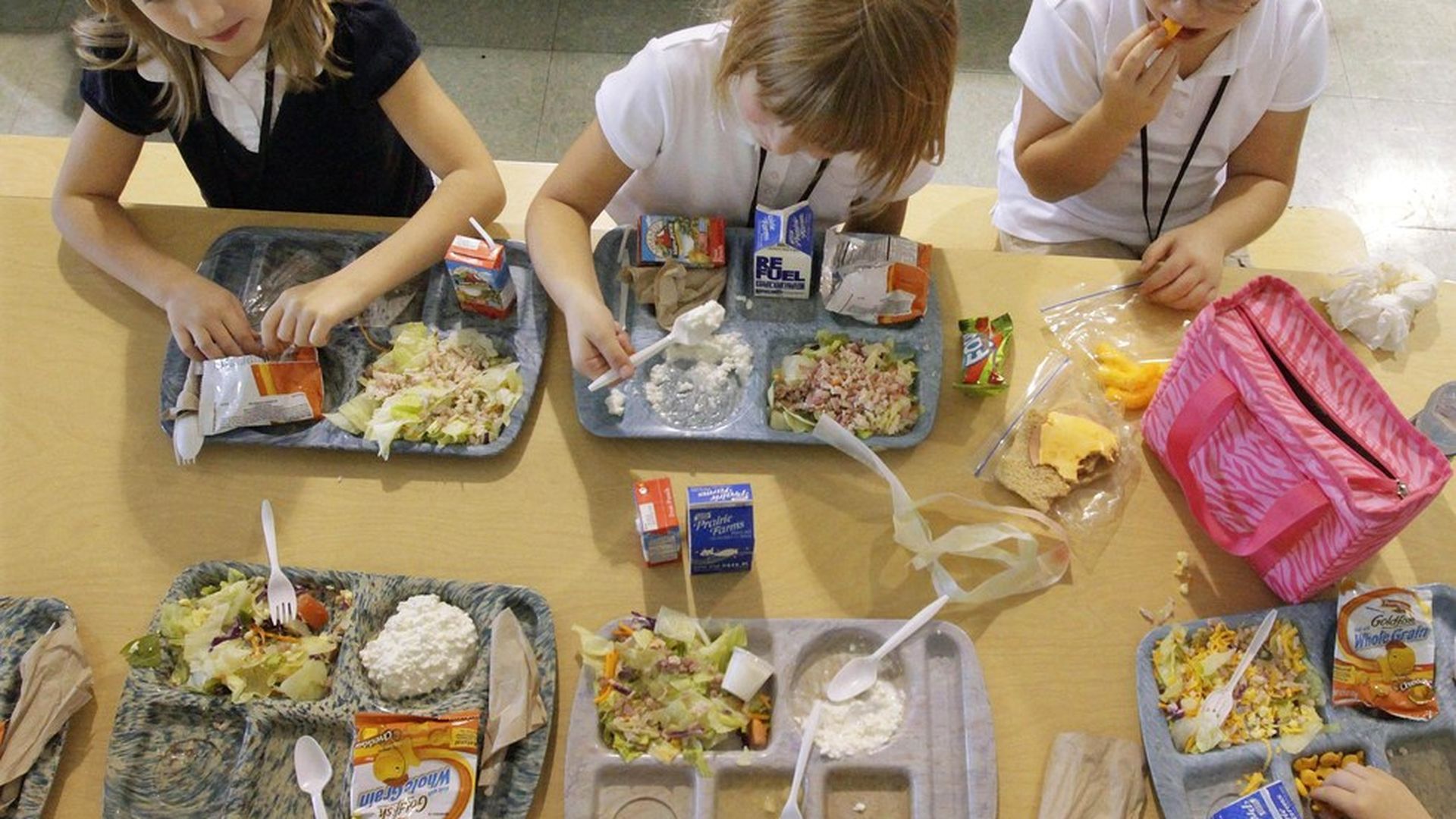
The Trump administration's new school lunch proclamation reverses regulations from one of Michelle Obama's signature programs.
- Michelle's plan: The USDA set standards for the amount of calories, fat, and sodium found in the National School Lunches programs across the country, and required more whole grains, fruits, veggies, and nonfat milk options.
- What's changing: Agriculture Secretary Sonny Perdue announced a rollback of these regulations beginning next school year. Schools will be allowed to serve 1% milk, opt out of whole-grain products, freeze sodium levels as they stand, and have more control over their cafeteria options.
- Why? The administration believes that these healthier options are leading to more waste, as kids don't want to eat them.
- What they're saying: "Just because children would rather eat heavily salted, processed foods at school doesn't mean they should," argued Ken Cook, president of Environmental Working Group.


Intel, Apple, Google invited to join Trump's latest tech effort
On Monday, Axios' Mike Allen broke the news of a new White House-led effort to work with tech companies to modernize government.As for who will take part, that's less clear. Most declined to comment on the initiative. Uber said definitively it's not taking part, while Intel left the door wide open. "We're certainly interested in efforts to modernize government IT, and support all government efforts to address aging IT infrastructure, including the Modernize Government Technology Act that was reintroduced in Congress last week," an Intel rep told Axios.A source tells us Apple, Amazon, Facebook, Google, IBM, Intel, and Oracle received invitations to participate.In January, IBM CEO Ginni Rometty delivered to President Donald Trump a report outlining how the government could save $1 trillion over the next decade with certain policies including IT modernization, as reported by Fortune.For more news like this, sign up here for Login, Axios' daily tech newsletter.

EU to end extra Schengen border screenings
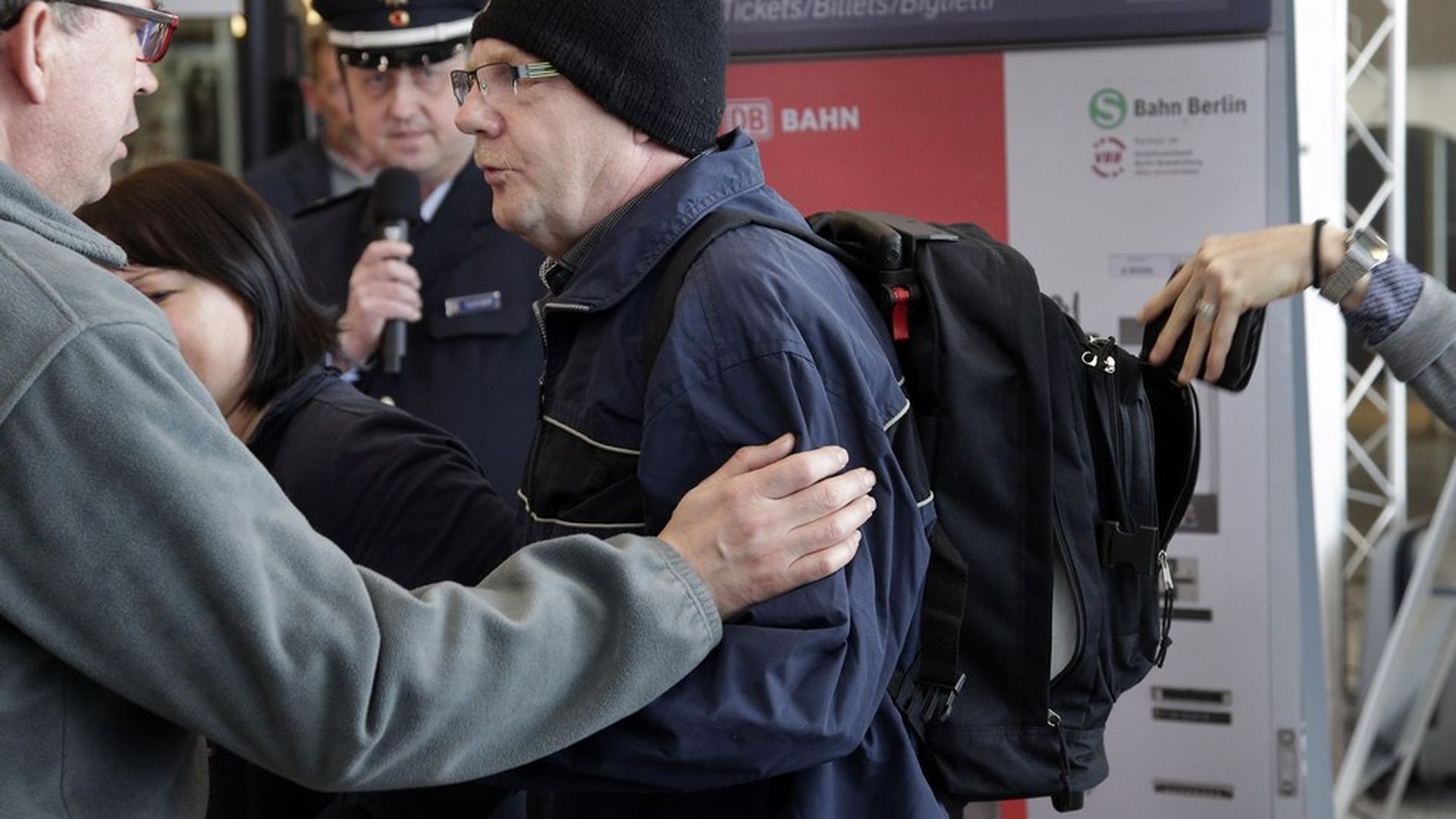
The European Commission announced Tuesday that five countries will have to phase out extra border checks they've been using in the Schengen zone by November this year, Reuters reports.
The countries: Germany, Austria, Denmark, Sweden, Norway. France, which added border controls after the November 2015 terror attacks, is exempted since it remains in a state of emergency.
The emergency checks were allowed to start in 2015 in response to the refugee crisis, when more than a million people sought asylum in Northern Europe, straining the countries' capacities to deal with that influx. Of the countries concerned, Germany took the most migrants.
Germany is not on board with loosening its border controls now, even though migrant flows have been down, claiming it needs to protect against terrorism.
Why it matters: This could have repercussions in the domestic politics of Germany and other E.U. countries, where immigration and terrorism are hot button issues.

Hillary Clinton: "I'm now back" for the resistance
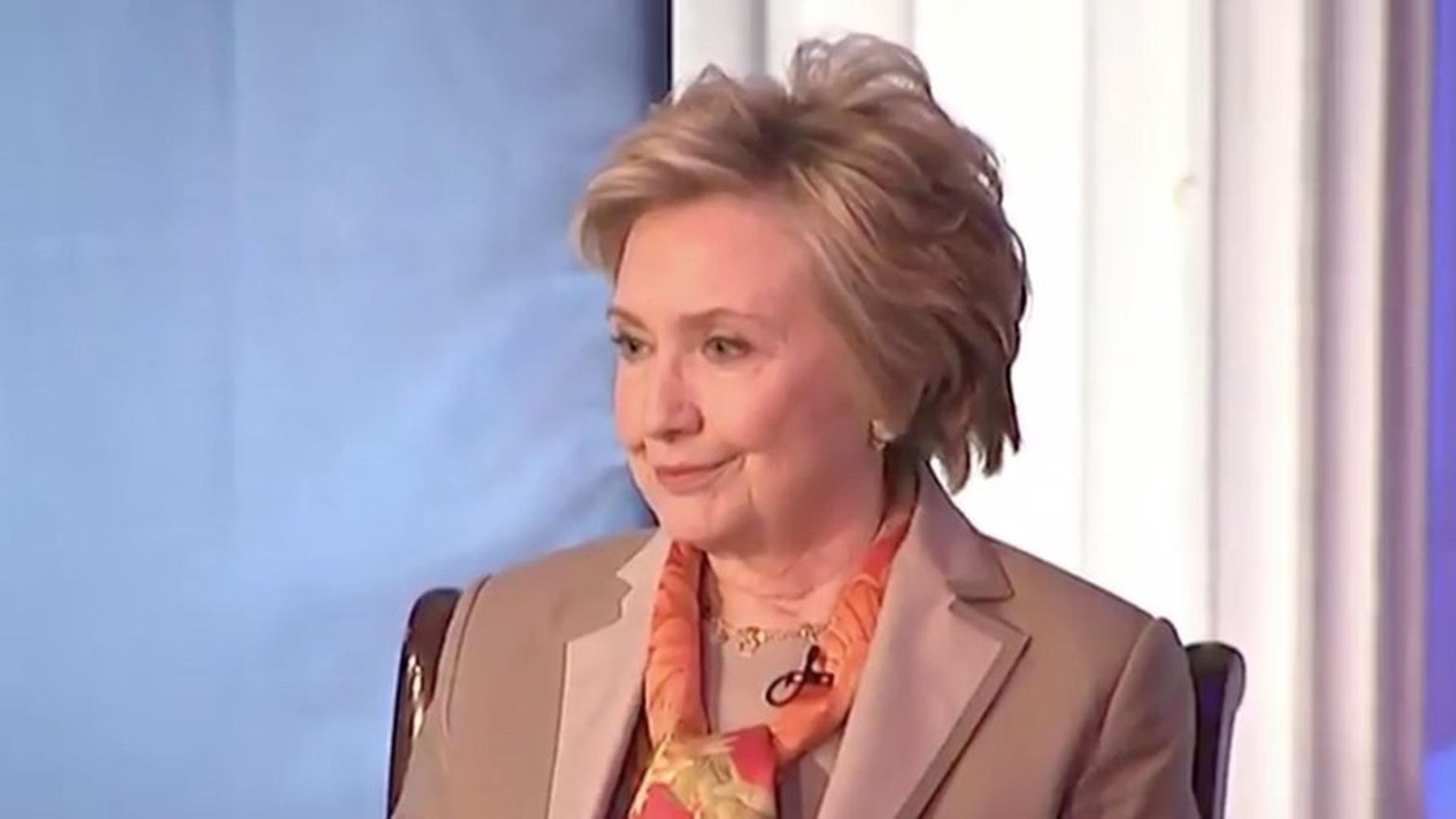
Hillary Clinton interviewed today at the Women for Women International Conference in New York City. In the span of a few minutes, she took "personal responsibility" for her 2016 loss, while also blaming her defeat on WikiLeaks and FBI Director Jim Comey.
Highlights below:
Mulvaney steps in for Spicer to slam Dems over spending deal
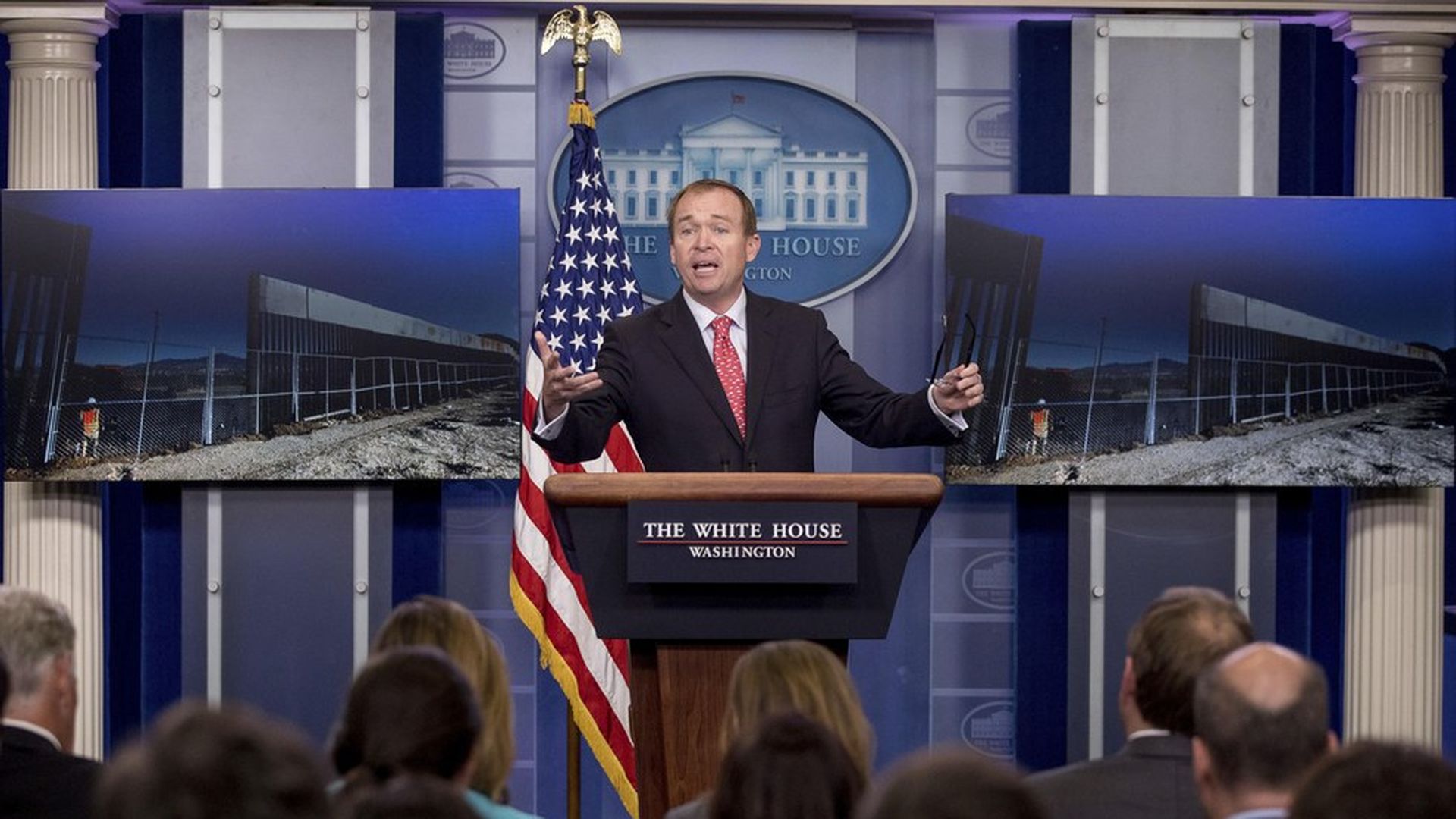
OMB Director Mick Mulvaney stepped in for Sean Spicer at Tuesday's briefing and attacked Democrats for claiming the bipartisan deal to fund the government was a victory over President Trump.
- On Trump's shutdown tweets: The president is "frustrated" that Dems "went out there to spike the football and make him look bad."
- On Democrats stalling: "They wanted a shutdown. They were desperate to make this administration look like we couldn't govern," said Mulvaney. "If the Democrats aren't going to behave any better than they have...[a shutdown] may be inevitable."
- The border wall: Mulvaney pointed to photos of a new, taller "replacement wall" and said the Democratic base "aren't going to like that, but they're going to need deal with it."
- On Planned Parenthood: "If you want to prove to the folks back home that you are pro-life, vote for the Planned Parenthood bill."
Senators blame Trump for rising hate crimes rates
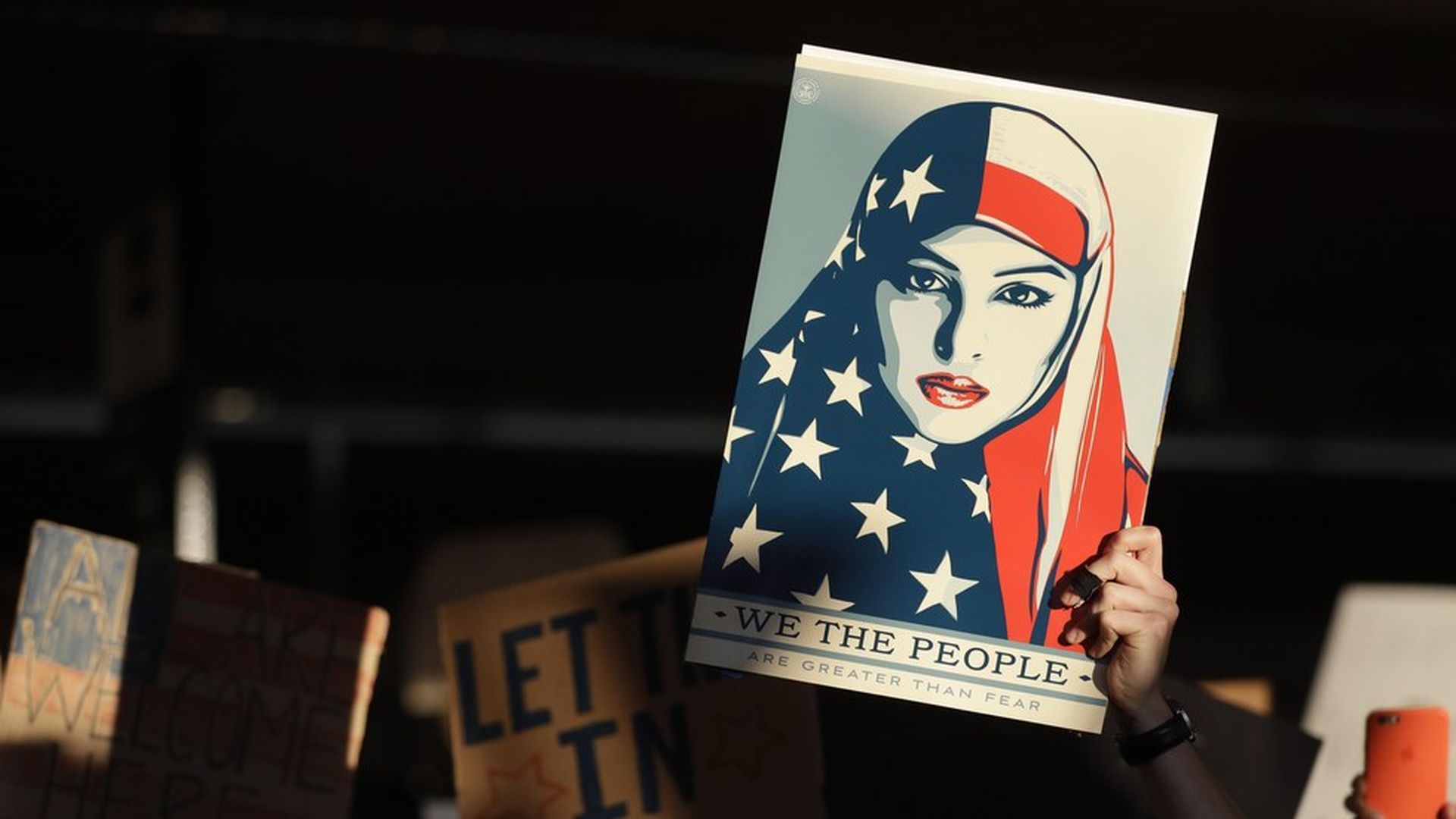
Senators Chuck Grassley and Dianne Feinstein kicked off Tuesday's judiciary hearing on religious hate crimes by highlighting the increasing crime rates against Jewish and Muslim communities. Meanwhile other Senators, including Mazie Hirono and Richard Blumenthal, blamed Trump's perceived anti-Muslim rhetoric and his travel ban for the uptick.
The stats: The Anti-Defamation League said there have been 541 anti-semitic incidents in first four months of this year, an 86 percent increase since 2016, according to Feinstein. Meanwhile, there has been a 67 percent rise in anti-Muslim hate crimes from 2014-2015.
Why this matters: There has been a significant increase in hate crimes, including bomb threats on Jewish community centers and attacks on Muslim mosques, since the November election.
One big problem: The majority of crimes are left up to states and local jurisdictions to prosecute, rather than the federal government. The DOJ has been training local police officers and working with community groups to receive better feedback.

The thinking behind Trump's "shutdown" tweets
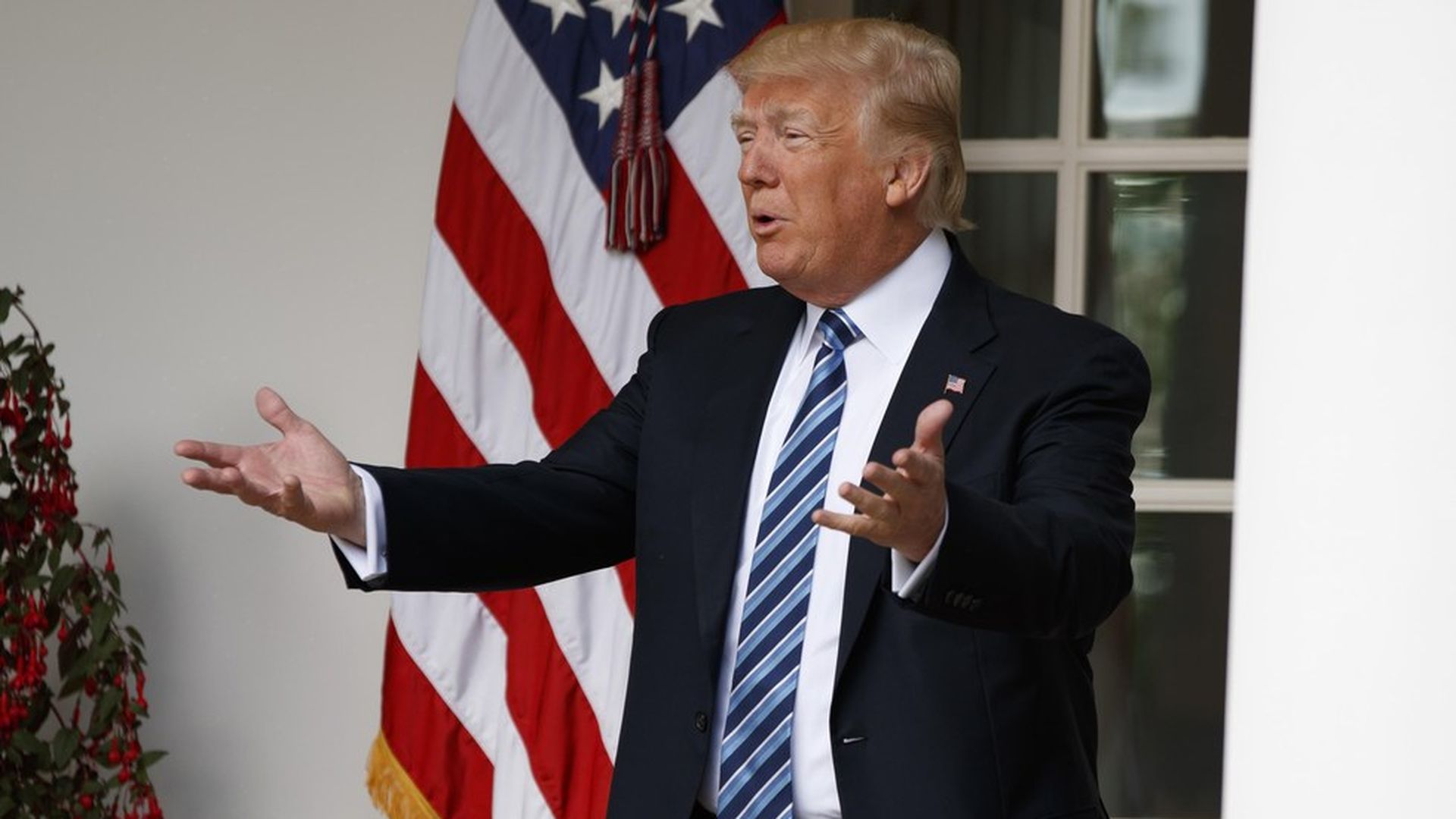
At 9:01am today President Trump tweeted:
"The reason for the plan negotiated between the Republicans and Democrats is that we need 60 votes in the Senate which are not there! We either elect more Republican Senators in 2018 or change the rules now to 51%. Our country needs a good "shutdown" in September to fix mess!"
Behind the tweet: there are two things you need to know about the thinking inside the White House:
1. Trump hates the legislative filibuster. As one senior administration source says: "he's a practical guy...he's not an ideologue." As a private businessman, Trump could never understand when he saw senators like Ted Cruz standing for hours on end reading children's books. Trump saw this as utterly pointless and futile behavior that would never fly in the business world. He doesn't care a bit about congressional traditions and was thrilled when Mitch McConnell used the nuclear option to force through Neil Gorsuch onto the Supreme Court.
2. Trump is flagging the shutdown in September for a very good reason: his aides tell me the current government funding fight was seen internally as something they just needed to "get through."
There was never going to be major victories in the 2017 spending bill; the Democrats had all the leverage and Trump couldn't afford a government shutdown so early in his administration and with healthcare still unresolved. The 2018 spending fight is a different matter, though.
My White House sources tell me this will be the time to fight for real "wins" — like funding the border wall. That will lead to an inevitable standoff with Democrats and possibly a government shutdown.
10 big broken promises of past presidents
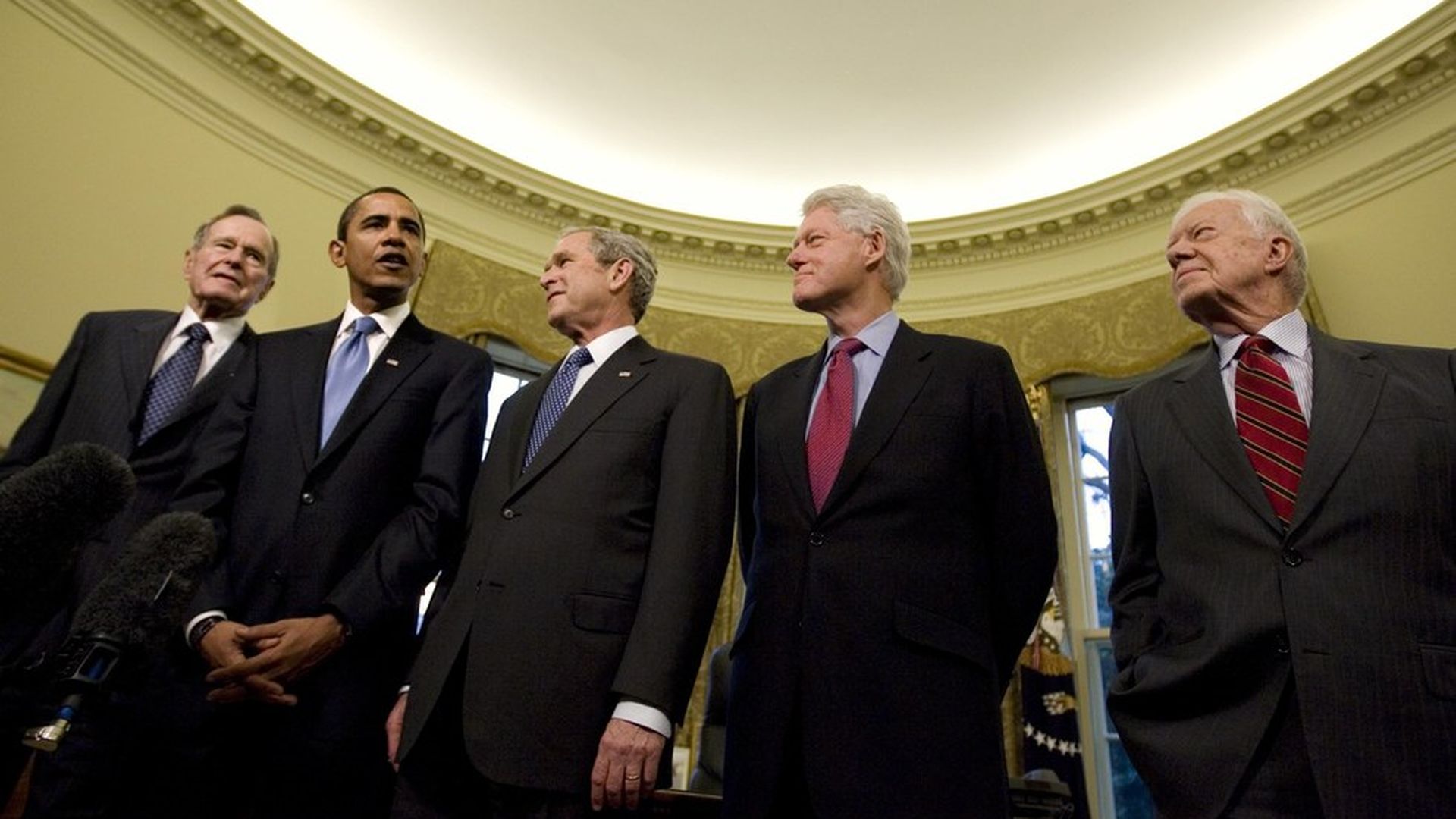
Trump touted his fulfilled promises during a Pennsylvania rally on Saturday night, and the media responded by pointing out his still-unkept promises — repealing Obamacare, renegotiating NAFTA, building the wall, etc. But it's important to remember that many U.S. presidents have a long history of making daring promises to win an election, but not always following through.
Why it matters: Trump has only been in the White House a little more than 100 days. Despite his confidence and often-repeated big promises, fulfilling all of them in that time frame is a big ask. And if he does end up breaking some of his campaign promises, he won't be the first POTUS to do so. Promises are used to win elections, and sometimes are actually best unfulfilled.
How Trump's H-1B visa reforms may hurt start-ups
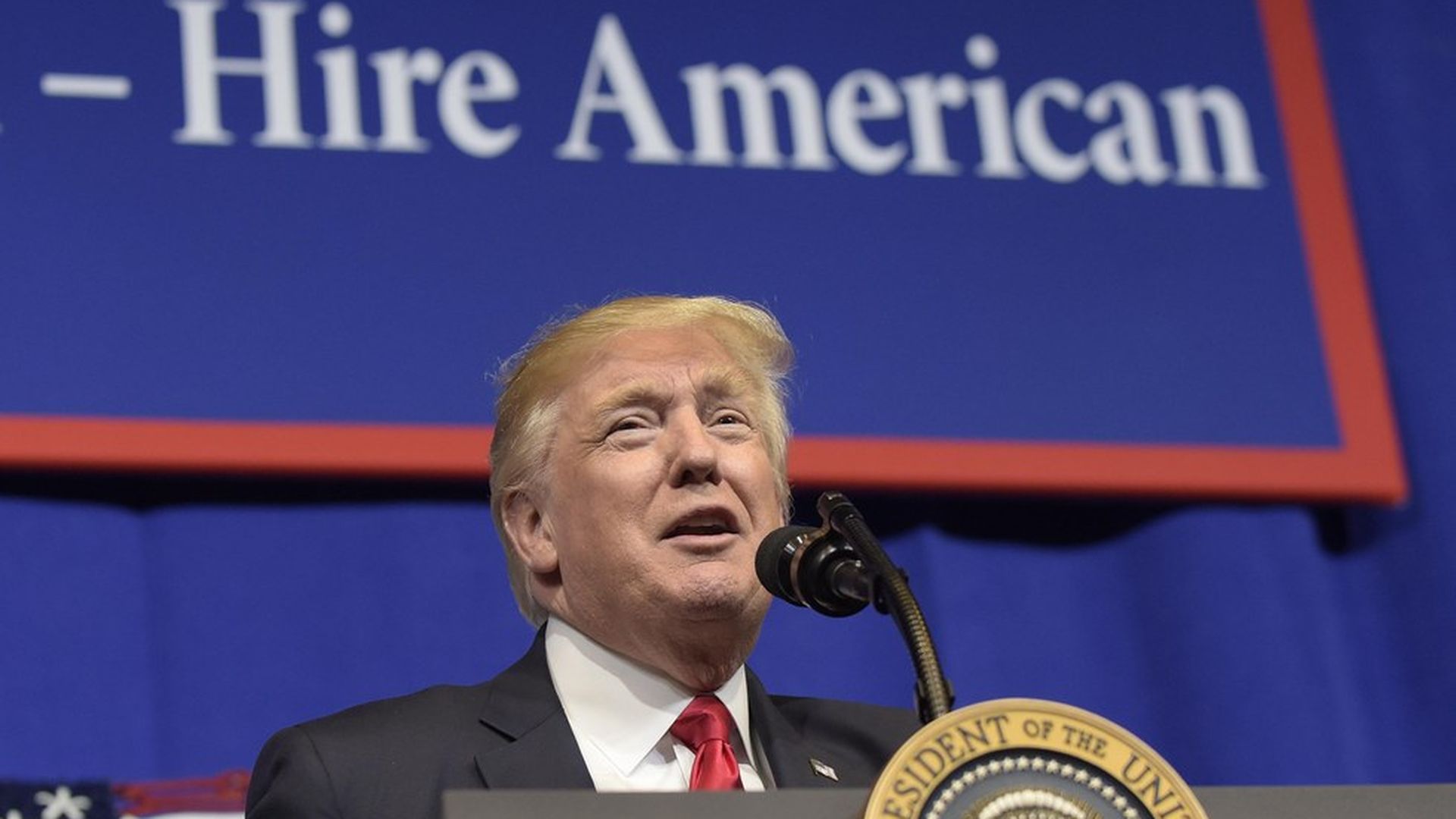
Start-ups could bear the brunt of the impact from President Trumps' executive order reforming the H-1B high-skilled visa program.
What we're hearing: Startups already have a tough time accessing the current lottery system because their small number of visa applications are dwarfed by the high volume filed by bigger firms. But new direction toward a merit-based system favoring higher salaries will also be detrimental to startups, according to some entrepreneurs, investors and immigration attorneys.