Friday's health stories

The RFK-Trump mindmeld on vaccines

This week made it clearer than ever: Longtime vaccine critic Robert F. Kennedy Jr. is doing things his way as the nation's top health official, and President Trump appears thrilled with how it's going.
Why it matters: If anyone thought Kennedy would be kept on a leash when he became Trump's health secretary, they thought wrong.
- "I think he's gaining capital," said one source who has spoken to the White House about vaccine issues. "This is a mindmeld between Kennedy and Trump."
- But his latest move — cutting the number of recommended children's vaccines — could backfire if he falls short on his promises that anyone who wants the shots will still be able to get them.
- Voters could also get spooked by the warnings about a rise in infectious diseases.
Driving the news: Exactly one month after Trump directed HHS to review the childhood vaccine schedule, officials on Monday slashed the number of recommended vaccines for children by roughly a third, down to 11.
- There was no new supporting evidence or the customary public reviews, but the officials said the move better aligns the U.S. with peer nations. In reality, the U.S. now recommends fewer vaccines than most other developed countries.
- Public health experts and medical groups quickly lined up against the change, saying it will cause a drop in vaccinations and a rise in preventable childhood disease.
- Democrats also jumped to condemn the slimmed-down schedule, in a preview of what could become potent midterm messaging.
The big picture: Vaccines remain overwhelmingly popular in the U.S., and a survey of 35 competitive congressional districts by Trump pollster Tony Fabrizio late last year concluded that "skepticism toward vaccine requirements is politically risky for both parties."
- "Republicans or Democrats adopting positions that remove long standing vaccine recommendations would negatively impact their party's performance," the polling memo adds.
Between the lines: If findings like Fabrizio's make Republicans nervous, they won't find much assurance from the White House.
- Trump has publicly embraced Kennedy's vaccine skepticism, praising the new schedule as "far more reasonable" and calling for even more vaccine changes on social media.
Yes, but: On its face, the vaccine policy change may look self-destructive. But some sources close to the administration argue that it won't impact key voters in any meaningful way that would work against Republicans.
- "The changes are somewhat defensible. They're not insane," said the source who has spoken to the White House about vaccine issues. "They didn't say don't vaccinate their kids at all. Unlike some of the attacks from the left, it's not really true you're not going to be able to get the vaccines."
What they're saying: "President Trump entrusted Secretary Kennedy to evaluate and realign the American childhood vaccine schedule using gold standard science," said White House spokesperson Kush Desai.
- "HHS's historic undertaking doesn't alter access to or insurance coverage of any vaccine for Americans who want them, but instead will increase confidence in vaccine recommendations, including the vaccines that President Trump has himself urged Americans to take," Desai added.
Kennedy has created his own red line when it comes to vaccine access — one that some sources say neutralizes political risk associated with the schedule change.
- Even as his health department slashed the number of vaccines it recommends all children get, Kennedy insisted that anyone who wants the no-longer-recommended vaccines can still get them, and insurance will still cover them.
- "I've always promised I'm not going to take people's vaccines away from them," he said in a video posted on X by an official White House account. "Everybody who wants them can get all of the vaccines that were on the old schedule."
What they're saying: The schedule change was "incredibly shrewd and well executed," said David Mansdoerfer, a senior HHS official during Trump's first term, in part because "they eliminated the access argument by making no modifications on reimbursement."
- "The timing of this happening right before midterms get started gives MAHA another notch in the win column," Mansdoerfer added.
"A middle-class suburban woman is not going to get terribly upset about the theoretical prospect of some child they don't know getting hepatitis B," a person familiar with internal discussions on health care policy at the White House and HHS told me.
- "I think this becomes a nonevent politically."
Between the lines: The insistence that anyone who wants vaccines can still get them recalls another health care promise made more than a decade ago after the passage of the Affordable Care Act.
- That promise — "If you like your health care plan, you can keep it," made by former President Obama — aged like milk in a heat wave.
- No one tried to take people's plans away, but by creating a stronger set of minimum coverage rules, the law triggered changes that made it impossible for people with cheaper plans to keep them.
- Named PolitiFact's 2013 "lie of the year," it led to a midterm clobbering of Democrats by Republicans.
What we're watching: Whether parents who want the previously recommended pediatric vaccines can actually access them as easily for their children.
- If that promise backfires, Republicans could pay a steep price come November.
And Kennedy allies have made clear they want the administration to go further, particularly around weakening or removing vaccine manufacturers' federal liability shield.
- If the administration does eventually go down that path, it risks spooking vaccine makers out of the market — and creating the kind of availability problems it has vowed won't happen.

China's fentanyl crackdown led to a stunning drop in U.S. overdoses, research says


Chinese crackdowns on fentanyl may have reduced overdoses and saved American lives, new research shows.
Why it matters: The data-backed explanation for the 34% plunge in overdose deaths from its peak suggests diplomatic pressure was more effective than decades of mass street-level arrests.


5 blue states sue Trump admin over $10 billion child care funding freeze

Democratic attorneys general from five states sued to block the Trump administration's freeze of child care and social services funding Thursday evening.
Why it matters: The freeze would cut off more than $10 billion in federal money that supports low-income families — and imperil the child care programs, homeless shelters and other services that rely on the cash.

These 17 Republicans voted with Democrats to pass House ACA bill
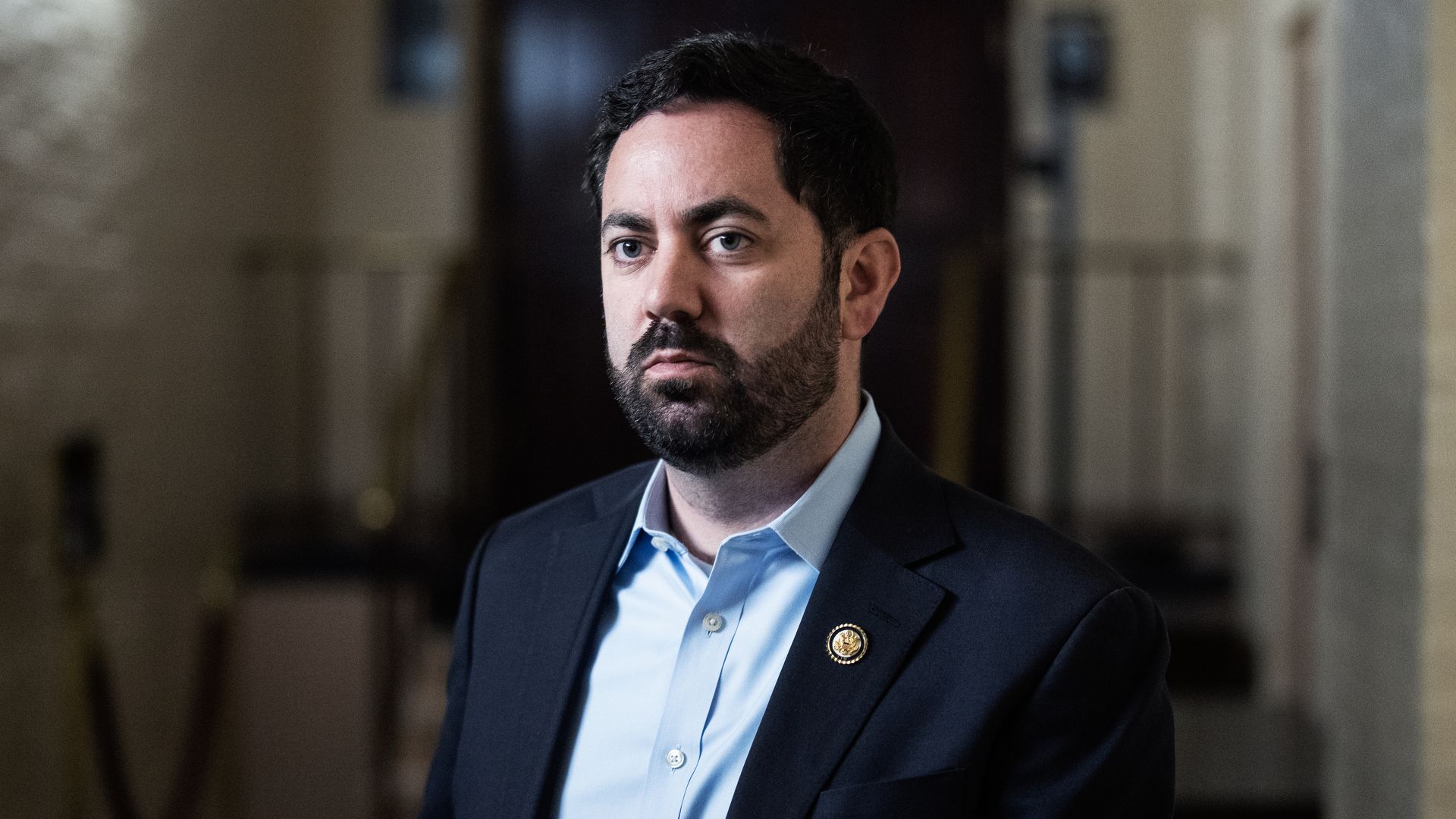
Seventeen Republicans voted with every Democrat to pass a bill to extend enhanced Affordable Care Act subsidies for three years.
Why it matters: They acted in rare defiance of President Trump and GOP leaders to pass the measure on a key health care affordability issue ahead of November's midterm elections, piling pressure on the Senate to reach a bipartisan deal.


Republicans defy Trump and Mike Johnson on health care
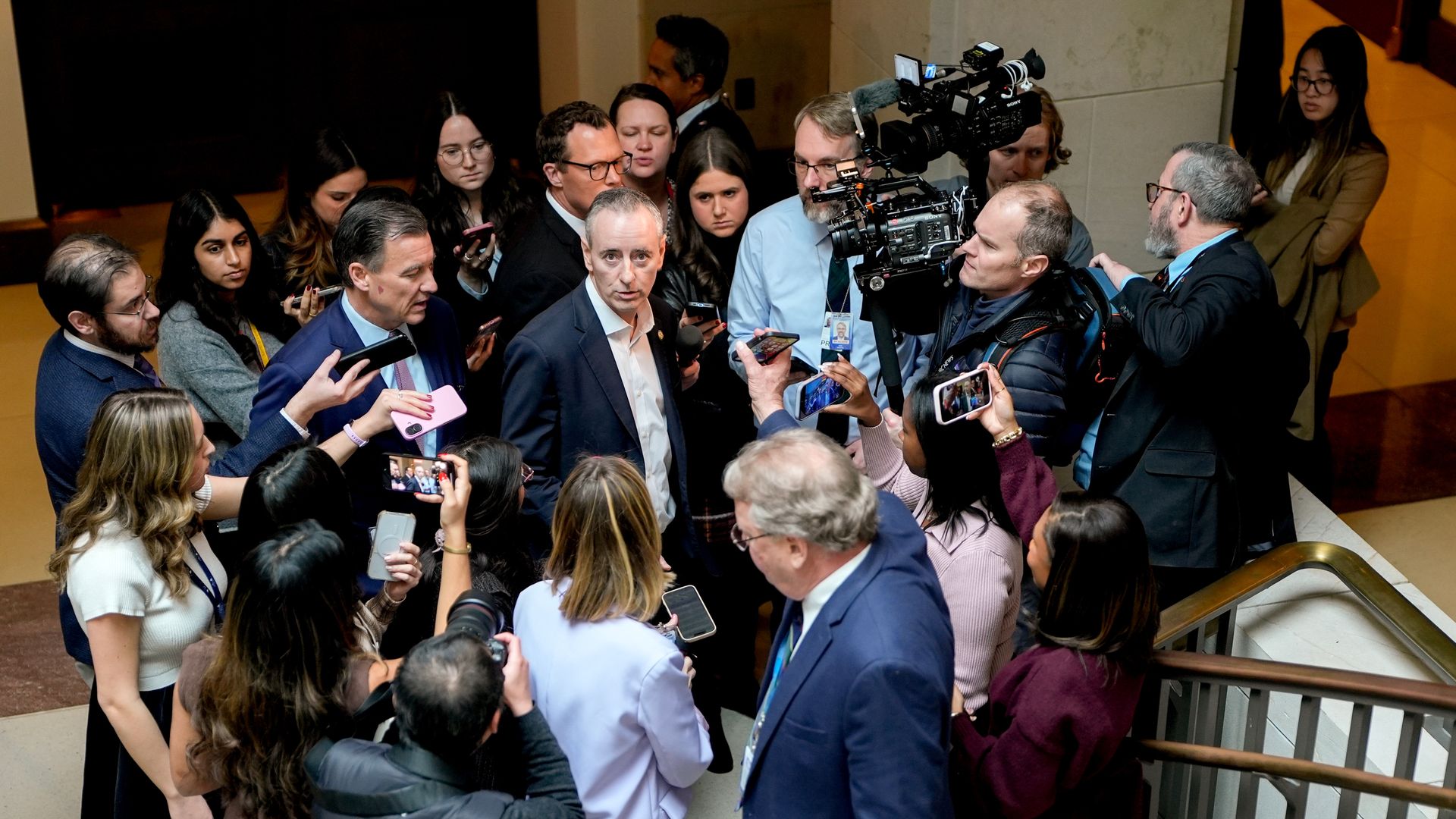
More than a dozen House Republicans broke ranks with their party Thursday and voted for a Democratic bill to extend expired Affordable Care Act subsidies for three years without any restrictions.
Why it matters: It's a rare instance of Republican lawmakers defying President Trump — though the phenomenon has become less and less taboo in recent months.

ChatGPT unveils new health tool for doctors

OpenAI just announced a suite of new products designed for health care professionals that will roll out to leading medical institutions on Thursday, a company spokesperson told Axios.
Why it matters: Although over 40 million users already use ChatGPT for health information daily, providers using the tab must be careful to ensure that the sometimes hallucinatory chatbot gives professionals accurate advice and maintains patient privacy laws.

House votes to revive Affordable Care Act subsidies
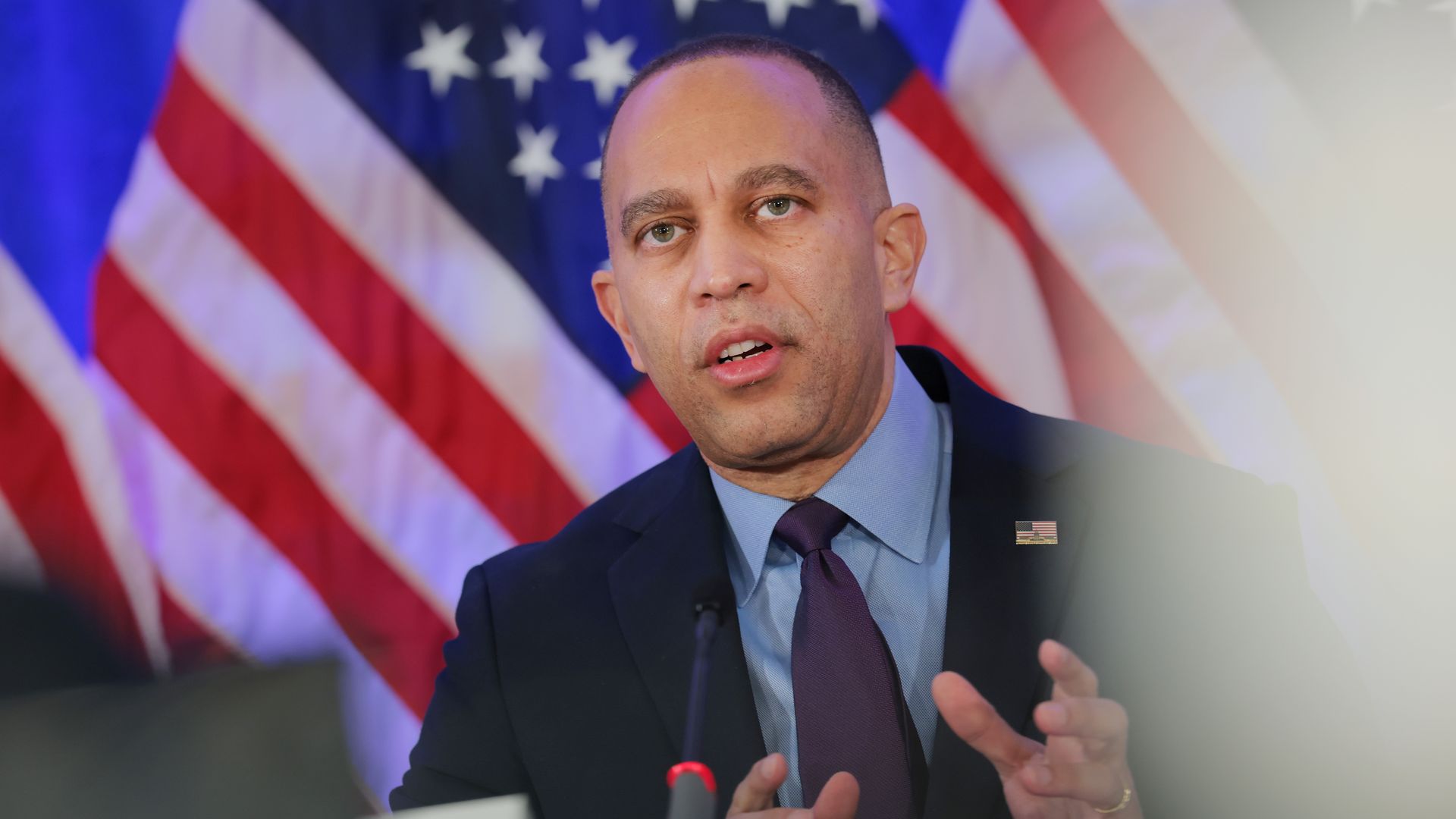
A Democrat bill to revive enhanced Affordable Care Act subsidies for three years passed in the House Thursday with the help of 17 Republicans.
Why it matters: The dramatic 230-196 vote marked a rare rebuke by some Republicans of their own leadership, driven by concerns about spiking health care costs in an election year dominated by affordability concerns.

Kennedy's nutrition guidelines raise questions
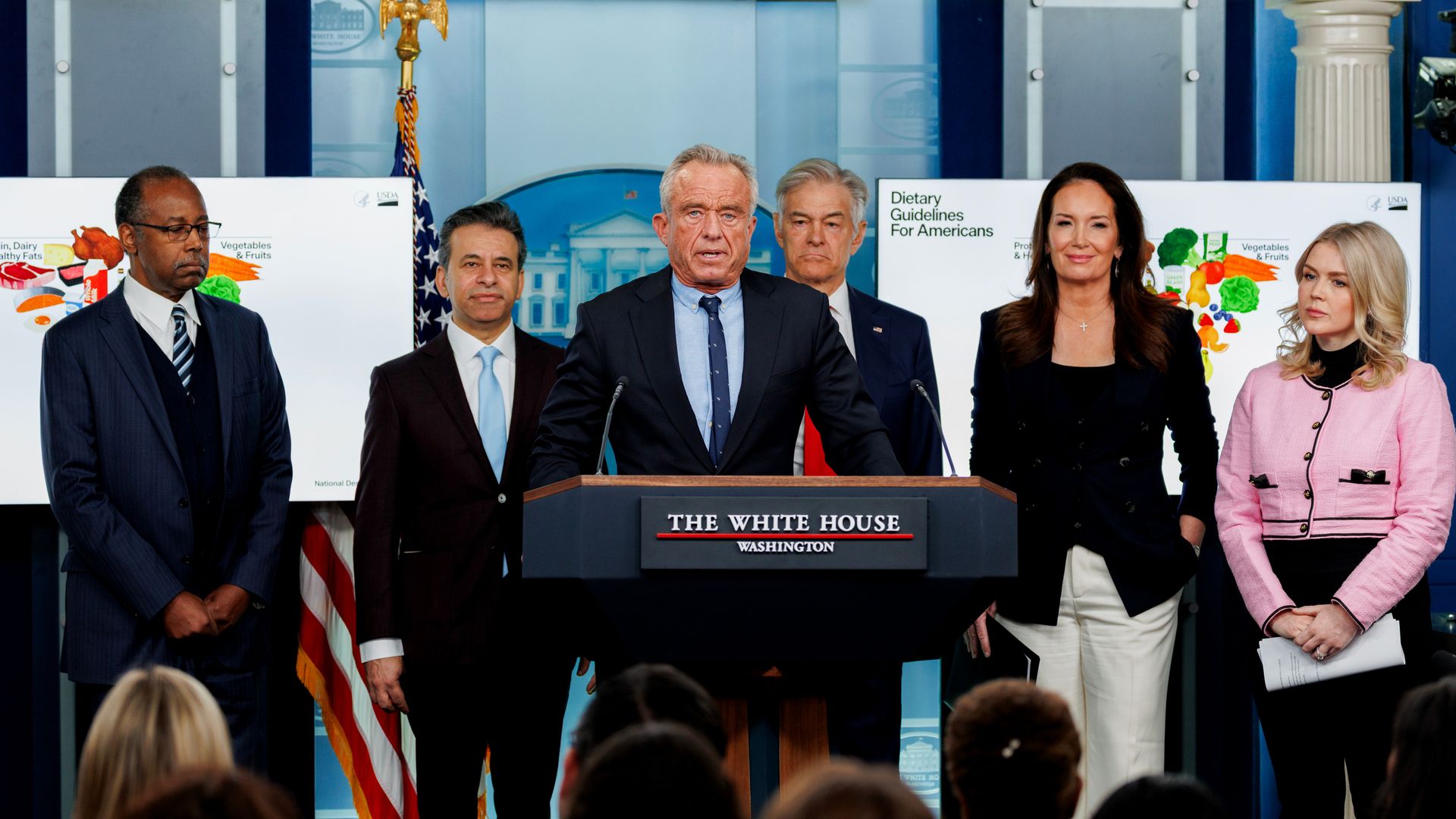
Health Secretary Robert F. Kennedy Jr.'s long-awaited rewrite of federal dietary guidelines may have raised as many questions as it answered.
The big picture: While the updated nutritional guidelines hit on many familiar "Make America Healthy Again" themes, they were prepared with the input of researchers with food industry ties and contained what nutritionists say were fundamental inconsistencies.
Project 2025 creators pitch marriage bootcamp, two-children families

The architects of Project 2025 released a roadmap on Thursday for the American family that encourages heterosexual marriage and childbearing along with increased government intervention in such affairs.
Why it matters: The Heritage Foundation report outlines next steps for the pro-natalist movement against the backdrop of a historic low in new births.

Why COPD needs more champions in Congress
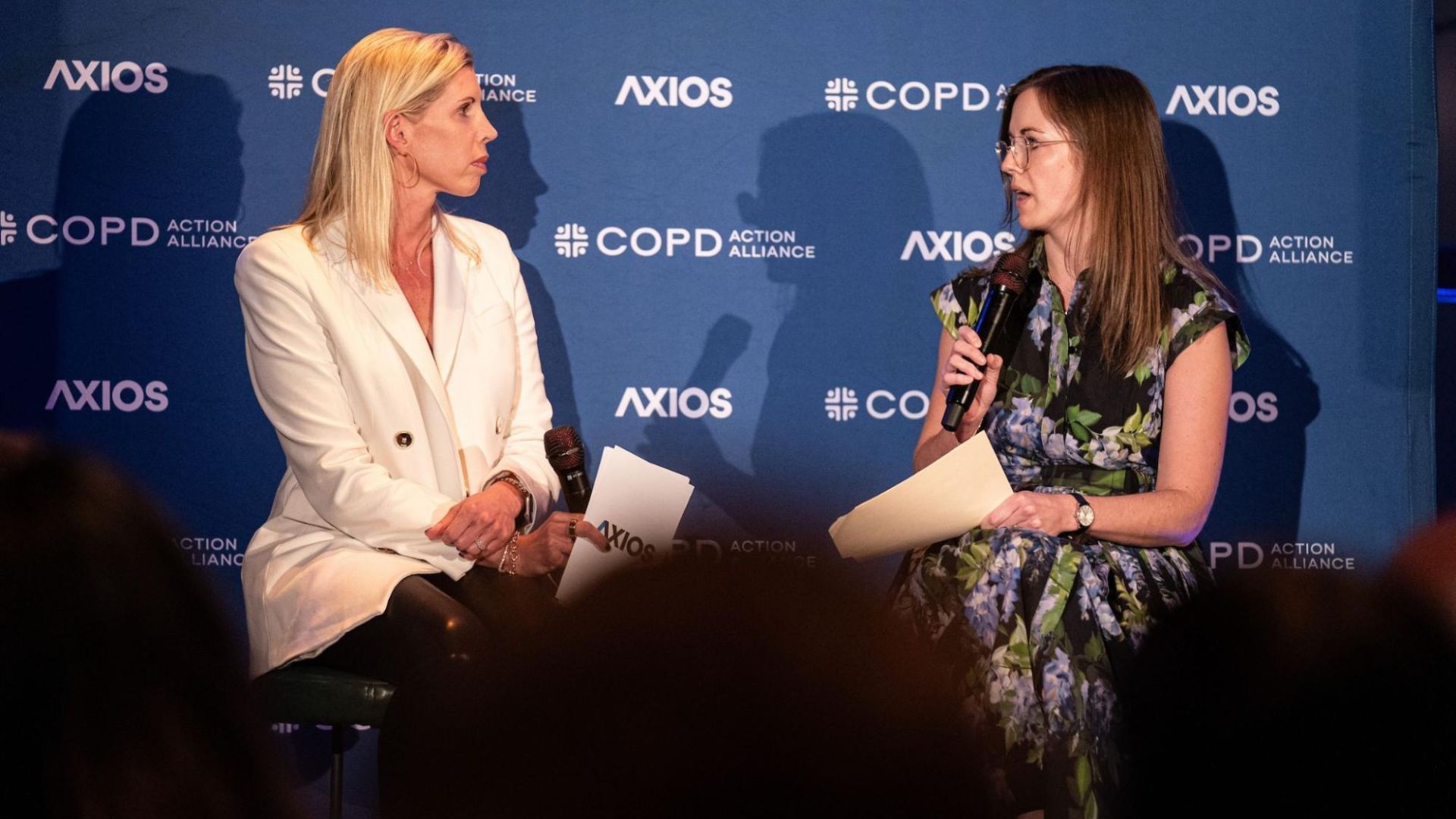
In honor of World Chronic Obstructive Pulmonary Disease (COPD) and COPD Awareness Month, Axios' Kristen Burkhalter spoke with Josie Cooper, executive director of the Alliance for Patient Access, about the urgent policy priorities in respiratory health and how the COPD Action Alliance is pushing for change.
What 36 years of data signals about U.S. health

Reliable data is essential to understanding where Americans are thriving, new pressures are emerging and opportunities exist to improve health for everyone.
New data from America's Health Rankings, the nation's longest-running health monitoring resource, is illuminating the state of the nation's health.
- It's a comprehensive, state-by-state health assessment designed to track outcomes and what shapes them.

Mapped: America's healthiest, least healthy states
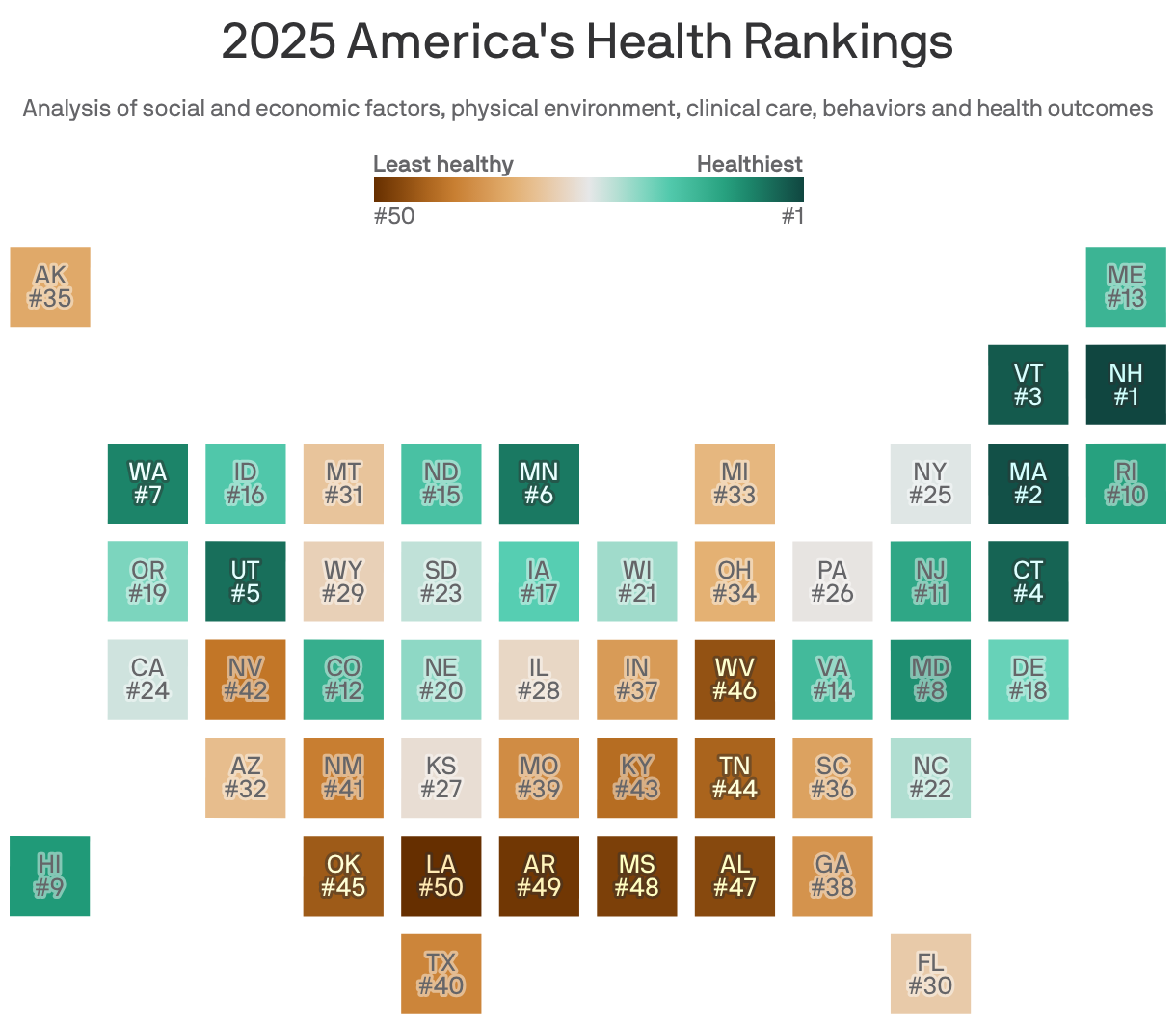
A state-by-state health report card, out today from the United Health Foundation, finds an array of encouraging signs for America: Rates for premature death, drug deaths, firearm deaths and homicides all fell. Rates of cancer screenings, physical activity and volunteerism all increased.
- But rates of e-cigarette use and multiple chronic conditions increased. Homelessness and unemployment — socioeconomic factors that help determine the nation's health — rose.
Why it matters: America's Health Rankings — from the United Health Foundation, established by UnitedHealth Group — synthesize 99 measures of health and well-being, drawn from 31 data sources, to produce a "comprehensive portrait of health at both the national and state levels."
House ACA vote could pressure Senate to act
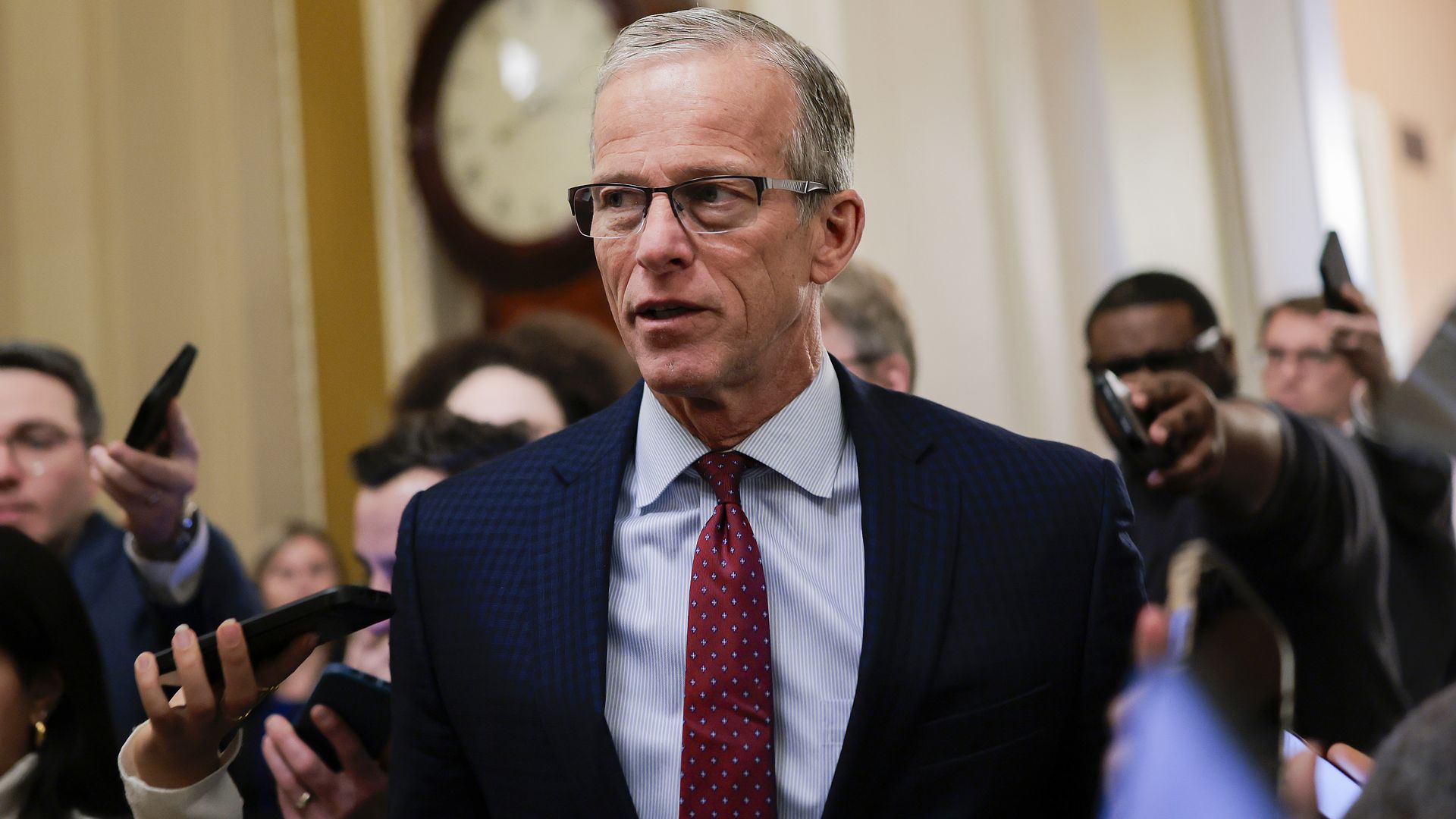
The drama will be in the House on Thursday, when an extension of the enhanced Affordable Care Act subsidies is expected to pass — but the action to watch is the bipartisan talks in the Senate to hammer out a compromise.
Why it matters: The House bill isn't going to become law, but the vote is still likely to be a remarkable rebellion against the Republican leadership. And it could provide the pressure the Senate group will need to reach a bipartisan deal.

OpenAI's ChatGPT Health tools spark safety debate

Mixed reactions to OpenAI's new ChatGPT Health feature highlight demand for more personalized medical help tempered by chatbot safety and privacy concerns.
Why it matters: Health has become a go-to topic for chatbot queries, with more than 40 million people consulting ChatGPT daily for health advice and hundreds of millions doing so each week.

Trump agrees to meet Colombian president after exchange of public threats
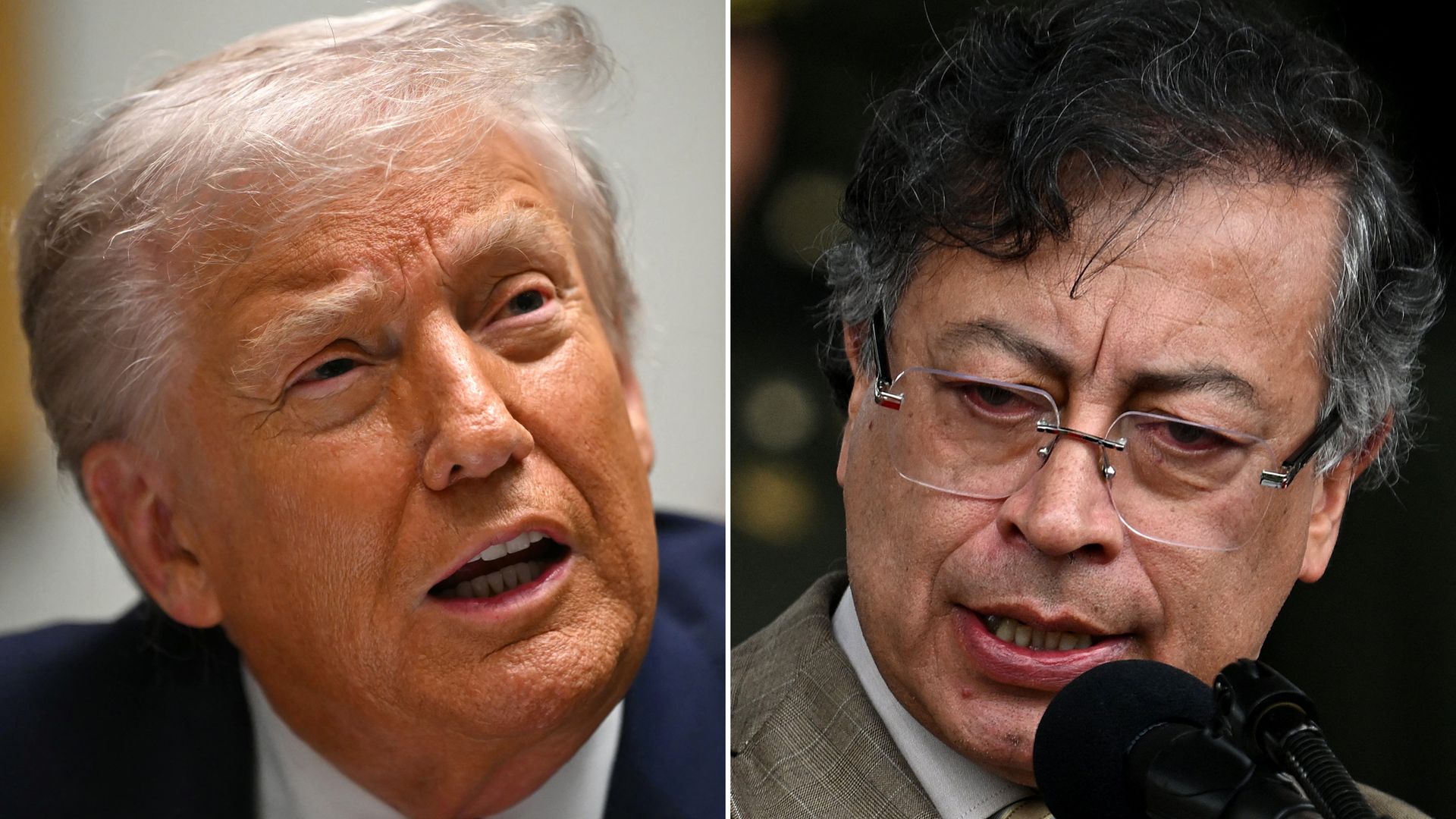
President Trump spoke on Wednesday with Colombia's President Gustavo Petro and the two said they agreed to meet at the White House soon.
Why it matters: It was the first between the two leaders. The call was an attempt to de-escalate tensions between the U.S. and Colombia after a war of words between Trump and Petro that included threats of using military force.