Wednesday's health stories

Kennedy's revamped dietary guidelines call for less processed food

Americans should eat less packaged and highly processed foods and more protein and full-fat dairy, according to updated nutrition guidelines the Trump administration released Wednesday.
Why it matters: The new guidelines, closely watched by the food and beverage industries, are the strongest leverage Health Secretary Robert F. Kennedy Jr. has over what Americans eat, as they
- They blend elements of Kennedy's MAHA agenda with well-established nutritional guidance and maintain existing recommendations on saturated fat intake.
- There also is no specific mention of cutting back on seed oil consumption, which Kennedy has repeatedly railed against.
Driving the news: The Health and Human Services and Agriculture departments jointly released the 10-page document, which emphasizes prioritizing protein at every meal, limiting added sugars and eating vegetables.
- It says balanced diets should include a variety of protein, including red meat, eggs, and plant-based items like beans and soy.
- The document urges Americans to consume less alcohol — without specifying limits — and says to restrict artificial flavorings, dyes and preservatives.
- "Alcohol is a social lubricant that brings people together," Medicare and Medicaid administrator Mehmet Oz said at a Wednesday press briefing.
- "In the best-case scenario, I don't think you should drink alcohol, but it does allow people an excuse to bond and socialize," he said.
The administration also released a new food pyramid, with vegetables, proteins and healthy fats at the top. Whole grains are on the bottom.
- Kennedy has repeatedly slammed the previous guidelines, which were updated in 2020 during President Trump's first term.
What they're saying: The new guidelines are "a dream come true," Vani Hari, a top MAHA influencer who blogs as the "Food Babe," told Axios.
- "We put our full support in for Secretary Kennedy because he told the truth for the first time about the American food system ... and he is following through with his promise," she said.
- The American Academy of Pediatrics, which has fought Kennedy on vaccine policy and other public health issues, said the new guidelines are "an opportunity to clearly explain to parents what a healthy diet for their children should look like."
Food and beverage interests offered mixed assessments of the recommendations.
- The Consumer Brands Association, whose members include food giants like Coca-Cola and Kraft Heinz, said it looks forward to working with the administration and Congress while noting that consumers still "seek a diverse selection of foods."
- But the American Beverage Association criticized recommendations to limit both added sugar and other sweeteners.
- "Americans deserve pragmatic advice they can use in daily life. Guidance that discourages sugar but dismisses safe, effective no sugar options is impractical and inherently contradictory," spokesperson William Dermody said in a statement.
Between the lines: The new guidelines mark the first time the government has formally recommended cutting down on ultra-processed foods.
- They continue to recommend that saturated fats should not exceed 10% of total daily calories, consistent with the previous standards.
- Still, Kennedy said during a the briefing that the administration is "ending the war on saturated fats."
- FDA Commissioner Marty Makary added that the guidelines "are telling young people, kids, schools [that] you don't need to tiptoe around fat and dairy."
A long-standing body of scientific evidence shows that reducing saturated fat intake causes a reduction in cardiovascular issues. And many nutritionists have called concerns over seed oils, which are mostly unsaturated fats, overblown.
- The guidelines urge prioritizing oils with essential fatty acids like olive oil, as well as butter and beef tallow.
- "More high-quality research is needed to determine which types of dietary fats best support long-term health," the document states.
Context: The dietary guidelines are updated every five years. They impact federal nutrition policy, including what goes into free school lunches and what soldiers eat.
- A panel of nutrition experts issued a report in late 2024 with science-based recommendations on guideline updates for HHS and USDA to consider.
- The 2024 report recommended that Americans eat less saturated fat and meat. Reducing saturated fat has been one of nutrition experts' most consistent recommendations since the first guidelines were issued in 1980, it said.
- It stopped short of recommending eating fewer ultra-processed foods.
Go deeper: America's food reckoning
This story has been updated with additional reporting.

Exclusive: 24 Hour Fitness sold as gym "pioneer" Mark Mastrov returns

24 Hour Fitness founder Mark Mastrov and private equity firm LongRange Capital have agreed to buy the gym chain he founded and sold more than 20 years ago.
Why it matters: The fitness industry — which has returned to stability after a bruising period during the pandemic — is now dealing with shifting consumer preferences and the effects of weight-loss drugs.
Drug prices to keep rising through Trump's term

The drug price hikes that are helping drive the health affordability crisis will continue for the rest of President Trump's term, key industry stakeholders are now predicting — despite his deals with drugmakers and Medicare negotiating lower prices.
The big picture: Insurers, drug supply middlemen and hospitals who represent 13% of all pharmaceutical purchases predict single-digit price increases for branded drugs over the next three years, according to a new survey by TD Cowen.

Protein is everywhere on restaurant menus now

Chains from Dunkin' to Subway are opening the year with protein-packed launches as the trend pushes deeper into everyday menus.
Why it matters: Protein is having a restaurant menu moment — and it's getting bigger. Now shorthand for "better-for-you" eating, it's reshaping menus as consumers dine out less, scrutinize value more and increasingly use GLP-1 drugs.

Why making your bed is about more than tidying

If decluttering is your New Year's resolution, don't skip your bedroom — even if no one else sees it.
Why it matters: "When you don't make your own space a priority, it leads to feelings of stress, overwhelm, and a lack of control that you carry with you throughout your day," write authors Meg DeLong and Ea Fuqua of "Tidying Up."

Trump administration tells 5 states their child care funds have been frozen

The Trump administration sent out letters Tuesday night to five blue states, freezing about $10 billion in funding for child care and social services programs pending a "thorough review," citing concerns over "systemic fraud."
Why it matters: The suspension of the funds could hurt low-income families in those states, depending on how long the freeze lasts, advocates say.

Inside the Senate's last-gasp effort to solve the health care crisis

Sen. Bernie Moreno (R-Ohio) isn't giving up on a health care plan that can win 35 Senate Republicans and a majority of Democrats — but he and a small bipartisan group have about three weeks left to find it.
Why it matters: Enhanced ACA subsidies have expired, which will raise health care costs for millions of Americans. But key negotiators see a final chance to revive them.


Trump puts Mike Johnson in a bind on health care

House Speaker Mike Johnson is starting off the new year in a familiar, uncomfortable predicament:
- The Louisiana Republican faces a shrinking majority, a loss of control over the legislative agenda, and pressure from President Trump to embrace an issue many in the GOP want to avoid.
Why it matters: Trump is urging Republicans to make health care their issue and to be "flexible" on long-standing red lines. But many Republicans see health care as a losing issue for the party, especially in the 2026 midterms.

Democratic state officials erupt over Trump threat to child care funds

Democratic leaders and officials are calling out the Trump administration for threatening to freeze billions of dollars in funding for child care and assistance for the poor.
Why it matters: The livelihoods of millions of families and the health of an already fragile child care system are at stake, officials and advocates say, while the Trump administration says it is merely shoring up the integrity of the system.
- The administration is moving to create new rules and restrictions around federal child care funding, claiming that there's widespread fraud.

Trump wants GOP's flexibility on Hyde Amendment

President Trump on Tuesday urged House Republicans to be "flexible" on the Hyde Amendment — the 50-year-old policy barring federal funding for most abortions — as GOP leaders search for a deal to lower health insurance costs before the midterms.
The big picture: Trump's comments signal a notable softening on a long-held Republican policy as party leaders worry about voter backlash over rising Affordable Care Act premiums during an election year.

U.S. is modeling childhood vaccine policy after Denmark. How the countries differ

The Trump administration dramatically narrowed the childhood vaccine schedule this week and aligned immunizations more closely with Denmark's recommendations — a move months in the making.
Why it matters: Though the U.S. is looking to adapt Denmark's playbook against childhood infectious diseases, it might not translate to a nation with almost 60 times more people and vastly different public health policies.

Trump administration sparks midterm vaccine war

The Trump administration made good on its vows to upend childhood vaccinations just days into the new year, ensuring that public health will be a prominent midterm campaign issue.
Why it matters: The slimmed-down vaccine schedule resembling Denmark's suggests that the administration is undaunted by public support for childhood vaccines — or by warnings about the return of preventable diseases.

Lawsuit claims McDonald's deceives customers with McRib
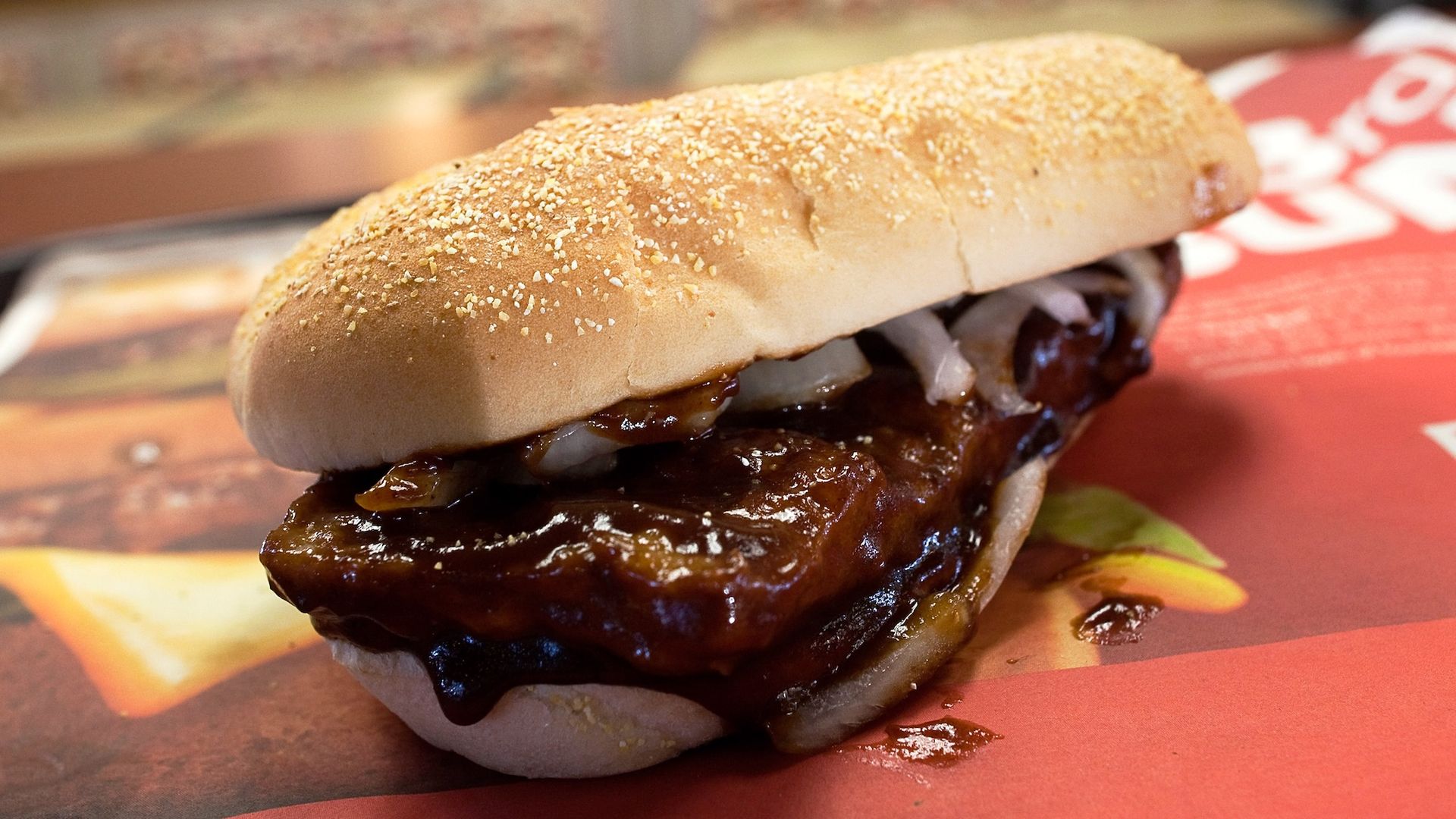
The popular McRib sandwich that pops up periodically on McDonald's menu is at the center of a new federal class action lawsuit filed in Illinois.
Why it matters: The global fast food giant continues to lean into "value and affordability" as inflation worries grow, but customers feeling misled could put both of those selling points at risk.