OpenAI just announced a suite of new products designed for health care professionals that will roll out to leading medical institutions on Thursday, a company spokesperson told Axios.
Why it matters: Although over 40 million users already use ChatGPT for health information daily, providers using the tab must be careful to ensure that the sometimes hallucinatory chatbot gives professionals accurate advice and maintains patient privacy laws.
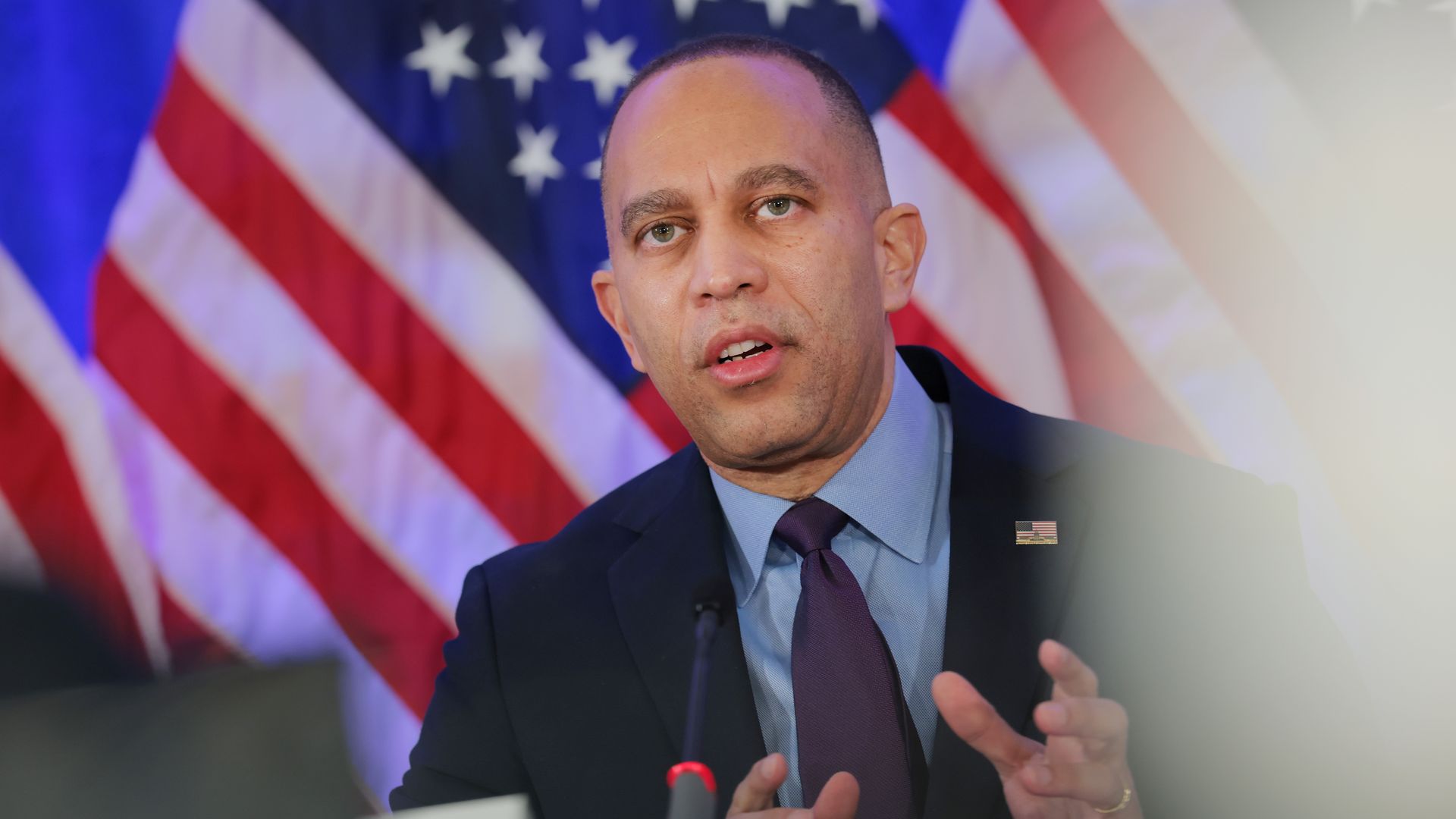
A Democrat bill to revive enhanced Affordable Care Act subsidies for three years passed in the House Thursday with the help of 17 Republicans.
Why it matters: The dramatic 230-196 vote marked a rare rebuke by some Republicans of their own leadership, driven by concerns about spiking health care costs in an election year dominated by affordability concerns.
Health Secretary Robert F. Kennedy Jr.'s long-awaited rewrite of federal dietary guidelines may have raised as many questions as it answered.
The big picture: While the updated nutritional guidelines hit on many familiar "Make America Healthy Again" themes, they were prepared with the input of researchers with food industry ties and contained what nutritionists say were fundamental inconsistencies.
The architects of Project 2025 released a roadmap on Thursday for the American family that encourages heterosexual marriage and childbearing along with increased government intervention in such affairs.
Why it matters: The Heritage Foundation report outlines next steps for the pro-natalist movement against the backdrop of a historic low in new births.
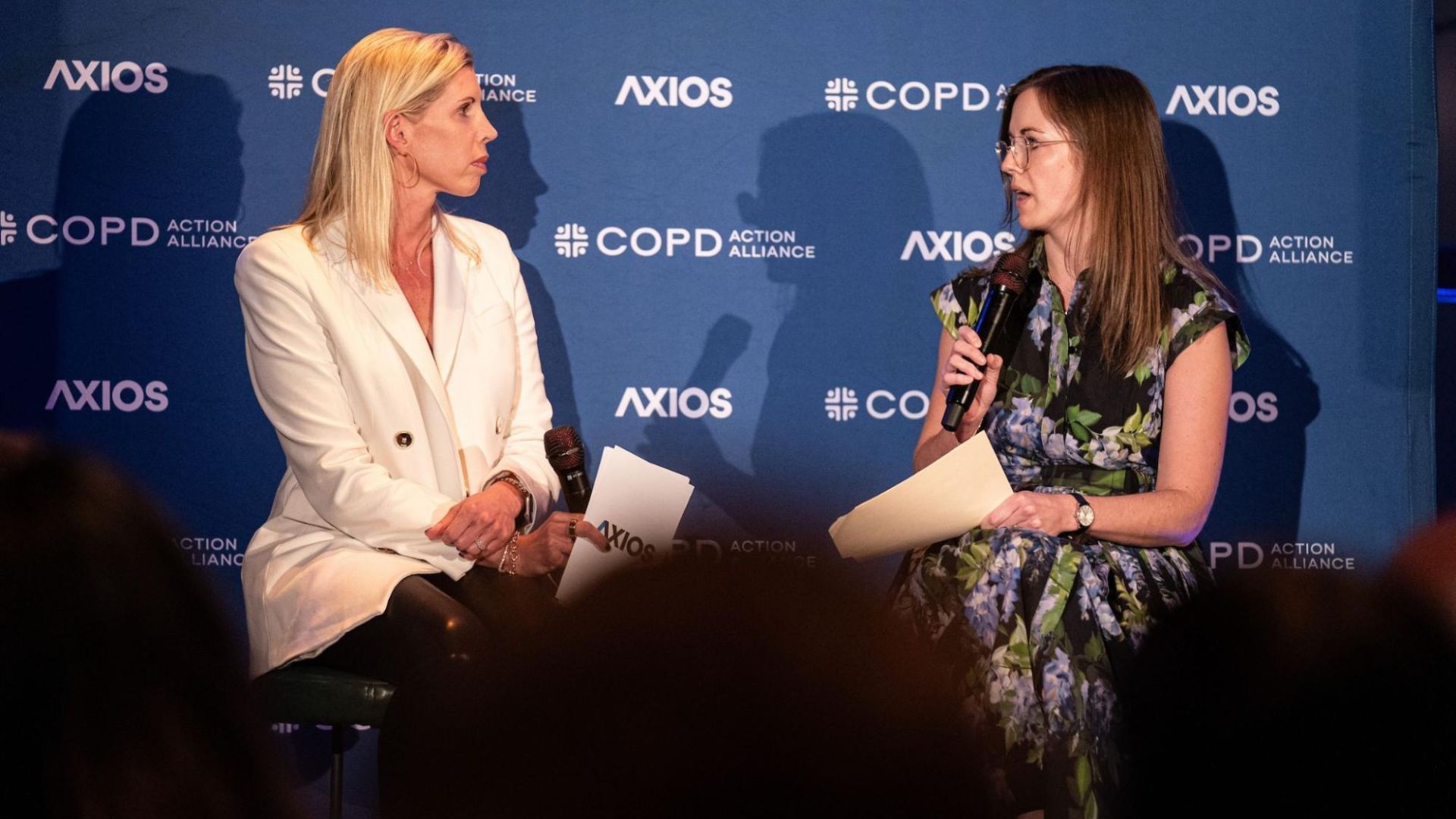
In honor of World Chronic Obstructive Pulmonary Disease (COPD) and COPD Awareness Month, Axios' Kristen Burkhalter spoke with Josie Cooper, executive director of the Alliance for Patient Access, about the urgent policy priorities in respiratory health and how the COPD Action Alliance is pushing for change.
Reliable data is essential to understanding where Americans are thriving, new pressures are emerging and opportunities exist to improve health for everyone.
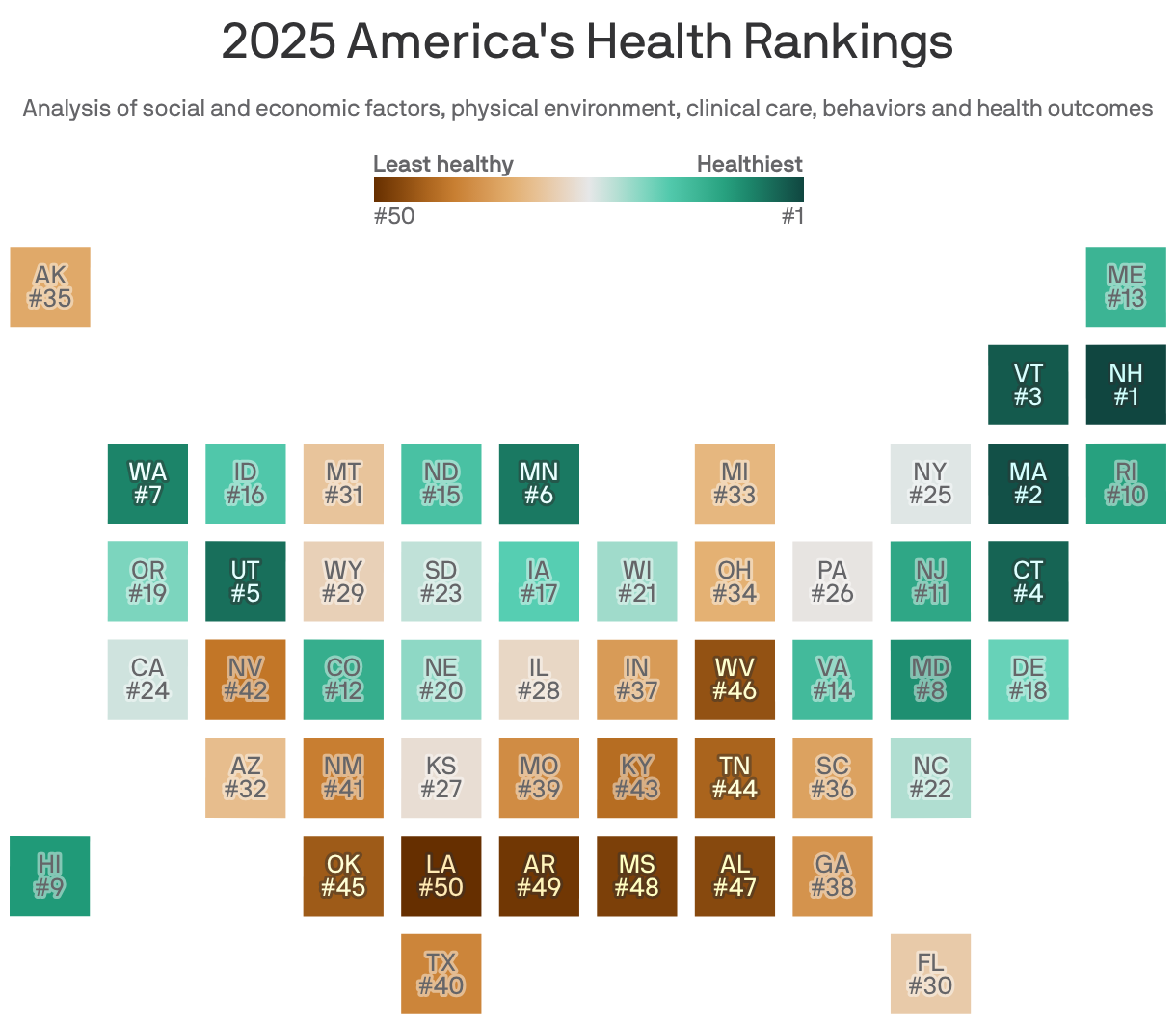
New data fromAmerica's Health Rankings, the nation's longest-running health monitoring resource, is illuminating the state of the nation's health.
It's a comprehensive, state-by-state health assessment designed to track outcomes and what shapes them.
Data: United Health Foundation. Cartogram: Axios Visuals
A state-by-state health report card, out today from the United Health Foundation, finds an array of encouraging signs for America: Rates for premature death, drug deaths, firearm deaths and homicides all fell. Rates of cancer screenings, physical activity and volunteerism all increased.
But rates of e-cigarette use and multiple chronic conditions increased. Homelessness and unemployment — socioeconomic factors that help determine the nation's health — rose.
Why it matters: America's Health Rankings — from the United Health Foundation, established by UnitedHealth Group — synthesize 99 measures of health and well-being, drawn from 31 data sources, to produce a "comprehensive portrait of health at both the national and state levels."
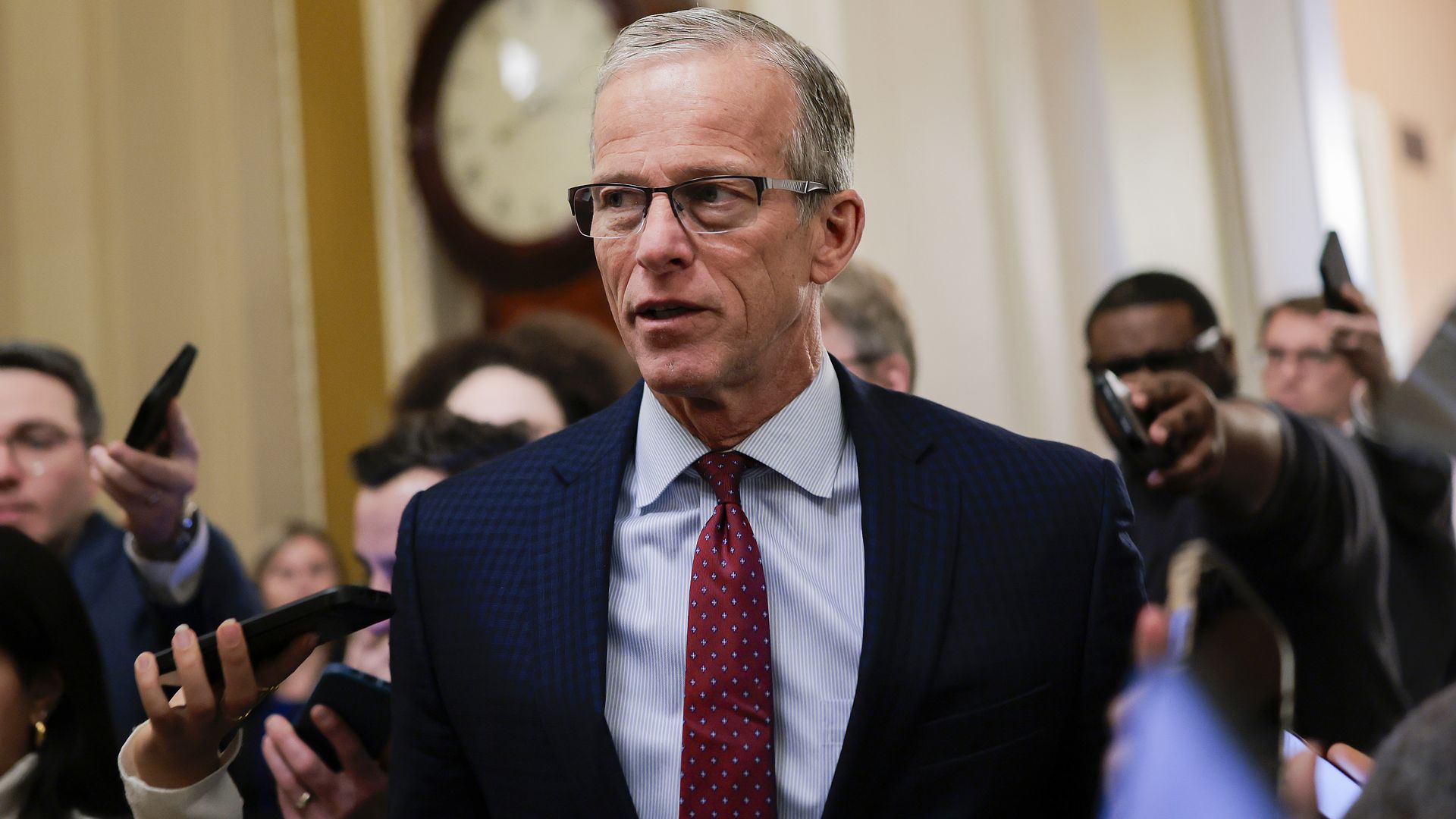
The drama will be in the House on Thursday, when an extension of the enhanced Affordable Care Act subsidies is expected to pass — but the action to watch is the bipartisan talks in the Senate to hammer out a compromise.
Why it matters: The House bill isn't going to become law, but the vote is still likely to be a remarkable rebellion against the Republican leadership. And it could provide the pressure the Senate group will need to reach a bipartisan deal.
Mixed reactions to OpenAI's new ChatGPT Health feature highlight demand for more personalized medical help tempered by chatbot safety and privacy concerns.
Why it matters: Health has become a go-to topic for chatbot queries, with more than 40 million people consulting ChatGPT daily for health advice and hundreds of millions doing so each week.