Americans are getting healthier by some key metrics

Add Axios as your preferred source to
see more of our stories on Google.

Illustration: Aïda Amer/Axios
Overdose deaths are down, life expectancy is up, the odds of surviving cancer are improving, and we're even losing weight.
The big picture: In a year defined by election-related stress, global tensions and economic uncertainty, there's a surprisingly hopeful trend: By a few key measures, Americans are getting healthier.
- Breakthrough therapies and more preventive care are playing a part. So are shifting attitudes on drinking and drugs, especially among Gen Z.
- The obesity rate has stopped climbing for the first time in a decade, just as weight-loss drugs like Wegovy and Ozempic are becoming the rage.
Reality check: Americans still live shorter lives and experience more sickness than people in other high-income countries. The odds of surviving a health crisis are especially bad if you're poor or an ethnic or racial minority.
Post-pandemic rebound
Life expectancy is trending upward, one of several data points that indicate public health is rebounding since the pandemic.
- Life expectancy increased to 77.5 in 2022, up from 76.4 in 2021 though below the pre-pandemic rate of 78.8 in 2019. CDC data isn't yet available for 2023.
- Death rates fell for all age groups 15 and older, though infant mortality increased.
- COVID fell from the third to fourth leading cause of death in 2022, trailing heart disease, cancer and unintentional injuries.
Opioid crisis may be turning a corner
Drug overdose deaths declined in 2023 and are falling even faster this year, according to preliminary CDC data.


- While public health officials don't have a firm fix on what's driving it, the increased availability of naloxone and the end of pandemic-era social isolation and stress could be factors.
Cancer treatments improving
The odds of surviving cancer keep improving.
- The five-year relative survival rate for all cancers combined has increased from 49% for diagnoses during the mid-1970s to 69% from 2013–2019, per the American Cancer Society.
- The development of targeted therapies has led to especially rapid improvements for cancers affecting the blood, bone marrow and lymph systems, and for melanoma.
- Still, delays in diagnosis and treatment during the pandemic and disruptions in employment and insurance could dent that progress.
More sobering is a steady uptick in cancer diagnoses in Gen X and millennials, who are more likely than previous generations were to develop conditions including breast, liver and pancreatic cancers.
- Sedentary lifestyles, environmental factors and obesity may be contributing, though the picture is probably more complicated.
Obesity slows after decades of increase
As far as obesity goes, a staggering four in 10 Americans are obese, but the obesity rate is no longer rising.
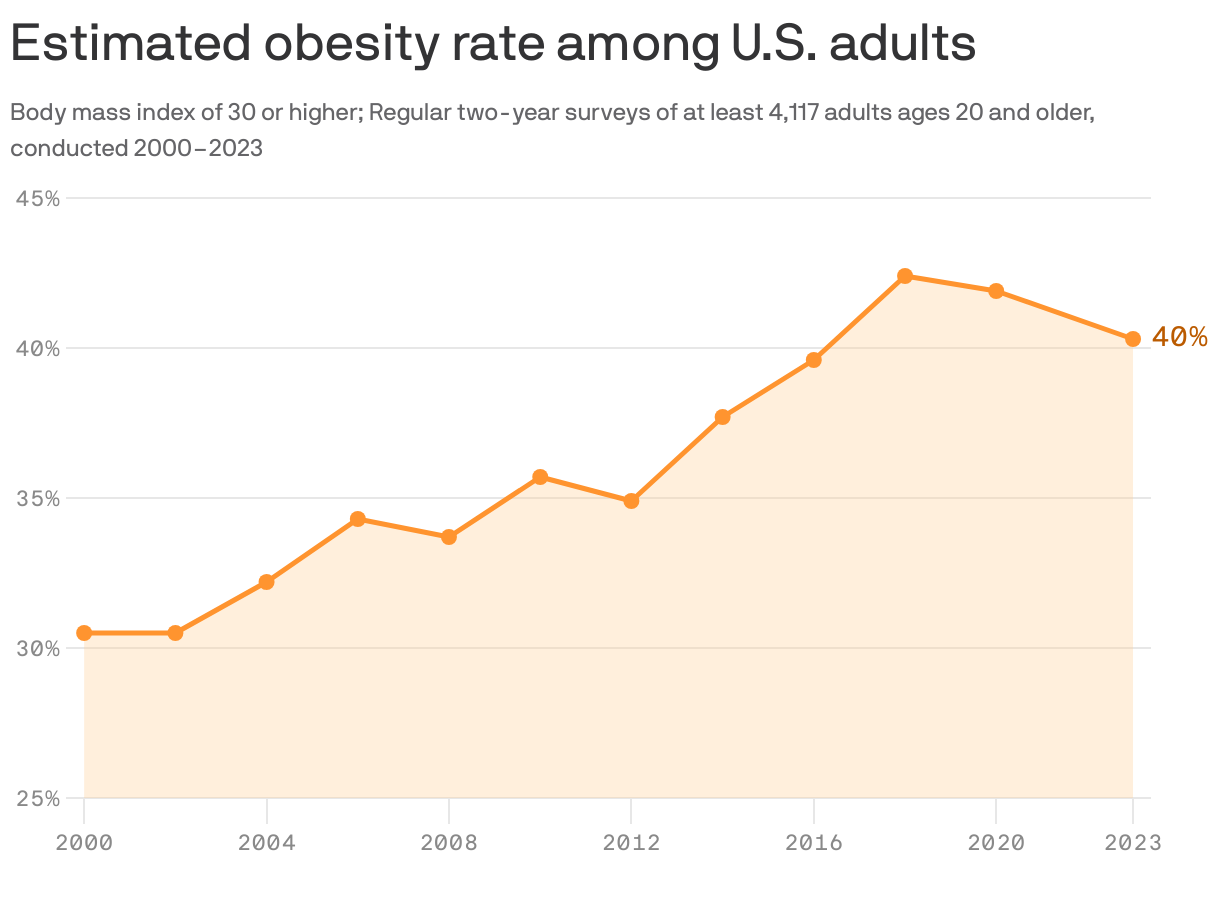
- Slimming waistlines could lower the risk of cardiovascular and metabolic disease and even lower health care spending.
- But many insurers, including Medicare, still won't cover the pricey drugs for weight loss, putting them out of reach for large segments of the population.
A long way to go
The U.S. ranked lowest on health outcomes out of 10 developed countries the Commonwealth Fund recently surveyed.
- The report cited a fragmented insurance system and higher cost-sharing requirements that leave many people unable to visit a doctor when medical issues arise.
- "Reversing the dismal track record of the U.S. health system would require multiple, demanding interventions by government at all levels and by the private sector," Commonwealth said. It recommended extending coverage to the remaining uninsured and cutting administrative red tape.
Caitlin Owens and Tina Reed contributed reporting.
