The big picture: The Department of Health and Human Services is fleshing out targets and putting an organizational framework around the $5 billion "Project NextGen," which will operate similarly to the Trump-era public-private partnership in speeding the development of new treatments.
The Food and Drug Administration finalized new guidance on Thursday that will allow more gay and bisexual men to donate blood.
Why it matters: The change formally ends the FDA's blood donor restrictionsfor men who have sex with men that originated during the HIV/AIDS crisis in the 1980s, which have been denounced as discriminatory by medical and LGBTQ organizations.
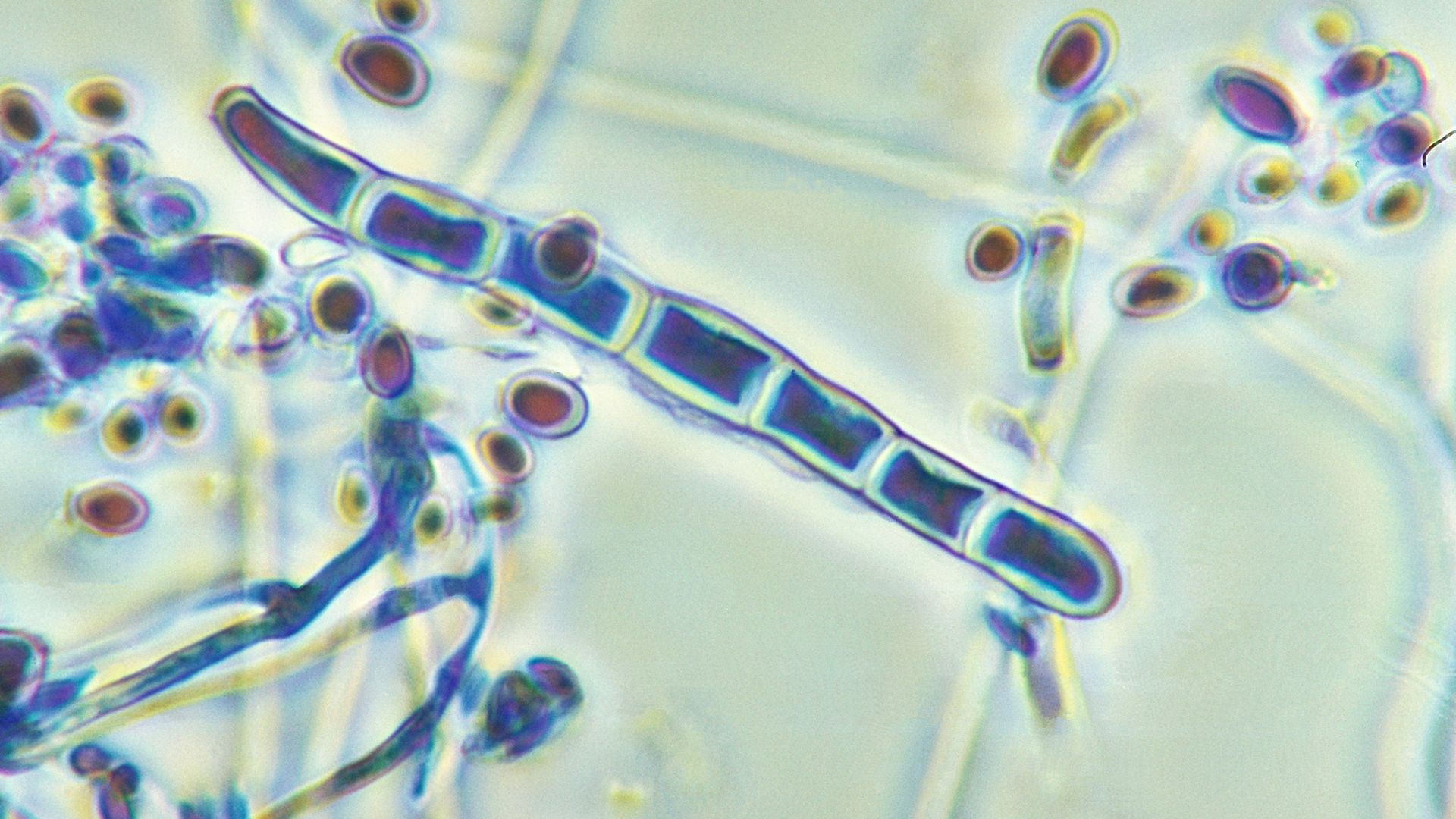
Officials in New York City are urging clinicians to be vigilant after two cases of drug-resistant ringworm infections were recently identified there, the CDC announced Thursday.
Driving the news: The recently emerged fungus causes severe and contagious superficial skin infections.
This is the latest drug-resistant fungus to be found in the United States. Another potential global threat, the fungus Candida auris, appeared to gain strength during the pandemic.
Zoom in: Officials said they were notified in February by a dermatologist after two patients with severe ringworm were found to not improve with treatment. Neither patient had major medical conditions.
One of the patients had no recent international travel history which suggests local transmission of the fungus, they said.
What they're saying: "It is also important that clinicians strengthen surveillance of drug-resistant ringworm their antifungal stewardship and surveillance of drug-resistant ringworm," CDC officials said.
Providers who suspect the infection should contact their state or local public health department for testing help, officials said.
What to watch: Lawmakers recently reintroduced bipartisan legislation known as the PASTEUR Act, which stands for Pioneering Antimicrobial Subscriptions to End Upsurging Resistance Act, which would create market incentives for pharma companies to develop new antibiotics.
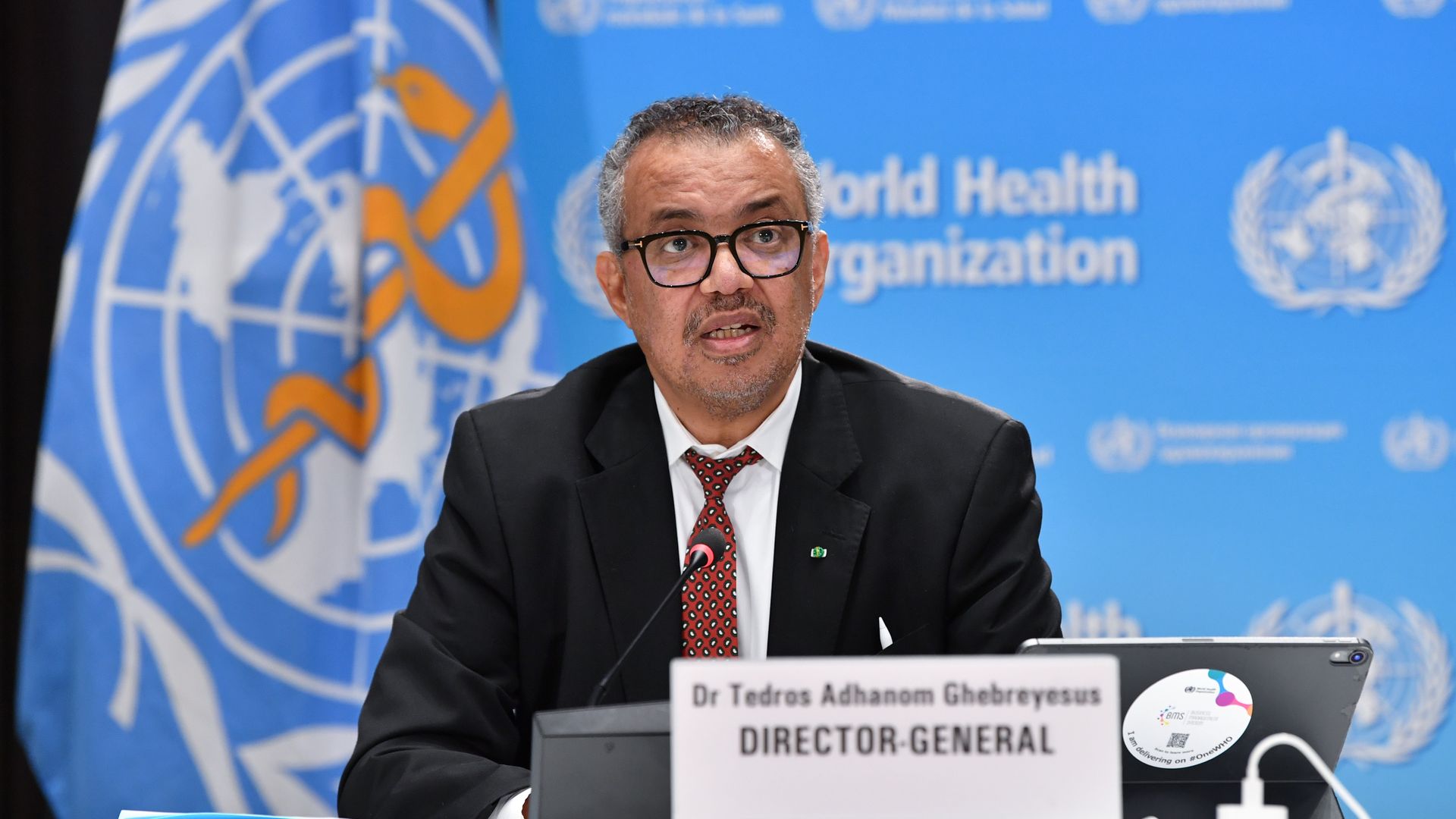
Mpox is no longer a global health emergency, World Health Organization director-general Tedros Adhanom Ghebreyesus declared at a press briefing Thursday.
Driving the news: There has been a steep decline in mpox — previously known as monkeypox — over the past three months, with countries reporting 90% fewer cases than they had in the previous three-month period, Tedros said.
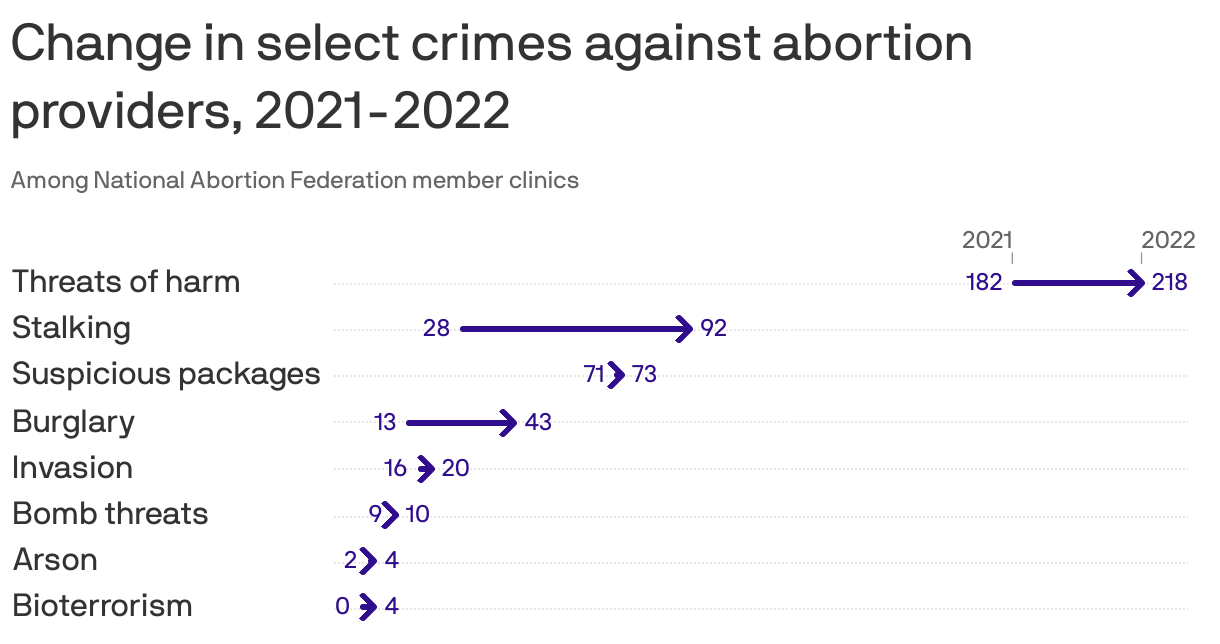
Data: National Abortion Federation’s 2022 Violence & Disruption Report; Note: 80% of member clinics reported data. Chart: Axios Visuals
The Supreme Court's decision to overturn Roe v. Wade was followed by a "sharp increase" in violence directed against abortion providers and patients, according to a new report from the National Abortion Federation.
Zoom in: The report found that states that protect abortion access saw a "disproportionate" increase, including a ninefold increase in reported cases of stalking, a doubling of burglaries and a 29% increase in assaults and batteries from 2021 to 2022.
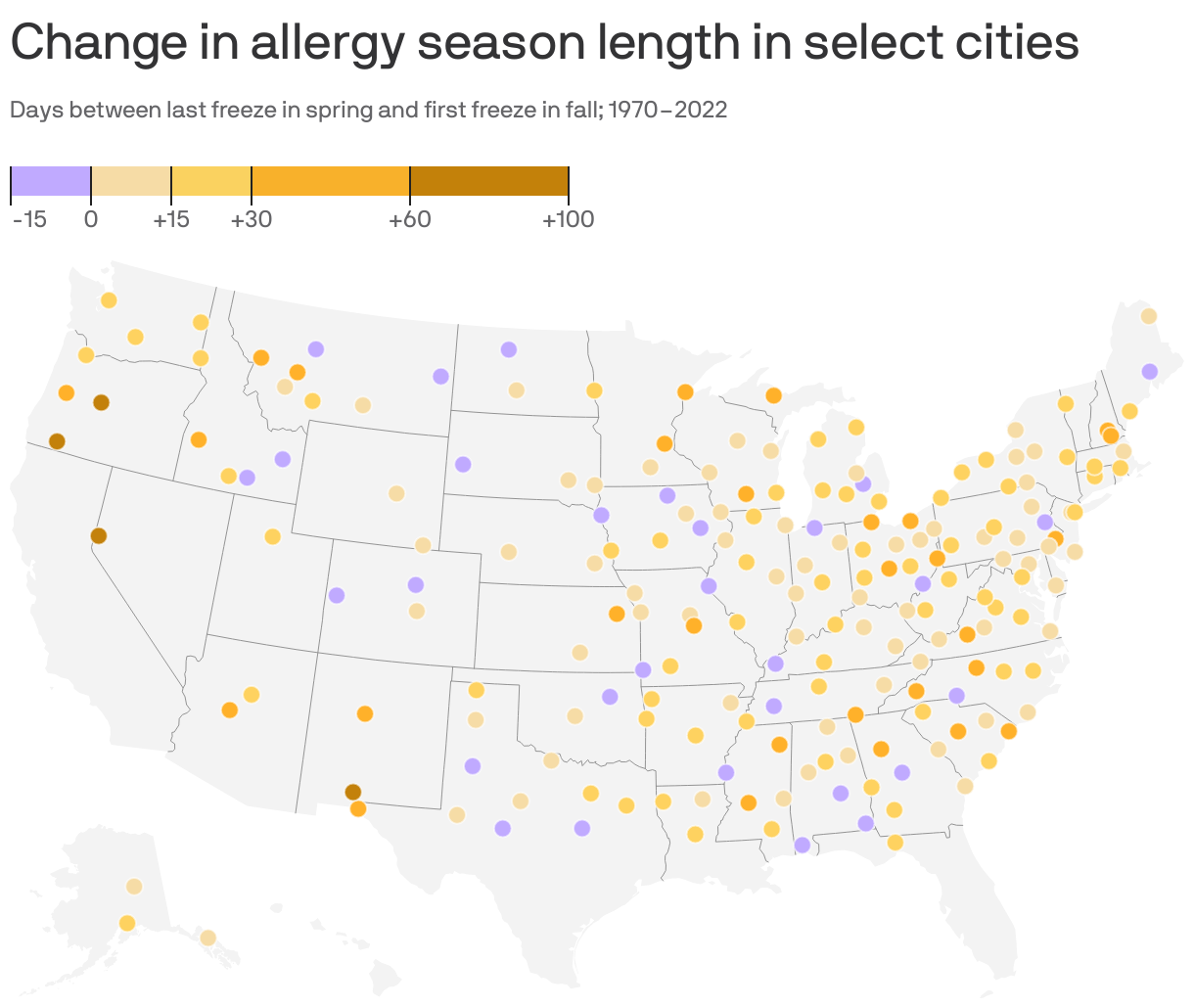
Allergy season lengthened by 15 days on average between 1970 and 2021 across about 200 U.S. cities, per an analysis from Climate Central, a nonprofit climate news organization.
That's based on the number of days between the last freeze each spring and the first freeze each fall — essentially, the annual window during which seasonal allergy sufferers are most likely to rely on their antihistamine of choice to get by each day.
The expiration of the COVID-19 public health emergency today will cut off a pipeline of data that tallied the pandemic's human toll and offered a view of how the stealthy virus spread.
The big picture: More than 1.1 million Americans have died from COVID over the course of the public health emergency, or about 980 peoplea day.
Startup Alto Pharmacy plans to raise another funding round as it eyes potential acquisition targets — building on its billion dollar-plus revenue, CEO Alicia Boler-Davis said Wednesday at Axios BFD in San Francisco.
Why it matters: The company's growth plans come at a time of tightened capital markets for digital health care companies, particularly for a low-margin corner of the sector.
Scientists on Wednesday published a first draft of a human "pangenome" that captures more of the genetic diversity in the human population.
Why it matters: It's a major development that could help researchers to find and better understand genetic variations linked to diseases and disorders. Genetic research and medical treatments have been hindered by a reliance on genomic data from white European populations.
An FDA advisory panel on Wednesday unanimously endorsed making daily birth control pills available over-the-counter for the first time, following two days of deliberations over whether patient misuse could lead to more unintended pregnancies.
Why it matters: If the FDA follows the recommendation and switches HRA Pharma's Opill away from prescription-only use, it could expand the availability of contraception and deepen partisan rifts over reproductive health in the post-Roe landscape.
Patients who take antidepressants are at highest risk of harming themselves in the weeks immediately after the drug is prescribed, according to a new analysis of more than 8.4 million electronic health records.
Why it matters: The Food and Drug Administration has warned since 2004 that antidepressants can increase suicidal behavior, but little is known about when the potential threat is greatest, researchers wrote.
Antidepressants are also estimated to take up to eight weeks to begin working, with side effects common before mood lifts.
The details: The report from the research arm of electronic health records company Epic looked at data between 2017 and 2022 of patients with no history of self-harm or suicide attempts prior to being on antidepressants.
The analysis doesn't breakdown types of self-harm, which can include but is not limited to attempted suicide.
The 12-to-17 age group had the highest rate of self-harmat 0.39% and were nearly five times more likely to report a self-harm event in the first few months of being prescribed antidepressants compared to the general population.
Teen girls, who the CDC in February found are experiencing record levels of sadness and violence, were especially at risk of self-harm.
Men in the 18-to-24 age group, were slightly more likely to harm themselves than women the same age.
Active antidepressant prescriptions also doubled between 2017 and 2022, signaling the increased use of depression treatment during the pandemic.
Worth noting: Although researchers did observe an increase in self-harm soon after patients started antidepressants, most first-time self-harm events occurred among patients (69%) who were not on antidepressant medication.
If you or someone you know is having thoughts of suicide, call or text 988 to reach the National Suicide Prevention Lifeline. Ayuda disponible en español.
Syneos Health, a North Carolina-based biopharma contract research organization, agreed to be taken private for $7.1 billion by an investor group that includes Elliott Investment Management, Patient Square Capital and Veritas Capital.
Why it matters: Private equity firms are once again teaming up for big buyouts, a practice that was largely abandoned after the Great Financial Crisis.
New guidelines changing the recommended screening age for breast cancer to 40 years old from 50 are adding another wrinkle to the confusing discussion over when and how often to get mammograms.
Driving the news: The draft guidance the U.S. Preventive Services Task Force released on Tuesday for women with average risk estimated that starting screenings a decade earlier could save 19% more lives.
Artificial intelligence poses "an existential threat to humanity" akin to nuclear weapons in the 1980s and should be reined in until it can be properly regulated, an international group of doctors and public health experts warned Tuesday in BMJ Global Health.
What they're saying: "With exponential growth in AI research and development, the window of opportunity to avoid serious and potentially existential harms is closing," wrote the authors, among them experts from the International Physicians for the Prevention of Nuclear War and the International Institute for Global Health.
















/2023/05/09/1683674815514.gif?w=3840)