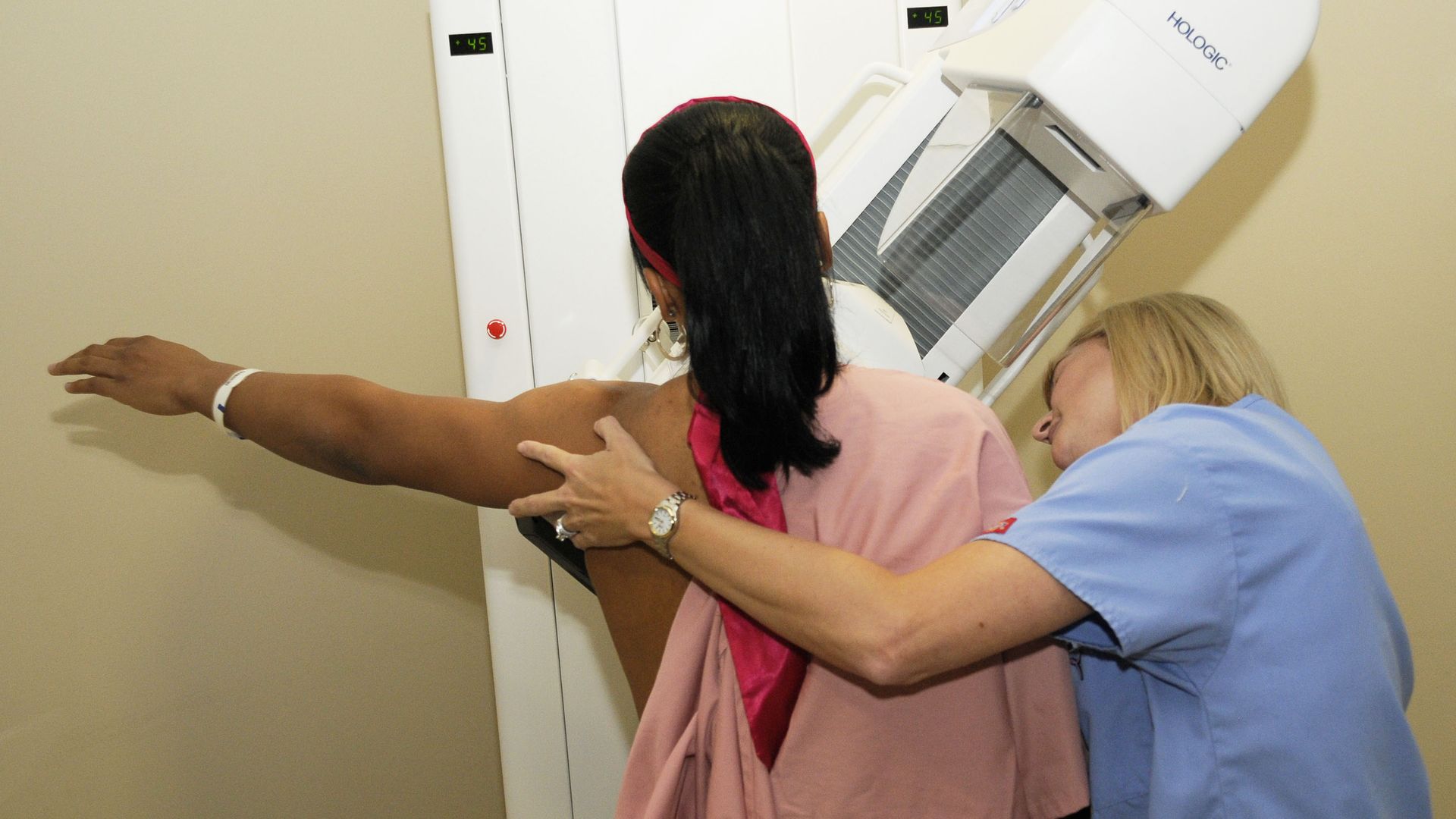
The recommended age for women to start getting mammograms every other year should be lowered from 50 to 40, according to draft health panel recommendations released Tuesday.
Why it matters: The U.S. Preventive Services Task Force found that starting formalbreast cancer screenings 10 years earlier could save 19% more lives.
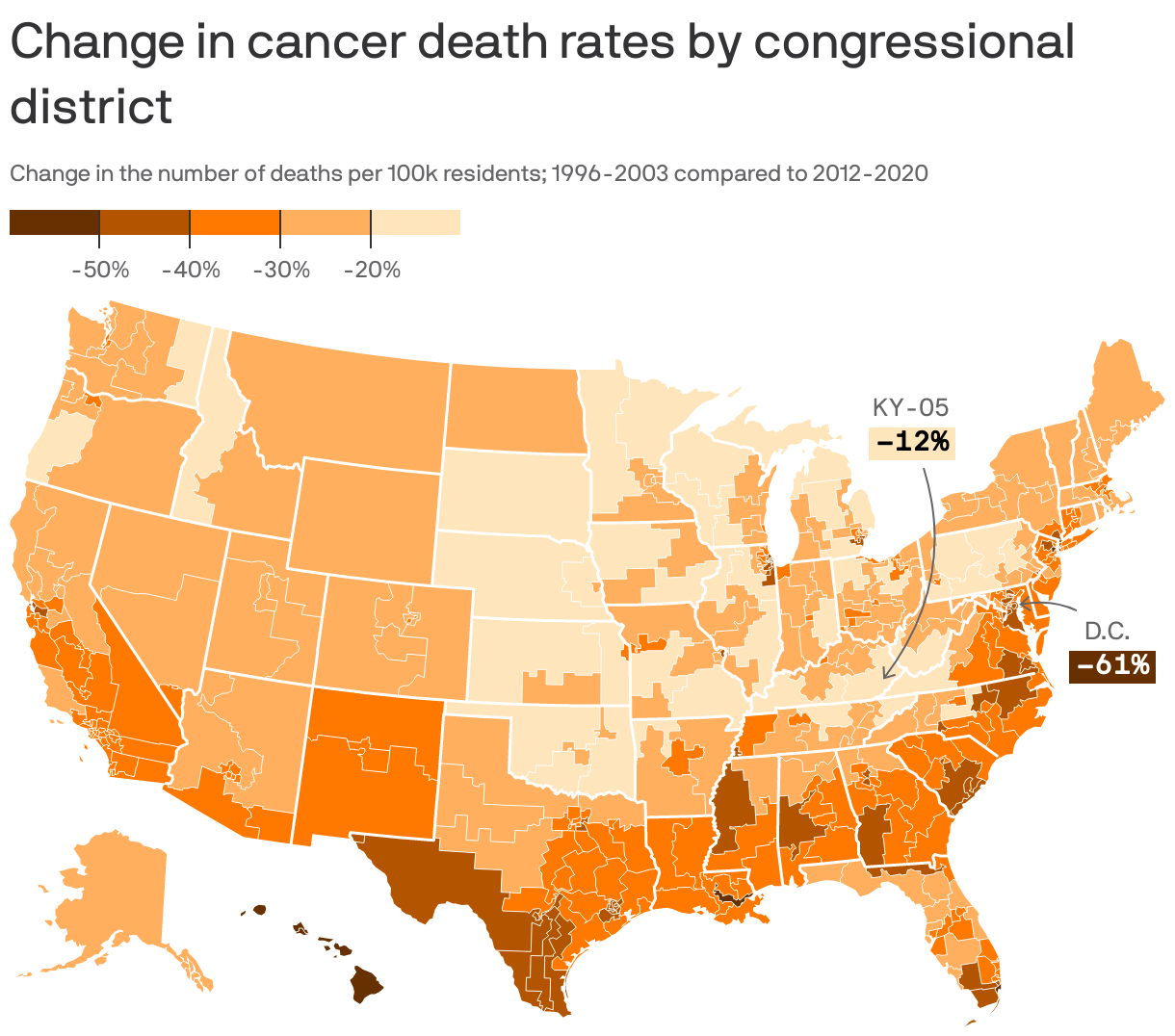
Data: American Cancer Society; Note: Death rate is computed as the average of the male and female rates; Map: Erin Davis/Axios Visuals
Cancer deaths are on the decline in every congressional district, typically between 20% and 45% among males and a 10% and 40% among females, over the past quarter century, according to a study published today in the journal Cancer.
Telehealth rules created during the pandemic that allowed for the prescribing of controlled substances without an in-person visit will stay in place as is until Nov. 11.
Driving the news: The Drug Enforcement Administration filedthe rule on Tuesday to extend telehealth flexibilities, which will take effect on Thursday when the COVID-19 public health emergency expires.
FDA advisers today will weigh whether to make daily birth control pills available over-the-counter for the first time amid concerns from agency staff that patient misuse could cause more unintended pregnancies.
Why it matters: Expanded availability of the pills could deliver more options for the more than 19 million women living in areas with health centers that do not offer a full range of birth control methods.
Abortion rights advocates are trying to force the Food and Drug Administration to expand access to medication abortion — even if that winds up undercutting the agency's rulemaking discretion.
The big picture: The FDA's regulatory powers over drugs that terminate pregnancies are being challenged by both abortion rights and anti-abortion groups in a way that creates a "dangerous path" for the agency to make independent scientific decisions, legal experts say.
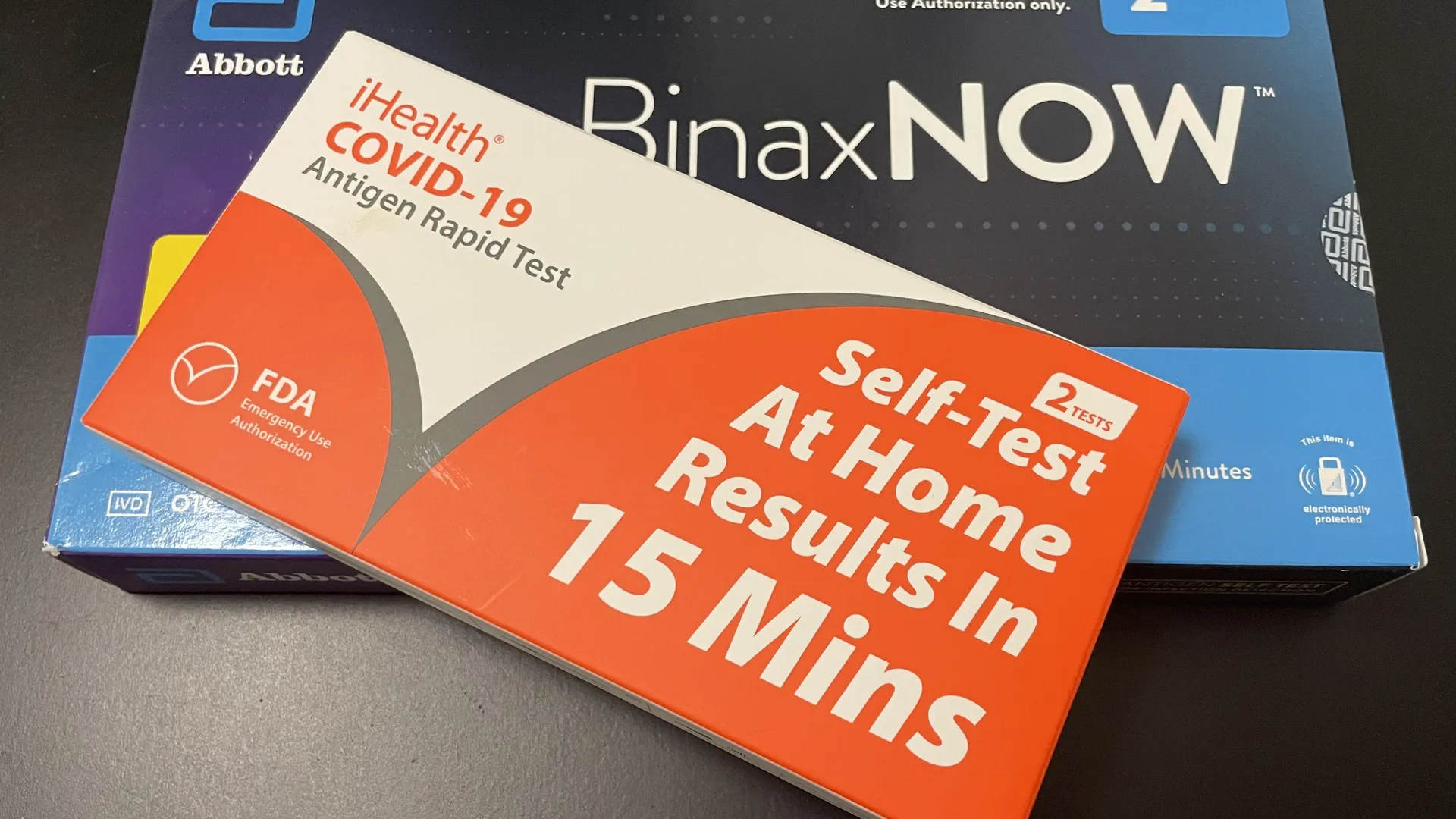
With the pandemic public health emergency ending Thursday, time is quickly running out for most people to get COVID-19 tests covered by insurance.
Why it matters: The end of the federal government’s health emergency that began in March 2020 will shift who pays for the testing kits and some COVID-19 treatments.
A number of health care changes that both providers and patients have grown used to during the pandemic will disappear on Thursday as the COVID public health emergency ends.
Why it matters: Congress has stepped in already and extended a number of COVID-era flexibilities. But the end of others could hurt access to health care, make it more costly, and stymie some of the positive innovations that emerged from the pandemic, providers say.
An estimated 1.7 million people would drop off Medicaid rolls next year if House Republicans' debt ceiling bill with Medicaid work requirements were to become law, a new KFF analysis finds.
Why it matters: Though Democrats strongly oppose it, tying Medicaid coverage to work could factor into debt limit discussions or the broader budget process after the House endorsed an 80-hour per month requirement, which could save the federal government $109 billion over 10 years, per the Congressional Budget Office.