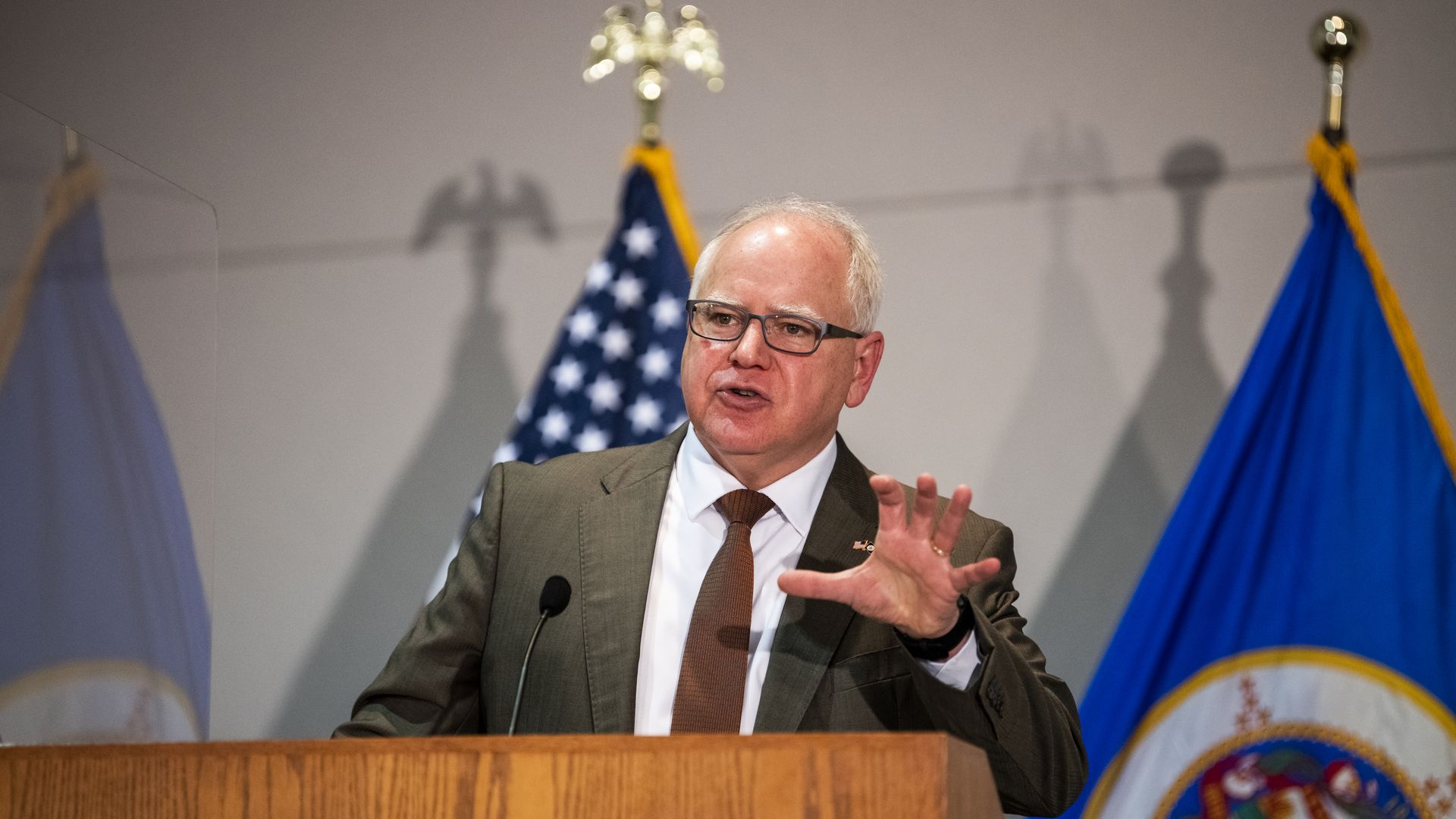
The first 100,000 Minnesotans who get vaccinated against the coronavirus between Memorial Day weekend and the end of June will be eligible for free state parks passes, free fishing licenses or other rewards, Gov. Tim Walz (D) announced Thursday.
Why it matters: The incentives are part of the state's effort to increase vaccinations. 61% of Minnesotans 12 years and older have received at least one dose of a COVID-19 vaccine, but the pace of doses administered daily has slowed since its peak in April, according to the Minnesota Star Tribune.
The Ohio Lottery’s Cash Explosion TV show on Wednesday night announced the first winners of the state's Vax-a-Million campaign to increase the number of COVID-19 inoculations in the state, AP reports.
By the numbers: Over 2.7 million adults signed up for the $1 million prize and more than 104,000 teens between the ages of 12 and 17 signed up to enter the drawing for the college scholarship, AP notes.
When sports shut down last spring, it instantly made the pandemic feel more urgent and signaled just how drastically our lives were about to change.
What's happening: Now that fans are returning in droves, sports are once again acting as a barometer of the world's well-being and foreshadowing our future reality — only this time, it's a reality worth getting excited about.
Immunity to coronaviruses lasts at least a year and could possibly last a lifetime, two new studies have found.
Why it matters: This could offer some peace of mind for lingering concerns about how long protection against COVID-19 will last, the New York Times reports.
The pace of new coronavirus infections in the U.S. fell by nearly 20% over the past week — the fifth straight week of double-digit declines.
The big picture: America’s vaccination drive is working, and as it continues to expand, the country can safely get back to many of its pre-pandemic routines.
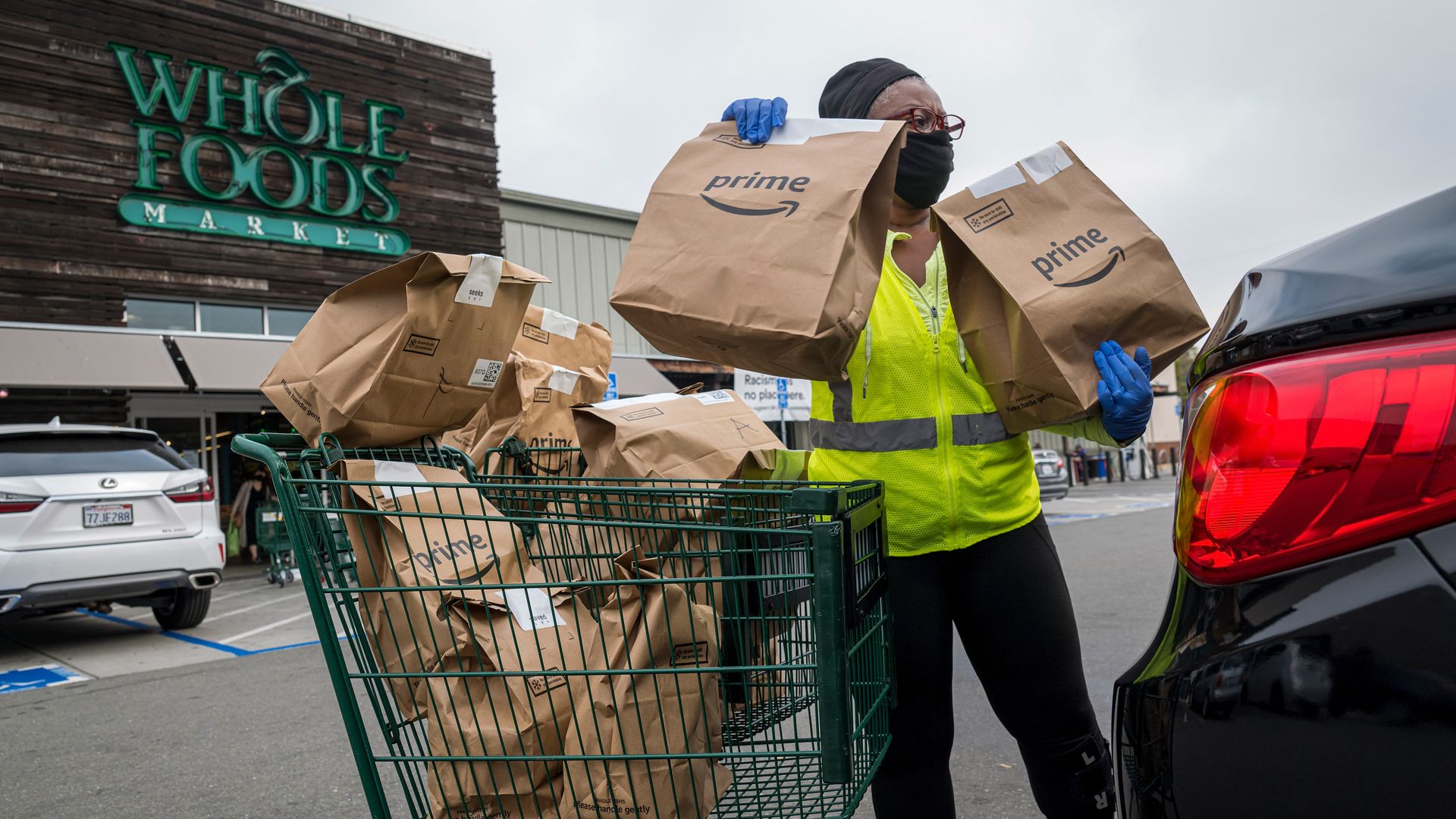
Amazon is contemplating opening physical pharmacy stores, including within its Whole Foods locations, Business Insider reports.
Reality check: Amazon still isn't disrupting the prescription drug industry. Amazon is maybe, possibly considering a way to capture a marginally bigger piece of the extremely small slice it has.
A number of U.S. colleges and universities say they've seen a surge of students who say the COVID-19 crisis inspired them to pursue the public health field, and crisis communication in particular.
Why it matters: The pandemic exposed the need for and challenges of well-executed public health messaging — particularly in a time rife with misinformation campaigns and polarizing politics.
Facebook posts claiming that COVID-19 was "man-made" will no longer be removed, the social media giant announced Wednesday.
Why it matters: The lifting of the ban reflects a reinvigorated debate on the origins of the pandemic in recent days, following a Wall Street Journal report that three researchers at the Wuhan Institute of Virology were hospitalized in November 2019 after falling ill.
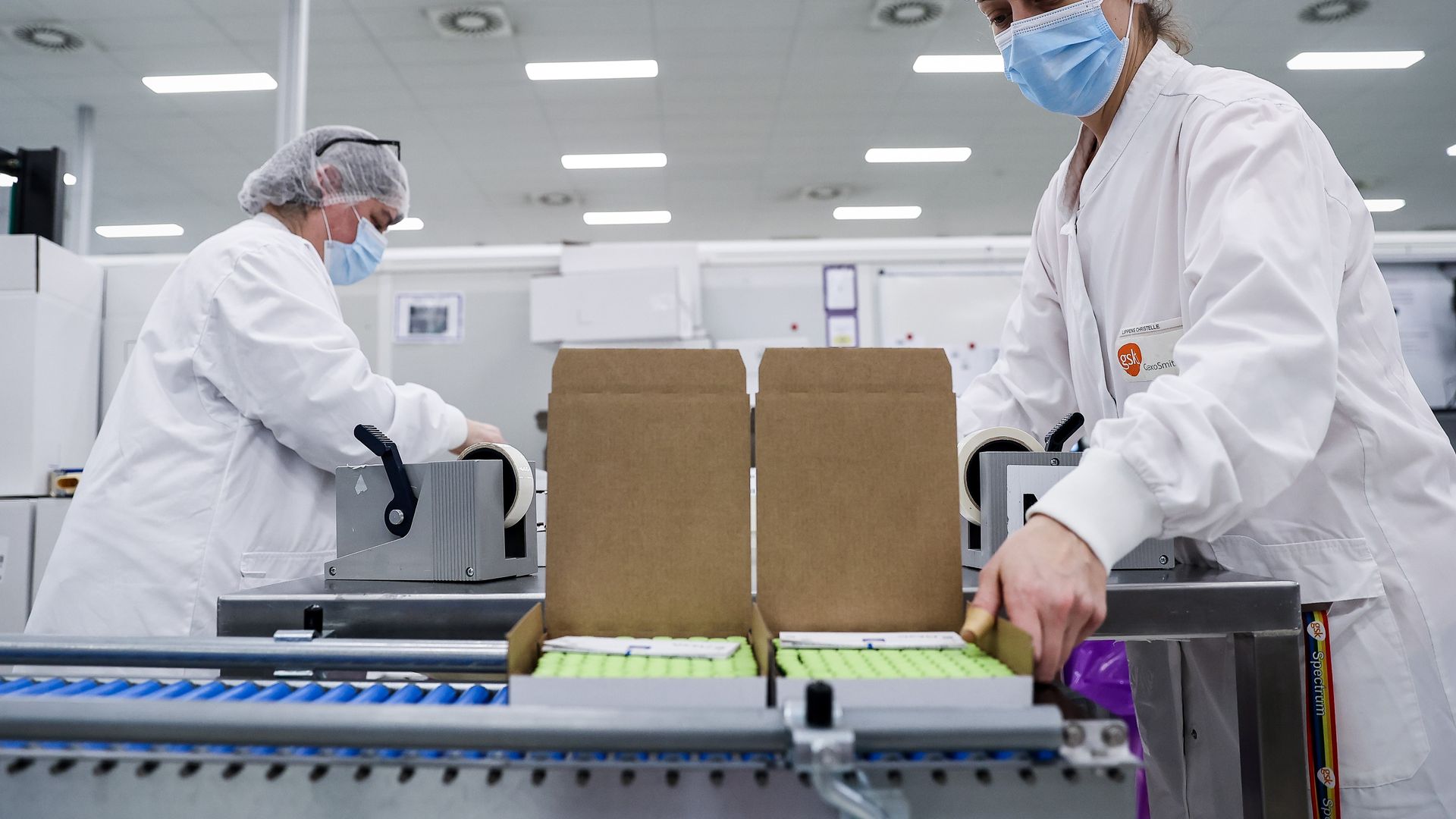
The U.S. Food and Drugs Administration on Wednesday authorized Vir Biotechnology and GlaxoSmithKline's monoclonal antibody drug treatment for early COVID infections, the agency said.
Why it matters: It's the third antibody treatment authorized for patients in the early stages of the disease who are at high risk of developing severe infections. The drug is "expected" to protect against variants, according to the FDA.
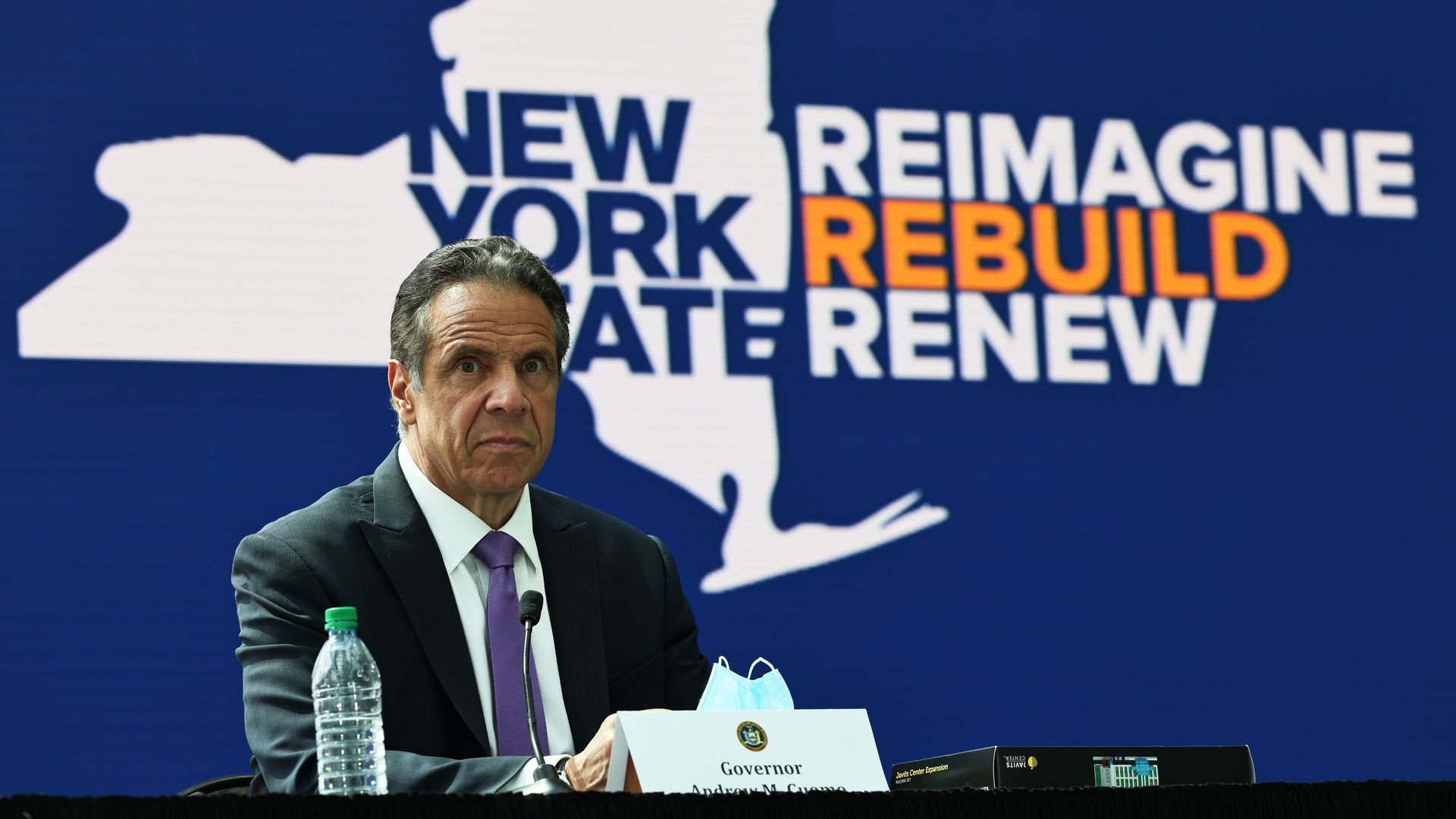
New York will raffle off 50 four-year scholarships to any public college or university in the state for people between 12–17 years old who receive a coronavirus vaccine from tomorrow until July 7, New York Gov. Andrew Cuomo announced Wednesday.
Why it matters: It's part of the state's initiative to vaccinate young people after the Centers for Disease Control and Prevention approved the use of Pfizer-BioNTech's coronavirus vaccine in 12- to 15-year-olds.
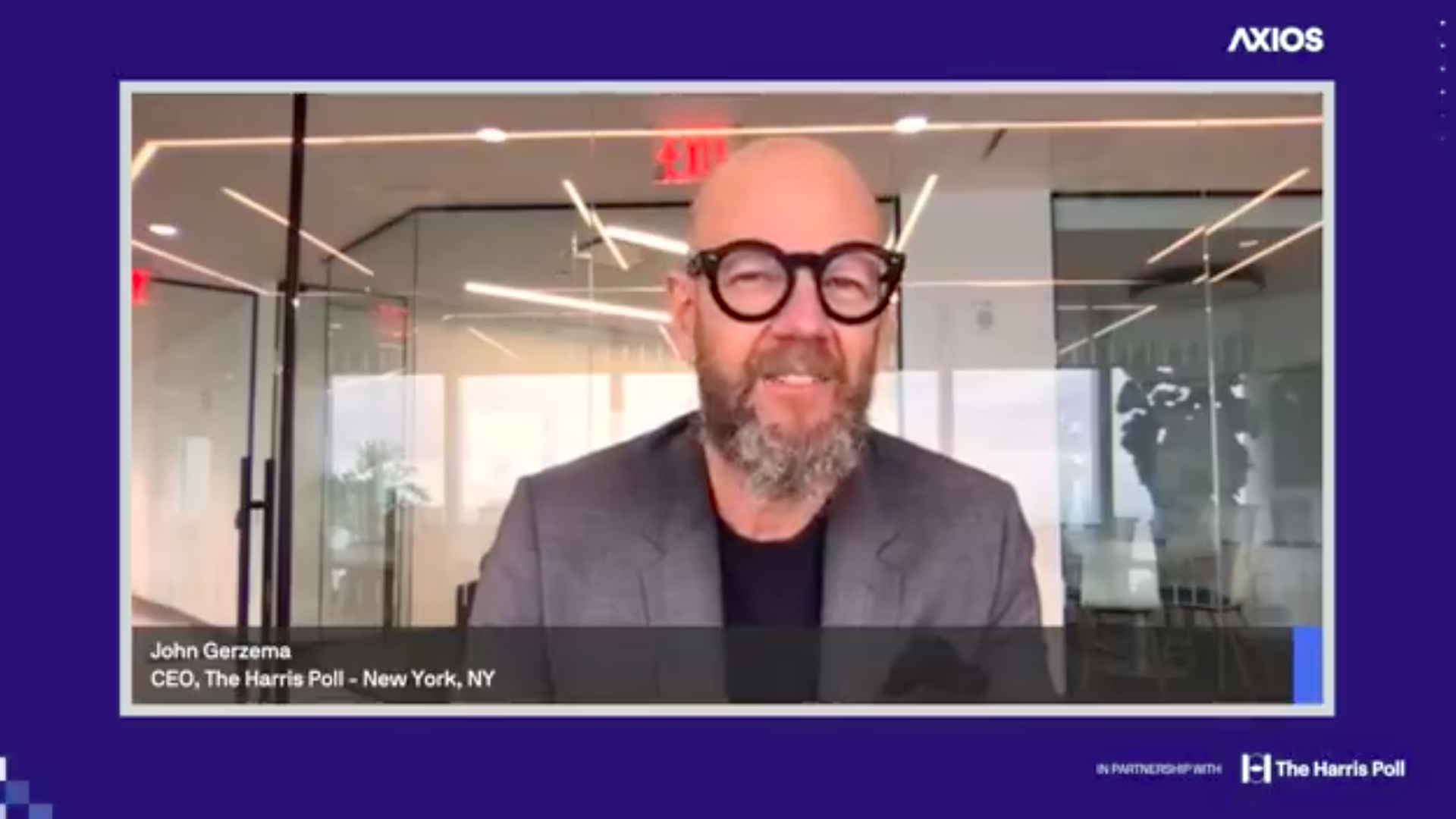
Americans' trust in Moderna, Pfizer, Tesla, and SpaceX — some of the top-rated and most visible brands in the 2021 Axios Harris Poll reputation ranking — show it's been "a good year for science," Harris Poll CEO John Gerzema said Wednesday at a virtual Axios event.
Why it matters: The dual visibility of pharmaceutical companies developing COVID-19 vaccines and companies working to build spacecraft and electric cars suggest Americans are looking to the post-pandemic future.
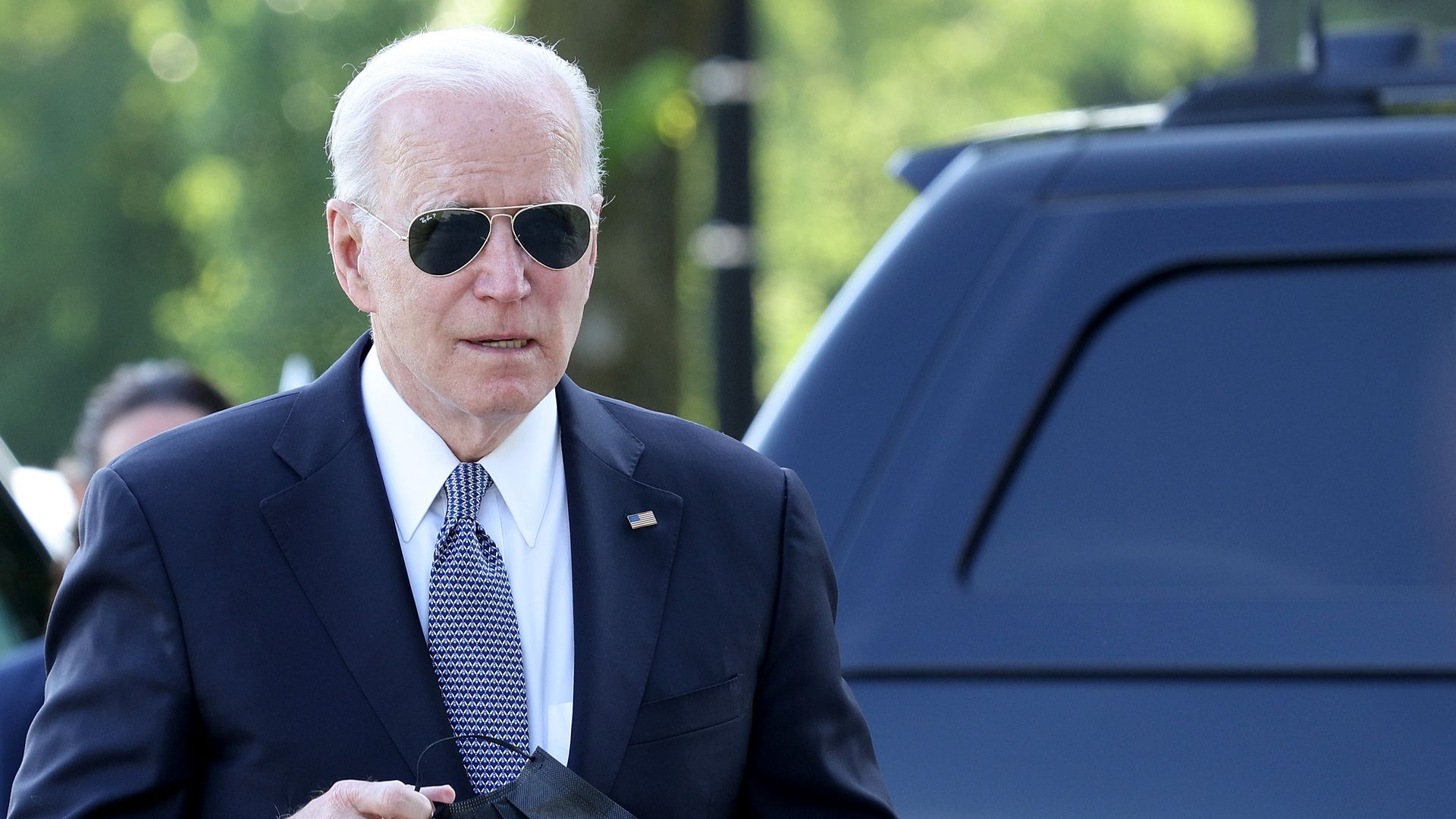
President Biden announced Wednesday he has asked the U.S. intelligence community to "redouble their efforts" to investigate the origins of the coronavirus and provide a report within 90 days that "could bring us closer to a definitive conclusion."
Why it matters: The debate over the origins of COVID-19 has been reinvigorated in recent days by previously undisclosed U.S. intelligence, first reported by the Wall Street Journal, that three researchers at the Wuhan Institute of Virology fell ill enough to be hospitalized in November 2019.
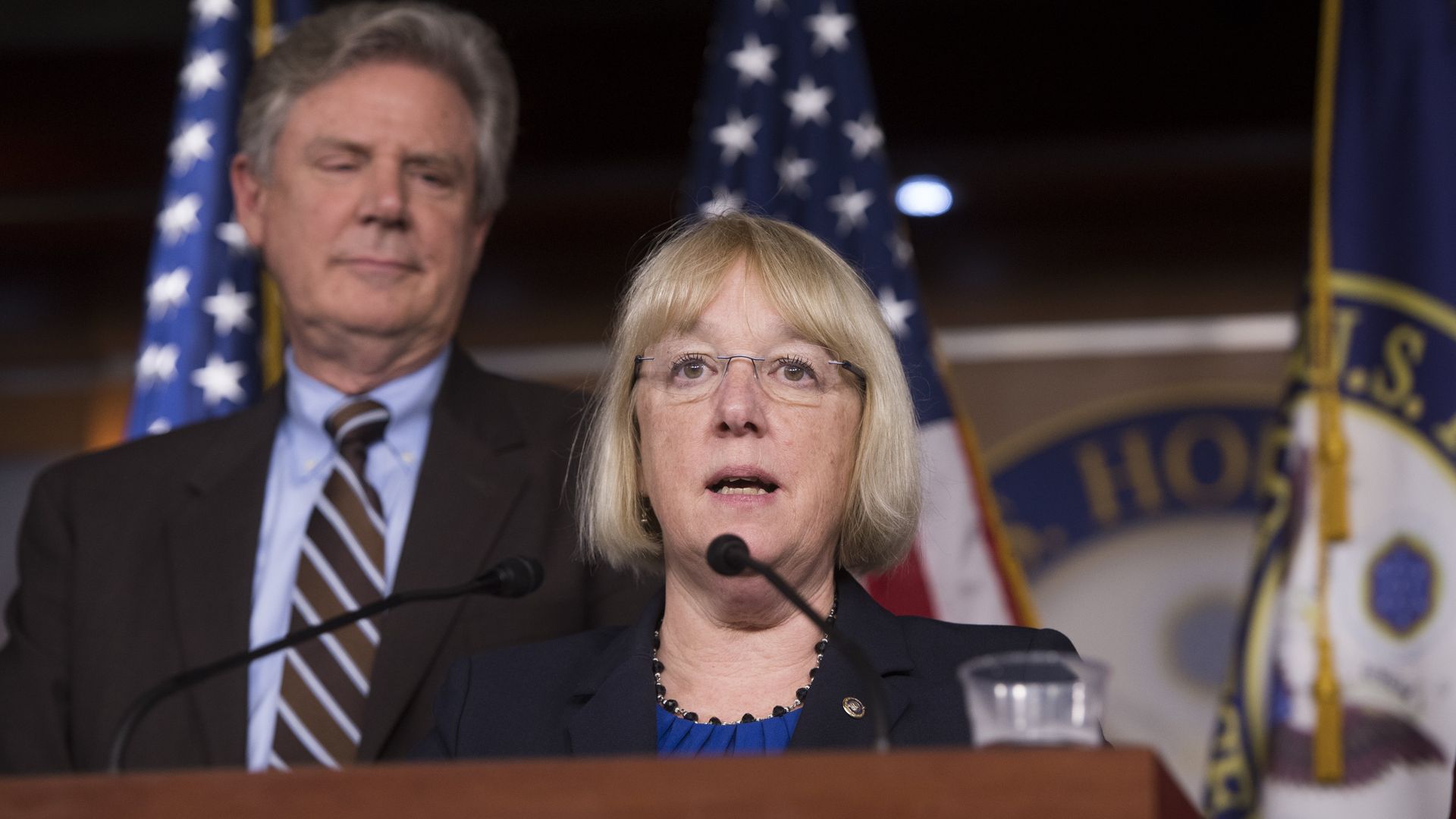
Sen. Patty Murray (D-Wash.) and Rep. Frank Pallone (D-N.J.) on Wednesday asked for public input on how to craft a "federally administered public option that provides quality, affordable health coverage throughout the United States."
Why it matters: The push for a public option comes days before PresidentBiden’s first full budget, which reports show will endorse the idea of a public option, but actually falls short of including such a proposal or any kind of analysis of cost.
Dominic Cummings, the former chief strategist to U.K. Prime Minister Boris Johnson, delivered bombshell testimony Wednesday on the British government's early response to the coronavirus, apologizing for falling "disastrously short" in a way that cost thousands of lives.
Why it matters: Cummings, a controversial figure known as the architect behind the Brexit campaign, has become one of Johnson's most troublesome critics since resigning from government after a bitter power struggle last year.
Clear Labs, a California-based startup that provides rapid genetic sequencing for pathogen surveillance, will announce a new $60 million funding round this morning.
Why it matters: Clear Labs' whole genome sequencing can identify the unique genetic code of a pathogen within 24 hours, allowing hospitals or public health agencies to track unusual variants in diseases like COVID-19 as well as food safety threats like salmonella.
Vaccine rates are increasing and COVID-19 cases are declining, which is opening up businesses and driving job growth that looks broad, making inequality in actual job losses relatively low, according to the Morning Consult/Axios Inequality Index.
What it means: This data is based on whether or not survey respondents have lost pay or income in the past four weeks, rather than whether they are worried about losing it. This is also represented as standard deviations.
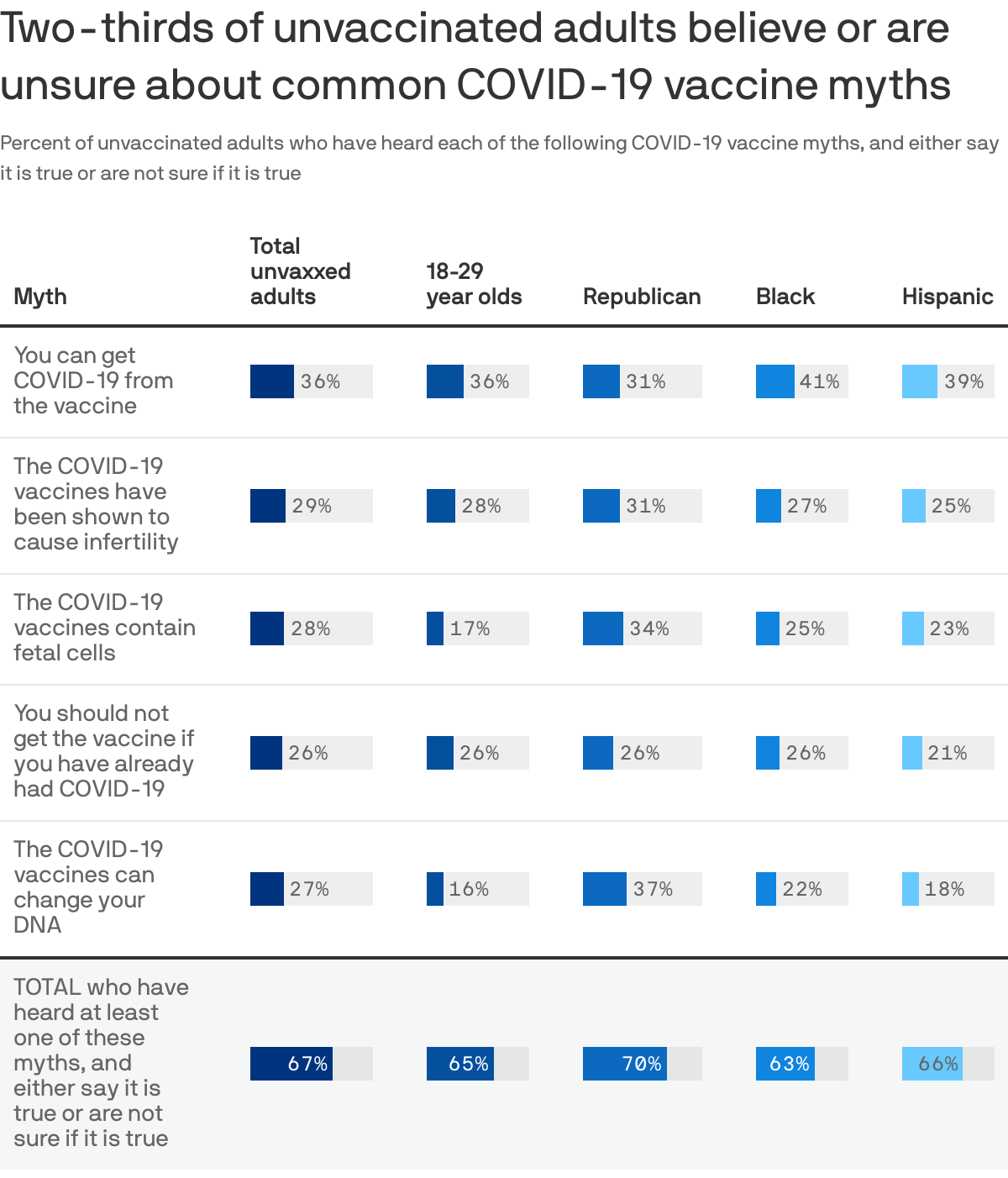
Reproduced from KFF COVID-19 Vaccine Monitor; Chart: Axios Visuals
Big myths about COVID vaccines are showing real staying power among unvaccinated Americans.
The big picture: While misinformation isn't the only factor fueling hesitancy, it's an ongoing problem the media, health leaders and trusted messengers need to chip away at.
A small fraction of vaccinated Americans experienced "breakthrough" cases of COVID-19, and an even smaller number were hospitalized, new data from the CDC shows.
By the numbers: As of April 30, there were a total of 10,262 breakthrough infections reported across the U.S., when about 101 million Americans had been vaccinated. The majority of those cases (63%) occurred in females and the median patient age was 58 years old.
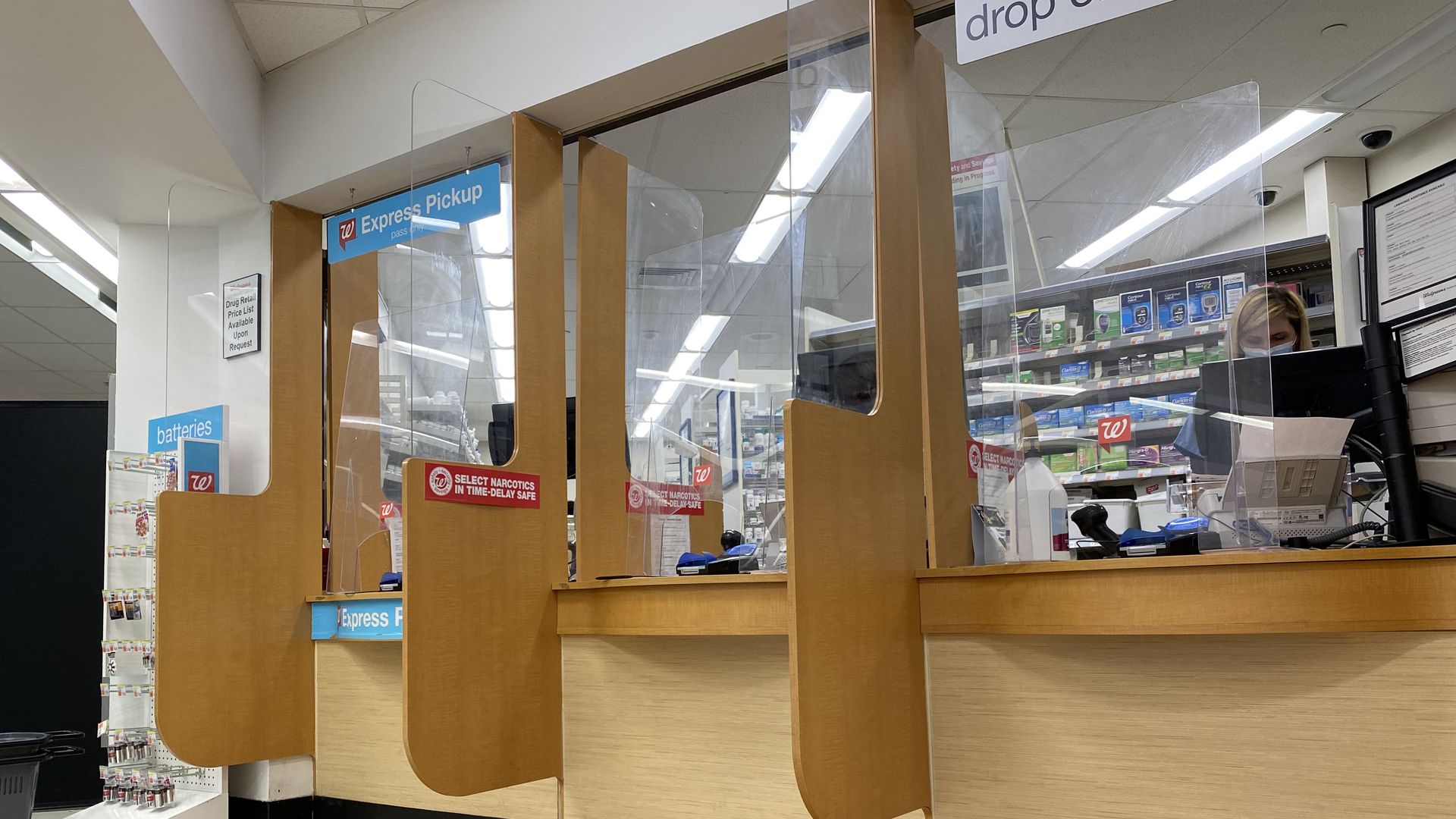
Buying prescription drugs through GoodRx, Amazon and other alternative avenues does not guarantee patients are getting a good deal.
The big picture: More people are purchasing their drugs with cash instead of using their health insurance, in large part because they are getting sizable discounts. But discounted prices often still have no relation to a drug's actual cost.
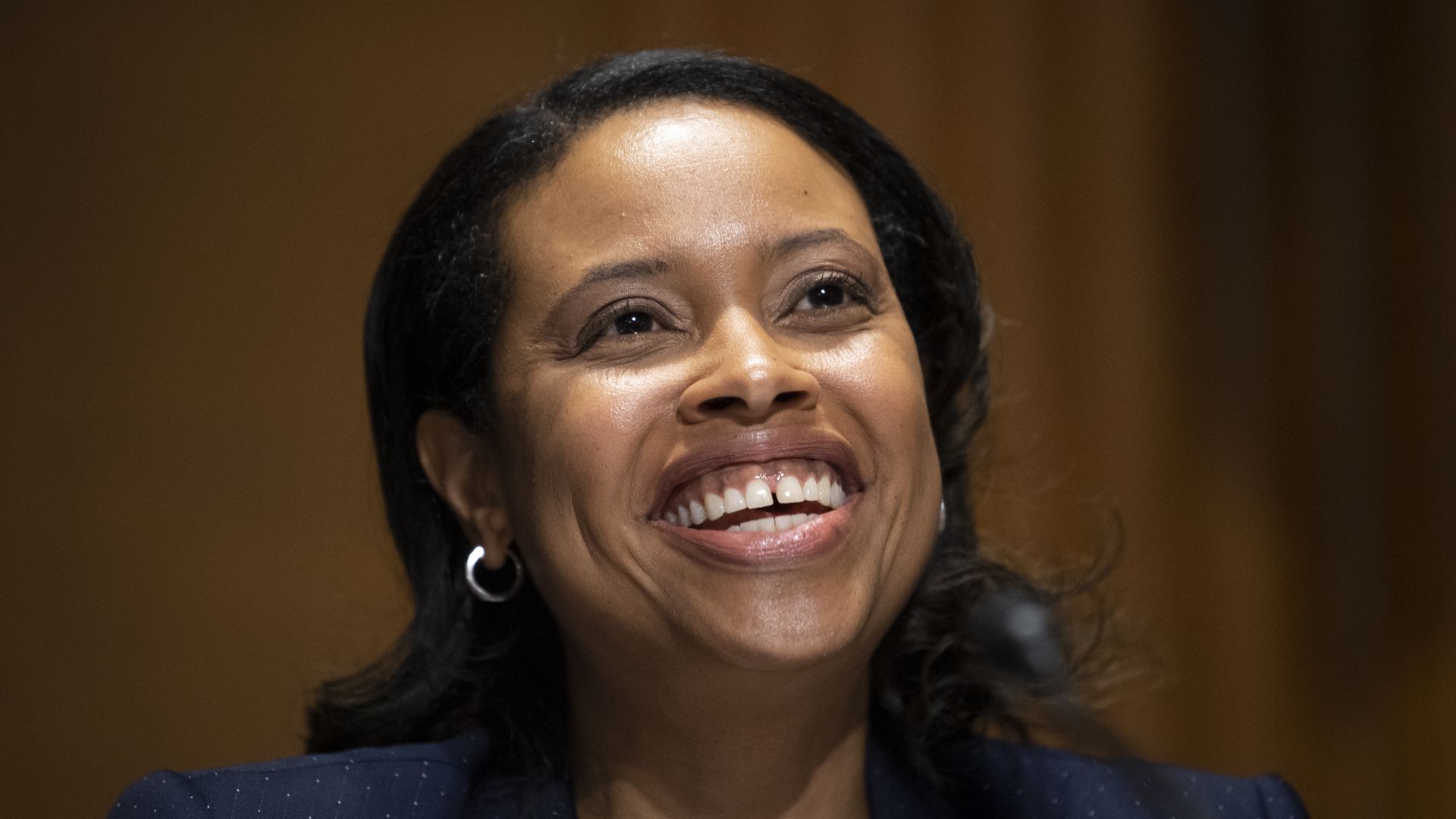
The Senate yesterday confirmed Chiquita Brooks-LaSure to lead Medicare and Medicaid. But, four months in, President Biden still hasn't nominated anyone to lead the FDA.
Why it matters: The FDA has a slew of high-profile decisions coming up, as drug companies look to expand access to their COVID-19 vaccines and a controversial Alzheimer's drug awaits an approval decision.
With less than two months until the Tokyo Olympics' opening ceremony, scientists are warning that "canceling the games may be the safest option," according to a paper published Tuesday in the New England Journal of Medicine.
Why it matters: As Japan anticipates 20,000 athletes and support staff from 200 different countries, the country remains in a state of emergency with nearly 70,000 active cases and only 5% of the population vaccinated, the lowest rate within OECD countries.
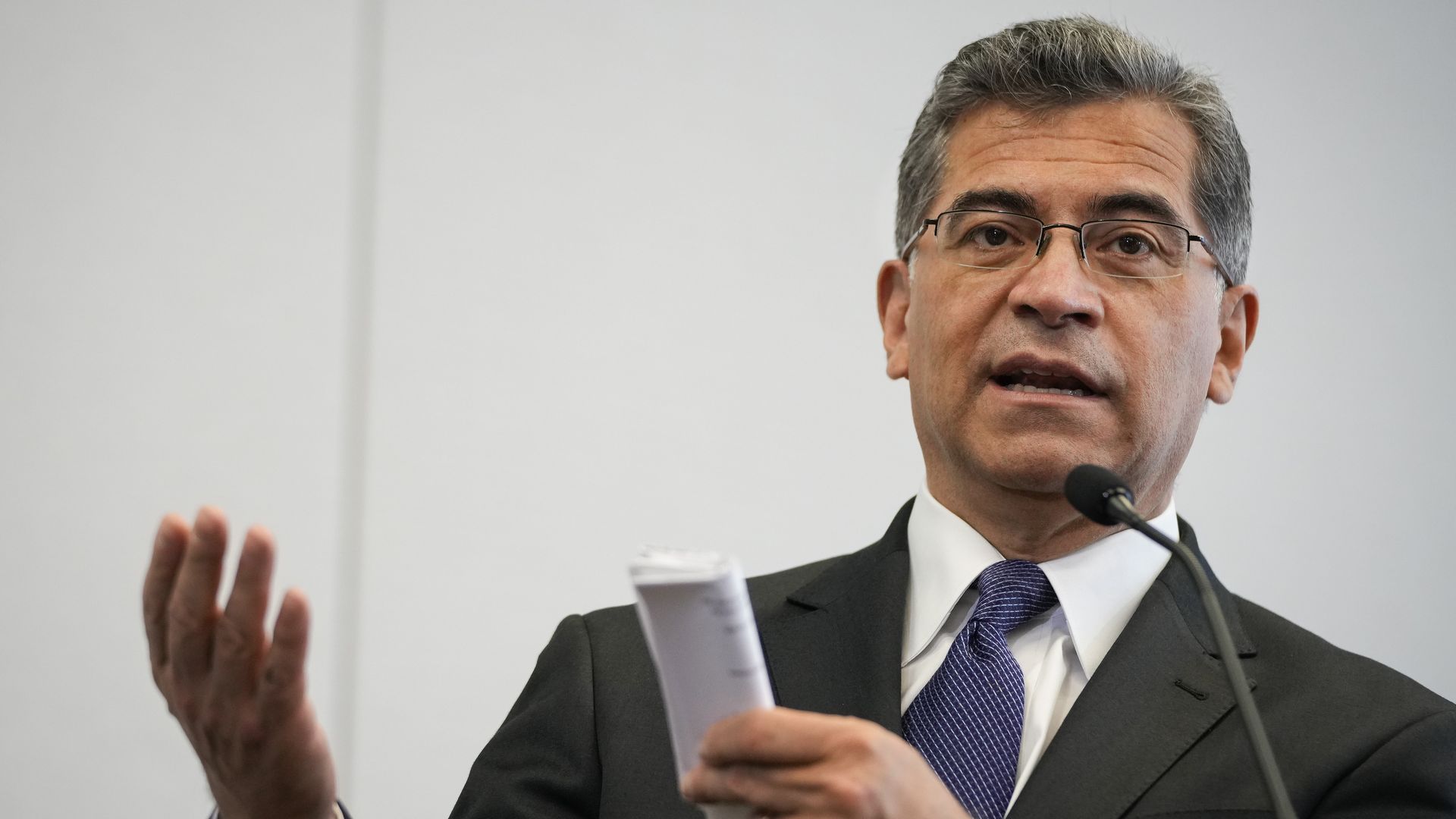
Health and Human Services Secretary Xavier Becerra told a virtual World Health Assembly meeting Tuesday there needs to be a "transparent, science-based" follow-up investigation into the origins of the COVID-19 pandemic.
Why it matters: The original investigation by a team of scientists assembled by the World Health Organization and China's government returned inconclusive findings in March and was criticized by top officials including Secretary of State Antony Blinken.