Sen. Tim Scott (R-S.C.) told Axios during a virtual event on Thursday that Congress may look back at the federal government's 9/11 response as guidance for employer liabilities amid the coronavirus pandemic.
What they're saying: "You've got liability exposures bringing your employees back and bringing your customers in. That's a liability issue that I'm not sure how we meet that need — 9/11 may be one of the places that we go for that conversation."
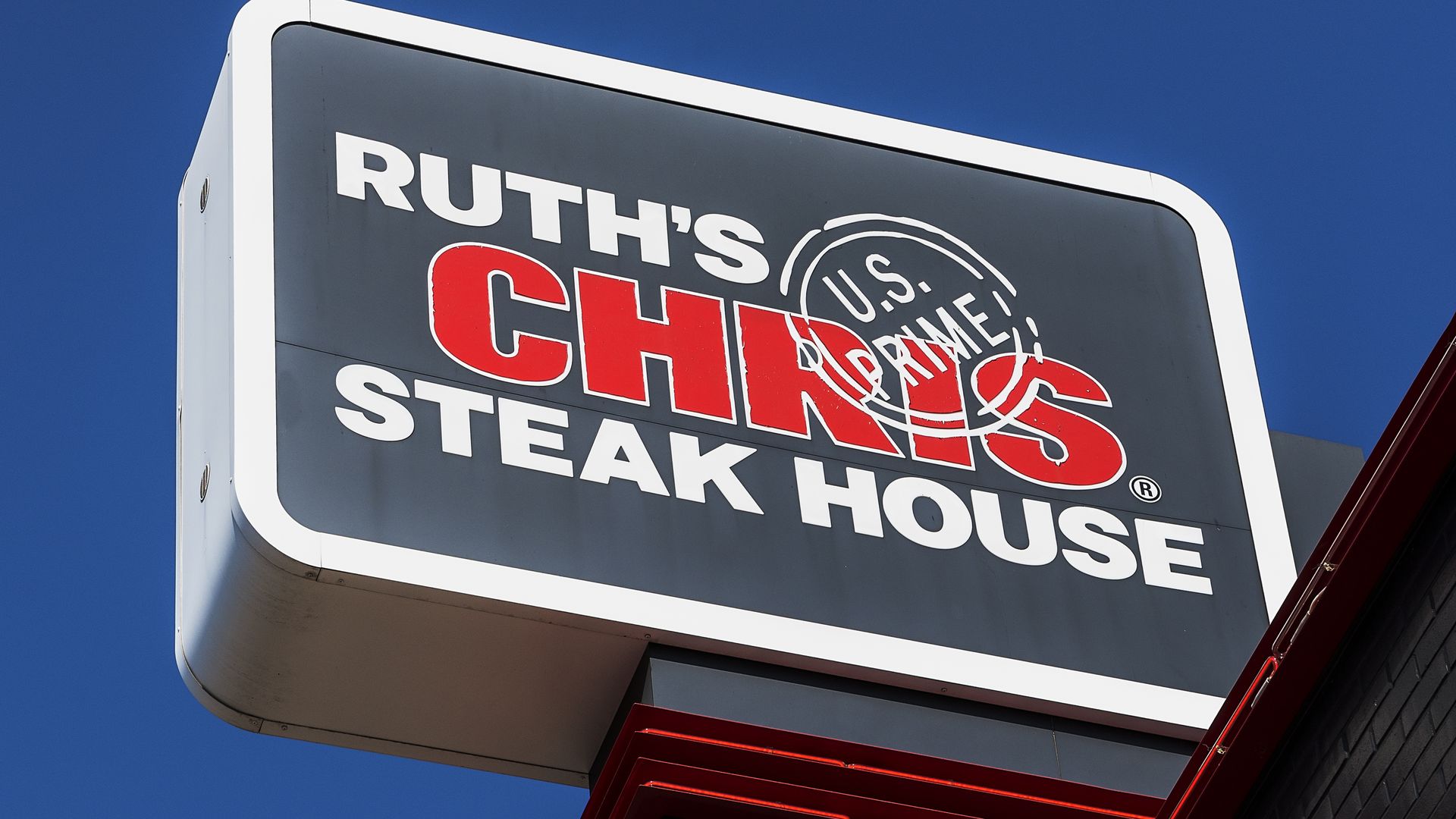
Ruth's Hospitality Group, which owns the Ruth's Chris Steak House, says the company will return the $20 million it received from the small business relief program, NBC News reports.
Why it matters: The multimillion-dollar company, which has over 100 steakhouses in North America,secured $10 million in loans for each of its two subsidiaries. It was able to secure the money because it has fewer than 500 employees at each location. The ordeal has sparked backlash and highlighted the loopholes in the hastily written relief package.
U.S. Chamber of Commerce President Suzanne Clark told Axios during a virtual event Thursday that employers could face massive liability concerns by re-opening their businesses during the coronavirus pandemic, calling it "a second economic risk."
Why it matters: Governors nationwide are looking to reopen non-essential businesses following weeks of social distancing that have handicapped the economy. The lifting of restrictions are bringing non-essential workers back out of their homes and increasing their exposure to the coronavirus.
Chamber of Commerce president Suzanne Clark told Axios on Thursday that Congress' replenishment of the Paycheck Protection Program loan fund will not be enough to sustain small businesses through the coronavirus pandemic.
The big picture: The PPP (Paycheck Protection Program) is meant to help small businesses weather the toll of closures and economic pain from the coronavirus restrictions.
Bankruptcy is not an option for sovereign borrowers. That's not a big problemfor countries like the U.S. that can borrow unlimited amounts in their own currency.
Yes, but: It's a huge problem for most countries that need to fund their coronavirus response while also servicing existing debts. For those countries, one solution is the creation of new obligations issued at a super-sovereign level.
Axios hosted a live, virtual event on the impact of the coronavirus on small businesses, featuring conversations with Sen. Tim Scott (R-S.C.), U.S. Chamber of Commerce President Suzanne Clark, EQtainment founder Sofia Dickens and Intuit QuickBooks EVP and GM Alex Chriss.
U.S. first quarter GDP data comes out on Wednesday. Estimates are all over the map for how the economy held up through the end of March — while most of the quarter was fine, the last couple of weeks were terrible.
Why it matters: The economy is undeniably in a recession, though official data is slow to confirm that. The Q1 figures will begin to quantify the damage.
What to do about the billions of dollars of non-payroll liabilities that can't or shouldn't be paid? In normal times, companies file for bankruptcy protection when they can't pay their debts — but these aren't normal times.
The big picture: The costs of bankruptcy are enormous. It is a huge burden on the court system, it can last for years, and it tends to destroy institutional capital. Few companies come out of it unscathed, with a motivated and largely intact workforce.
The price of oil is at all-time low. Even if you put aside the technical factors that caused the May WTI futures contract to close at negative $37.63 per barrel, oil has never been this cheap, in real terms, since the 1973 oil crisis.
Why it matters: Oil, like cash, is based on flows: the number of barrels produced per day, versus the number of barrels consumed. Oil also literally makes the world move: powering cars, trucks, planes, trains and ships. Now that the world has stopped moving, demand is well below supply, and storage capacity is running out.
A crisis is a terrible thing to waste. The coronavirus crisis is a dress rehearsal for the climate crisis: It will help show us not only what is possible, but also, crucially, whether or not those actions work.
Why it matters: There has never been a better time for big financial ideas to become reality.
The Federal Reserve announced Thursday that it will publish details about recipients of its various loans and financings through the CARES Act on a monthly basis, including their names, loan amounts, interest charged and associated costs and fees.
Why it matters: The disclosures won't shed light on recipients of the Paycheck Protection Program since it's not headed up by the Fed. But the move gets ahead of calls for transparency by agreeing to release which businesses get funding from the central bank's $600 billion Main Street Lending Program, as well as a separate program to fund states and municipalities.
Of all the economic stimulus programs, the most controversial and least popular is the Paycheck Protection Program, or PPP. That's a bit weird, since it's basically free money for small businesses, which is something you'd expect to be popular.
The state of play: The program managed to get $342.3 billion to small businesses (including Axios) in the space of just a few weeks. That's pretty impressive. Most of that money will go straight into paychecks, keeping Americans employed. And there's another $322 billion where that came from.
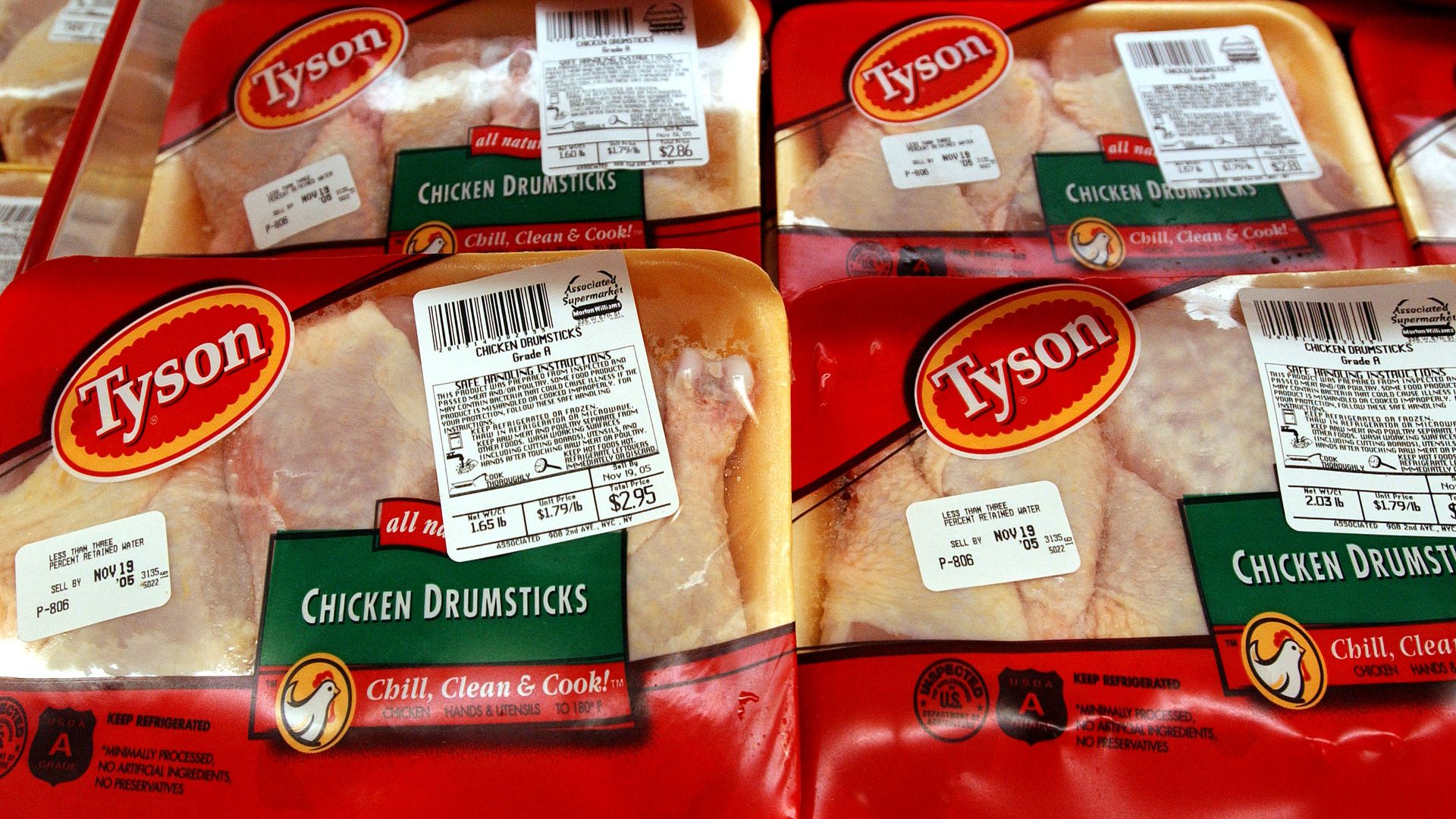
Tyson Foods said Thursday it's closing a beef plant in Washington state indefinitely as workers undergo coronavirus testing, warning in a statement that "the closure will mean reduced food supplies."
Why it matters: The facility in Pasco, Wash., produces enough beef in one day to feed four million people, according to Tyson. At least 12 meatpacking plants and three processed food plants have now closed due to the coronavirus, according to data collected by the Food and Environment Reporting Network (FERN).
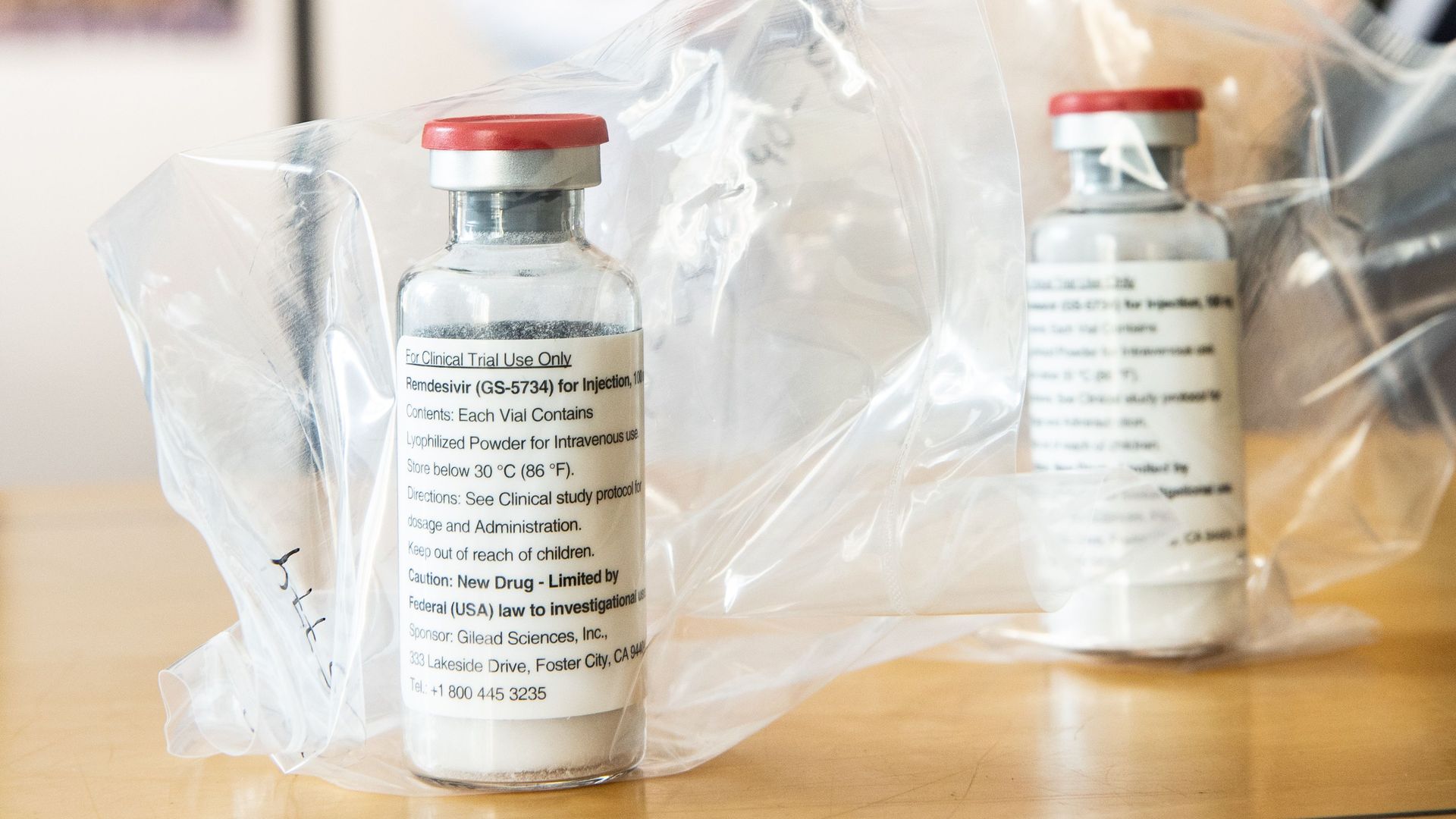
Remdesivir, the drug made by Gilead Sciences that is being tested on coronavirus patients, "was not associated with clinical or virological benefits," according to a leaked summary of a randomized trial posted by the World Health Organization and viewed by STAT and the Financial Times on Thursday.
Why it matters: Experts have placed a lot of hope in remdesivir as an antiviral treatment for COVID-19, but the preliminary results of this study dash a lot of that hope. However, the study is still undergoing peer review, and Gilead is arguing the results weren't characterized appropriately.
Another 4.4 million Americans filed for unemployment benefits last week, as the economy continues to hemorrhage jobs. Dan digs in with New York Times econ and tax policy reporter Jim Tankersley.
This week was to be the annual TED conference, with thousands of business leaders, celebrities, artists and scientists gathered in Vancouver to share ideas. Instead, Wednesday became the first step in the organizers’ effort to take their entire event online.
Why it matters: While many conferences have moved online, the shift is particularly tricky for luxury events, where much of the value is around in-person networking and socializing.
Sycamore Partners on Wednesday backed out of its agreement to pay $525 million for a majority stake in women's lingerie retailer Victoria's Secret, claiming current owner L Brands (NYSE: LB) breached deal terms by closing stores, furloughing store staff, cutting senior executive pay, and defaulting on lease agreements.
Why it matters: This sets up a legal battle between standard M&A terms that have come into conflict due to the coronavirus pandemic and government lockdowns, and might set some precedent.
Lucid Motors is out with a new video showing off the performance of prototypes of the upcoming Lucid Air luxury EV in cold, snowy, and icy conditions in northern Minnesota.
What they're saying: "The extreme environment is ideal for validating vehicle dynamics as we test features like antilock braking, traction control, and stability control," a blog post alongside the video states.
Snap announced Thursday that it is planning to raise up to $750 million through a private debt offering.
In a note to staff obtained by Axios, CEO Evan Spiegel says that the "proceeds from this offering will further bolster our balance sheet which will allow Snap the flexibility to continue to invest in the long-term growth of our business, even if challenging conditions continue."
Google has changed its advertising policies to require all advertisers, not just those with political affiliations, to complete an identity verification program to show ads on its platforms, which include Google Search, Google News, YouTube and more.
Why it matters: Verification tends to weed out spammy advertisers, including those that sell things like price-gauged hand sanitizer or fake coronavirus face masks.
Another 4.4 million Americans filed for unemployment last week, according to Labor Department data released Thursday.
Why it matters: While the pace of layoffs is easing, more than 26 million Americans have filed jobless claims in recent weeks as the coronavirus pandemic takes a never-before-seen toll on the job market.
The U.S. stock market closely tracked its performance from 2008 following the first major decline of the bear market this year, but has now diverged greatly.
What's happening: Comparing the period of 31 market days starting from Sept. 29, 2008, to the same period beginning March 9 this year, the S&P 500 has fallen by much less than it did, despite expectations for this to be a far more damaging recession.
Even before expected new stimulus measures are passed, the U.S. government's annual deficit will likely top $4 trillion this year, analysts at BMO Capital Markets write.
Why it matters: "These are astronomical numbers that will reshape the Treasury market for years, if not decades, to come."
Consumer sentiment around the globe is starting to recover, data firm Morning Consult finds, despite economic projections for weakening growth and worse outcomes.
Where it stands: Ratings agency Fitch said Wednesday it expects global GDP to decline by 3.9% this year, "twice as large as the decline" it predicted just weeks ago and "twice as severe as the 2009 recession."
Unemployment is likely to hit levels not seen since the Great Depression and remain elevated, economists warn, weakening the U.S. economy and making a V-shaped recovery increasingly doubtful.
Why it matters: That will be true even if states allow businesses to reopen sooner than expected, as surveys show most Americans aren't ready to go back to their normal routines.
Hundreds of thousands of high school graduates from all over the country and the world are set to start college this August — and they have no idea what they're getting into.
Why it matters: The coronavirus pandemic is accelerating a troubling trend of falling enrollment at American universities. This could push many institutions over the edge.
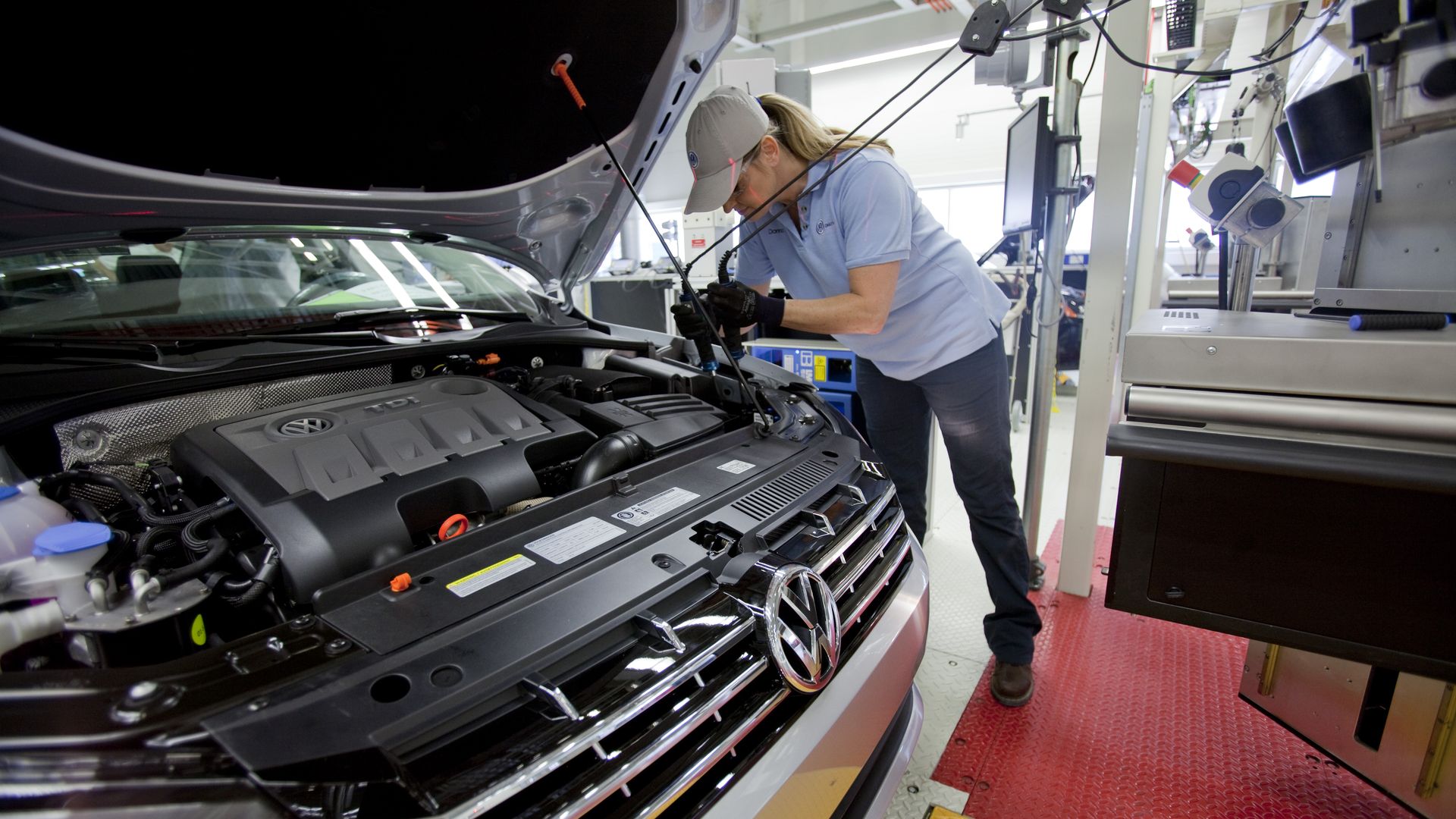
Why it matters: Vehicle manufacturing represents 3% of the nation's gross domestic product and employs 649,000 hourly U.S. workers. Resuming production will not only be a shot in the arm for the American economy, it could also set the tone for how other businesses reopen under strict health safety precautions.
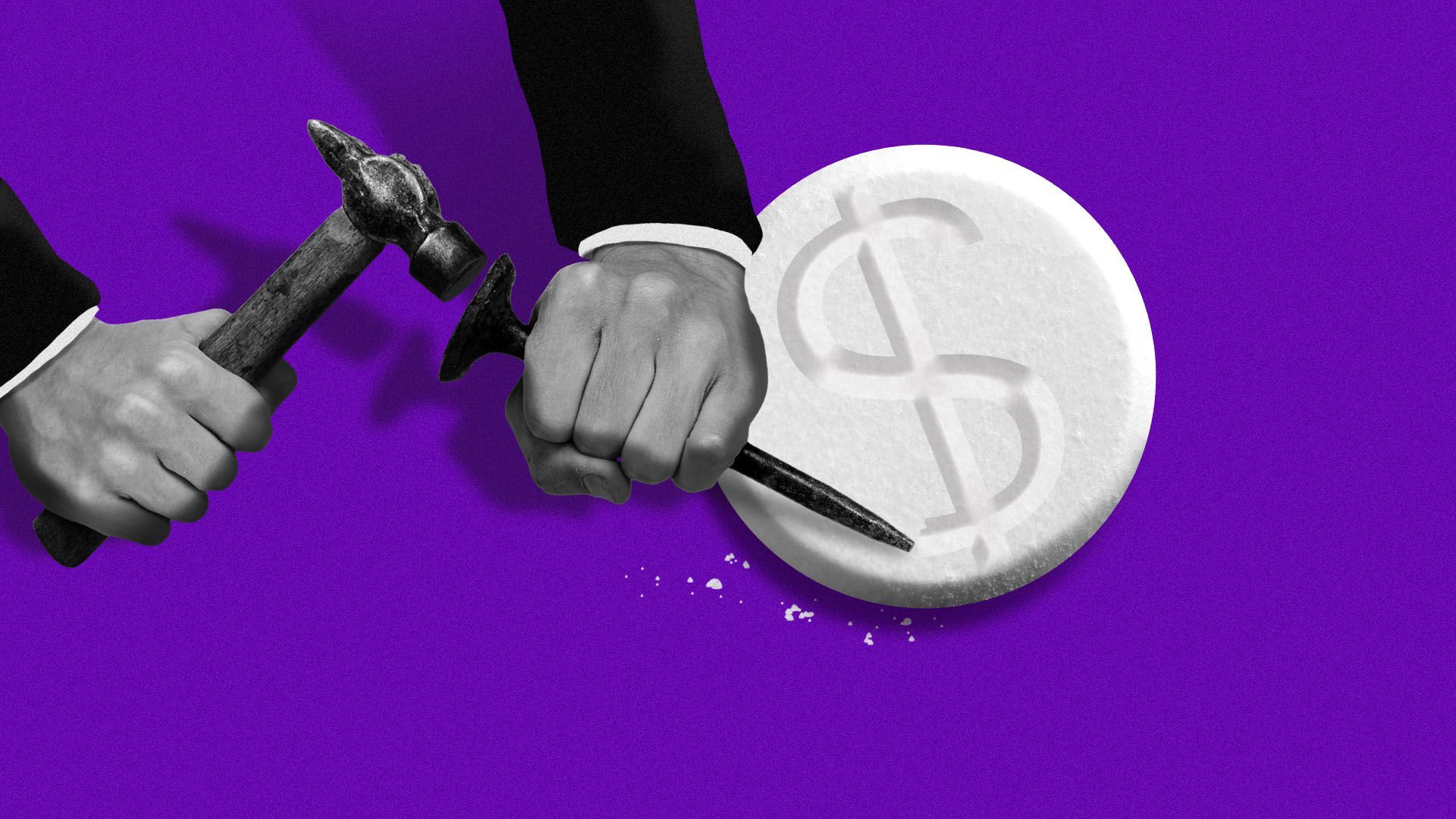
This month, Jaguar Health more than tripled the price of its lone FDA-approved drug, right after asking the federal government to expand the use of its drug to coronavirus patients.
Why it matters: Jaguar Health drastically raised the price of a drug during the height of the pandemic, but executives argued the move was needed to stave off the company's collapse.








/2020/04/23/1587670931680.gif?w=3840)














/2020/04/22/1587579867377.gif?w=3840)