Cruise, the San Francisco-based self-driving startup, has hired Jeff Bleich, a prominent California attorney and chairman of Pacific Gas & Electric, as its chief legal officer.
Why it matters: Cruise is likely to face extensive regulatory issues as it works toward the deployment of self-driving cars, starting with its home market in San Francisco.
The Senate passed a $484 billion interim coronavirus funding bill via voice vote on Tuesday after more than a week of intense negotiations between the Trump administration and Congress.
Why it matters: The agreement will replenish the Paycheck Protection Program (PPP), the stimulus bill's emergency loan program for small businesses, and provide billions for hospitals and expanded coronavirus testing.
Snap's stock price jumped 20% in after-hours trading after the company posted strong Q1 results, beating analyst estimates with $462 million in revenue and just missing earnings estimates with a $0.08 loss per share.
Why it matters: Like other ad-supported businesses, Snap is vulnerable to a pullback in advertising spend, though the company is also in a position to see more activity as users spend more time at home during the coronavirus pandemic and need entertainment and online socializing.
Netflix's stock was up more than 10% in after-hours trading on Tuesday after the entertainment giant blew past investor expectations for subscriber growth in the first quarter.
Why it matters: Nielsen and other measurement vendors reported that Netflix was experiencing a surge in viewership during the coronavirus pandemic. Netflix blew past the high end of Wall Street's new subscriber estimates, nearly doubling them.
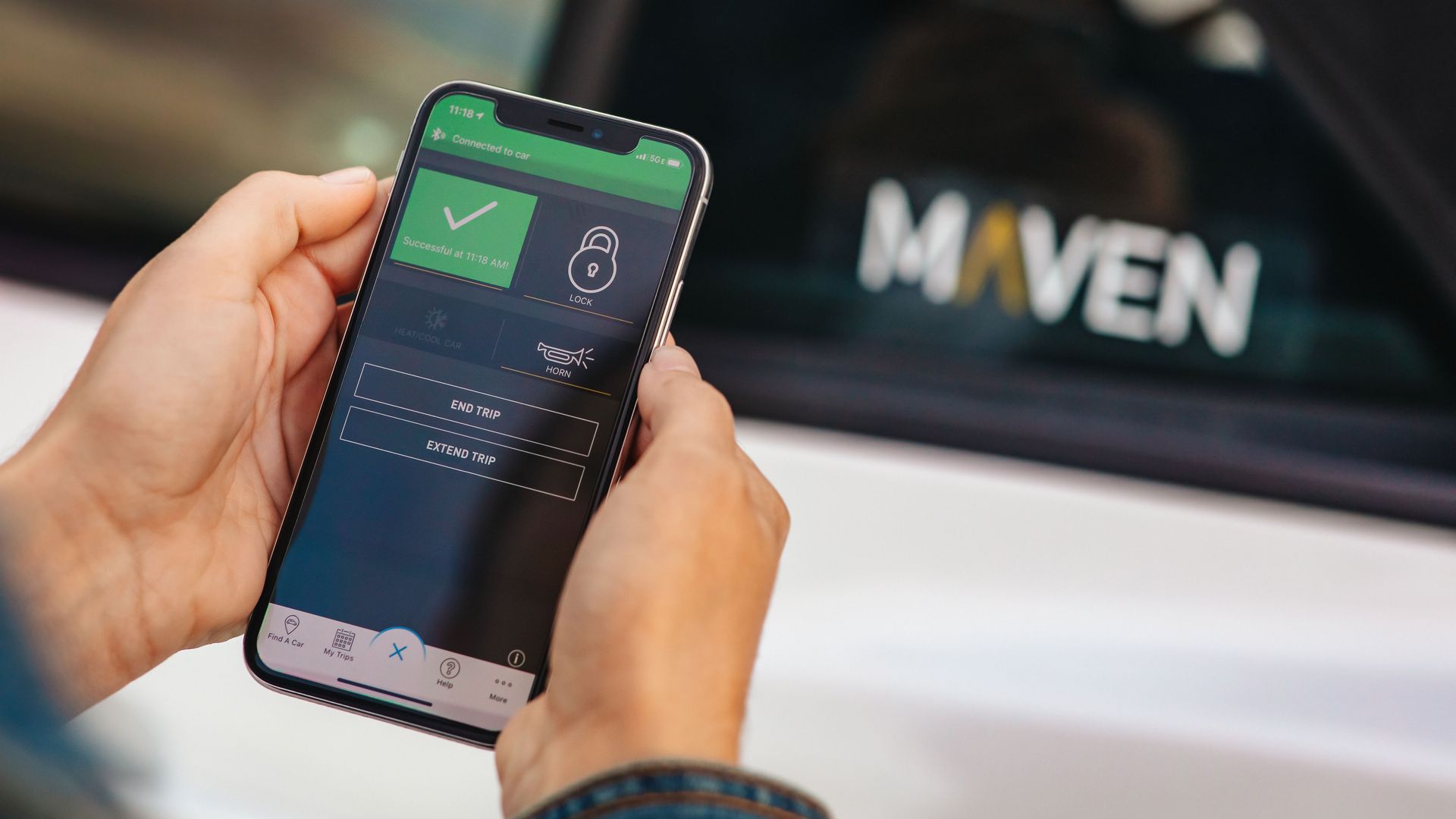
General Motors is winding down Maven, its car-sharing business, which fell victim to both the societal and economic challenges of the coronavirus pandemic.
Why it matters: With its factories shuttered and car demand plummeting, GM needs to shore up its finances to support its core business. Besides, the idea of car-sharing is less appealing when you don't know who drove the vehicle before you and whether they left any germs behind.
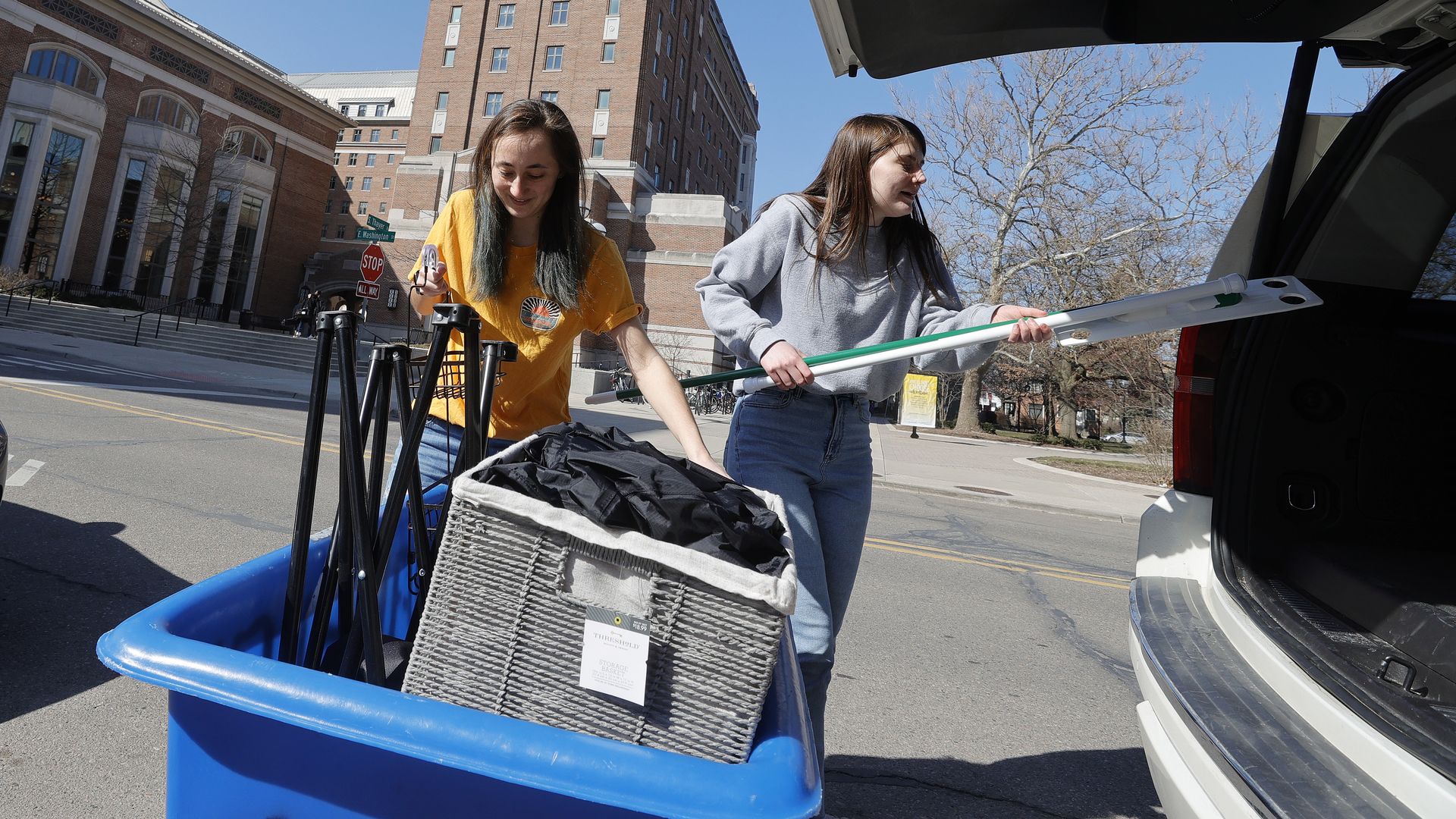
Universities across the U.S. are predicting massive revenue losses as uncertainty looms over whether it will be safe enough for students, staff and faculty to return to campus in the fall.
Why it matters: A number of colleges will furlough and lay off workers to offset budget cuts and operating costs amid the coronavirus pandemic.
Envision Healthcare, a Nashville-based healthcare staffing company owned by KKR, is considering a bankruptcy filing, per Bloomberg. A source says no such decision is imminent, as Envision continues to restructure its $7.5 billion debt-load (it recently exchanged $725 million of its $1.75 billion in unsecured notes).
Why it matters: This is a high-profile example of the cash-crunch felt by all sorts of medical groups, due to the sharp drops in everything from elective surgeries to ER visits to preventative care appointments.
Google won't charge businesses to sell goods in its Shopping section, beginning later this month in the U.S. and globally over the course of the year, the company said on Tuesday.
Why it matters: Google is trying to eliminate fees for its services to ease the burden on small businesses and publishers, two categories that rely heavily on its services and are hurting badly amid the coronavirus' effect on the economy.
Fourteen years ago, venture capital firm Kleiner Perkins raised $200 million for a fund dedicated to "worldwide pandemic preparedness and global health, with a focus on surveillance and detection, diagnostics, vaccines and drugs.”
Why it matters: Several companies from that portfolio are now part of the fight against COVID-19, and the fund's partners played a part in creating a government agency called BARDA that's been helping to fund test and vaccine development efforts for the coronavirus.
Bloomberg Media is offering free subscriptions to college and grad students worldwide for three months starting Wednesday, April 22. They'll have free access to Bloomberg.com and its mobile app until July 31.
Why it matters: A typical monthly Bloomberg subscription is $34.99, although U.S. students can access it for $9.99. That makes this an expensive giveaway, particularly for international students.
President Trump's latest guidelines for "Opening Up America Again" may be too optimistic for things like movie theaters and concerts, analysts predict.
Driving the news: Georgia’s governor said yesterday that the state will reopen theaters on April 27, granted that they take strict social distancing and safety precautions.
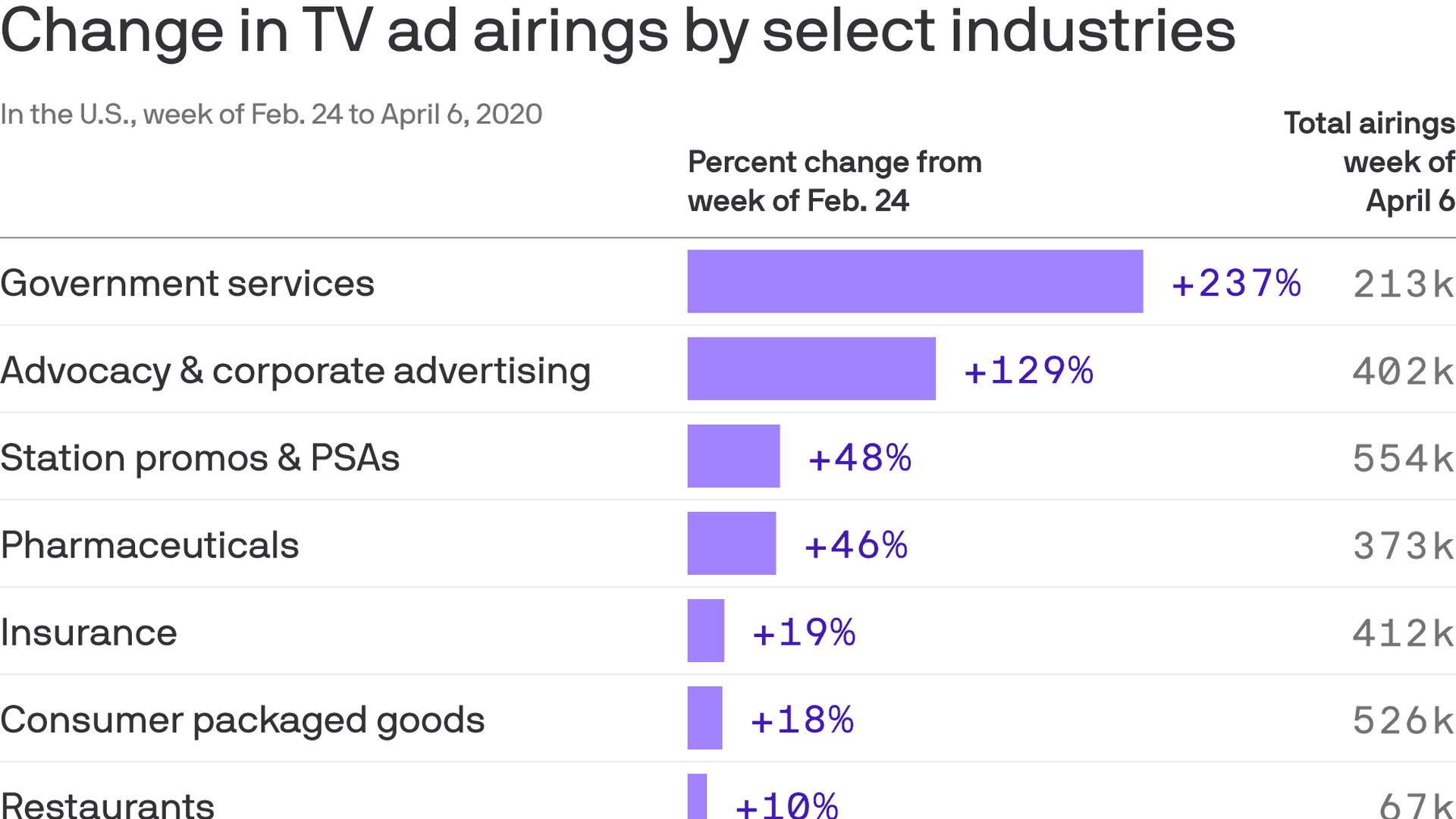
Advocacy and corporate reputation television ads are spiking, while other industries continue to pull back spend, according to data from Advertising Analytics.
Why it matters: Brands are expected by consumers to address the coronavirus issue in a direct and empathetic tone.
Many of the biggest advertising holding groups are forecasting that their clients will severely pull back on ad spend due to the coronavirus.
The big picture: In a note to clients Tuesday morning, MoffettNathanson senior analyst Michael Nathanson predicted the drop in organic growth during the coronavirus crisis will be steeper than the financial crisis for major ad agencies holding groups like WPP, Omnicom and Interpublic (IPG).
Local newsrooms have been hit hard by the crisis over the past month, but several are planning expansions that can provide a much-needed shot of optimism for the industry.
Driving the news: McClatchy plans to launch a new digital local news outlet called "The Longmont Leader" this spring, serving the residents of Longmont, Colorado, executives tell Axios. 6AM City, a local newsletter company, is planning expansions to new cities.
As Congress pushes closer to extending a second round of relief payments to small businesses after its $350 billion Paycheck Protection Program ran out of funds in two weeks, banks are facing severe backlash over their handling of the program.
Driving the news: A class-action lawsuit on behalf of small business owners alleges JPMorgan, Bank of America, Wells Fargo and US Bank prioritized larger loan applications over small ones in order to collect larger processing fees.
The contrast between moves in oil prices and U.S. stocks has been stark. Even before Monday's once-in-a-lifetime fire sale in oil, crude prices had priced in at least some of the massive demand drop in the market while stock prices had recovered to their April 2019 level.
Why it matters: Stock prices are not reflecting the value of companies and the S&P 500 could fall hard and fast, in a miniature version of Monday's oil rout (when WTI crude futures fell from $17.85 a barrel to -$37.63) after a 25% rally since March 23.
Last month, Axios Pro Rata readers helped build a joke-book for our kids to read, as many of us balance working from home with childcare and remote learning. Then they did it again. Now, it's time for Part III:
The whole country is eating every meal at home — and that’s triggering widespread shifts in the food supply chain.
What's happening: Restaurants are turning into grocery stores and wholesalers, and supermarket chains are functioning as grocery-pickers, as they adapt to America's new lifestyle.
Virtual competitions, reruns of classic games and, most recently, sports documentaries are filling a void for both TV networks and fans during the coronavirus pandemic.
The big picture: All the substitute programming in the world isn't going to make up for a loss of live sports. In the past 90 days, each of the top nine cable sports networks has lost more than 25% of its audience compared to January, per data from Samba TV.
Facebook said on Monday that it has deleted events for anti-quarantine protests in Nebraska, New Jersey and California that defied government guidelines, Reuters reports.
Why it matters: Facebook has faced calls over the years to better police content shared on its site — which often features misinformation. The platform says it will align with public health officials in supporting stay-at-home orders, which experts argue are essential to curb the spread of the novel coronavirus.





/2020/04/21/1587499995519.gif?w=3840)