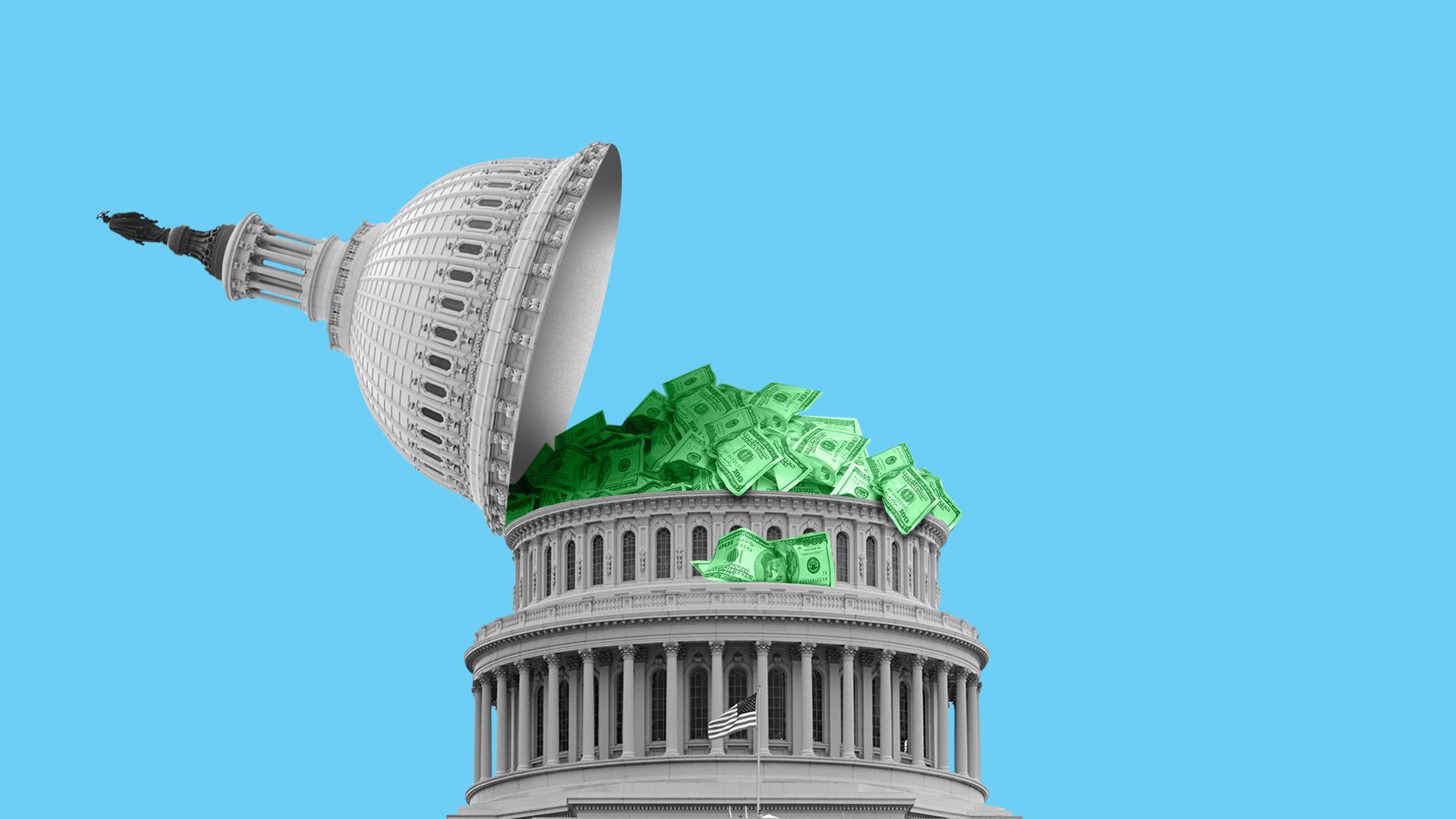
Lawmakers on both sides of Pennsylvania Avenue could reach a deal by the end of Sunday night on a new coronavirus spending package that will deliver billions more of emergency funding for small businesses, hospitals and testing.
Even if you believe every optimistic scenario about how the coming months could unfold, America is still looking at a hole in our finances and society that could take generations to dig out of.
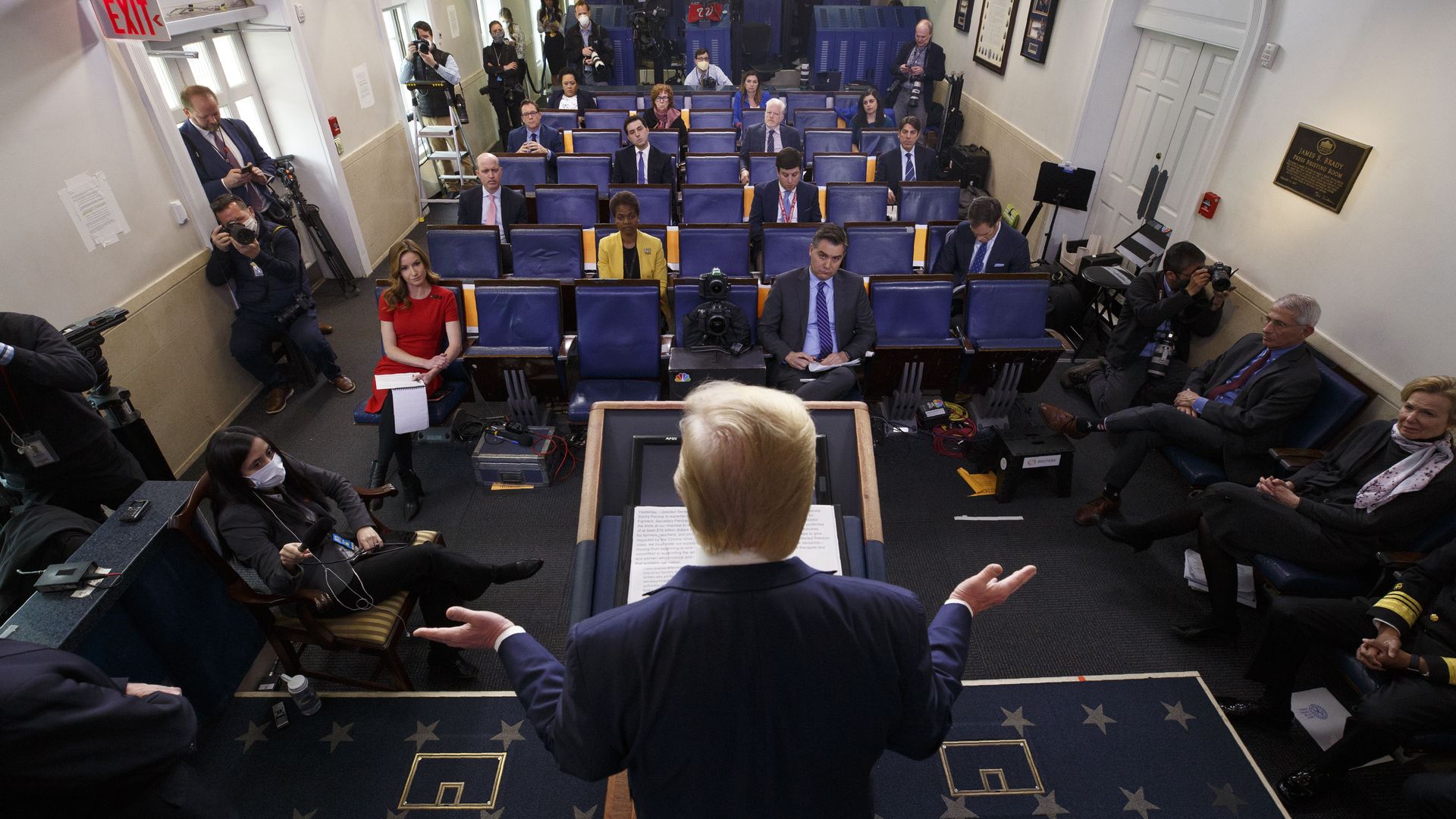
Why it matters: President Trump and his top officials keep telling viewers that the economy will come roaring back within months of getting the virus under control. But the long-term price of the pandemic is just barely beginning to emerge.
Neiman Marcus Group is set to file for bankruptcy as soon as this week, Reuters reports, citing people familiar with the matter.
Why it matters: It would be the first major department store chain to fall victim to the coronavirus economy. Neiman Marcus is also an anchor tenant to many shopping malls that were already struggling before the coronavirus pandemic.
The new pressures on working parents to be full-time employees and full-time homeschool teachers while protecting their families from the pandemic are leading to exhaustion — with no end in sight.
Why it matters: Working parents make up roughly one-third of the U.S. workforce. The longer the stay-at-homeorders continue, the higher the risk that these workers will be on the verge of emotional and cognitive burnout before they can return to their offices.
Widespread social distancing has forced Americans to get creative with how they connect to one another, including romantically.
The big picture: The dating industry was poised to take a hit amid the coronavirus outbreak as potential suitors are generally unable to meet in-person. Platform Match, which also owns Tinder and OkCupid, has seen stocks tumble 25%. But daters are turning to digital courtship through video chats and virtual activities as an alternative.
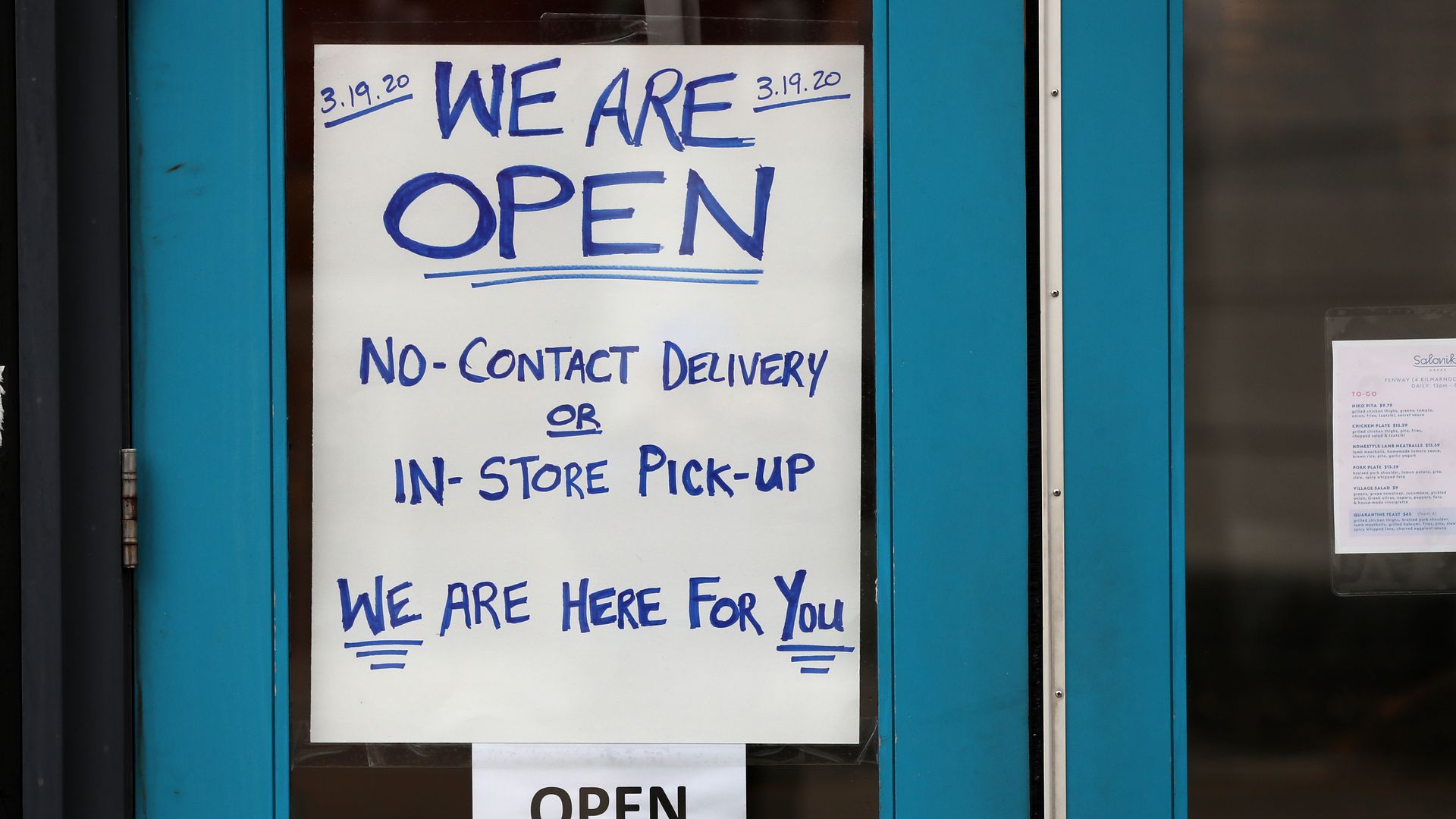
Some restaurants and other businesses, primarily in the service sector, are seeing spikes in tips as the coronavirus pandemic stalls the U.S. economy.
Why it matters: The restaurant industry has been hit hard as mandated dining area closures have forced businesses to restructure operations. Many workers rely heavily on tips, so the uptick in discretionary gratuity can help make up the difference.
Lawmakers in communities along the U.S. coasts are considering reopening their beaches as the coronavirus pandemic persists and summer nears. Meanwhile, seaside business owners worry about potential losses during their busiest months.
Why it matters: The virus has already smacked the U.S. economy, leaving nearly 22 million Americans unemployed. That number could increase if businesses remain closed or refuse to hire over the summer, the Wall Street Journal notes.
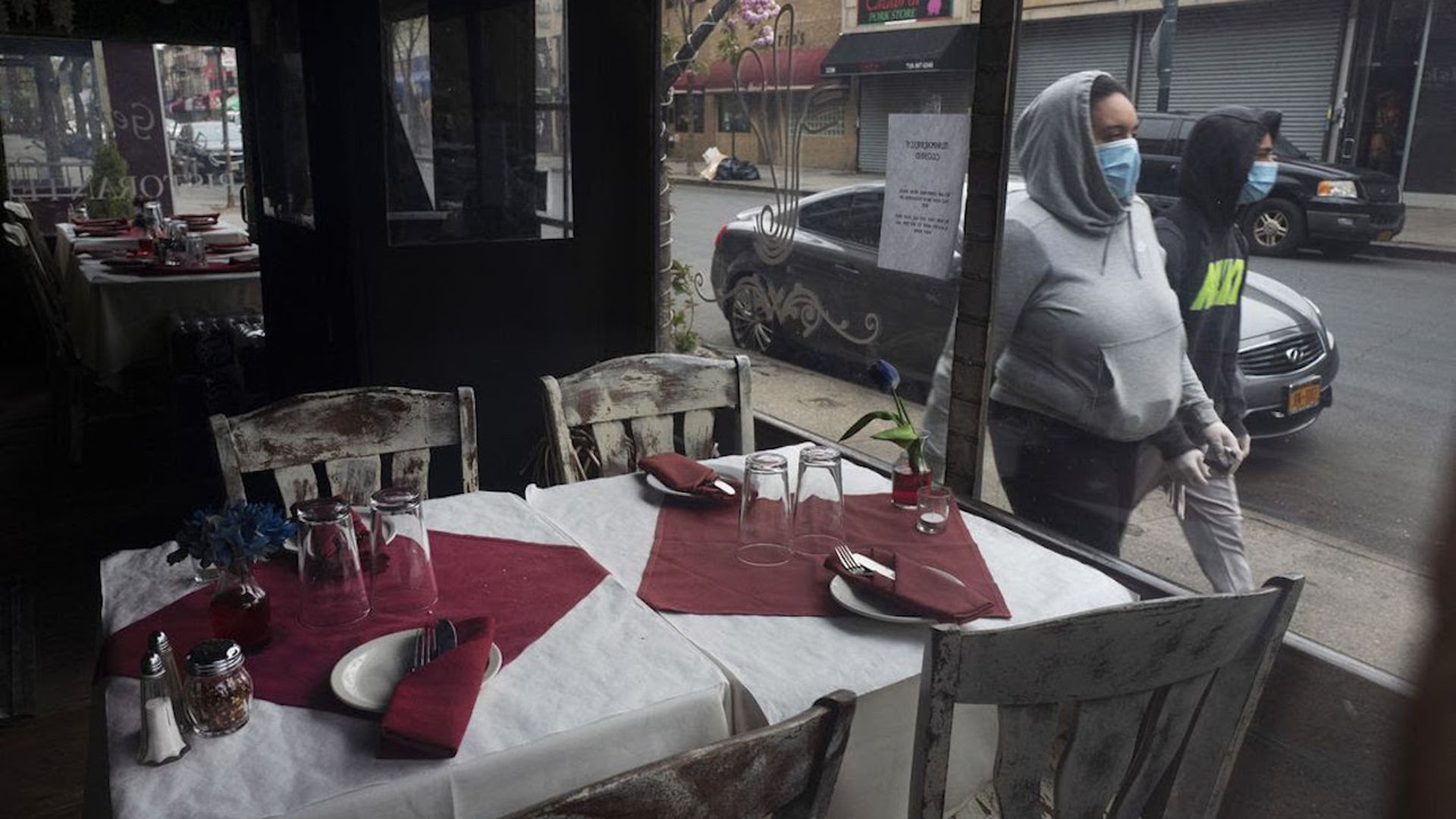
It may be a long time before many of us congregate in restaurants. And going out to eat is quickly becoming a far-off luxury for many hardworking Americans.
What's next: The dining trade is starting to think about how the industry will need to evolve, and Bloomberg's Leslie Patton and Edward Ludlow have a look ahead as "buffet services may disappear" and "workers may need to wear gloves and masks."