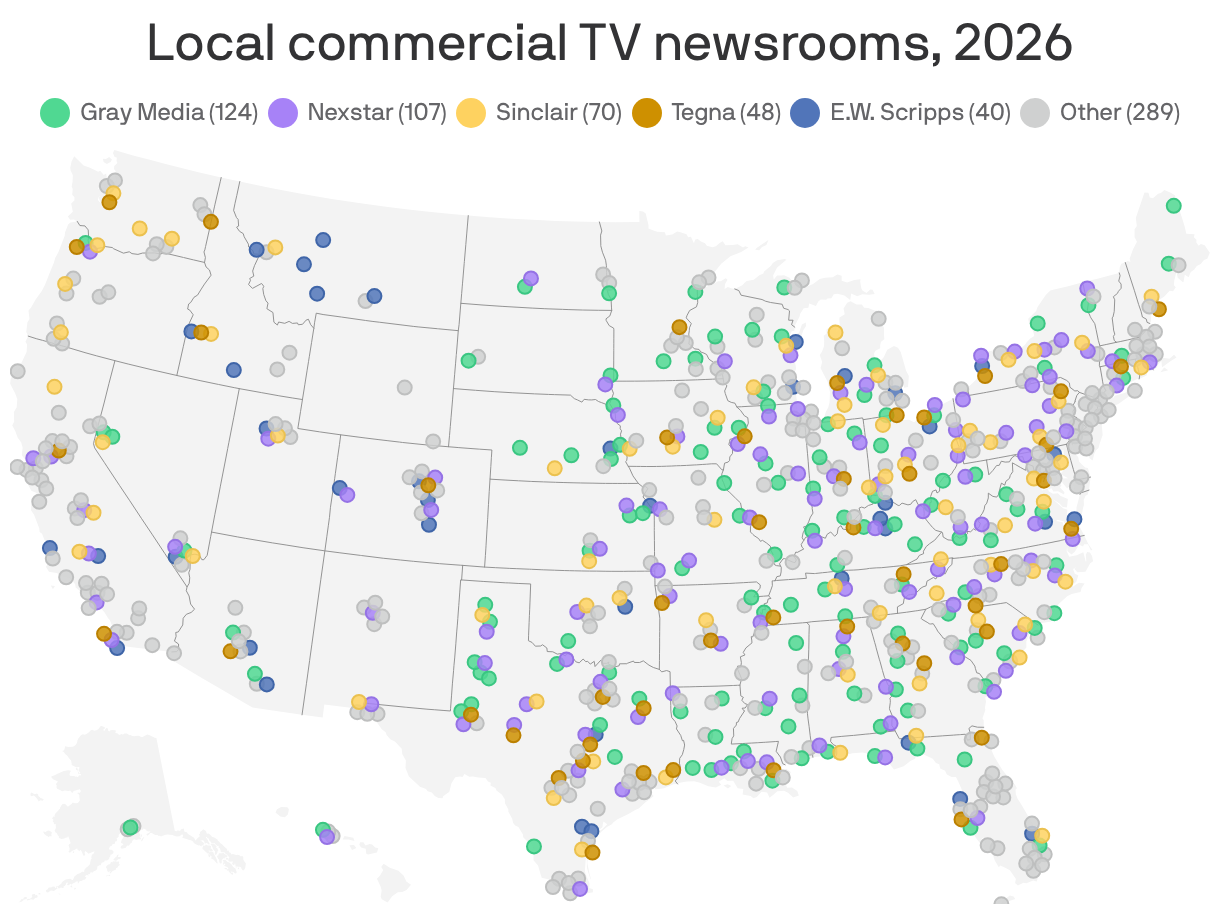
Reproduced from Medill State of Local News; Map: Axios
The 10 largest owners control 75% of local commercial TV newsrooms, according to a new report from the Medill School of Journalism at Northwestern University.
By comparison, the 10 largest newspaper owners control less than a quarter of all local newspapers.
Why it matters: Increased consolidation in local broadcast news could mean fewer journalists covering communities, more duplicated newscasts and fewer choices for viewers, said Tim Franklin, a Medill professor who founded its Local News Initiative.
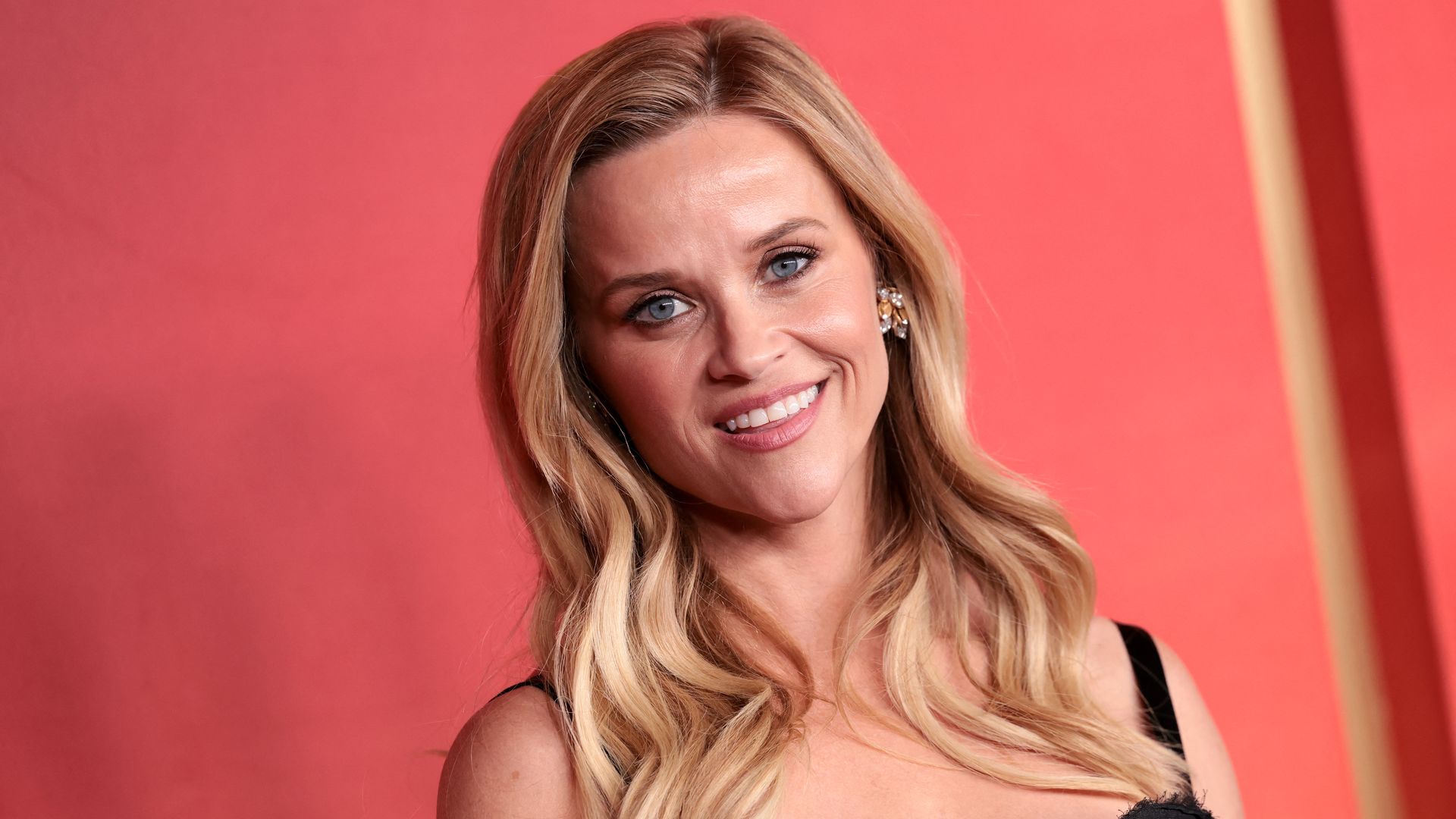
Reese Witherspoon has teamed with Mediawan, a Paris-based independent production company, to buy back her production firm Hello Sunshine for low- to mid-eight figures, sources told Axios.
Hello Sunshine, Mediawan and Candle Media declined to comment.
Why it matters: The sale price is a fraction of Hello Sunshine's $900 million valuation when Candle Media acquired a controlling stake in the company in 2021.
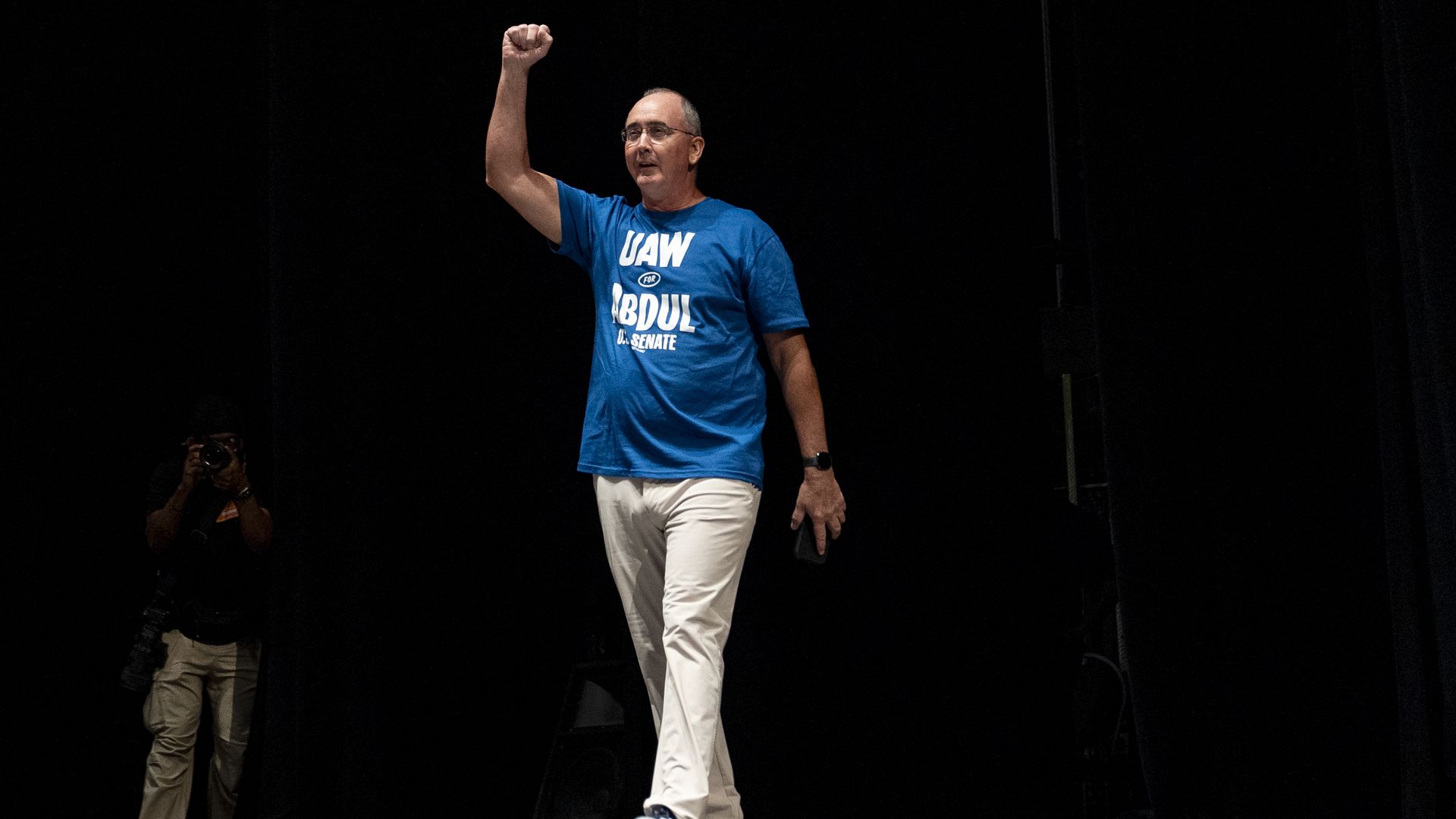
Shawn Fain, the charismatic and controversial president of the United Auto Workers, was reelected by a large margin.
Why it matters: Fain set an intentionally militant tone as president of the UAW in 2023 as he led a simultaneous strike against General Motors, Ford and Stellantis, ultimately winning record wage increases.
American consumers remain resilient despite higher interest rates and energy costs, according to earnings reports from three of the nation's biggest banks Tuesday.
Why it matters: The AI boom is getting a lot of credit for propping up the economy, but don't forget about the role of consumers.
The Treasury Department on Tuesday announced more than $1.2 billion in penalties against Bank of America for years of failures to report suspicious transactions and address shortcomings in its anti-money-laundering program.
Why it matters: The action includes the third-largest penalty in Treasury history.
TikTok and Newsmax say they wouldn't allow livestreams or clips of a possible public execution by firing squad that the Defense Department says it plans to livestream, when asked by Axios.
No other major platform or TV network would comment on their plans.
Why it matters: It's still unclear whether the early December event will actually be livestreamed, but if it does, it will test whether America's biggest media and tech companies are willing to enforce their content moderation policies against the U.S. government.
President Trump's deal to lift sanctions on Russia to increase diesel supplies "is a betrayal of the people of Ukraine" and "a gift to our adversary," a bipartisan coalition of senators wrote in a letter admonishing the agreement.
Why it matters: The decision to turn to Vladimir Putin in an attempt to ease the diesel crunch is piling onto Republican headaches ahead of the midterms and fueling fresh friction between the U.S. and Ukraine.
Legal experts and press freedom advocates believe the Justice Department's White House television press pool probe could be a pretext for seeking additional records from reporters.
Why it matters: Antitrust lawyers argue the DOJ's legal case against the networks is thin.
Six Flags is temporarily closing nine roller coasters throughout its network of amusement parks after someone was killed Monday on a ride in Georgia.
The big picture: The incident heightens public scrutiny over ride safety at a time when regional amusement parks are already under mounting competitive pressure.
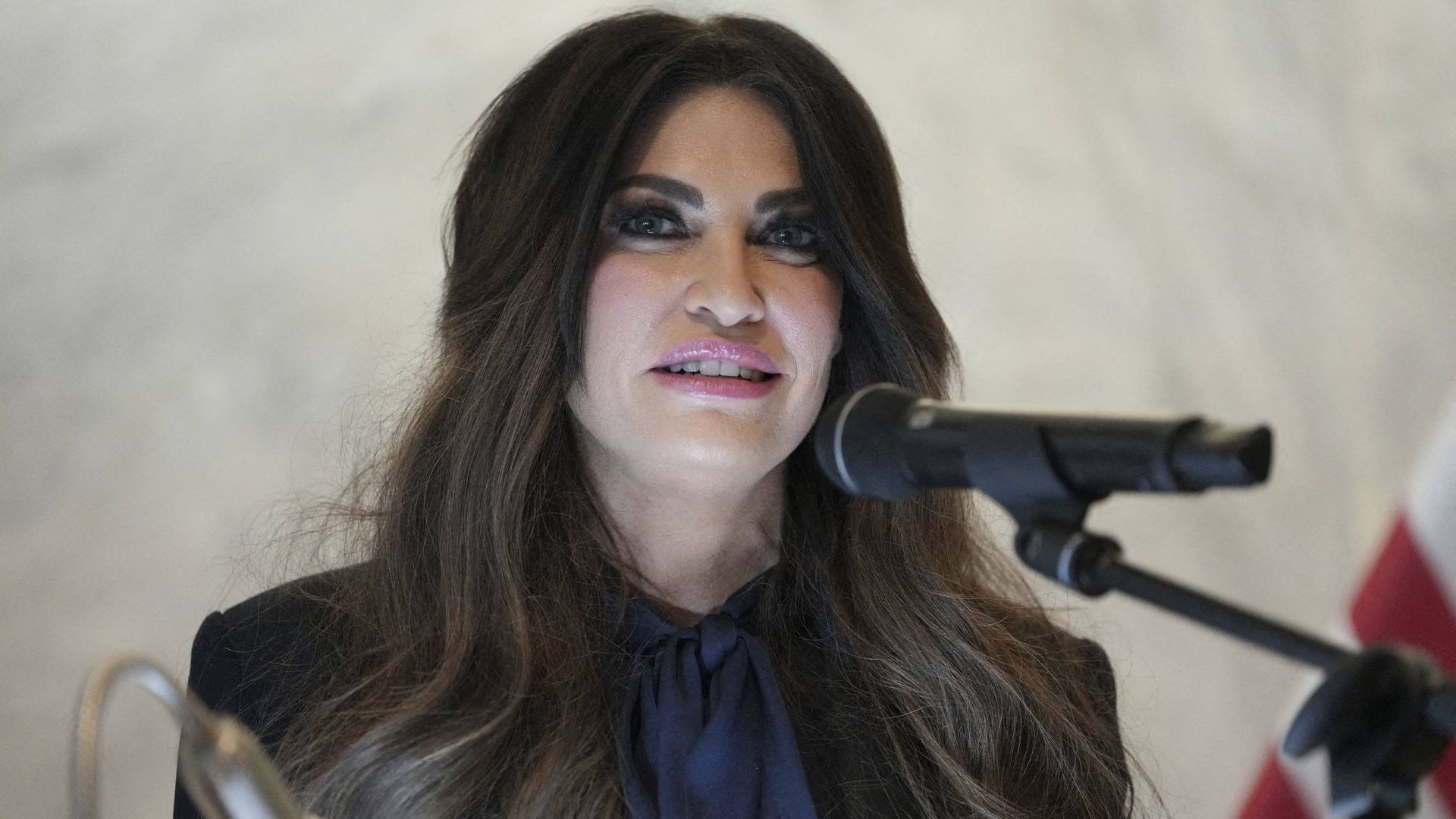
Kimberly Guilfoyle, the U.S. ambassador to Greece, announced her resignation Tuesday, shortly after the White House asked her to step down and following reports alleging misconduct before and during her diplomatic posting.
Why it matters: The exit of the president's longtime political ally and former fiancée of his son Donald Trump Jr. follows a series of Wall Street Journal reports alleging she used her political connections to seek financial favors and promote private business interests.
International law enforcement agencies and major tech companies, including Meta, said Tuesday they disrupted online scam networks in West Africa, arresting 28 people and rescuing 117 trafficking victims.
Why it matters: Authorities have spent years targeting sprawling scam compounds in Southeast Asia. Now they're expanding those efforts to West Africa, where similar criminal networks are defrauding victims around the world.
Wall Street is scratching its head over Iambic Therapeutics, an AI biotech that plans to go public this week.
The big picture: Either it's the bargain of a lifetime or the private markets are wildly overvaluing one of its top comps, Alphabet-backed Isomorphic Labs.
Investors are treating news about OpenAI and Anthropic's finances as if they were earnings reports from public companies. They are not.
Why it matters: The stock market, and a significant part of the real economy, depends on whether these massive startups can earn enough to justify the billions of dollars being plowed into AI.
Communications — internally, externally and now with AI — is getting much more complicated, much faster.
All of us need to jump ahead of the unfolding change.
Why this matters to CEOs: Most of us have finally adapted to a world where our staff and customers learn about us and buy our products across literally dozens of disparate info-bubbles — from Instagram to MAGA podcasts. Now, we need to learn how to communicate with agents and LLMs as well.
James Cadwallader, CEO of Profound, which helps brands show up inside ChatGPT and AI agents, gave me a quick briefing on how all of us should think about — and act on — GEO.
Why it matters: GEO is vital to your future growth. It decides whether you and your products show up inside LLMs like Claude and agents like Meta's Muse.
Data: U.S. Bureau of Economic Analysis, FactSet; Chart: Axios/Matt Phillips; Note: After-tax profit data includes inventory and capital depreciation adjustments.
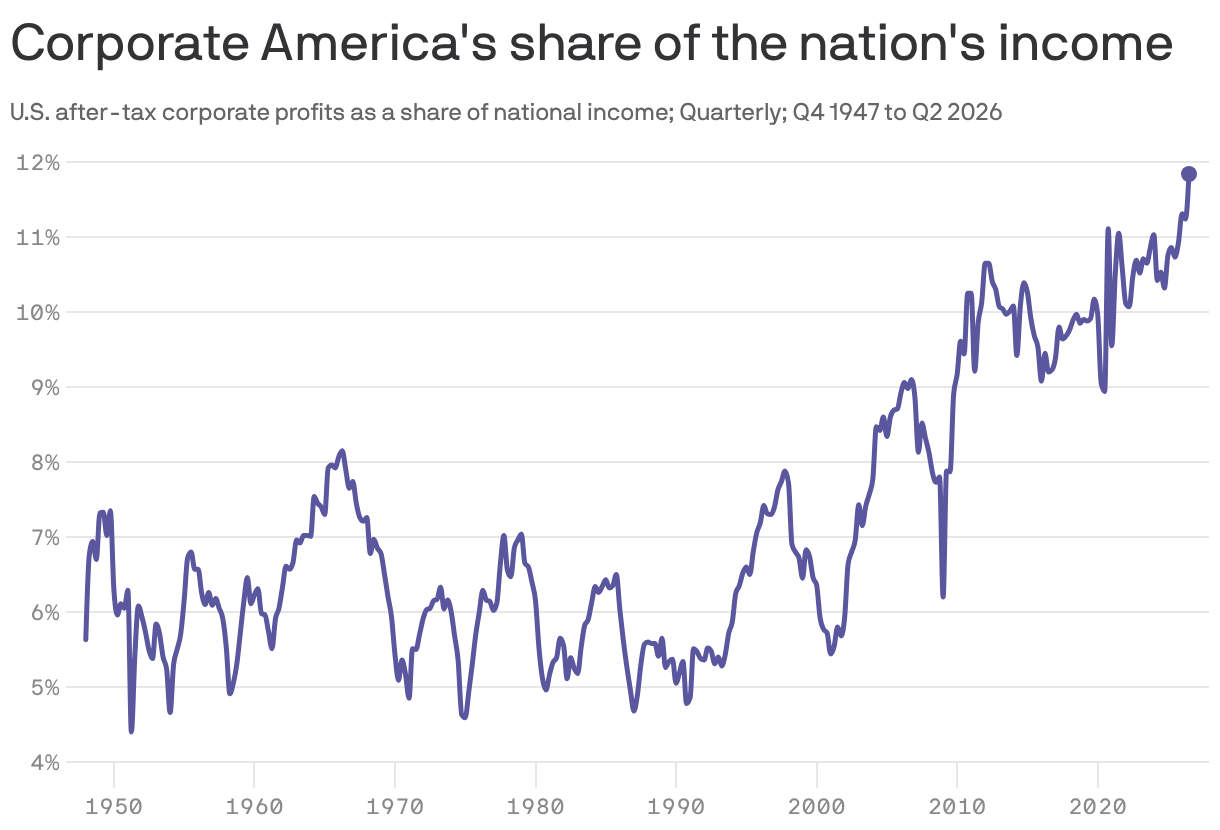
Corporate America is raking in record profits, luxuriating in luscious margins and capturing the largest chunk of the country's income on record.
Why it matters: The corporate bonanza is bolstering the stock market, but it may also be playing a role in the persistently sour sentiment among the American electorate.
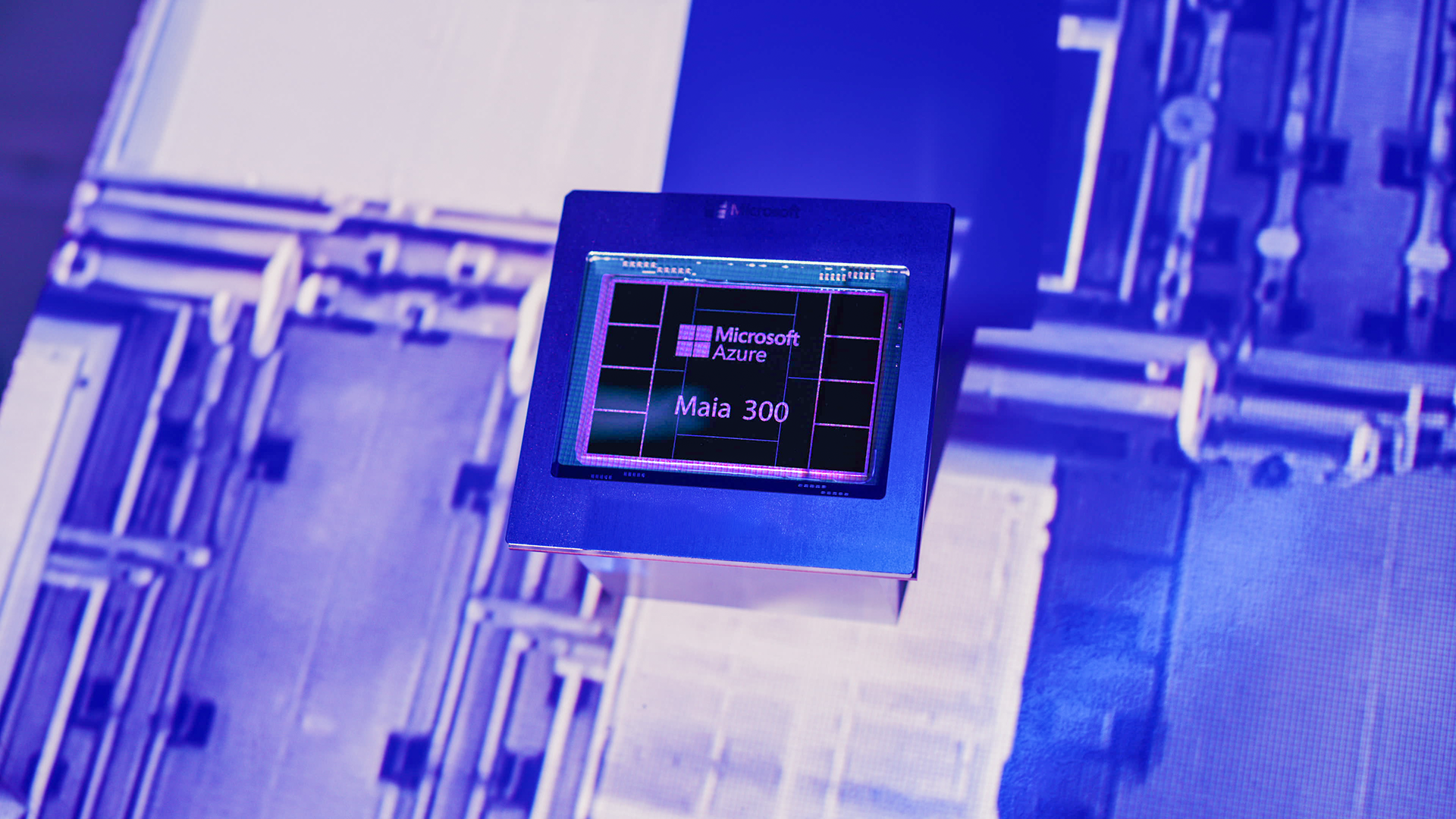
The trillion-dollar AI race is moving from software to silicon, as Microsoft's massive bet on its proprietary Maia chips proves Big Tech wants to wean itself off Nvidia's dominance.
Why it matters: Microsoft's plan to power its AI products with custom silicon shows how every major Nvidia customer is now a competitor, seeking lower costs, improved performance and more control.
Mike Sommers, CEO of the American Petroleum Institute, has some blunt advice for AI CEOs: apply the oil industry's strategy for winning political support for fracking to data centers and AI.
Why it matters: Data centers are the new fracking — a potential job creator and financial windfall for local communities, greeted with deep-seated, well-funded fear and loathing. It took roughly 14 years and well over $1B in ads and lobbying to win the political war and limit the public backlash.
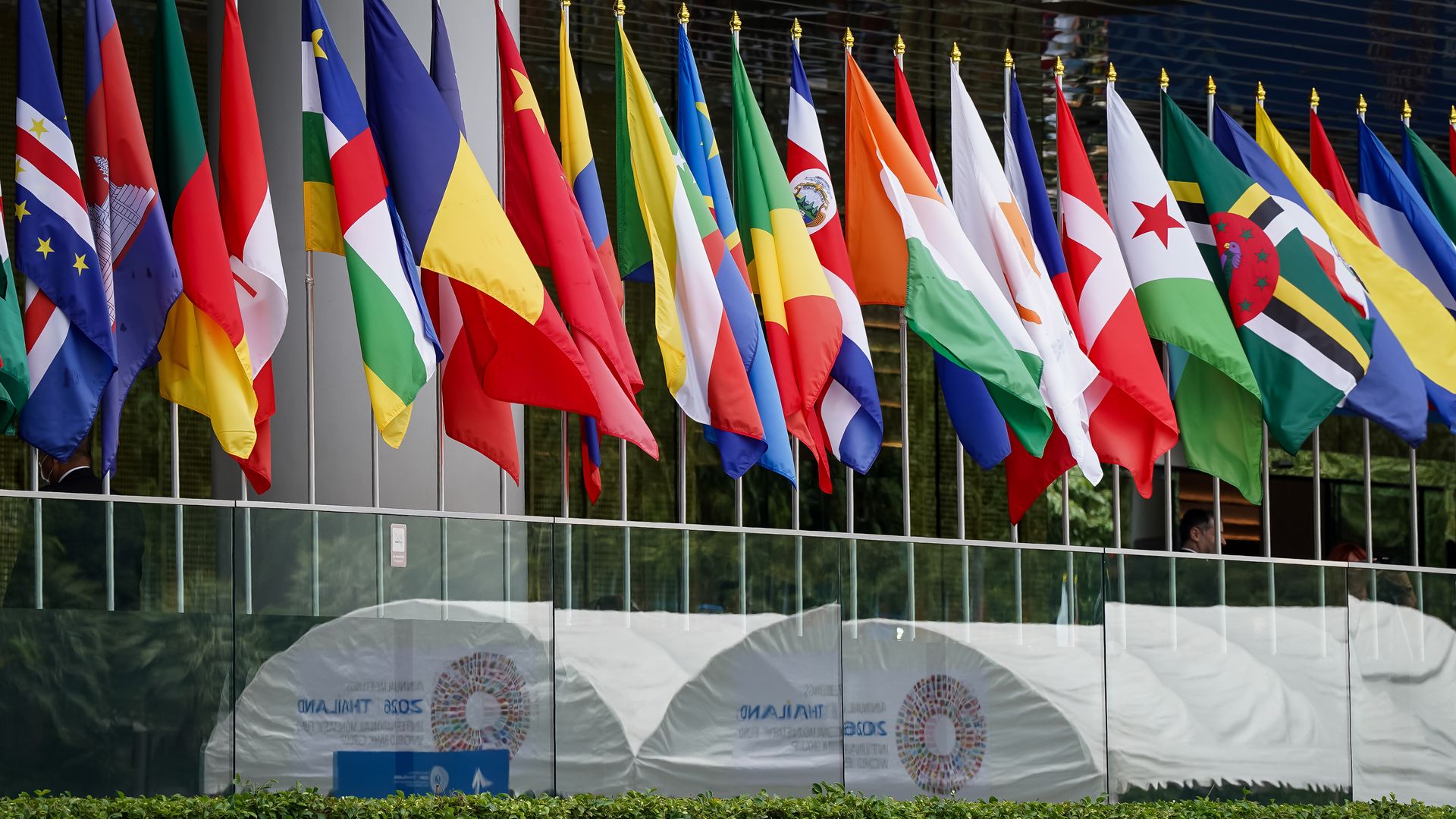
The global economy's ability to withstand new shocks is coming under strain, the International Monetary Fund warned Monday night in its latest economic forecast.
Why it matters: Worldwide growth has defied expectations, holding up despite the Middle East war and soaring oil prices. But some policymakers fear that dwindling energy reserves, mounting debt and growing reliance on the AI boom leave the world increasingly vulnerable.