Why America's regional amusement parks aren't having fun

Add Axios as your preferred source to
see more of our stories on Google.
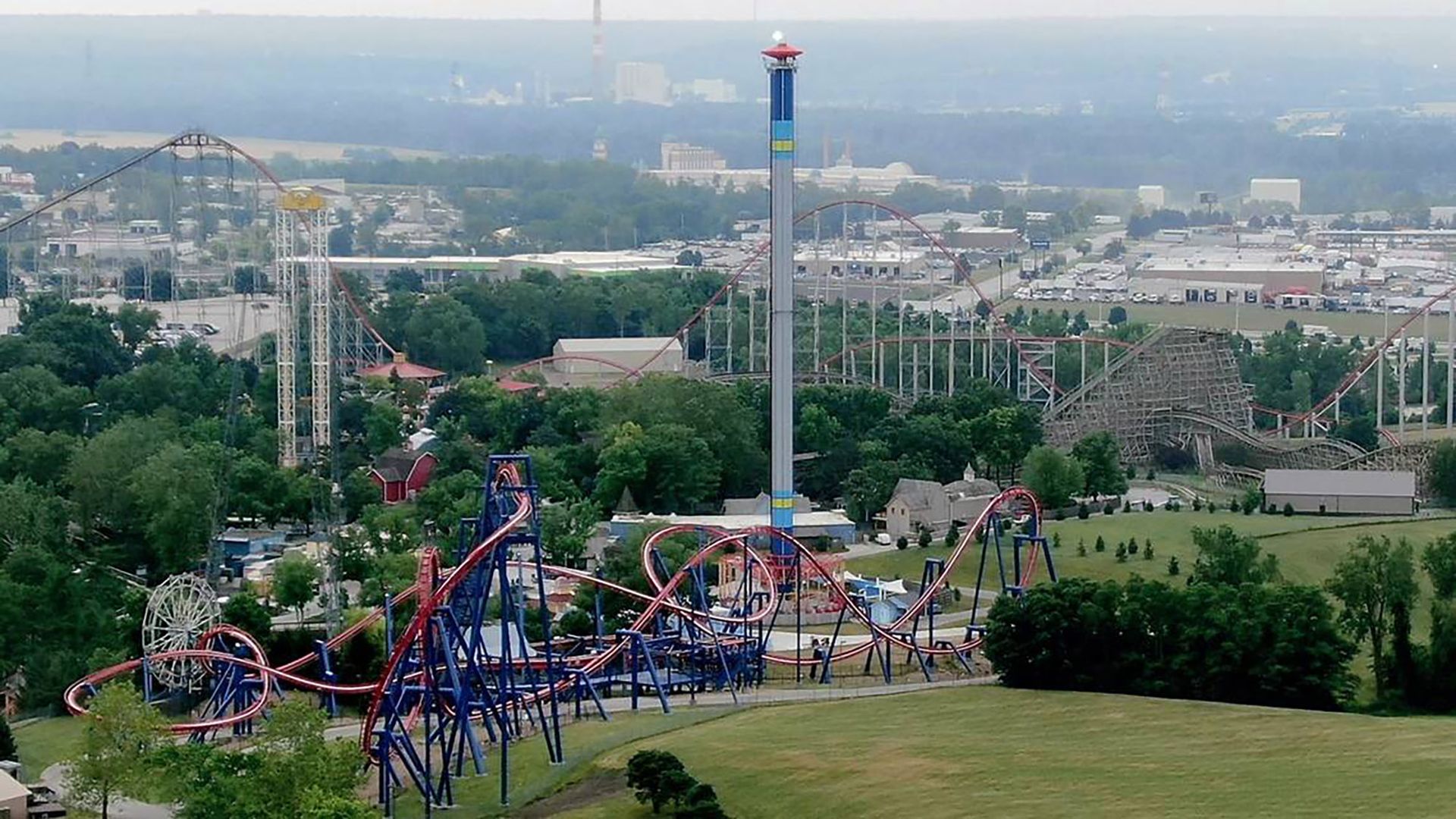
The Worlds of Fun amusement park in Kansas City is among seven parks being sold by Six Flags Entertainment to EPR Properties. Photo: Jill Toyoshiba/The Kansas City Star/Tribune News Service via Getty Images
America's regional amusement parks aren't having much fun.
Why it matters: Parks like Six Flags and SeaWorld have been staples in the entertainment landscape of middle America for decades — but they're falling behind as patrons turn to a growing universe of alternative entertainment options.
🎢 Driving the news: Six Flags Entertainment announced Thursday that it will sell seven of its regional parks for $331 million to real estate investment trust EPR Properties.
- The deal includes Valleyfair in Minneapolis; Worlds of Fun in Kansas City; Michigan's Adventure in Grand Rapids; Schlitterbahn Waterpark in Galveston, Texas; Six Flags St. Louis; Six Flags Great Escape in Queensbury, New York; and Six Flags La Ronde in Montreal.
- The seven parks hosted 4.5 million guests in 2025.
The big picture: Interest in regional theme parks has been declining.
- Six Flags attendance fell 13% in the fourth quarter to 9.3 million, compared with a year earlier.
- Attendance at United Parks & Resorts — which includes SeaWorld and Busch Gardens — was down 2.5% in the fourth quarter to 4.8 million. CEO Marc Swanson said the showing "did not meet our expectations."
State of play: The theme park story has been one of the rich getting richer, as destination giants pull further ahead.
- Disney's parks have been powering the company in recent years — and it announced a 10-year, $60 billion investment in parks and cruises beginning in 2023.
- Six Flags bulked up, merging with Cedar Fair in 2024 — but combined attendance fell more than 5% in 2025, according to CFRA Research.
- Meanwhile, United Parks is facing rising competition in the key market of Orlando, where Universal's elaborate new Epic Universe theme park is expected to draw significant crowds, according to CFRA Research analyst Alex Fasciano.
Between the lines: Regional parks aren't just competing with better-capitalized destination resorts — they're also battling streaming, youth sports, video games and the pull of smartphones for consumers' attention.
Threat level: Six Flags has been under pressure from activist investors to take action.
- New York-based Jana Partners teamed with up superstar athlete Travis Kelce — the fiancé of Taylor Swift — to acquire a 9% stake in Six Flags in 2025.
- "The chance to help make Six Flags special for the next generation is one I couldn't pass up," Kelce said in a statement at the time.
Zoom in: Six Flags — which has the appropriate stock ticker FUN — is selling parks with an EBITDA margin of 17.3% compared with the company's average of 25.5%, according to UBS analyst Arpiné Kocharyan.
- "We think investors will like the operational focus on parks that have much higher profitability, and that the proceeds will be used to pay down debt," Kocharyan wrote Thursday in a research note.
- Kocharyan added that "operational discipline and focus" could help Six Flags get back on track under newly appointed CEO John Reilly.
What's next: EPR is leasing the U.S. parks to Enchanted Parks, formerly known as Innovative Attraction Management, which will continue to operate them.
- The company also acquired the Six Flags naming rights through 2026.
The bottom line: Six Flags will be looking to stabilize its attendance base with its remaining 34 parks in 23 locations in North America.
