IMF chief's warning: No painless exit from war's energy shock

Add Axios as your preferred source to
see more of our stories on Google.
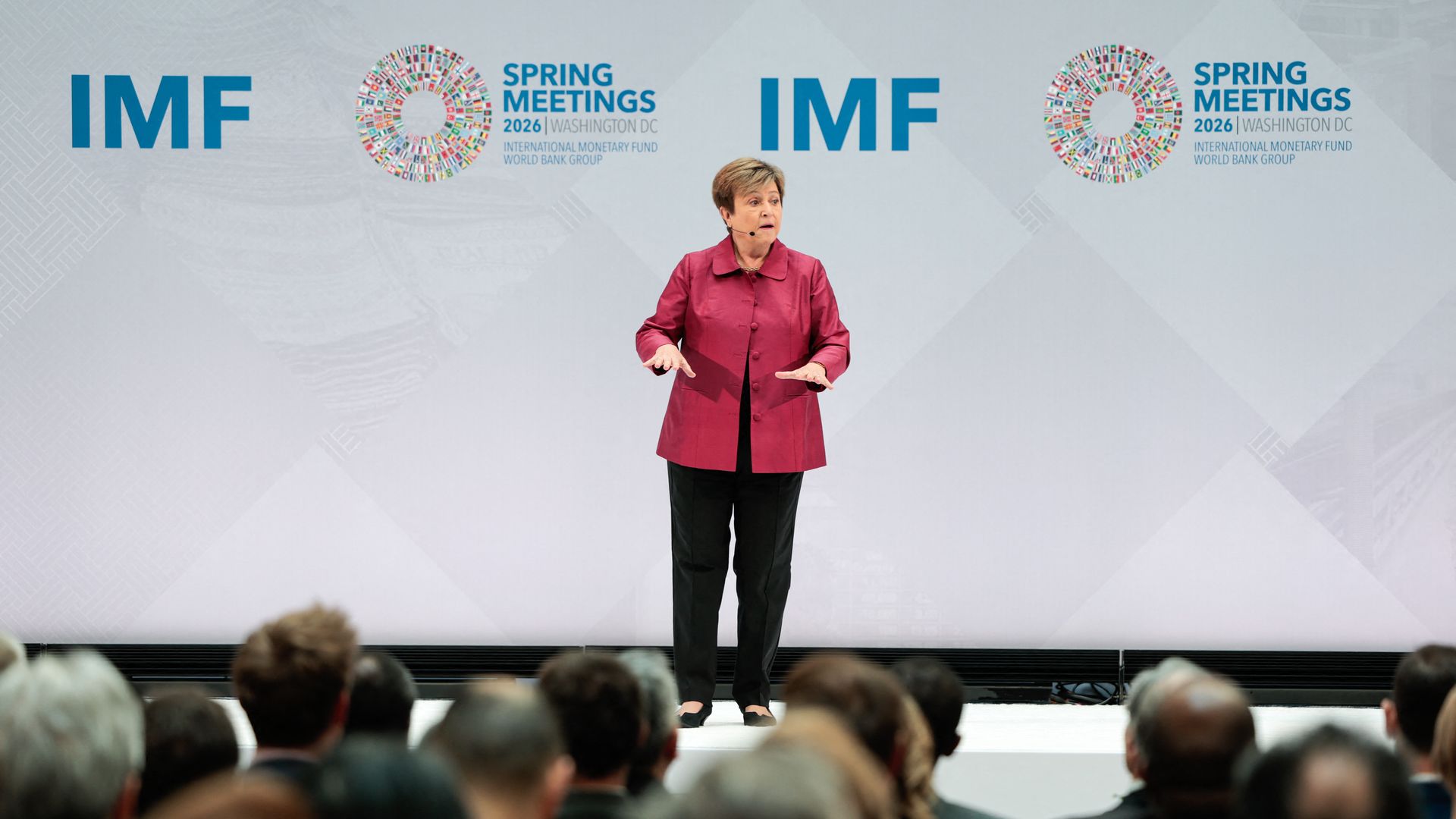
International Monetary Fund managing director Kristalina Georgieva. Photo: Kent Nishimura / AFP via Getty Images
You can't fix a supply problem by boosting demand — and it would be counterproductive for countries to try to stimulate their way out of the pain of the Iran war's energy shock.
The big picture: That is a key message from Kristalina Georgieva, the International Monetary Fund managing director, in a curtain-raiser Thursday morning ahead of the spring meetings of the fund and World Bank next week.
- The blockage of the Strait of Hormuz means less oil and fewer other commodities flooding the world economy.
- It implies fiscal restraint, energy-efficiency efforts and potential monetary tightening in a world again beset by a negative supply shock.
State of play: Even with the ceasefire between Iran and the U.S., the flow of oil, natural gas, fertilizer and other products from the Persian Gulf is being throttled — and may face new Iranian tolls indefinitely.
- The blockage has driven up global interest rates, reflecting the possibility that central banks will need to maintain tighter policy to keep inflation in check.
- Georgieva endorsed the possibility of a hawkish pivot by central banks, saying that "if inflation expectations threaten to break anchor and ignite a costly inflation spiral, then central banks should step in firmly with rate hikes."
- Rate hikes, she acknowledged, "would further dampen growth — that's how they work. ... Fiscal support should remain targeted and temporary," she said.
What they're saying: "[T]his being a classic negative supply shock, demand adjustment is unavoidable," Georgieva said. "To put it in non-technical language, we cannot go through it without some pain."
- Policymakers must be careful not to make things worse, such as through "go-it-alone actions — export controls, price controls and so on."
- She warned against "untargeted tax cuts, energy subsidies, and price-based measures," saying that most countries have held the line against them, "although a few have chosen to deliver broad-based support."
- More constructive, in her telling, are energy conservation measures that restrain demand.
Zoom in: In particular, she warned against policies that would pit fiscal and monetary policy against each other.
- At a time of already rising global interest rates, "adding deficit-financed stimulus to this mix at this moment would increase the burden on monetary policy," she said, "like driving with one foot on the accelerator and one on the brake — not good."
Yes, but: Policies to cushion the blow of higher energy and food prices for the poorest citizens can coincide with efforts to curtail overall demand.
- Georgieva spoke of "targeted and temporary support to the vulnerable."
The bottom line: "Don't pour gasoline on the fire," Georgieva said, before quipping: "You need this gasoline to drive your cars."
