S&P 500 high aside, rate surge is hitting stocks

Add Axios as your preferred source to
see more of our stories on Google.
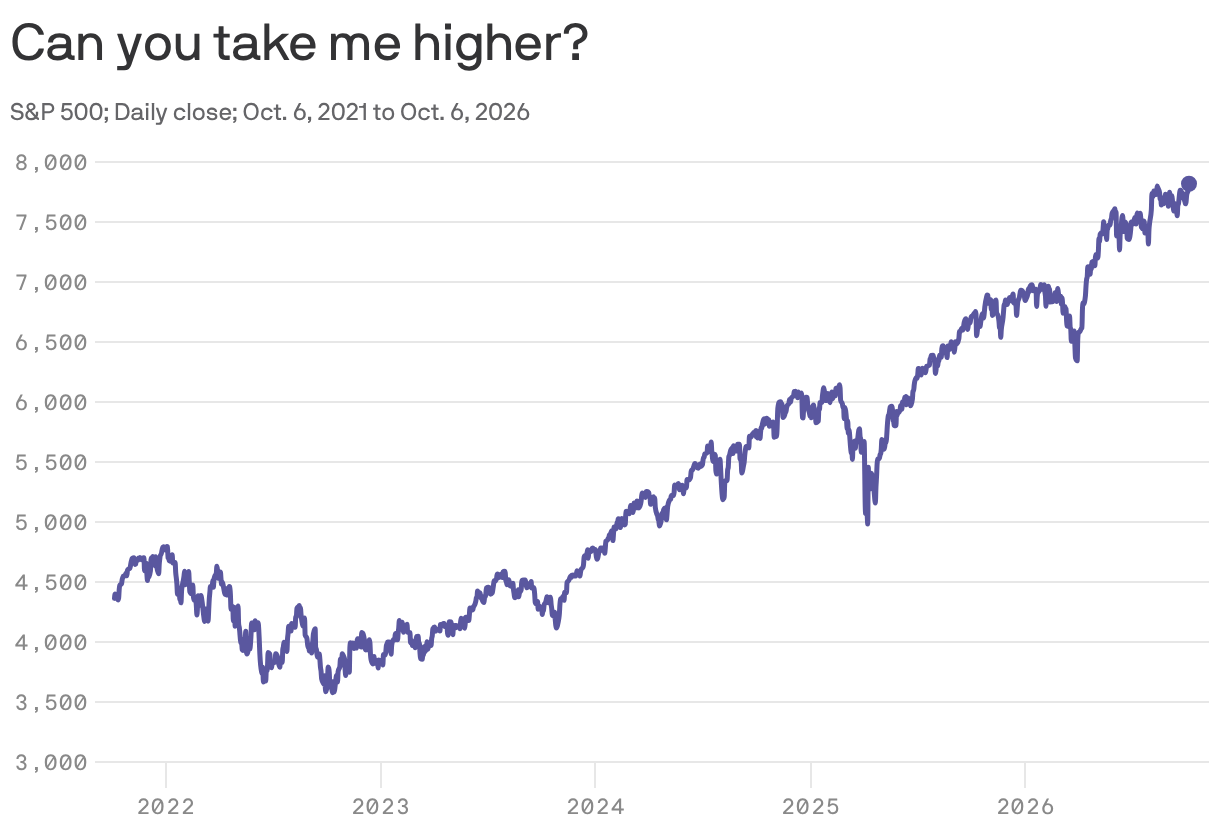
The S&P 500 hit a new high Tuesday, but under the hood of the rally, higher interest rates are making a measurable imprint on the market.
Why it matters: Rising rates have often marked the beginning of the end for bull markets, though no one knows how it will play out this time.
The latest: At first glance, surging yields on long-term U.S. Treasury bonds haven't bothered the market much.
- The yield on the benchmark 10-year Treasury is up roughly 1 percentage point over the last six months.
- The S&P 500 is up about 18% over the same period.
Yes, but: The S&P 500 is only one way to measure the market — you can see the impact of higher rates elsewhere.
Zoom in: You can see it in the decline of valuation metrics like the so-called forward price-to-earnings ratio, analysts say.
- A year ago, the forward P/E on the S&P 500 was a punchy 23.5 times expected earnings. Today, it's roughly 19.5 times.
- That's still not cheap. But it means the market isn't just mindless euphoria — earnings have actually surged, too.
- In that respect, higher rates may be calming down somewhat frothy markets.
Another place you can see the impact of higher rates is in small caps.
- Smaller companies are viewed as more vulnerable to rising rates, as they have less financial flexibility and often use floating-rate debt.
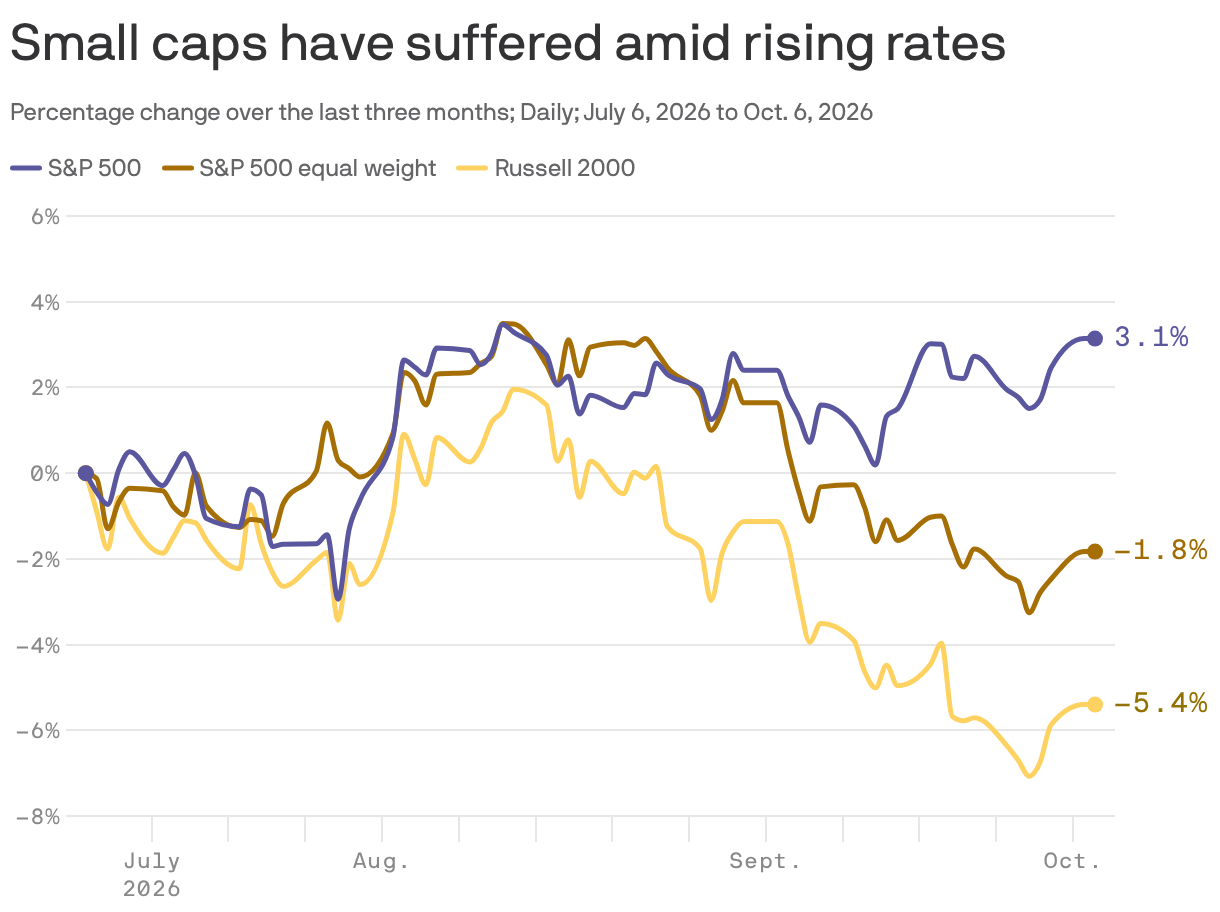
State of play: A similar dynamic is at play in the S&P 500.
- While the index itself is at new highs, many of the stocks that comprise it are struggling.
- In fact, only about 25% of the stocks in the S&P 500 are actually trading above their 50-day moving average, a particularly weak measure of medium-term momentum for a market making fresh highs.
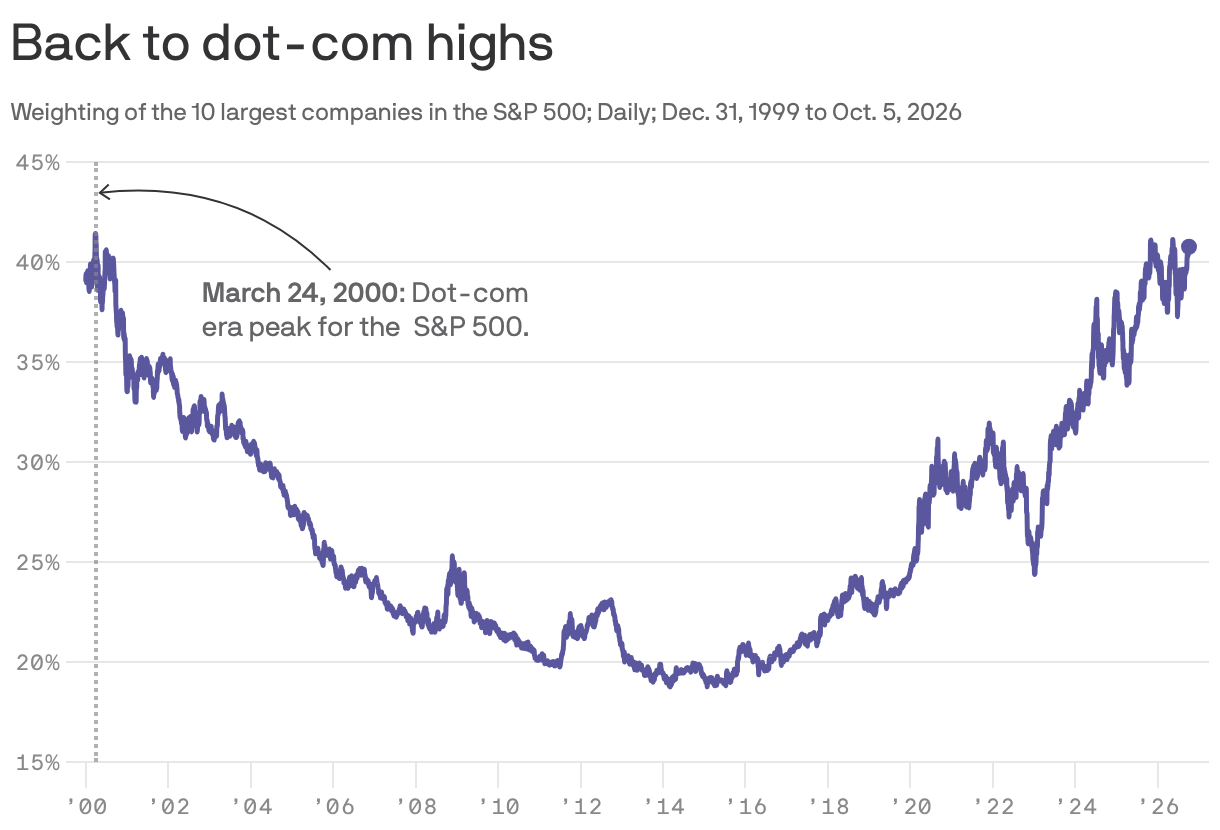
Zoom out: Or put differently, it seems the S&P 500 is being carried higher by fewer and fewer stocks, and you don't get a prize for guessing which ones. (Yes, it's the giant AI tech companies.)
- Indeed, the top 10 stocks in the S&P 500 now account for about 41% of the entire weight of the index.
- That's a level of concentration we really haven't seen since the dot-com bubble.
Case in point: Nvidia continued to push toward a market valuation of $6 trillion on Tuesday, closing at $5.8 trillion, underscoring the fact that we live in a new age of corporate giants.
The bottom line: The market seems to hinge on the opaque and interconnected assemblage of giant entities building out the AI ecosystem.
- It sure would be nice to know if any of them are making any money from it.
- Oh, also if it's going to kill us all.
