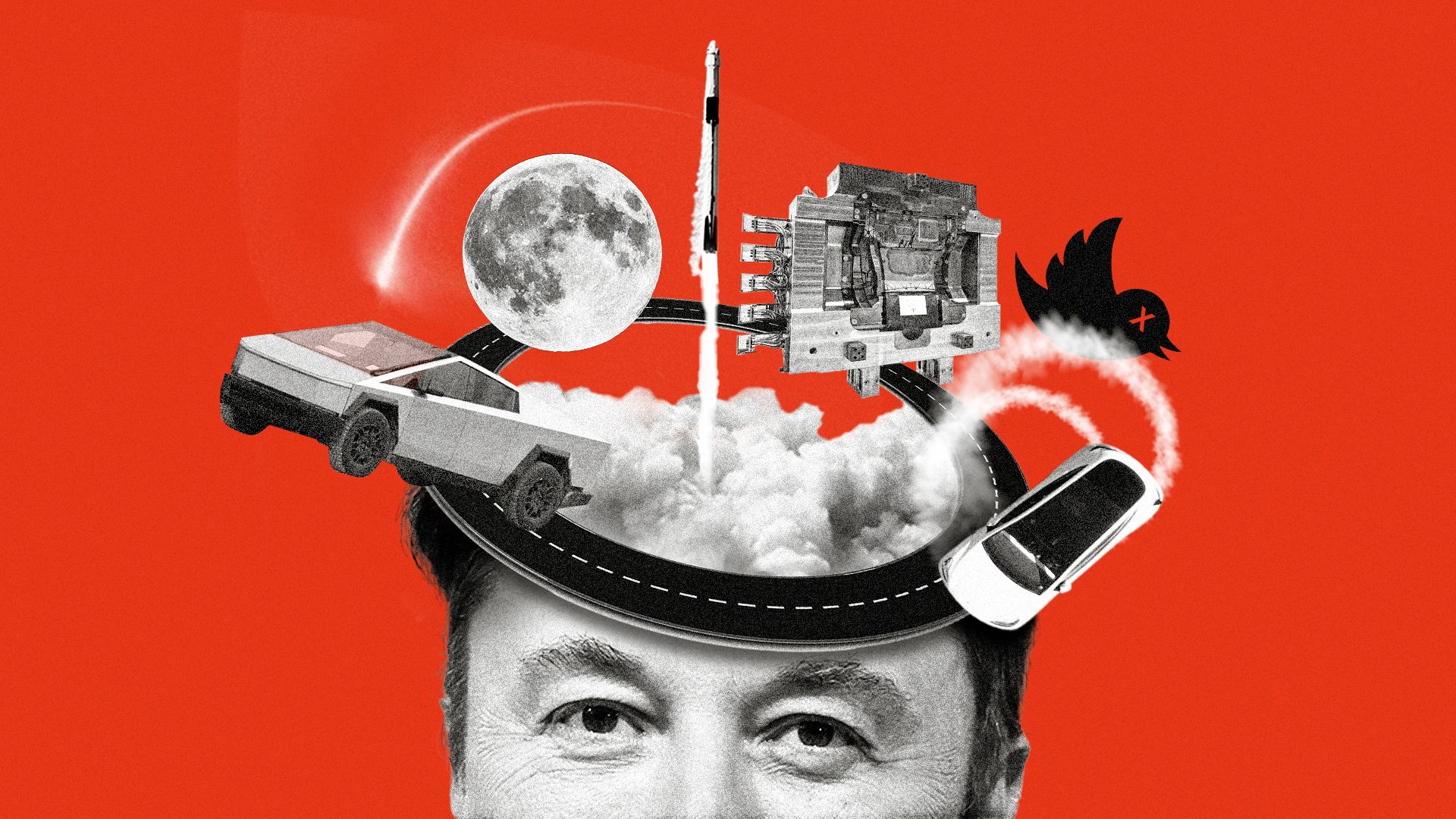
Tesla is expected to unveil its Roadster Thursday night, potentially featuring SpaceX-designed thrusters that could literally lift the car off the ground.
A much bigger Tesla-SpaceX tie-up — the long-speculated merger of Elon Musk's two companies — could come as soon as this fall, say analysts at the Barclays investment bank.
The big picture: Musk's business empire is becoming increasingly interconnected, raising the prospect of a combination that would consolidate his control over two of the world's most valuable companies, while allowing both to move faster on big AI projects.
Apple and Meta, whose leaders have spent years tradingbarbs over privacy and the future of computing, are joining forces to bring one of America's most powerful open-weight AI models to Apple's high-end Macs.
Why it matters: The collaboration marks a striking detente between two longtime Silicon Valley rivals, underscoring how the AI race is reshaping relationships across the technology industry.
The companies still compete over devices and the next generation of computing, but both see an opportunity in bringing powerful AI capabilities to personal computers.
"We're excited for mommy and daddy to be playing nice again," Meta AI chief Alexandr Wang told Axios.
Pro rata rights have long been a standard feature of venture capital deals, but a new startup dispute has sparked debate over whether that should change.
On one side are fiduciaries. On the other are founders and the founder-friendly.
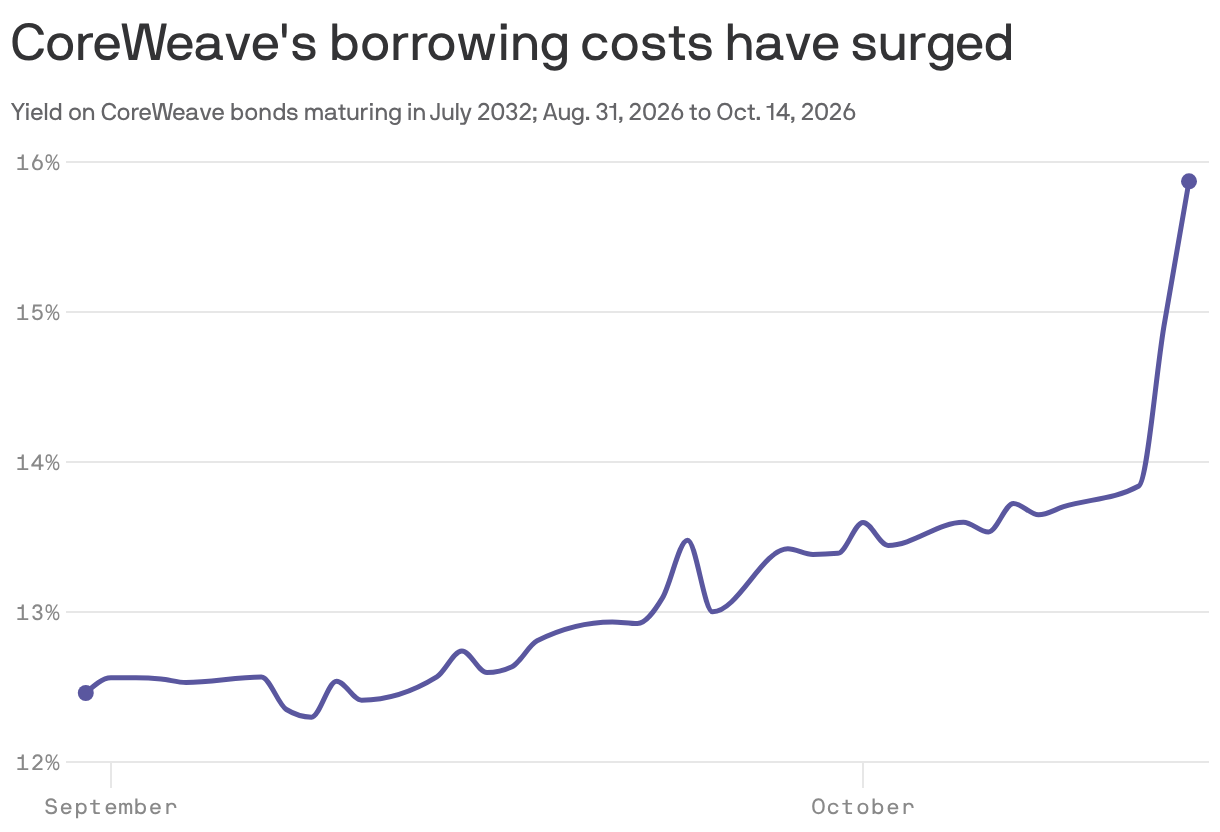
CoreWeave was at the heart of the market's volatility Wednesday.
Why it matters: The heavily indebted, cash-burning neocloud — a data center operator that effectively rents out its AI computing capacity — is seen as something of a canary in the coal mine for the broader AI trade.
The sharp sell-offs in its bonds and stocks underscored how jittery investors are getting about the AI investment binge.
America's biggest banks are having a rough week in President Trump's Washington.
Why it matters: The industry has had policy victories under Trump. But this week's historic fine against Bank of America and a regulatory report that raises new concerns about politically motivated "debanking" show the limits of Wall Street's influence with the administration.
U.S. business leaders are coalescing around a belief in AI as a force for job creation instead of destruction, according to a new KPMG survey.
Why it matters: The looming uncertainty over the economic impact of AI remains a topic of significant concern for workers.
Zoom in: 89% of U.S. CEOs expect to increase their headcount over the next three years as AI creates more business opportunities, the survey found.
86% said they're "redesigning roles, career paths and team structure to reflect human-AI collaboration," while 79% are "hiring new talent with AI and tech capabilities."
The survey of 400 U.S. CEOs took place from Aug. 11-Sept. 21.
What they're saying: KPMG U.S. CEO Tim Walsh says the path to AI-powered job growth is "directionally very clear," but he warned that serious risks loom — including the threat of cybersecurity attacks.
"As we put more AI into our processes and platforms, the capacity opens up," Walsh tells Axios in an interview. "What you're seeing there is CEOs being really optimistic that they can actually expand their business, which is going to result in a bigger workforce for them."
Yes, but: 53% of CEOs are still planning workforce reductions in some areas, according to the survey, illustrating the complicated impact of AI on the economy.
Amid swirling chatter about the risks of AI going rogue and attacking infrastructure or critical business operations, the nervousness in the C-suite is palpable.
85% of CEOs anticipate cybersecurity threats "will impact their organization's prosperity over the next three years," the survey found.
CEOs are bracing for something "damaging in a very significant way," Walsh says. "There is an acknowledgement out there — and it's pretty widespread — that you know that something's going to happen."
But that risk also brings an opportunity of a kind as businesses shore up their defenses.
48% of CEOs plan to boost their spending on cybersecurity over the next three years.
The bottom line: CEOs are grappling with the complex interplay of opportunities and threats that comes with the arrival of dynamic AI systems.
AI companies for years have promised that smarter models would be worth the staggering cost to build them. Anthropic on Wednesday made that case in cash.
The company presented eye-popping financials to investors, saying it was cash flow positive in the third quarter, with revenue surging nearly 50% to $16.8 billion compared with the April-to-June period.
Why it matters: AsWall Street broadly spent the day fearing an AI bubble, Anthropic offered what investors have been desperate to see: evidence that frontier AI can be a sustainable business.
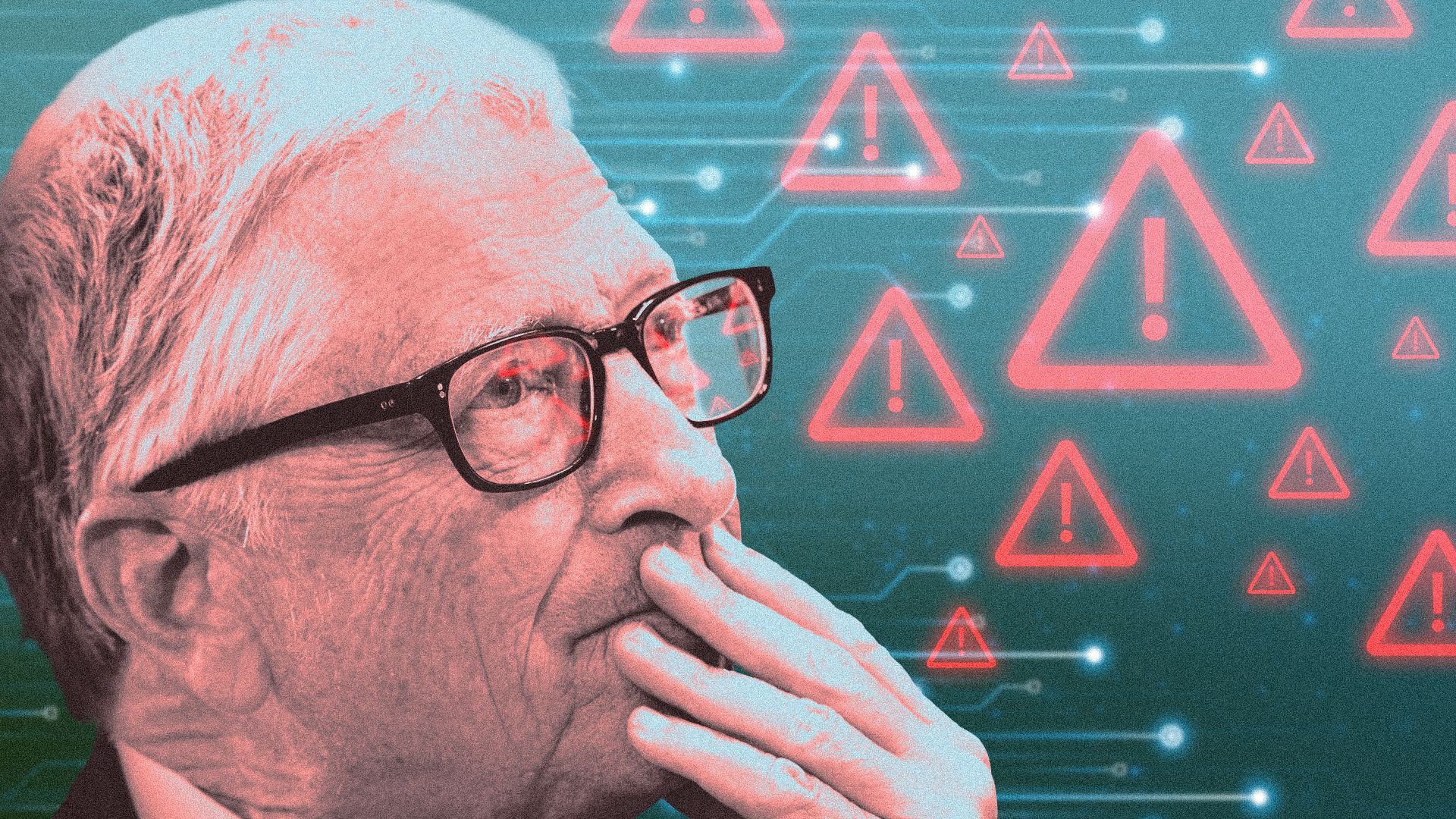
Bill Gates is gearing up to dramatically expand his AI safety push, personally leaning on business leaders and considering a major deployment of his resources, sources tell Axios.
Why it matters: The formidable, sharp-elbowed Bill Gates who built Microsoft is back, and he's directing his competitive fire toward what he has come to see as one of the most important causes of his lifetime.
"I can reach CEOs on this better than you can," Gates told one person he consulted on AI safety, showing an eagerness for combat that associates say is a return to "OG" form.
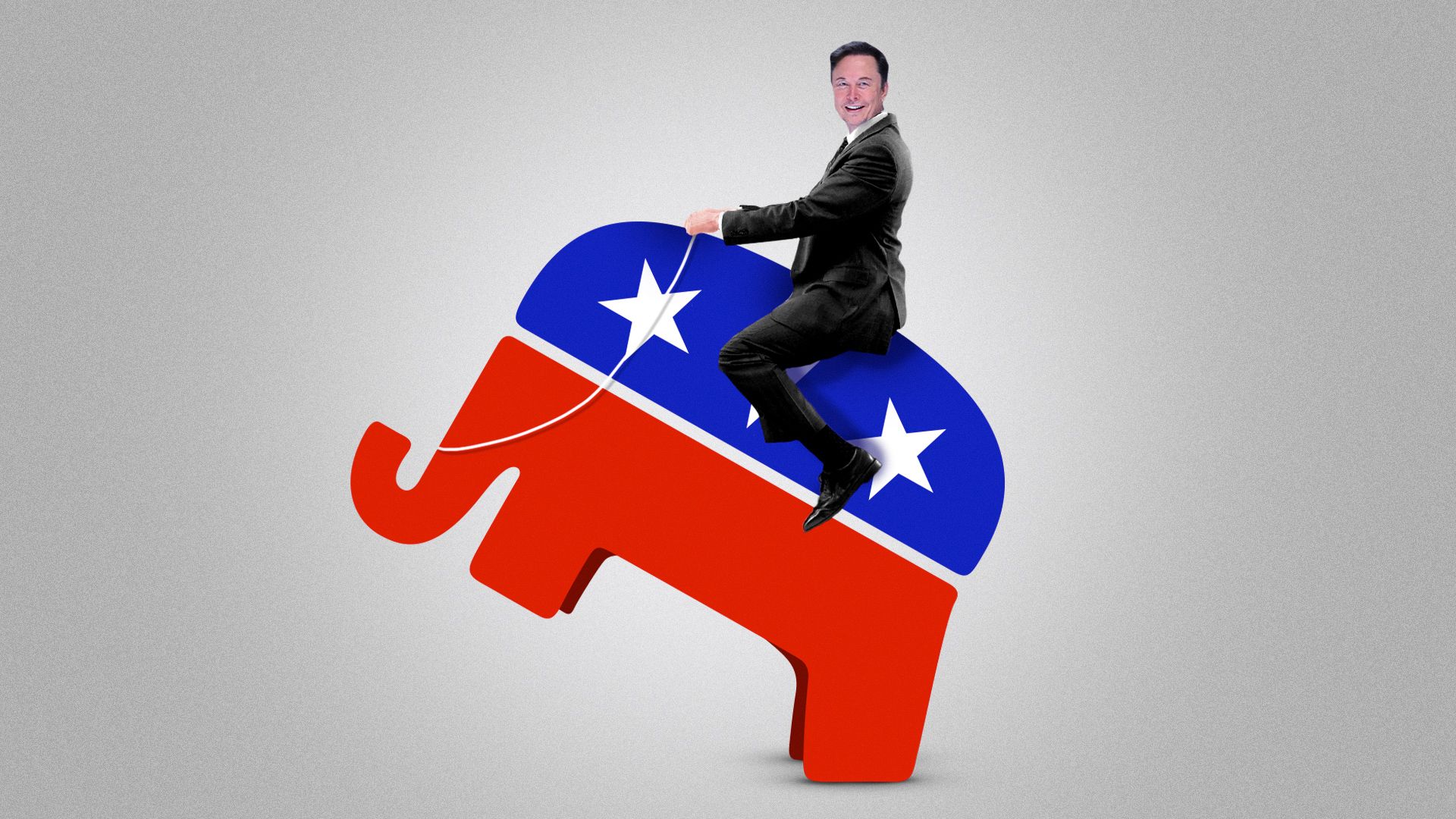
Elon Musk,by far the biggest known midterm donor, is single-handedly keeping the Republican Party afloat in some of its most vital races.
Musk's team reached out to Republicans in late August to discuss a train wreck they all saw coming: Unless the GOP poured more money into Texas immediately, the state's Senate race could be lost in a matter of weeks.
Why it matters: That chat set in motion a massive rescue operation for Republican Ken Paxton funded substantially by Musk, who gave $158 million to the GOP in September alone.
The Federal Trade Commission on Wednesday sent civil subpoenas to AI giants seeking documents about safety incidents that have spiraled into an industry crisis.
The FTC sought documents from Anthropic and OpenAI in a probe focused on potential consumer protection violations, a person familiar told Axios.