Axios AI+

August 26, 2026


Mady here, in the beginning phases of listening through miss Dolly Parton's entire discography. Rest in peace to an absolute queen.
👀 Situational awareness: Meta agreed to a multibillion-dollar settlement over child safety allegations. The settlement comes with sweeping new safety standards for teens, which include things like daily time limits, bans on overnight use and cosmetic filters, and more. Keep reading.
Today's AI+ is 1,131 words, a 4.5-minute read.
1 big thing: Bill Gates sounds the alarm on AI transition
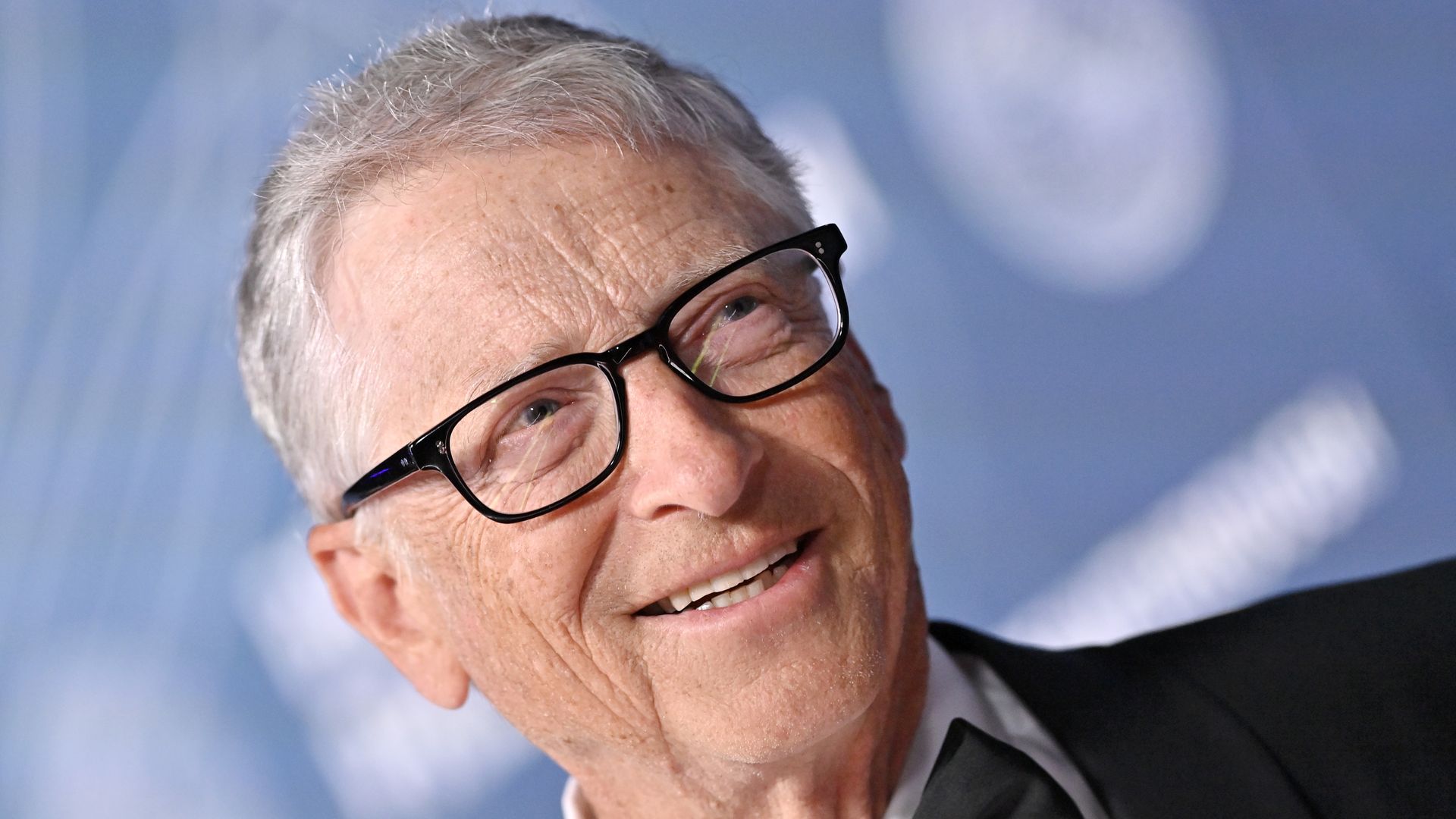
Bill Gates, long one of technology's leading optimists, is sounding a strikingly sober warning about artificial intelligence: The technology is advancing faster than governments and society are preparing for its consequences.
Why it matters: In a new memo out today, Gates argues AI will be more consequential than virtually any previous technological change — disrupting white- and blue-collar jobs, introducing unprecedented cyber and biological risks and potentially creating systems humans struggle to control.
In the essay, Gates argues that "AI will either be the greatest equalizer ever invented, or the worst source of injustice." Which course it takes depends on human actions being taken (or not) right now, he says.
- Even under the best circumstances, Gates says, the transition will be among the most turbulent periods in human history, and there is currently no coordinated plan for navigating it.
Between the lines: "The good stuff is moving a bit slowly, and ... other than robots, I'd say the bad stuff is imminent," Gates told Axios during an interview at his Seattle-area office.
- "On the current course and speed, there's a very high chance of a net negative outcome," he said.
- Gates criticized both U.S. political parties. "I'd say neither party is very knowledgeable or being thoughtful about this," he said.
Zoom in: Gates argues the traditional analogy to earlier technological revolutions breaks down because those transitions occurred over generations and ultimately produced new work requiring human cognition.
- AI itself can substitute for that cognition. His essay predicts disruption across law, customer service, medicine, software and manufacturing and says that without intervention there will be "far fewer" jobs than there are today.
- And things that were once thought of as years-off concerns are showing up now. Risks involving cybersecurity, biology, human relationships and AI control are "all like flashing either yellow or red."
Zoom out: Gates is calling for new national institutions capable of coordinating AI policy across areas including national security, employment, education, taxation and health — alongside an international organization with elements of nuclear inspections and international aviation regulation.
- He also wants governments to consider two unconventional economic responses: reserving some jobs for humans and taxing AI usage and robots, an idea he has floated for nearly a decade.
Reality check: Gates acknowledges that the geopolitical environment makes coordinated action exceptionally difficult.
- "If someone had a credible plan for slowing down AI advances globally, I would likely support it," he writes in the memo. "However, I don't think that's going to happen."
2. Gates: Some jobs could be off-limits to AI

Bill Gates says governments may eventually need to do something that runs counter to centuries of technological progress: deliberately stop machines from replacing people in some jobs.
Why it matters: Gates expects AI to eventually outperform humans at such a wide range of work that simply retraining displaced employees won't be enough.
- In his new essay on the impact of AI, Gates proposes the notion of "Human Reserved" jobs: occupations or tasks that society chooses to leave to people even when AI or robots could perform them.
- Gates says the idea is loosely analogous to nature reserves where societies could develop certain lands but choose not to because doing so would destroy something worth preserving.
Zoom in: In an interview with Axios, Gates floated child care and jury service as among the types of things humans are clearly better suited for, but said there should be room for humans even in areas where AI also has a role to play.
- In education and health care, Gates said, "you wouldn't want to completely ban" AI. Instead, a profession might be protected while workers use AI to improve their output.
Between the lines: In the essay, Gates also recommends taxing AI tokens and robots to lessen the economic incentives that companies currently have to automate human work.
- "The tax system nudges you toward replacing people with machines," he writes.
3. Gates confronts the Epstein questions
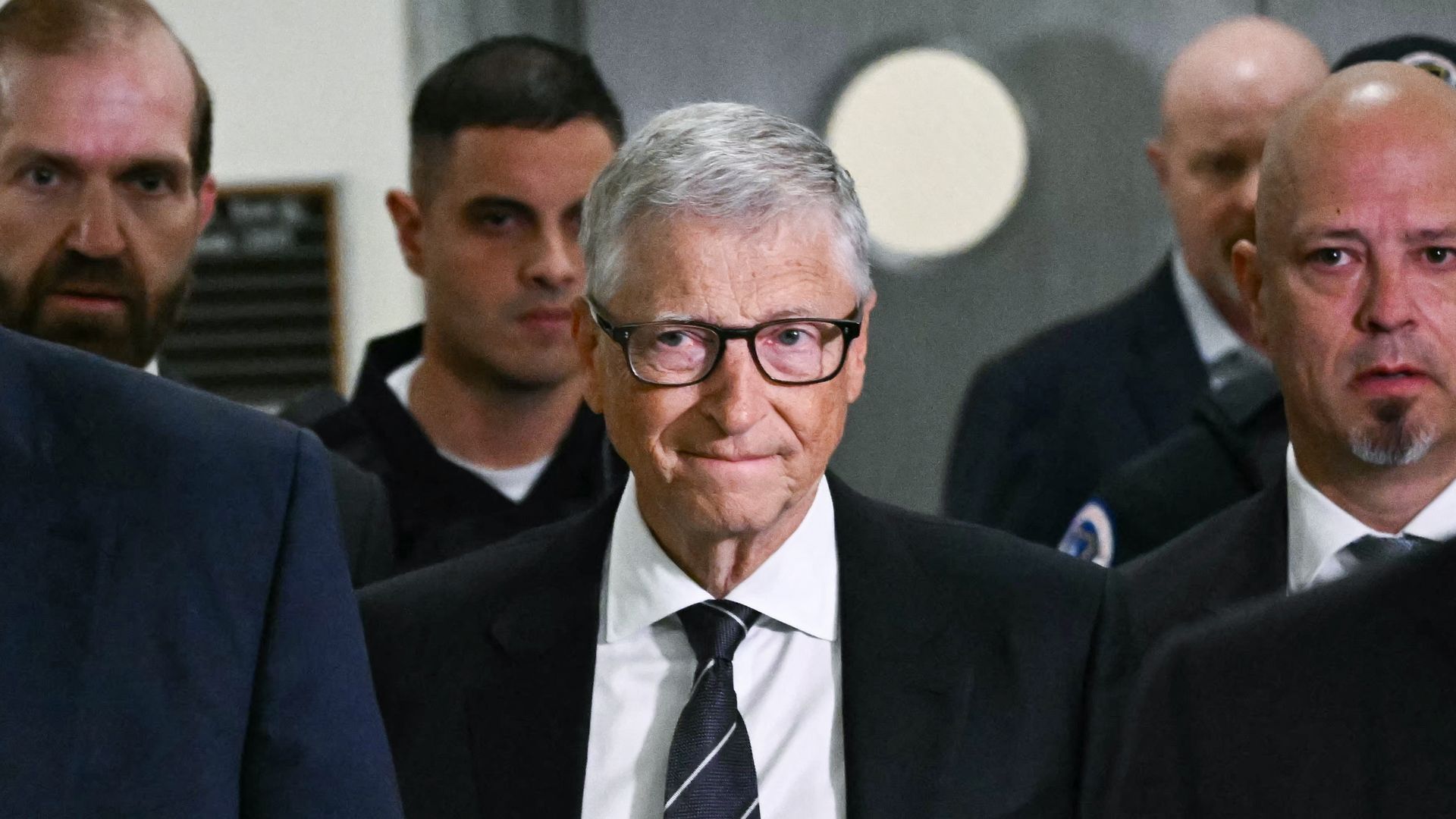
Bill Gates tells Axios his association with Jeffrey Epstein was a "huge mistake" but hopes it won't prevent him from influencing debates over artificial intelligence and global health.
Why it matters: Gates is launching one of his strongest public interventions yet on the societal risks posed by AI at a moment when renewed scrutiny of his past association with Epstein threatens to overshadow his message.
The big picture: Asked by Axios whether the controversy could cause people to dismiss his arguments or reduce his credibility, Gates compared the moment to other periods when his personal or professional troubles overwhelmed the issues he wanted to discuss.
- "When I was in the antitrust trial, my promotion of PCs was somewhat reduced," Gates said. "As I went through my divorce, my discussion of African health was ... somewhat reduced."
Then he turned directly to Epstein.
- "What I did do, in some ways, was very limited, and it was motivated by my desire to raise money," Gates said. "But ... it was a huge mistake."
4. Exclusive: Google targets AI sticker shock
Google is launching new tools to help businesses control their AI bills, as the tech giant sees an opening to compete on one of the biggest obstacles to widespread corporate AI adoption: cost.
The big picture: Google sees a second AI market opening up around offering cheaper and more governable access to AI, while insisting it's still competing on frontier model offerings.
Driving the news: Google Cloud is adding a pay-as-you-go option to Gemini Enterprise alongside its existing per-seat subscriptions, so companies can use the product without committing to fixed spend, the company shared exclusively with Axios.
- Customers can set monthly project spending limits that temporarily stop an agent's API calls once the budget is exhausted, and there's no spending minimum.
5. Training data
- It's getting easier to hack critical infrastructure. (Axios)
- Bosses want agents to have more access to your Slack discourse. (WSJ)
6. + This
Mady again. We have to talk about AI-writing-gate, or legendary investor Stanley Druckenmiller admitting to using AI for his op-ed in the Wall Street Journal.
- There are two schools of thought: those who view AI-ified writing as heinous, and those who think this is the future and anyone who questions it is rubbing two sticks together after matches were invented.
- The life lesson I hold closest to my heart is that the truth is always in the middle, but that won't stop people from fighting passionately about it on X.
Thanks to Megan Morrone for editing this newsletter and Matt Piper for copy editing.
Sign up for Axios AI+
