Fox News turns 30 on Wednesday with a distinction few legacy TV networks can claim: Its ratings lead over rivals has never been wider.
Why it matters: Fox News president and executive editor Jay Wallace, who has been with the network alongside CEO Suzanne Scott since launch, attributes the brand's durability to consistency in ownership and strategy.
Google and Constellation Energy announced a deal in which Constellation will invest $4.3 billion to upgrade 11 nuclear units in three states to help meet growing demand for electricity.
Why it matters: It's the latest deal from Big Tech meant to fund new nuclear generating capacity needed to support its enormous data-center buildout.
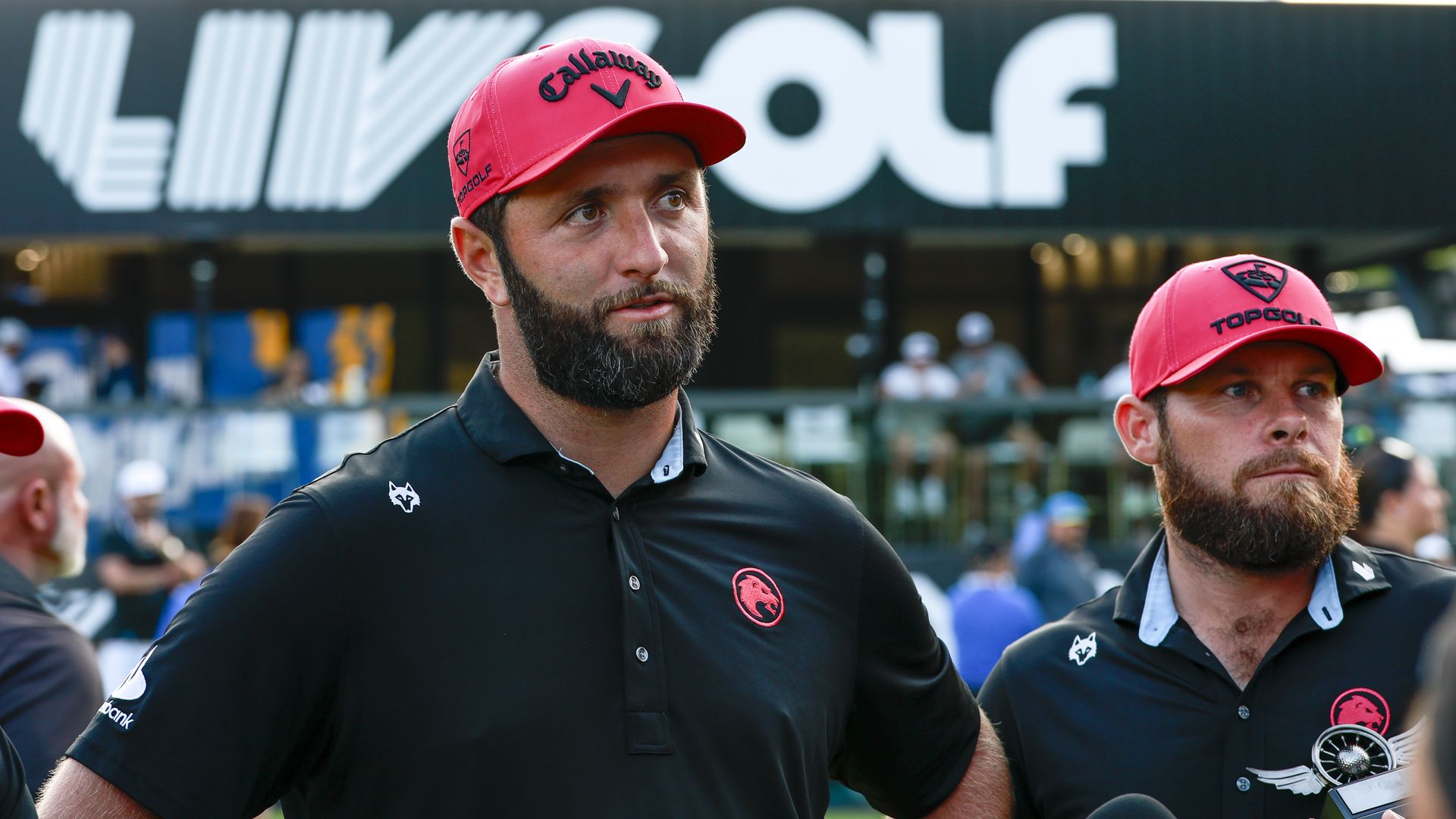
Why it matters: The Saudi-backed league filed for Chapter 11 bankruptcy protection in September after its strategy of paying big money to lure players away from the PGA Tour proved unsustainable.
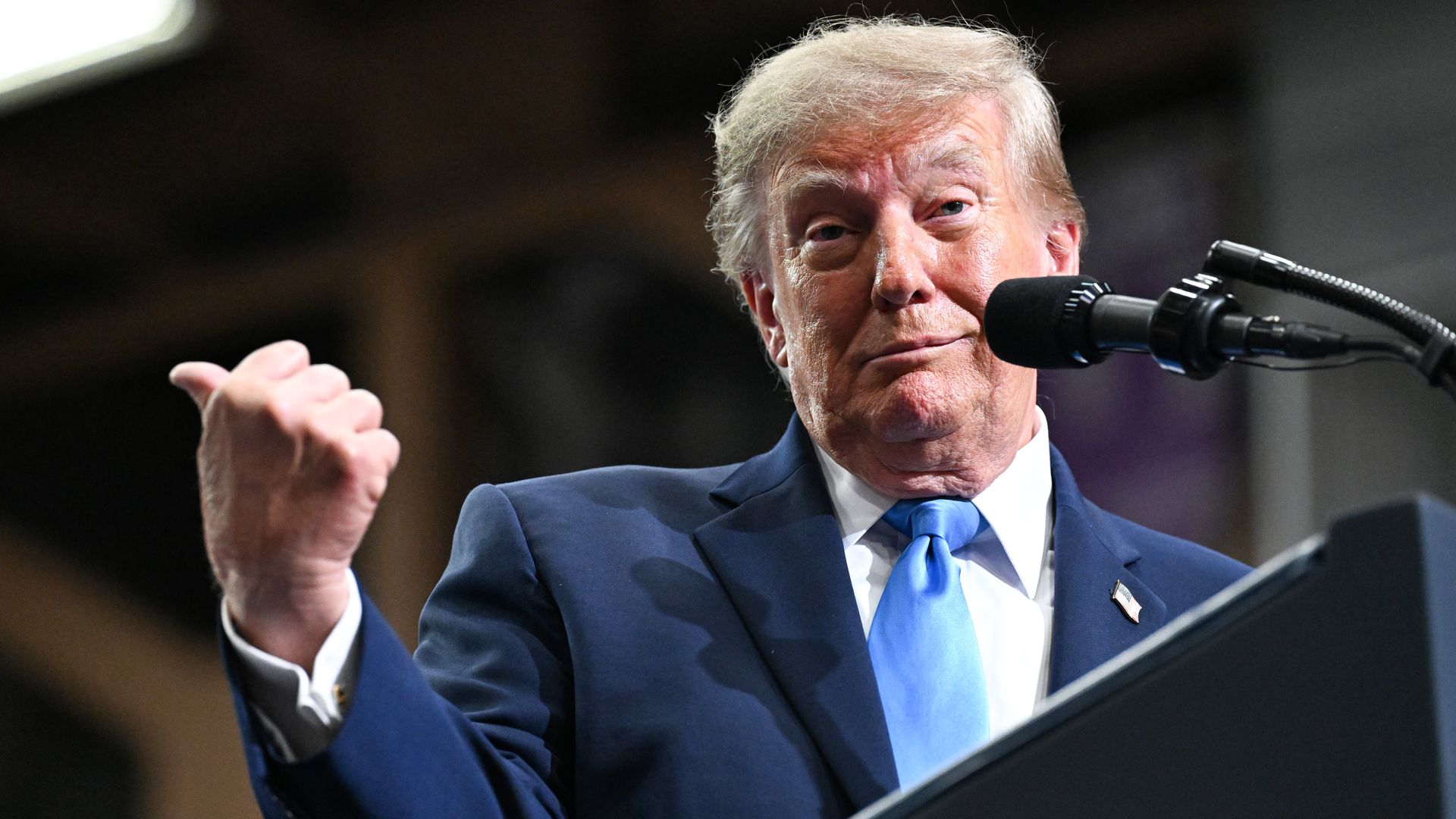
President Trump's super PAC will not reimburse the government for taxpayer money spent on campaign-style ads promoting the administration.
Why it matters: Taxpayers have footed a multimillion-dollar bill for the advertisements, which some critics of the president have called "government propaganda."
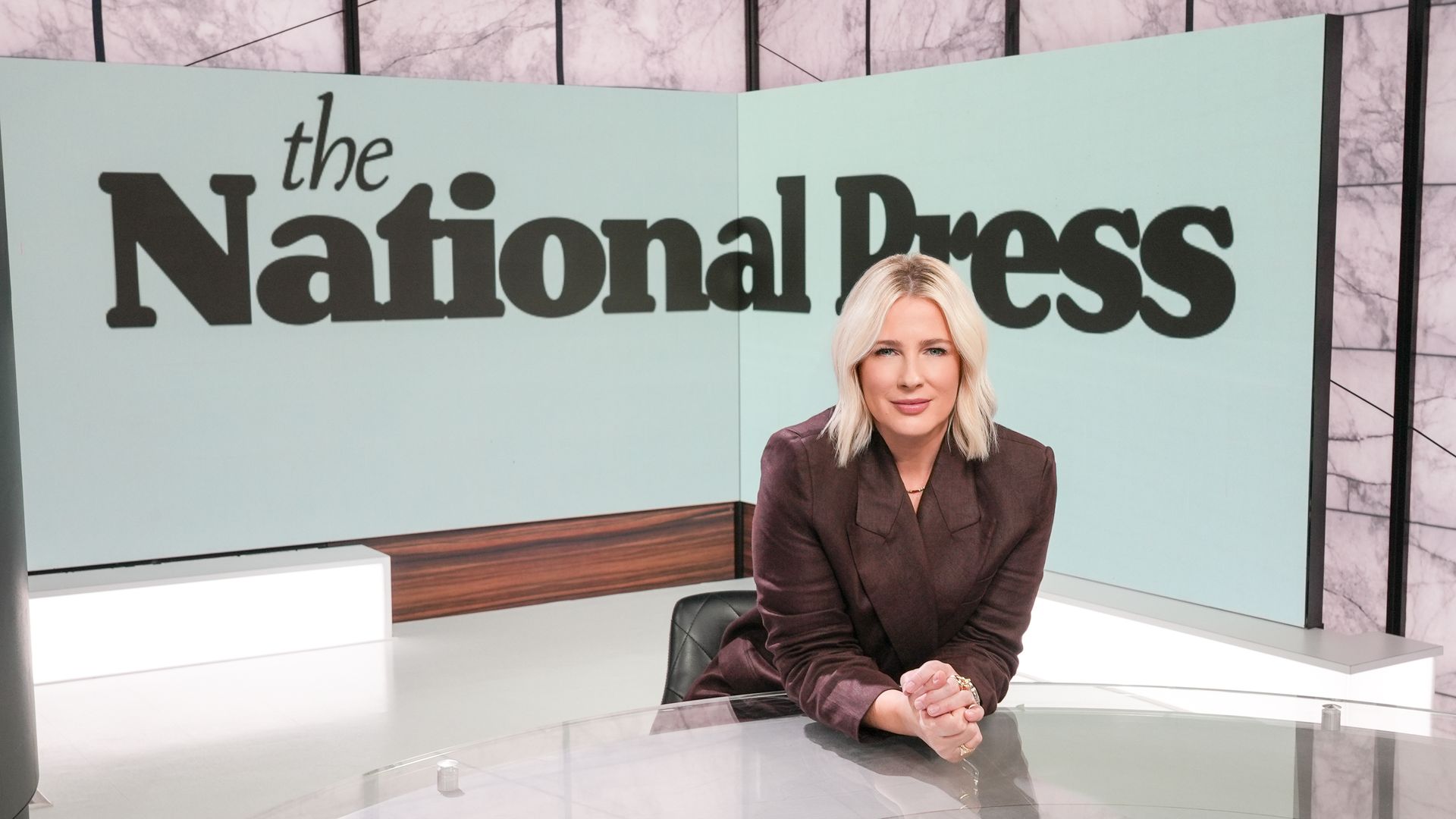
Sinclair, one of the nation's largest local broadcast groups, is launching a subscription-focused, national news brand on Substack called The National Press, executives told Axios.
Why it matters: It's a huge bet for the family-controlled local news giant as it looks to build trust and loyalty among users beyond the TV screen.
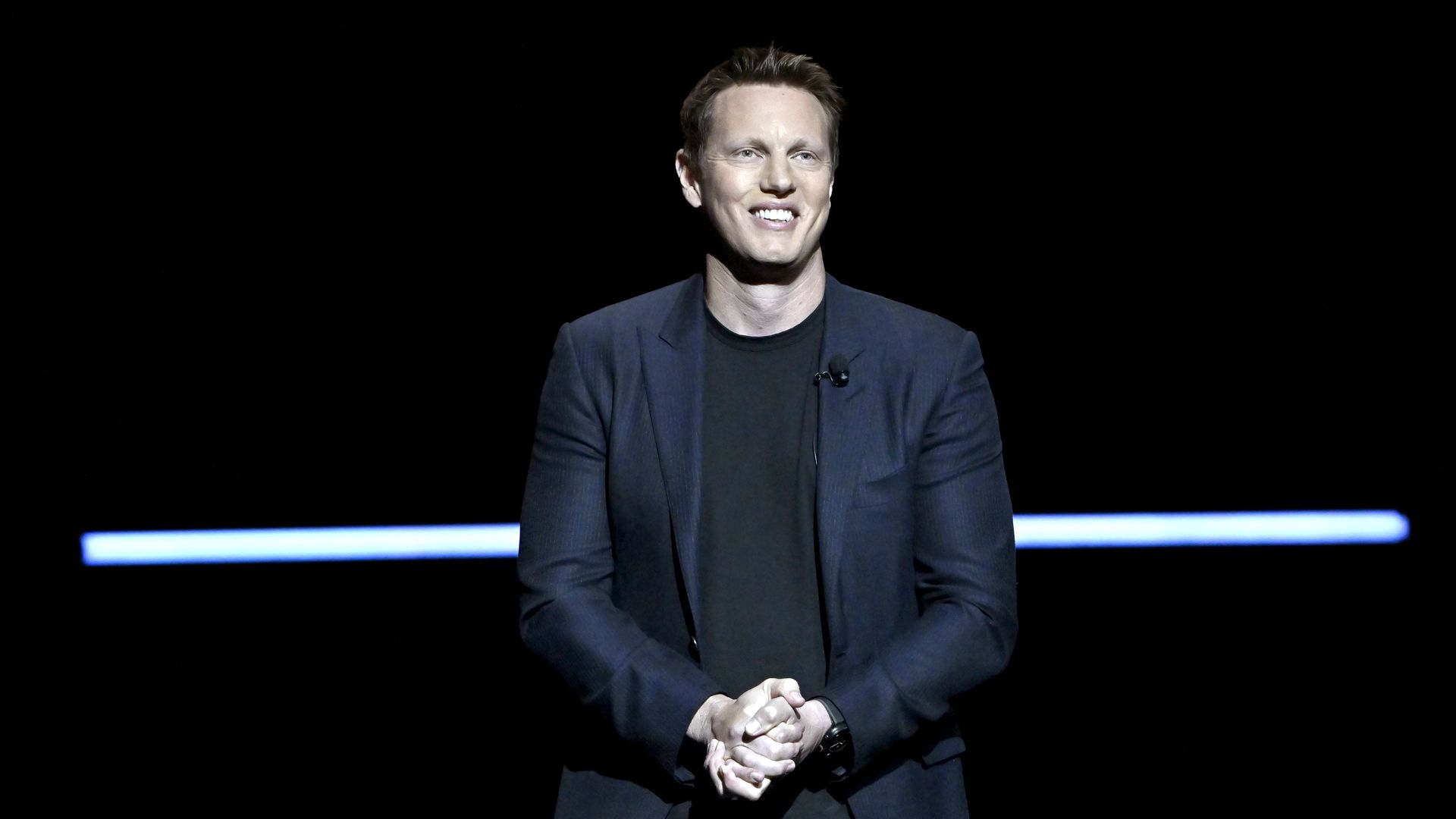
Paramount Skydance on Tuesday closed its deal to acquire Warner Bros. Discovery, ending a dramatic, yearlong process that rattled Hollywood, Wall Street and Washington.
Why it matters: The deal creates one of the largest entertainment behemoths in the world and makes David Ellison — a lesser-known figure outside of Hollywood — one of the most powerful people in culture and business.
A slew of new products announced around Advertising Week show how quickly the ad economy is shifting from selling attention to monetizing what consumers want next.
Why it matters: Budgets are rapidly moving to new platforms, putting pressure on traditional publishers.
Private equity and venture capital aren't leaning into a Blue Wave, according to an Axios analysis of campaign donations made by political action committees affiliated with the American Investment Council and National Venture Capital Association.
Why it matters: Political alignment could impact issues like expanded retail investor access to alt investments, crypto market structure, qualified investment definitions, and AI regulation.
A new crop of powerful, Western open-weight AI systems are mounting a comeback, with fresh models from Reflection and Mistral narrowing China's recent lead.
Why it matters: These models and others will give businesses and governments alternatives to the closed ecosystems of OpenAI and Anthropic, as well as to Chinese options they may have eschewed for security reasons.
President Trump's new "super intelligence" task force will work to reconcile competing views on AI regulation without rushing into rules that could quickly become outdated, co-chair Scott Kupor tells Axios.
Why it matters: The approach reflects the administration's effort to balance its push to win the AI race with pressure to address the technology's risks, said Kupor, a Silicon Valley veteran and director of the federal government's Office of Personnel Management.
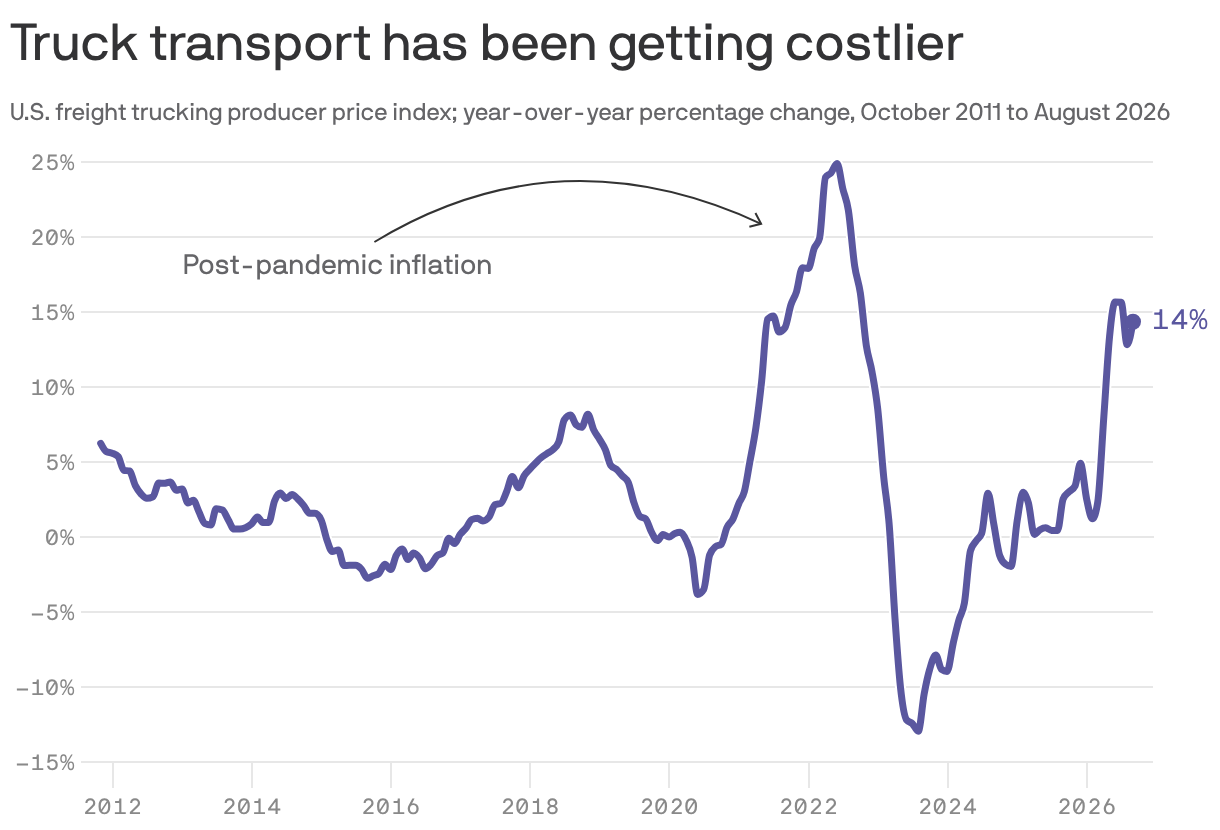
Data: FactSet. U.S. Bureau of Labor Statistics; Chart: Axios/Matt Phillips
It's not just diesel. The Trump administration's regulatory clampdown on truckers is adding to surging transportation costs.
Why it matters: Trucking is a major way that price shocks get transmitted through the economy.
And limits on available drivers could amplify the impact of the spike in fuel costs, with diesel now averaging $6.32 a gallon — up over 70% from last year.
Global investors did not expect Flávio Bolsonaro to convincingly top the first round of Brazil's presidential election, but now their expectations are running high that Latin America's largest economy could soon be transformed.
Why it matters: Should the right-wing candidate win the run-off on Oct. 25, nearly all of South America would become aligned with the Trump administration on trade, national security and other issues.
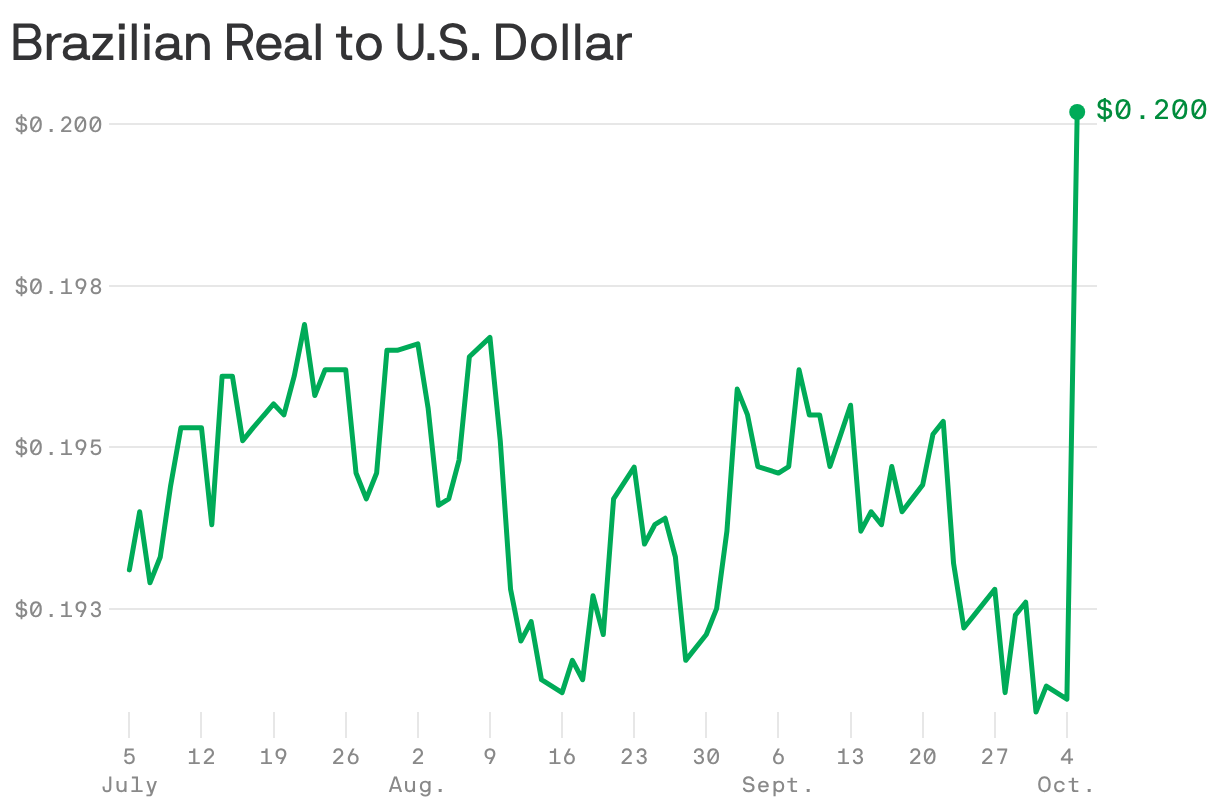
Driving the news: Brazilian markets surged Monday after Bolsonaro captured 47% of the vote Sunday.
The Brazilian currency, the real, surged in value.
After soaring more than 9%, the benchmark Bovespa stock index closed up 7.7%, its best daily gain since March 2020.
Zoom in: Bolsonaro, the eldest son of the former president known as the "Trump of the tropics," has pledged to cut public spending, which has helped push borrowing costs in Brazil higher.
While it's unclear how fiscally prudent Bolsonaro might be, "markets are likely to give him the benefit of the doubt," said Thierry Larose, portfolio manager at Vontobel, per Reuters.
It's not just Bolsonaro's surprising show of strength: Other right-wing candidates made gains as well.
And no presidential candidate who came in second in the first round has gone on to win the run-off since 1989, says the Economist Intelligence Unit.
What they're saying: "An increased likelihood of a change in government, together with the composition of the new congress, raises the probability of a credible fiscal anchor," UBS analysts wrote in a note Monday.
President Trump has long nicknamed his opponents, and now, as November approaches, he's even trying to dictate the vocabulary around key issues.
The big picture: Trump's latest effort to reshape political language follows his longtime political strategy: Define the terms of the debate, and you gain power over the debate itself.
But as polling on those issues continues to haunt the president's party, Trump's new vocabulary may not be enough to change voters' minds.
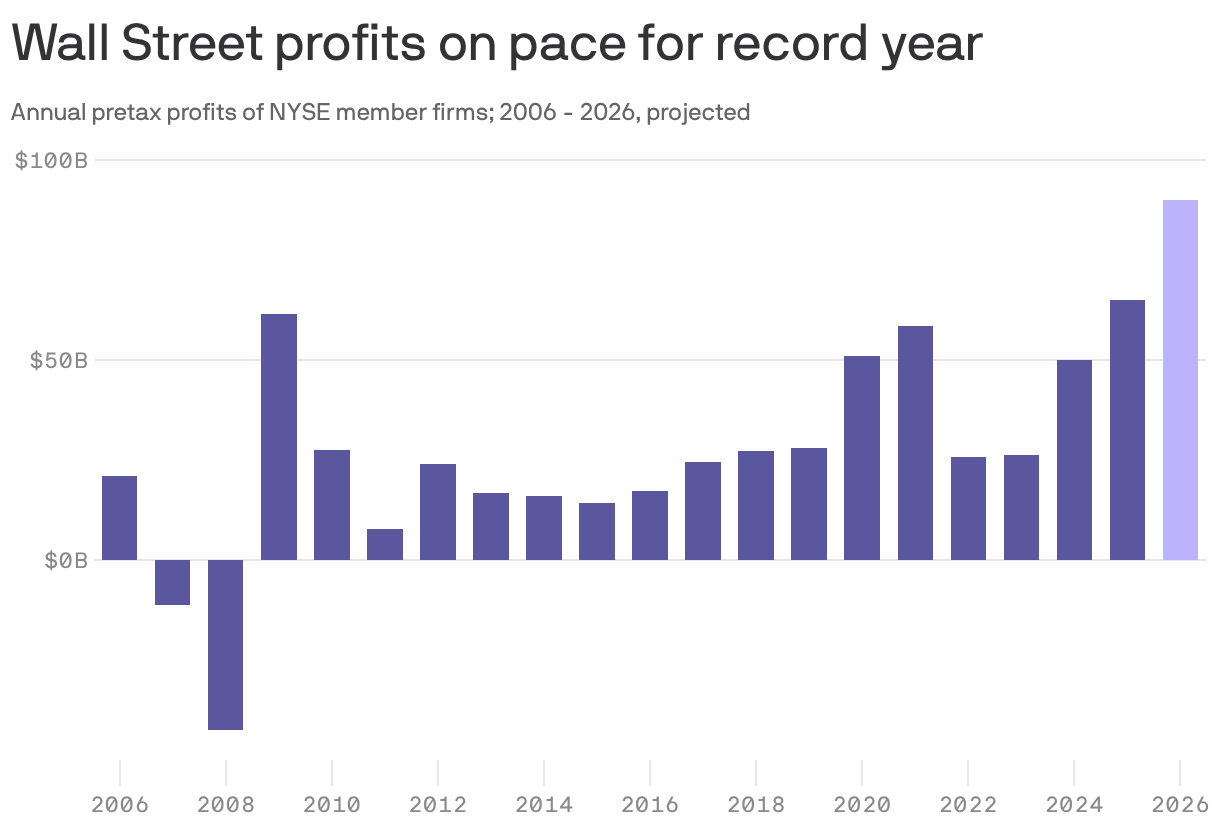
Data: NYSE/Intercontinental Exchange via the New York State Comptroller; Chart Emily Peck/Axios; Note: 2026 projected by the comptroller if first-half growth continues at current pace. First-half 2026 profits were $45.9 billion. Profits are for broker-dealer operations of NYSE member firms and are not adjusted for inflation.
Wall Street profits are blowing past expectations this year, the New York State Comptroller's office finds in a new report.
Why it matters: Profits are on track for an all-time record, a sign of how the AI boom isfueling dealmaking and how volatile markets are helping trading.
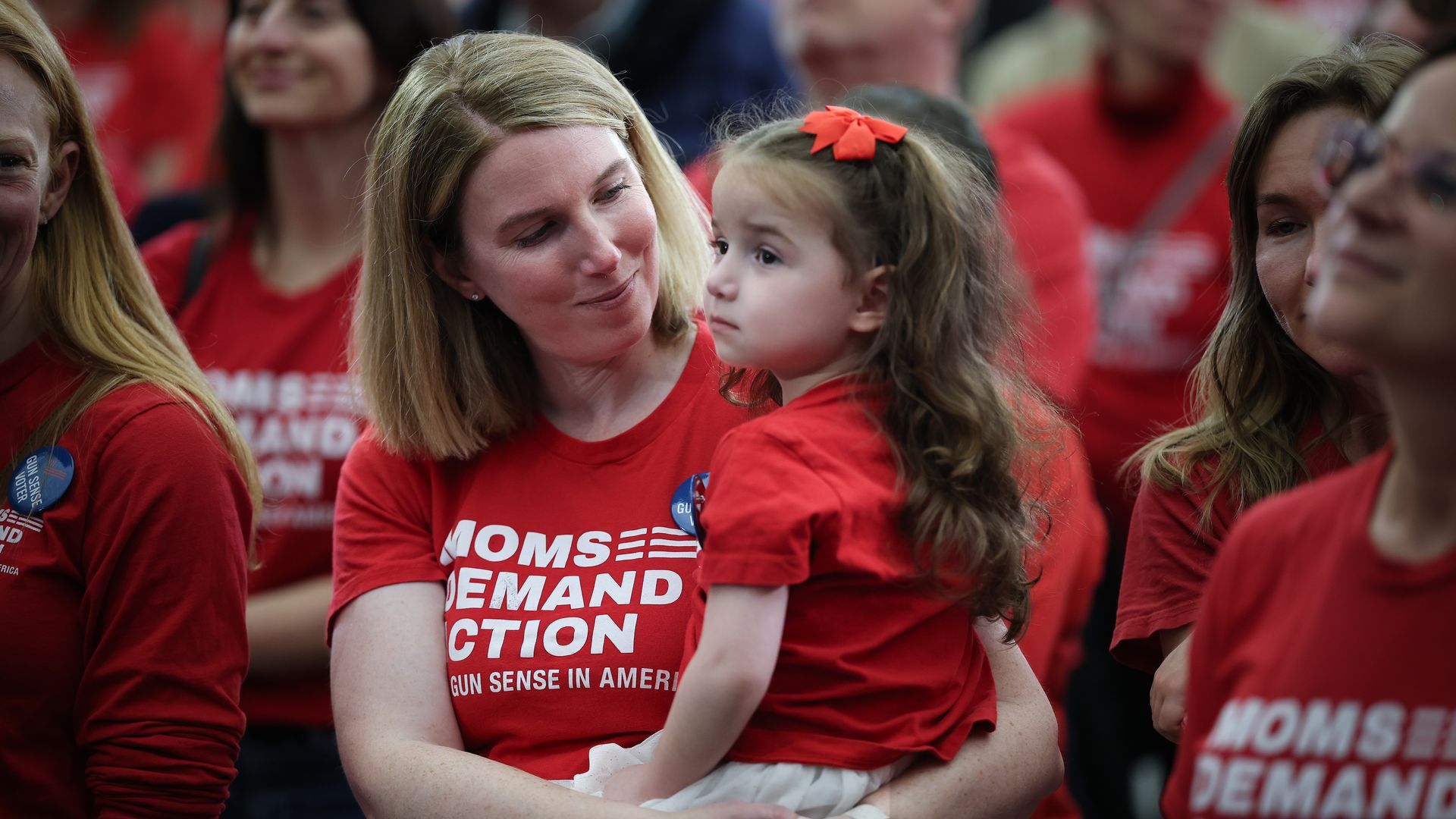
Everytown for Gun Safety, a group that advocates for stricter gun laws, is teaming up with House Democrats on a $10 million ad campaign to boost former gun safety advocates now running for Congress, Axios has learned.
Why it matters: That's a significant sum at a moment when Democrats are raising alarm bells about being outgunned financially in the midterm elections.
President Trump's newly minted "super intelligence" task force faces a daunting mandate: Reconcile fiercely divided Cabinet factions to create a tech policy that keeps pace with the blistering AI race.
Why it matters: The task force brings the administration's scattered AI work under one roof, but it also makes it likely that any new rules will be forged in the crossfire of competing internal camps.
In an interview, task force co-chair Scott Kupor rejected the assertion that the administration is asleep at the wheel on AI policy, arguing that rigid, static legislation would risk becoming instantly obsolete.
The 2026 midterms are shaping up to be the most intensely observed, recorded, dissected and challenged election in American history.
Why it matters: A small army of partisan and nonpartisan observers will show up. So will a surge of Justice Department monitors, organizers looking for signs of ICE and citizen journalists broadcasting their search for illegal voting in real time.