Paramount closes historic $110B deal for Warner Bros. Discovery to create Skydance

Add Axios as your preferred source to
see more of our stories on Google.
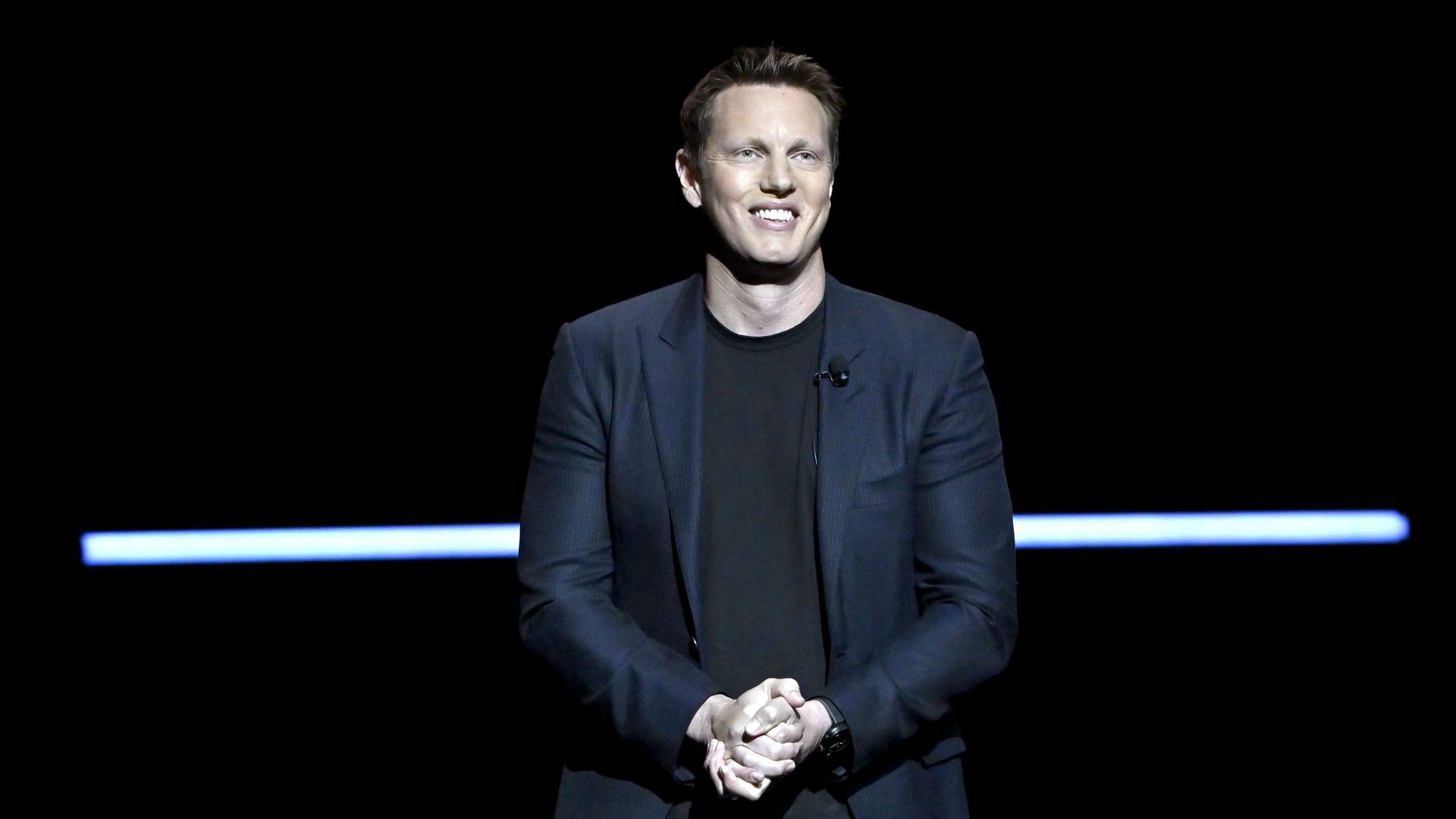
David Ellison. Photo: David Becker/Getty Images for CinemaCon
Paramount Skydance on Tuesday closed its deal to acquire Warner Bros. Discovery, ending a dramatic, yearlong process that rattled Hollywood, Wall Street and Washington.
Why it matters: The deal creates one of the largest entertainment behemoths in the world and makes David Ellison — a lesser-known figure outside of Hollywood — one of the most powerful people in culture and business.
Zoom in: The combined entity, rebranded Skydance, will house three major movie studios (Paramount Pictures, Warner Bros. Pictures and Skydance), two global streamers (Paramount+ and HBO Max) and two major news networks (CNN and CBS).
- It will also create a cable juggernaut, marrying Paramount's Viacom channels, such as MTV, VH1 and Comedy Central, with WBD's cable networks, including TBS, TNT, Food Network and Discovery.
- The combination of those assets on the back end won't all be felt by consumers, but product changes are coming. The combined company, for example, plans to merge HBO Max and Paramount + into one giant unified streamer.
The big picture: The transaction forced the entertainment industry and regulators around the world to confront how much consolidation is necessary for traditional media companies to compete with Big Tech.
- While some countries took a closer look at the deal than others, every government that required regulatory approval for the merger ultimately blessed the transaction.
- Although Netflix did meaningfully engage in a bidding war for WBD, it eventually abandoned its interest when the asset became too pricey.
Reality check: Merger fights don't typically enter the zeitgeist for everyday Americans, but this one played into a broader societal debate around the concentration of power among the elite and the independence of federal regulators.
- Ellison's father, Oracle co-founder and Trump ally Larry Ellison, agreed to backstop billions of dollars of equity financing to seal the deal.
- Federal regulators cleared billions of dollars in equity investments from Middle Eastern sovereign wealth funds to support the deal. The Federal Communications Commission, led by Trump ally Brendan Carr, granted Paramount's request to exceed foreign ownership limits for broadcasters.
Between the lines: The political tension surrounding the deal was on full display when a dozen Democratic state attorneys general sued to block the transaction as it approached the finish line this summer.
- The state AGs said their case was rooted in traditional antitrust law around film and cable dominance, not politics.
- But after a settlement was announced clearing the deal, at least one participating state attorney general admitted that they wanted the agreement to force a divestiture of CBS and CNN.
State of play: To alleviate regulatory concerns about the enormous concentration of assets, Skydance made a slew of commitments in its settlement, including theatrical film release minimums and investments in domestic production jobs.
- But the creative industry is still on edge as it anticipates a potentially huge number of job cuts as a result of the merger.
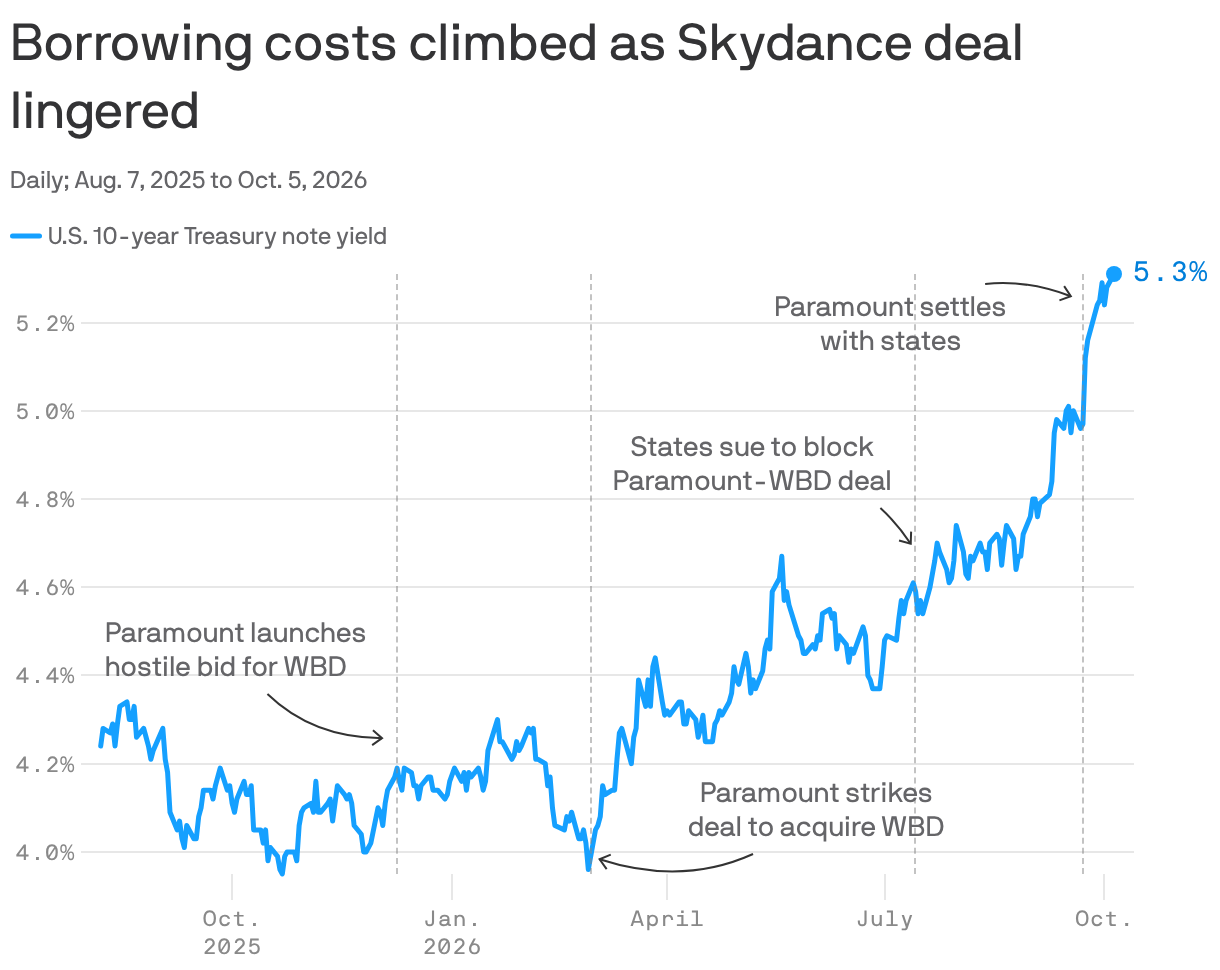
What to watch: The deal, which is one of the most highly levered transactions in American history, will test the market's appetite for megamergers financed by huge amounts of debt amid rising interest rates.
- To get the transaction over the finish line, Paramount raised $52 billion in new debt, per Bloomberg. Some of that debt is very expensive, carrying a yield of nearly 9%.
- In addition to the debt it raised, Skydance will carry WBD's existing liabilities, totaling $87.5 billion in debt, according to Fitch Ratings.
The bottom line: Ellison has proven himself to be one of the most savvy dealmakers in American history. His next test is whether he can build a sustainable business from a mountain of debt.
