Trump's AI co-chair defends flexible AI strategy

Add Axios as your preferred source to
see more of our stories on Google.
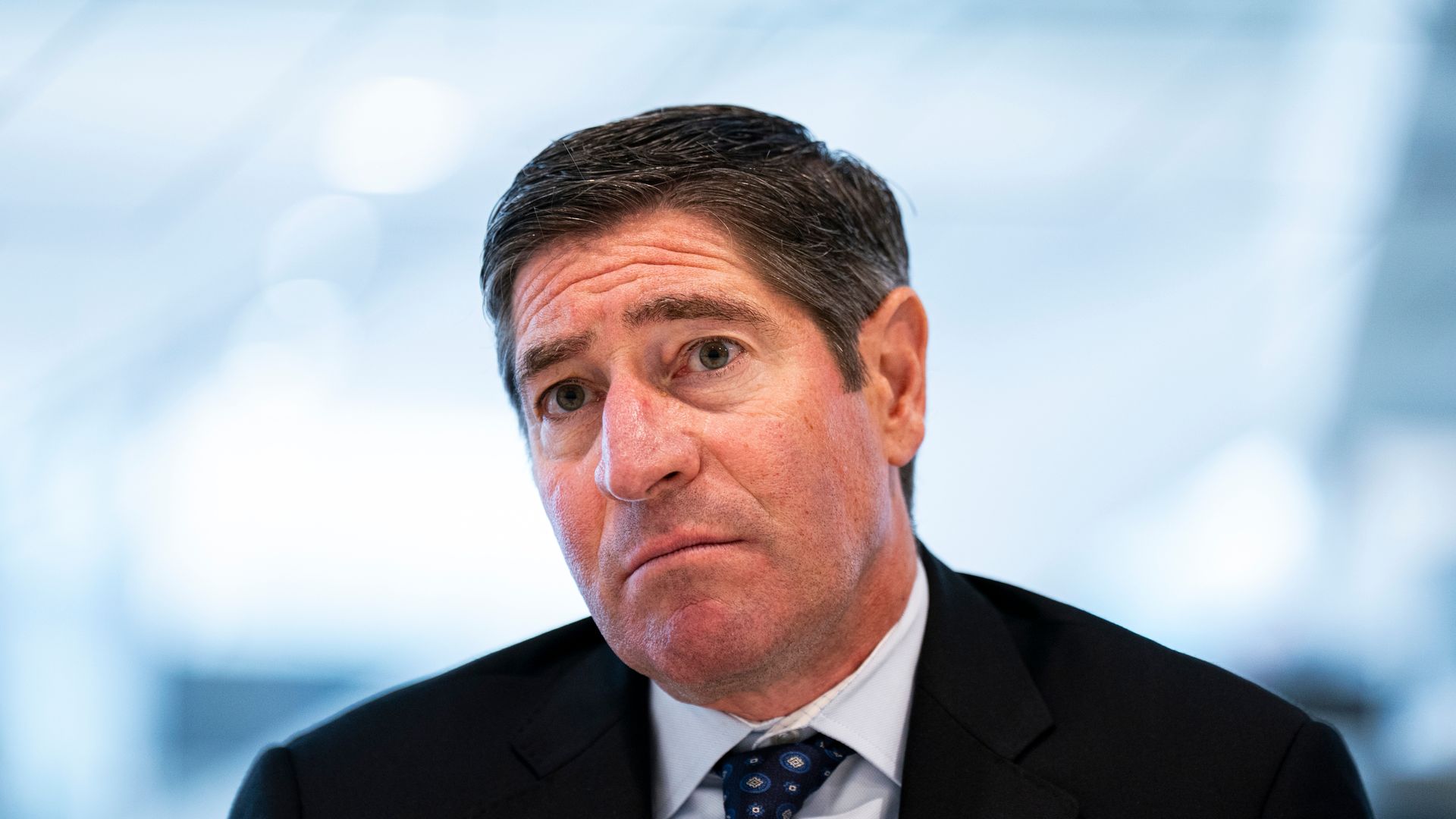
Scott Kupor, co-chair of President Trump's "super intelligence" task force. Photo: Al Drago/Bloomberg via Getty Images
President Trump's new "super intelligence" task force will work to reconcile competing views on AI regulation without rushing into rules that could quickly become outdated, co-chair Scott Kupor tells Axios.
Why it matters: The approach reflects the administration's effort to balance its push to win the AI race with pressure to address the technology's risks, said Kupor, a Silicon Valley veteran and director of the federal government's Office of Personnel Management.
Axios spoke with Kupor on Monday morning, following his appointment to the task force, which he will co-chair with Federal Trade Commission Chair Andrew Ferguson and Pentagon undersecretary Emil Michael, while National Intelligence Director Jay Clayton leads as AI czar.
- In addition to the AI czar position, Trump last month announced what he called an "AI Force" on social media, sparking a flurry of questions about what AI regulation coming out of Washington will look like.
This interview has been edited and condensed for clarity.
Is it an open question whether or not there will be an AI Force?
Kupor: To my knowledge, yes. I think Jay's view, which I agree with, was "Let's make sure we actually take the time," because the last thing we want to do is go into a hole for two years and come up with some big policy which will be outdated.
There seem to be different perspectives within the administration, where some officials are more open to government intervention than others. How big of a difference is there, really, and where do you fit into the picture?
Kupor: Look, we live in D.C. There's nothing that's not political in this town. People have different views and that's totally fine. Our obligation is to demonstrate to the American people that this is good and also that we take the anxieties and the concerns seriously.
- At the end of the day, there is no daylight between the president and anyone else, which is: We need to win.
- The perspective I bring is what I have seen in every technology market, which is that things start out, and they have problems.
- The question is, what is the pace at which things are improving? And, if you look at it, most of these things are improving at incredibly fast rates.
At the White House AI lunch last week, industry players represented varying perspectives. How do you reconcile all of those?
Kupor: I don't have a magic answer to that, other than, we're gonna have to listen to everybody.
Government has been getting industry feedback on AI for a few years now. What's going to be different about this?
Kupor: None of us has an interest in producing some Ph.D. dissertation that becomes another working document.
- "Our goal is, how do we go back to the president and say this is the way we reconcile the two objectives [winning while being responsible].
How would you address the criticism that the administration is basically choosing not to regulate?
Kupor: I reject that concept. We have not come in and said: "There shall be a new piece of legislation." And so people think that's asleep at the switch.
- The worst thing for us to do would be to assume a static set of knowledge that allows us to put a regulatory schema in place that then has unintended consequences.
- I know lots of people pooh-poohed the document that CEOs signed. But when you actually have third-party independent auditors who do things, and they report to an independent committee of the board — that is a whole set of fiduciary duties and securities laws implications. You cannot, as a board, ignore that stuff any more than you can if you got a bad financial audit.
How is your goal of hiring 1,000 people from the tech sector by the end of this year going?
Kupor: We've got roughly 360 people in the program right now. I'm highly confident we'll get to 550 in the next month or two. Whether we get to 1,000 or not, "I don't know" is the honest answer.
What's next: Task force members and other government officials "who are relevant" will very likely have a kickoff meeting this week, Kupor said.
