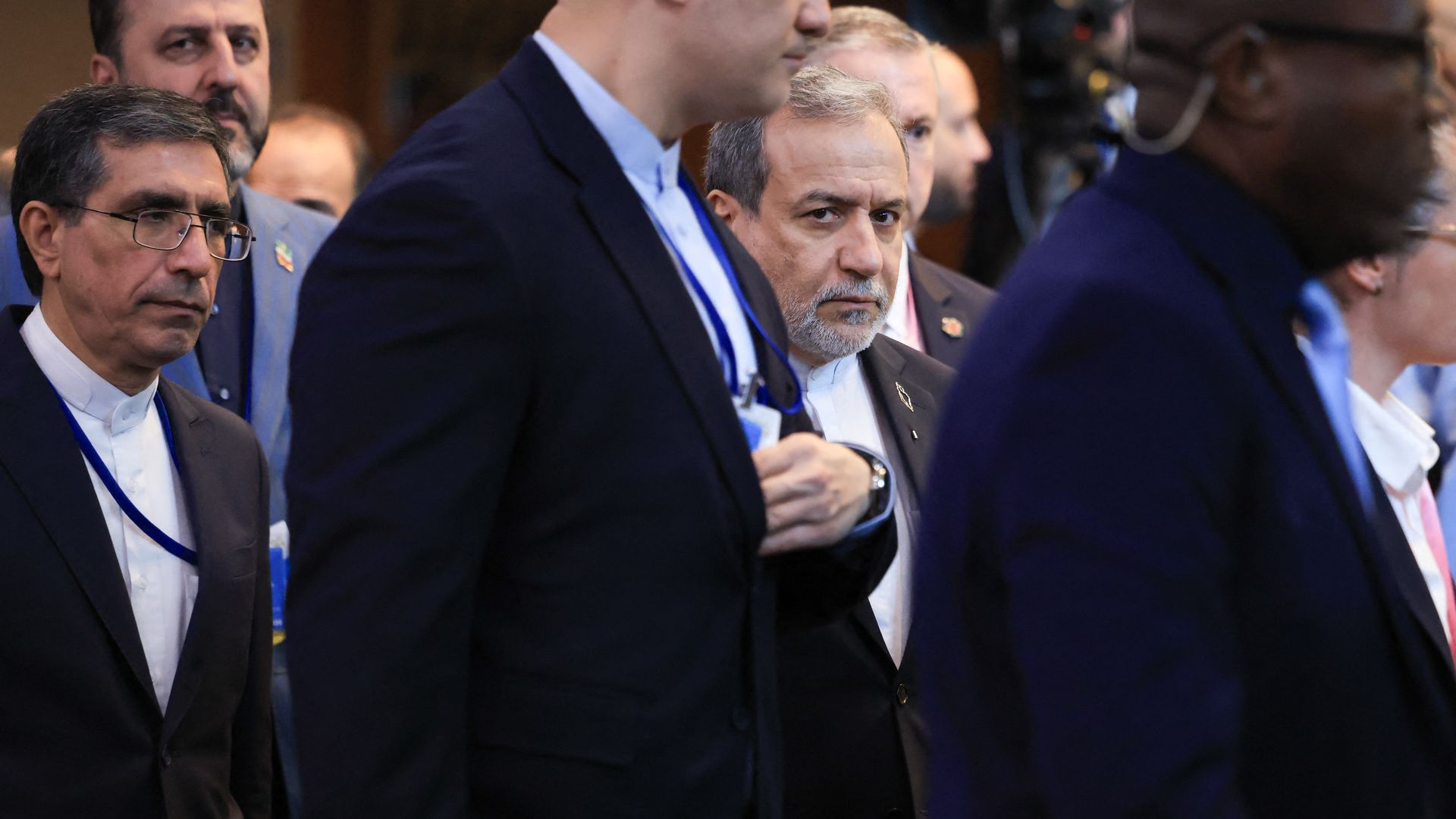
President Trump said U.S. officials met for three hours with the Iranian delegation to the United Nations General Assembly in New York on Tuesday.
Trump envoys Steve Witkoff and Jared Kushner attended the meeting from the U.S. side, and Iranian Foreign Minister Abbas Araghchi from the Iran side.
"Steve and Jared had a very productive meeting today with mediators of Iran," Trump said later, before meeting with Arab leaders. "I think there's a lot of momentum for them to make a deal. That's what we are hearing from everybody."
Iran state television said the meeting was requested by the U.S. and "driven by the need to convey Iran's conditions for reopening the Strait of Hormuz," which include lifting the naval blockade, releasing frozen Iranian assets and ending the war on all fronts.
The National Council on Problem Gambling issued a strongly worded warning Tuesday about the harms from prediction markets, taking a firmer stance on the industry following months of criticism for its initial handling.
Why it matters: Kalshi joined the nonprofit in May — the first prediction market to do so — setting off concerns among some problem gambling groups over NCPG's approach to the fast growing industry.
AI companies have competed on having the best and often most dangerous models for years. Now, they're pivoting to a new focus: cost.
Why it matters: The biggest risk to the AI boom is demand, and recent innovations to make models cheaper while maintaining powerful levels of intelligence have offered a bullish signal.
As the prices of top models from OpenAI, Anthropic and others come down, usage is increasing dramatically, a trend that points to the kind of demand that will be necessary to justify trillions of dollars in spending.
The Atlantic Council is launching a new organization to strategically elevate the importance of policy and statecraft involving sports on a global scale, Axios has learned.
Why it matters: Sports operate at the nexus of geopolitics, financial power, technology and media, creating space for an influential policy voice across key sectors.
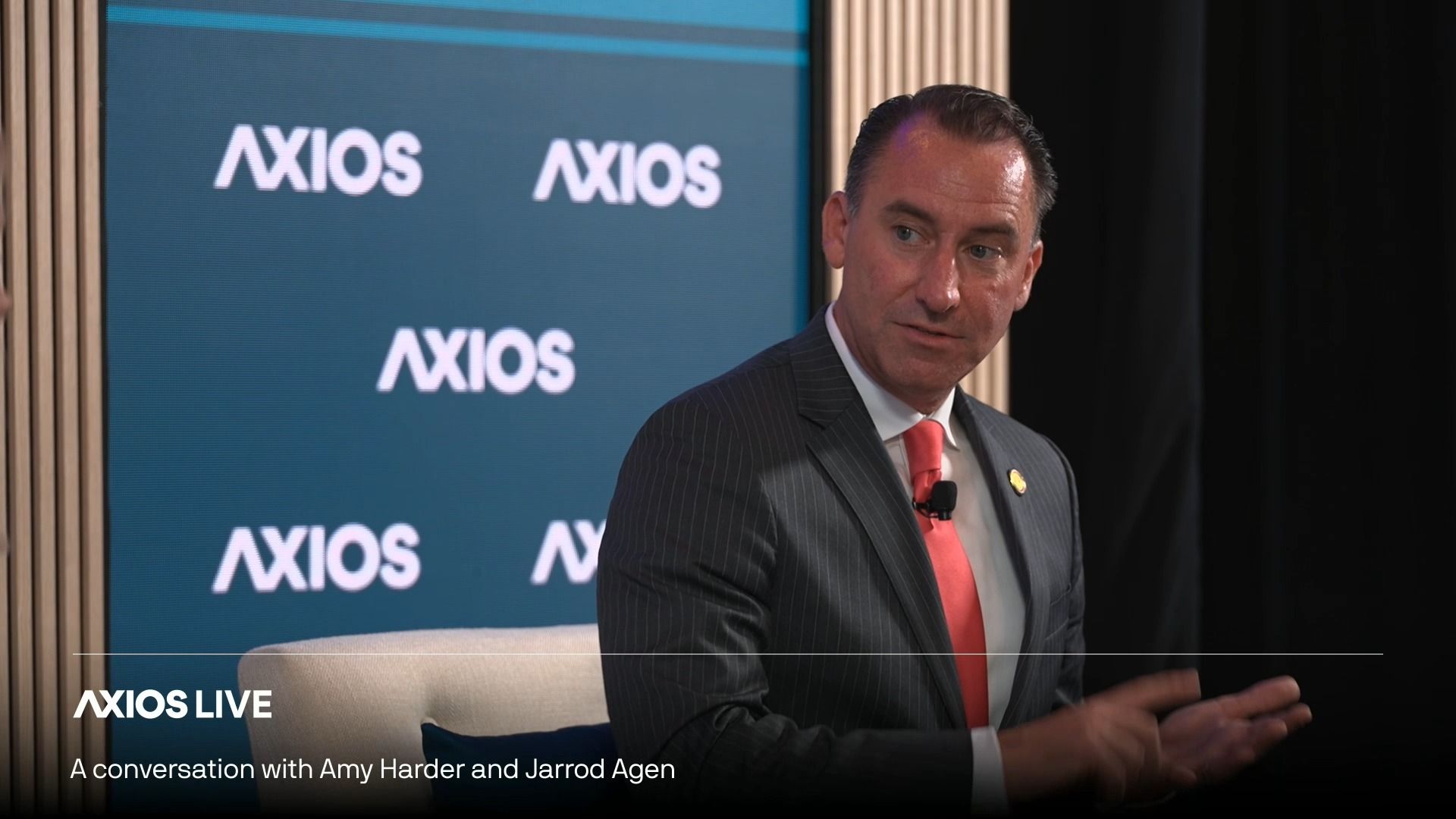
The affordability of gasoline remains "the top issue that the president looks at," Trump energy adviser Jarrod Agen said at an Axios House event Tuesday.
Why it matters: The Trump administration is championing energy savings from its deregulatory push as overseas conflicts, including the Iran war, rattle oil markets, driving up fuel costs and threatening an expensive winter for millions of households.
One of the world's biggest sellers of weight-loss drugs is zeroing in on new pharmaceuticals developed using AI, executives said.
Why it matters: Proponents of artificial intelligence have long held high hopes for AI drug discovery, but the industry has not yet delivered any major breakthroughs.
Ella Langley's "Choosin' Texas" reached 23 weeks atop the Billboard Hot 100, surpassing Mariah Carey's "All I Want for Christmas Is You" for the longest tenure at No. 1.
Why it matters: The country song from the 27-year-old Alabaman is a triumph of the digital era: its popularity grew organically across mediums, not dependent on any one ecosystem.
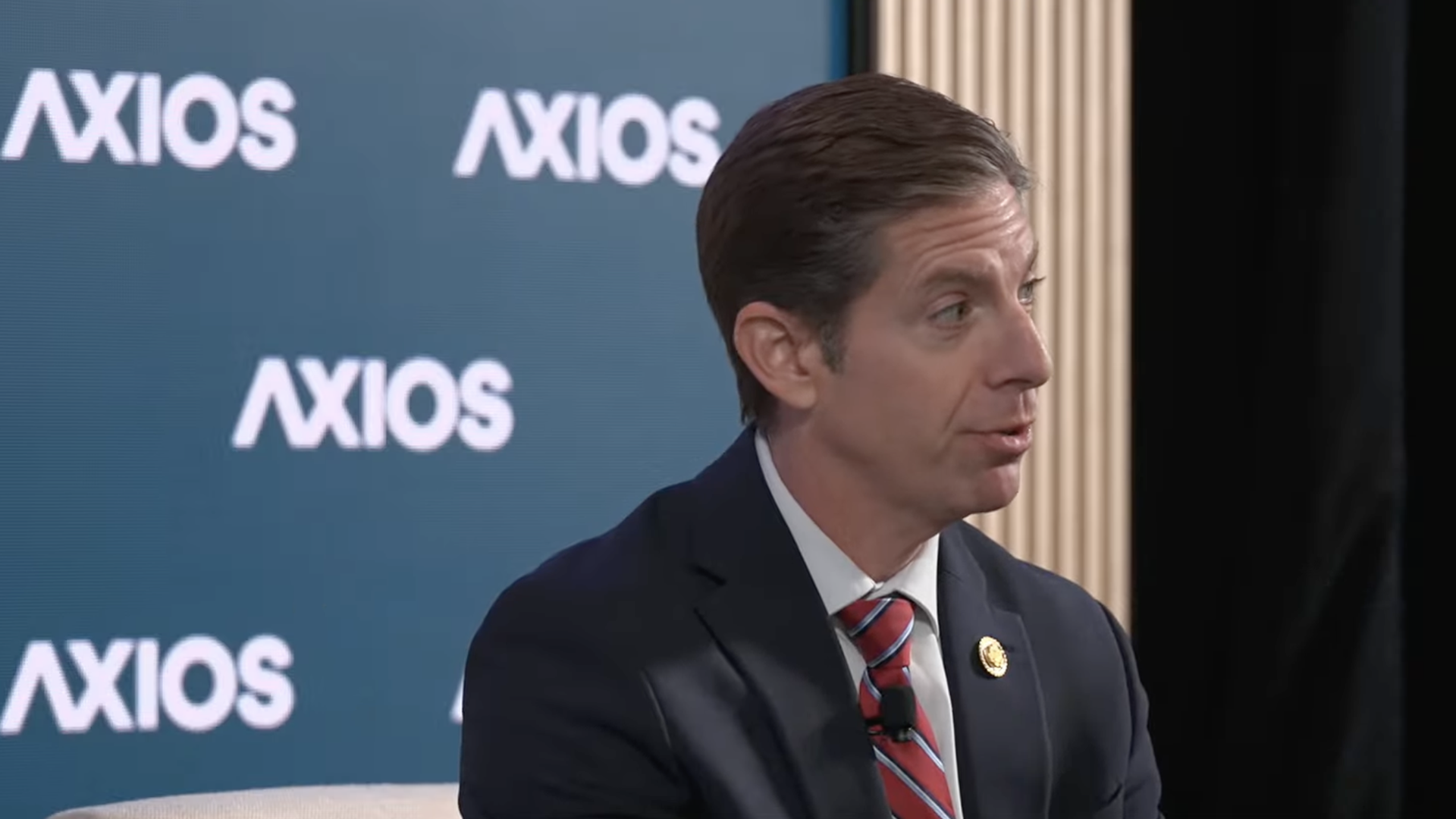
Rep. Mike Levin (D-Calif.) said that, unlike many aging members of Congress, he uses AI "all the time," speaking at Axios House at Climate Week & UN General Assembly.
Why it matters: Levin said Congress must pass "guardrails" around AI but declined to support a full block on a data center development.
Asked about a poll showing broad pessimism about the Iran war, President Trump told CNN's Kaitlan Collins, "You shouldn't be here," Tuesday morning at the United Nations General Assembly.
Why it matters: The exchange brought Trump's fight with major news organizations to an event outside White House grounds as the dispute heads to federal court.
The terms and timing of Paramount Skydance's settlement with state attorneys general were the byproduct of clever maneuvering by CEO David Ellison, who identified a unique point of leverage over the plaintiffs' ringleader California Attorney General Rob Bonta.
Why it matters: Bonta lost political support for his lawsuit after it became clear Paramount was serious about its threat to leave California and take thousands of jobs with it. That put pressure on him to settle quickly ahead of Paramount's ticking fee deadline of Sept. 30.
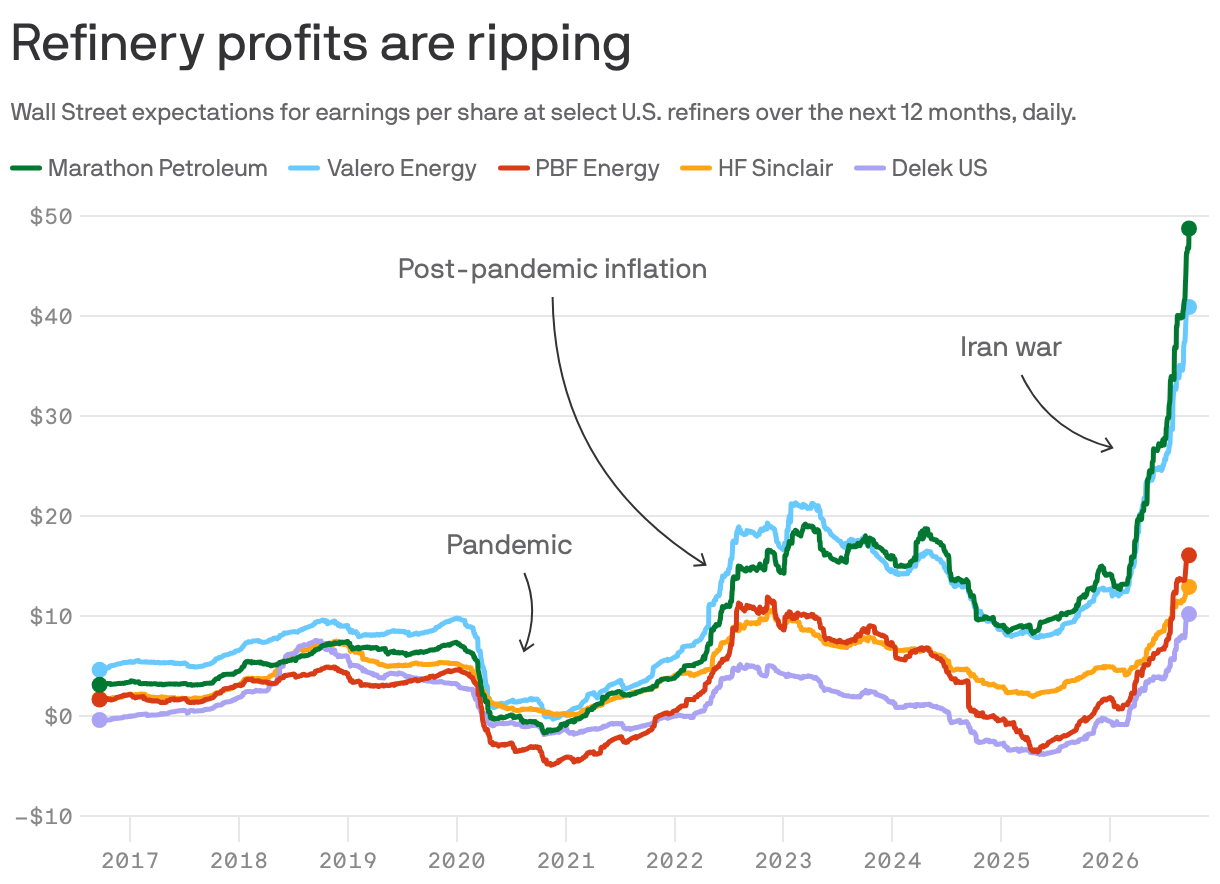
The global scramble to secure fuel supplies — diesel, above all — is supercharging profit expectations for refineries.
Why it matters: While painful at the pump, surging fuel prices have made refinery stocks a bright spot for the market.
Of the 126 subindustry groups represented in the S&P 500, oil and gas refining and marketing is by far the best performer of 2026, rising 145.4% through Friday's close, according to FactSet data.
In a new survey, homebuilders around the country say ramped-up Immigration and Customs Enforcement crackdowns are creating huge headaches for their businesses.
Why it matters: The labor strain comes on top of other challenges for the industry: rising mortgage rates, higher prices for key inputs driven by tariffs and the Iran war, as well as growing competition for resources with builders of data centers.
Peloton is debuting its first foldable treadmill — also its most affordable one ever — and new AI-powered coaching tools in a deeper push into running.
Why it matters: The fitness brand — which has been struggling to stem a slide in subscribers since its post-pandemic peak — wants to broaden its image beyond its trademark bikes and classes.
Of the various ways experts fear AI could kill us all, one is slowly moving closer to reality: AI learning to make itself unstoppable.
Why it matters: Recursive self-improvement, the ability of an AI model to build better versions of itself without human guidance, could make increasingly capable systems harder for humans to control.
The race for AI supremacy between labs, companies and countries may be impossible to reconcile with the push for AI safety, industry insiders tell Axios.
Why it matters: The top AI companies are proposing more independent oversight as they seek to engineer an AI slowdown. But trillions of dollars in incentives to keep pushing the frontier — and the money required for such scaling — will always loom larger, critics say.