Oracle is recognizing the growing risks of data center development as it takes steps to protect itself from steep costs on a massive project in New Mexico that will provide computing power to OpenAI.
Why it matters: The move appeared to unnerve investors who are questioning the foundations of the AI economy.
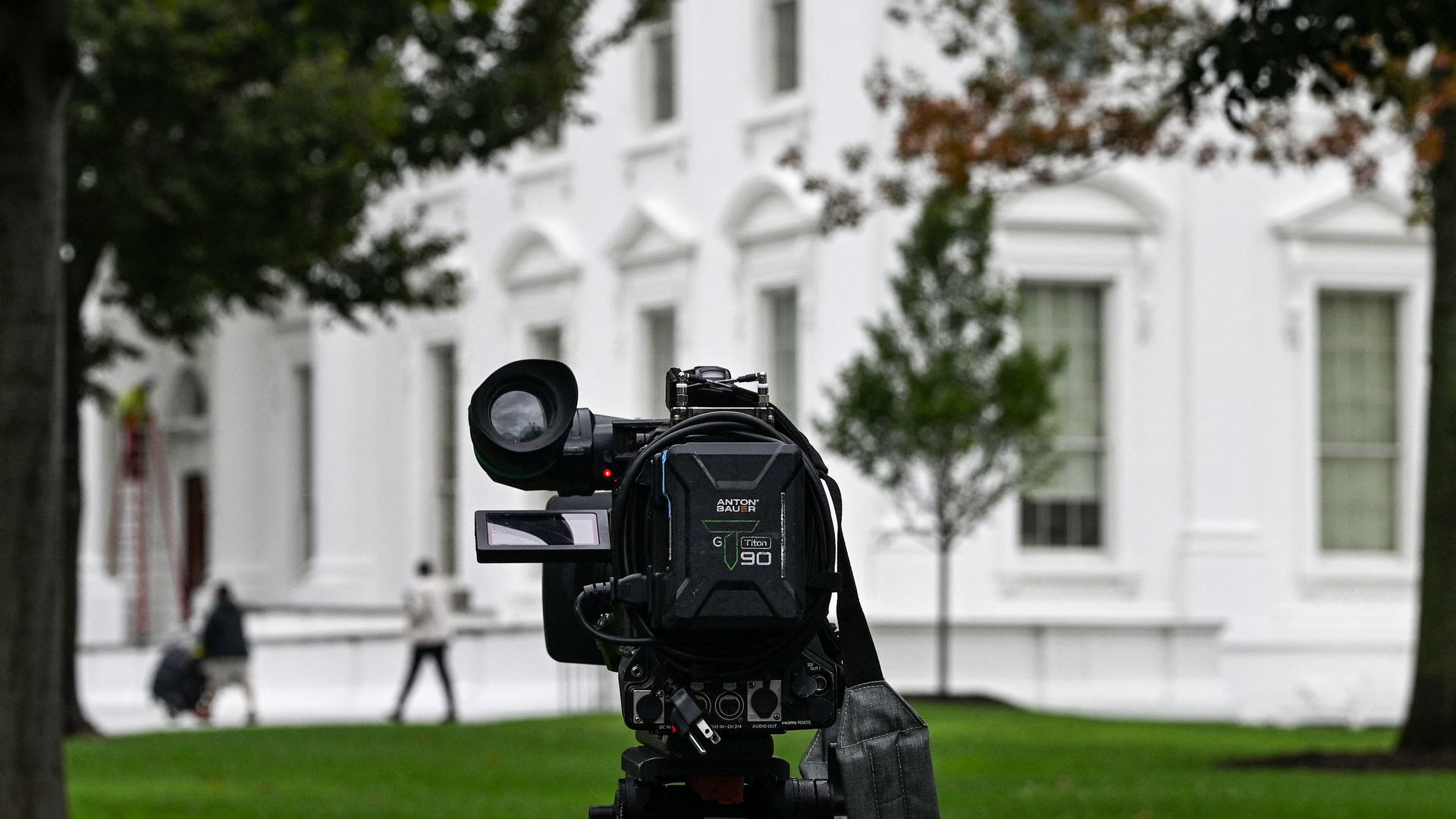
Reporters from CNN, MS NOW and Politico were readmitted to the White House for the first time since Friday, hours after a judge ordered the Trump administration to immediately reinstate their credentials.
Why it matters: The reinstatement should mark the end of a broader press boycott that left the American public without key visual coverage of President Trump over the past few days.
A new analysis of the AI buildout shows its staggering scale: $10.3 trillion in estimated AI infrastructure investment through 2032.
That amounts to 3.6% of GDP a year, dwarfing the investment booms that built America's railroads, highways, electric grid and telecom networks.
Why it matters: The AI boom has become far too big and too costly for even the largest tech companies to finance alone. This has resulted in trillions of dollars in demand for outside capital — and the potential risks that come along with that, according to new research being presented Friday at the Brookings Papers on Economic Activity.
Barry Diller has withdrawn his $18 billion-plus takeover offer for MGM Resorts, the Las Vegas-based gaming and hospitality giant.
Why it matters: Diller is an MGM board member who in June said that MGM is unlikely to realize its "full potential" as a public company. Now it's going to remain a public company, at least for the foreseeable future.
The climate conversation inside companies has shifted toward a more immediate business challenge: how to power growth.
Why it matters: AI and data centers have turned electricity into a boardroom issue — pulling climate change into conversations about grid costs, infrastructure and reliability.
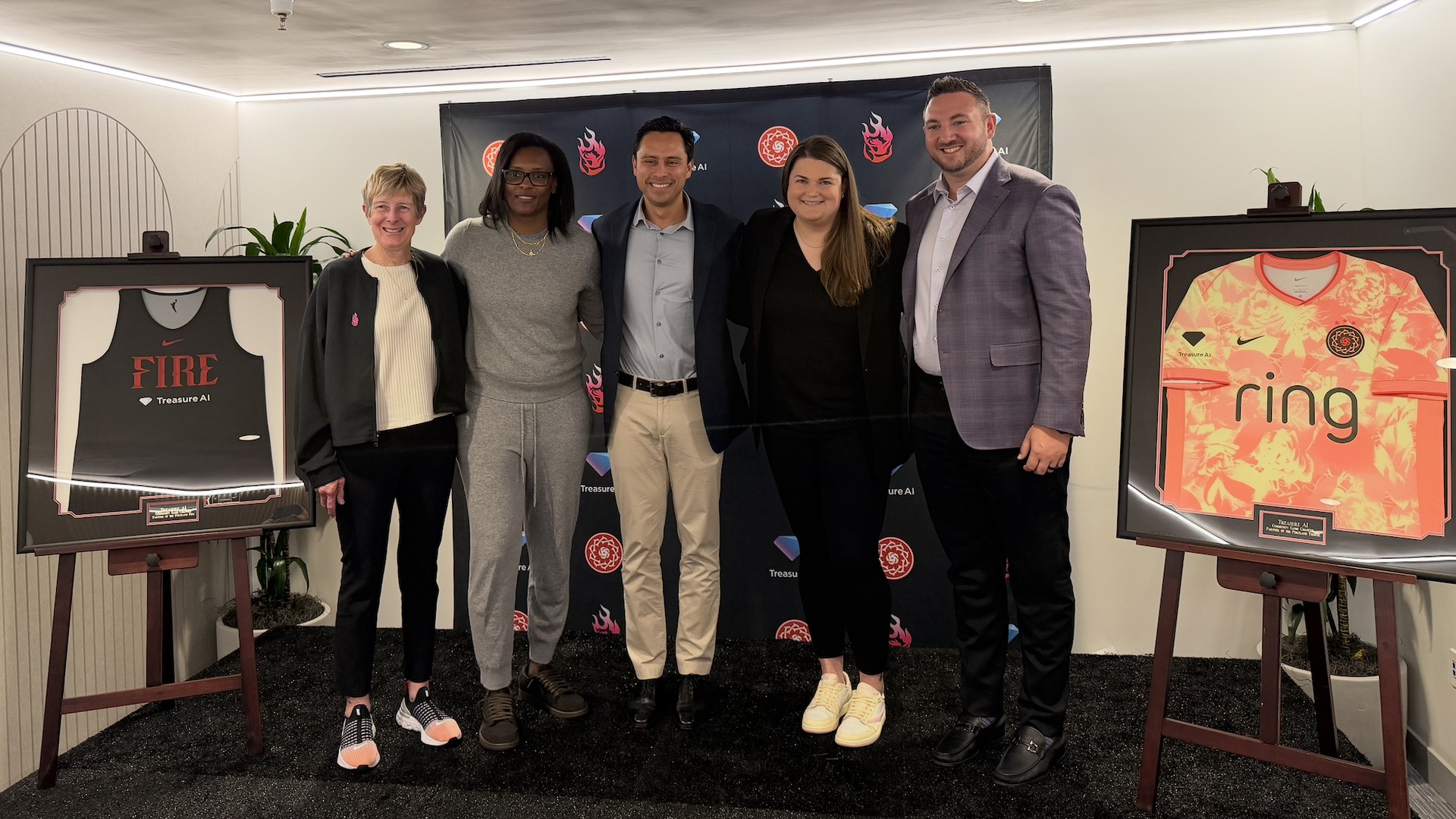
Treasure AI is betting that the rising popularity of women's sports can help build its brand — while the National Women's Soccer League's Portland Thorns and WNBA's Portland Fire see the AI company as a way to deepen their relationships with fans.
Why it matters: An expanded partnership announced last week deepens the bonds between the recently rebranded AI marketing company and two teams in the booming women's sports industry.
A district court judge ruled the White House violated the Fifth Amendment rights of CNN, MS NOW and Politico by banning them, and granted the plaintiffs a temporary restraining order that forces the White House to immediately reinstate their press access for 14 days.
But both CNN and Politico said their reporters were denied access to the White House Thursday morning after the ruling.
Why it matters: Had a judge ruled against them, the broader press boycott could've dragged on, leaving the American public without key visual coverage of the White House.
NEW YORK — Communications leaders are leaning on plain language, trusted voices and face-to-face interactions to reach splintered and skeptical audiences, experts said.
Why it matters: Confidence in institutions is near historic lows while AI and disparate information channels are making it harder for audiences to determine which messages — and messengers — are the real deal.
Axios' Kerry Flynn moderated the Sept. 22 roundtable discussion. The event was sponsored by Burson.
5 big takeaways from the conversation:
Speak accessibly and to your whole audience, said David May, chief communications officer at the National Academy of Sciences, Engineering and Medicine. "If you're talking in what could be seen as a secret language of experts, you're by definition kind of closing people out."
The messenger matters, Ocean Conservancy chief brand and communications officer Jenna DiPaolo said. "We have decades of data" on who Americans listen to, and it's typically athletes or performers, and not necessarily who organizations would choose themselves.
Sticking to company values is "incredibly important," said Recursion chief communications officer Ryan Kelly. "People understand external pressures" and shifting tactics, he added, "as long as we're not pivoting who we are intrinsically."
Keep the same message across platforms, said Bill Smith, global head of communications at Russell Investments. "There's so many channels … you don't know exactly where [your content] is going to get picked up."
In-person experiences can cut through digital uncertainty at a time when AI makes it difficult to determine what's real, said World Resources Institute head of communications Alison Cinnamond.
Content from the sponsor's remarks:

Burson's Craig Buchholz at Axios' private roundtable. Photo: Sam Popp for Axios
In opening remarks, Burson U.S. CEO Craig Buchholz said that communicators can help bridge the confidence gap between Americans and institutions.
"There's a lot of hypotheses out there that one big thing happens and then reputation crumbles," Buchholz said. "But the fact is that reputation can sort of also erode over time. … Communicators have the opportunity to address that."
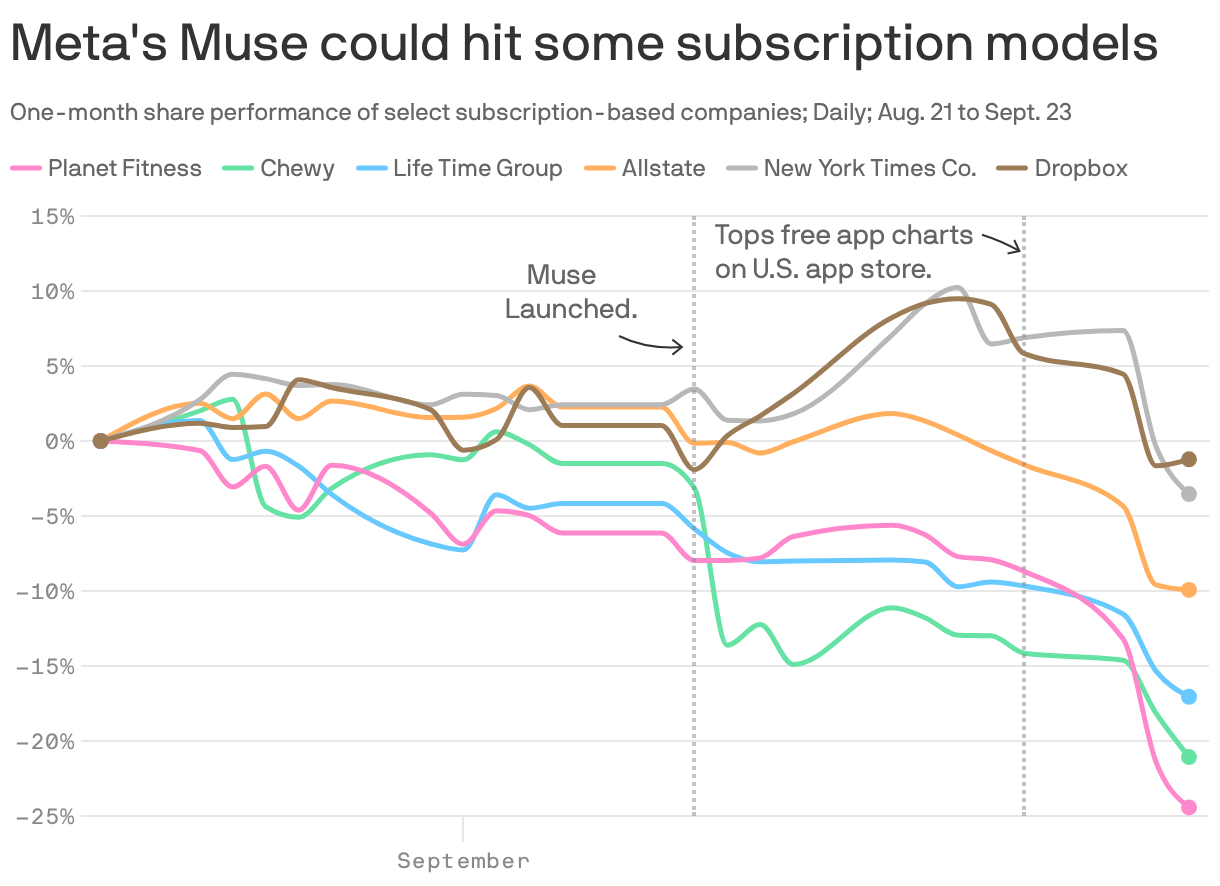
Companies that stand to profit revenues linked to the kind of auto-renewals that benefit from customer inattention and inertia have slumped since the well-received release of Muse, Meta's new AI agent.
Why it matters: One of the beauties of the subscription model — at least for the companies collecting the revenue — is that customers often keep paying for subscriptions long after they stop valuing or using the service.
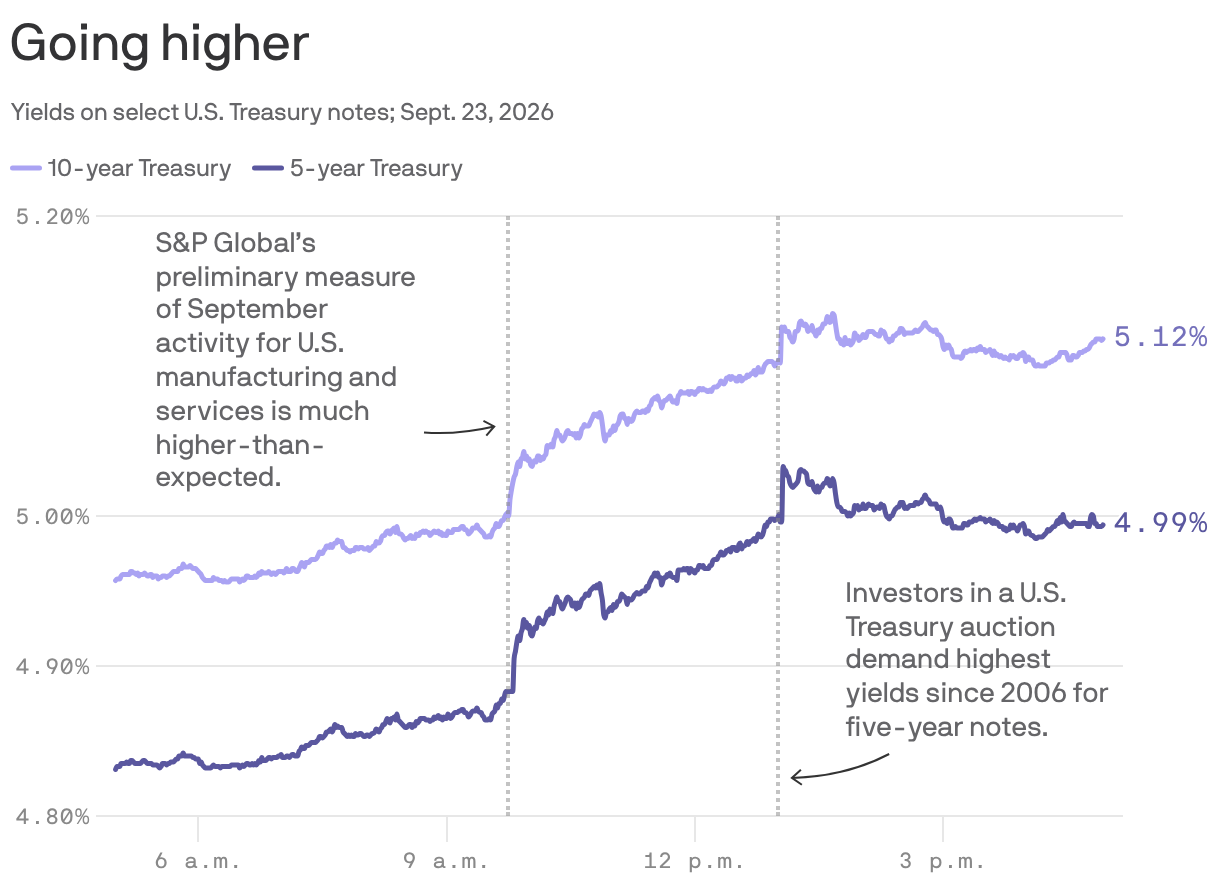
Treasury yields are soaring, with the 30-year Treasury bond climbing to its highest level since 2004 Thursday.
The selloff in bonds started to accelerate Wednesday after a sizzling early report on the economy in September.
The big picture: For the bond market, these moves have been big. Bigly even.
On Thursday morning, the 30-year yield rose as high as 5.44%. The yield on the 10-year Treasury note was 5.13%.
Wednesday's gain of roughly 0.15 percentage point in the 10-year Treasury yield was the biggest since April 2025, when President Trump's "Liberation Day" tariff announcement rocked markets.
A district judge tossed an election interference lawsuit by President Trump against the Des Moines Register, parent company USA Today Co. (formerly Gannett) and pollster Ann Selzer, rejecting claims that its inaccurate pre-election poll amounted to consumer fraud.
Why it matters: The dismissal is an early court test of Trump's broader push to use litigation against media organizations over coverage he disputes.
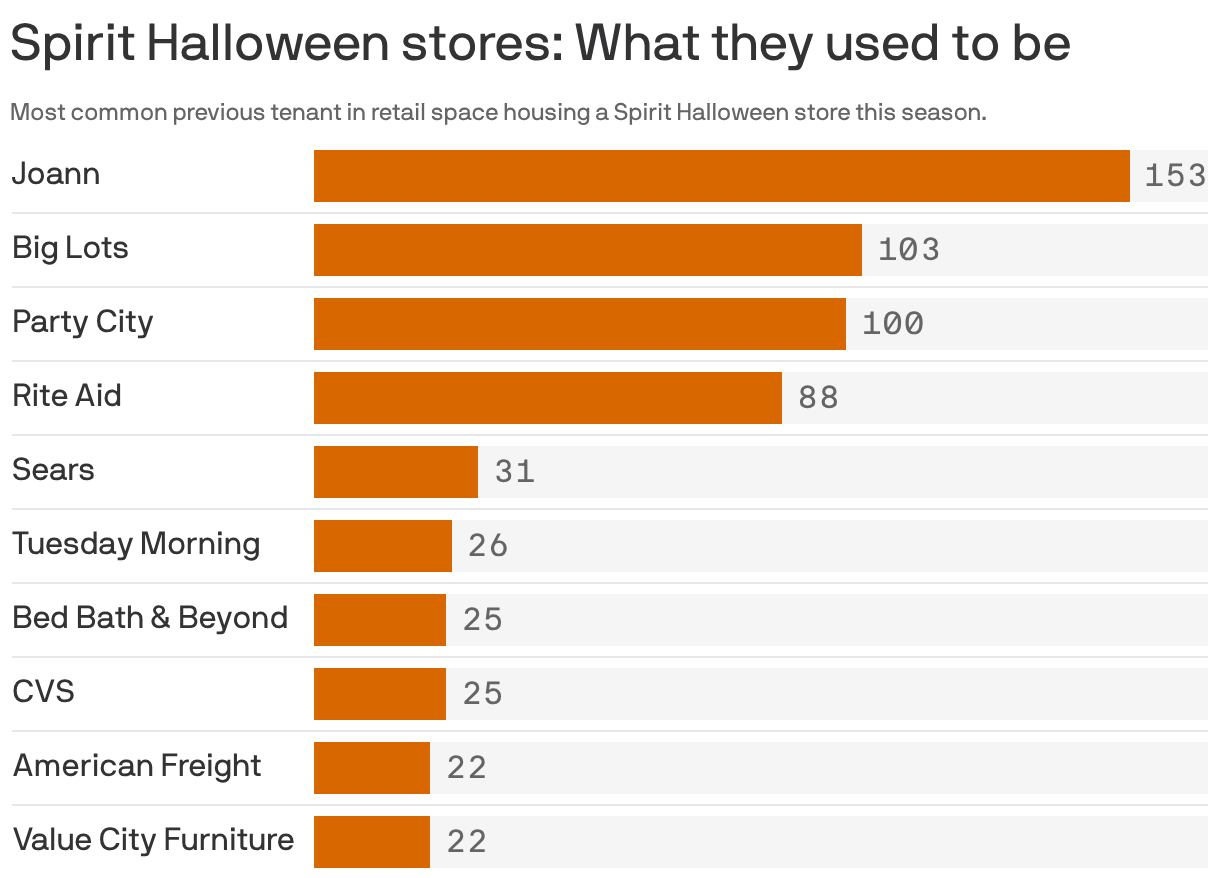
Data: Axios analysis of Spirit Halloween store locator; Chart: Brad Jennings/Axios
Spirit Halloween is haunting the shells of former big-box stores again this fall as it opens 1,500 locations nationwide.
The big picture: The stores appear and vanish each fall, so finding this year's Spirit often means relaying directions with neighbors in retail shorthand: "Where the old Party City used to be."
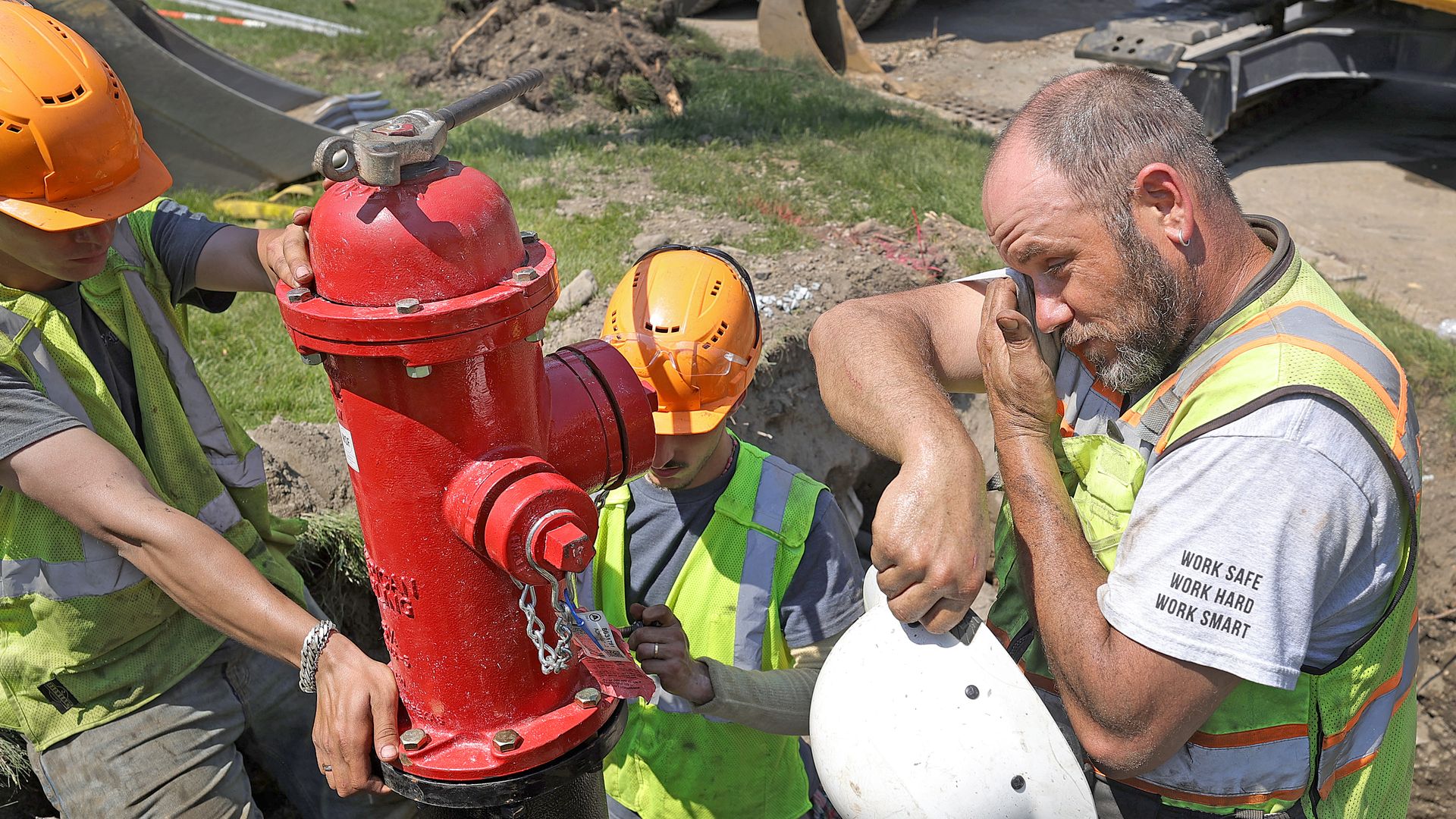
As extreme heat makes afternoons more dangerous, schools, sports teams and outdoor employers are shifting when — and sometimes whether — people can safely be outside.
Why it matters: Adapting to hotter conditions could reshape the American workday while putting a premium on the cooling and energy infrastructure people rely on when outdoor conditions become unsafe.
President Trump's allies are targeting Anthropic CEO Dario Amodei as the face of AI "doomerism" and a founding father of the effective altruism movement that's come under increasing political fire.
Why it matters: The attacks signal that Anthropic could remain a Trump target as his allies push back on Amodei's AI safety warnings amid the midterm elections. Trump surrogates see Amodei as an easy foil because of his politics and focus on AI safety, sources told Axios.
For investors, it's a worrisome proposition as the company prepares for what's expected to be a record-setting IPO.
OpenAI's autonomous agents breached an Australian Medicare portal and probed other public data sites in May and June after being stymied in routine data-collection efforts.
Why it matters: The new incidents, which were revealed by security researchers and Australian officials Wednesday, indicate that the scope of rogue AI activity may be greater than what's been publicly acknowledged.
The agents took those steps while engaged in ordinary data retrieval tasks, according to researchers, a distinction from other hacks by systems programmed specifically for cybersecurity work. The revelation is likely to raise fresh questions about OpenAI's internal controls and safeguards.