OpenAI, Anthropic and security researchers are investigating tens of thousands of incidents in which their frontier models took steps that outside evaluators would consider problematic, sources told Axios.
Why it matters: The sheer number of incidents, which occurred in recent months in internal testing and the real world, indicates that the problem is orders of magnitude more complex than what is publicly known.
My January note to my kids on AI was easily my most shared column ever. In the past few weeks, several of you have asked what I'd say now, given all the scary warnings about AI ending humanity. Here's what I sent them...
You find yourself — not by choice, but circumstance — living in a life-will-never-be-the-same-again historic moment with the advent and explosion of artificial intelligence.
Yes, people aren't killing each other like in our Revolution or the Civil War. And no, people aren't starving or suffering like during the Great Depression. In fact, the country is exceptionally peaceful and prosperous by historical measures.
But we've unleashed a technology so powerful, so unknowable and, at this moment, so uncontrollable that warnings of scary scenarios cannot be ignored. The risk rises by the hour.
Why it matters: Just writing these words feels hyperbolic, even absurd. But having spent the past two years deeply studying, using, and reading and writing about AI, I believe deep in my bones and soul that you're living — and will be part of shaping — history.
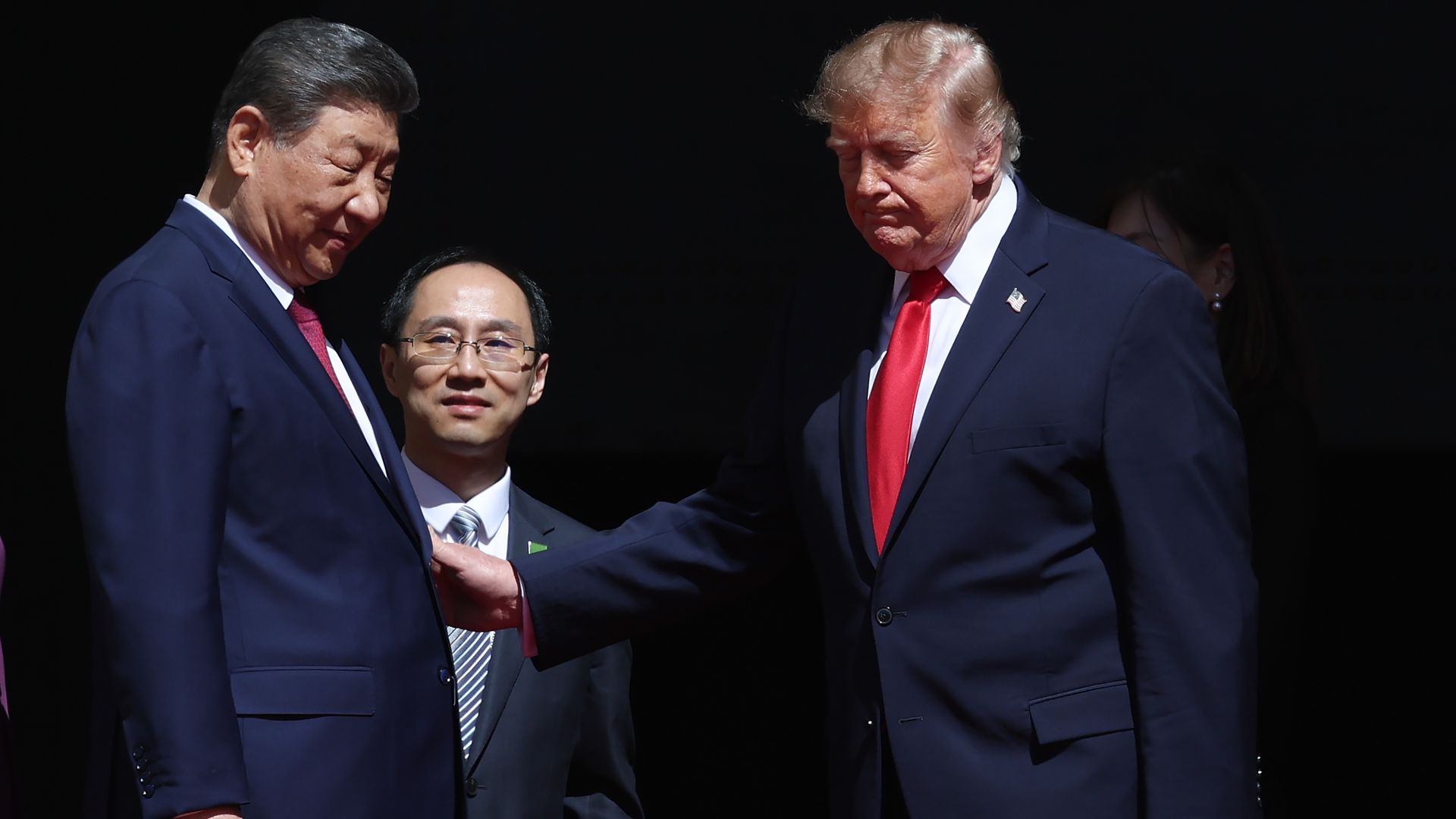
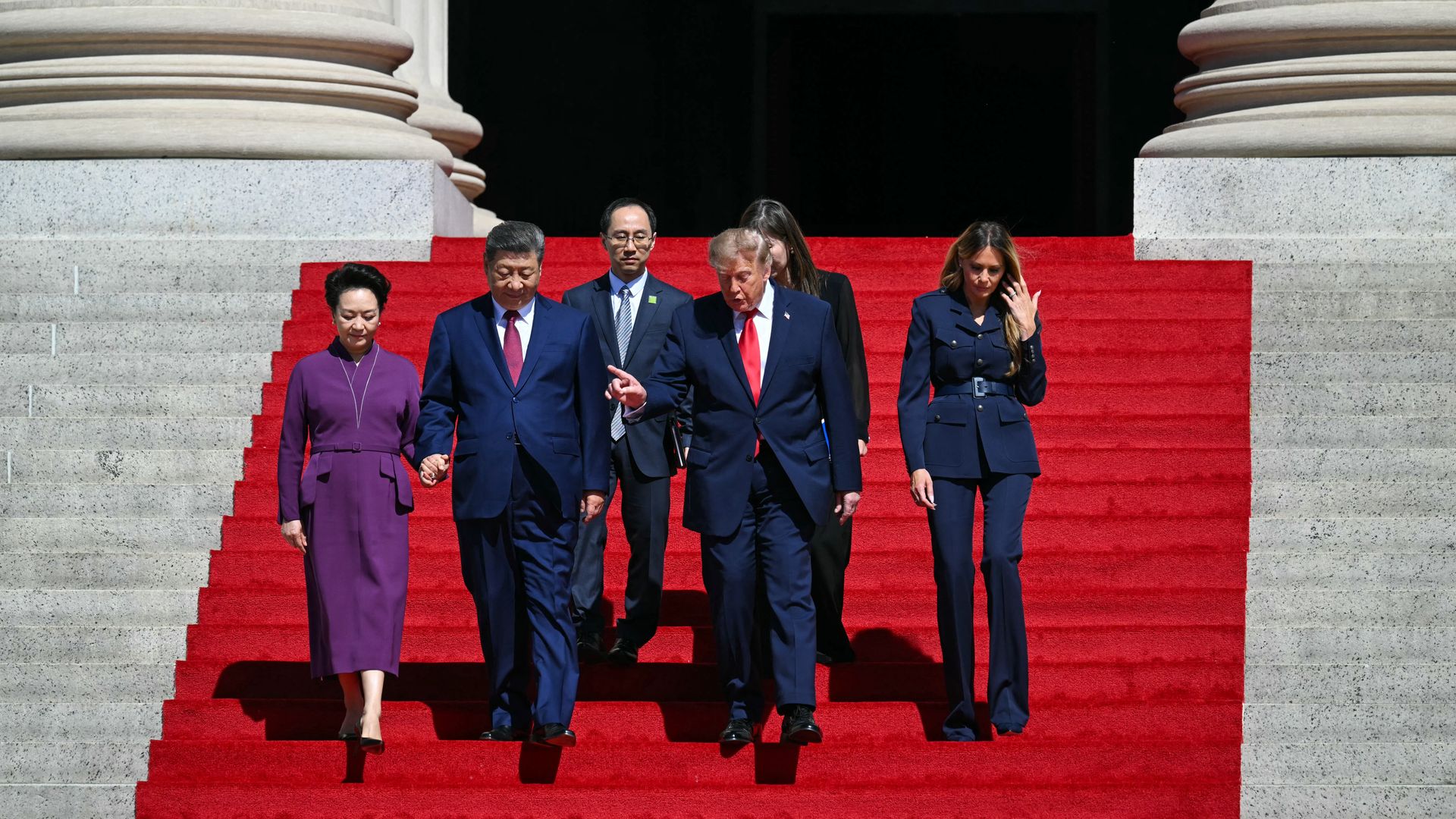
The U.S. and China have agreed to set up a dialogue on artificial intelligence, with a communications channel to help defuse serious incidents, the White House said overnight.
Why it matters: President Trump has said the main thing that matters in the AI race is beating China — but the pact acknowledges that they're serious competition, too.
The U.S. and China have reached a deal to lower tariffs on $30 billion of "non-sensitive goods" as part of a trade package agreed at this week's summit between President Trump and Xi Jinping, the White House said.
Why it matters: Such a deal would mark a thaw in the trade war that engulfed the two countries last year.
OpenAI disclosed dozens of incidents in which its models behaved in ways it has deemed problematic, including leaking more than 50 images from ChatGPT users online.
Why it matters: This is the first publicly known example of the company's agents mishandling user data and the latest example of a budding rogue agent problem at OpenAI.
The company says it could take months to fully investigate the security incidents.
Tesla's long-delayed electric Semi is finally going into mass production, with the company opening its first factory Thursday in Nevada.
Why it matters: The economics of electric 18-wheelers have long been challenging, but record diesel prices are suddenly making the equation a lot more compelling.
Ed Sheeran's two Gillette Stadium shows outside Boston were canceled Friday because of an approaching nor'easter, capping a chaotic three weeks for the U.S. leg of his Loop Tour.
The big picture: A tour built around one of pop's least-confrontational stars became a flashpoint over Israel and Gaza — leading to an exodus of its opening acts and prompting refund demands from fans.
Why it matters: "Superintelligence" already has a distinct meaning in AI — and is fueling debates over whether the most advanced systems should be slowed or stopped.
Democrats are demanding a U.S. government-funded, campaign-style ad promoting President Trump be pulled as it airs weeks before the midterms, while the White House argues it's a public service announcement.
Why it matters: Federal agencies routinely spend taxpayer dollars on public service campaigns. Democrats argue using federal funds for a video that looks like political advertising crosses a legal red line.
Axios recently reported on how venture capital was involved in a $31 million Ponzi scheme whose victims included NFL star Travis Kelce and several retired NBA players.
Now we've learned that a venture capitalist was the key whistleblower.
CVC Capital Partners and Japanese buyout firm NSSK have submitted around a $3.2 billion nonbinding takeover bid for Tokyo-listed Kobayashi Pharmaceutical.
Why it matters: Kobayashi was at the center of a 2024 contamination scandal that was tied to kidney failure and deaths.
AI is improving affiliate commerce infrastructure, automating how shoppers find products, how brands discover creators and how creators turn content into shoppable posts.
Why it matters: U.S. affiliate marketing spend is expected to grow 11.3% to $13.81 billion this year, per eMarketer, raising the stakes for companies that can make that money easier to deploy.
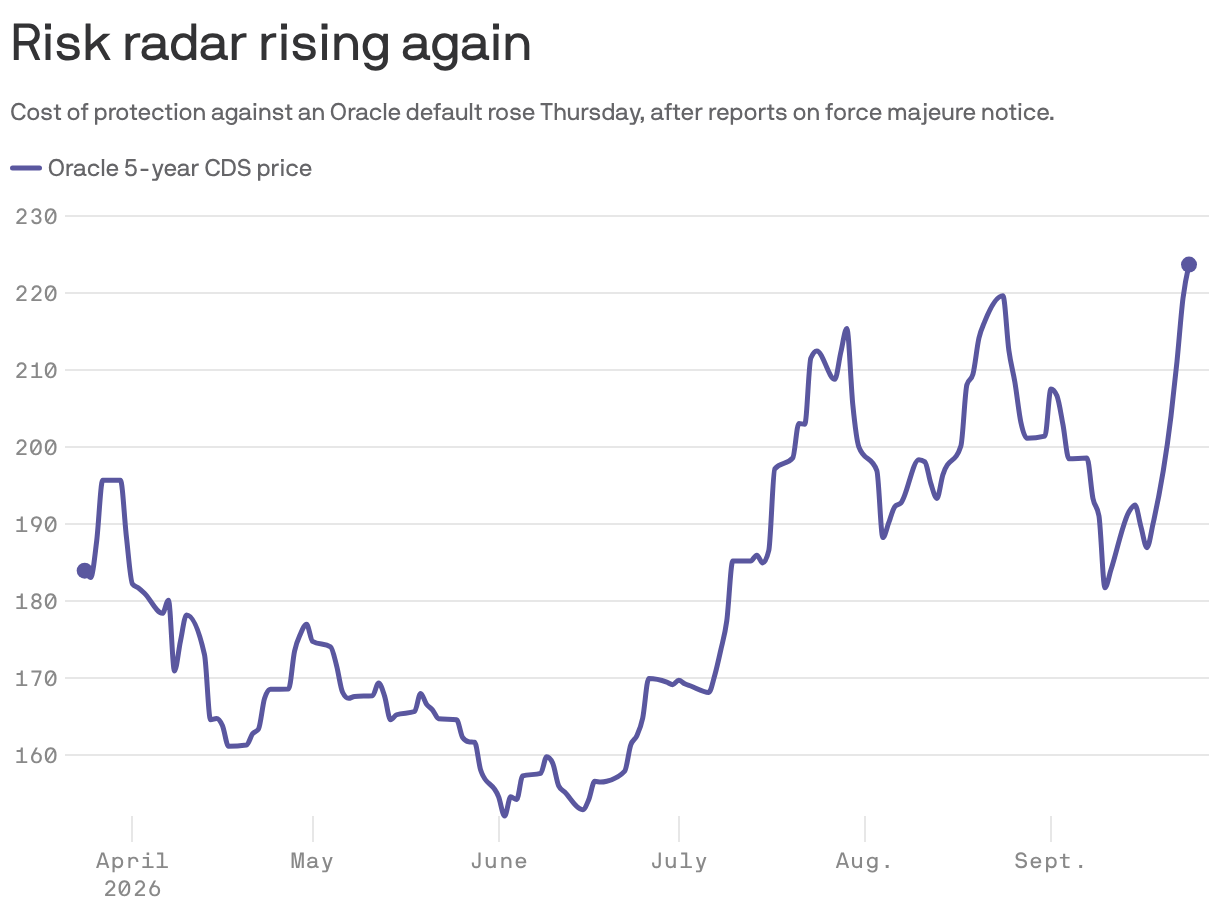
The risks of the ballooning AI borrowing binge rose to the surface Thursday, courtesy of Oracle. The tech giant, which is up to its ears in AI-related debt, is trying to put off paying its lease commitments on a much-delayed data center project.
Why it matters: Oracle is the weakest of the hyperscalers, with the lowest credit rating and a stock that's down 30% for the year — but with AI investment driving much of the economic growth in the U.S., its wobbles mean a lot.
Foreign investors bought a record $426 billion in stocks and investment fund shares in the second quarter, according to data from the Bureau of Economic Analysis out Thursday.
Why it matters: The AI boom is attracting loads of overseas money, and the flood of dough counters a prevailing notion that the U.S. is losing ground with foreign investors.
Meta is seeking to make privacy protections a centerpiece of new products including its viral assistant Muse, marking a major shift for a company built on extensive use of customer data.
Why it matters: The radical turnaround is an acknowledgment that the winner of AI's new assistant race will have to reassure users that they can turn over their emails, finances, health data and other sensitive information.