Oracle rekindles the data center debt risks

Add Axios as your preferred source to
see more of our stories on Google.
The risks of the ballooning AI borrowing binge rose to the surface Thursday, courtesy of Oracle. The tech giant, which is up to its ears in AI-related debt, is trying to put off paying its lease commitments on a much-delayed data center project.
Why it matters: Oracle is the weakest of the hyperscalers, with the lowest credit rating and a stock that's down 30% for the year — but with AI investment driving much of the economic growth in the U.S., its wobbles mean a lot.
Where it stands: Oracle sent the developer of a data center project in New Mexico known as Project Jupiter a notice citing force majeure — reserving its right to delay payments in the event something major goes down. (Axios' Nathan Bomey has more on that.)
By the numbers: Markets aren't loving it. Oracle bonds set to mature in 2055 are now trading at 77 cents on the dollar, according to data from PitchBook.
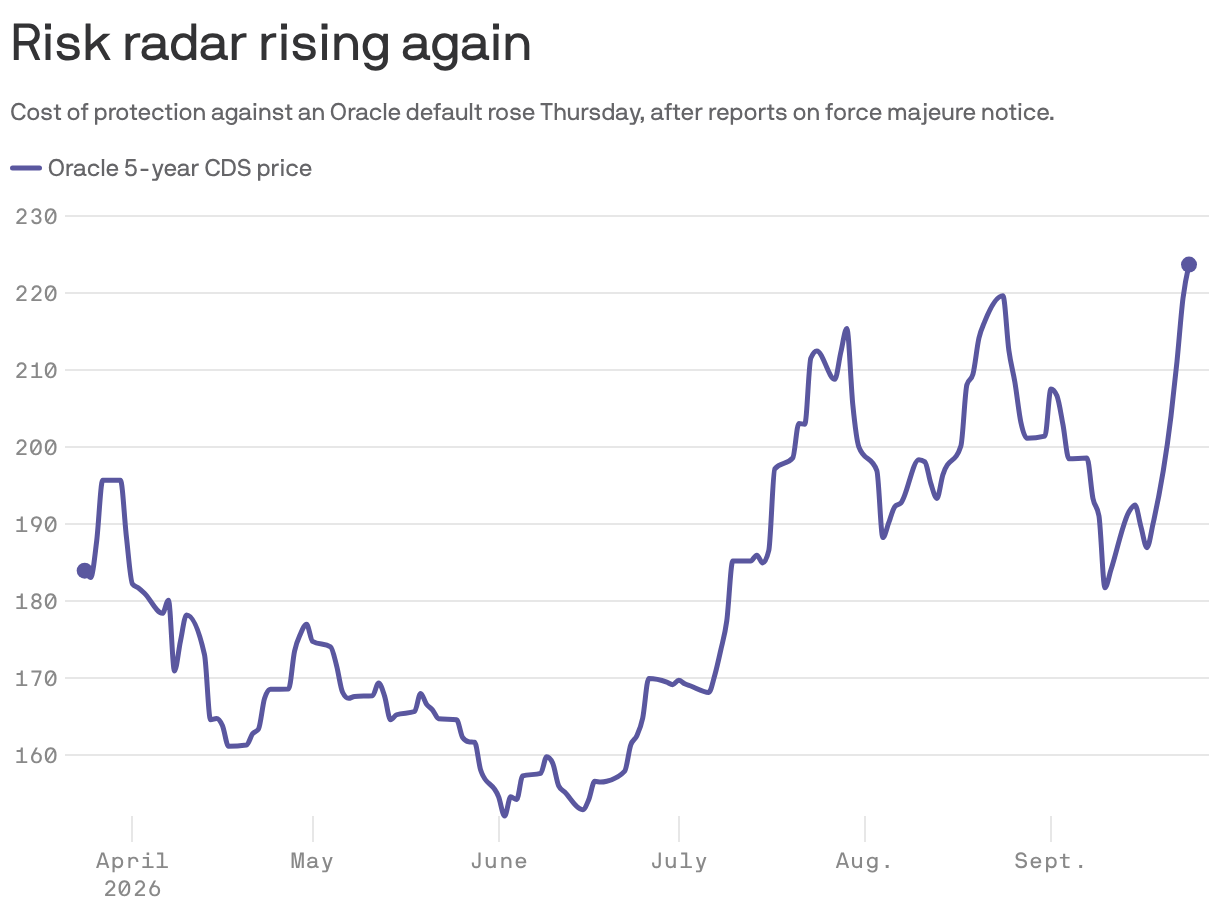
- Another stress signal: The cost of buying a type of bond-market insurance, known as a credit default swap, on Oracle debt rose Thursday after the report. (See the chart above.)
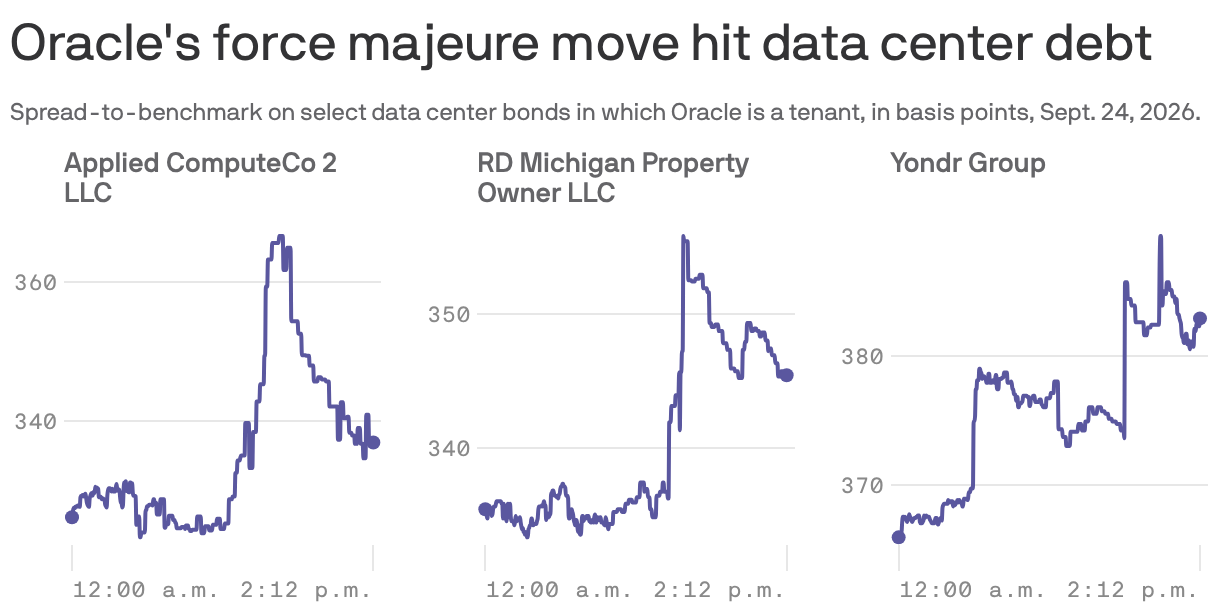
- News of the maneuver rippled through the ballooning ecosystem of data center-related debt Thursday morning, with spreads on notes financing AI infrastructure bonds in which Oracle would be a tenant briefly blowing out — typically seen as reflecting rising worries among investors — before re-tightening somewhat by the end of the day. (See chart below.)
Between the lines: The force majeure notice doesn't mean Oracle's obligations to pay the lease are canceled — it's like an FYI to the developer.
- The notice "signals the company's own risk assessment has shifted enough to warrant legal cover," per a note Thursday from RBC Capital Markets.
- Oracle says Project Jupiter remains on schedule.
Follow the money: The move may make stock investors anxious about their expectations for Oracle's future revenue. But the idea that the hyperscalers can back away from data center commitments should give bond investors some comfort that these companies have some leverage.
- "You don't want to be making lease payments on a project that doesn't currently exist and you're not earning anything from it," says Johnathan Owen, a portfolio manager at TwentyFour Asset Management who covers investment-grade debt.
The big picture: The Oracle situation hits all the boxes on the AI investment bingo card:
Bond binge. Oracle helped kick off a scramble among the hyperscalers to borrow money when it issued a long-dated bond last year, John Atkins, who covers bonds for PitchBook, wrote in a note Thursday.
Off-balance sheet debt. Beyond bonds, the hyperscalers have also committed billions of dollars in future payments for data centers that haven't been built yet. Think of it like signing a lease for a vacation home that a contractor says he'll have done by 2030.
- Oracle's commitment to lease the New Mexico data center, as part of a massive buildout called Stargate, helped get the developers some $18 billion in loans from about 20 banks in 2025.
Circular financing. A lot of the AI players are extremely interconnected.
- Stargate was spearheaded by OpenAI and SoftBank and announced by President Trump on his first full day back in office last year.
Data center backlash. New Mexicans have been fighting this project since at least 2025, as the New York Times detailed. This summer, the state land commissioner rejected part of the project's plans, forcing delays. That setback and others led to Oracle's notice.
- It's as if your vacation home contractor had to put down tools and wait for permits — you might balk at making rental payments.
The bottom line: Force majeure? More like zut alors!
