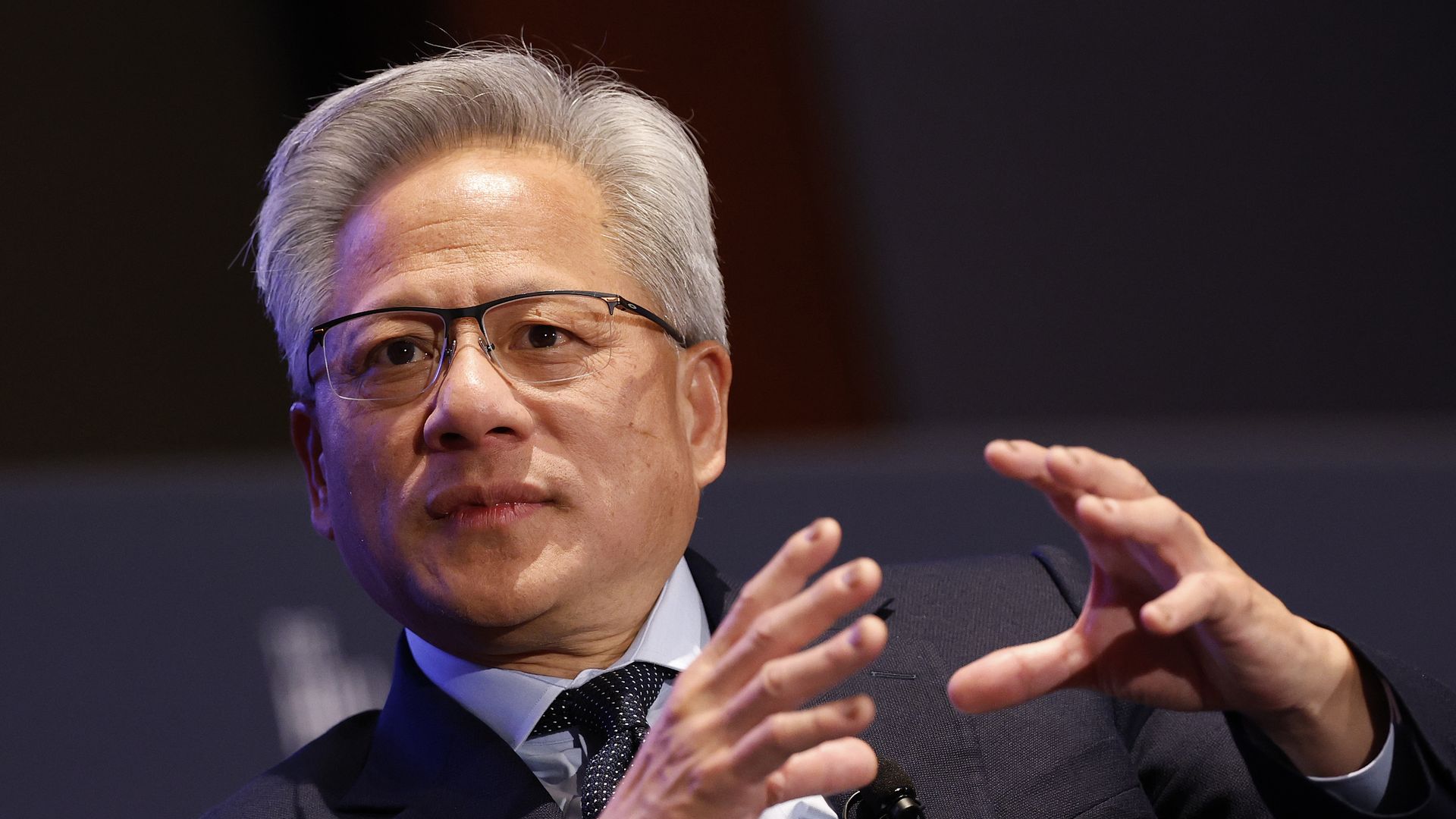
Why it matters: The world's largest chip company has resisted calls to slow AI development over safety fears — arguing now that technological guardrails can keep rogue AI agents under control.
Longtime Meta executive David Ginsberg is shifting to a new AI-focused innovation role, according to a staff memo obtained by Axios. Tucker Bounds, another Meta veteran, will be elevated to head of communications and public affairs in his stead.
Why it matters: Bounds will be responsible for shaping the company's public positioning around hot-button issues, including AI and platform safety.
Joe Baratta is stepping down as Blackstone's global head of private equity strategies, most likely at year-end.
Why it matters: Baratta is in charge of the private equity market's biggest book, helping to build it over three decades, and his departure seems to signal Blackstone's hierarchical shift away from star dealmakers.
Florida Attorney General James Uthmeier has asked for a temporary injunction against OpenAI and ChatGPT, claiming the company doesn't have the ability to properly regulate its own technology.
Why it matters: The legal fight could further test how far states can go to restrict AI companies despite the federal government declining to enact guardrails.
Some of the world's foremost AI researchers and policy leaders — including at OpenAI, Anthropic and Microsoft — are warning that AI's growing ability to automate its own development could rapidly speed up its progress.
Why it matters: Such a rapid scale-up in capabilities would leave governments and institutions with little time to prepare for or respond to the consequences, they say.
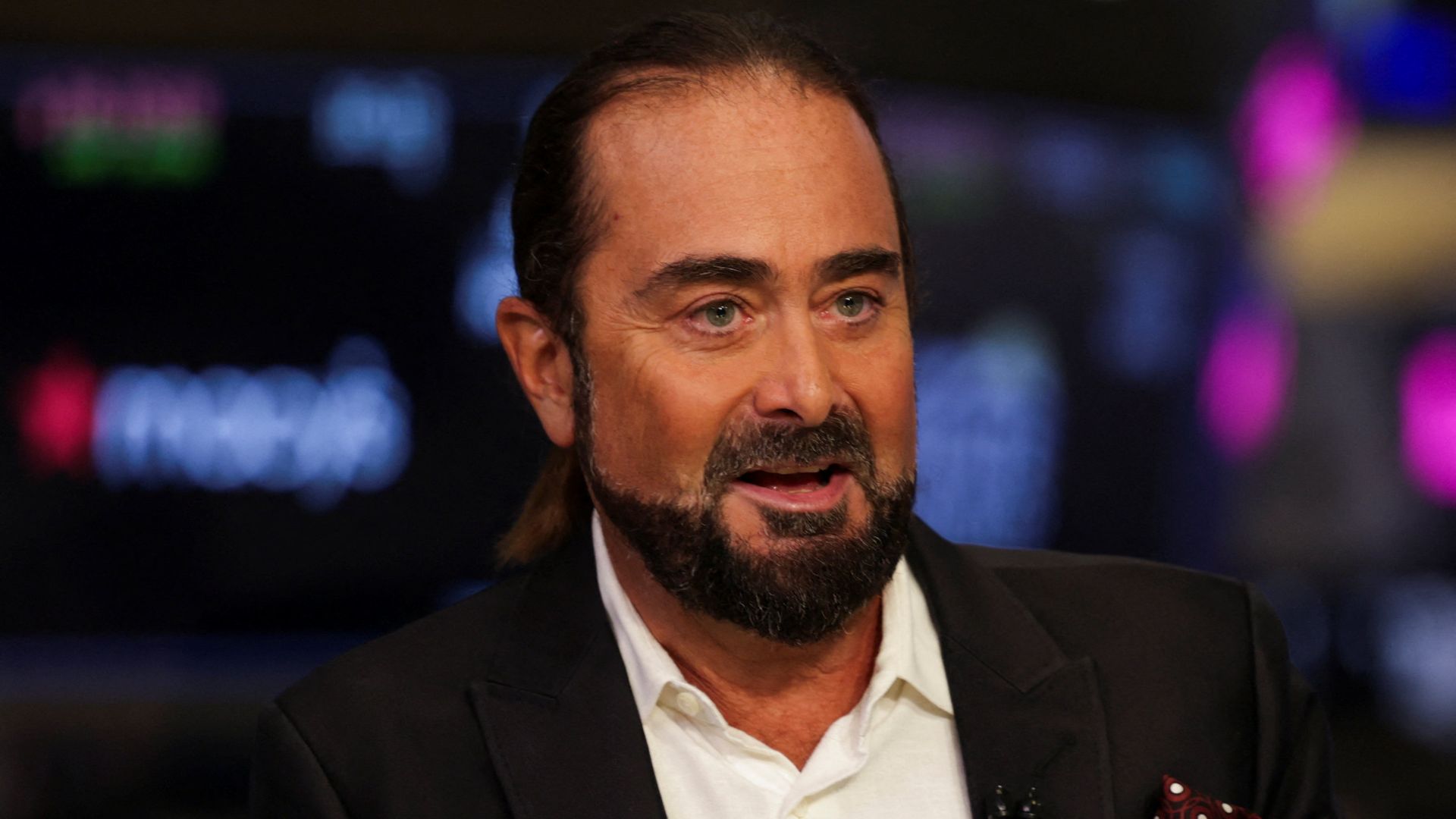
David Zervos, a longtime Wall Street strategist known for his out-of-consensus views on markets and the economy, is joining the Trump administration as a senior adviser to Treasury Secretary Scott Bessent.
Why it matters: Zervos has spent much of his career challenging conventional thinking on markets and monetary policy and brings a distinctly out-of-consensus voice inside the administration.
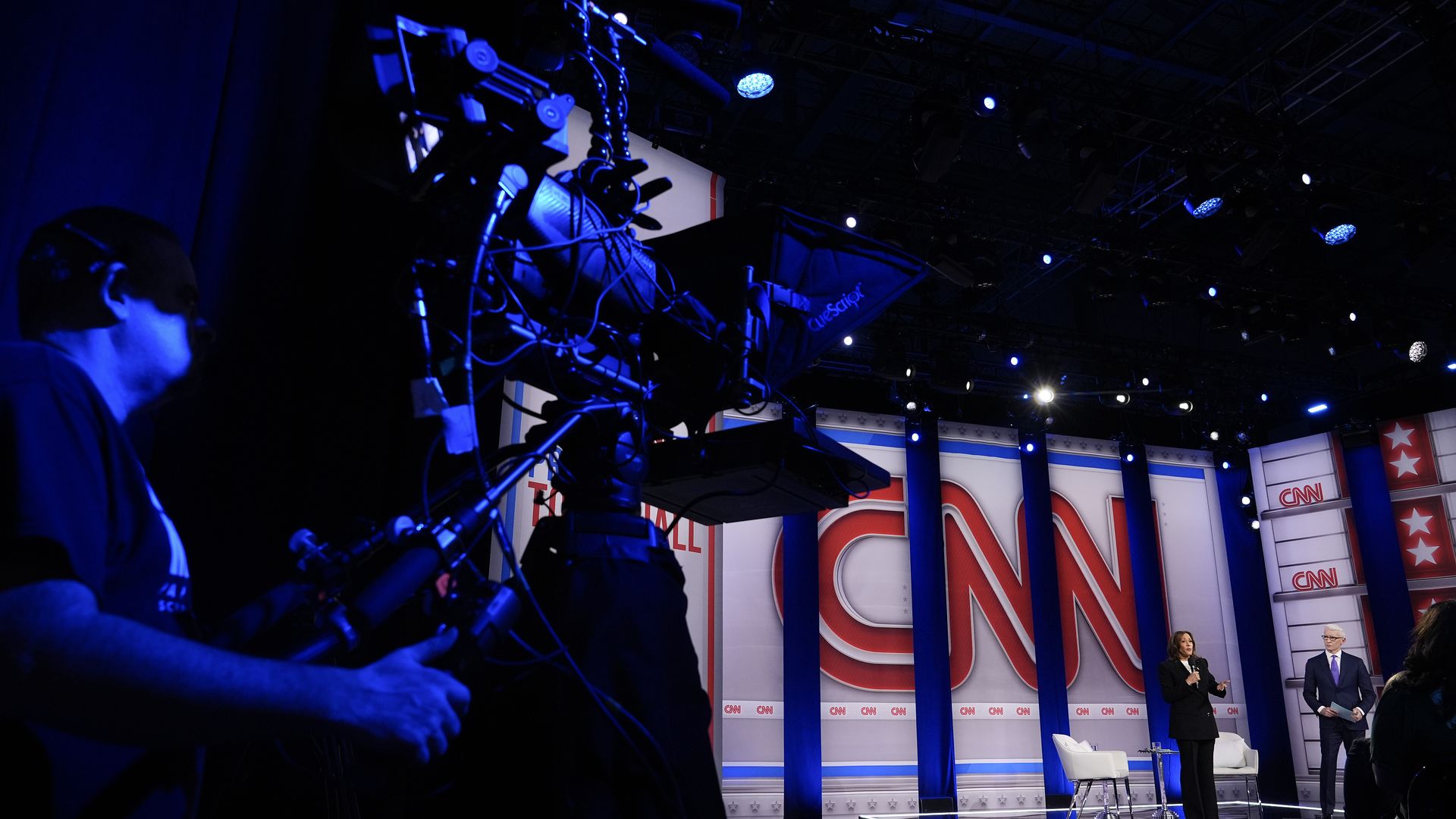
CNN is partnering with YouTube-focused Jubilee Media for a Texas Senate town hall with Democratic candidate James Talarico, the company told Axios.
Why it matters: The deal gives CNN access to Jubilee's young, digitally native audience while providing Jubilee a platform that could further legitimize its role as a channel for political debates.
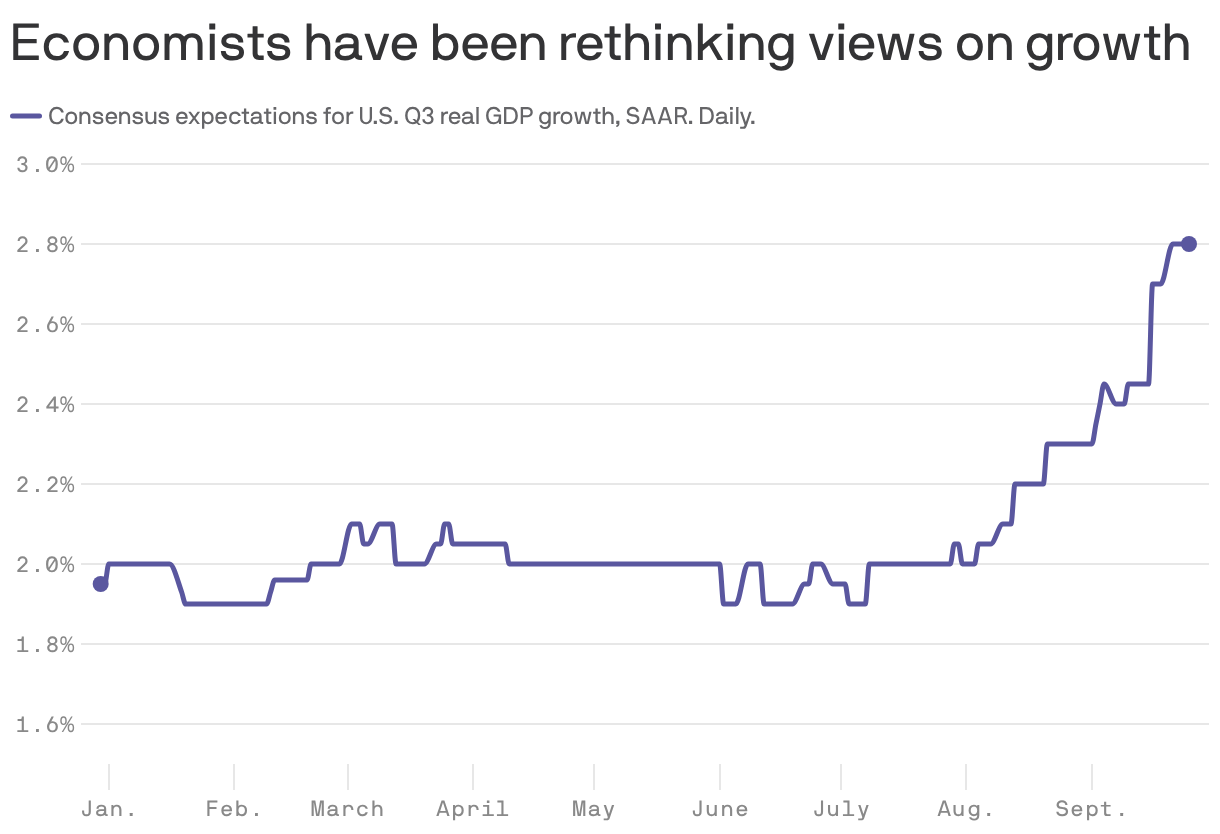
Why it matters: While the energy spike caused by the Iran war is a big deal, some analysts stress that the main takeaway of the bond market's recent turn should be that the U.S. economy is simply far stronger than many previously thought.
Banks don't usually get a lot of public sympathy, but pour one out for them, or at leastfor those who have been bullish on bank shares.
The big picture: Even as consumers continue to spend and companies continue to borrow — all good for banks' business — their stocks have slumped in recent weeks, dragging the KBW Nasdaq Bank Index into correction territory.
Nu Holdings (NYSE: NU) has reportedly held talks to acquire Monzo in a potential deal that could value the British digital bank at £8 billion to £10 billion.
Why it matters: A deal would give Nu an established British bank and a licensed platform for expansion across the EU.
Uljan Sharka, founder and CEO of Domyn, the company the EU picked to build Europe's open-source frontier model, popped into my office and dropped a helluva accusation: OpenAI and Anthropic are purposely lying about safety concerns.
"This is a big lie that is driving an unreasonable conversation."
Asked if he was comfortable seeing the word "lying" in print, he said: "It's the truth for me. ... I'm ready."
His case: The tech has plateaued. The scary behavior is trained by labs faking "autonomous" agents. The doom talk is designed to merely prop up valuations ahead of IPOs — and manufacture a delay to buy time so they can build AI that actually matches their hype.
Geoff Freeman, president and CEO of the U.S Travel Association, shared with me some very sobering — and telling — stats showing even our closest allies are refusing to visit America.
Most startling: Despite hosting the World Cup, overseas travel to the U.S. was DOWN this summer.
We're on pace for overseas visitors to drop by 2 million from last year — down 20% from our '19 peak.
"We're the only major country in the world losing visitation, he told me. "It's mind-boggling."
Why it matters to other CEOs: This is hitting the U.S. economy hard. And it's mostly self-inflicted: longtime allies like Canada (down 23% over two years) or Germany and France (down 16% and 15% YTD, respectively) are stiffing us, largely out of protest and fear.
Meta is finally promising the one feature that has long kept me away from its AI services: privacy.
Why it matters: In a world with many models capable of meeting my needs, knowing how my data will be used is a key factor, especially with sensitive information.