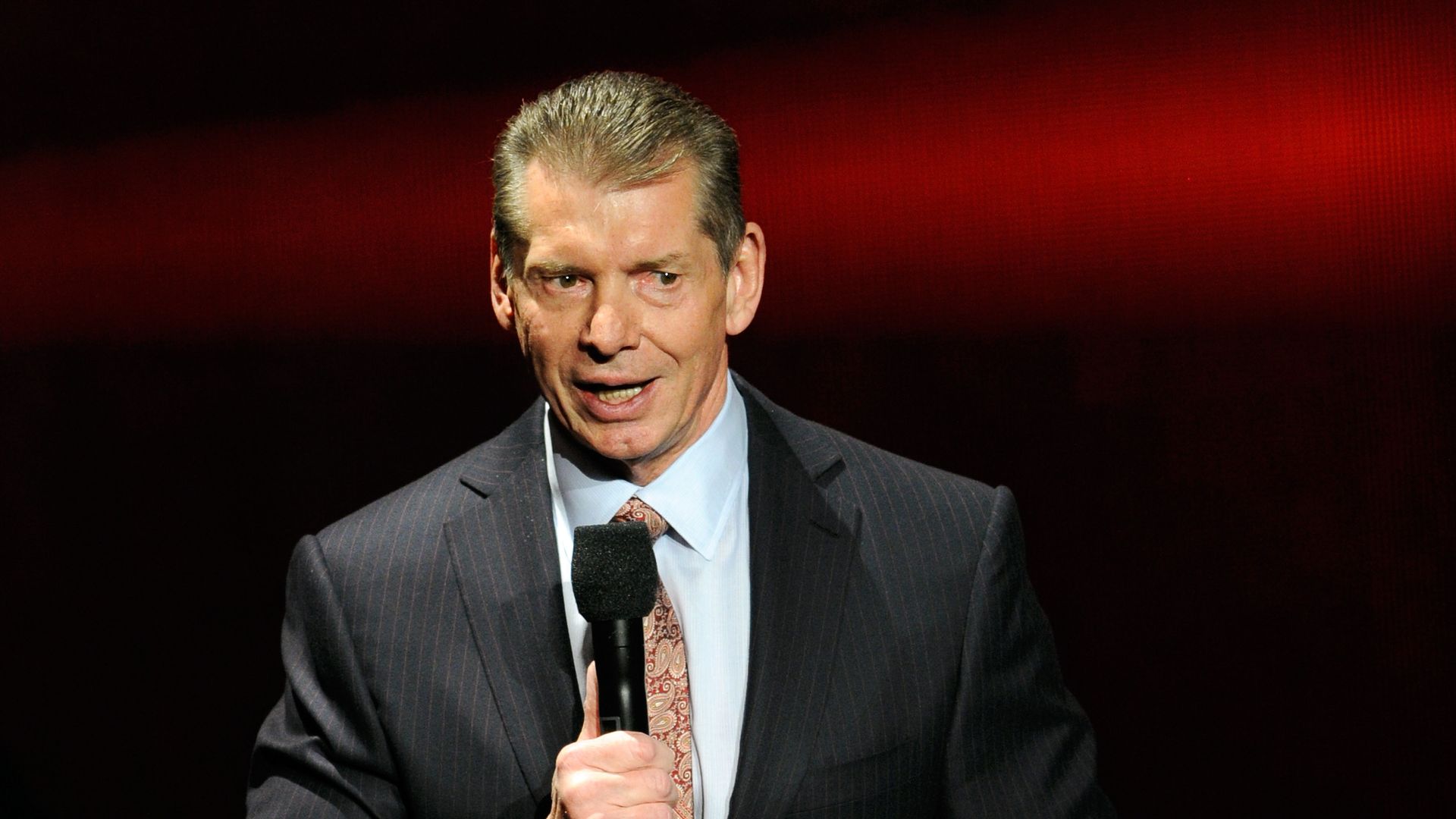
Vince McMahon resigned as executive chairman of WWE's parent company, TKO Group, one day after being accused of sexual assault and sex trafficking in a lawsuit.
Why it matters: The move appears to be an attempt to allow the fast growing professional wrestling group to move forward without McMahon's legal troubles.
When a government is worried that its stock market has fallen too far, sometimes it tries to buy stocks in an attempt to turn the market around. China is looking to unleash about $278 billion to that effect shortly.
Why it matters: Economists generally hate this move, saying it introduces inefficiencies to markets. But policymakers are generally more open to it.
Developers are aiming high — really high — in Oklahoma City, with ambitions of constructing the tallest building in the U.S., Nathan writes.
Driving the news: Matteson Capital and architect AO recently revealed a proposal to build a 1,907-foot-tall skyscraper as the centerpiece of a 5 million-square-foot development in Oklahoma City.
The structure's height — which would make it taller than the 1,776-foot One World Trade Center in New York — pays homage to the year Oklahoma became a state.
Yes, but: The developers will need height variance approval from the city for the Legends Tower, which was previously targeted at 1,750 feet.
High schools across the country are using advanced technology to monitor whether students are vaping — and they're sometimeshanding down severe punishments when someone gets caught.
The big picture: Districts have set up sensors and surveillance cameras to detect vaping, often without informing students.
Of all the potential use cases for crypto technology, you seldom hear the phrase: "helping to understand the origins of life."
Why it matters: A shoutout to blockchains from the scientific community is a win for the industry, helping to validate the technology's wide range of application possibilities.
The Biden administration will pause approvals of new liquefied natural gas export facilities, partly to more fully consider each project's potential climate change consequences, President Biden announced Friday morning.
Why it matters: The U.S. is the top LNG exporter in the world. A moratorium affects the fate of facilities that do not yet have a permit from the Energy Department, and would come online later this decade.
Venture capitalist and podcaster Chamath Palihapitiya has pulled the plug on plans to raise $1 billion for an early-stage investment fund, Axios has learned.
A decadelong lending boom for apartment buildings doesn't look quite as smart as it used to.
Why it matters: It's another headache for smaller lenders that just limped through an ugly 2023. Regional banks lost deposits to larger rivals after the collapse of Silicon Valley Bank prompted many to move money to the apparent safety of the "too big to fail" banks.
Most milk alternatives don't taste like the ingredient they feature (oat, almond, cashew, etc.) — but a newcomer called pistachio milk does, and delightfully so.
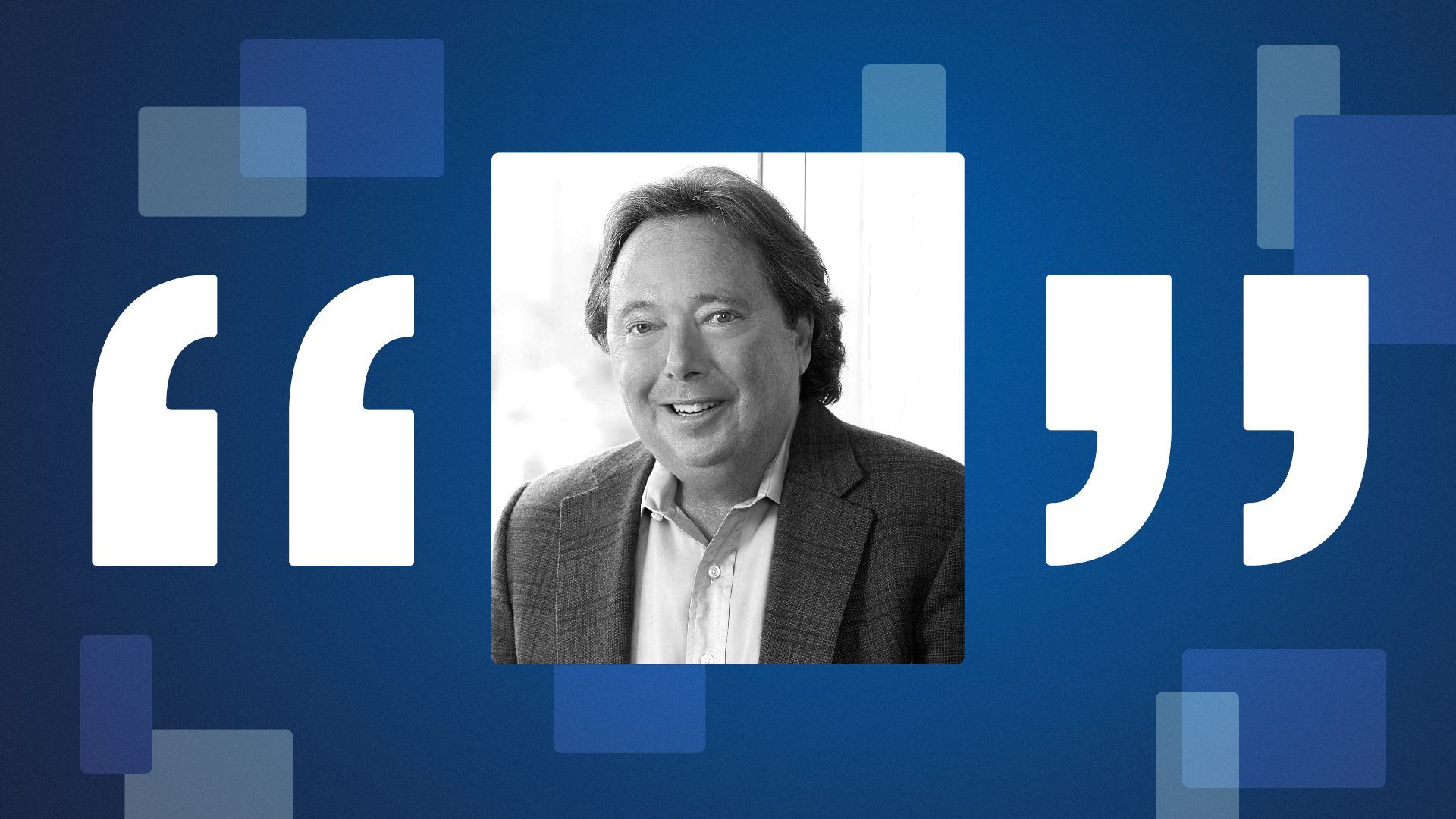
Rich Gelfond is the 68-year-old CEO of IMAX — best known for designing theater projection systems for some of the largest video resolution formats in the world. The company also manufactures digital and film camera equipment.
Why he matters: Gelfond, a former lawyer and investment banker, bought IMAX with a partner in 1994.
Over the past nearly 30 years as co-CEO and then CEO, he has steered the company through several crises, including near-bankruptcy, and has grown IMAX from a museum-focused service with 110 locations to about 1,700 theaters globally.
And while box offices continue to struggle to rebound, the IMAX format has been driving an increasing share of growth.
Hope King talked with Gelfond at his office in Manhattan in December. Here's Part 1 of their interview.
1. Christopher Nolan has been arguably the highest-profile champion for the IMAX film format (his "Oppenheimer" drove IMAX to a near-record year). Who's the next director that you see taking up the mantle?
Denis Villeneuve, director of "Dune"; Jordan Peele, director of "Nope"; Cary Joji Fukunaga, director of the 25th Bond title "No Time to Die"; Todd Phillips, director of the "Joker" series, as well as Hoyte van Hoytema, a cinematographer who worked with Peele and collaborates frequently with Nolan.
When Gelfond got back to work, there was a booklet on his desk pitching the sale of the company.
"It was like some kind of karma in the world."
3. You often cite "It's never as good as it looks, or as bad as it seems" as your motto. How does that describe your leadership style?
"I try and be levelheaded … because it's very easy to lose perspective," he said.
When "Oppenheimer" soared at the box office, he reined in the company's exuberance by reminding the team that they had "a lot of movies," and that "it's a long year."
When other movies flopped or when the company's stock was 55 cents, he had to stand up in front of "employees looking like they were going to a funeral" and say, "Tomorrow's another day."
4. How much of IMAX is Richard, and how much of IMAX is going to be IMAX after Richard? (The average tenure of public company CEOs is about 7 years.)
"I've thought a lot about that question. … I think our brand is so well known [globally] that I think IMAX will do just fine and probably really great after I'm no longer here."
5. Why haven't you left?
"I have a mission and I haven't fulfilled it. … I'm [also] intensely loyal to the people who work for me here. And they're intensely loyal to me. At some level, and maybe I'm crazy, I would think it would be a betrayal to leave before we accomplished our mission."
His dream for IMAX — which he sees as "a platform for awe-inspiring content" — has been for people to "wake up and say, 'I'm not doing anything today. I want to go to the IMAX theater — what's going on there?'" rather than, "Oh, Dune 2 is out — I want to go see it in IMAX."
🎞️ 1 fun thing: Where do you sit in the Lincoln Square IMAX?
"In the back row, in the center of the theater" because it's more convenient to get to during public screenings.
Gelfond also agreed with Hope, though, that the center of theater, two-thirds back from the screen "is probably the ideal seat."
"When we first bought the company, and I looked at rough cuts of movies, I'd walk around the theater [during the movie] to look at it from different perspectives, just to see if it worked as well from different seats."
Subscribe to Axios Closer to read Part 2 of the interview.