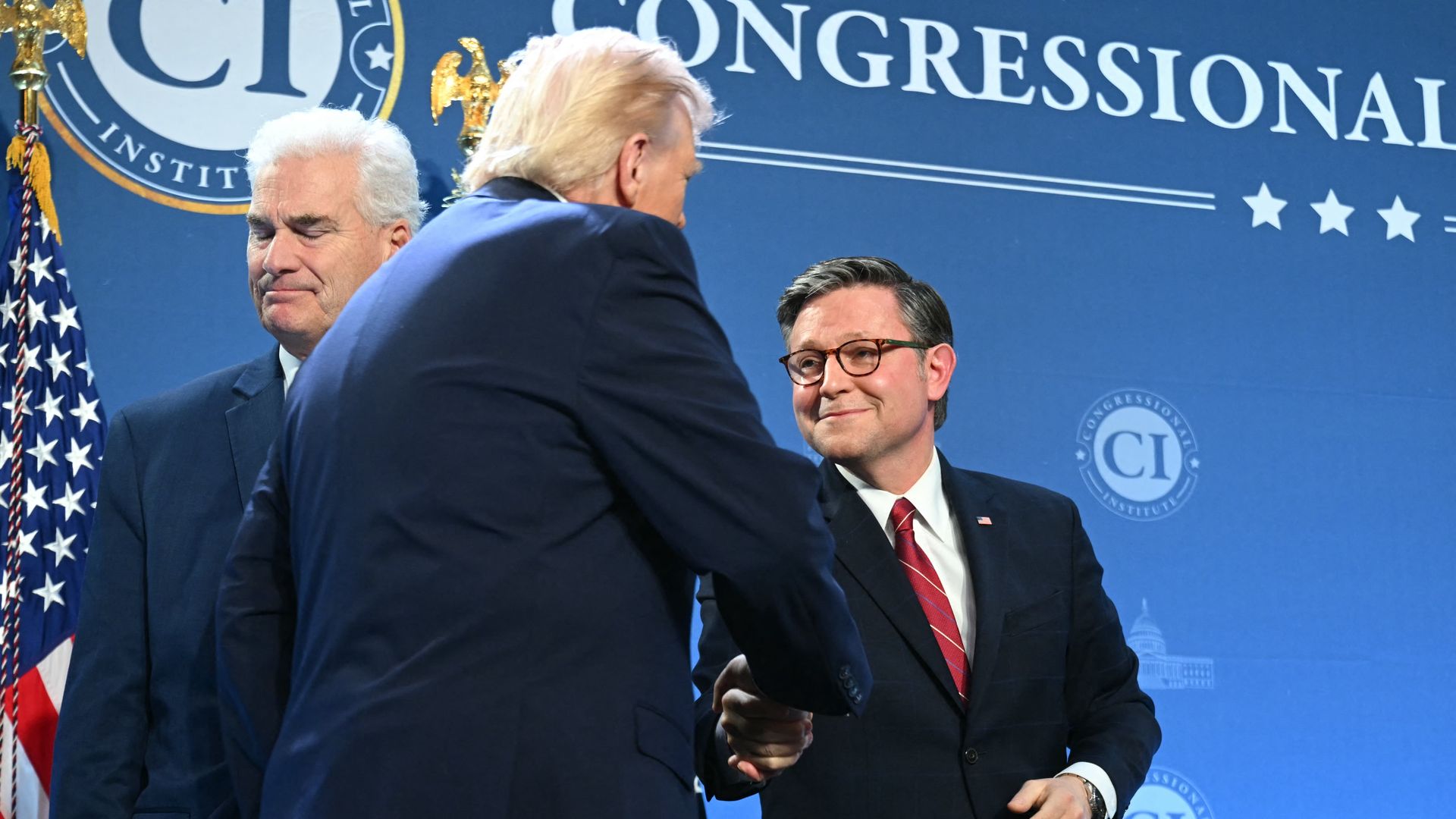
DORAL, FL: President Trump told House Republicans the conflict in Iran will be "over pretty quickly," without giving a firm timeline — and repeated his warning that he would not sign any legislation until the Senate passed the SAVE America Act.
Why it matters: The dual messages — boasts about successes abroad, coupled with frustration with Republicans and Democrats at home — competed for attention in his pep-talk to House Republicans at their annual retreat in Florida.
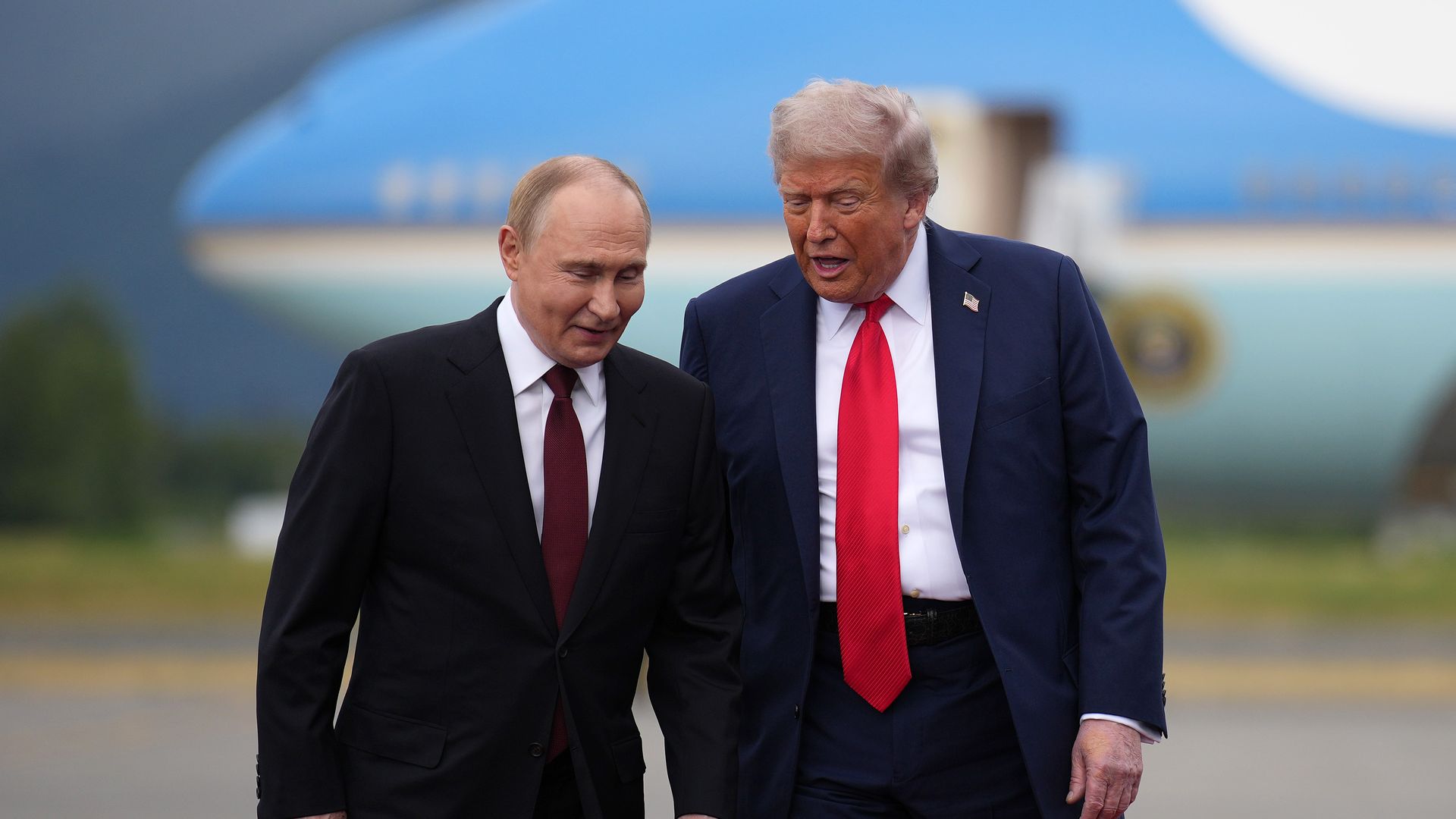
President Trump spoke on the phone with Russian leader Vladimir Putin Monday and discussed the war with Iran and the efforts to end the war in Ukraine, the Kremlin said.
Why it matters: This was the first call between Trump and Putin since the beginning of the war with Iran.
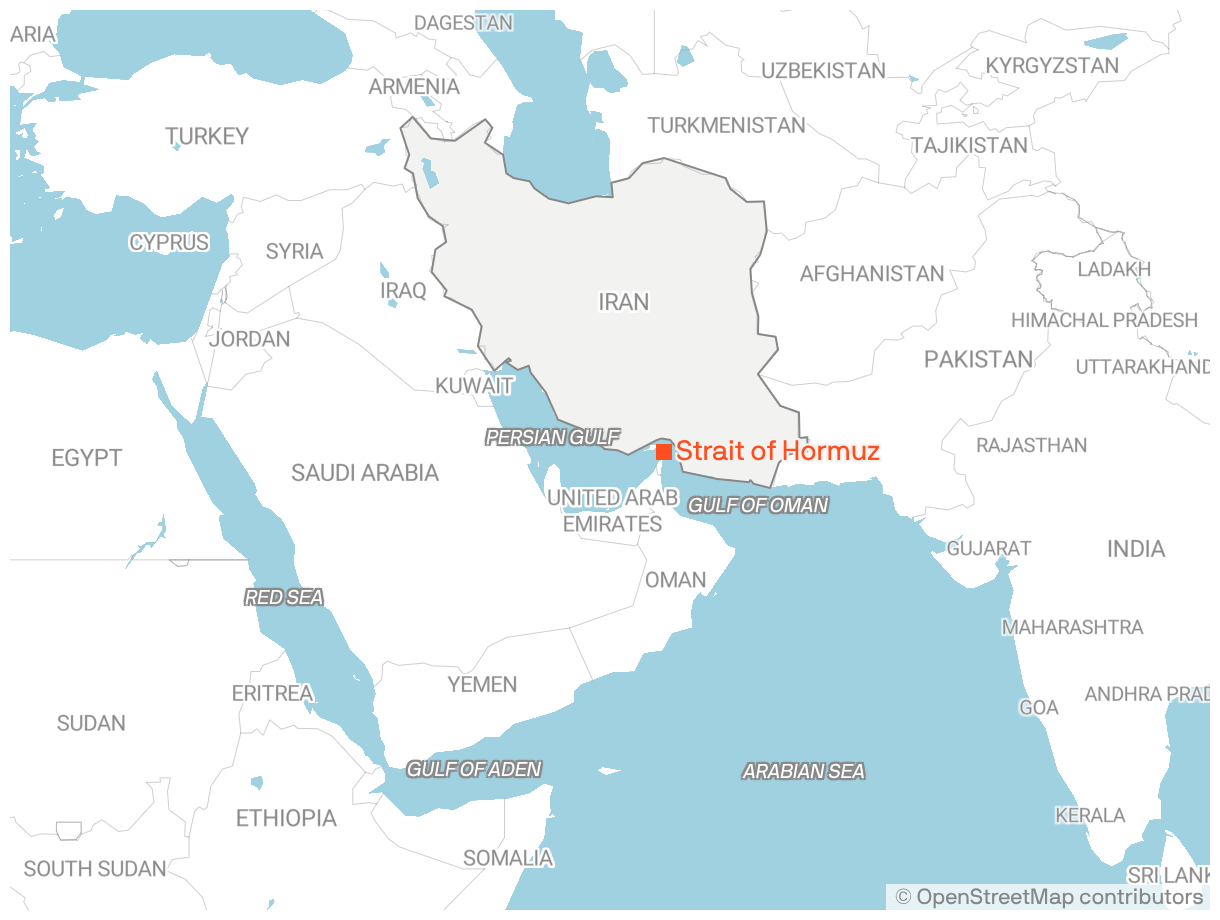
While President Trump has offered political risk insurance and Navy escorts for tankers navigating the Strait of Hormuz, it still remains one of the most difficult waterways in the world to defend.
The big picture: The Strait, which carries roughly 25% of the world's seaborne oil supply, is approximately 21 nautical miles wide at its narrowest point, but the designated shipping lanes are far smaller — concentrating traffic into predictable corridors for Iran to monitor and target adversaries.
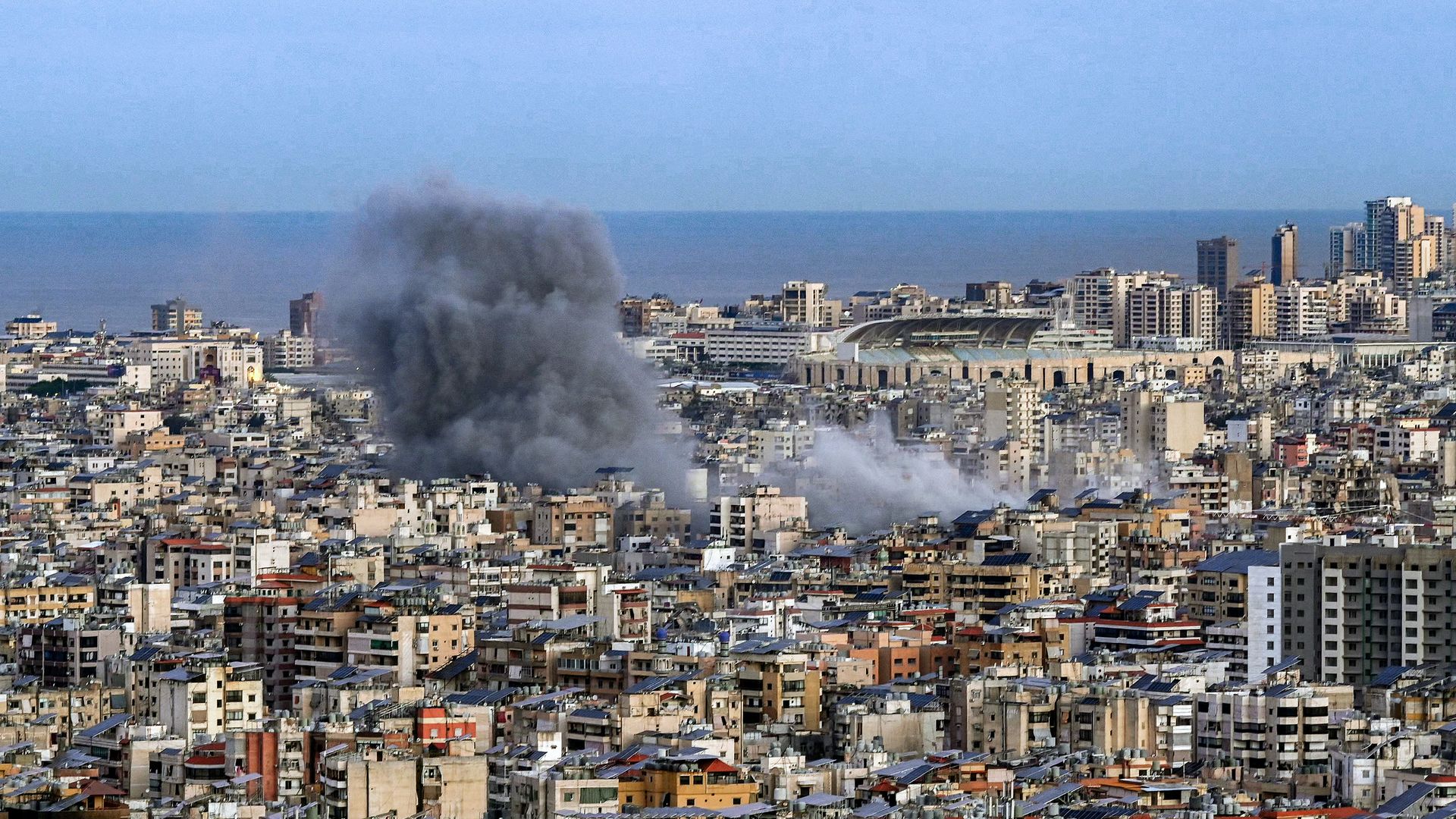
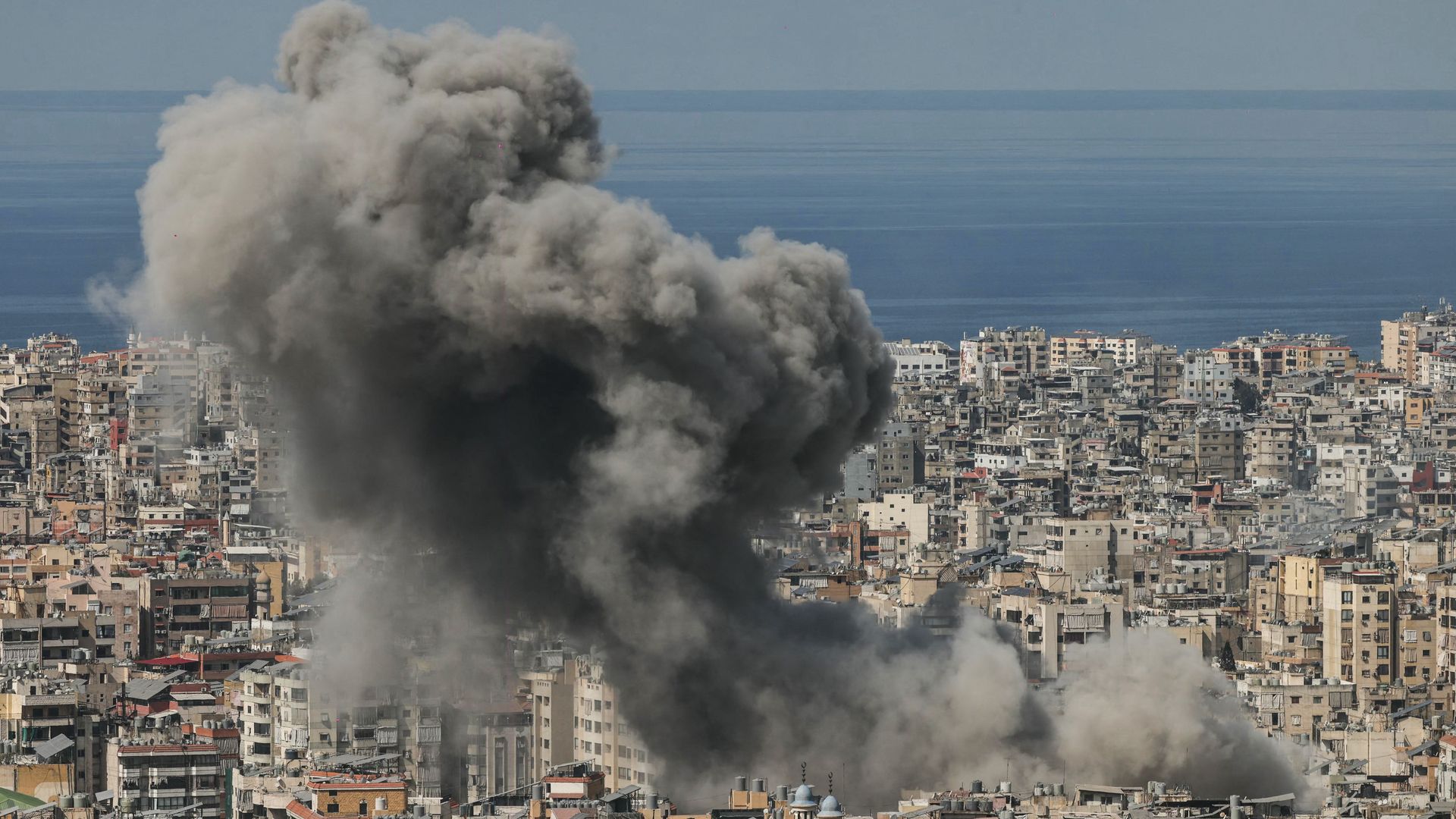
The Lebanese government proposed direct negotiations with Israel — through the Trump administration — aimed at ending the war and reaching a peace agreement, according to five sources with knowledge of the matter.
Both the U.S. and Israeli responses were cool and deeply skeptical, the sources said.
Why it matters: Lebanon's government is extremely alarmed that the renewed war, triggered by Hezbollah's decision to launch rockets at Israel, will devastate the country.
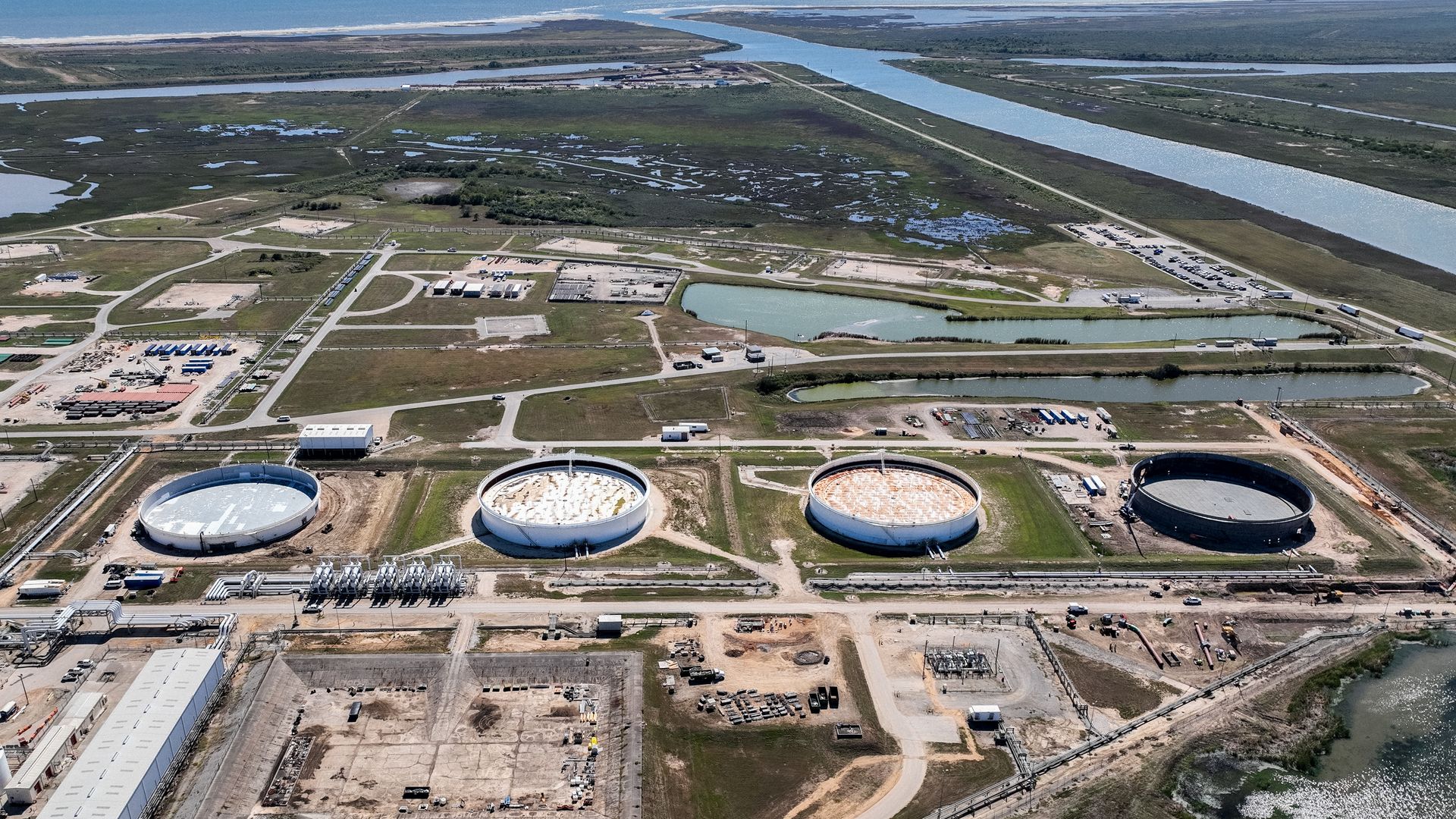
Pressure is mounting on President Trump to tap the Strategic Petroleum Reserve, the world's largest emergency oil stockpile, as gas prices surge in response to the Iran war.
Why it matters: The stockpile sits near its lowest levels in decades, limiting the government's cushion if the conflict drags on.
More than a dozen countries were drawn into the Iran war in its first week, and more appear to be on the cusp.
The big picture: If major powers like China or Russia step in beyond the margins, the regional conflict risks widening into something far more dangerous — a direct U.S.-Russia confrontation by proxy, or a global energy crisis that forces Beijing's hand.
The Iran conflicthas a new economic front: oil topping $100 a barrel, with a near-immediate impact for drivers, travelers and grocery shoppers — while the benefits will flow more slowly to a handful of oil patch states.
Why it matters: Americans were already fed up with high prices. The effects of a widening conflict will ripple across the economy, with uncertainty about how high prices will rise and how long the surge will last.
The Iran war has cast a sharp spotlight on the global economy's reliance on the Strait of Hormuz.
Why it matters: The strait is a chokepoint for critical global commodities — and prices for oil, gas, plastics and fertilizers are already surging on fears of war-related disruptions.
In the first week of the American and Israeli attack on Iran, the economic ripples were looking pretty minimal. But as Week 2 begins, the risks to the global economy are growing much more serious.
The big picture: You can't decapitate the leadership of a country of 90 million people, with expansive military and intelligence capabilities, in the heart of some of the world's most economically important supply chains, without a huge cost.
Oil prices on Sunday crossed into triple digits for the first time since 2022 — a stark sign of how the Iran war is throttling global supplies and raising consumers' costs.
Why it matters: The psychologically important $100-a-barrel mark is going to increase pain for consumers, many of whom don't support the war and didn't have any real warning that it was coming.