What is the Strategic Petroleum Reserve, the U.S. oil stockpile

Add Axios as your preferred source to
see more of our stories on Google.
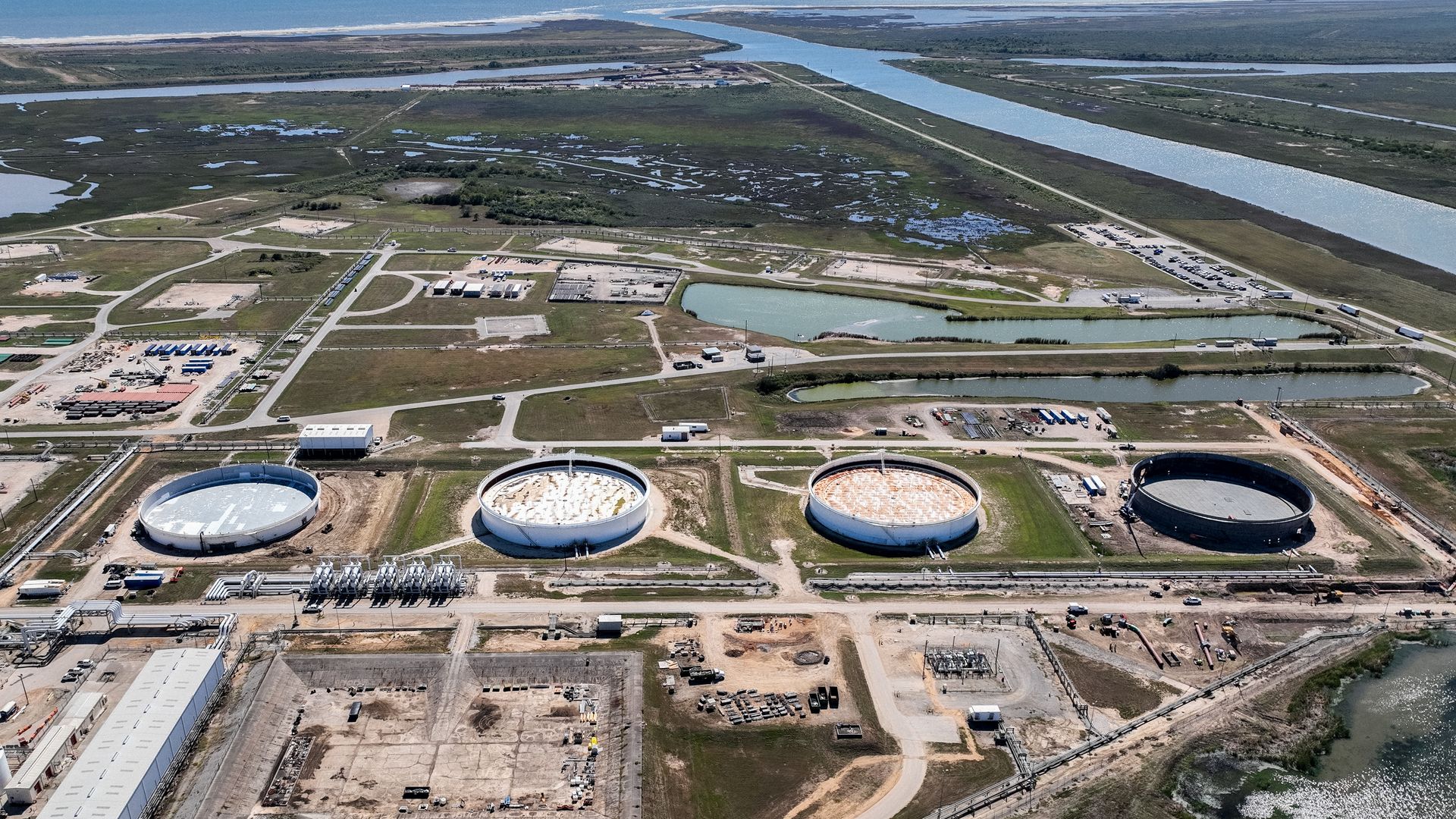
The Strategic Petroleum Reserve storage at the Bryan Mound site in October 2022 in Freeport, Texas. Photo: Brandon Bell/Getty Images
Pressure is mounting on President Trump to tap the Strategic Petroleum Reserve, the world's largest emergency oil stockpile, as gas prices surge in response to the Iran war.
Why it matters: The stockpile sits near its lowest levels in decades, limiting the government's cushion if the conflict drags on.
Driving the news: Senate Minority Leader Chuck Schumer (D-N.Y.) on Sunday called for Trump to release oil from the stockpile to counter soaring gas prices.
- Republicans have resisted tapping the national stockpile and argued the uptick in gas prices is driven by market fears and won't last.
- The reserve was designed for the situation we're in, Tom Seng, an energy finance professor at Texas Christian University, tells Axios.
- "We would hope that in the planning of this attack on Iran, that they had a full-blown picture of the ramifications," Seng says.
Friction point: The GOP criticized former President Biden's historic 2022 SPR release as purely political. His order called for an average of 1 million barrels per day for six months at the outset of Russia's invasion of Ukraine, which disrupted oil markets.
- Trump, who has bragged about increasing the SPR's supply, "finds himself in a crossfire" when considering whether to tap it, Tyler Daniel, a visiting assistant professor of political science at Roanoke College, tells Axios.
- "More Americans are concerned about the price they pay at the pump than with how much oil is in reserve at the SPR," he says.
How it works: The oil is stored in four underground storage sites along the Gulf Coasts of Texas and Louisiana and can reach nearly half of U.S. oil refineries using pipelines, tankers and barges.
- Crude oil hits the market within 13 days of a presidential order — the time it takes to conduct the sales process, award contracts and arrange transportation.
- The energy secretary can also authorize limited releases of 5 million barrels for test sales.
By the numbers: The SPR has a storage capacity of up to 713.5 million barrels.
- As of last month, it held about 415 million barrels of crude oil.
Flashback: The reserve was created after the oil embargo of 1973–74 and is meant to cushion against disruptions like natural disasters, labor strikes, technical failures, political disputes or other conflicts.
- The Department of Energy said it serves as an "insurance policy" against supply disruptions and provides a deterrent to threats.
- Presidents have ordered emergency SPR releases four times: after Operation Desert Storm in 1991, after Hurricane Katrina in 2005, during the 2011 Libya crisis, and after Russia's invasion of Ukraine in 2022.
Go deeper: Schumer urges GOP to tap oil stockpile to lower gas prices
