Oil tops $100 per barrel as Iran war escalates

Add Axios as your preferred source to
see more of our stories on Google.
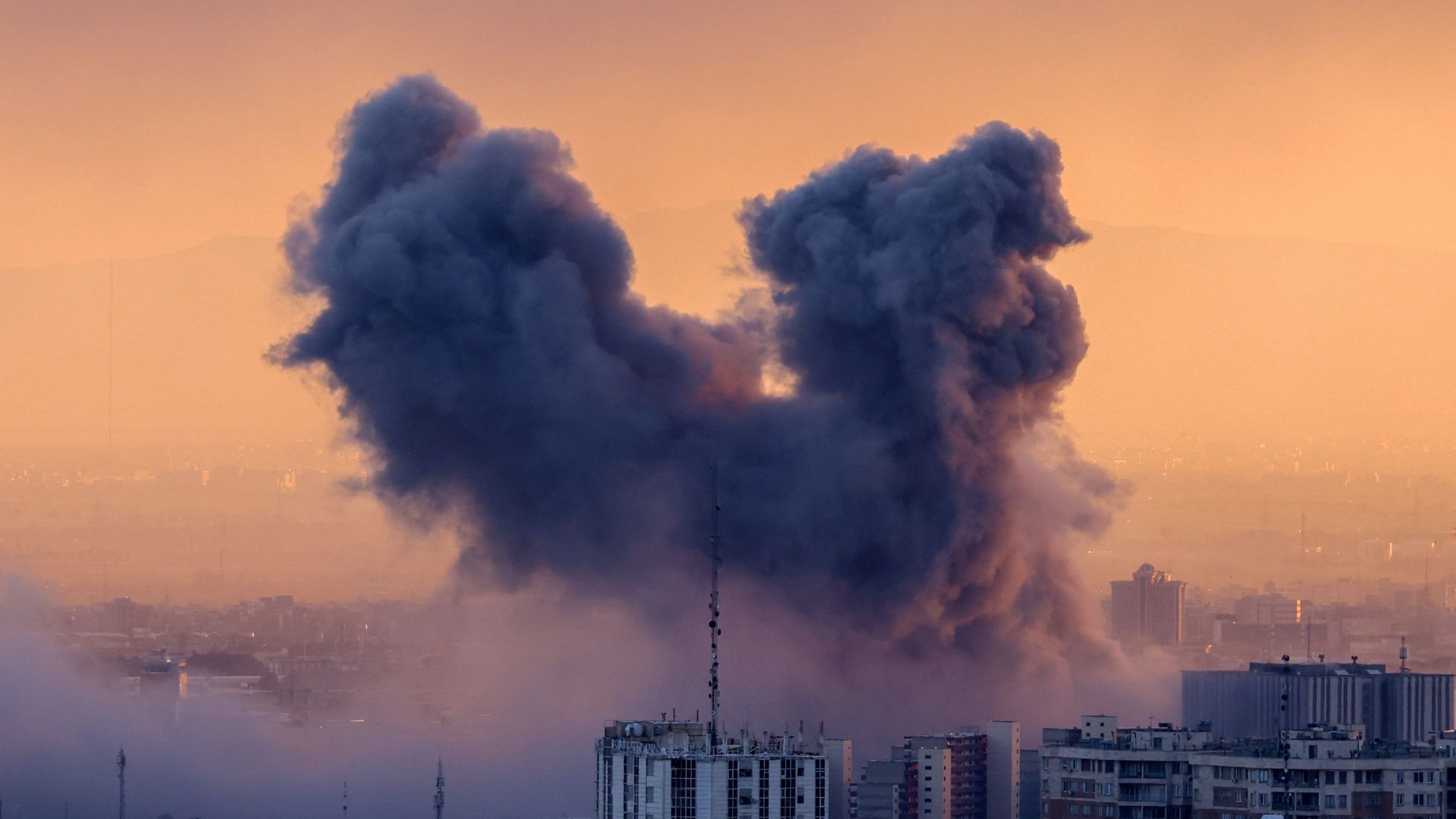
A plume of smoke rises after a strike on Tehran March 3. Photo: Atta Kenare/AFP via Getty Images
Oil prices on Sunday crossed into triple digits for the first time since 2022 — a stark sign of how the Iran war is throttling global supplies and raising consumers' costs.
Why it matters: The psychologically important $100-a-barrel mark is going to increase pain for consumers, many of whom don't support the war and didn't have any real warning that it was coming.
- It's also a political setback for President Trump, who has relished in touting lower gasoline prices on his watch.
Driving the news: The global benchmark Brent crude was trading initially Sunday evening at $101.81, while WTI, the main U.S. metric, was at $101.56. Brent later climbed over $108.
- U.S. oil prices surged further later in the evening and were near $120 a barrel overnight ahead of the start of the week's trading.


Stunning stat: The Iran war has disrupted 20% of global oil supply for nine days and counting, said Rapidan Energy Group in a note Sunday evening.
- That's "more than double the previous record set during the Suez Crisis of 1956-57, which disrupted just under 10%," according to the statement.
Friction point: U.S. drivers are already feeling the effects of crude prices that have now climbed more than 30% since military strikes on Iran began.
- Average U.S. regular gasoline prices have shot up from roughly $3 per gallon before the strikes to $3.45 on Sunday, per AAA tracking, and more increases loom.
The big picture: High risks are keeping tankers away from the narrow Strait of Hormuz off Iran — a vital transit point for energy shipments.
- The price also reflects other risks the expanding conflict poses to regional oil production, processing, storage and export infrastructure.
What they're saying: Trump wrote on Truth Social Sunday evening: "Short term oil prices, which will drop rapidly when the destruction of the Iran nuclear threat is over, is a very small price to pay for U.S.A., and World, Safety and Peace. ONLY FOOLS WOULD THINK DIFFERENTLY!"
Flashback: It's the first time oil prices have reached $100 since 2022, when dislocation and risk from Russia's invasion of Ukraine occurred alongside the post-COVID demand surge.
State of play: Trump administration officials are scrambling to contain the cost increases.
- The U.S. International Development Finance Corp. is offering political risk insurance and guarantees, though the usefulness to the shipping industry remains unclear.
- Trump has also floated potential naval escorts, and on Thursday the Treasury Department issued a 30-day sanctions waiver to enable Indian refiners to buy more Russian oil.
- Energy Secretary Chris Wright said on "Fox News Sunday" that higher prices are "a small price to pay to get to a world where energy prices are returned back to where they were, and I'm talking weeks, certainly not months."
Yes, but: White House options are limited.
- "Oil and LNG prices will continue climbing until credible measures enable resumed shipment through the strait," Eurasia Group analysts said in a note Friday while prices were still in the $90s.
- Senate Minority Leader Chuck Schumer (D-N.Y.) on Sunday called on Trump to release oil from the national stockpile — an idea that Republicans have been slow to embrace.
- Tapping the Strategic Petroleum Reserve could deprive Republicans of a talking point: that then-President Biden's move to do so in 2022 was done for purely political reasons.
Context: Despite the recent spikes, prices at the pump are nowhere near historical highs.
- The average price briefly breached $5 per gallon in mid-2022.
What we're watching: The strains on the system are likely to get worse as storage space runs out.
- "Production shut-ins in Iraq and Kuwait are already happening and might spread to UAE and even Saudi Arabia over time," Barclays' Amarpreet Singh said in a note Friday.
The bottom line: If the current situation persists for another couple of weeks, Brent prices could test $120, Singh wrote — a stunning turnabout from what had been a pretty soft and well-supplied global market.
- "These numbers might seem too high, especially given widespread pessimism about the oil market outlook heading into this year, but we reiterate that fundamentals are stronger and risks are bigger than the Russia-Ukraine conflict, when we saw these levels materialize," he wrote.
Go deeper... Scoop: U.S. dismayed by Israel's Iran fuel strikes, sources say
Editor's note: This article has been updated with comment from President Trump and Rapidan Energy Group and with further details on surging oil prices, including a graph.
