Airplane manufacturers Boeing and Airbus will lose roughly $39 billion in combined plane contracts with Iranian carriers as a result of the Trump administration's reimposition of sanctions following the U.S. withdrawal from the Iran nuclear deal, the Washington Post's Steven Mufson and Damian Paletta report.
The backdrop: Both companies were reportedly the biggest beneficiaries of the Obama-era pact that eased sanctions on Iran in return for increased restrictions on its nuclear weapons program. In 2016, Airbus signed a deal to supply Iran Air with 100 airplanes for about $19 billion, and Boeing had a $20 billion contract to deliver 110 aircrafts. "The aircraft sales were among the most sought-after contracts for Iran," write Mufson and Paletta.
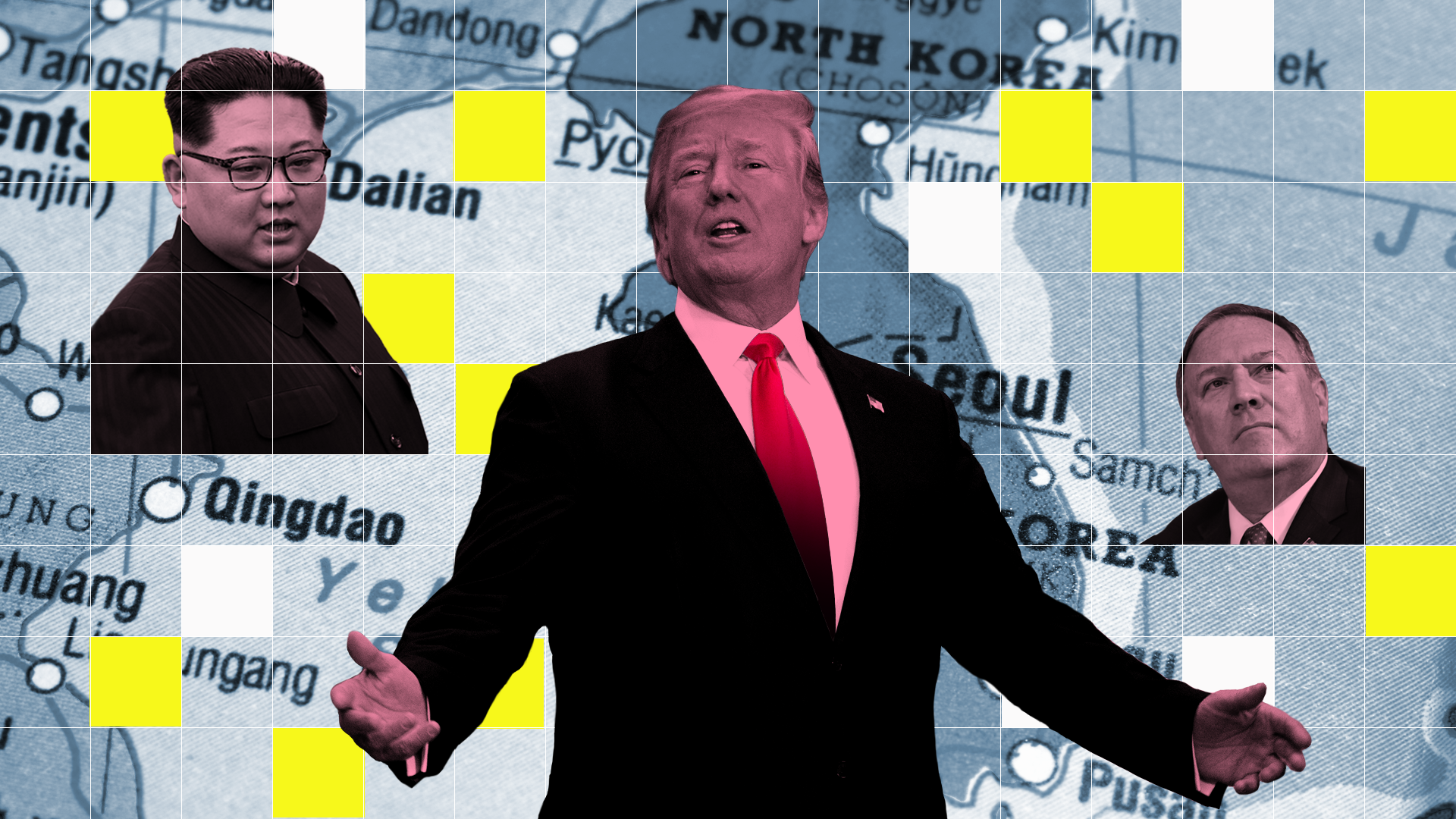
Three U.S. prisoners in North Korea are coming home, and President Trump will be meeting them when the plane arrives in the wee hours of Thursday morning.
Why it matters: "[T]he release of the three Americans is permanent, and Mr. Kim forfeited a bargaining chip in freeing them. No other Americans are believed to be held prisoner in North Korea," Choe Sang-Hun writes for the N.Y. Times.
Beijing is paying top dollar to woo star Chinese scientists back home to win the AI race and build a home-grown chip industry. But for the vast majority of foreign-educated graduates, finding work back in China is tough.
What's going on: The U.S. is making it harder for foreign university graduates to remain in the U.S., Axios' Stef Kight reported earlier. Meanwhile, Chinese students in the U.S. are increasingly choosing to go home after getting their diploma, despite the intense competition.
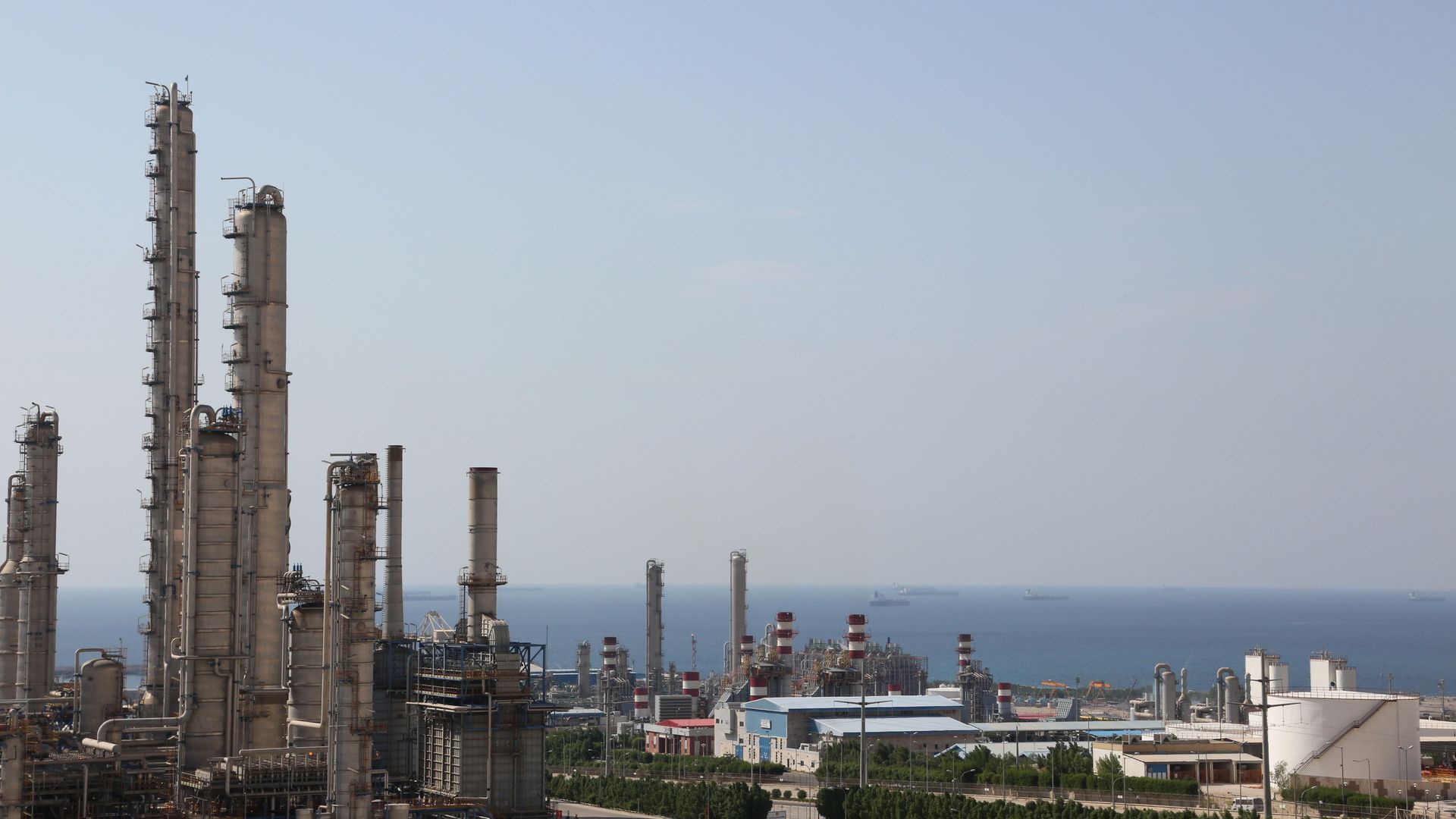
The U.S. exit from the Iran deal will hurt European countries, but leave room for the Chinese and Russians.
The bottom line: Last year, the U.S. exported only $140 million in goods to Iran, but the stakes are far higher for European countries. Still, if they have to choose between the $400 billion per year Iranian market and the $18 trillion per year U.S. market, they will chose the U.S., says Barbara Slavin, director of the Atlantic Council's Future of Iran Initiative.
That the 2015 nuclear deal has so far delivered on its core promise is not in dispute by most observers. If Iran today chooses to dash for a nuclear weapon it will be found out, thanks to the restraints imposed on it by the deal.
Yes, but: The performance of the deal was not the key factor in President Trump’s withdrawal of the U.S. from the agreement. His decision points to the greater aim of bringing about regime change in Tehran, as suggested by his appeal to the Iranian people to rise up and reclaim their country from the Islamist dictatorship.
An ex-CIA agent has been charged with espionage for allegedly passing information to Chinese intelligence officials, per the NY Times.
Why it matters: This follows a years-long investigation, launched in 2012 amid suspicion that a mole had betrayed the identities of CIA informants who kept disappearing. Jerry Chun Shing Lee, the former agent, was arrested in January and charged with the far less serious charge of illegally retaining classified information, but these charges confirm he's suspected of spying for China.
After previously saying he'd like to hold his summit with Kim Jong-un at the border between North and South Korea, President Trump said today that the location will be announced soon — and it isn't the DMZ.
Smart take: That leaves Singapore as the odds-on favorite. The Washington Post's David Nakamura explains why: "Trump mentioned it publicly last week along with DMZ, and ruled out DMZ today. Singapore has diplomatic relations with North Korea and a DPRK embassy there. Singapore regularly facilitates 'third country' diplomacy in Asia."
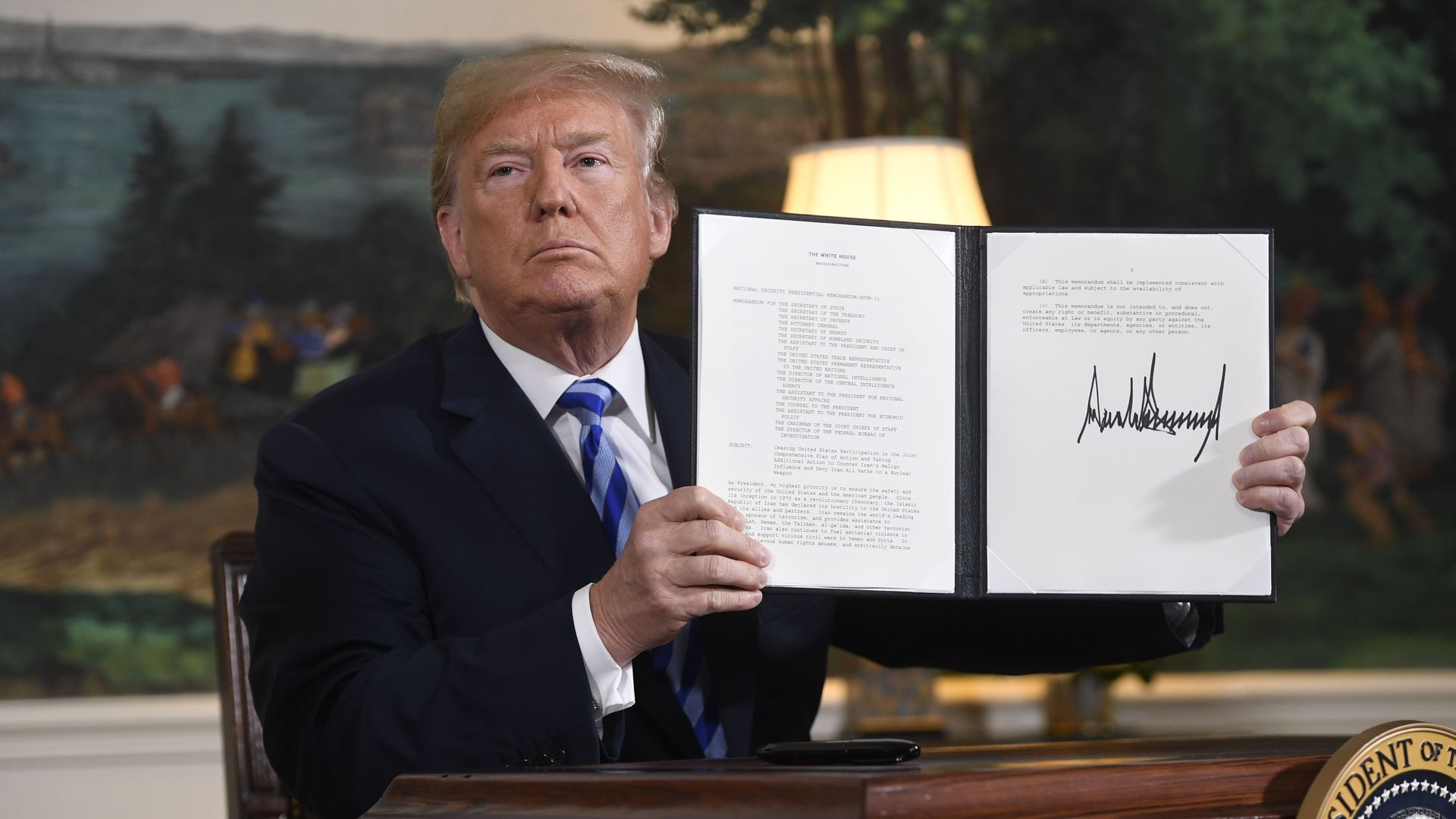
President Trump’s decision to withdraw from the nuclear deal with Iran doesn’t only deliver a blow to the global nonproliferation regime and stability in the Middle East. It also poses major risks for Washington’s South Asia strategy.
Why it matters: The administration’s objectives in South Asia include strengthening ties with India and weakening the Taliban in Afghanistan. Scuttling the Iran deal could undercut both goals.
Iran recruits heavily from online security forums to staff suddenly-launched hacking campaigns, according to new research by Recorded Future.
Why it matters: The report comes a day after security experts expressed fears Iran may retaliate against the United States for withdrawing from the Iran nuclear deal. As a Recorded Future official said yesterday — albeit without the detail of the report — if emergency hiring leads Tehran to hire amateurs, they may be less amenable to government control.
The Wall Street Journal reports that Toshiba has basically given up on the proposed $18 billion sale of its memory chip to a Bain Capital-led consortium, due to Chinese regulatory hurdles.
Thought bubble: This deal isn't healthy, but it has a bit more pulse than WSJ seems to think.
Why it matters: There’s no denying that this is a crisis of Trump’s own making. Iran is not in violation of the JCPOA, a fact confirmed by not only IAEA inspectors but also by Trump’s own Secretary of Defense. Even the Israeli intelligence that Trump cited shows nothing more than the fact that Iran had a nuclear program prior to 2003.
President Trump’s decision to abrogate the Iran nuclear deal was supported less by a threat from Iran than by a misrepresentation of what the Joint Comprehensive Plan of Action (JCPOA) achieves.
The big picture: Many of the reasons Trump laid out for withdrawing from the JCPOA today were inaccurate. The deal does not pave the way for Iran to “reach the brink of a nuclear breakout”; in fact, it extended Iran’s nuclear breakout time from about a month to more than a year. It also rolled back Iran’s existing program, kept it under strict limitations and included a pledge from Iran that it would never seek a nuclear weapon.
After a decade of discussing a potential military hotline to avoid escalation in the East China Sea, Tokyo and Beijing have agreed to establish one, Reuters reports.
The big picture: Tensions in the Sino-Japanese relationship have been simmering down, with the two countries working more closely together amid mounting uncertainty around U.S. foreign policy and a potential trade war.
President Trump tweeted Wednesday morning that Secretary of State Mike Pompeo is returning from North Korea with the three Americans — Tony Kim, Kim Hak-song, and Kim Dong-chul — who had been detained there.
More from POTUS: "Secretary Pompeo and his 'guests' will be landing at Andrews Air Force Base at 2:00 A.M. in the morning. I will be there to greet them. Very exciting!"
Crude prices hit their highest levels in well over three years Wednesday morning after President Trump's decision to bail on the Iran nuclear deal and to reimpose energy sanctions after a 180-day wind down.
By the numbers: WTI crossed $71 per barrel for the first time since late 2014, while Brent crude went above $77. This morning had WTI trading at $71.04 and Brent at $77.13.
World leaders and experts warn of dominoes of destabilization in the Middle East. But a source who was with President Trump yesterday said he was in high spirits about his high-stakes decision to withdraw from the Iran deal.
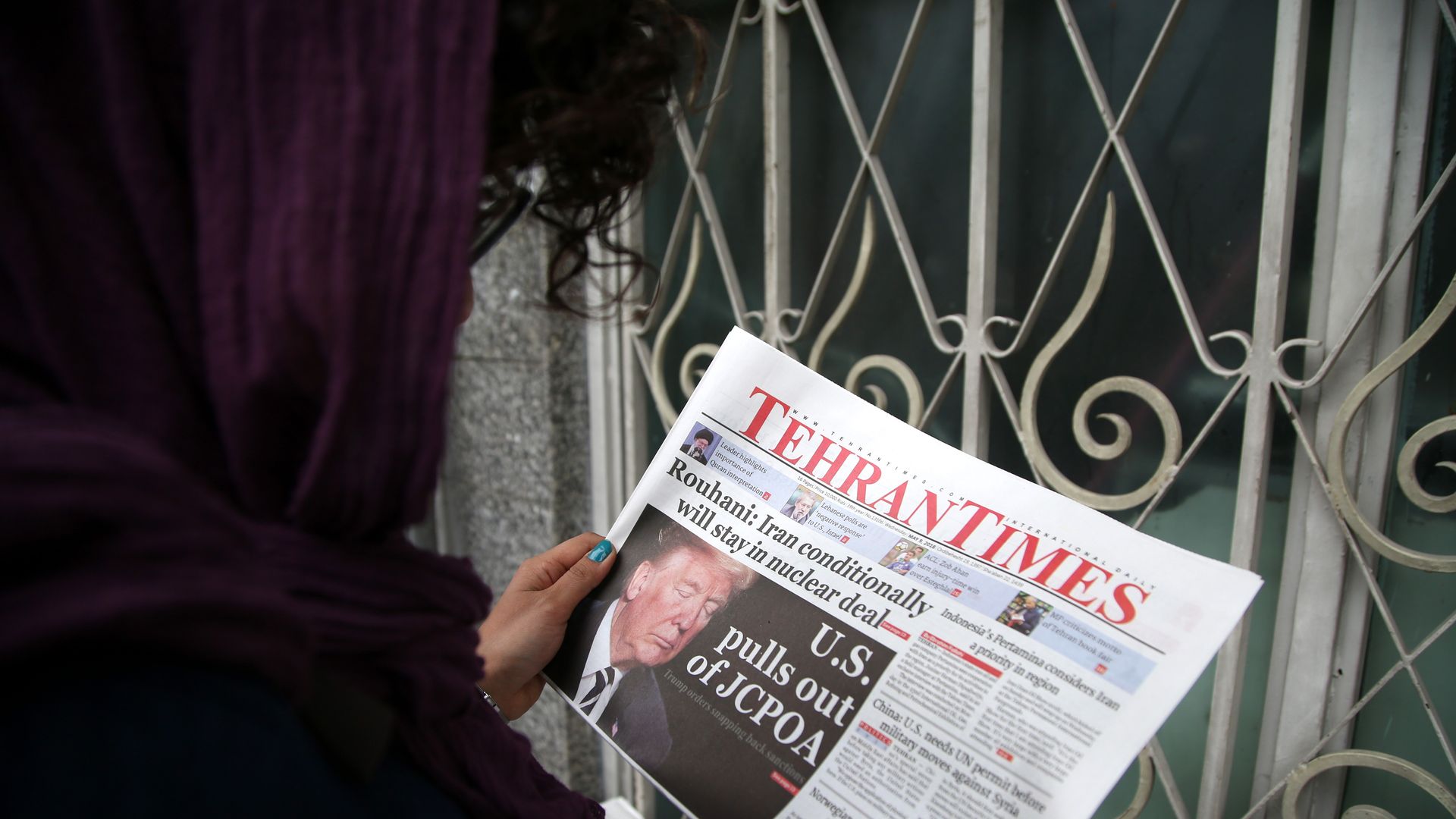
Why it matters: It's history, his way. The banner headline of today's N.Y. Times: "TRUMP ABANDONS IRAN PACT HE LONG SCORNED ... Move Creates Divide With Allies and Complicates North Korea Talks."
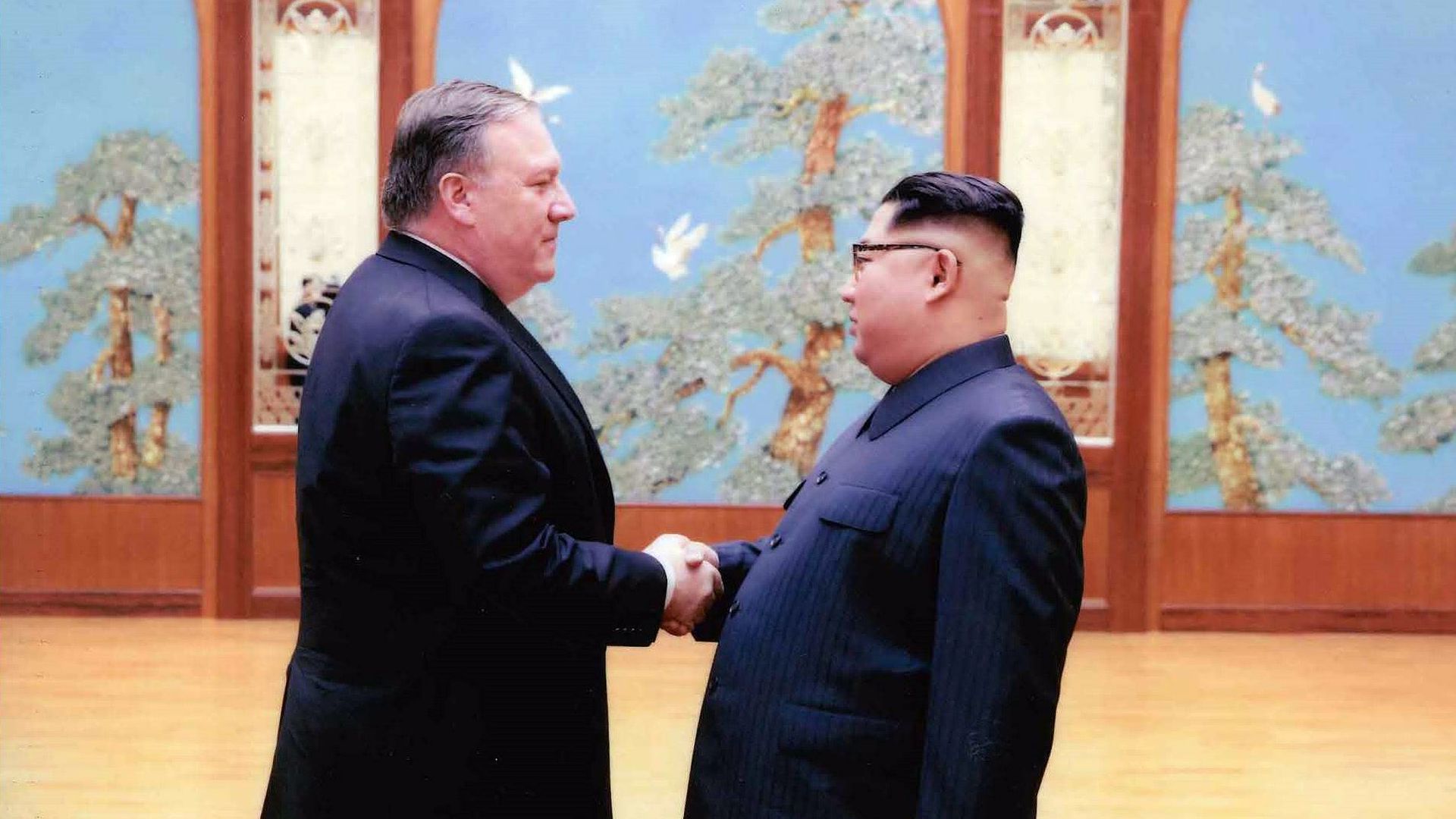
South Korea's Blue House has announced that North Korea will release three American prisoners into the custody of visiting U.S. Secretary of State Mike Pompeo, according to Yonhap News.
Timing: President Trump announced earlier today that Pompeo was visiting North Korea to nail down the details of the anticipated summit between Trump and North Korea leader Kim Jong-un. When asked if the prisoners would be released today, Trump responded, "We will soon be finding out. It would be a great thing if they are."