Experts are split over whether President Trump's move to withdraw from the Iran deal today will cause an escalation in Iranian cyber espionage, either spying or destructive activity.
The big picture: Iran's cyber-espionage program has become fairly sophisticated in recent years, increasing the stealth and efficacy of its malware. But it doesn't take much sophistication to launch many types of destructive attacks — a response Iran pursued five years ago in the wake of the Stuxnet attack on its nuclear program, which is widely credited to the U.S. and Israel.
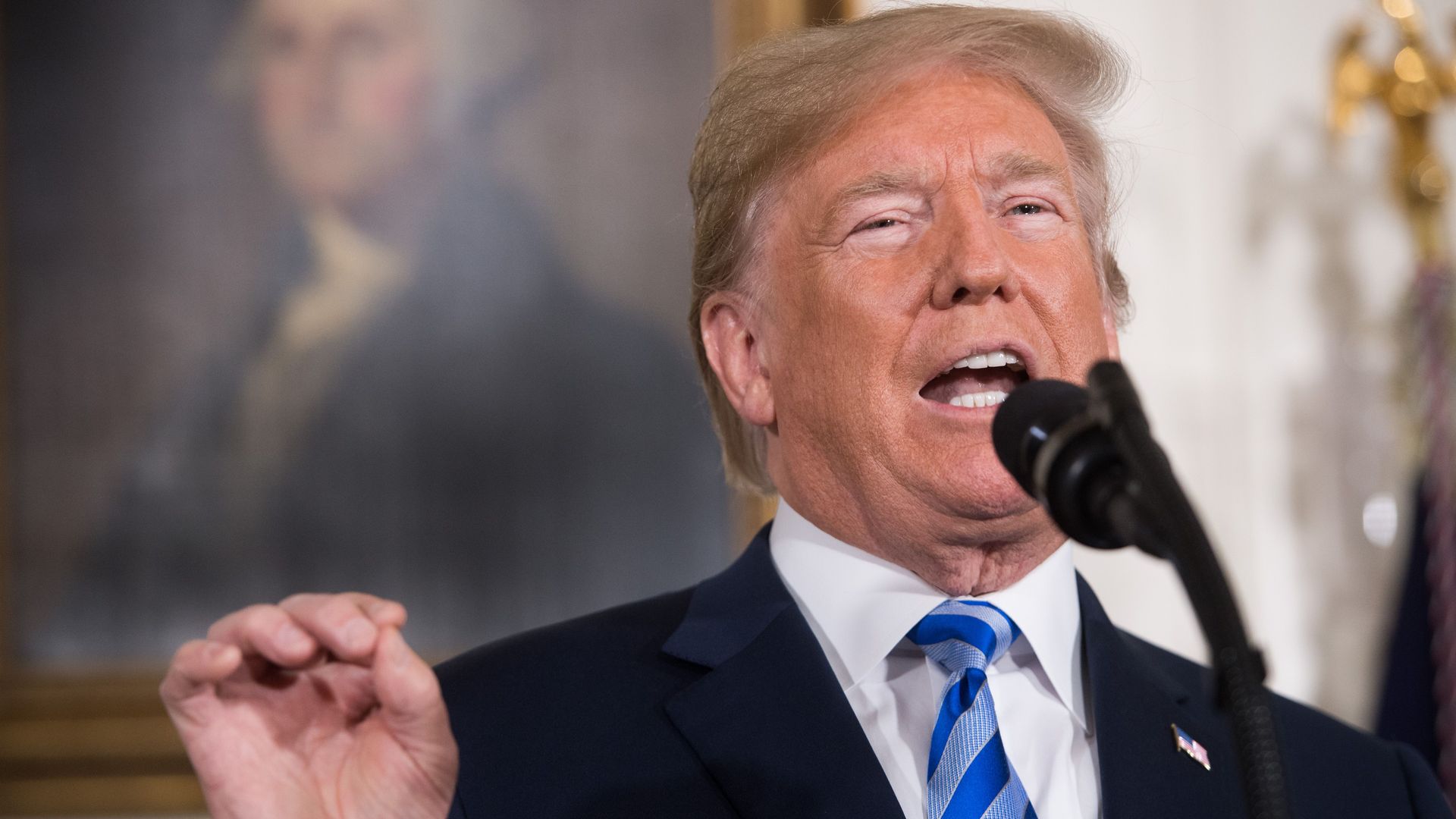
President Trump took the most radical option available in pulling out of the Iran nuclear deal, which he variously described as “horrible,” “one-sided,” “disastrous,” “decaying” and “rotten.” He also announced the re-imposition of U.S. sanctions against Iran and those who continue to do business with Iran.
Why it matters: Trump’s decision could force a showdown over Iran’s nuclear program now rather than in a decade. If Iran were to resume nuclear activities proscribed by the Joint Comprehensive Plan of Action (JCPOA), there is a real risk the U.S. or Israel would launch attacks against it, starting a regional conflict of unknown dimensions.
President Trump’s core foreign policy idea could be described as the Withdrawal Doctrine: He has already withdrawn from the Paris climate agreement and the Trans-Pacific Partnership trade accord. He has also threatened to withdraw U.S. troops from Syria and South Korea and to reduce American support to NATO.
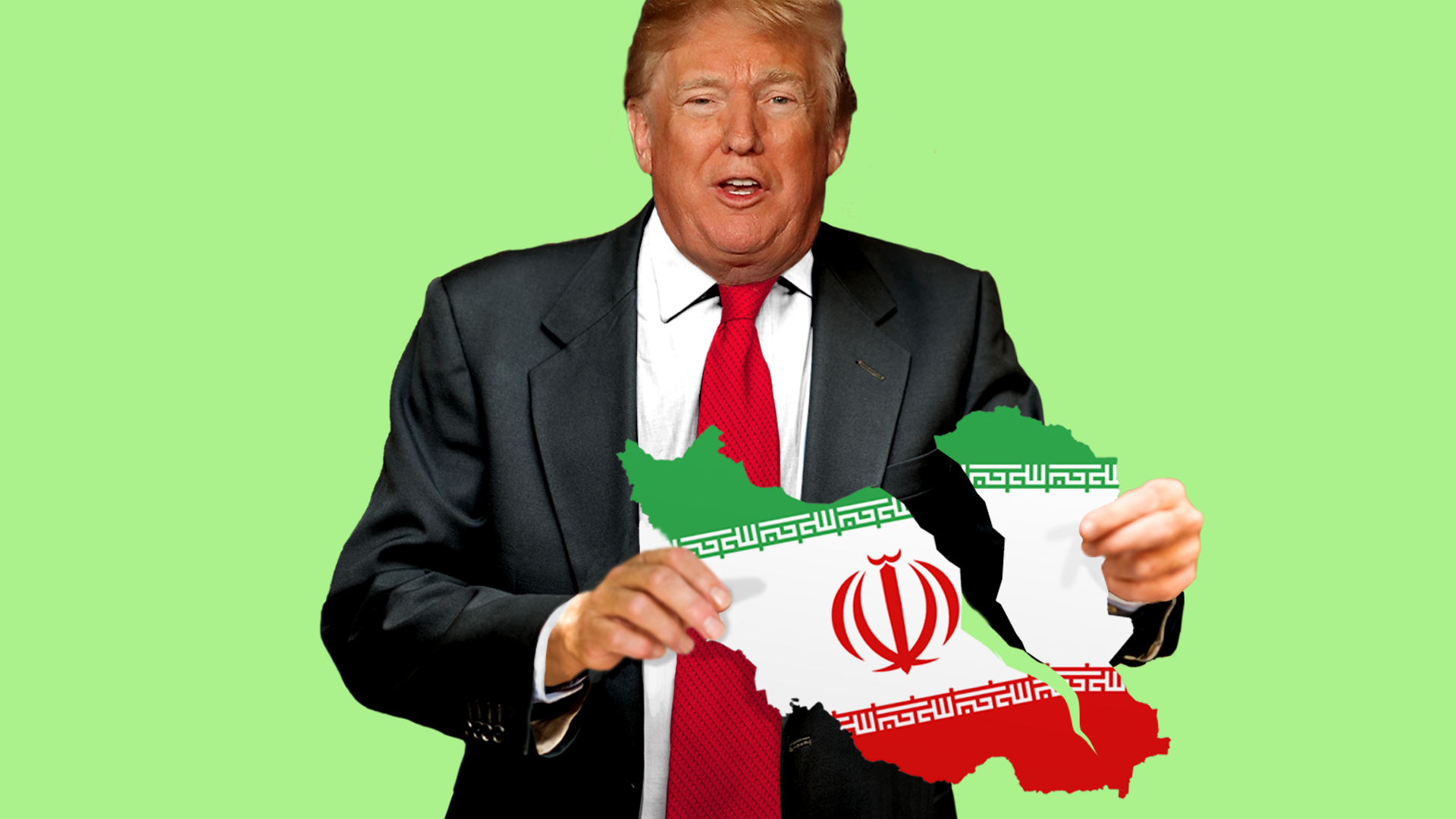
What’s new: Trump announced on Tuesday that he will pull out of the Iran nuclear deal — the greatest manifestation of his Withdrawal Doctrine to date, and one with grave risks for U.S. security interests.
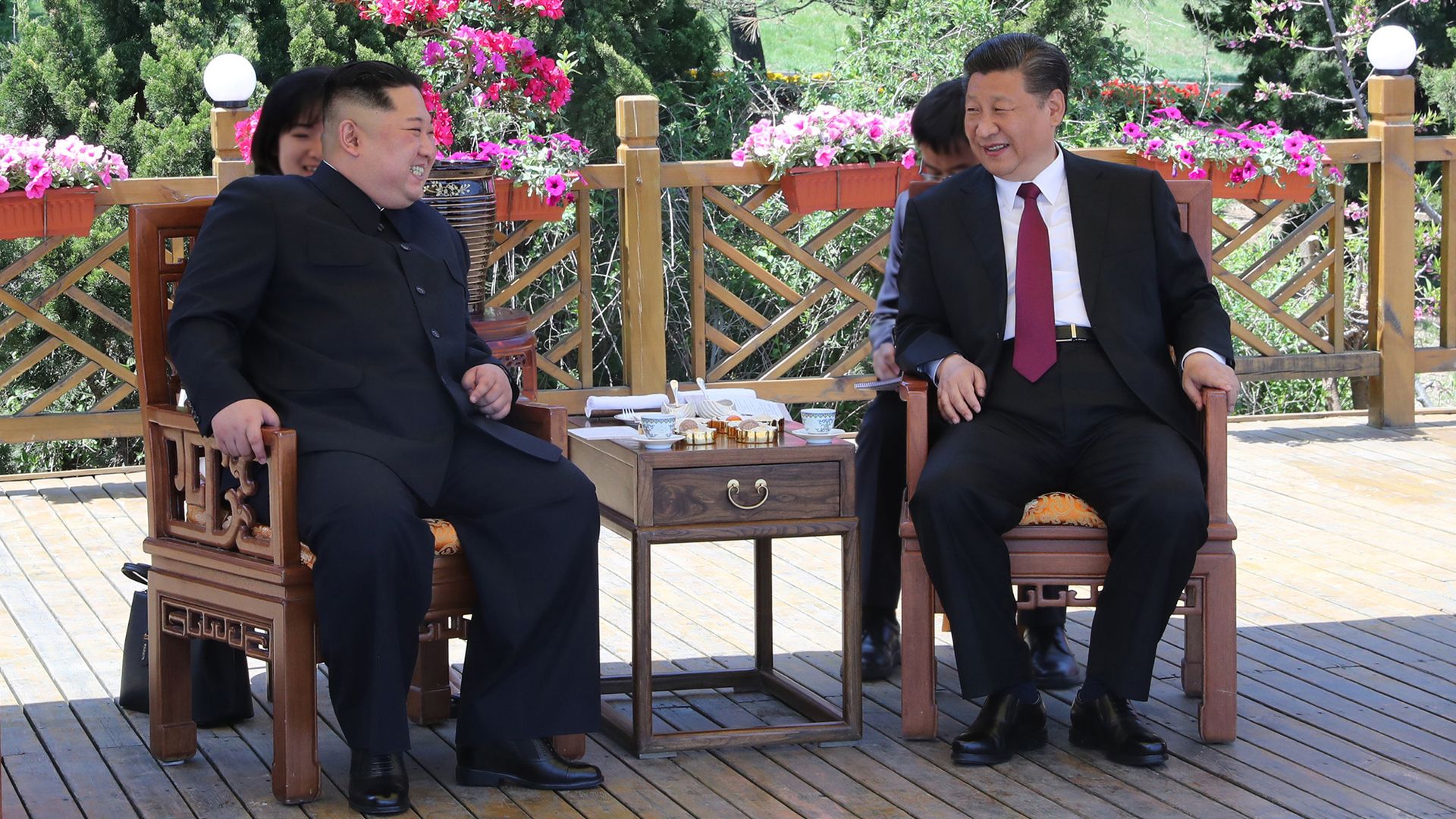
Kim Jong-un's second visit to China in 40 days, following his March 28 meeting with President Xi, demonstrates that the two leaders continue to work together as closely as “lips and teeth,” a metaphor long used to describe the relationship between North Korea and China.
Why it matters: With U.S. pressure mounting, Kim needs to ensure China’s support before meeting with Trump, while China wants to show that it is still a key player. The two leaders doubtless exchanged views and coordinated strategy.
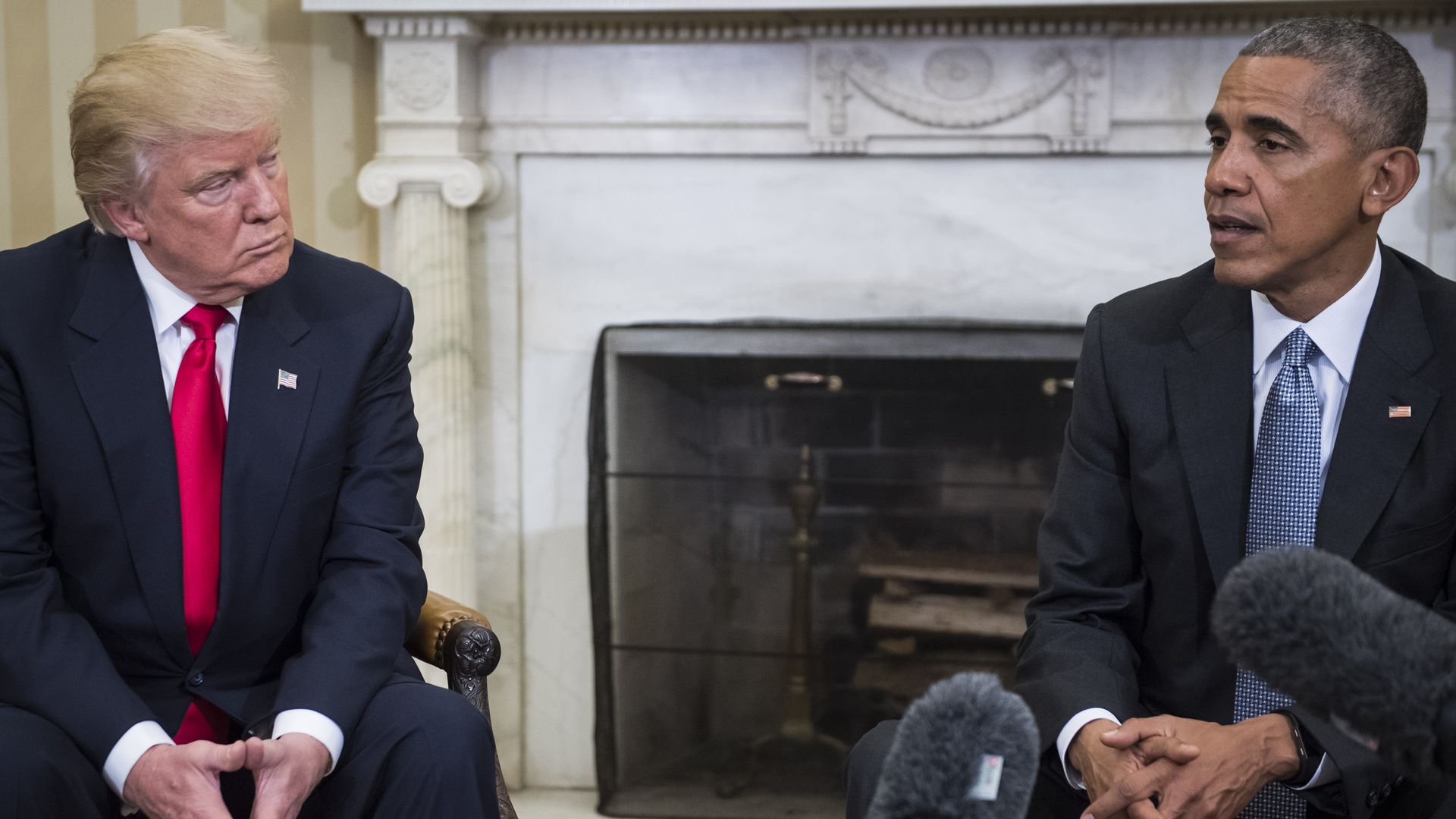
Barack Obama released a statement today calling President Trump's decision to withdraw from the Iran nuclear deal — one of Obama's landmark achievements as president — a "serious mistake."
Key quote: "Walking away from the JCPOA turns our back on America’s closest allies, and an agreement that our country’s leading diplomats, scientists, and intelligence professionals negotiated. In a democracy, there will always be changes in policies and priorities from one Administration to the next. But the consistent flouting of agreements that our country is a party to risks eroding America’s credibility, and puts us at odds with the world’s major powers."
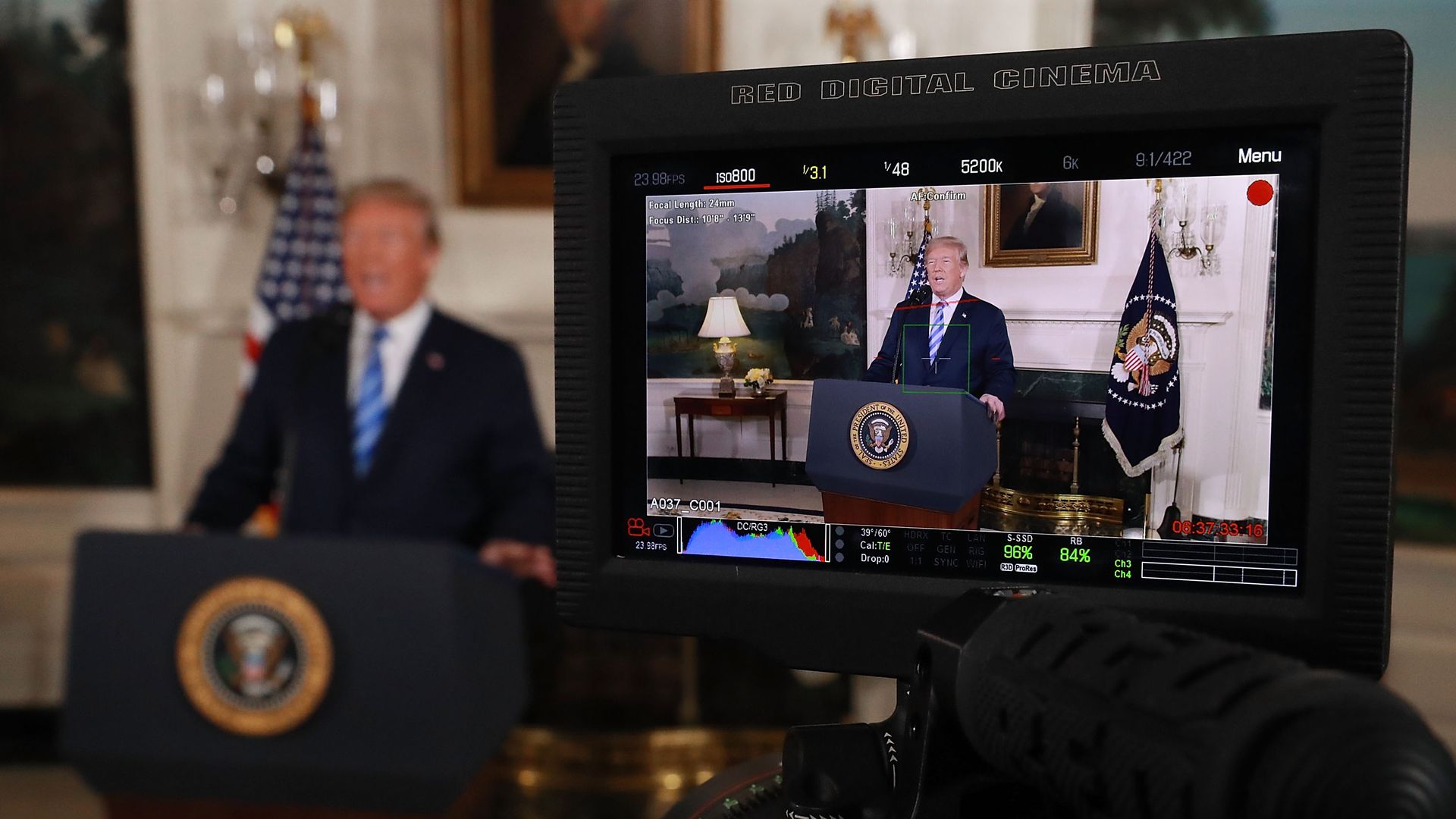
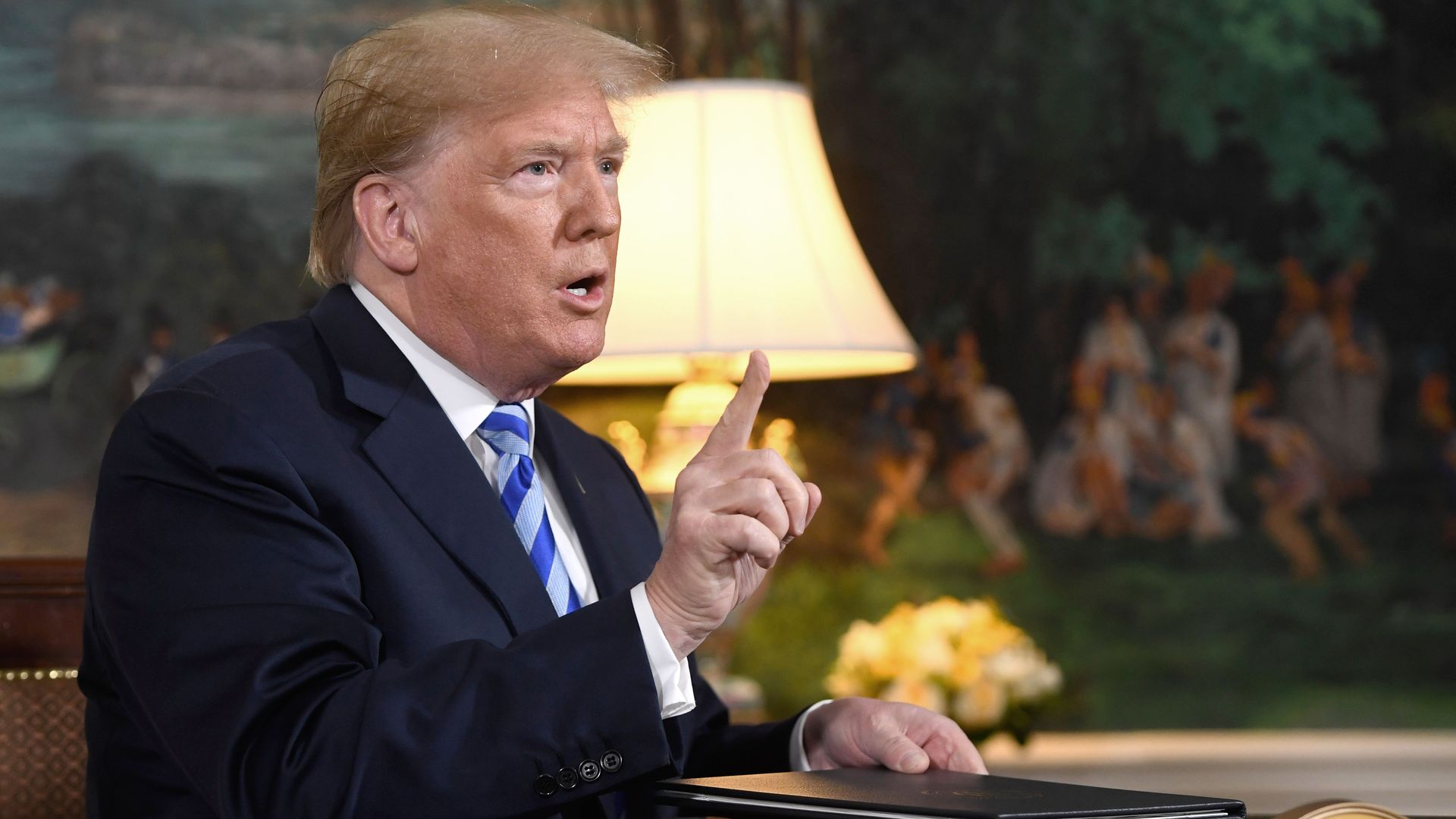
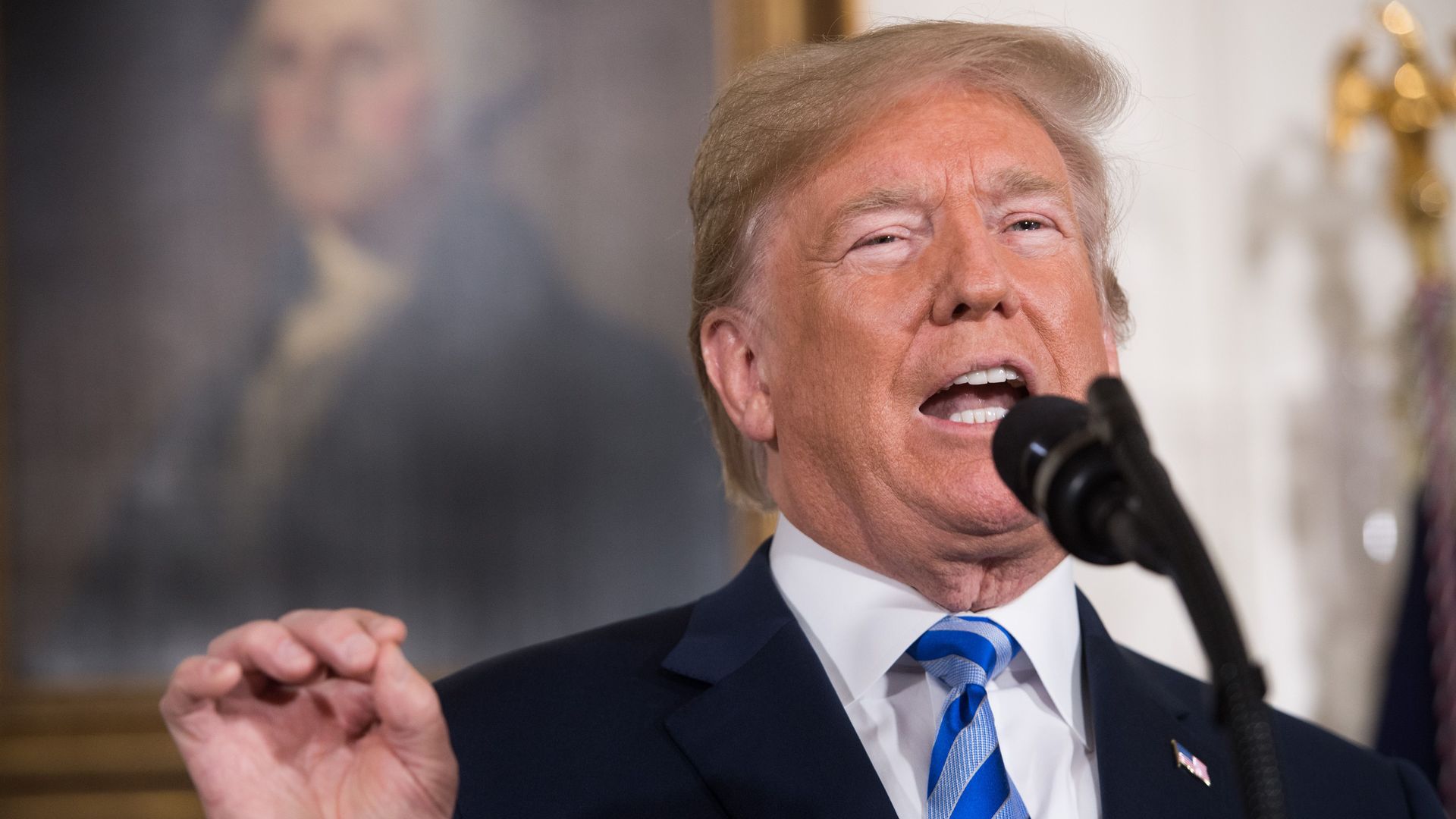
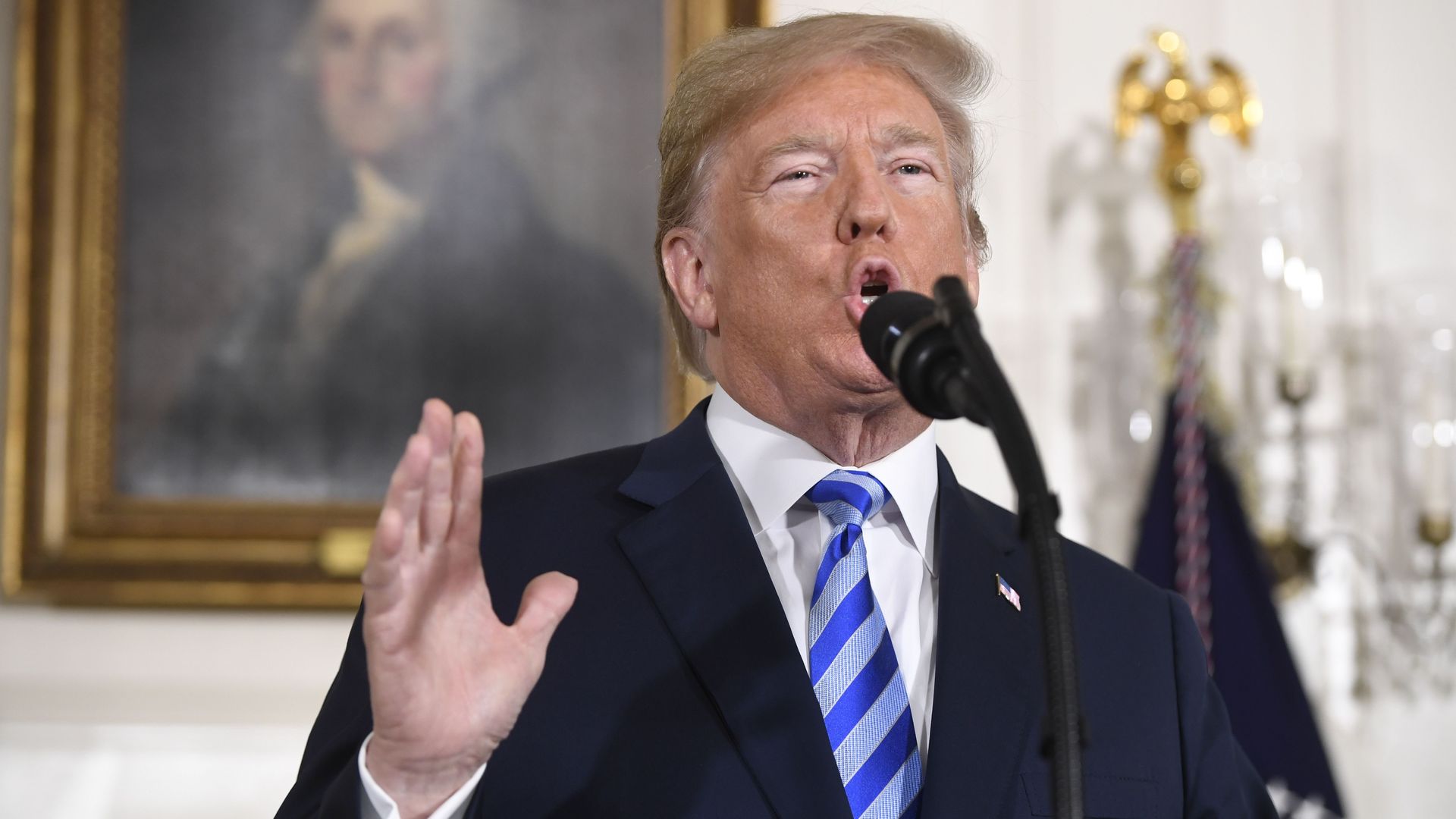
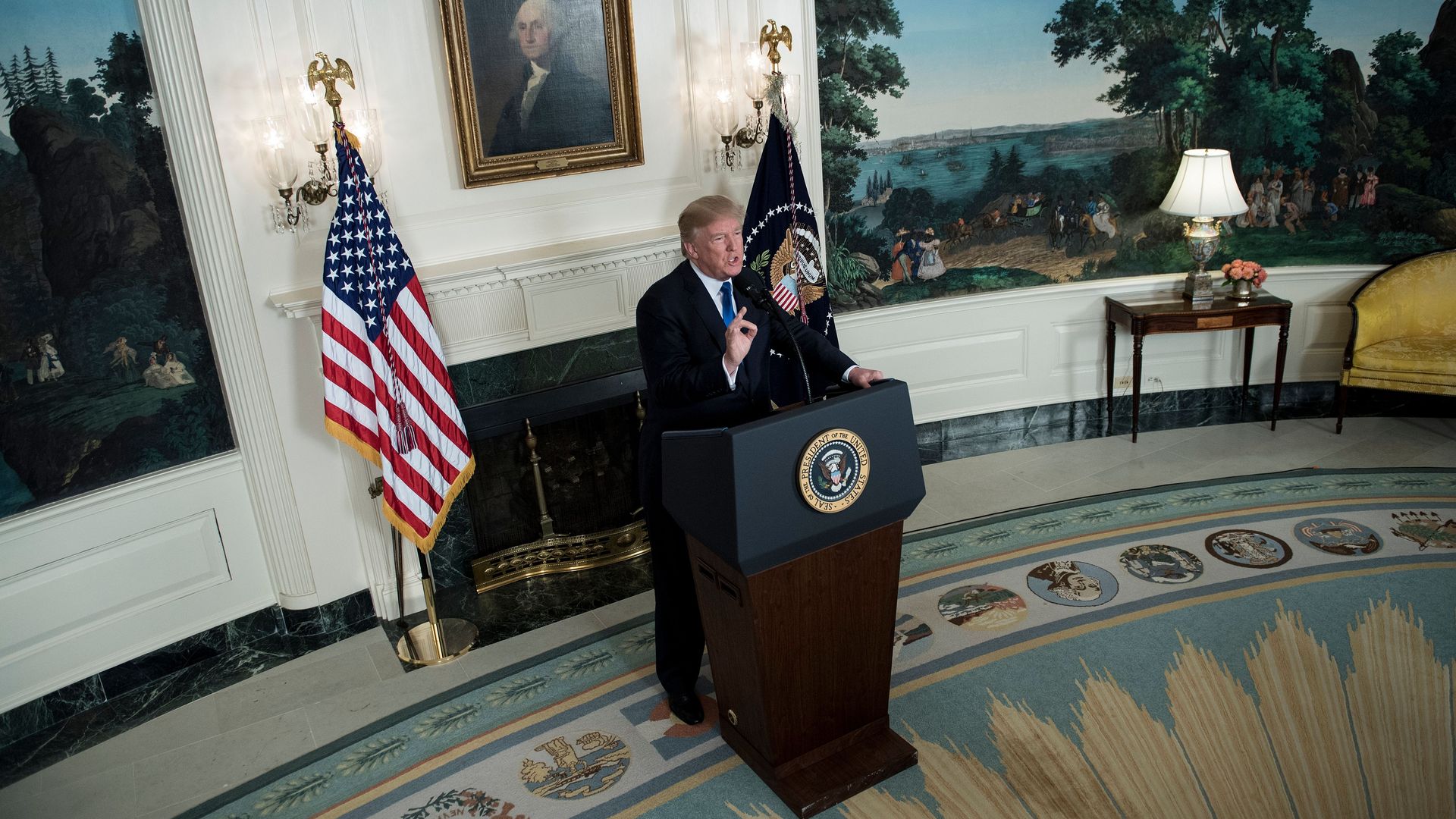
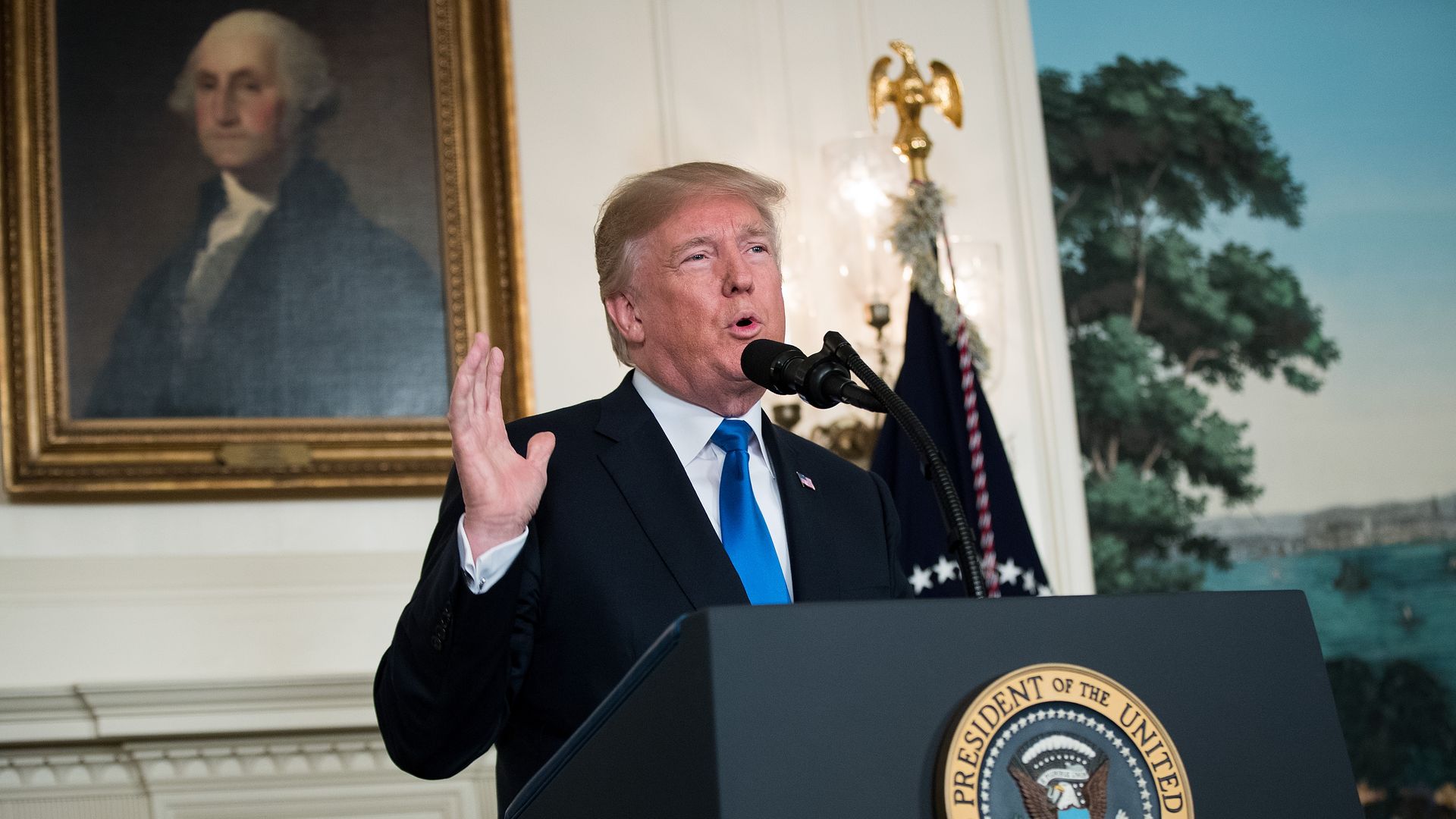
President Trump announced that the United States will withdraw from the Iran nuclear deal and institute the "highest level" of sanctions against it during a statement at the White House on Tuesday — ahead of the May 12 deadline for a decision.
Be smart, from Axios' Jonathan Swan: Trump has never wavered on the Iran deal. He was convinced from the campaign that it was a “disaster” and “weak” — a poorly-negotiated contract by poor negotiators.
Jerusalem Mayor Nir Barkat said Tuesday he will formally name a square near the new U.S. embassy site in honor of President Trump.
The backdrop: The move comes months after Trump relocated the U.S. embassy from Tel Aviv to Jerusalem, triggering backlash from Palestinian officials and some world leaders. It will open next week Monday.
President Trump has recognized #Jerusalem as the capital of the Jewish people. To show our love and respect for @POTUS and the American people, who always stand by the side of Israel and Jerusalem, we will name a square next to the new #USEmbassy in honor of the President.
The most prominent foreign and domestic leaders are voicing their opinion on Trump's highly-anticipated decision to withdraw from the Iran nuclear deal.
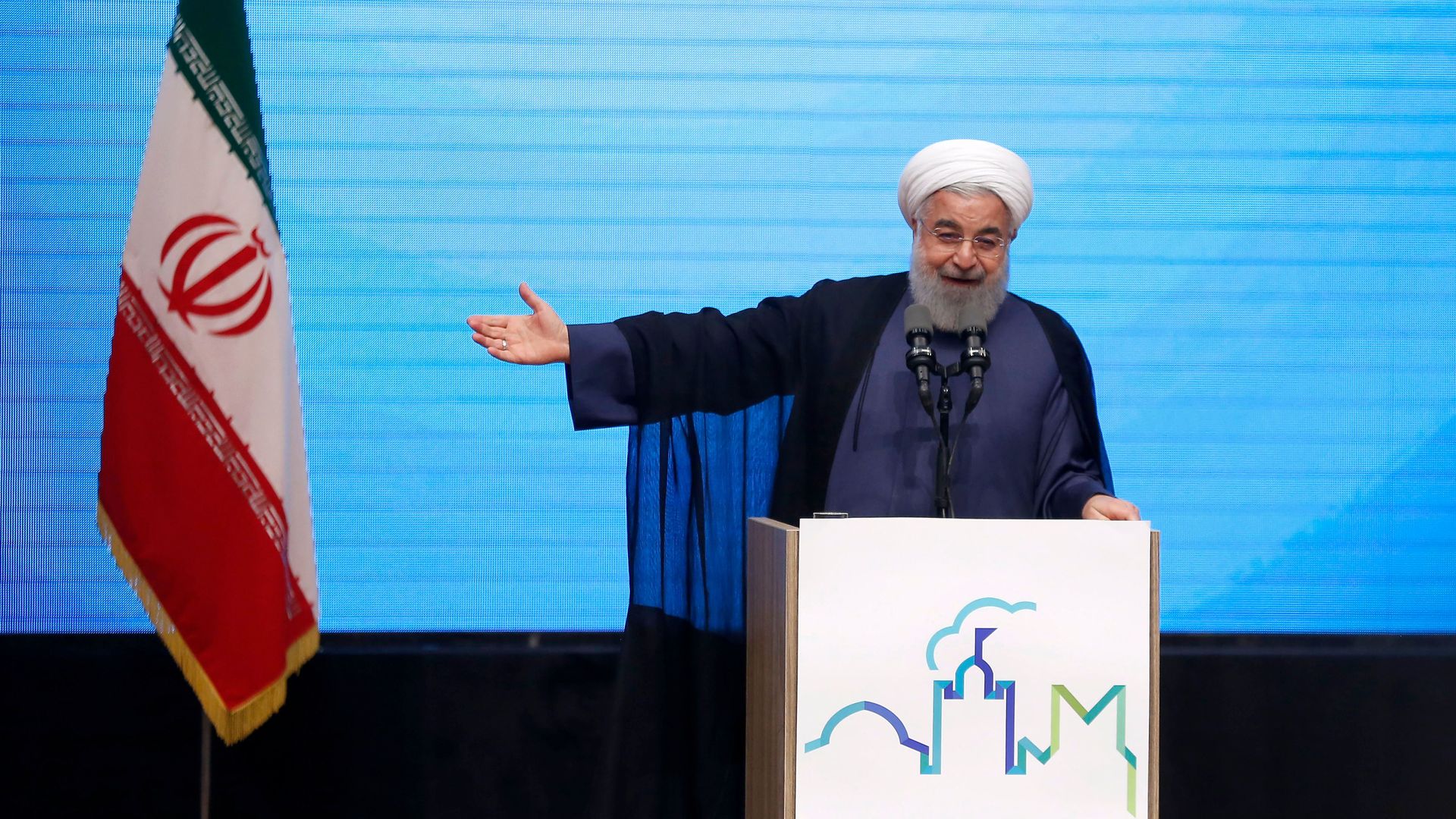
What they're saying: Iranian President Hassan Rouhani spoke immediately after Trump, saying Iran would attempt to salvage the agreement without the U.S. "I have ordered Iran’s atomic organization that whenever it is needed, we will start enriching uranium more than before.” Former President Barack Obama, who signed the original deal in 2015, called Trump's decision "misguided" and a "serious mistake."
Donald Trump is nothing if not consistent. In announcing that the United States is withdrawing from the Iran nuclear deal, he gave a familiar litany of reasons: Iran is still a bad actor, and the Joint Comprehensive Plan of Action (JCPOA) is not enough to keep it from acquiring nuclear weapons and the missiles to deliver them when the restrictions in the deal begin to expire.
Yes, but: What Trump didn’t explain is how he plans to compel Iran into a new deal now that the U.S. has cheated on the old one. He also offered no incentives for Iran to return to the negotiation table.
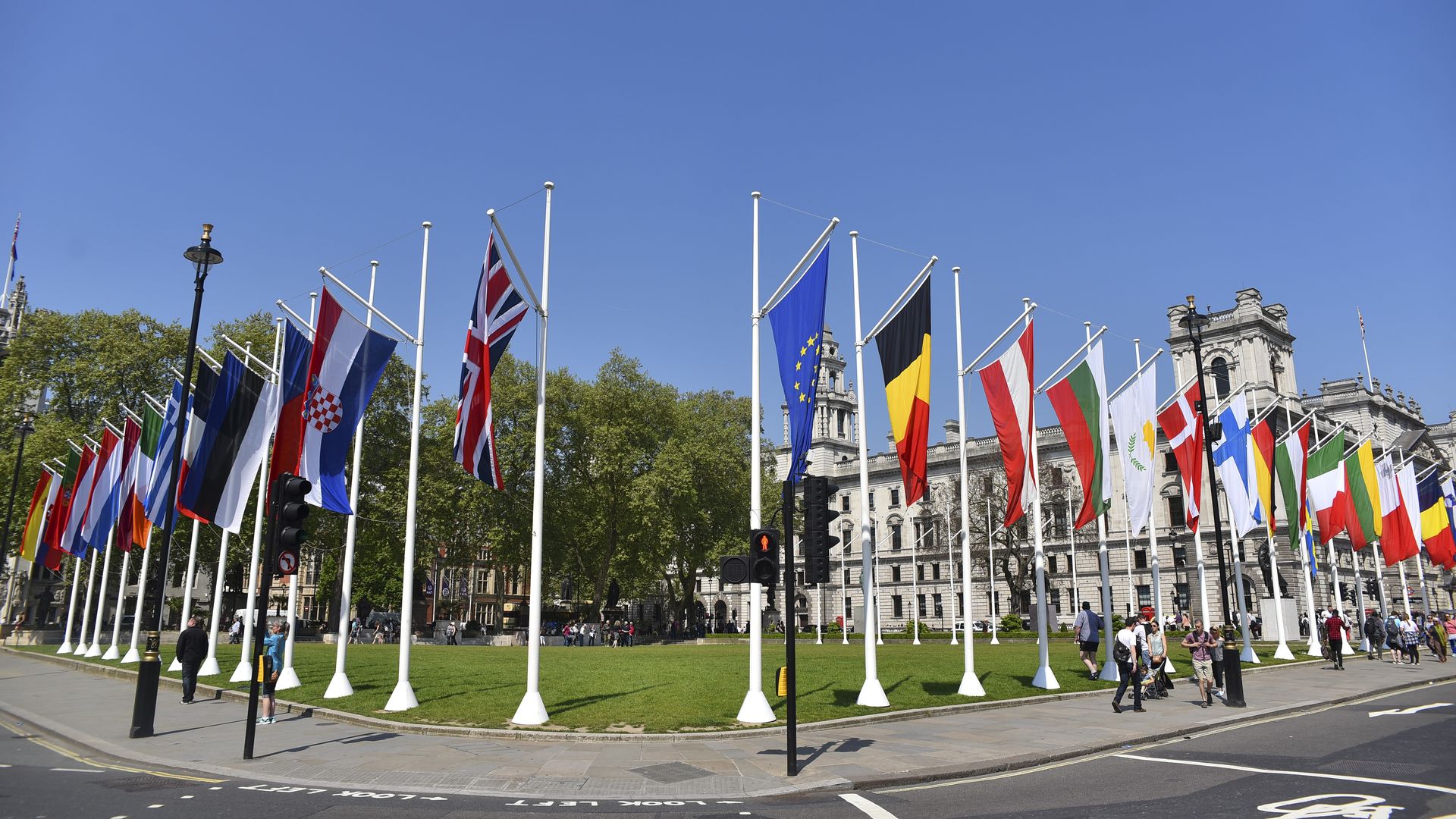
European Union leaders are making moves to protect European companies from U.S. sanctions as foreign policy differences between the EU and U.S. continue to drift apart, the Wall Street Journal reports.
The state of play: The EU has long opposed sanctions against countries such as Russia, Iran and Cuba and with the U.S. pulling out of the 2015 Iran nuclear deal, sanctions could return, with European firms likely paying premium.
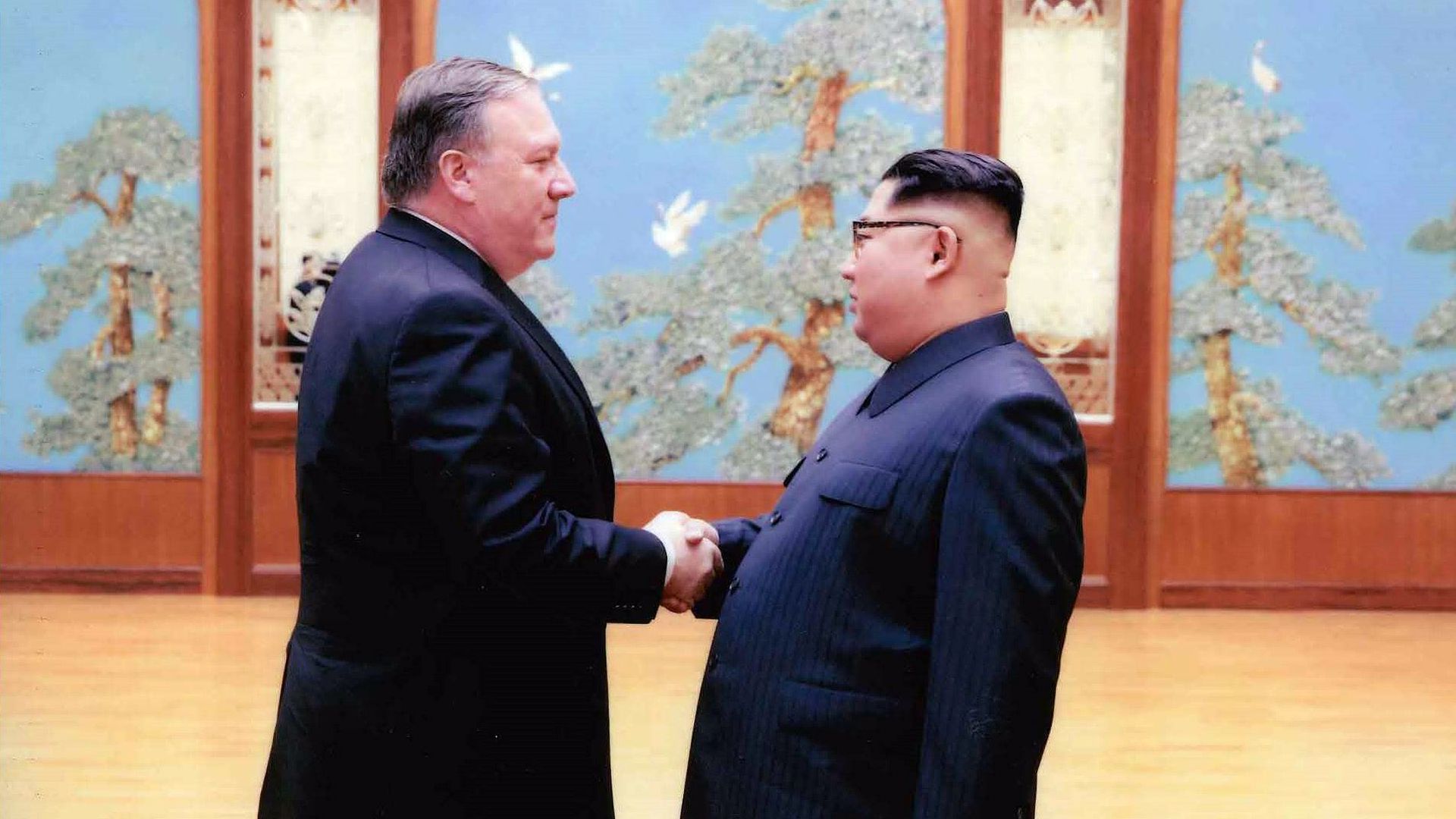
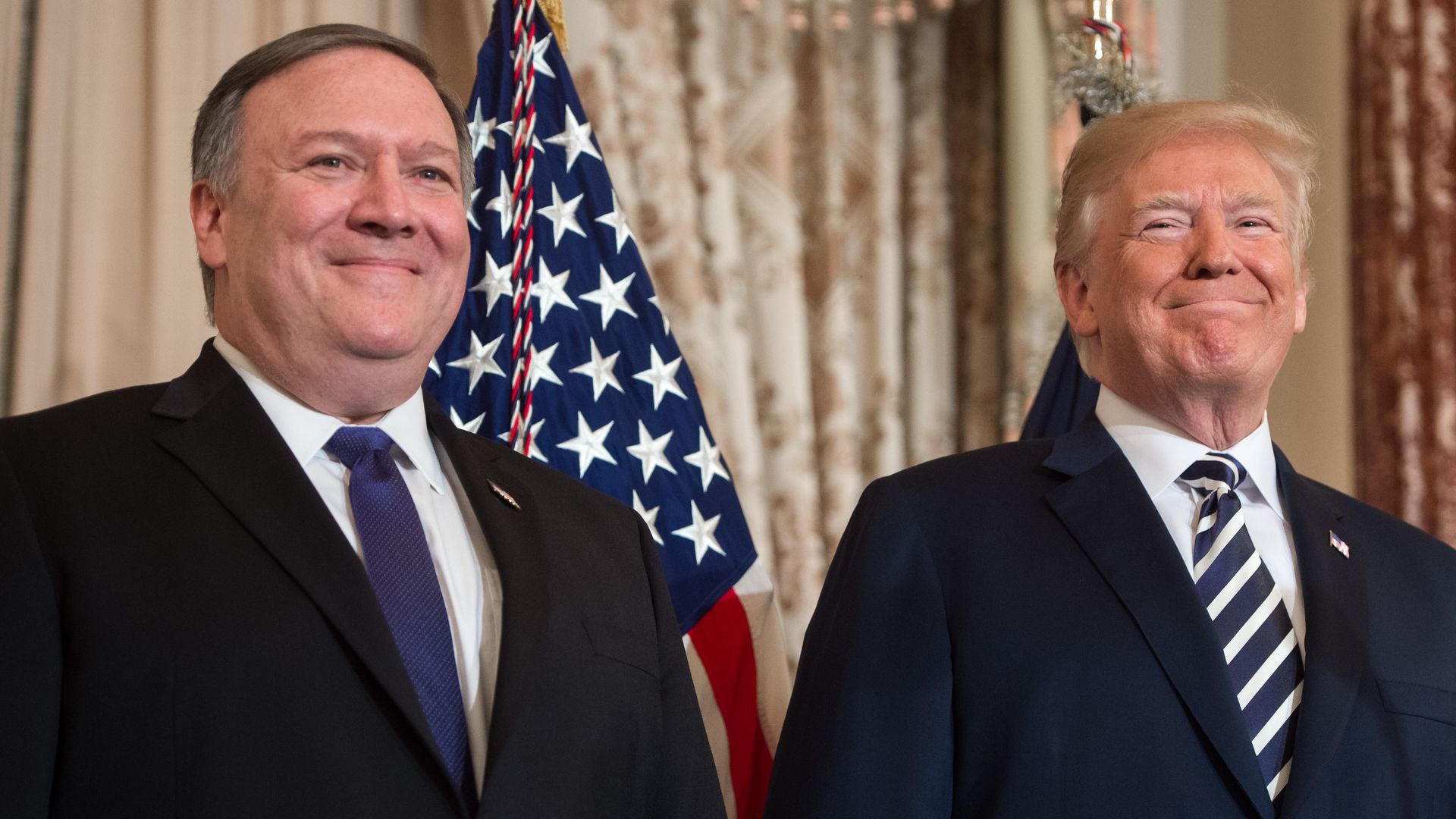
President Trump announced Tuesday that Secretary of State Mike Pompeo is currently on his way to North Korea to help finalize the details of Trump's meeting with Kim Jong-un.
"When I make promises I keep them. In fact, at this very moment, Secretary Pompeo is on his way to North Korea in preparation for my meeting with Kim Jong-un."
— President Trump, while announcing the U.S. is withdrawing from the Iran nuclear deal
The president added that we will "soon find out" whether North Korea will release American detainees ahead of his planned meeting with Kim Jong-un.
A months-long effort by the U.S.' closest European allies to persuade President Trump to stick to the Iran deal has failed. This failure not only dooms the deal itself, but also shows that when it comes to U.S. foreign policy, allies no longer count.
Why it matters: The U.S.' greatest advantage in competing with China and Russia is that it has allies, whereas they merely have clients. That reality seems lost on Trump, who has ignored allies' views and interests since taking office.
President Trump announced today that he will withdraw the U.S. from the 2015 deal under which Iran scaled back its nuclear program in exchange for sanctions relief.
Why it matters: This is likely to be one of the most consequential decisions of Trump's presidency. It could see Iran ramp up its nuclear program, and raises the likelihood of military confrontation. It will also have big economic consequences for Iran and for the global oil trade, and ramifications for U.S. relationships with key European allies.
President Trump is expected to announce whether the United States will remain in the Iran nuclear deal this afternoon — though, it seems likely he will choose to withdraw — but most Americans simply don't know enough to have an opinion about the decision, according to new polling.
The bottom line: Trump's decision on Iran will be one of the most significant foreign policy moments of his presidency thus far and risks isolating the U.S. from its allies in Europe. However, per CBS News, more than half of Americans "don't know enough" to evaluate his choice and, per Pew Research, a quarter of Americans have heard "nothing at all" about the deal.
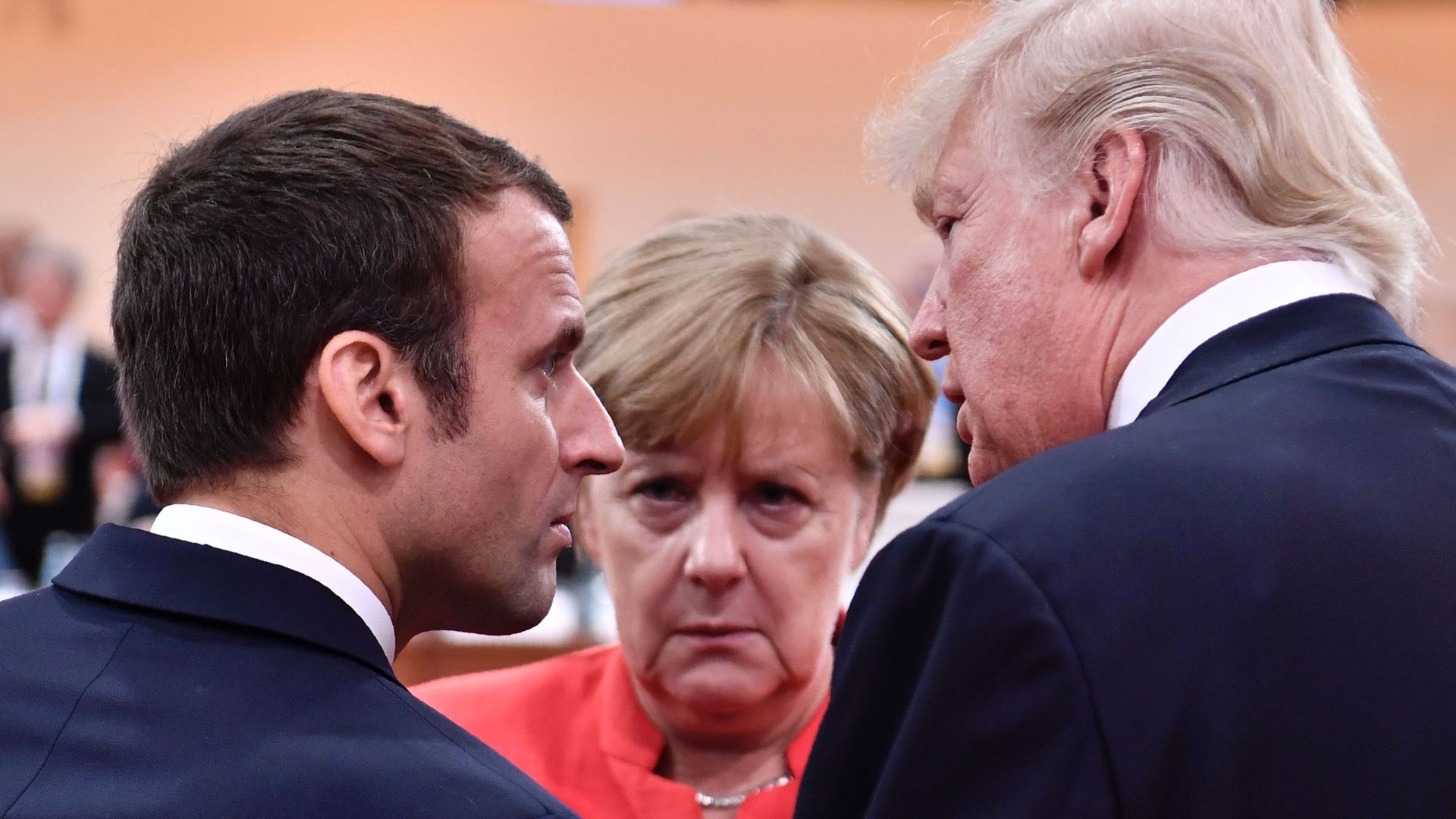
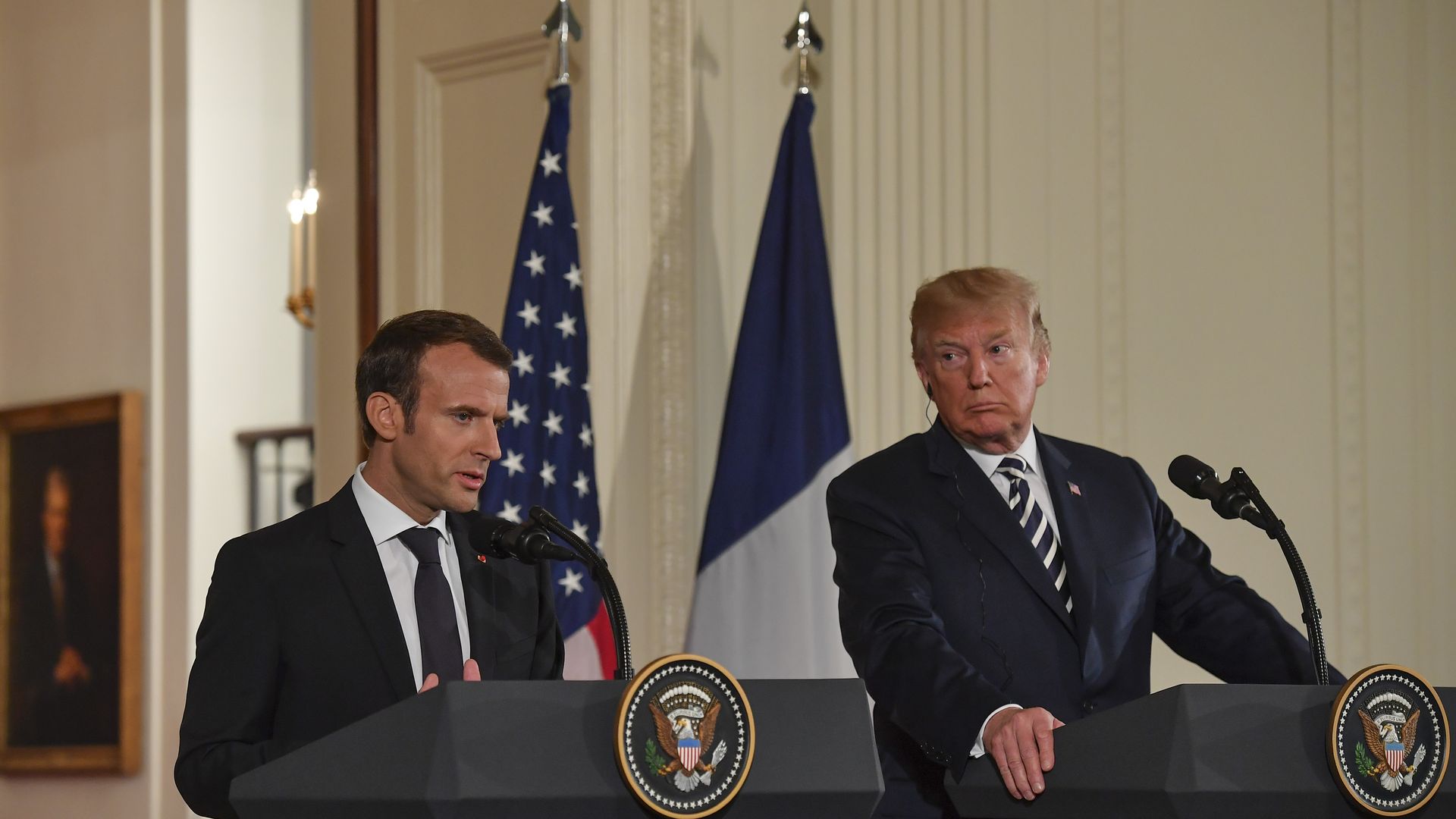
President Trump told French President Emmanuel Macron this morning that he will be withdrawing the U.S. from the Iran nuclear deal, the NY Times' Mark Landler reports.
Why it matters: This is the closest we've come, ahead of Trump's 2pm announcement, to confirmation that he will violate the deal and throw it into peril by declining to waive sanctions on Iran. Per Landler, he's also planning to go one step further: "preparing to reinstate all sanctions waived as part of the nuclear accord — and impose additional economic penalties as well."
Ahead of Trump’s 2 pm announcement on the Iran nuclear deal, we talked to Obama official Jake Sullivan, who helped to open the secret channel with Iran in 2013.
When the U.S. announced new trade sanctions against Chinese tech giant ZTE last month, it didn't intend to strengthen China's domestic semiconductor industry. But trade fights can have unexpected consequences.
"The Trump administration probably didn't think twice about sanctioning ZTE, but it's going to have real effects," said Jim Lewis, senior vice president at the Center for Strategic and International Studies and a former head of the Commerce Department team dealing with national security issues in high tech trade with China.
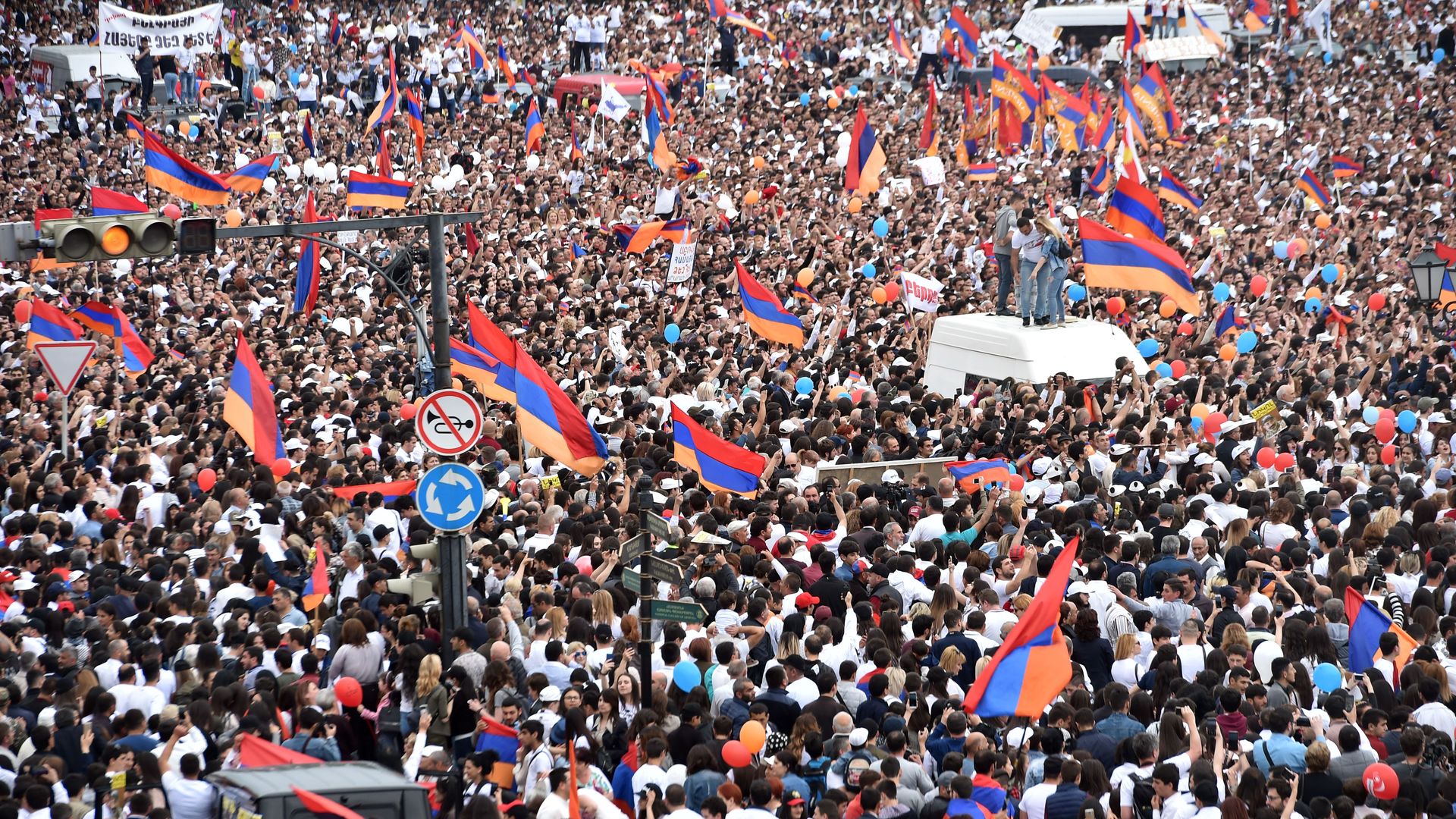
A week after Armenia's parliament rejected opposition leader Nikol Pashinyan as prime minister, voters gave in to protests and popular sentiment and elected him Tuesday in a 59 to 42 vote.
Why it matters: A small elite had clung to power for decades in the former Soviet state, which remains close to Moscow, until protests last month forced out the prime minister and elevated Pashinyan. Meanwhile, Vladimir Putin declined to intervene. "He seems to have decided that it was better to sacrifice his ally than to risk losing Armenia itself," writes the Washington Post's David Ignatius.
President Trump, facing a May 12 deadline, says he'll announce his plans for the Iran nuclear deal today at 2pm ET.
Why this matters: Trump opposes the deal and at some point he's widely expected to reimpose sanctions designed to restrict Iranian crude sales to other buyers (the U.S. does not import Iranian oil).
Chinese President Xi Jinping met with North Korean leader Kim Jong-un in northern China close to the North Korean border, reports the AP, citing Chinese media. And Xi will speak with President Trump on the phone this morning, per a presidential tweet.
The backdrop: Trump's East Asian priorities are clashing as he tries to take a hard line against China on trade — but is counting on Beijing to keep up its economic pressure on North Korea.
Secretary of State Mike Pompeo told his colleagues from the E3 — France, Germany and the United Kingdom — on Friday that President Trump has rejected the understandings that were drafted with American negotiators over the last four months regarding a possible fix of the Iran nuclear deal.
Why it matters: Pompeo's message in a conference call on Friday was a de-facto U.S. announcement that it was walking away from negotiations with the Europeans over the Iran deal.