Tuesday's world stories

UN: North Korean supplies linked to chemical weapons in Syria
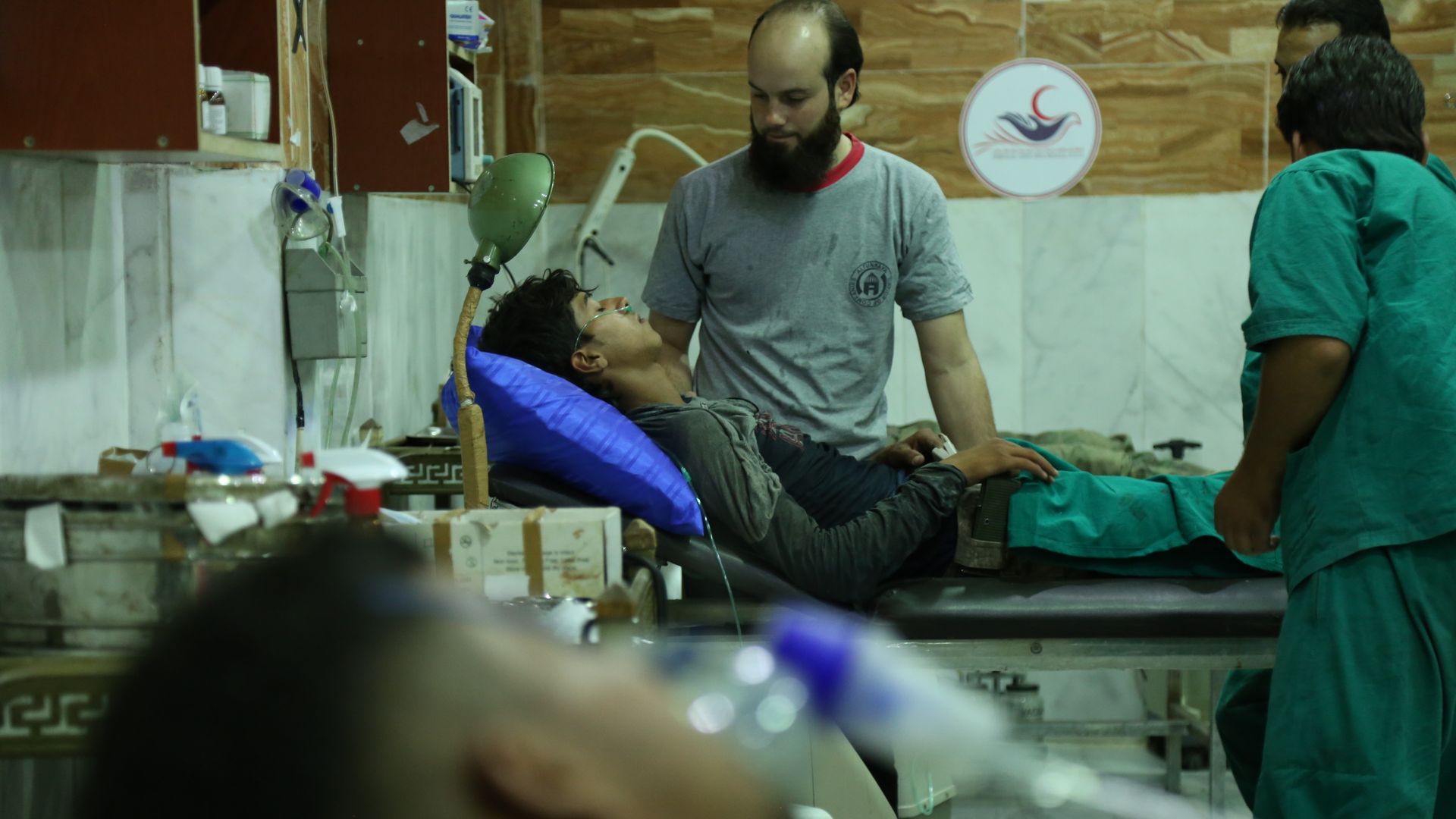
North Korea has been shipping supplies to Syria that could be used for the production of chemical weapons, according to a United Nations report reviewed by the NYTimes.
The details: A panel of eight experts, responsible for investigating violations of North Korean sanctions since 2010, claims that acid-resistant tiles, valves and thermometers were part of at least 40 unreported shipments between the two nations from 2012 to 2017.
Why it matters: Per the Times, this kind of trade relationship "could allow Syria to maintain its chemical weapons while also providing North Korea with cash for its nuclear and missile programs." The news follows recent reports of chlorine gas attacks in Eastern Ghouta, Syria, where even a 30-day UN ceasefire has failed to put an end to the violence.

Mueller moves to dismiss charges against Gates
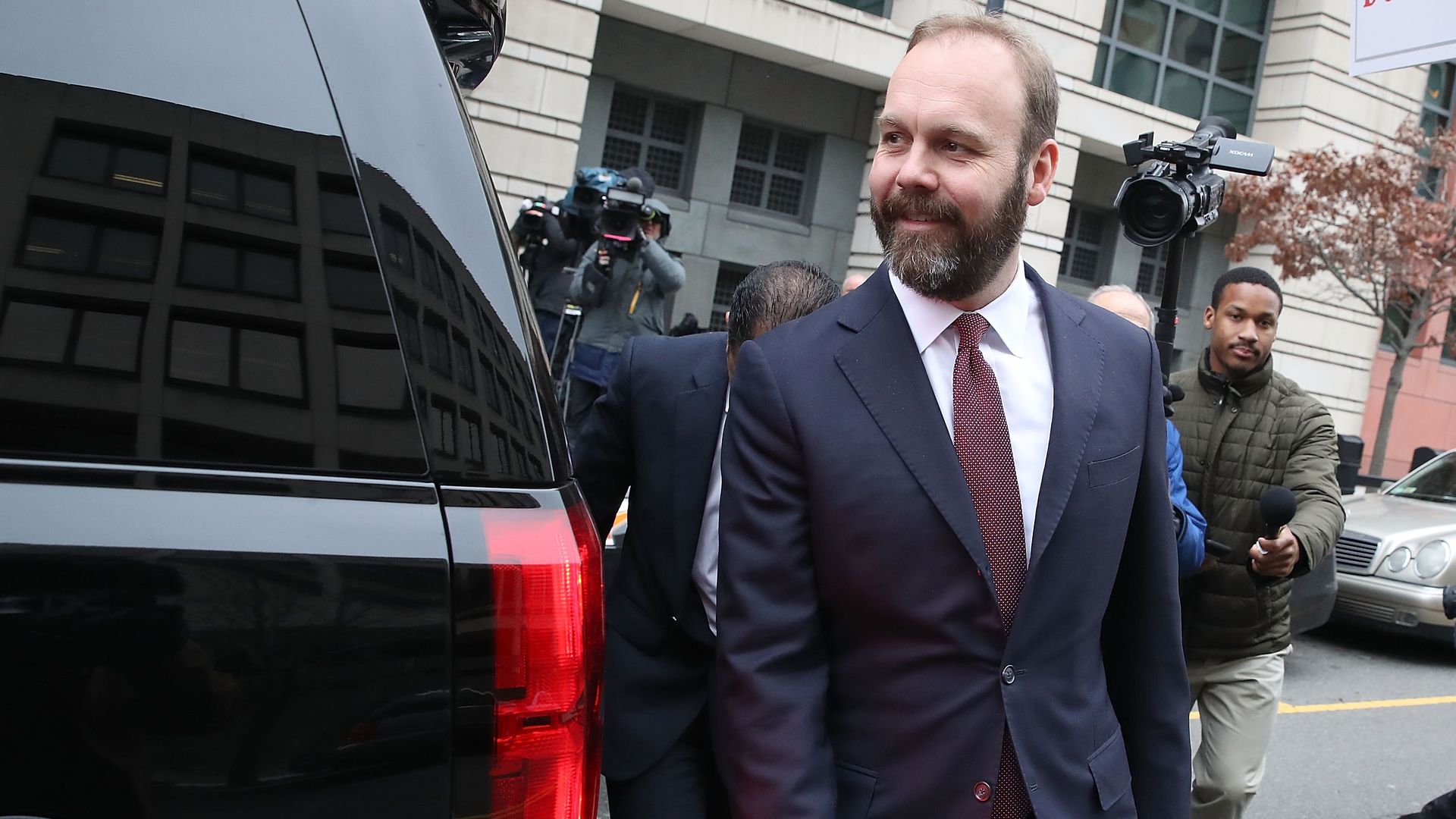
Special Counsel Robert Mueller and his legal team has moved to drop charges that were brought last week in an expansive superseding indictment against Rick Gates. The 32-count indictment issued in the Eastern District of Virginia accused Gates of tax and bank fraud.
Why it matters: Mueller's decision to drop the more expansive charges against Gates suggests that he may have provided good information for Mueller's probe. Gates still faces an advisory sentence of 57 to 71 months under his guilty plea, per Bloomberg, but it's worth noting that the "prosecution can request a shorter sentence but isn't required to do so." Gates pled guilty last week to charges filed in the District of Columbia on counts of conspiracy against the United States and lying to the FBI and the Special Counsel.
Anti-Semitic incidents surged in 2017

The number of anti-Semitic incidents in the U.S. rose by 57 percent in 2017 marking the largest single-year increase on record and the second-highest number reported since tracking began in 1979, according to an annual report published by the Anti-Defamation League.

UN's Syria ceasefire already hobbled by flaws
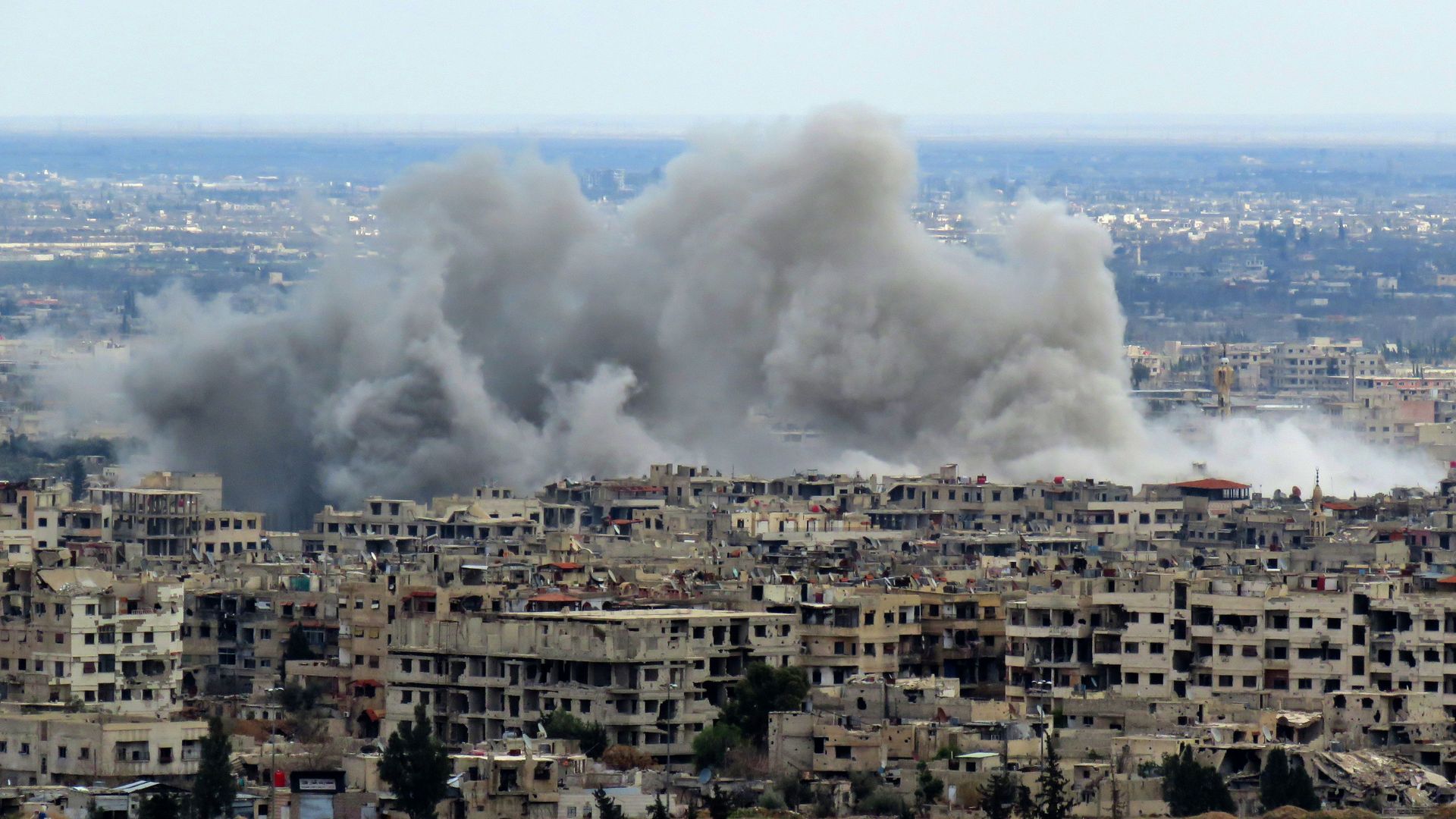
On Saturday the UN Security Council voted unanimously in favor of a ceasefire in Syria, amid an escalation of attacks by pro-Assad forces on Eastern Ghouta that has left at least 520 dead and 2,500 injured in the past five days. The resolution provides for a 30-day nationwide ceasefire, weekly UN aid convoys and medical evacuations, but has several glaring weak points.
The problems:
- The ceasefire does not apply to ISIS or al-Qaeda, which raises fears that Russia and Assad will invoke the limited presence of Hay'at Tahrir al-Sham, an al-Qaeda affiliate, to continue the campaign against Eastern Ghouta.
- No enforcement mechanisms are spelled out, even though the Syrian government has violated past ceasefires and Russia is an unreliable guarantor.
- The violence in Eastern Ghouta is already a direct violation of existing de-escalation agreements backed by Russia, Turkey and Iran in the Astana framework.

Trump's North Korea strategy faces growing diplomatic deficits
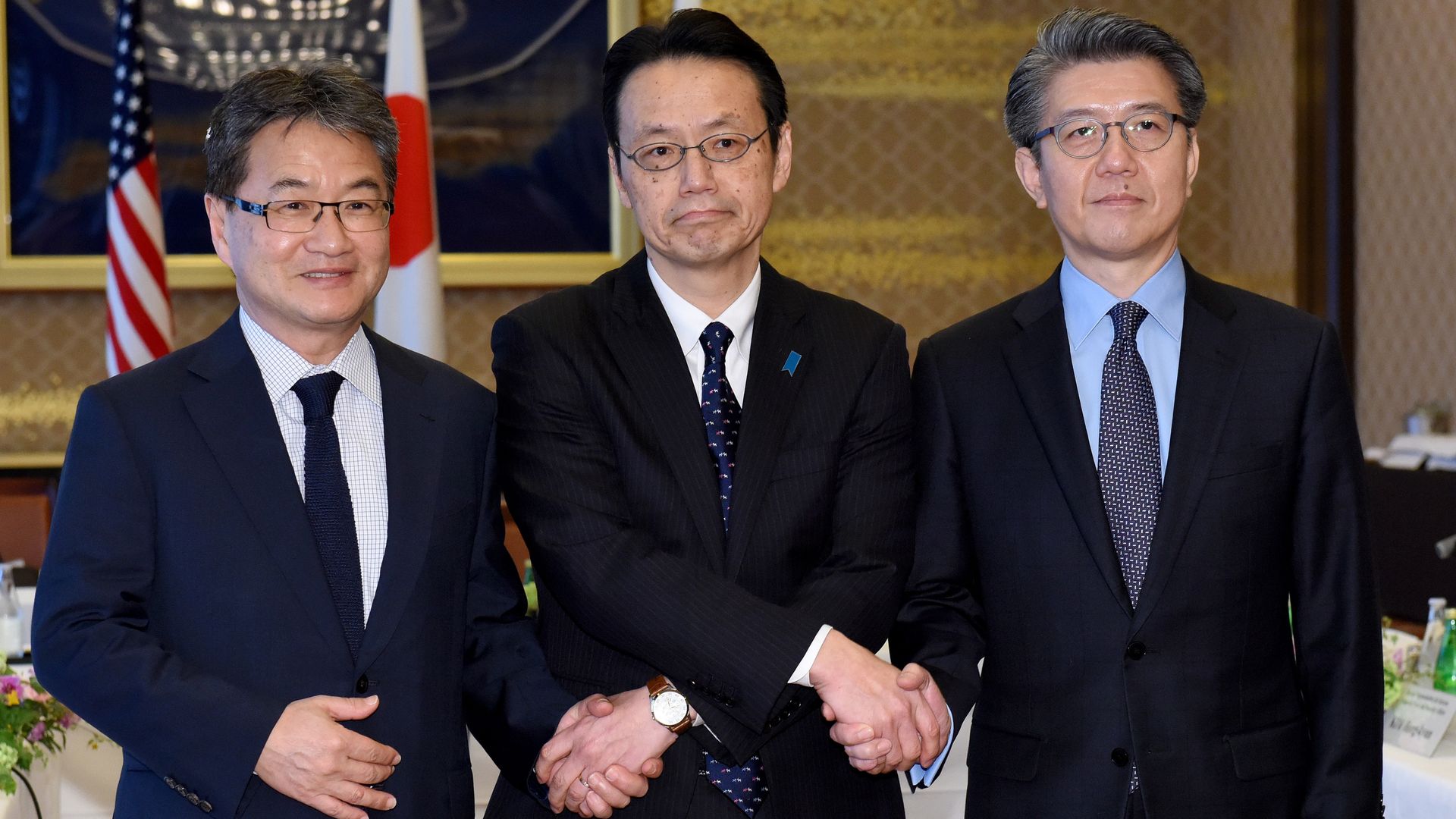
The resignation of Joseph Yun, the State Department’s Special Representative for North Korea policy, this week serves as a fresh reminder of the gaping hole at the center of America’s North Korea strategy: the absence of a credible diplomatic approach to talking — and eventually negotiating — with North Korea.
Why it matters: There are no guarantees that entering into dialogue with North Korea would yield progress. In fact, the past record gives little cause for optimism. Even so, there are other reasons for the United States to seize diplomatic initiative.

Hope Hicks to meet with House Intelligence on Tuesday

White House Communications Director Hope Hicks will appear before the House Intelligence Committee tomorrow in relation to the Trump-Russia probe, CBS News reports. Her appearance had previously been delayed.
Why it matters: Hicks has been one of Trump's closest aides during the campaign and throughout his White House tenure. She was also reportedly present for the crafting of a statement that obscured the purpose of Donald Trump Jr.'s meeting with a Russian lawyer, a sequence of events that has attracted the interest of Special Counsel Robert Mueller.
UN official: Security Council vetoes contribute to human "slaughterhouses"
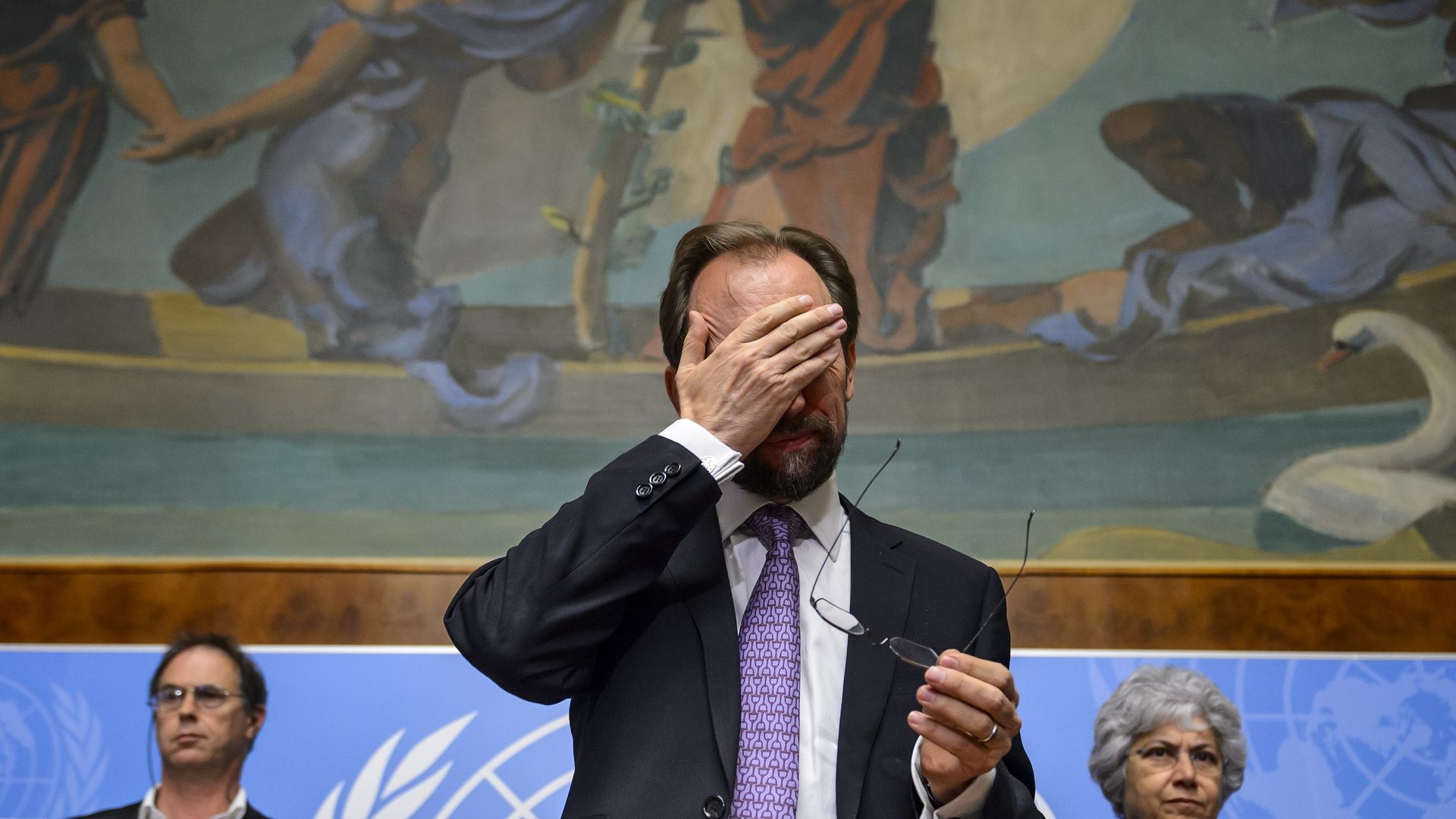
High Commissioner for Human Rights Zeid Ra'ad al-Hussein called out the permanent members of the United Nations Security Council for invoking their veto power in the face of "some of the most prolific slaughterhouses of humans in recent times."
"Second to those who are criminally responsible — those who kill and those who maim — the responsibility for the continuation of so much pain lies with the five permanent members of the UN Security Council. So long as the veto is used by them to block any unity of action, when it is needed the most, when it could reduce the extreme suffering of innocent people, then it is they — the permanent members — who must answer before the victims."— High Commissioner for Human Rights Zeid Ra'ad al-Hussein
Strongmen rise
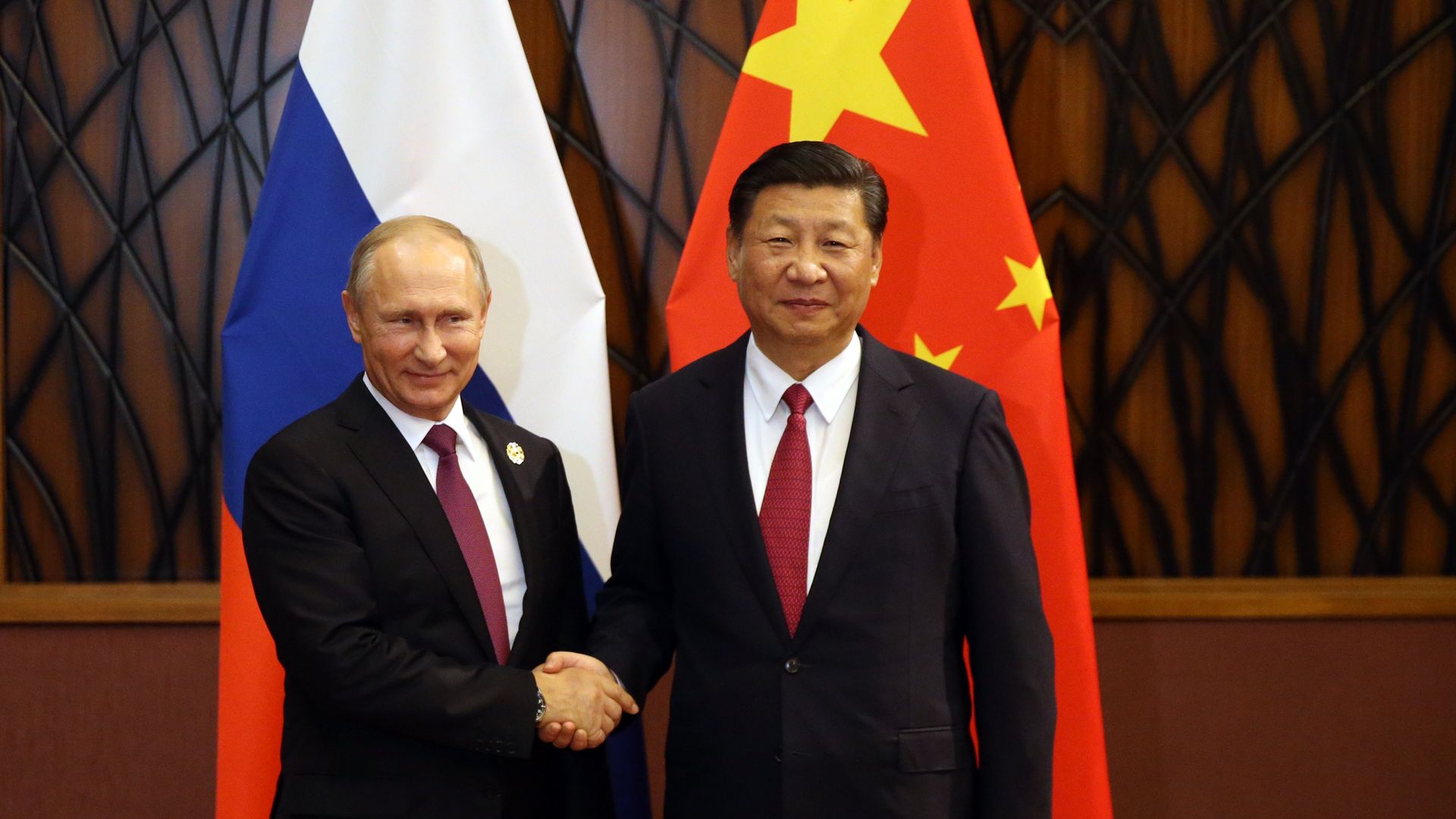
Chinese President Xi Jinping solidified his grasp on power yesterday, with the country's Communist Party abandoning term limits to allow Xi to serve long past his 2023 expiration date.
The global picture: This is "the latest and arguably most significant sign of the world’s decisive tilt toward authoritarian governance, often built on the highly personalized exercise of power," Steven Lee Myers reports for the N.Y. Times.
- "The list includes Vladimir V. Putin of Russia, Abdel Fattah el-Sisi of Egypt and Recep Tayyip Erdogan of Turkey..."
- "Authoritarianism is also reappearing in places like Hungary and Poland that barely a quarter century ago shook loose the shackles of Soviet oppression."
- Timeline: How Xi president positioned himself to rule for life

Emperor Xi: How China's president positioned himself to rule for life
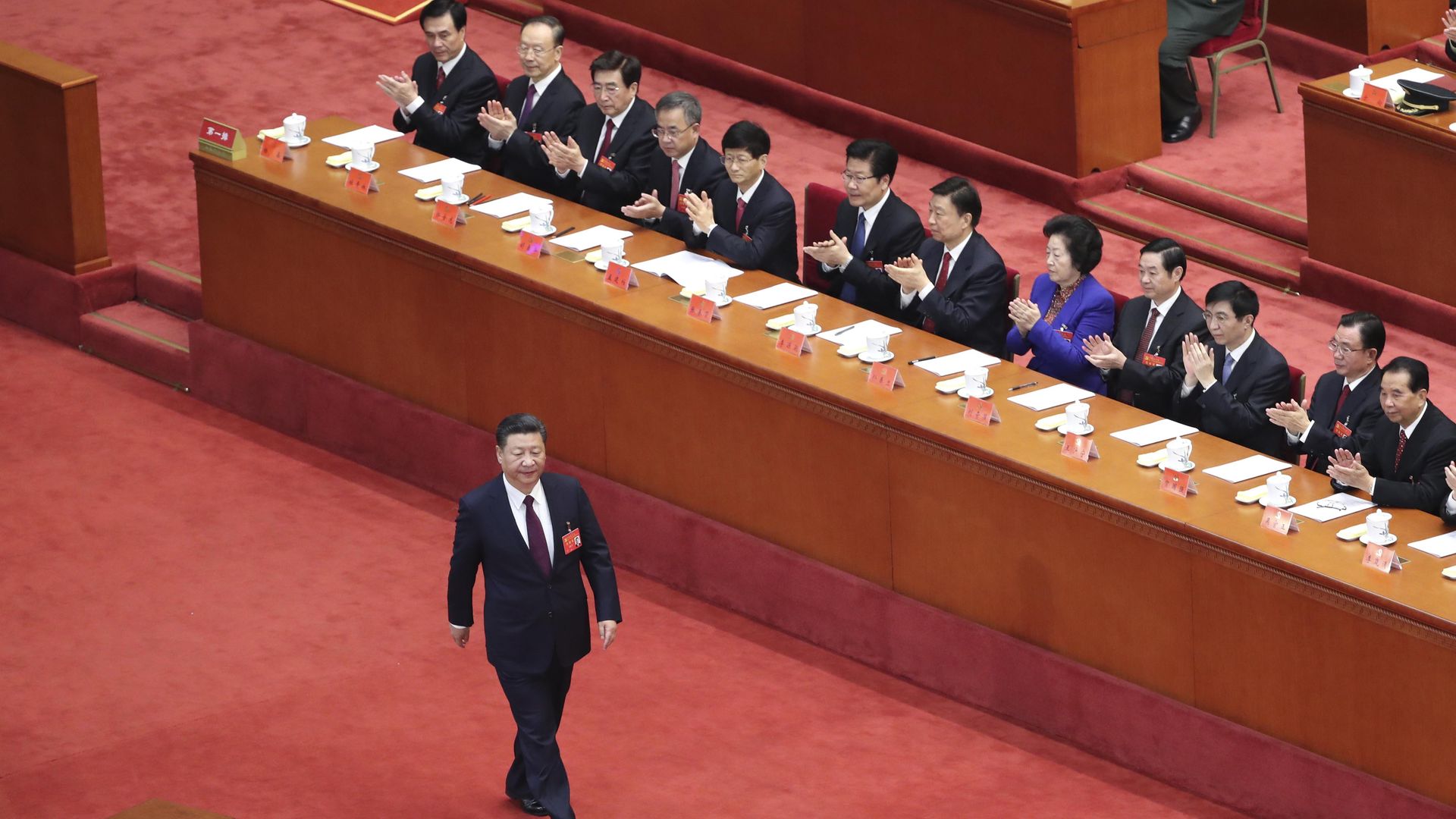
China’s Communist Party announced Sunday that it will eliminate term limits on the presidency, allowing Xi Jinping to serve indefinitely rather than step down in five years' time.
The big picture: Xi, 64, has set an incredibly ambitious foreign policy, and more firmly established China as a rival to U.S. influence around the world. At home, he has ruled as a strongman with no tolerance for dissent, and methodically removed nearly all checks on his power. Here’s how he has positioned himself as, essentially, China’s emperor for life.
South Korea calls on U.S. and North Korea to compromise
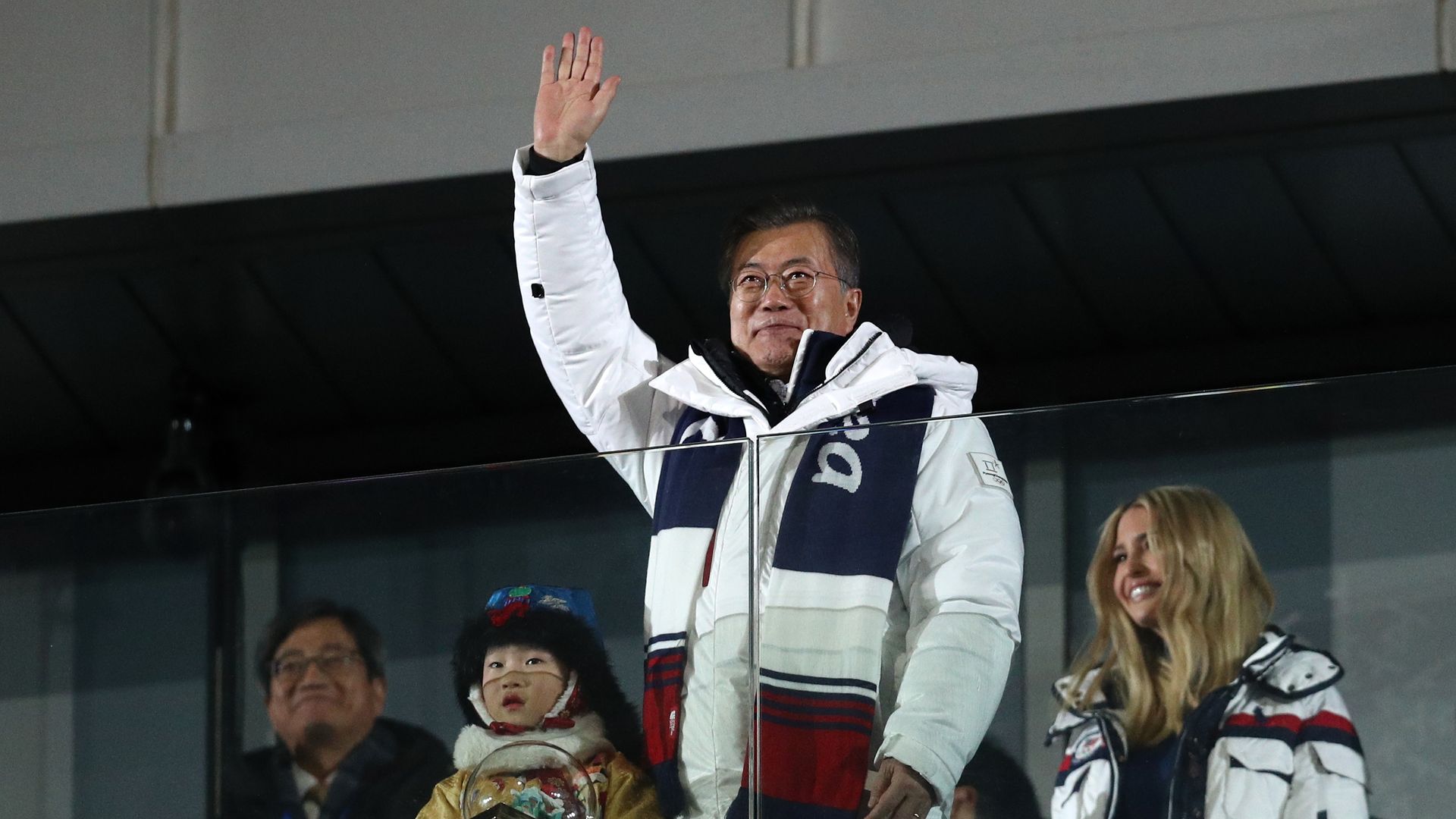
South Korean President Moon Jae-in said Monday that in order to diplomatically resolve the crisis over North Korea's nuclear weapons program, all sides must be ready to make concessions. Moon said the U.S. must lower its threshold for talks and North Korea must demonstrate a willingness to denuclearize, reports Reuters.
Why it matters: The Trump administration has said it is open to talks with North Korea, but only to explain that the U.S. will continue to apply maximum pressure on the country until it begins the process of denuclearization, per the AP. The U.S. says it will not enter formal negotiations until disarmament is officially on the table.

Top Chinese emissary to visit U.S. Feb. 27
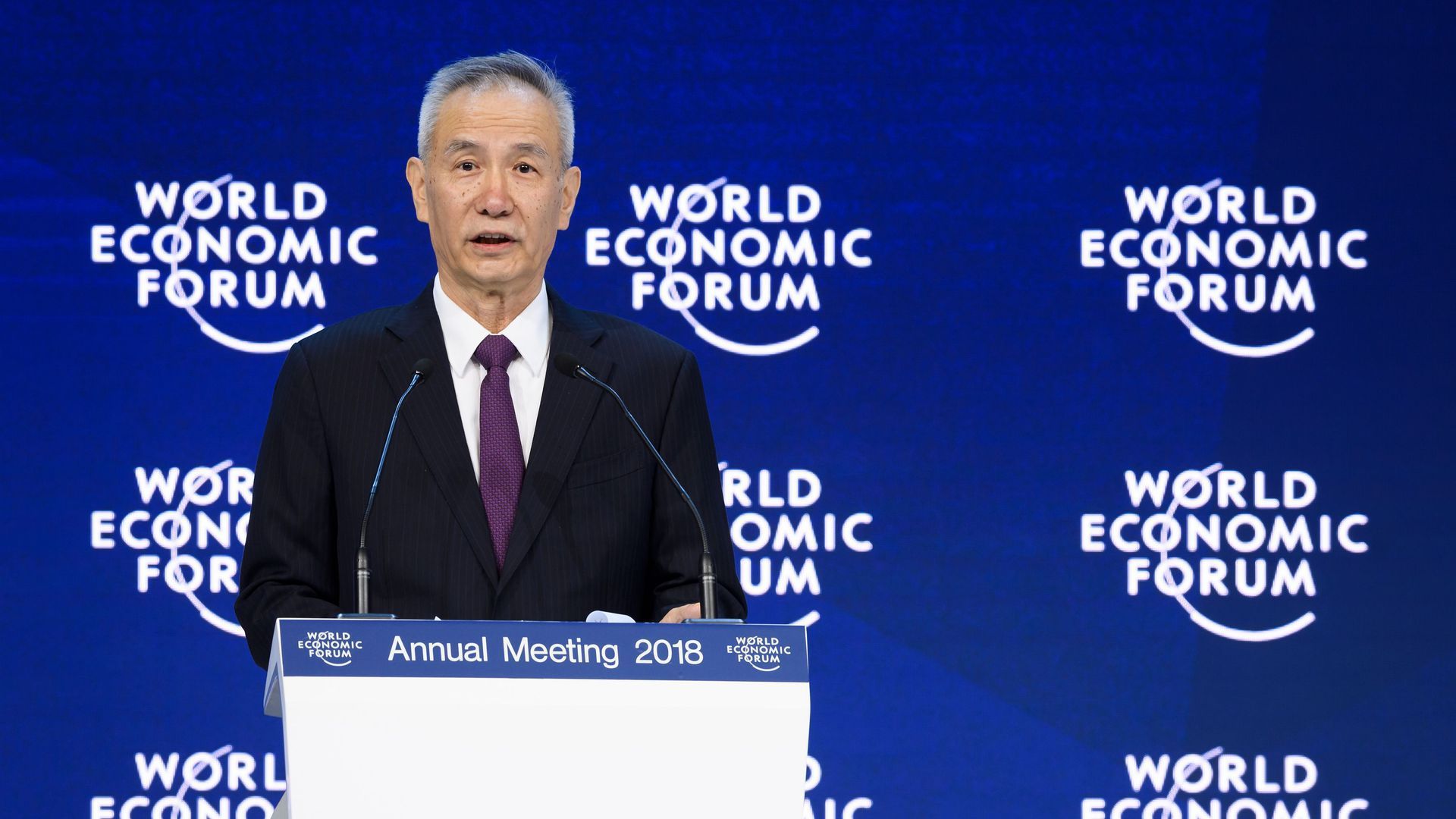
Liu He, a top economic adviser to Chinese President Xi Jinping, will visit the U.S. from Feb. 27 to March 3, to discuss economic and trade matters, the Foreign Ministry confirmed on Monday. This will be the second top emissary to visit the U.S. in a couple months.
Why it matters: Beijing is trying to figure out how to avoid a much more contentious phase of U.S.–China relations. If China is serious about difficult financial reforms, then it needs to avoid risking its cleanup with significant economic friction with the U.S. The U.S. has leverage but so far I am hearing that the Trump administration has been unable to craft and implement a coherent strategy to use that leverage.