Monday's world stories
Hope Hicks to meet with House Intelligence on Tuesday

White House Communications Director Hope Hicks will appear before the House Intelligence Committee tomorrow in relation to the Trump-Russia probe, CBS News reports. Her appearance had previously been delayed.
Why it matters: Hicks has been one of Trump's closest aides during the campaign and throughout his White House tenure. She was also reportedly present for the crafting of a statement that obscured the purpose of Donald Trump Jr.'s meeting with a Russian lawyer, a sequence of events that has attracted the interest of Special Counsel Robert Mueller.

UN official: Security Council vetoes contribute to human "slaughterhouses"
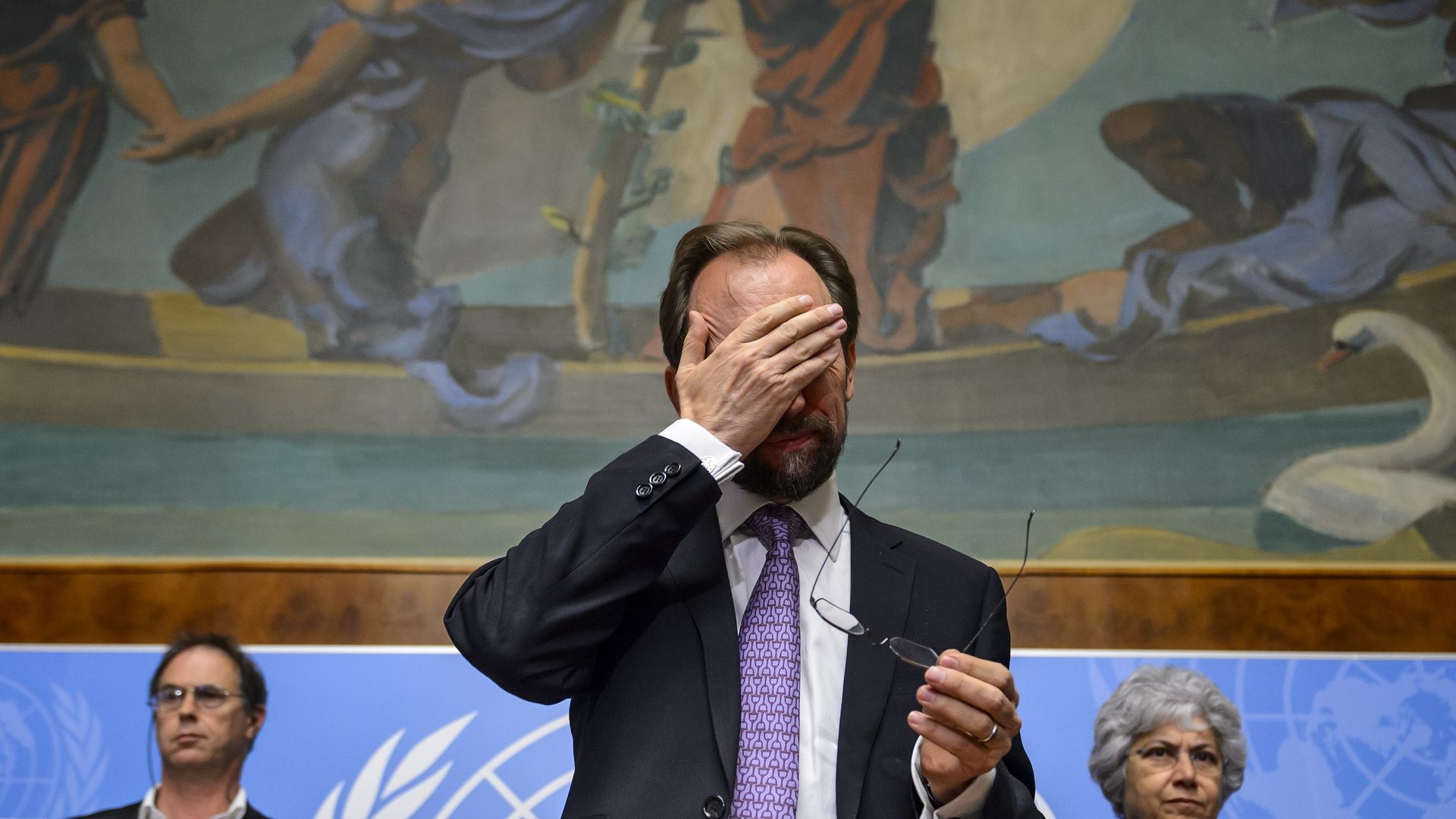
High Commissioner for Human Rights Zeid Ra'ad al-Hussein called out the permanent members of the United Nations Security Council for invoking their veto power in the face of "some of the most prolific slaughterhouses of humans in recent times."
"Second to those who are criminally responsible — those who kill and those who maim — the responsibility for the continuation of so much pain lies with the five permanent members of the UN Security Council. So long as the veto is used by them to block any unity of action, when it is needed the most, when it could reduce the extreme suffering of innocent people, then it is they — the permanent members — who must answer before the victims."— High Commissioner for Human Rights Zeid Ra'ad al-Hussein
Strongmen rise
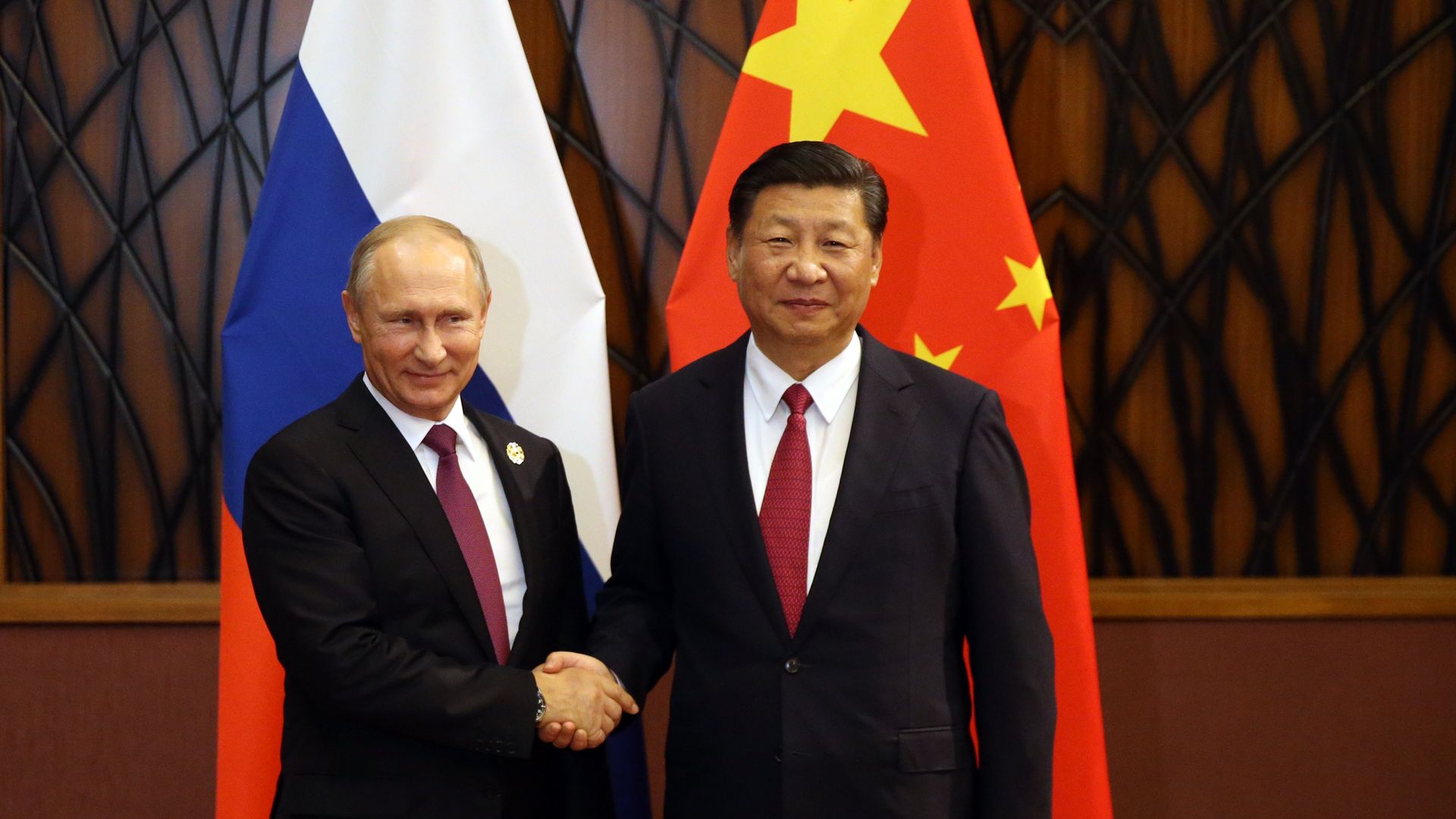
Chinese President Xi Jinping solidified his grasp on power yesterday, with the country's Communist Party abandoning term limits to allow Xi to serve long past his 2023 expiration date.
The global picture: This is "the latest and arguably most significant sign of the world’s decisive tilt toward authoritarian governance, often built on the highly personalized exercise of power," Steven Lee Myers reports for the N.Y. Times.
- "The list includes Vladimir V. Putin of Russia, Abdel Fattah el-Sisi of Egypt and Recep Tayyip Erdogan of Turkey..."
- "Authoritarianism is also reappearing in places like Hungary and Poland that barely a quarter century ago shook loose the shackles of Soviet oppression."
- Timeline: How Xi president positioned himself to rule for life

Emperor Xi: How China's president positioned himself to rule for life
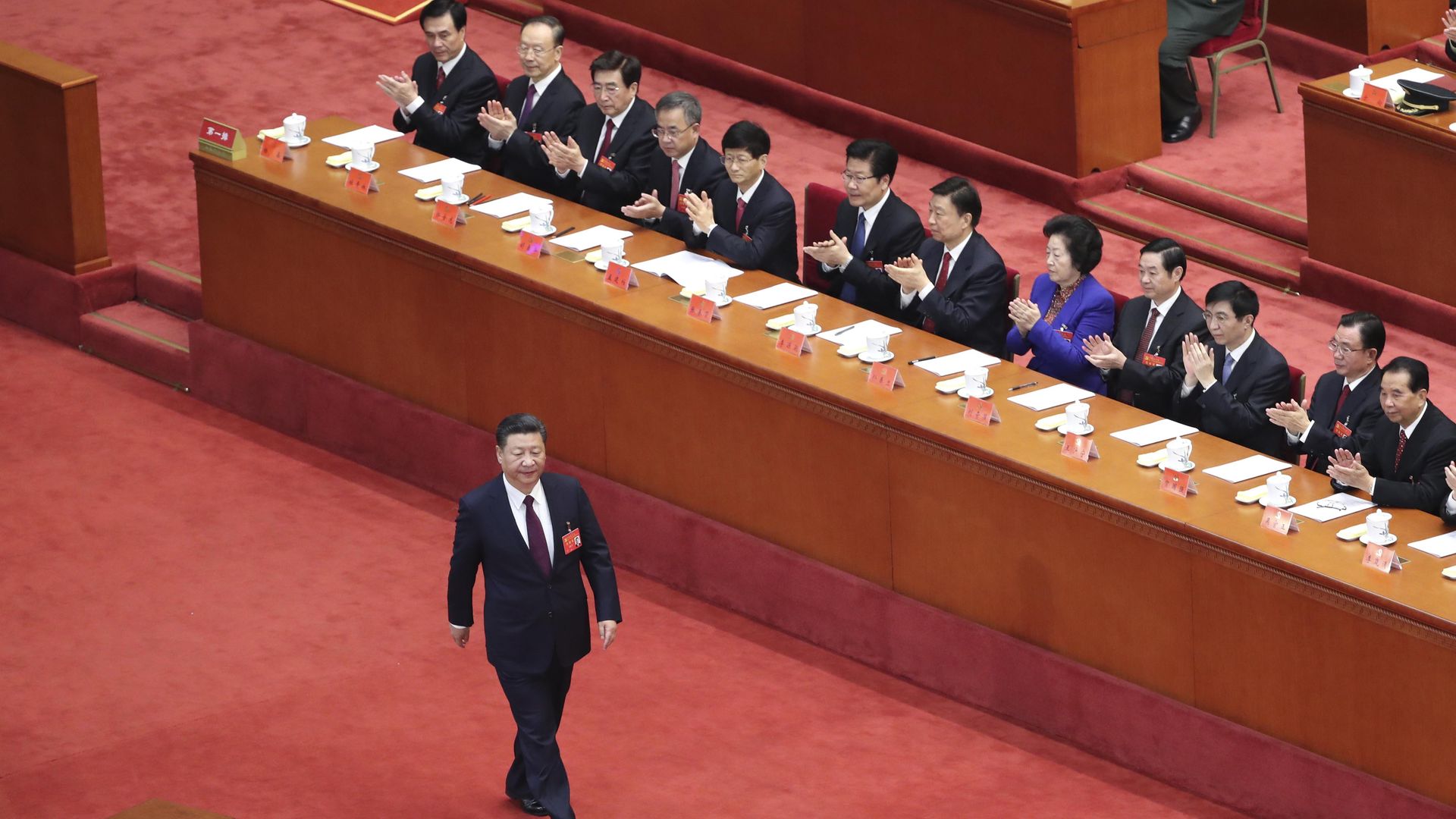
China’s Communist Party announced Sunday that it will eliminate term limits on the presidency, allowing Xi Jinping to serve indefinitely rather than step down in five years' time.
The big picture: Xi, 64, has set an incredibly ambitious foreign policy, and more firmly established China as a rival to U.S. influence around the world. At home, he has ruled as a strongman with no tolerance for dissent, and methodically removed nearly all checks on his power. Here’s how he has positioned himself as, essentially, China’s emperor for life.
South Korea calls on U.S. and North Korea to compromise
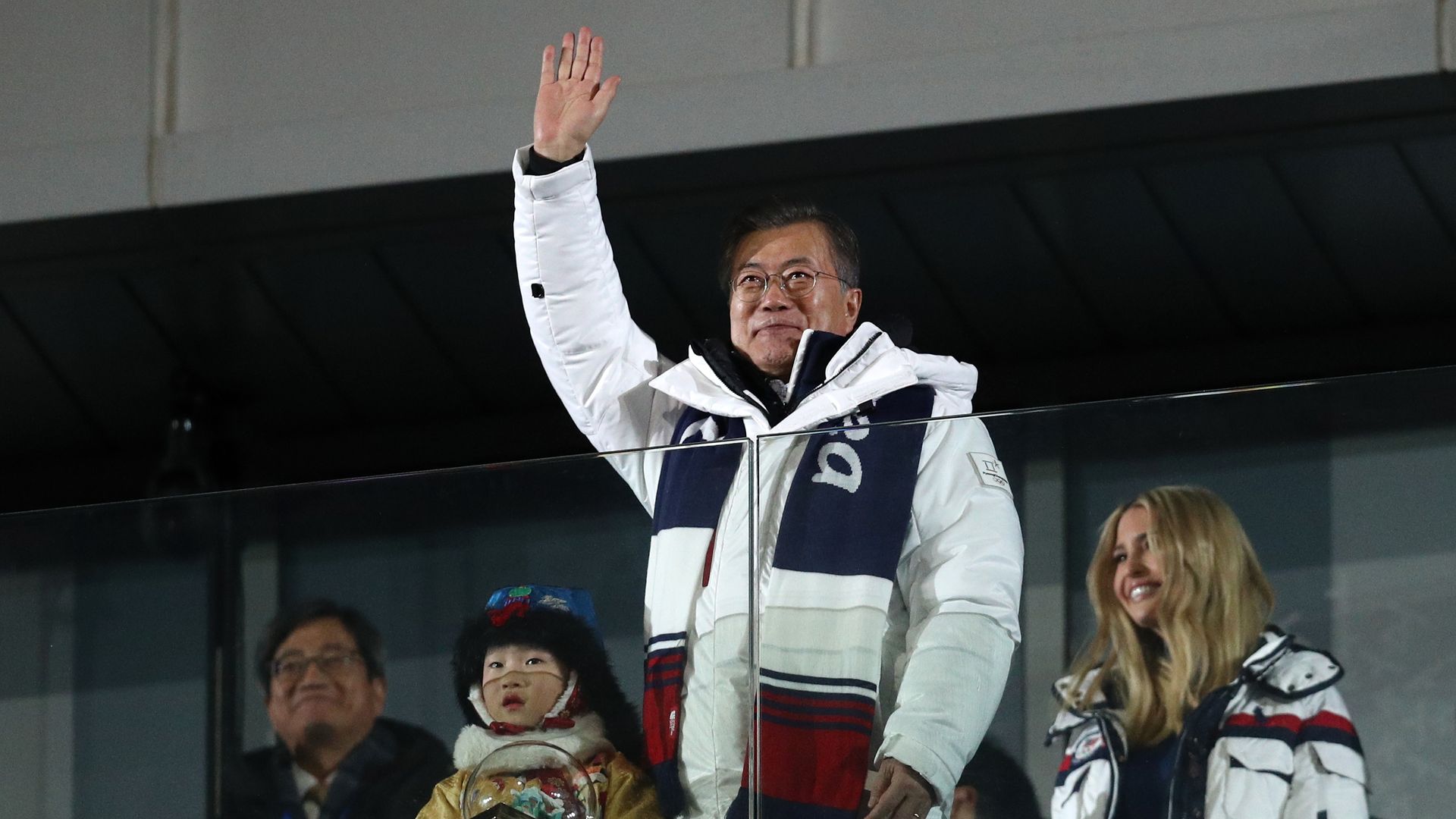
South Korean President Moon Jae-in said Monday that in order to diplomatically resolve the crisis over North Korea's nuclear weapons program, all sides must be ready to make concessions. Moon said the U.S. must lower its threshold for talks and North Korea must demonstrate a willingness to denuclearize, reports Reuters.
Why it matters: The Trump administration has said it is open to talks with North Korea, but only to explain that the U.S. will continue to apply maximum pressure on the country until it begins the process of denuclearization, per the AP. The U.S. says it will not enter formal negotiations until disarmament is officially on the table.

Top Chinese emissary to visit U.S. Feb. 27
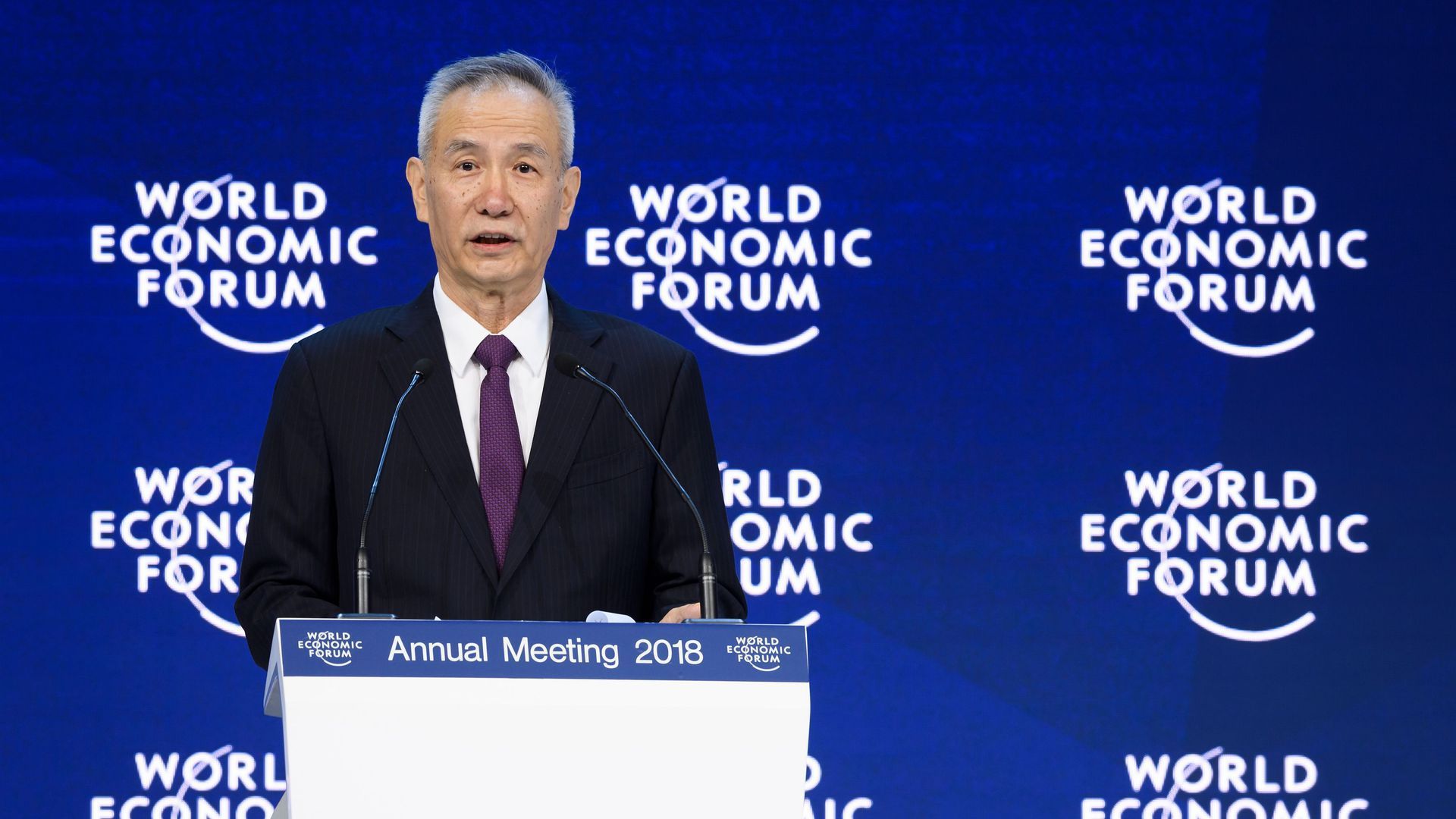
Liu He, a top economic adviser to Chinese President Xi Jinping, will visit the U.S. from Feb. 27 to March 3, to discuss economic and trade matters, the Foreign Ministry confirmed on Monday. This will be the second top emissary to visit the U.S. in a couple months.
Why it matters: Beijing is trying to figure out how to avoid a much more contentious phase of U.S.–China relations. If China is serious about difficult financial reforms, then it needs to avoid risking its cleanup with significant economic friction with the U.S. The U.S. has leverage but so far I am hearing that the Trump administration has been unable to craft and implement a coherent strategy to use that leverage.

Report: Russian spies hacked computers at Winter Olympics
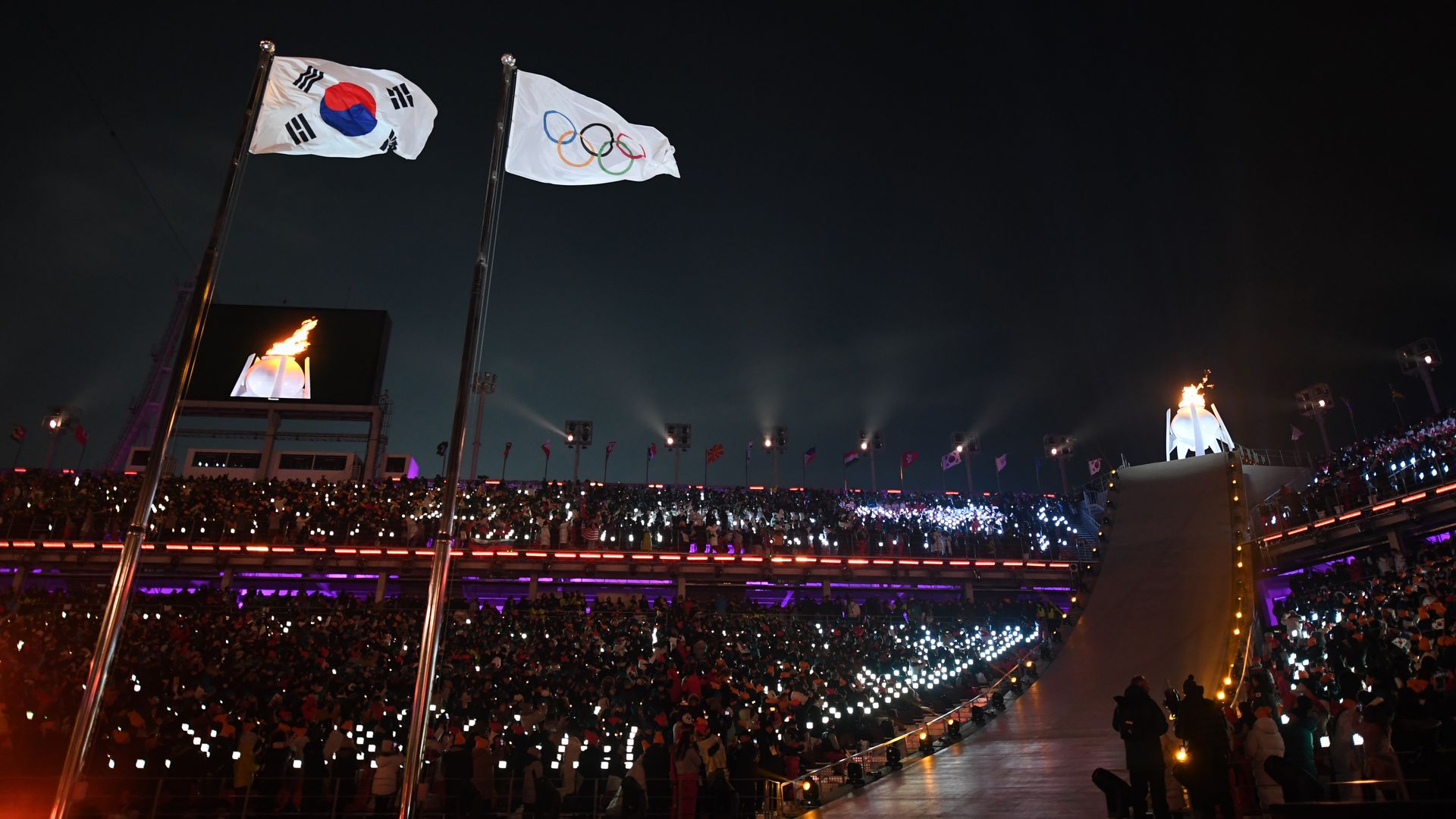
Russian military spies hacked hundreds of computers at the 2018 Winter Olympic Games in South Korea, the Washington Post reports. U.S. intelligence sources said the attacks were designed to make it look as though North Korea was behind the hack.
What happened: Officials in Pyeongchang have acknowledged that they experienced a cyber attack that caused disruptions to the internet, broadcast systems and the Olympics website during the opening ceremonies. But according to the Post, they declined to say whether Russia was behind it.

China proposes removing presidential term limits
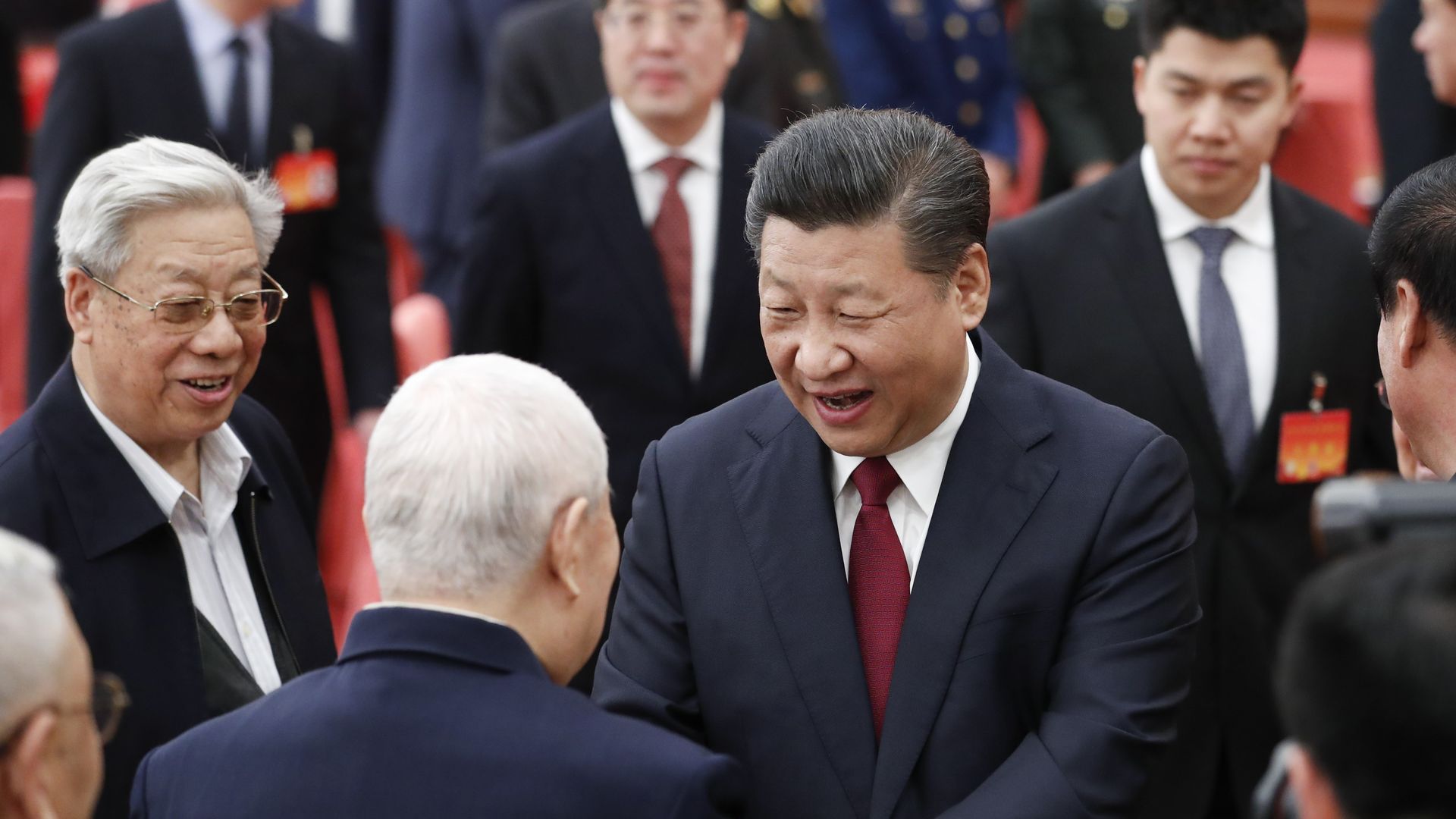
China's Communist Party has proposed removing a clause from its constitution that states the country's President and Vice President "shall serve no more than two consecutive terms," per the Party's newswire. If successful, the measure will allow President Xi Jinping to stay in power after his second term, which ends in 2023.
Why it matters: It would pave the way for Xi, "so long as he is alive and the Communist Party is running China, to be the most important and powerful person in China for life," Axios contributor Bill Bishop writes in Sinocism. "In this new Xi Era the world must learn to deal the most powerful Chinese leader in decades, while China itself is now the strongest it has been in centuries."
North Koreans "willing to have talks" with the United States
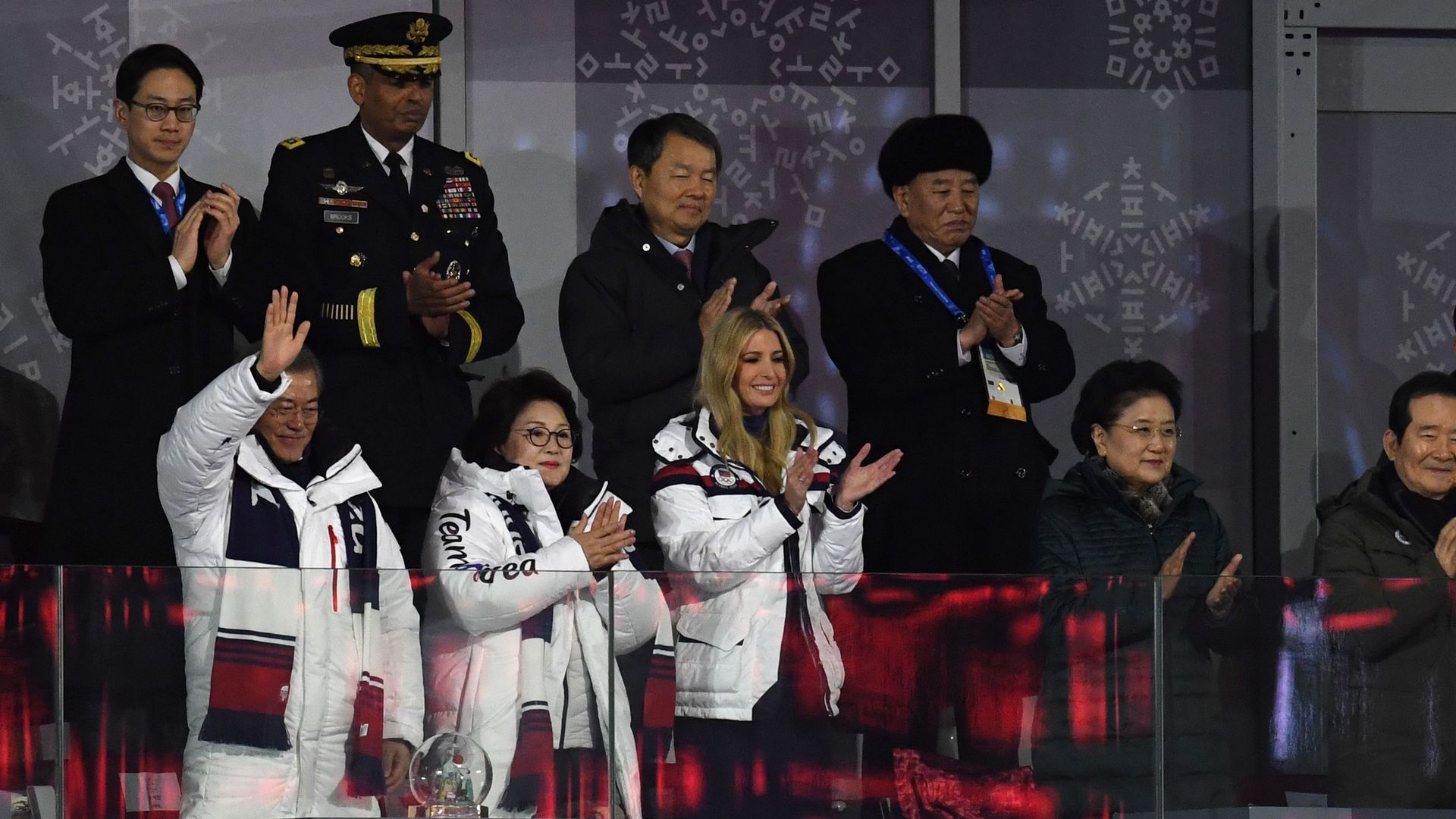
North Korea has said it is "willing to have talks" with the United States, the Washington Post reports, citing the office of the South Korean president. The news followed an hour-long meeting between President Moon and North Korea's Olympic representative, Kim Yong Chol. North Korea also agreed that inter-Korean relations should “improve together” with North Korea-U.S. relations.
Why it matters: This suggests the possibility of a meeting between Pyongyang and Washington on the sidelines of the Olympic closing ceremonies, and comes after the North Koreans agreed to, and then canceled, a meeting with Vice President Mike Pence around the time of the opening ceremonies.