The media and entertainment industries are some of the toughest arenas for dealmaking, buffeted by financial pressure, shifting consumer habits and intense regulatory scrutiny.
Why it matters: Shrewd dealmakers can work Washington and Wall Street to get deals done, but it takes visionary leaders to turn acquired assets into thriving businesses that last.
Sports, live events, original IP and proprietary data represent the hottest assets in media right now.
Why it matters: The next wave of media deals is not just about owning content, but using scarce assets to drive fandom and then owning and optimizing that customer relationship.
After a decade of failed megamergers, the media industry is finally facing a sobering reality: Scale doesn't necessarily drive value in an AI world.
Why it matters: Dealmakers want assets that AI can't commoditize, such as premium intellectual property, unique live experiences and proprietary consumer data.
AI's titans were handedan extraordinary mandate: Police yourselves.
But the industry faces a four-pronged crisis of trust as Democrats surge to power and many Americans rebel over AI and data centers. Guardrails for the industry will be a priority for the new Congress, with some populist Republicans eager to pile on.
Why it matters: The collision of safety scares, political blows, financial turmoil and leadership scandals threatens to derail AI's once seemingly unstoppable ascent.
Neocloud startup Nscale reported ballooning debt and increased reliance on Nvidia for financing as the startup aims for an IPO amid swirling questions about the sustainability of the AI boom.
Why it matters: The U.K. company is buying chips from Nvidia, getting financing from Nvidia, promising cloud computing to Anthropic and collaborating with Microsoft — illustrating the increasingly dense thicket of ties that bind together the AI economy.
The U.S. Air Force responded to unauthorized drone activity at one of its bases in the U.K. on Friday — the latest in a sequence of recent incidents that have raised concerns about the safety of military personnel in the country.
Why it matters: The U.S. increased security at several bases in Britain and moved its aircraft from RAF Mildenhall earlier this week because of a security threat linked to Iran.
Courts and governments worldwide felt the impact of this week's Microsoft outage, which sidelined work and stymied communication.
Why it matters: When Microsoft's popular workplace software went offline Thursday, it meant an extended lunch break for some offices — but for the courts and governments, it raised questions about the vulnerabilities of the technology underpinning justice and governance.
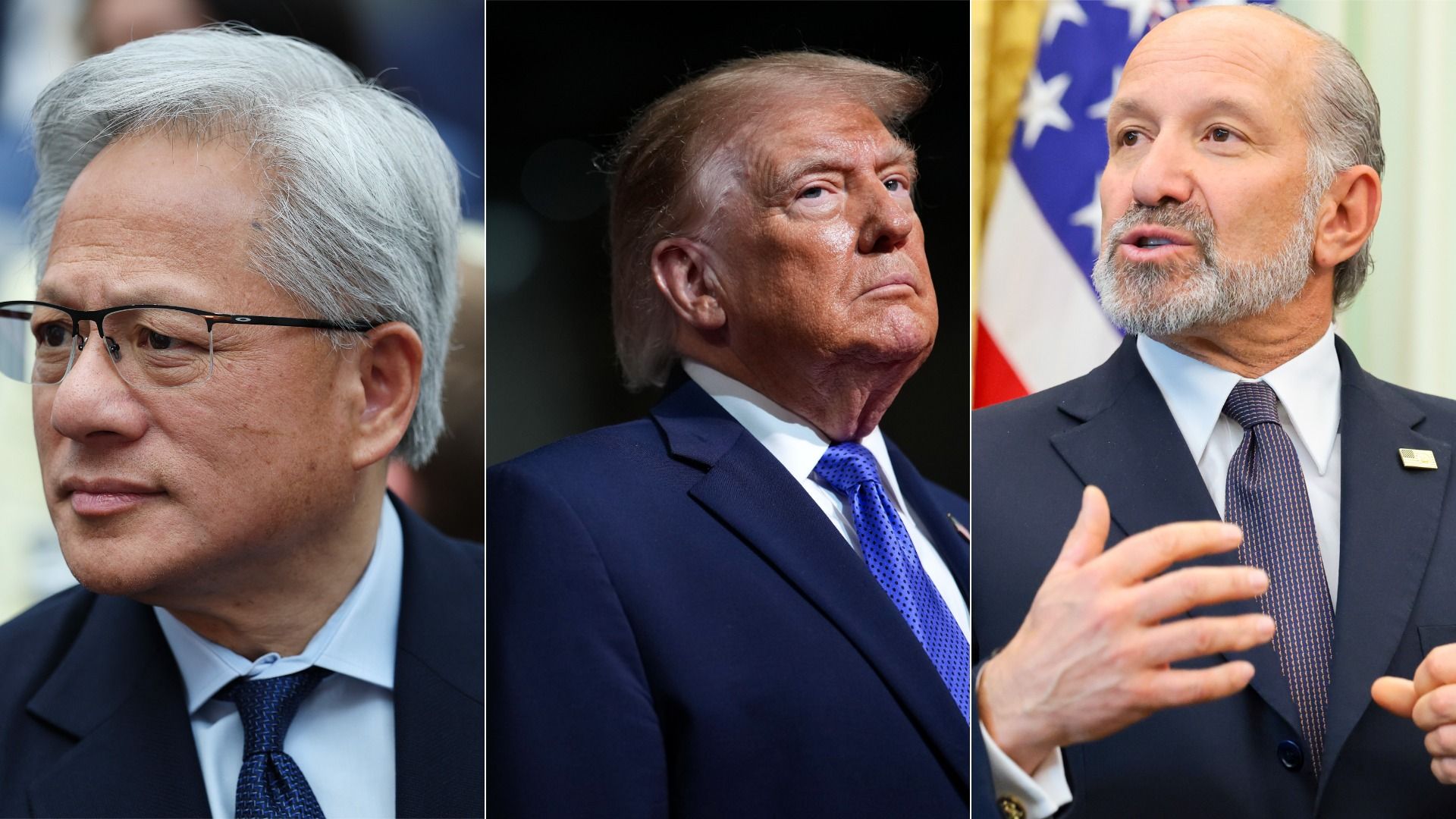
The controversy surrounding Nvidia's former CEO Jensen Huang has spiraled into a complex, wide-ranging scandal that has swept up powerful figures in tech and politics — with potentially far-reaching consequences for those involved.
Why it matters: Nvidia became the backbone of the AI boom, and the fallout from Huang's exit could further shake investor confidence in an industry already worried about soaring spending and national security risks.
Contracts power nearly every business transaction, but the work behind them can slow companies down and quietly drain revenue and margins.
From repeatedly negotiating the same terms across agreements to missing renewal deadlines, critical information is often buried in contracts and disconnected workflows, making it difficult to effectively manage key terms and obligations.
SpaceX is about to try catching both its next-gen Starship rocket and its Super Heavy booster back at its launch pad for the first time.
Why it matters: A successful attempt would make rocketry history — and mark a huge step towards realizing SpaceX's vision of Starship as a fully reusable, 171-foot-tall space launch behemoth.
Such reusability could dramatically cut launch costs, potentially ushering in a new era of commercial spaceflight.
Anthropic's IPO is just a week away, and is suddenly trying to dodge Nvidia fallout.
The big picture: The macro is a possible unwind, or at least reorientation, of the entire AI trade. The micro is a myriad of financial and strategic ties between the two companies.
The Commerce Department is finalizing a rule that could close a loophole allowing Chinese AI firms to remotely access advanced chips through overseas data centers, despite opposition from Nvidia. (The Information)
The New York Times has a worthwhile read on the history of affairs that have brought down chief executives, including several in tech.
We enjoyed nerding out on this rogue agent dashboard, which takes an important step in trying to rank events by severity on a 1-to-10 scale. Hugging Face got a 5.
Treasury Secretary Scott Bessent said in a Friday interview that while his department and others agreed on placing Megaspeed on a special list of companies that pose national security concerns, the Commerce Department "has the pen."
Why it matters: Bessent didn't deny reports of tension between him and Commerce Secretary Howard Lutnick, who has come under scrutiny for his inaction over Megaspeed.
Jensen Huang's departure as Nvidia CEO is spurring investors to rethink the financial ties between the chip behemoth and some of the most heavily indebted AI entities.
Why it matters: Nvidia's role in the AI boom isn't limited to producing its highly sought-after GPUs (graphics processing units).
It has also extended its vast financial resources to support a range of companies involved in the infrastructure boom.
Businesses are spending billions of dollars to give workers access to AI tools — but most companies haven't yet figured out what to do after that, executives tell Axios.
Why it matters: Until they do, the miraculous economic growth promised by AI and its boosters could remain out of reach.
The rapid deployment of artificial intelligence in hospitals and clinics is leading the nation's biggest physicians group to lobby for new legal protections if AI harms patients.
Why it matters: The use of increasingly sophisticated AI tools and recommendations is blurring the lines around negligence in health care, raising questions about whether doctors should be held responsible for decisions that rely on software.
Chuck Schumer and Hakeem Jeffries are both cautious, calm, compromise-minded leaders fantasizing about a serious, sensible Democratic-run Congress.
But social media is a temptress no party leader has tamed. The seduction of attention, likes and followers invariably proves too strong for the savviest, most self-promotional politicians to resist.
Why it matters: That's the lesson of the Internet Era of American Politics — the algorithms always win.
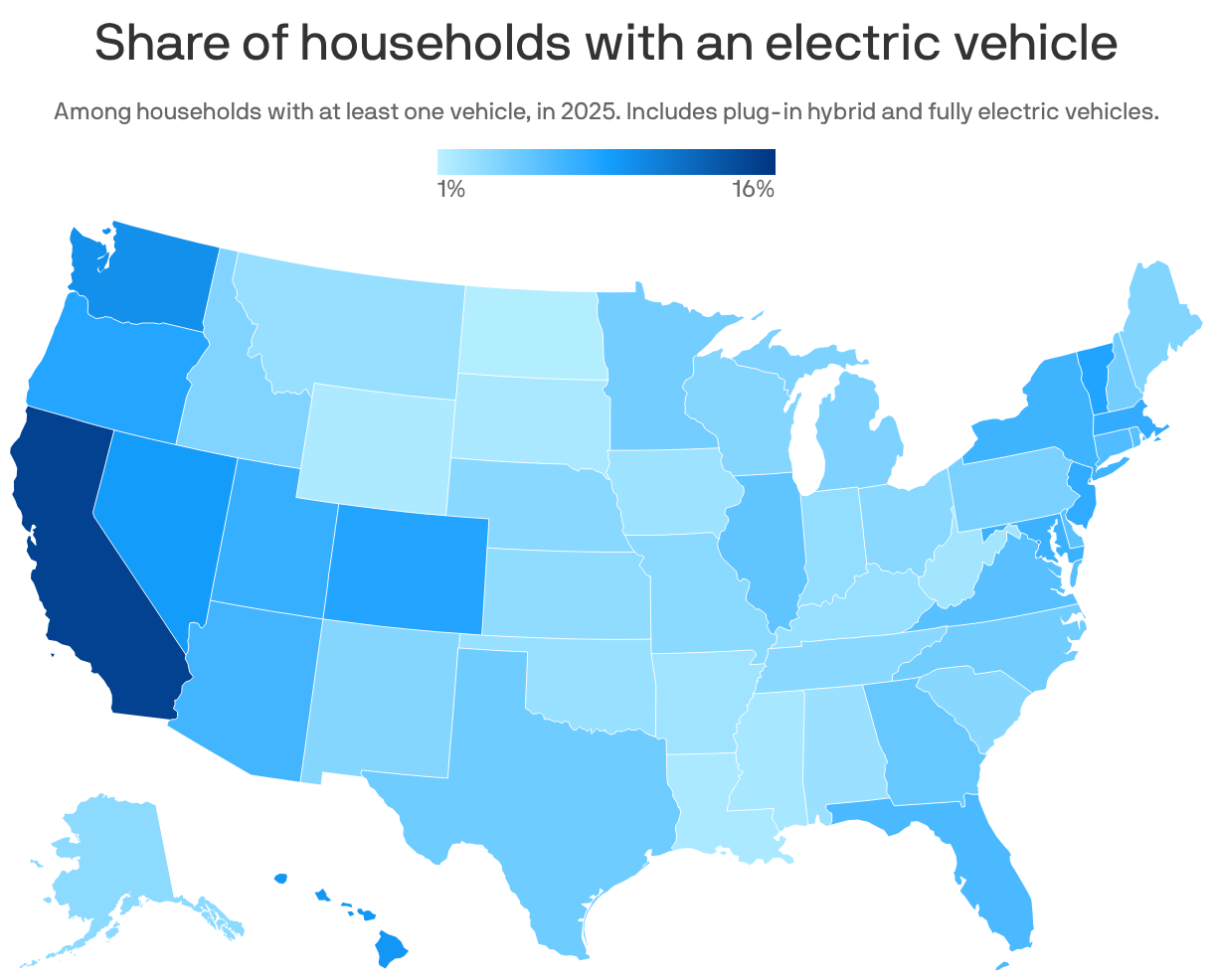
Data: U.S. Census Bureau; Map: Brad Jennings/Axios
U.S. electric vehicle ownership is most concentrated in the West and in major metropolitan areas, according to an Axios analysis of newly released Census Bureau data.
Why it matters: Where EVs are taking hold will shape who benefits first from electric transportation, where charging networks expand, and how quickly the country's auto market shifts away from gas-powered cars.
The AI boom without Jensen Huang will test a hard truth: Even if the tech world has grown somewhat less reliant on Nvidia's chips, it remains highly dependent on its checkbook.
Why it matters: With rival chips maturing and recent software breakthroughs, the tech ecosystem has achieved what would've seemed impossible a year ago: a viable path around Nvidia.