Snapchat's stock fell nearly 25% in after-hours trading Thursday after the tech giant acknowledged that its ad business "was disrupted" by changes to Apple's privacy terms that rolled out in June and July.
Why it matters: Snapchat's quarterly results sent stocks for Google and Facebook down in after-hours trading on fears that their businesses may also be affected by Apple's changes.
Video game developer Roberto Mejías created some of the visuals that players see in Nintendo’s new hit Switch game “Metroid Dread,” but, to his frustration, his name does not appear in its credits.
Why it matters: Video game credits are inconsistent across the industry and are often complicated by the policies and politics of the studios and publishers that create them.
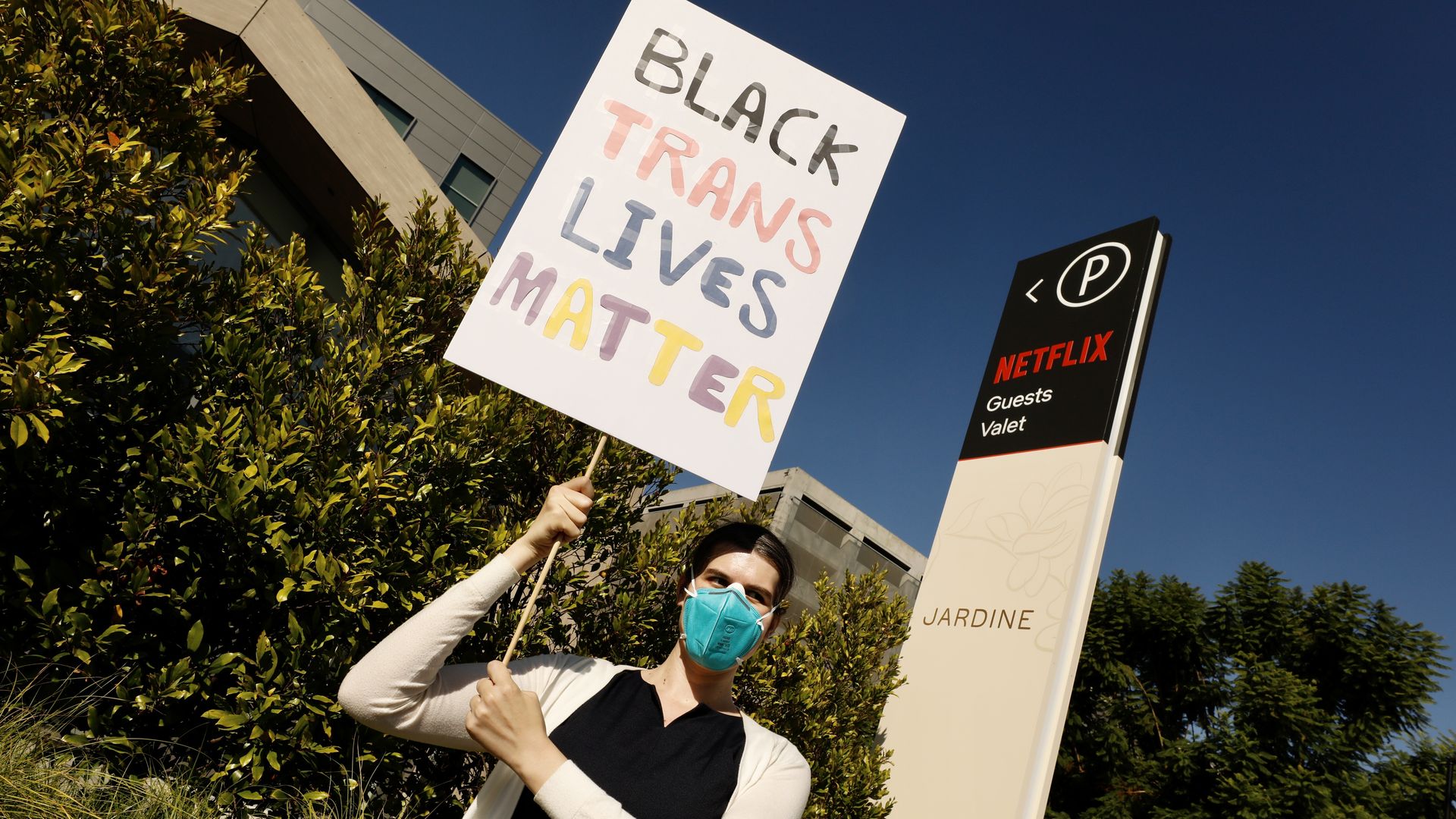
The Netflix workers who walked out on Wednesday aren't seeking to have Dave Chappelle's special taken off the service, but they do want their employer — and the world — to understand the impact his comments have.
Why it matters: LGBTQ advocates and Netflix's transgender employees say negative portrayals of transgender people in the media, including Chappelle's, further stigmatize an already vulnerable and misunderstood community.
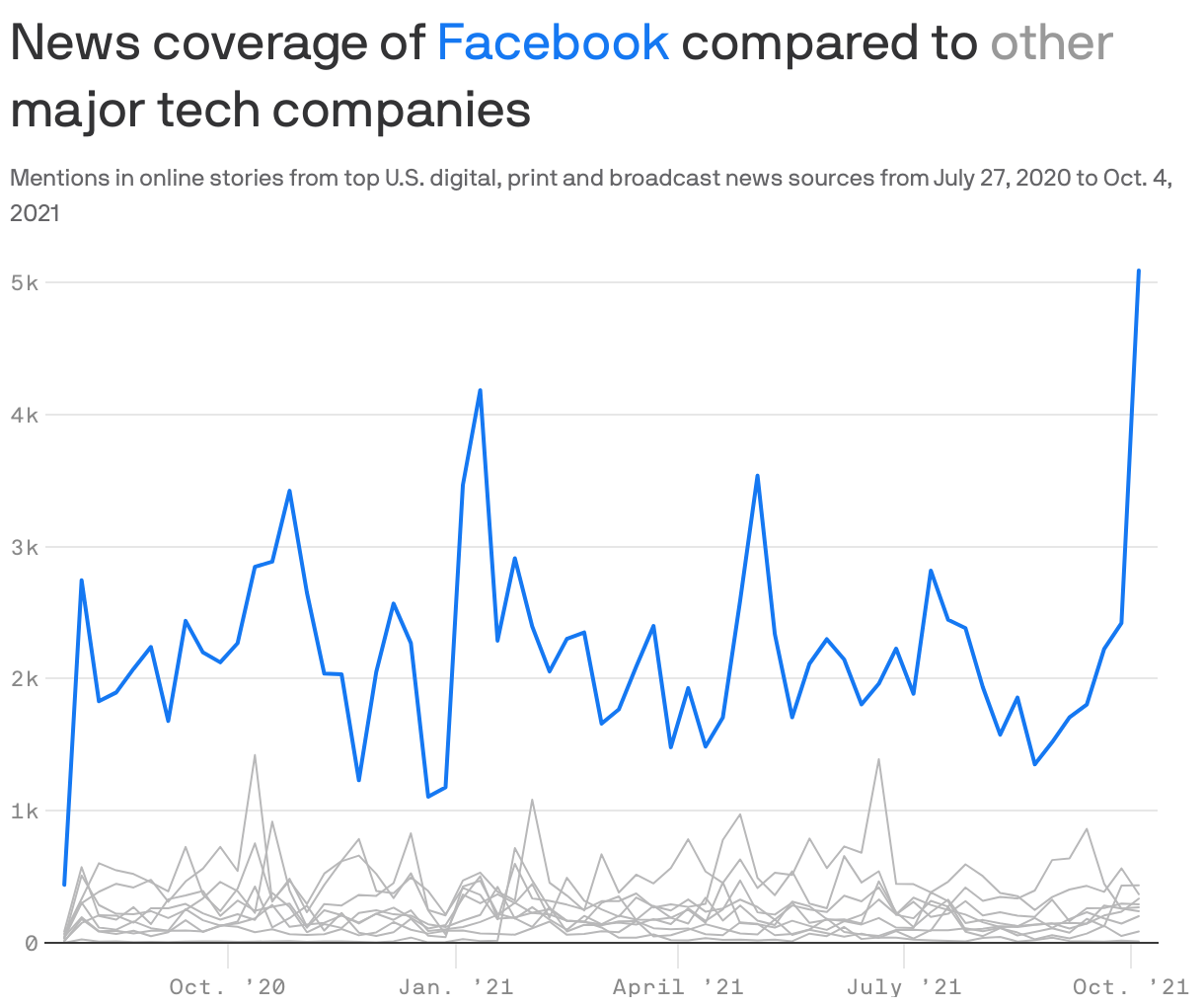
New data finds that Facebook has been mentioned in more online stories in the U.S. in the past year than all of its major tech competitors combined.
Why it matters: Press scrutiny of Facebook has become so intense and negative that the tech giant is reportedly planning to rename itself as soon as next week to signal that it's more than just a social media company.
Reproduced from Supply Chain Dive; Chart: Axios Visuals
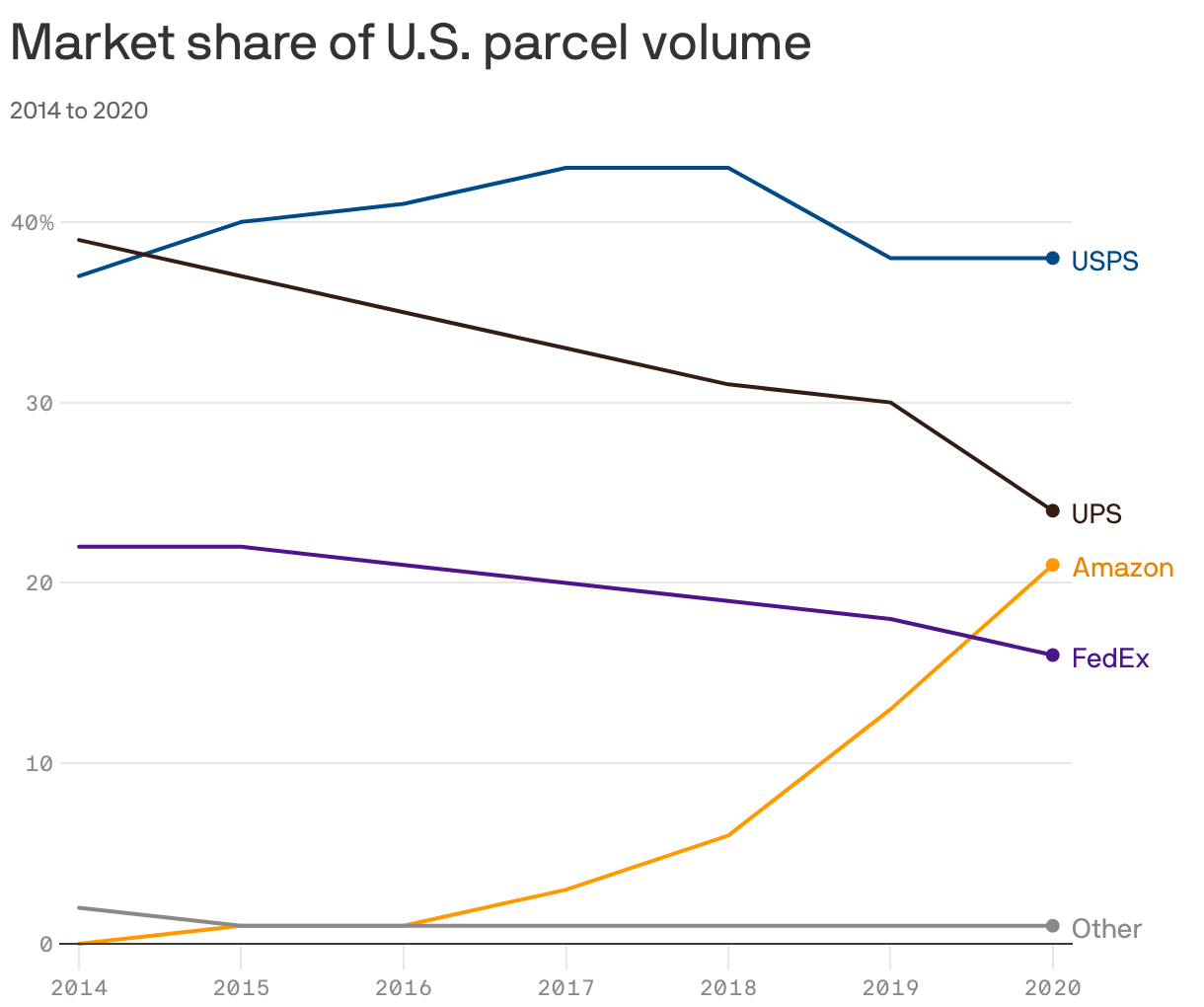
Amazon is not primarily known as a logistics company, but in 2020 the company shipped more parcels than FedEx.
Why it matters: Logistics is a $1.5 trillion business — and it has long been controlled by a handful of key players, like FedEx, UPS and the U.S. Postal Service. Now Amazon is poised to conquer it.
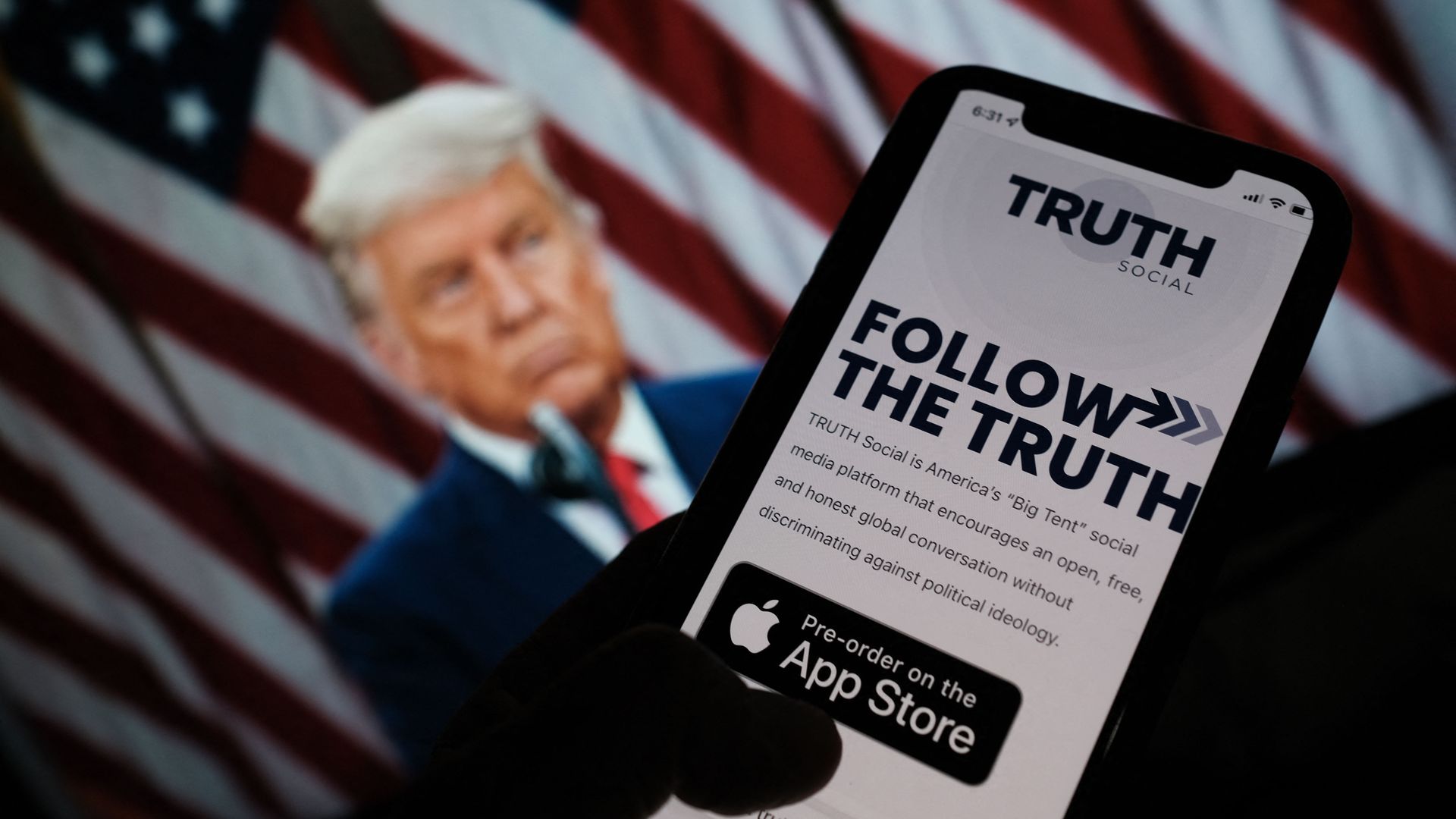
Former President Trump on Wednesday announced plans to launch a social media network called "Truth Social," and said that it would go public via a SPAC.
Why it matters: Most ex-presidents are focused on their legacies, by creating presidential libraries or engaging in philanthropic endeavors. Trump, however, remains consumed by social media.
Artificial intelligence — the ultimate optimization engine — is meeting one of its biggest challenges: untangling the messy, slow and expensive work of drug development.
Why it matters: Even as computing power has gotten faster and cheaper, drugs remain slow and costly to develop, in part because of the sheer work in selecting a candidate and getting it across the finish line.
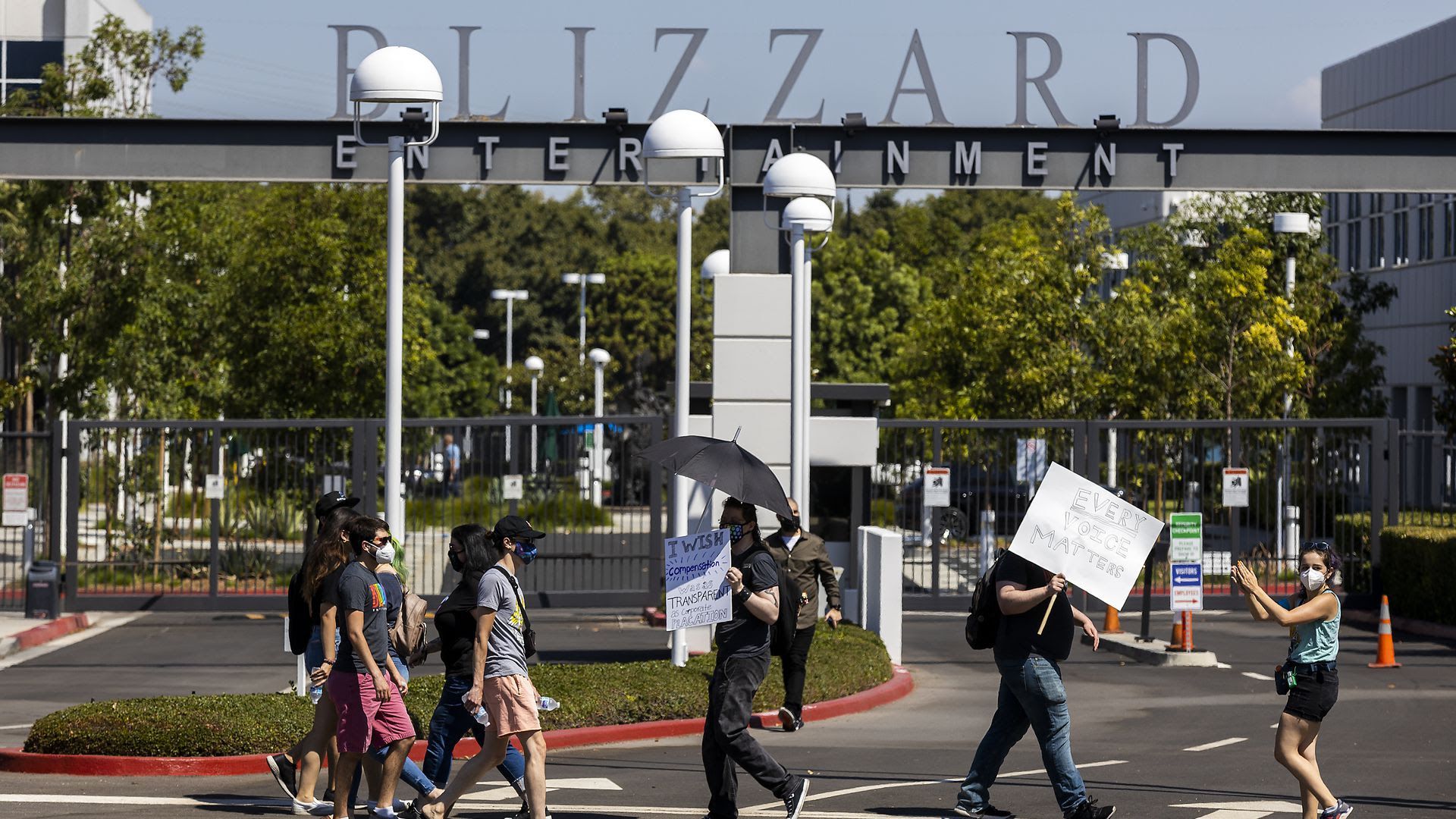
California's Department for Fair Employment and Housing (DFEH) is countering Activision Blizzard's claims of ethics violations, stating that the embattled developer is attempting to "conjure a scandal" from mundane facts.
Driving the news: Activision Blizzard filed an application this week for the lawsuit to "be put on pause" to investigate claims that DFEH lawyers committed ethical violations.
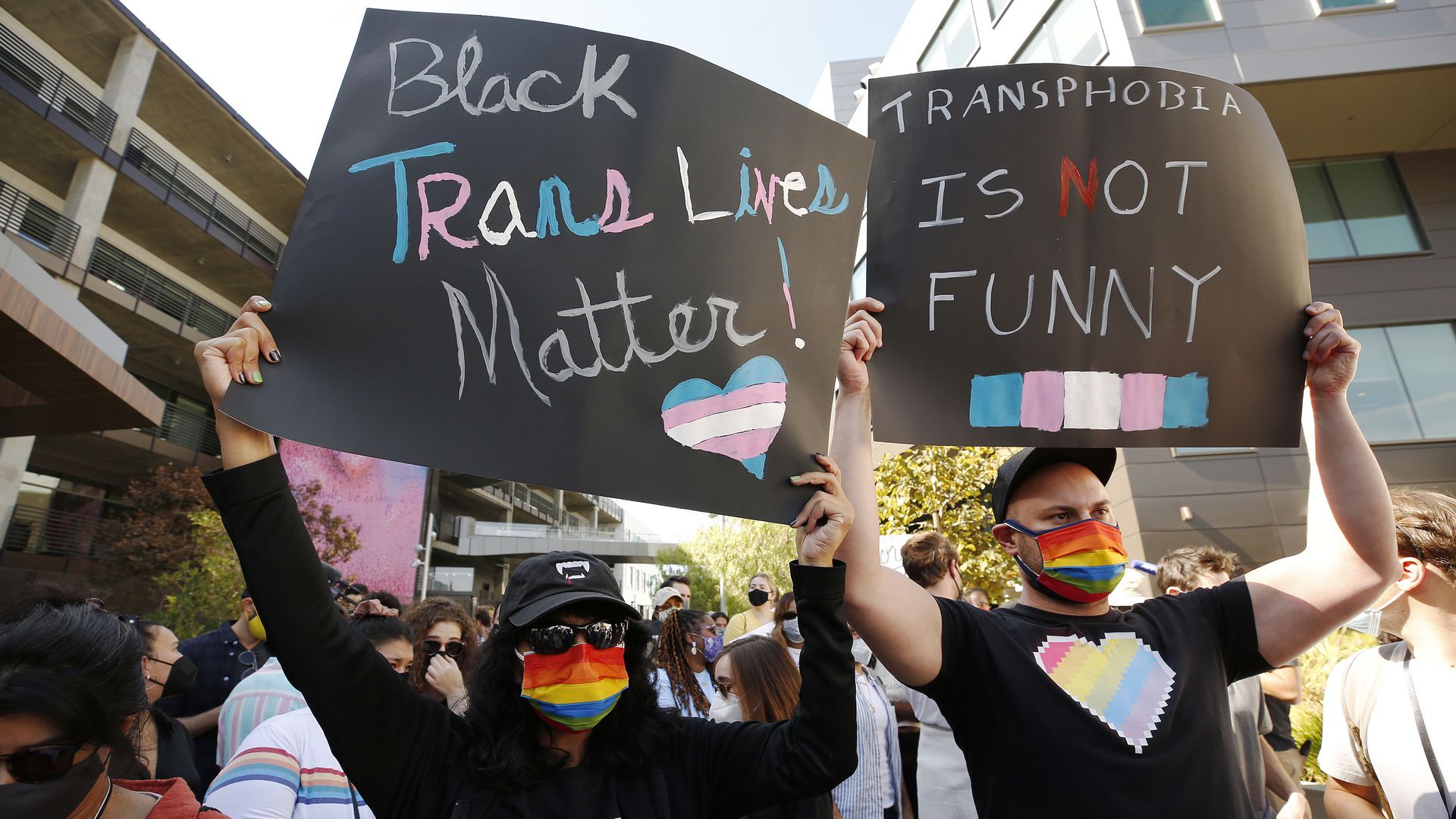
Workers at a Netflix office in Los Angeles and its Los Gatos. California, headquarters staged a protest on Wednesday over the company's handling of anti-transgender comments made by Dave Chappelle in his latest comedy special for the service.
Why it matters: The move comes amid growing controversy over Netflix's handling of the situation, which has also included the firing of one transgender employee for allegedly leaking company information.
Cyngn, a company that began as an attempt to build a more open flavor of Android and later pivoted to autonomous driving tech, is set to begin trading today following its initial public offering.
Why it matters: While special purpose acquisition companies got a lot of flack over the past year for acquiring expensive pre-revenue companies — especially in the automotive space — Cyngn's deal suggests IPOs of nascent, futuristic tech businesses aren't limited to SPACs.
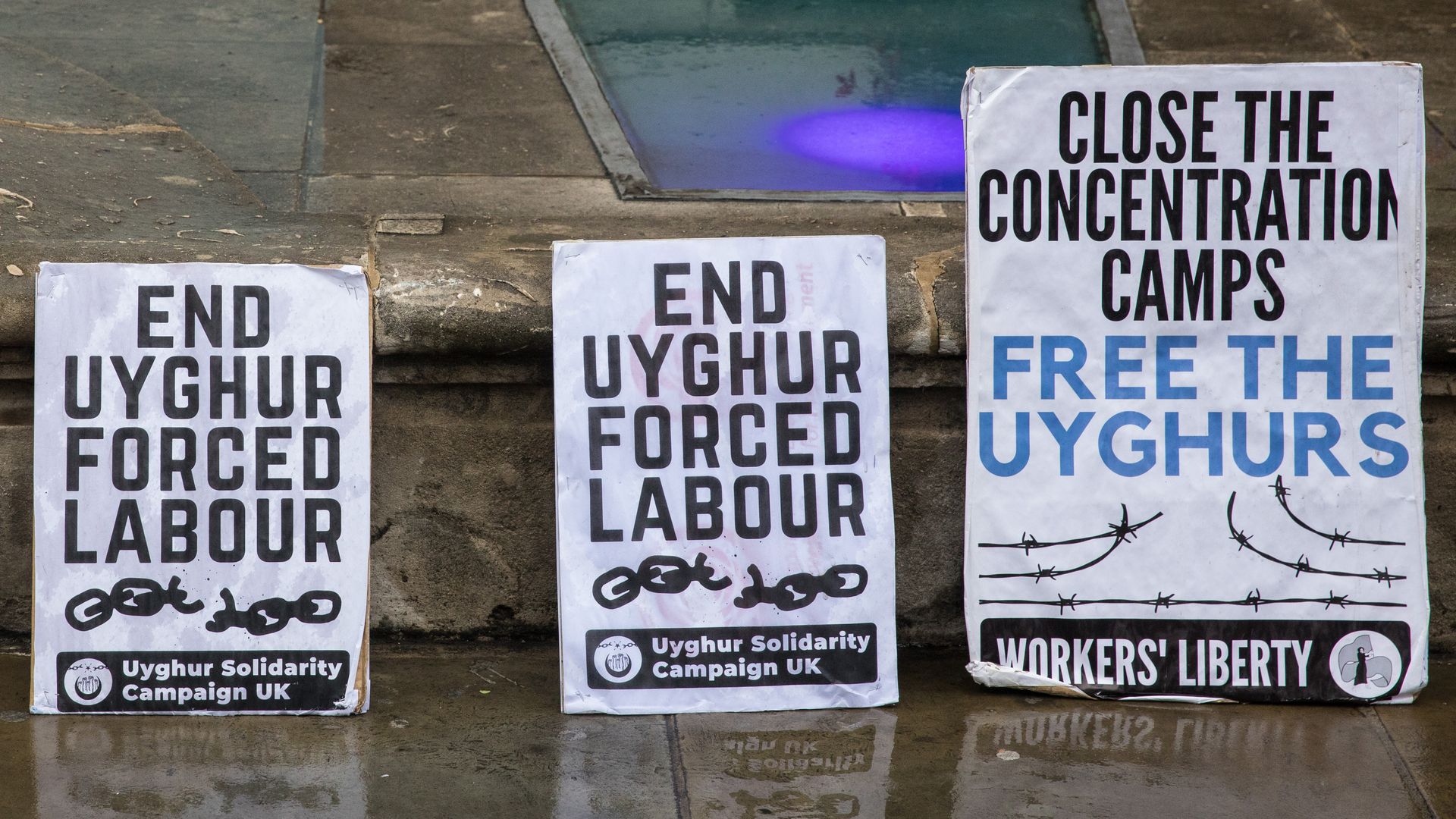
A trio of bipartisan senators sent a letter to Universal Electronics demanding the Nasdaq-listed company provide details on an alleged deal it struck with Chinese authorities to transport hundreds of Uyghur workers from Xinjiang to a plant in southern China.
Why it matters: The U.S. government has warned that businesses with supply chains and investments in Xinjiang, where China is accused of carrying out a genocide against Uyghur and other Muslim minorities, run a "high risk" of violating U.S. laws on forced labor.
While Google has been making its own Pixel phones for years, the Pixel 6 marks a turning point, and not just because the company has shifted to using its own Tensor processor to power the device.
Why it matters: Google has invested a great deal in its hardware operations, but it has yet to capture a significant share of the market.
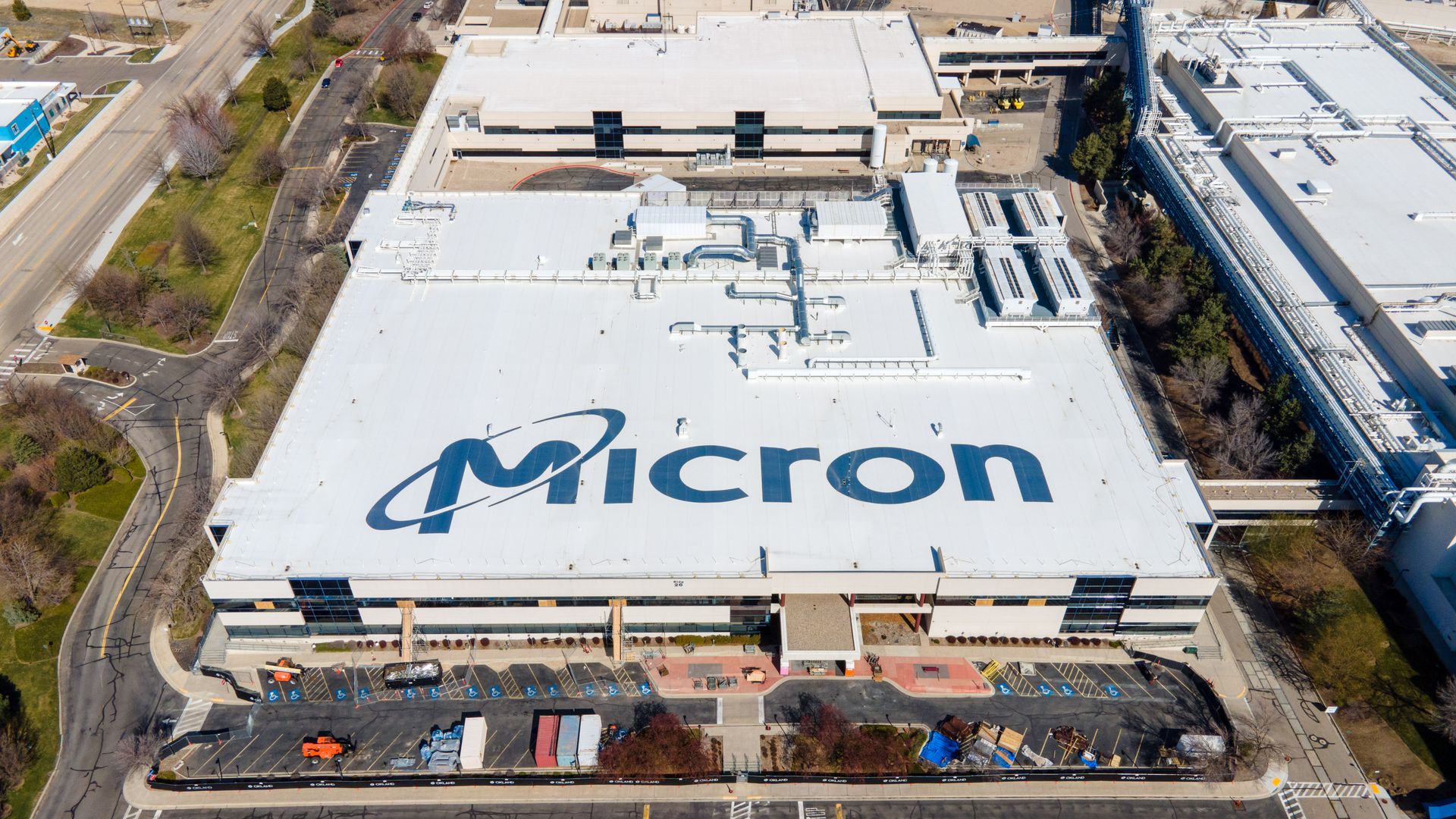
Memory chip maker Micron is announcing plans to spend $150 billion over the next 10 years, much of which will go to building new chip plants, potentially in the U.S.
Driving the news: Micron is willing to expand in the U.S. — but wants a commitment on government funding for the chip industry.
"FUTURES" — a multimedia museum experience that teases out possibilities for the future — will open Nov. 20 at the Smithsonian Institution in Washington, D.C.
Why it matters: At a moment when public attitudes towards the future can lean toward the dystopian, "FUTURES" aims to open up visitors to various scenarios that they can help create through their choices.
Tech companies are learning what everyone in Washington already knows: Leaks of confidential info are inevitable, and "plumbing" operations to close them rarely work.
Why it matters: Most tech firms talk up the power of transparency but prefer to keep details of their operations secret from competitors and the public. Researchers, regulators and the media are increasingly relying on information provided by dissident employees and whistleblowers to see inside companies' workings.
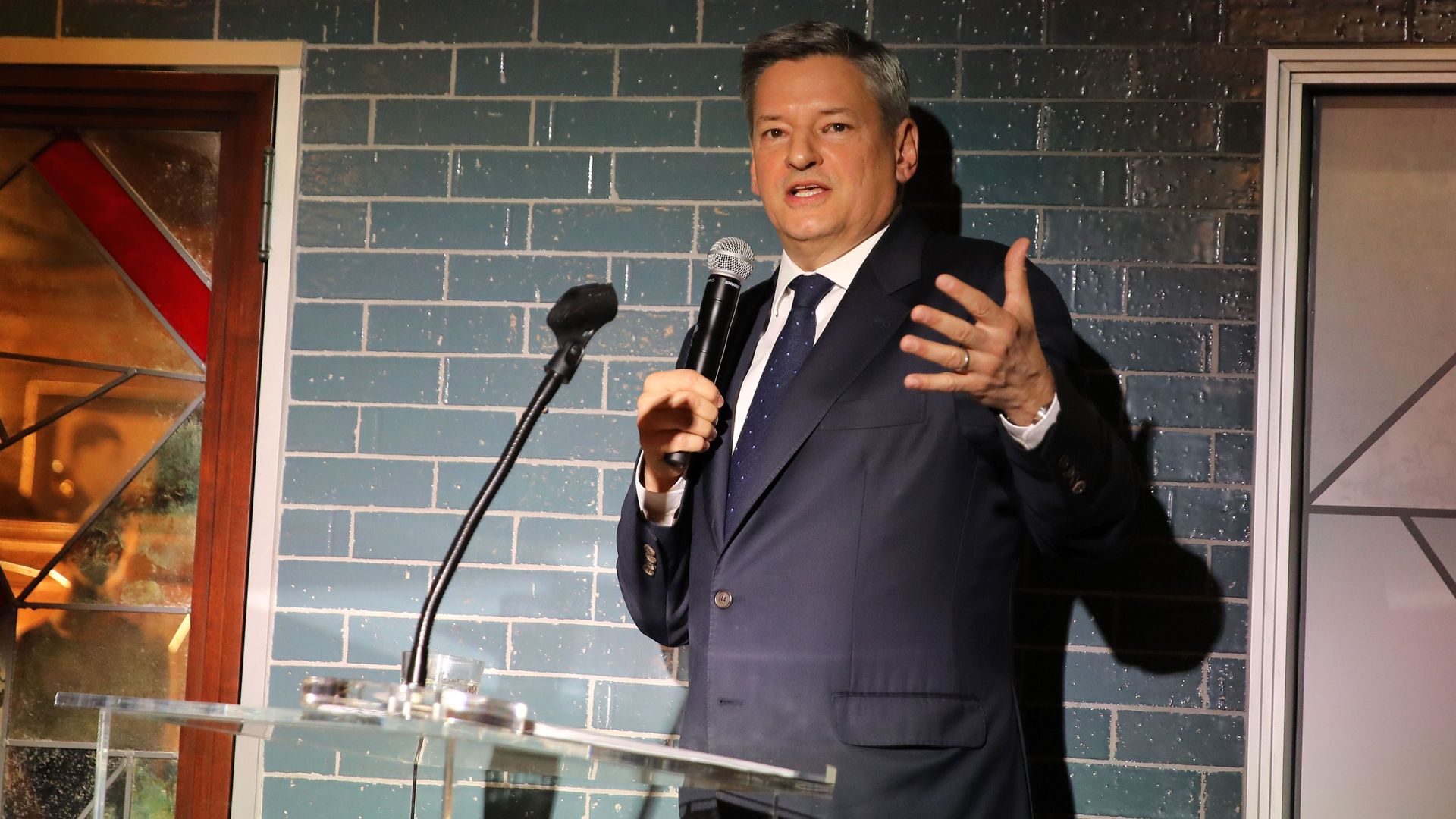
Netflix co-CEO Ted Sarandos said he "screwed up" in his communications with employees who are staging a walkout Wednesday over Dave Chappelle's anti-transgender comments in the comedian's latest comedy special on the platform.
Yes, but: While Sarandos told the Wall Street Journal and the Hollywood Reporter late Tuesday that he should have realized that airing Chappelle's special would hurt some employees, he still defended the decision to air "The Closer."