With Pixel 6, Google's phone finally stands out

Add Axios as your preferred source to
see more of our stories on Google.
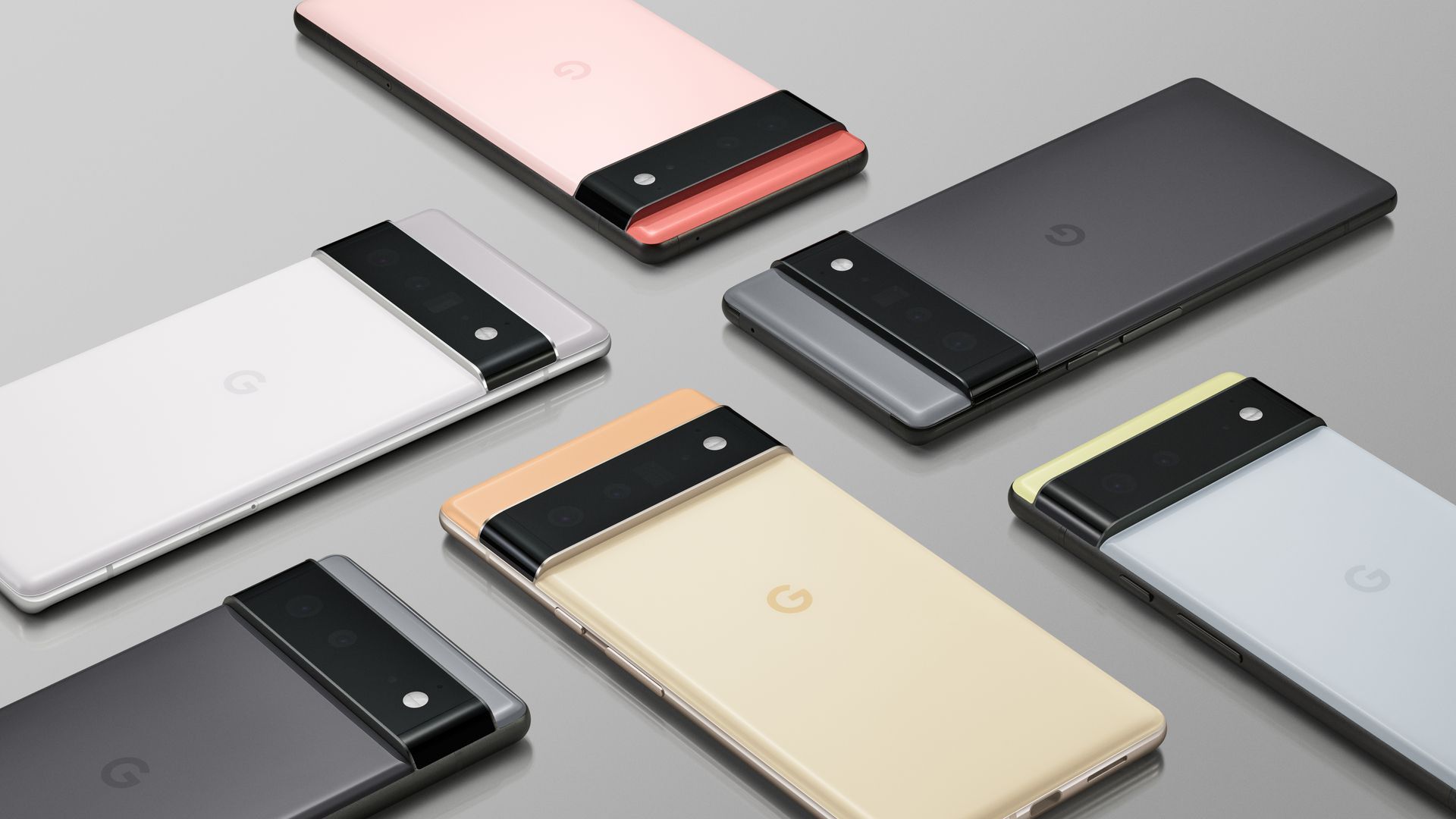
Photo courtesy of Google
While Google has been making its own Pixel phones for years, the Pixel 6 marks a turning point, and not just because the company has shifted to using its own Tensor processor to power the device.
Why it matters: Google has invested a great deal in its hardware operations, but it has yet to capture a significant share of the market.
Between the lines: It's clear that Google is going in a different direction just by looking at the Pixel 6 and the prominent rear protrusion, dubbed a camera bar, that houses the phone's advanced lenses and image sensors.
- On the inside, the biggest difference is that Google has replaced Qualcomm's Snapdragon with the internally designed Tensor processor, a switch that Google credits with powering a number of the phone's advances in computational photography and voice recognition.
Software is where the Pixel stands out from other Android devices, as with a new feature that helps out when you have to call a business. The Pixel 6 can serve up expected wait times before you call.
- Once you are on the line, it can transcribe the automated message options and provide clickable buttons, then tell you when a human being finally comes on the line.
The big picture: Google still has to make sure it gets in the conversation for more phone buyers. Hardware chief Rick Osterloh told me that the Pixel 6 will see the company's biggest-ever marketing push, though he declined to say how much it will spend.
Go deeper: Google's Pixel 6 bets on better cameras, homegrown chip
