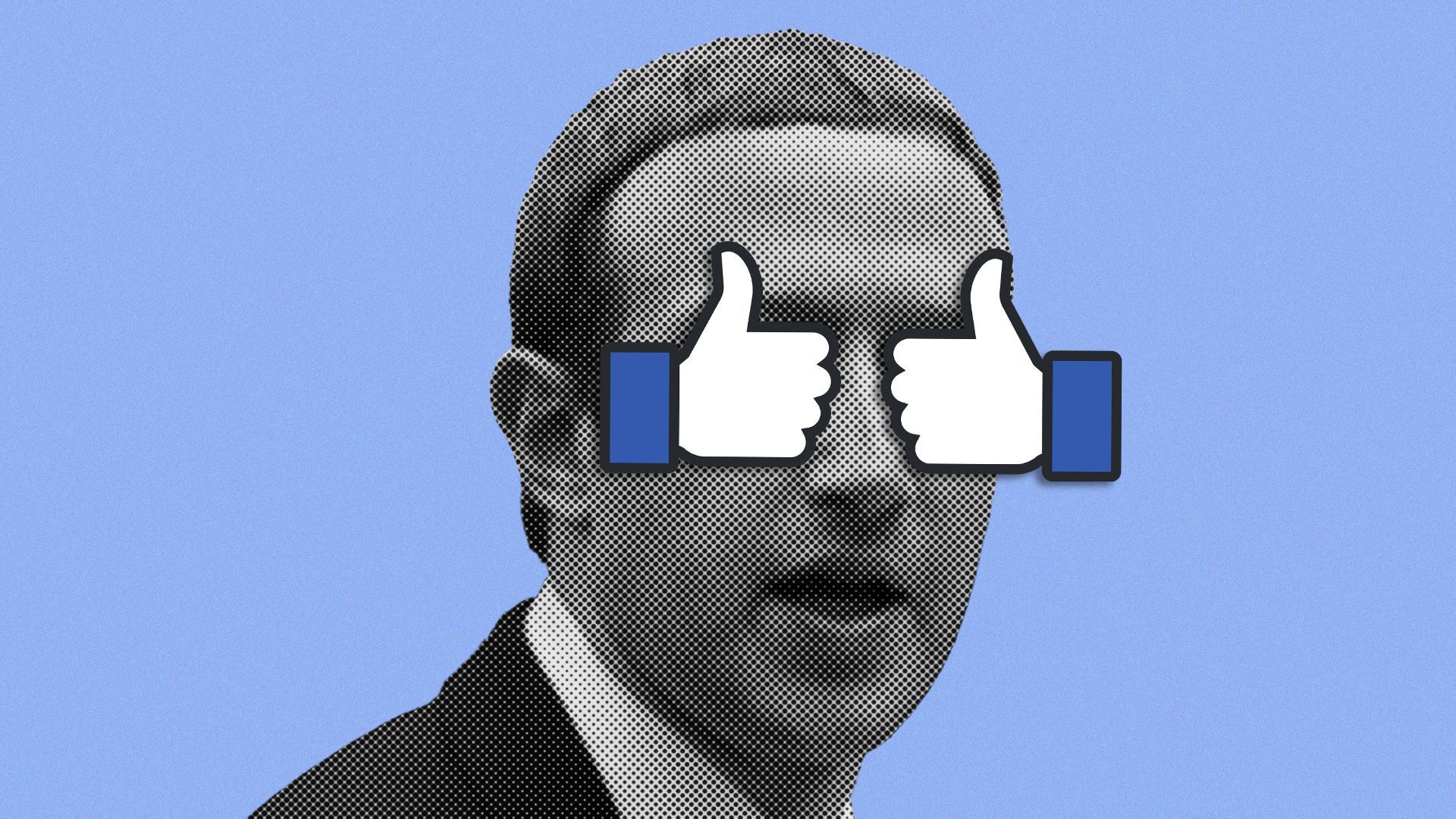
Facebook fired back on Friday evening after President Biden earlier said that social media platforms are "killing people" by allowing COVID-19 vaccine misinformation on their sites.
What they're saying: "We will not be distracted by accusations which aren't supported by the facts," a spokesperson for the tech giant said in a statement Friday.
Consumer spending on video game hardware, software and accessories rose to $28.9 billion for the first half of 2021, up 15% from the same time last year, according to the NPD group.
Why it matters: The easing of pandemic-related lockdowns in the U.S. hasn't stopped the boom in gaming, which began with the onset of COVID-19 last year.
The creators of the PlayStation 5 hit "Ratchet & Clank: Rift Apart" jettisoned old ideas about game difficulty — and even made a previously "unthinkable" design decision — to help players get through their new game, its creators told Axios in an exclusive interview.
Why it matters: Some game designers are rethinking the virtues of making a challenging game vs. those of making games that more people can get through.
President Biden will nominate Laurie E. Locascio to lead the federal agency in charge of promoting innovation and technology, the National Institute of Standards and Technology.
Driving the news: Biden will name Locascio, currently vice president for research at the University of Maryland, as Undersecretary for Standards and Technology at the Department of Commerce.
She previously led internal scientific research and laboratory programs at at the National Institute of Standards and Technology, or NIST, as acting principal deputy director and associate director for laboratory programs.
The nomination will mark Locascio's return to NIST, a federal agency that works with the private sector to develop technology and standards.
Jessica Rosenworcel, acting chairperson of the Federal Communications Commission, told an Axios virtual event that the key to helping close the digital divide is to focus on 5G midband spectrum, not millimeter wave.
Why it matters: Research shows that closing the gap in broadband access could add hundreds of thousands of jobs and tens of billions of dollars in economic output, Axios' Bryan Walsh writes.
An all-remote startup is offering companies a one-stop solution to set up their employees to work from home.
Why it matters: If the pandemic year of enforced remote work was a rough one for many employees, it's in part because there was little time to prepare what they needed to work out of the office.
The top Republican on the House Judiciary antitrust subcommittee is launching a new GOP caucus on Big Tech as he seeks to build support for antitrust changes despite a divide among Republicans.
The big picture: Republicans eager to take on Big Tech are at a crossroads between working with Democrats to enact changes now or going it alone and playing a longer game.
Autonomous trucking is a hot commodity as investors once dazzled by self-driving cars are now pouring truckloads of money into automated logistics.
The big picture: It's still not clear when robotaxis might be ready for large-scale deployment. Meanwhile, the explosion of e-commerce since the pandemic has created an increased demand for shipping.
Ransomware may be the threat everyone is talking about right now, but businesses also face another growing risk: becoming a disinformation campaign's direct target or collateral damage.
Why it matters: Ransomware's damage is immediate and unavoidable, but the attack takes skill and planning, while disinformation attacks are often cheaper to launch and harder to protect against.
Valve is officially entering the crowded market of Switch-like portable gaming PCs with the unveiling of the Steam Deck, a system stuffed with impressive features.
Why it matters: Valve's device is the latest effort to tap into an audience who likes the idea of the hybrid Switch but would prefer to play PC games and won’t mind missing Mario.
There's been a major shift in recent years in how video games represent Arabs, but developers are still struggling to find their footing and not rely on problematic stereotypes.
Why it matters: Arab cultures have been coded in harmful stereotypes in games for decades.
Surgeon General Vivek Murthy called on social media companies Thursday to curb misinformation related to the coronavirus pandemic and vaccines in his first health advisory since being confirmed to the position.
Microsoft on Wednesday announced Windows 365, a cloud-based version of the desktop operating system that allows people to run the same virtualized desktop across multiple PCs and even on Macs and mobile devices.
Why it matters: The move puts Windows in more places, including on iOS and Android, though its capabilities there are more limited than on a PC.
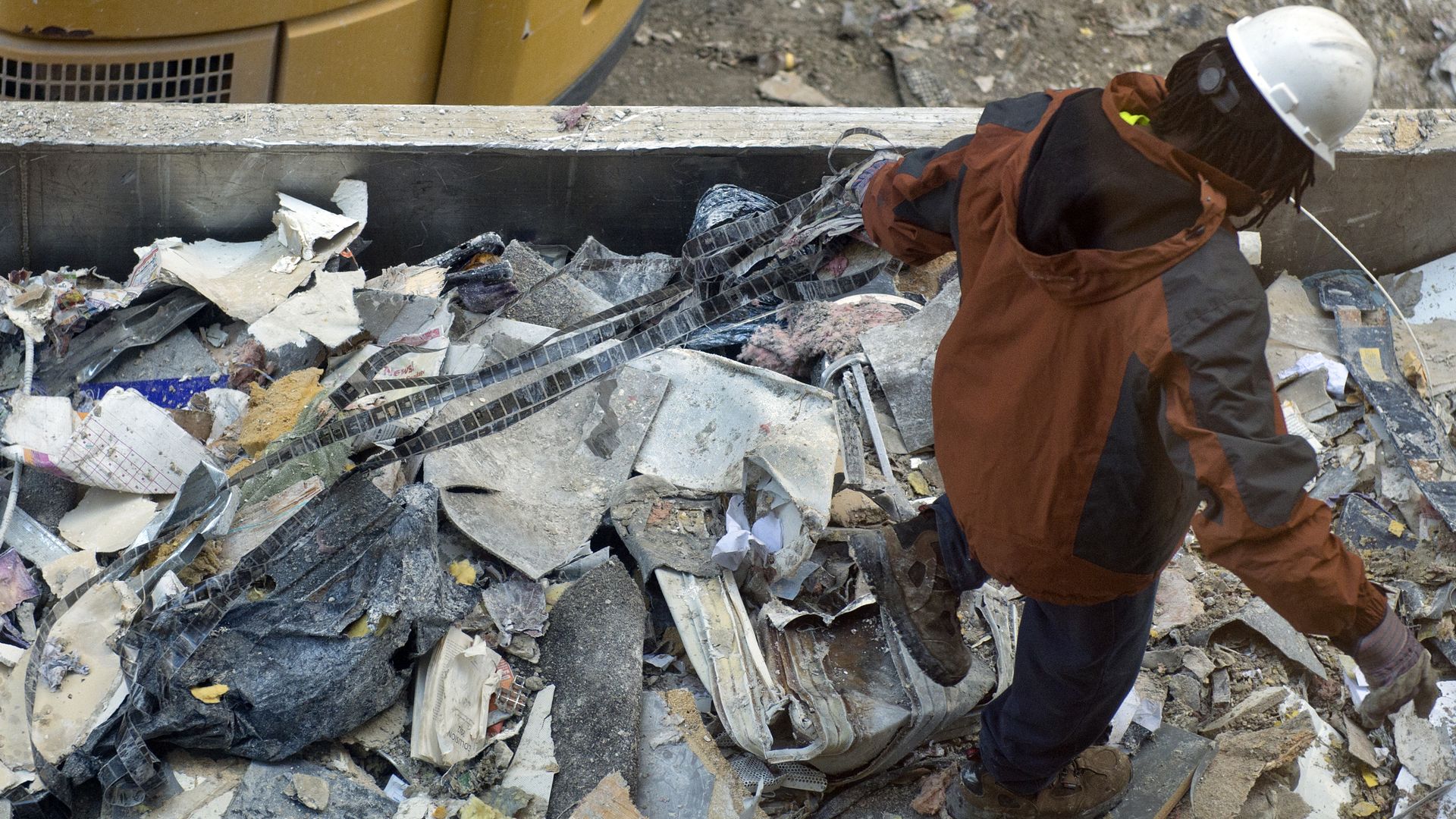
A startup called Compology is using high-tech cameras in dumpsters and AI analytics to help companies and cities better manage their waste streams.
Why it matters: Trash — unlike electricity or water — isn't easy for cities to meter, "which contributes to the inefficiency around waste management," says Jason Gates, Compology's CEO.
Digital maps are getting better every day, making turn-by-turn navigation more accurate, with real-time details. Adding a third dimension to mapping — altitude — is the next breakthrough.
Why it matters: Satellite-based GPS maps are critical to modern life but have their limitations. They don't work well indoors or in urban areas, and they aren't secure.
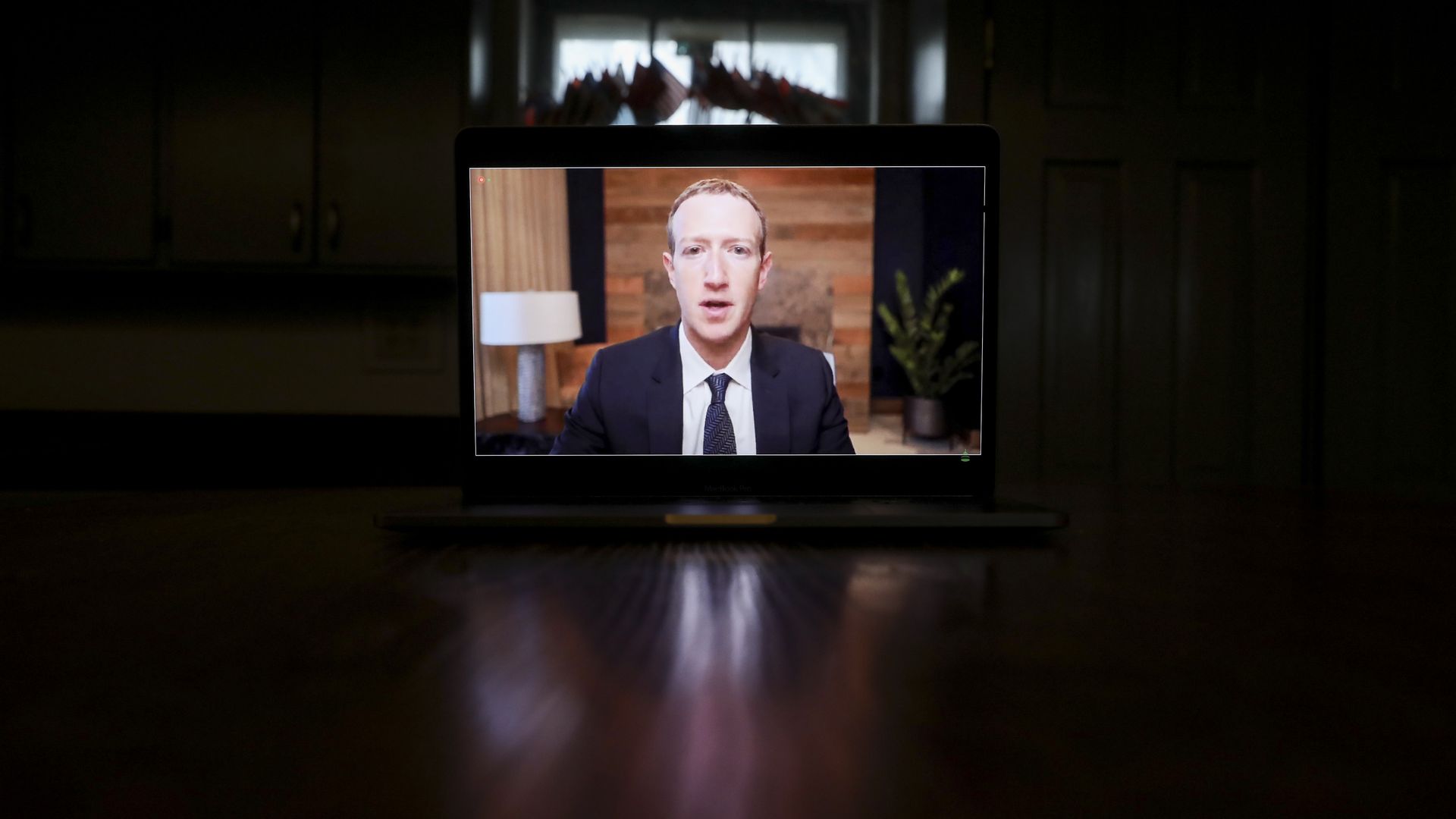
Only Facebook knows for sure what's popular on its platform at any given moment. The rest of us, viewing our individual feeds and seeing only how our own posts fare, are left to guess.
Facebook could change that by giving the world real-time windows onto the social network. But it has long resisted doing so — and new reports suggest it's afraid greater transparency will just make it look bad.








/2021/07/15/1626374790537.gif?w=3840)