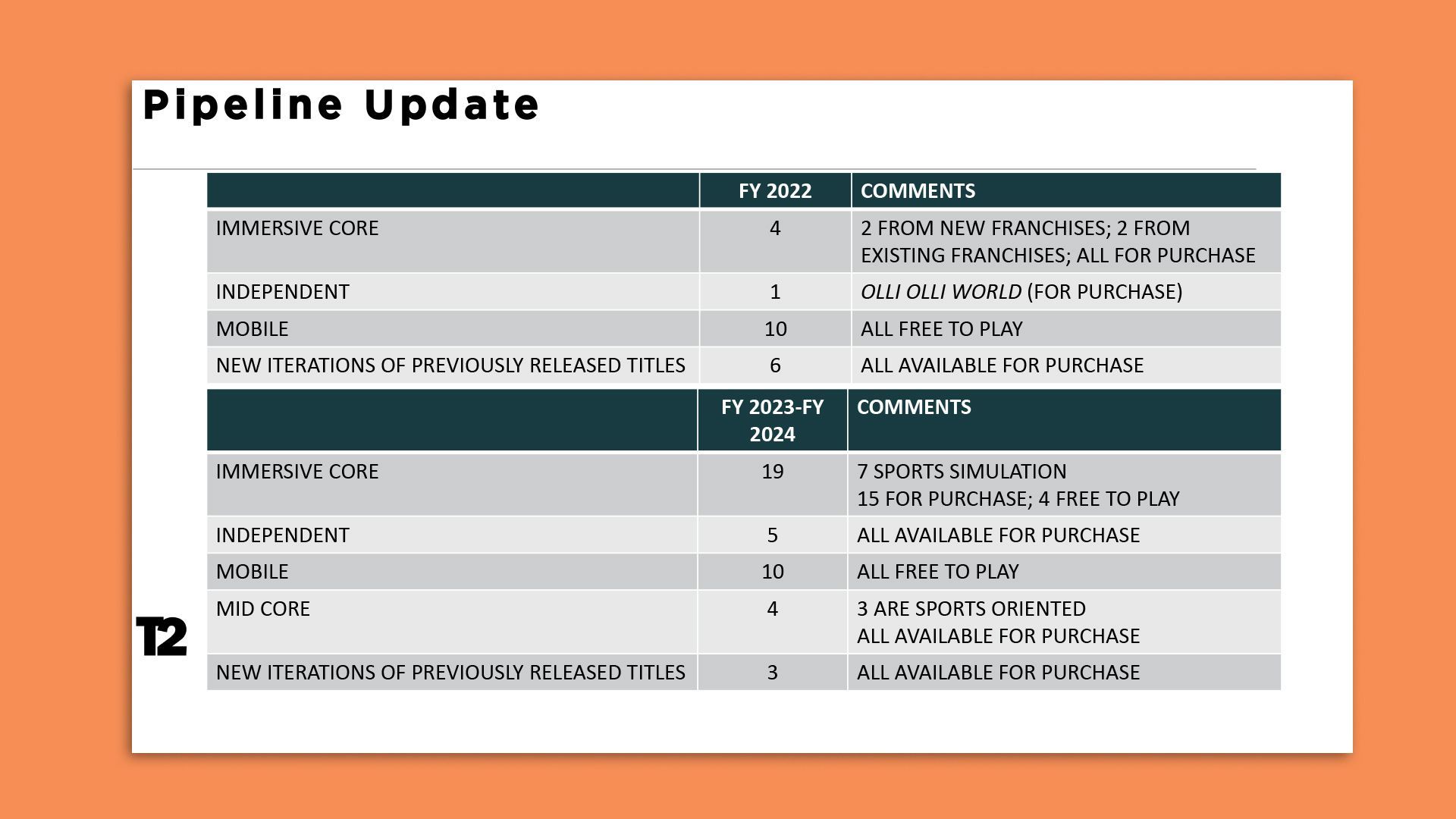
Take Two Interactive bucked convention by providing some details about the company’s upcoming games as far into the future as early 2024.
Why it matters: In the intensely secretive video game industry, big publishers avoid even admitting the existence of games coming out in the year you're currently in, let alone years that are a presidential election cycle away.
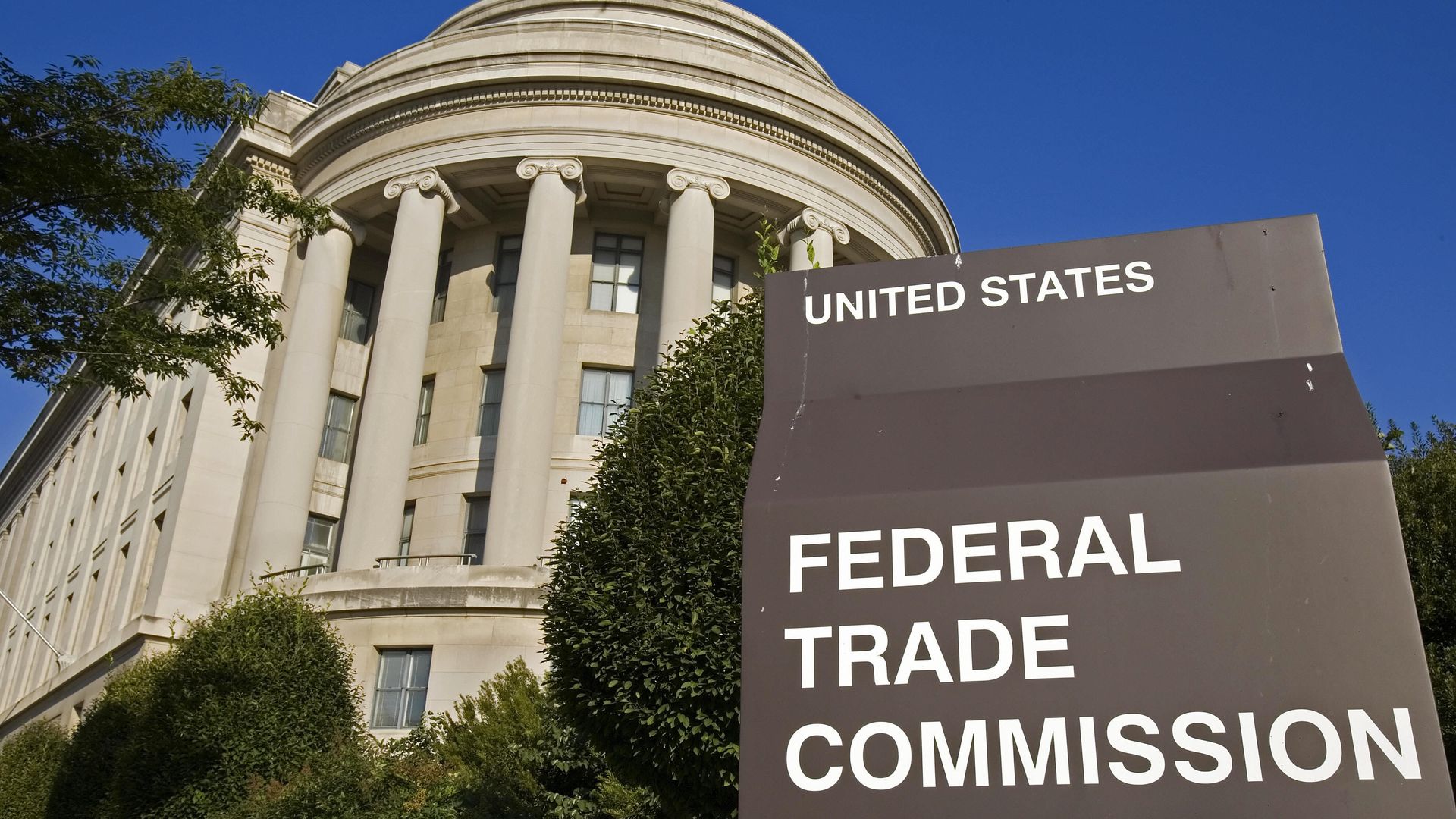
The Federal Trade Commission and six state attorneys general sued Frontier, an internet service provider, for allegedly not delivering the internet speeds it promised to consumers.
Why it matters: Frontier Communications is the only internet provider in many rural, small and mid-sized communities. The FTC's lawsuit claims Frontier upcharged consumers for higher-speed tiers of service, and then did not deliver it.
Maggie Robertson is the actress behind Resident Evil Village’s villain Lady Dimitrescu — a breakout role in which she’s gotten to show off her desk throwing skills and ability to act under a brim hat.
Driving the news: Lady Dimitrescu became an instant fan favorite, in large part because of her impressive stature. Her height (9’6”) was an instant topic of interest across news sites and fan blogs alike; even iconic game director Ikumi Nakamura was susceptible to her charms.
CEO of Colonial Pipeline Joseph Blount told the Wall Street Journal he authorized a ransom payment of $4.4 million to the DarkSide cybercrime group on May 7 in an attempt to restore the services of the largest refined fuels pipeline in the U.S.
Why it matters: The federal government for years has recommended that companies do not pay criminals during ransomware attacks over fears that the transactions would only encourage more groups to conduct future attacks.
Upstream, a startup that facilitates professional online communities and virtual networking events, has raised $3.25 million in seed funding led by Ibex Investors.
Why it matters: The pandemic's constraints on in-person interactions created a big void, both for those seeking to network within their industries, and for those yearning to interact with colleagues.
Aiming to sway budget-conscious legislators on the value of federal funding, the chip industry's U.S. trade group says that $50 billion in investment would boost the U.S. economy by $25 billion per year and create hundreds of thousands of jobs.
Why it matters: Congress gave conceptual blessing to the spending as part of a defense authorization bill, but has yet to allocate the funds.
If you tuned into to Google's two-hour I/O keynote on Tuesday, you heard about a whole slew of new products, features and technologies under development. You also heard the sound of Big Tech trying to turn the page after a year dominated by criticisms, hearings and investigations.
Why it matters: Innovation is tech's unifying tenet, and conferences like I/O give the industry giants a chance to put their best foot forward, highlighting areas where technology can do things that people alone can't.
Google is making inroads in its push toward what company officials call its "moonshot goal" of powering itself completely with carbon-free electricity 24 hours a day, seven days a week by 2030.
The big picture: At its virtual I/O event Tuesday, Google announced that its climate intelligence computing platform will be able to shift tasks between data centers to maximize the use of renewable energy.
A new report lays out the ways that cutting-edge text-generating AI models could be used to aid disinformation campaigns.
Why it matters: In the wrong hands text-generating systems could be used to scale up state-sponsored disinformation efforts — and humans would struggle to know when they're being lied to.
After scrapping last year's I/O developer conference because of the pandemic, Google used this year's event Tuesday to debut a more personalized version of Android and a big update for wearables, as well as a potential breakthrough in videoconferencing, among other advances.
Why it matters: Beyond showcasing new technologies, events like I/O and Apple's upcoming Worldwide Developer Conference serve as a chance to influence where other businesses large and small place their energy and resources.
Riot Games is suspending "Valorant" pro player Jay "Sinatraa" Won for six months "for failing to fully cooperate" with a sexual harassment investigation.
Why it matters: Won is a former Overwatch League MVP, and one of the most prolific "Valorant" competitors. In March, Riot suspended Won after former girlfriend Cleo Hernandez came forward with graphic allegations of emotional and physical abuse, which included audio recordings.
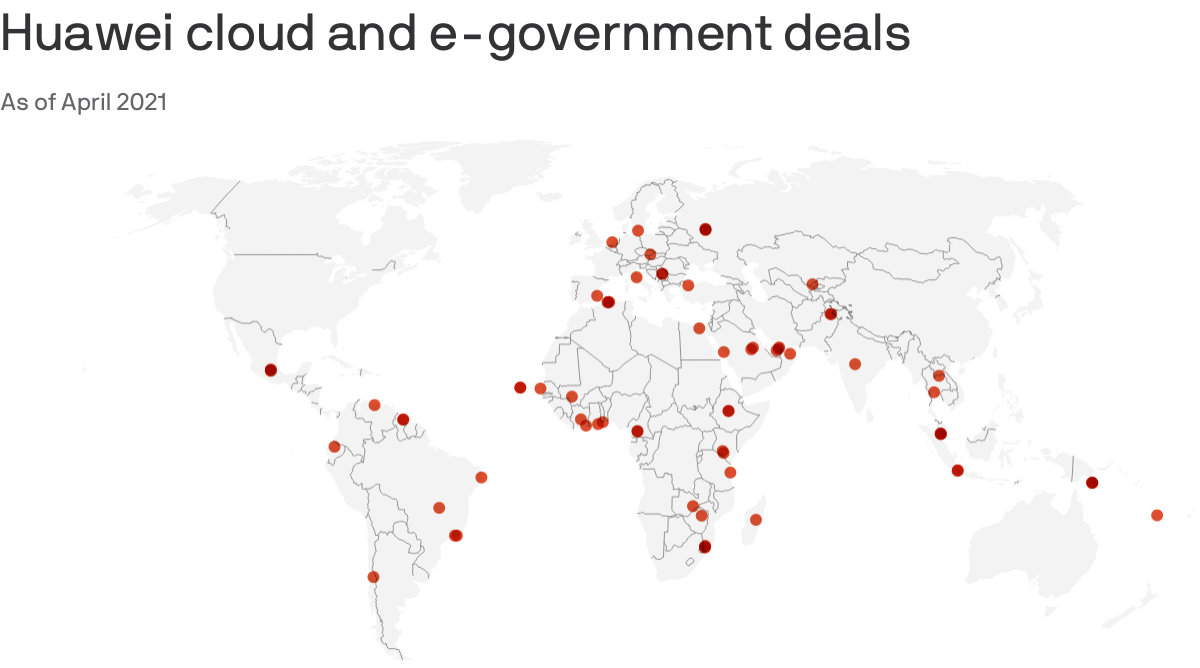
Data: Reconnecting Asia Project, “Reconnecting Asia Huawei Cloud & e-Government Data,” Center for Strategic and International Studies, April 2021; Map: Michelle McGhee/Axios
Chinese telecom giant Huawei is finding plenty of government buyers for its cloud services despite growing suspicion of the company, according to new data compiled by the Center for Strategic and International Studies' Reconnecting Asia Project.
The big picture: Middle-income countries without strong civil freedoms are the most common customers for Huawei's cloud and e-government services.
Amazon is reportedly in talks to acquire MGM Holdings, the legendary Hollywood studio, according to The Information. The deal could cost between $7 billion and $10 billion.
Why it matters: This would be Amazon's biggest move yet into entertainment.
Yesterday's news that AT&T is offloading its WarnerMedia assets into a joint venture with Discovery is far from a surprise since buying a media company in the name of vertical "synergies" has rarely ended well.
Case in point: WarnerMedia itself merged in 1990 with Time Inc. to create Time Warner.
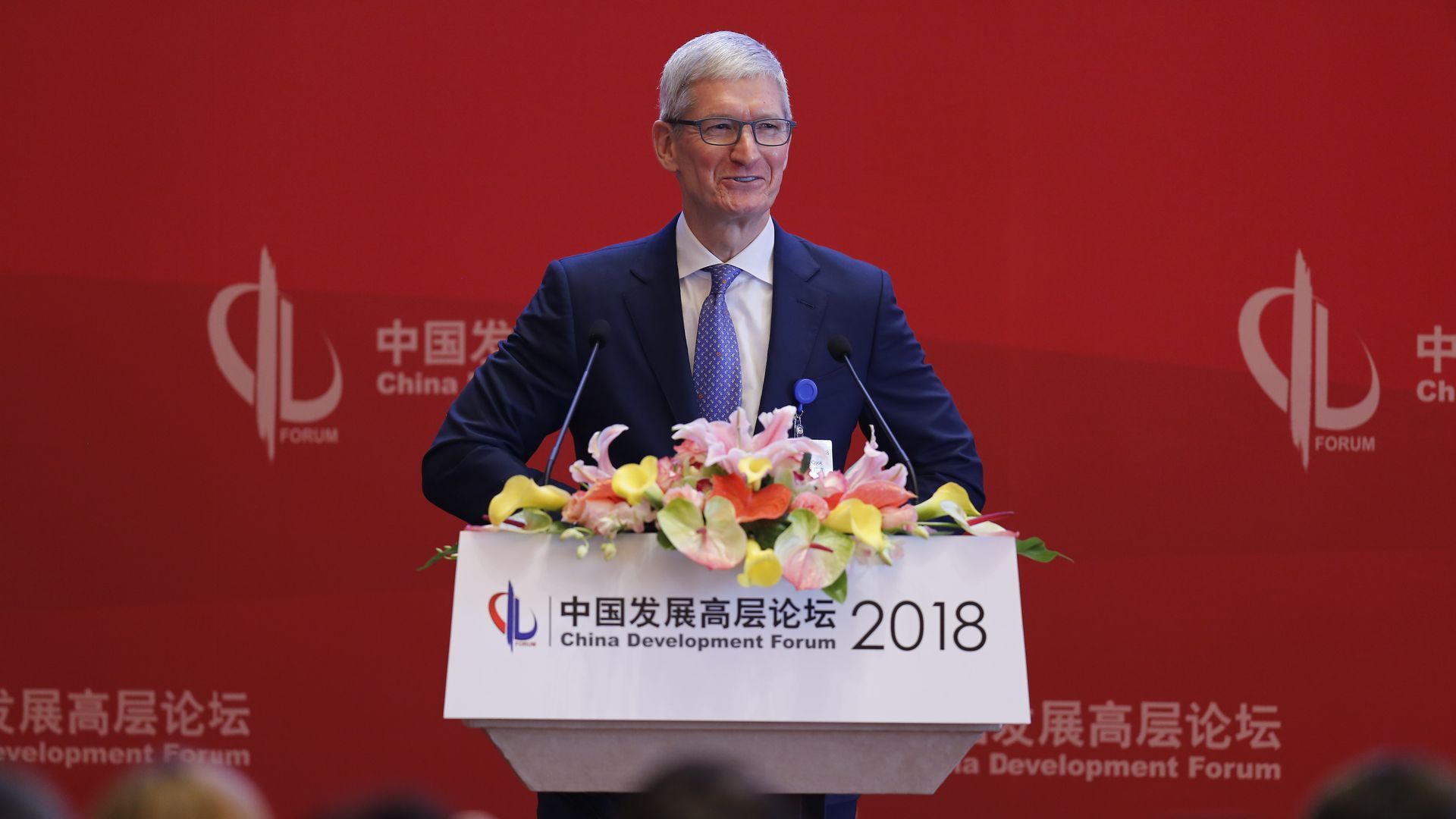
China is home to most of Apple's manufacturing and accounts for a significant and growing share of its sales. At the same time, doing business in China requires the company to make significant concessions that run counter to the company's positioning as a protector of the "human right" of privacy.
Between the lines: Apple says that it's simply following local laws in China, as it does elsewhere. However, China's "local laws" require granting the government access to a great deal of user content, as well as severely limiting what can be said about a wide range of issues, from Taiwan and Tibet to mentions of the 1989 Tienanmen Square uprising.
Google is among several big U.S. companies criticized in a report Monday for taking part in an April meeting of Republican state leaders that focused on efforts to pass new restrictions on voting.
Why it matters: Google has publicly said it is opposed to bills that would make voting harder, but it's also trying to engage with both Democrats and Republicans and some of that latter group are working hard to pass such bills in a number of states.
As outrage about the conflict in Gaza and misinformation about clashes between Palestinians and Israelis snowball online, social media companies face yet another test of their capacity to manage their platforms.
Why it matters: Tensions between Israelis and Palestinians haven't been this high since the last round of combat in Gaza in 2014, and social media has become a much larger part of our everyday lives and media diets since then.










/2021/05/19/1621432042454.gif?w=3840)