There are 3 broad groups of on-demand economy workers, according to Alexandrea Ravenelle, who interviewed some 80 workers for her book, Hustle and Gig: Struggling and Surviving in the Sharing Economy.
Details: The groups are: Strugglers, down on their luck; perhaps they find themselves unable to put their expensive college degrees to use; Strivers, supplementing their salaries and trying to get one rung higher on the economic ladder; Success Stories, who see entrepreneurial opportunity.
Apple has removed or restricted features from at least 11 of the most downloaded screen-time tracking, phone-addiction fighting, and parental-control apps throughout 2019, according to a New York Times data analysis.
Why it matters: This report is an example of an increasingly common criticism of tech giants: They run the platform third parties rely on to reach consumers, but also own their own competing offerings.
U.S. economic and national security is threatened by China's strategic plan for dominance in multiple areas, FBI Director Christopher Wray said in an interview Friday with Richard Haass, president of the Council on Foreign Relations.
Why it matters: These so-called "generational threats" will shape the future of the U.S., Wray warns.
At a time bigness is being broadly equated with badness, no one is perhaps more so equated than Facebook, the dominant global force in online friendship and the source of a relentless drumbeat of new probes into how it governs itself.
Driving the news: There may be good news of sorts for the company — that, amid a flood of reports of data breaches, Facebook critics seem no more hostile than last summer and fall. Some continue to call for it to be broken up, while others say that they are still not certain what should be done.
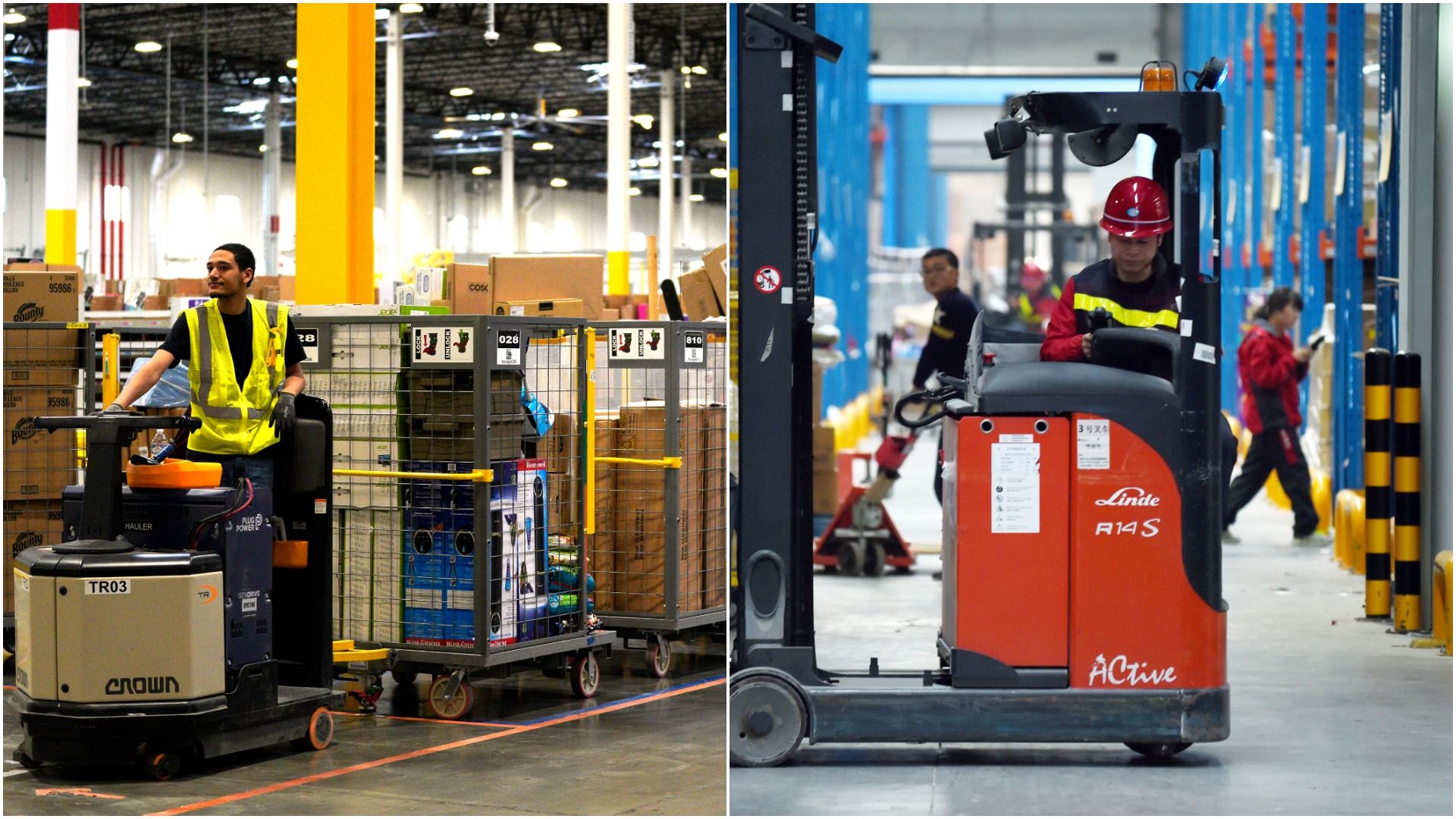
Amazon's move to slash free delivery times in half for Prime members — from 2 days to 1 — will squeeze American retailers, who are already scrambling to match it. But the e-commerce behemoth is still miles behind its Chinese rivals.
Why it matters: As we reported from China last summer, JD.com is already delivering 90% of its packages within 24 hours. Even 85% of packages shipped from abroad get to customers' doorsteps in a day. Last year, Alibaba said it will offer same-day delivery to all of China. Amazon is just catching up.
Snapchatsaid Friday that it is launching "Snap Select," a new feature which will make it easier for companies to buy video ads within its "Discover" content section.
Why it matters: Snapchat has dramatically improved its ads business since going public in 2017, mostly by making it easier to buy regular Snap ads "programmatically," or in an automated fashion. It's hoping to expand on that success by focusing on making it easier for advertisers to buy premium video ads.
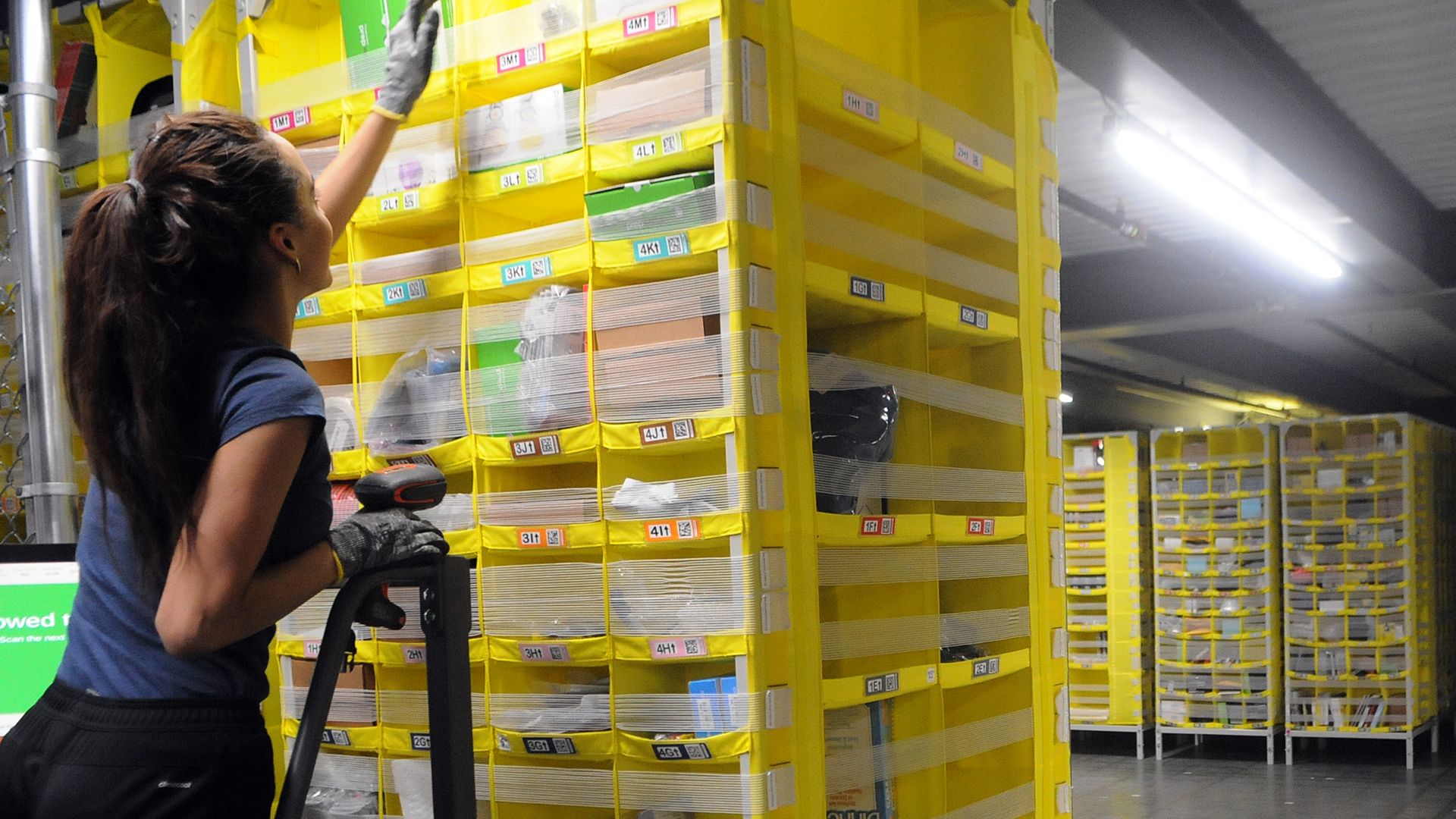
In a 14-month span starting in August 2017, Amazon fired about 300 full-time employees at a single warehouse in Baltimore for lack of productivity, according to reporting from The Verge that Amazon confirmed to Axios.
The big picture: That's a significant chunk of the roughly 2,500 people employed at the Baltimore warehouse where the firings occurred, reports the Verge's Colin Lecher.
Magic Leap, the Florida-based augmented reality company, raised $280 million in new funding from Japan's NTT DoCoMo.
Why it matters: No other startup in the consumer electronics space has ever raised that kind of cash while still private (depending on how you categorize Juul). This new infusion puts Magic Leap's total take up to a whopping $2.5 billion, and it also reportedly will reopen its most recent funding round.
Slack, the ubiquitous workplace messaging tool, on Friday filed to go public via a direct stock listing.
Why it matters: Slack is one of the hottest names in enterprise software, most recently valued at over $7 billion by venture capitalists, causing some speculation that it could receive a major acquisition offer before or after the listing.
Amazon has found a potentially lucrative new customer for its retail platform: government officials who spend taxpayer dollars.
Why it matters: Collectively, federal and local officials spend billions of dollars a year on goods and services, ranging from copy paper to musical instruments for schools. Amazon’s attempt to capture those dollars alarms its critics, who say that taxpayers could get a raw deal while the tech giant expands its dominance.
Uber on Friday morning disclosed that it plans to raise upwards of $9 billion in its IPO, at a market cap that could approach $84 billion.
Why it matters: If successful, this would be one of the largest IPOs of all time. It also would help validate some of the record-high prices that venture capitalists have paid to invest in private, growth-stage "unicorns."