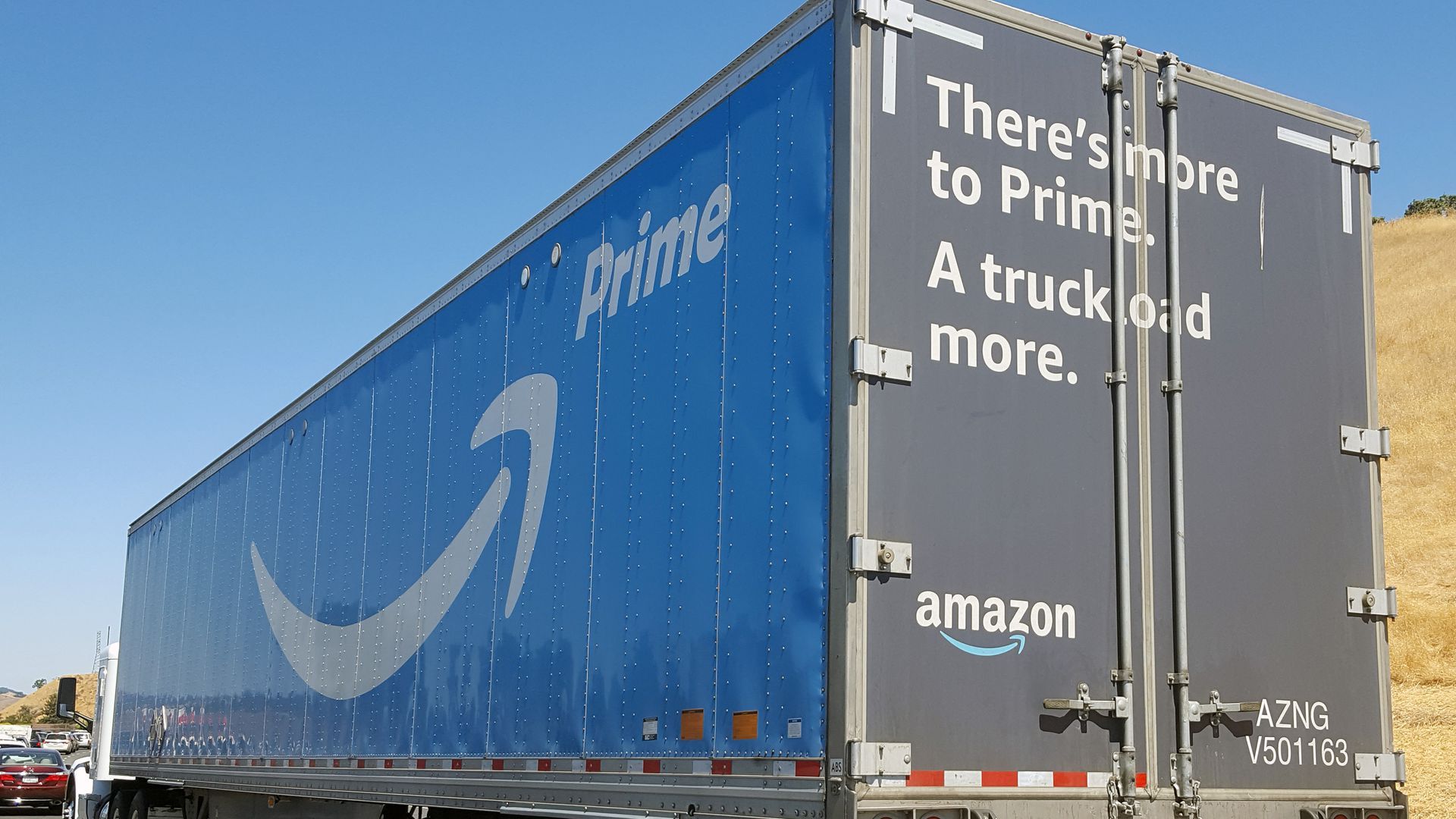
Amazon appears to be lowballing rivals in a classic squeeze to take over yet another industry: freight.
Why it matters: With its track record of upending nearly every business it enters, Amazon has the potential to decimate UPS and FedEx as it moves into shipping. Its tactic is a modern example of putting competition through a Rockefeller-style "good sweating."
After a year of profitability, Twitter sees a way to keep its business focused on growth. The company announced over a dozen new content deals Monday focused on quality programming tailored to the needs of existing, hyper-engaged communities on Twitter, rather than the widest corners of the internet.
Why it matters: The company hopes that more high-quality video programming, created exclusively for Twitter with trusted media partners, will lure advertisers who are looking for more brand-safe destinations on social media platforms to run video ads.
Anki, a heavily funded consumer robotics startup is shutting down and laying off its entire staff after failing to raise additional capital, Recode reported on Monday.
Amazon will open the first building in its new northern Virginia headquarters complex this fall, with new employees moving into a temporary space in June, the company said Monday.
Why it matters: Amazon vice president of workforce development Ardine Williams said in a blog post that it's "on pace to create 400 new jobs this year" and has started to hire for the office. Some in the region are nervous that the expected influx of tech workers associated with the Virginia project will displace current residents, especially low-income people. Similar concerns sunk a planned headquarters expansion in New York.
Apple insists that a crackdown on apps designed to help parents manage their kids' screen time is about security and privacy rather than an effort to stamp out competition.
Driving the news: The iPhone maker's defense follows a New York Times report that 11 of the top 17 parental control apps in the Apple App Store had been removed or restricted in the past year.
Spotify announced Monday in its Q1 earnings release that it reached 100 million paid subscribers worldwide, the most of any streaming music base.
Why it matters: Spotify’s emphasis on global reach in India, bundling with Hulu and acquisitions of podcast companies Gimlet Media, Anchor, and Parcast put it far ahead of Apple Music, which recorded 50 million subscribers worldwide. Apple Music's subscriber base still leads the U.S. with 28 million versus Spotify's 26 million, per the Wall Street Journal.
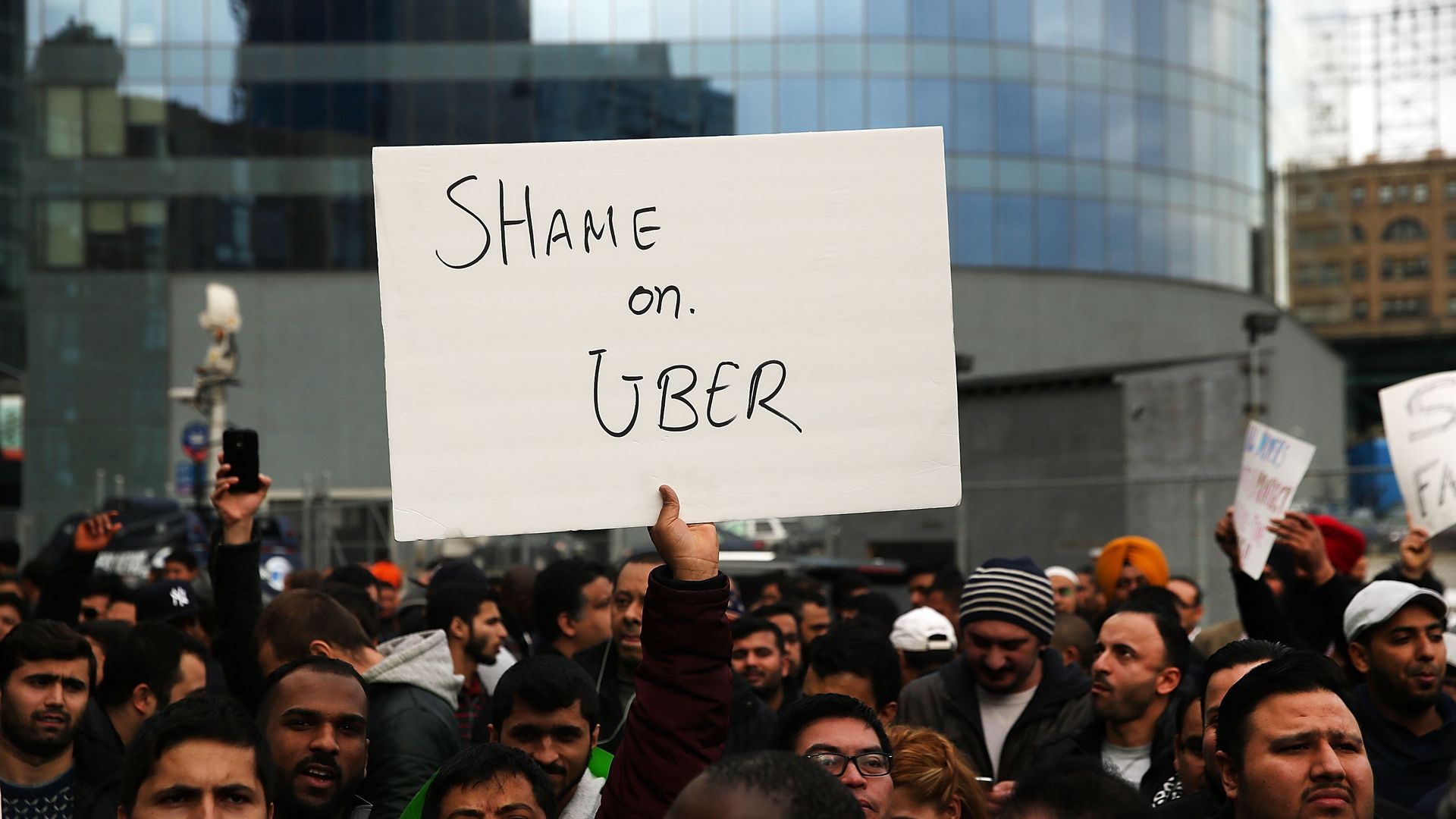
A two-year study of Uber drivers in Washington, D.C. found that Uber's payment system is so difficult to understand that 100% of participants had trouble figuring out how much they were actually earning.
Details: One female driver even calculated that she was making less than $5 an hour after expenses.