Technologists in Silicon Valley are becoming more aware of the dangerous effects significant screen time can have and aren't letting their own children use them, The New York Times reports.
Why it matters: Companies that are spinning out new tech each year have crusader-like mission statements of changing the world for the better. But within the last year, "several high-profile Silicon Valley defectors have been sounding alarms in increasingly dire terms about what these gadgets do to the human brain."
In the middle of a continued moral reckoning in the tech industry, a number of the major public companies announced their quarterly earnings this week, with mixed results. Here are five stories in tech news you may have missed.
As autonomous vehicles get closer, most people seem to be getting more reticent about them, according to a new Axios/Survey Monkey poll, which found fears creeping up for both passengers and pedestrians.
Why it matters: For AVs to take hold, they'll have to gain the trust of consumers.
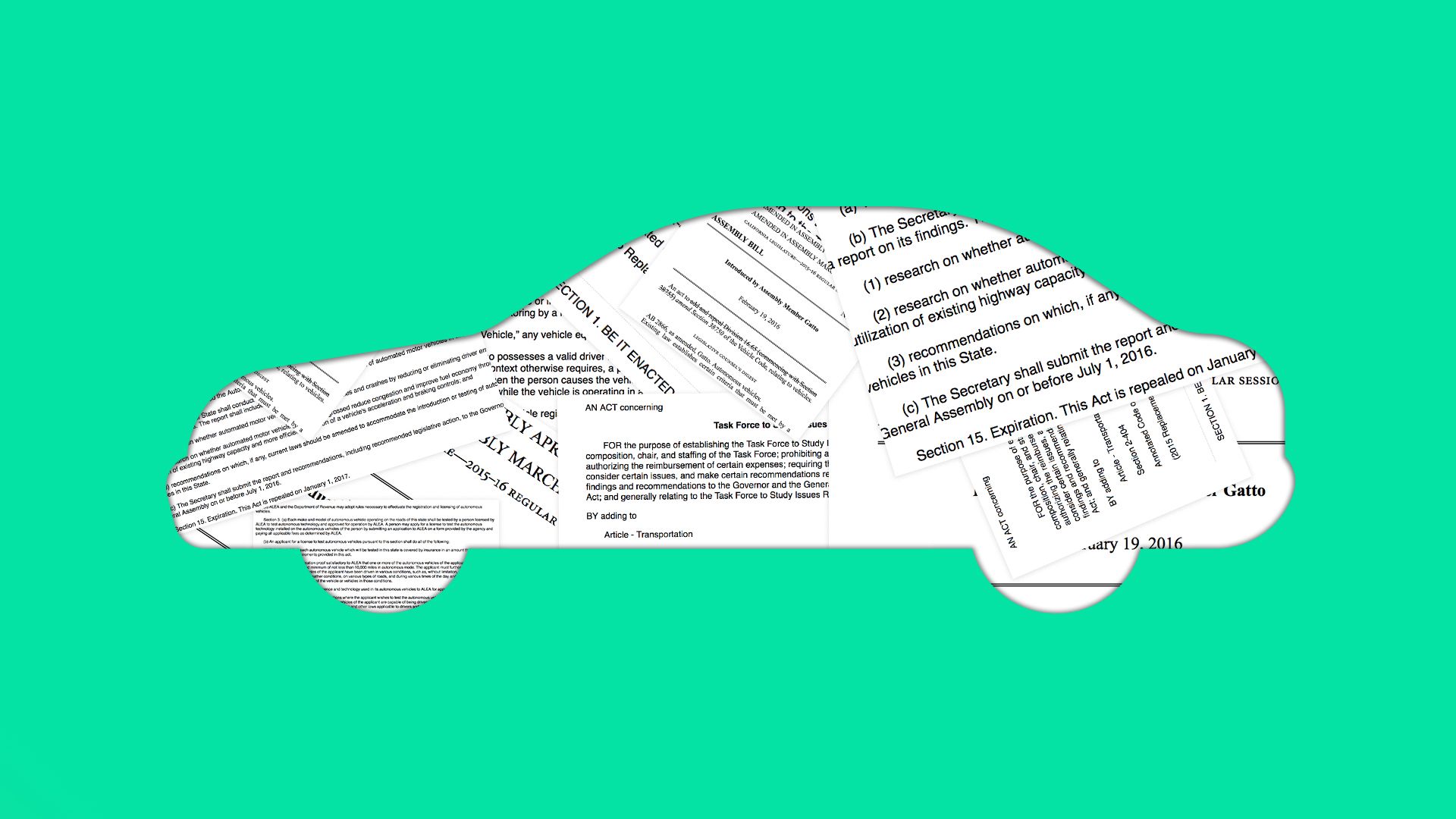
Drive.ai — a startup developing an on-demand autonomous shuttle service — is based in Silicon Valley, but it has deployed its first vans in Texas, drawn in by the state’s favorable regulations.
Why it matters: Without a national regulatory framework for autonomous vehicles, states have become laboratories not just for the technology itself, but also for the rules emerging to shape it.
As part of the Made in China 2025 strategic initiative, China wants supremacy in key future technologies, including electric cars and autonomous vehicles.
The big picture: Waymo and other U.S. firms like Cruise and Zoox are far ahead in developing the technologies. But China could become the autonomous leader by 2025 because regulators there can pave the way for mass adoption of autonomous cars more quickly than their American counterparts.
Global investors are pumping money into autonomous driving-related companies, according to data from CB Insights. In the first three quarters of 2018, they have committed $4.2 billion, compared to $3 billion in 2017 and $167 million in 2014.
The bottom line: The promise of autonomous driving has led investors — and automakers — to open their checkbooks wide to ensure they’re part of the future of transportation.
In its first ranking of automated driving systems, Consumer Reports rated General Motors’ Cadillac Super Cruise better than systems from Tesla, Nissan and Volvo. Why? Because it’s the only one that includes a camera inside the car to monitor driver attentiveness.
The big picture: There will be more of these driver monitoring systems in semi-automated cars because drivers still have to stay engaged. Their arrival is going to lead to a big privacy debate about how much monitoring consumers will tolerate in the name of safety. Nose-pickers and cursers, take note.
Why it matters: Twitter's longstanding inconsistencies in responding to users' reports of threatening posts look even more problematic when those who post threats fall under suspicion of causing real-world violence.
On the Tinder for robots, you don’t swipe left or right — you instead rate them on likability, appearance and overall desirability. Too many bad "appearance" ratings, and a bot lands in a modern hall of shame: the World’s Creepiest Robots.
Why it matters: Today’s most useful robots are giant arms that assemble cars and smartphones in enormous factories. But in the near future, robot builders want to make social bots that elicit empathy from people. First, they have to figure out how to make ones that aren’t totally horrifying.
Amid the worst stock market plunge since the financial crash, stark new questions are arising about the concentration of global profit and wealth in a few "superstar" firms, and the economic power that they wield.
Among concerns about Google, Facebook, Amazon, Apple and others is the historic scale of wealth at the apex of some industries, alongside decades-long wage stagnation for the middle and lower classes.
As companies progress from experiments with a few autonomous vehicles to pilot deployments of hundreds of them, early-stage startups — whose technologies and teams can give fleet operators unique advantages in quickly fielding AVs at scale — are being pre-emptively acquired at high prices.
Why it matters: While the broad deployment of AVs may still be years away, the race to capture market share is already transforming both venture investments and the types of startups that receive them.
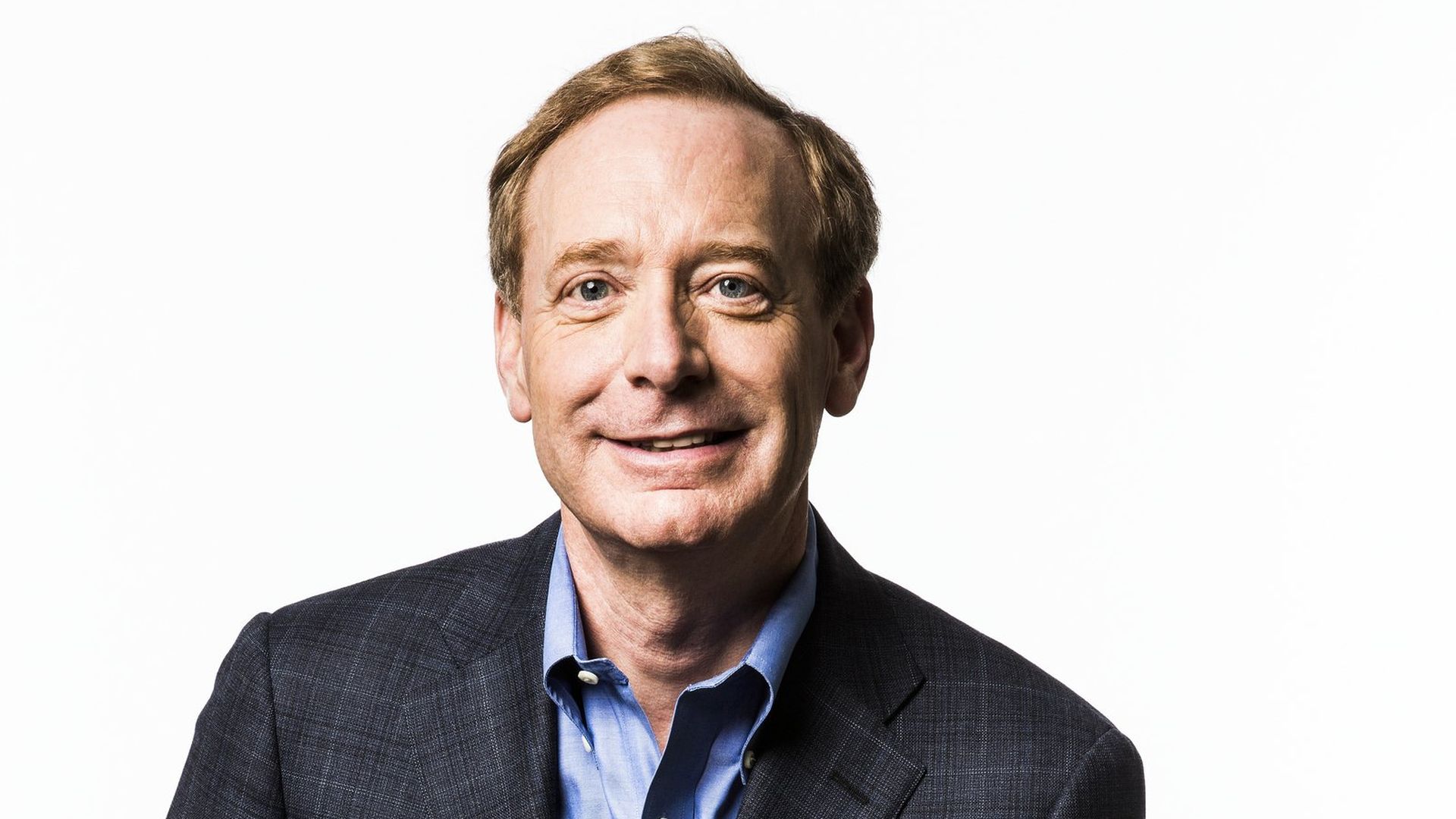
Microsoft said Friday it plans to continue seeking work with the U.S. military on a range of projects, including a controversial cloud computing contract.
Why it matters: Some employees have raised concerns, particular as powerful new technologies like artificial intelligence could enable autonomous warfare.
The Federal Trade Commission approved a settlement Friday with Uber Technologies over allegations that Uber deceived consumers about its privacy and data security practices.
Why it matters: The settlement is the latest consequence for Uber's free-wheeling behavior under then-CEO Travis Kalanick. Under the two data breaches, Uber did not disclose the second to consumers or the FTC for more than a year.
Facebook said Friday is had removed more than 80 accounts, pages and groups associated with “coordinated inauthentic behavior that originated in Iran and targeted people in the U.S. and U.K."
Why it matters: The company's response to disinformation campaigns aimed at Americans is being closely watched ahead of the midterm elections.
It was a story that many saw coming, but was still shocking to read: After a year of reporting, the New York Times offered up a blistering report on how Google failed to take strong action against male executives it concluded had behaved improperly with women.
Why it matters: The story confirms a wide belief in Silicon Valley that Google is the Big Tech company with the most skeletons in its closet in this area, having been home to a number of workplace romances involving married executives.
Constant Washington shocks have resulted in the underplaying of one of the most consequential stories of our time: Big Tech is facing rising scrutiny and controversy, with many Americans rethinking their online relationships.
With tech having lost its luster, the industry is now facing more skepticism from all directions, Axios chief tech correspondent Ina Fried points out.
Amazon reported its earnings Thursday with updates on its devotion toward advertising and "sales related to our other service offerings," which made nearly $2.5 billion in net sales in just the third quarter of 2018, The Atlantic reports.
Why it matters: Amazon has streamlined its ads to work on nearly every platform so advertisers can purchase ads in a bundle of Alexa, Kindle, Amazon.com banners and on television. Amazon's ad business has more than doubled from Q3 of 2017, when it made $1.12 billion. Brands have since upped their ad spending on Amazon by 250%.

















/2018/10/26/1540547059449.gif?w=3840)