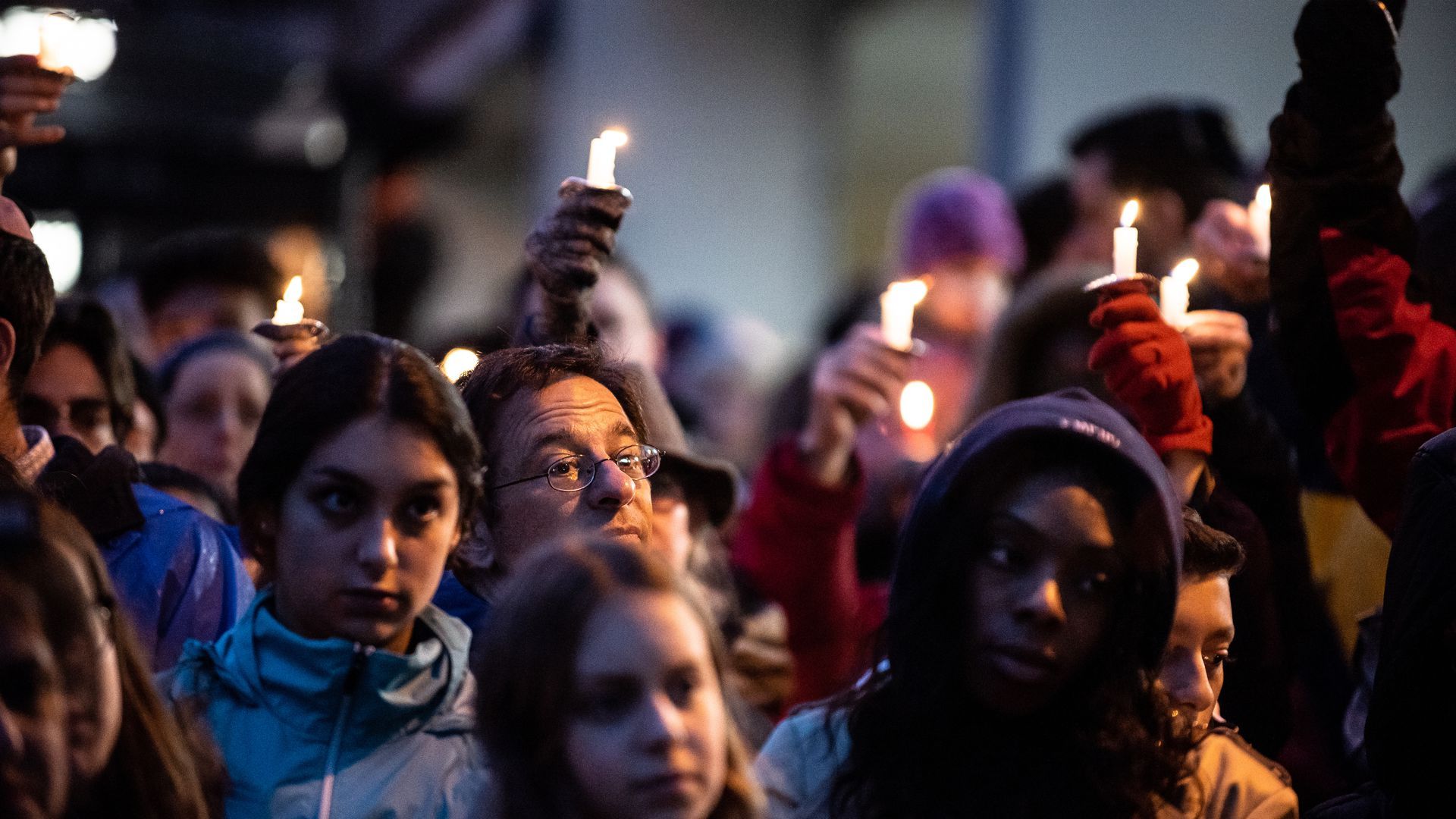
The last week proved that hate still abounds in America, and also that social media continues to fuel it.
The bottom line: On social media today, false narratives spread, bigotry intensifies, and sometimes entire plots are hatched. Tech's platforms have become hate-speech amplifiers, and their owners, especially Twitter, haven't shown they have a handle on the problem.
More than 100 S&P 500 companies will report quarterly results this week, but Apple and Facebook are the headliners.
Why it matters: Tech companies' good results have not been good enough for investors, as we saw with Alphabet and Amazon this week. Apple and Facebook could further drag tech sentiment down, or turn the tide.
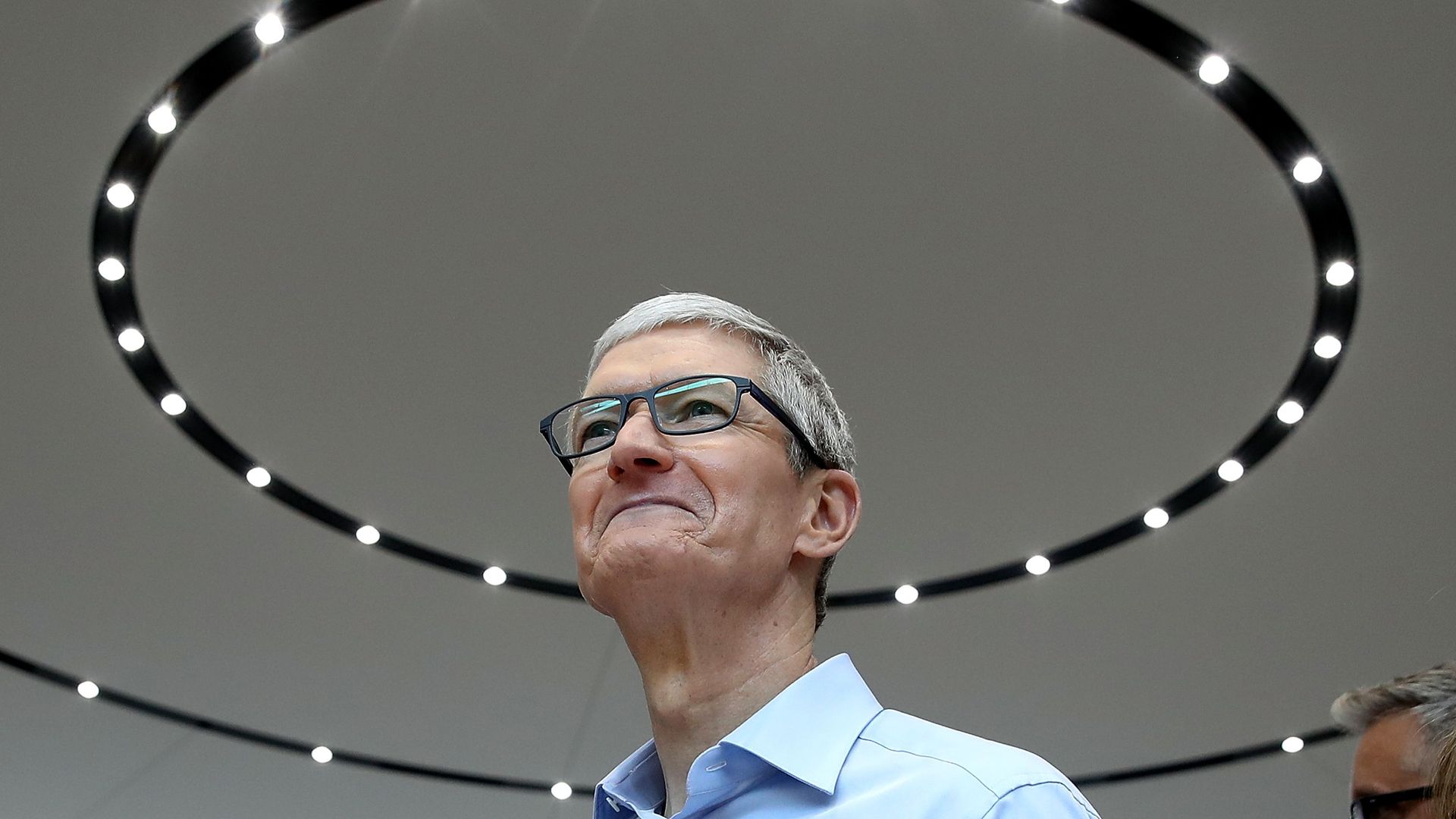
Tim Cook never wanted to be Apple's CEO: rather, he was thrust into the role by the untimely death of Steve Jobs.
The big picture: It took a while to get here, but Cook is no longer operating in Jobs's long shadow. In fact, he's arguably the most powerful and important CEO on the planet.
IBM announced Sunday it would acquire Linux specialist Red Hat in a deal valued at $34 billion in cash and debt. That works out to $190 per share, a hefty premium to where the software maker has been trading, and the largest software acquisition of all-time.
Our thought bubble, via Axios' Kim Hart: IBM has been shifting for years away from mainframes and servers to selling software and services that bring recurring revenue. Red Hat, which charges corporate clients for custom-built Linux offerings, fits into that strategy.
Never has a conference failed more spectacularly than this year's Future Investment Initiative. The so-called "Davos in the Desert" was meant to position Saudi Arabia as an innovative, dynamic nation with a bright tech-centered future ahead of it.
Instead: No one wanted to speak at the conference, and almost no one wanted to even attend. In the slots reserved for high-profile western CEOs like Jamie Dimon and Dara Khosrowshahi, we saw instead executives mostly from Russia and the kingdom itself.
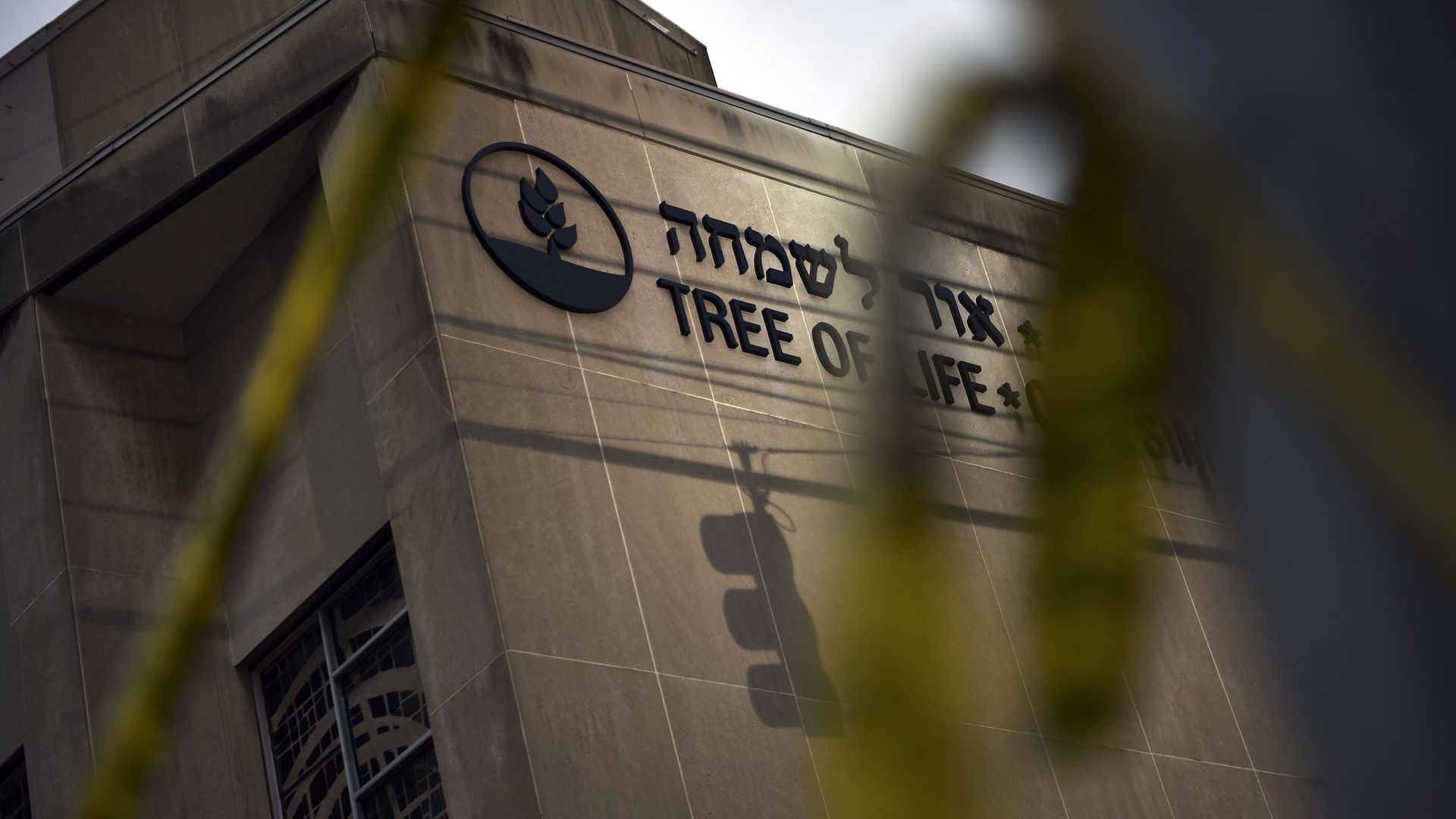
PayPal has cut ties with social networking service Gab following news that Pittsburgh gunman Robert Bowers — who killed 11 people at Tree of Life Synagogue on Saturday — had a history of using the platform for anti-Semitic speech, reports The Verge.
The big picture: Gab was founded in 2016 as a restriction-free alternative to Twitter, a social network that — while claiming "to defend free expression and individual liberty online for all people" — has attracted alt-right figures like Milo Yiannapolous and Richard Spencer that have been banned from other social media platforms.