Wednesday's technology stories

Facebook disabling "multicultural affinity" group advertising tool
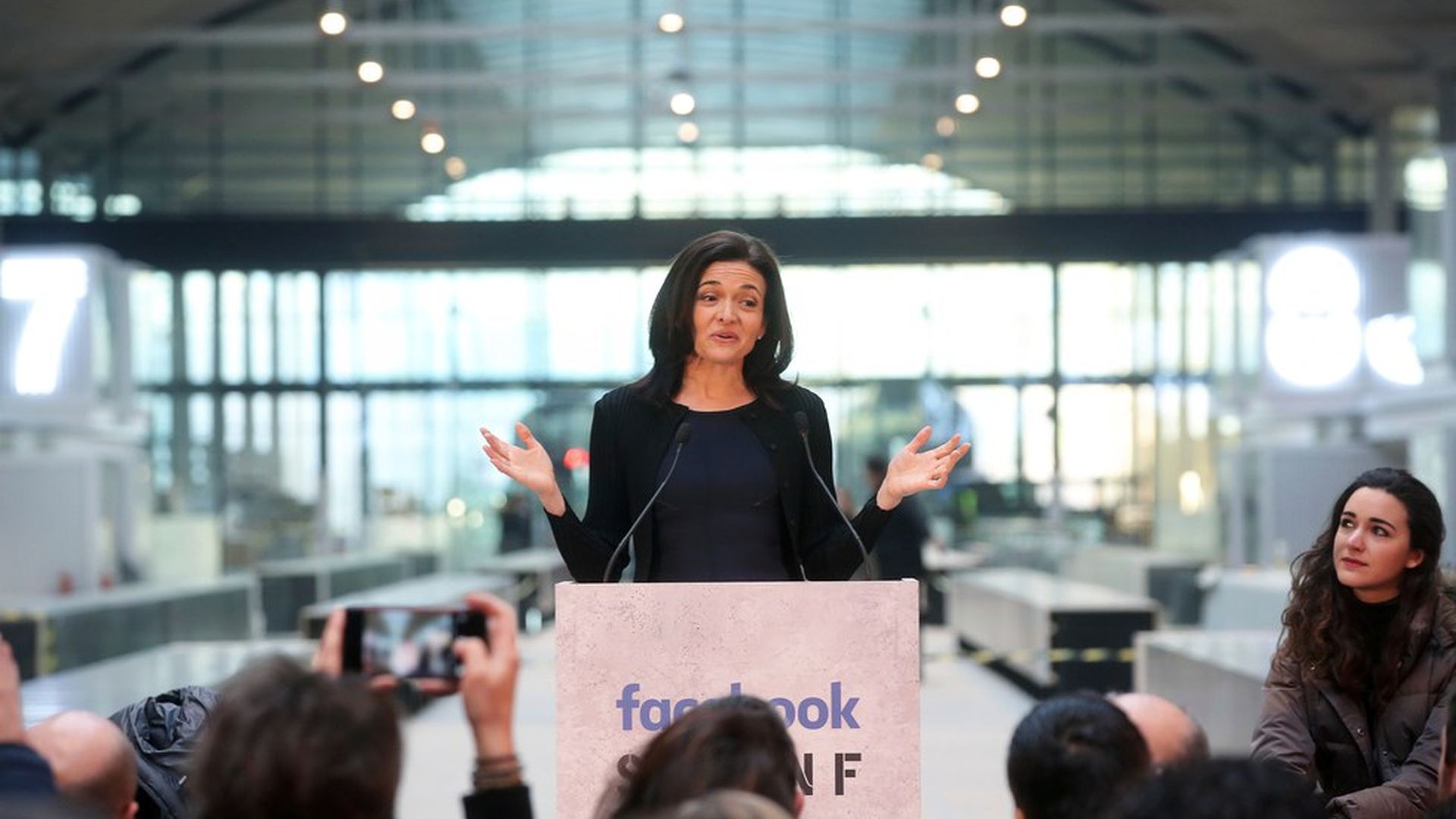
Facebook COO Sheryl Sandberg said in a letter today to Congressional Black Caucus chairman Cedric Richmond that it is disabling a tool that allows advertisers to exclude “multicultural affinity" segments from their audiences. She also declared that Facebook is "determined to do better" on multicultural marketing.
Why it matters: Rep. Robin Kelly said in a press release earlier this month that Facebook's "Ethnic Affinity" advertising option makes Facebook "complicit in promoting restrictive housing practices." Sandberg said in her letter that Facebook would strengthen policies to prohibit discriminatory advertising, and that until Facebook can "better ensure that our tools will not be used inappropriately," the tool is being disabled.

How the White House is spinning Trump's anti-Muslim retweets

Deputy White House Press Secretary Raj Shah tried to downplay the significance of President Trump's anti-Muslim retweets by emphasizing Trump's commitment to national security and the safety of Americans. Even when reporters pointed to the outrage Trump's behavior ignited, specifically with U.K. leaders, Shah remained committed to his message.
The backdrop: This isn't the first time a White House spokesperson has tried to spin a seemingly impulsive action by President Trump into a broader policy directive.

Researchers say AI can detect art forgeries

When the expert eye seems uncertain, infrared and x-ray imaging, carbon dating and chemical analysis are the go-to arbiters of an artwork's authenticity. But in a new paper, U.S. and Swiss researchers say artificial intelligence could be the best detective of all—sometimes from a single stroke, AI can detect a fake every time.
The stakes: An unknown percentage of the artwork currently for sale around the world is fake: Estimates range to well over half. Combine that with the sums paid for the rarest works are so high — earlier this month, Da Vinci's Salvator Mundi sold for $450 million — and it's clear why the industry can be fraught over authenticity. "Authenticity is the third rail. Historically, it's the most challenging risk issue for the art market going back to the Renaissance," Laura Patten, who leads the art and finance practice for Deloitte, tells Axios.

Europe's chief regulator aims to rein in power of tech giants

Margrethe Vestager, Europe's chief competition regulator who brought an antitrust case against Google this year, told Recode's Kara Swisher that the European Commission is continuing its focus on preventing tech giants from squashing competition from startups. She also said on the podcast that she's concerned about the lack of transparency around the algorithms used by these companies.
Across the pond: U.S. lawmakers also questioned the larger societal impact of Big Tech's use of algorithms and big data on Wednesday, and FCC Chairman Ajit Pai questioned whether social media is a net benefit to society.

New algorithm can help predict patients' end-of-life care

Researchers at Stanford University have developed a neural network that can determine a patient's chance of dying in the next three to 12 months in order to point doctors to them so they can more effectively deliver palliative care, according to MIT Technology Review.
Why it matters: "Our predictions enable the Palliative Care team to take a proactive approach in reaching out to such patients, rather than relying on referrals from treating physicians, or conduct time consuming chart reviews of all patients," the researchers wrote.

Apple pushes update to Macs to patch big vulnerability
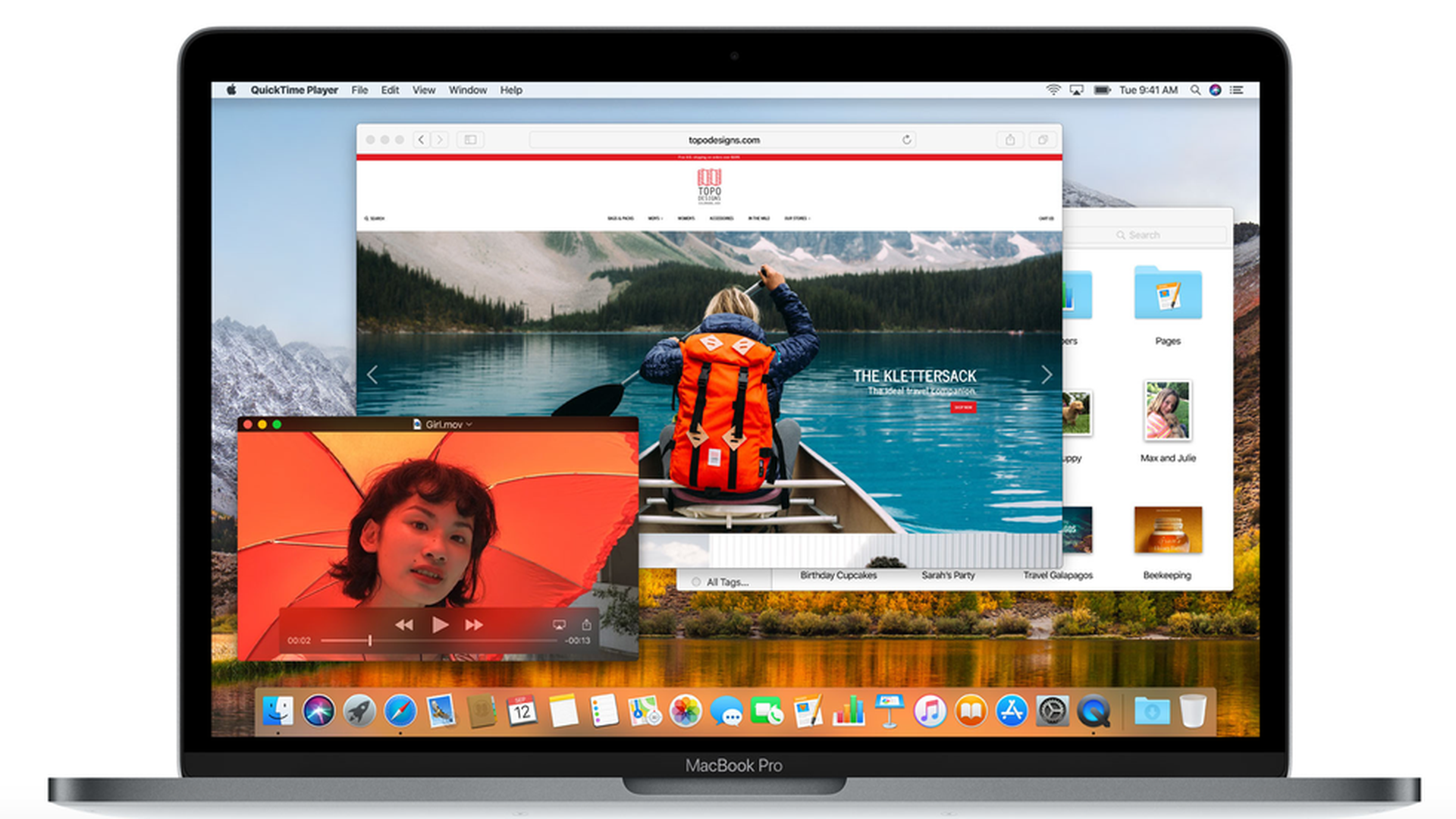
Apple is using its ability to automatically update Mac computers to fix a big security vulnerability that allowed hackers easy access to computers running the latest version of MacOS. It's only the second time Apple has made use of the ability to push down an update to all computers.
"Security is a top priority for every Apple product, and regrettably we stumbled with this release of macOS," Apple said in a statement.
Why it matters: The security hole was huge, but Apple moved quite quickly to patch things and forcing an automatic update ensures that machines won't remain vulnerable.
Apple said it began working on an update as soon as it became aware of the issue. The update was made available this morning and later today will be automatically installed on all machines.
"We greatly regret this error and we apologize to all Mac users, both for releasing with this vulnerability and for the concern it has caused," Apple said. "Our customers deserve better. We are auditing our development processes to help prevent this from happening again."

Uber deal reflects SoftBank's growing power in Silicon Valley

Early Uber investors Benchmark Capital and Menlo Ventures have said that they will sell a portion of their shares in the ride-hail giant to Japan's SoftBank Group via a well-publicized stock tender. There are no specifics on how many shares the firms might be willing to sell, nor is it certain that the deal will get done.
Bottom line: Do not underestimate how concerned VC firms are of crossing SoftBank. Not only has it become venture's largest and most aggressive player via its $98 billion Vision Fund, but it also has become a vital source of interim liquidity.

Snapchat emphasizes human content moderation in app redesign
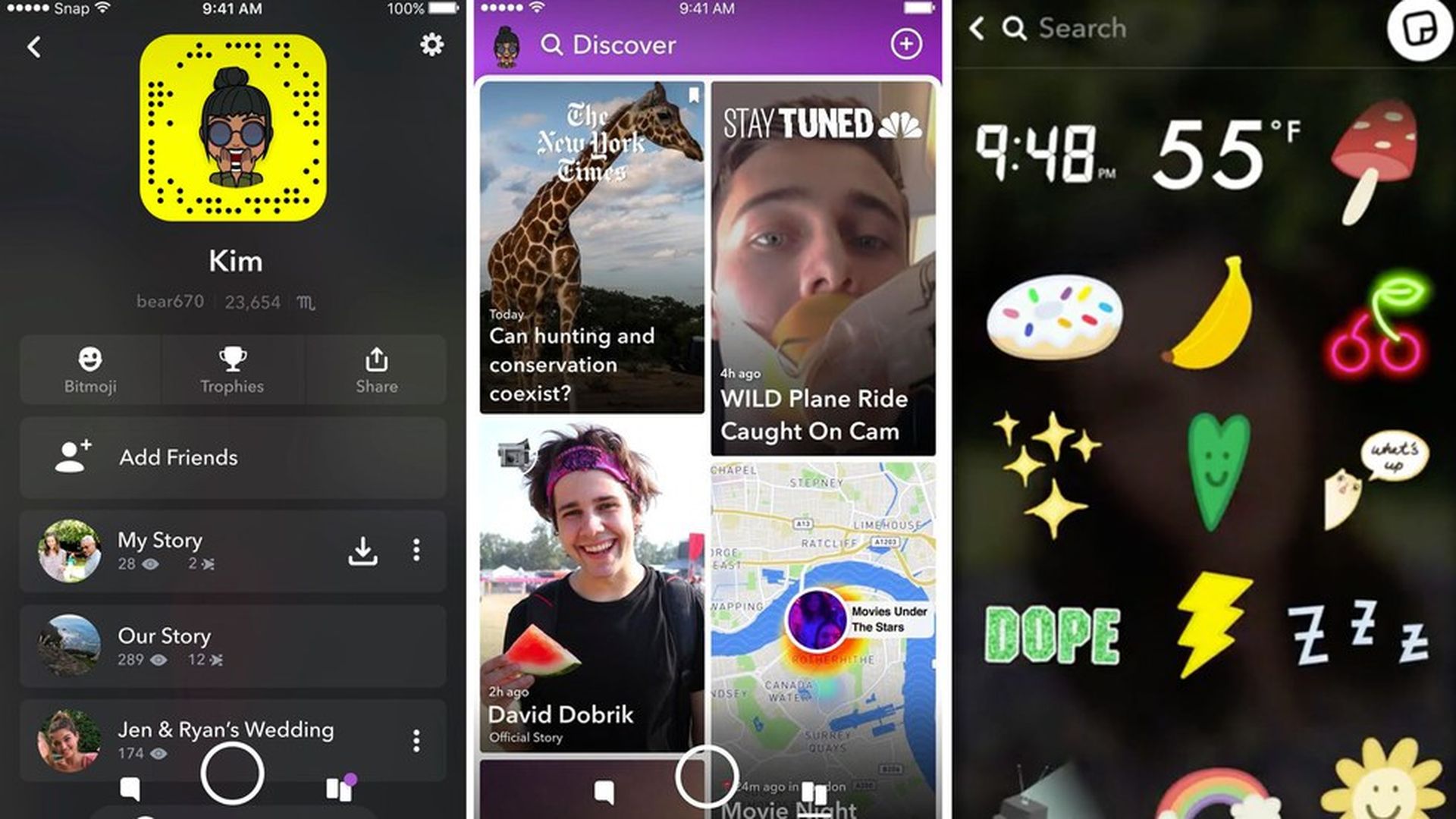
Snapchat is redesigning its app to separate media and social communications, making it easier to use and understand. CEO Evan Spiegel wrote an opinion piece for Axios Wednesday morning, saying that the separation takes "an important step forward towards strengthening our relationships with our friends and our relationships with the media."
Why it matters: Snapchat's last earnings showed slowed percentage of user growth for the fourth consecutive quarter. The company hopes a redesign will attract new users and engage current ones that may feel less inspired to post on Facebook and Instagram — rival platforms that rely on content recommendations from friends instead of algorithms and human curation tailored to individuals.
- The redesign will begin to roll out to a small percentage of users later this week and will be available to all users on iOS and and Android globally in coming weeks. According to a Snap spokesperson, the entire redesign was done in-house.
- The major design changes are centered around the separation of a "Discover" page on the right — which displays vetted publisher stories, stories from around the world, or stories from influencers or people you chose to follow that you don't know personally — and a "Friends" page on the left that features updates from your close friends and family. At the center is the "Send-to" homepage, or a navigation that starts with using its camera.
- Newer features, like Maps and Bitmojis, will be more easily accessible within more places on the app.
- Business and advertising products and operations will remain the same for the most part.
Snapchat will use algorithmic content recommendations, like Netflix, to help users discover new content, instead of relying on friends or large networks to elevate it to users through engagement (likes, comments, etc.) The content that users chose to follow will sit on top of the algorithmically-recommended content (curated stories, publisher stories and influencer stories/snaps).
- You can expect dozens of signals to affect the recommendations to your Friends and Discover pages, most of which will be based on content or people you've already engaged with, according to a Snap spokesperson. Separating the signals by page means that the experience will be much more customizable.
- Users will also now have a tool to easily hide anything they see in Discover that they don't like, which will help inform the tailored content.
Human curation and moderation of content is something the company is emphasizing heavily with this redesign. Unlike Facebook, which told Axios earlier this year that it's a technology company that doesn't hire journalists to moderate content, Snapchat says it will have a team of content programmers coming from editorial backgrounds to ensure "that each user sees a diverse mix of content formats, and be able to promote interesting or editorially important content to users."
Editor's Note: Get more stories like this by signing up for our daily tech newsletter, Login, and our weekly media newsletter, Axios Media Trends.

Trump retweets anti-Islam videos from far-right British politician
This morning, President Trump retweeted a series of three anti-Islam videos from Jayda Fransen, the deputy leader of the far-right ultranationalist U.K. political party Britain First.
The titles of the videos: "Muslim migrant beats up Dutch boy on crutches!"..."Muslim Destroys a Statue of Virgin Mary!"..."Islamist mob pushes teenage boy off roof and beats him to death!"
Go deeper: Fransen has said British police should be able to shoot Muslims, according to this Huffington Post story.

How Snapchat is separating social from media

The personalized newsfeed revolutionized the way people share and consume content. But let's be honest: this came at a huge cost to facts, our minds and the entire media industry.
This is a challenging problem to solve because the obvious benefits that have driven the growth of social media – more friends! more likes! more free content! – are also the things that will undermine it in the long run.

Revelations of secretive tactics complicate Uber's case in Waymo suit

Uber is facing even more questions about its alleged attempts to interfere with a trade secrets theft lawsuit from Waymo after two ex-employees testified in court Tuesday. The testimonies were prompted by the discovery last week of a critical letter written on behalf of one of them, which led to a delay of the trial.